The moment every Formula 1 enthusiast has been waiting for has finally arrived. The calendar may say it is early in the year, but for the paddock, the clock has officially ticked over to the new era. Earlier today, the world was treated to the first tangible evidence of the 2026 regulations in action. We aren’t just looking at renders or digital concepts anymore; we are looking at real carbon fiber hitting real asphalt.
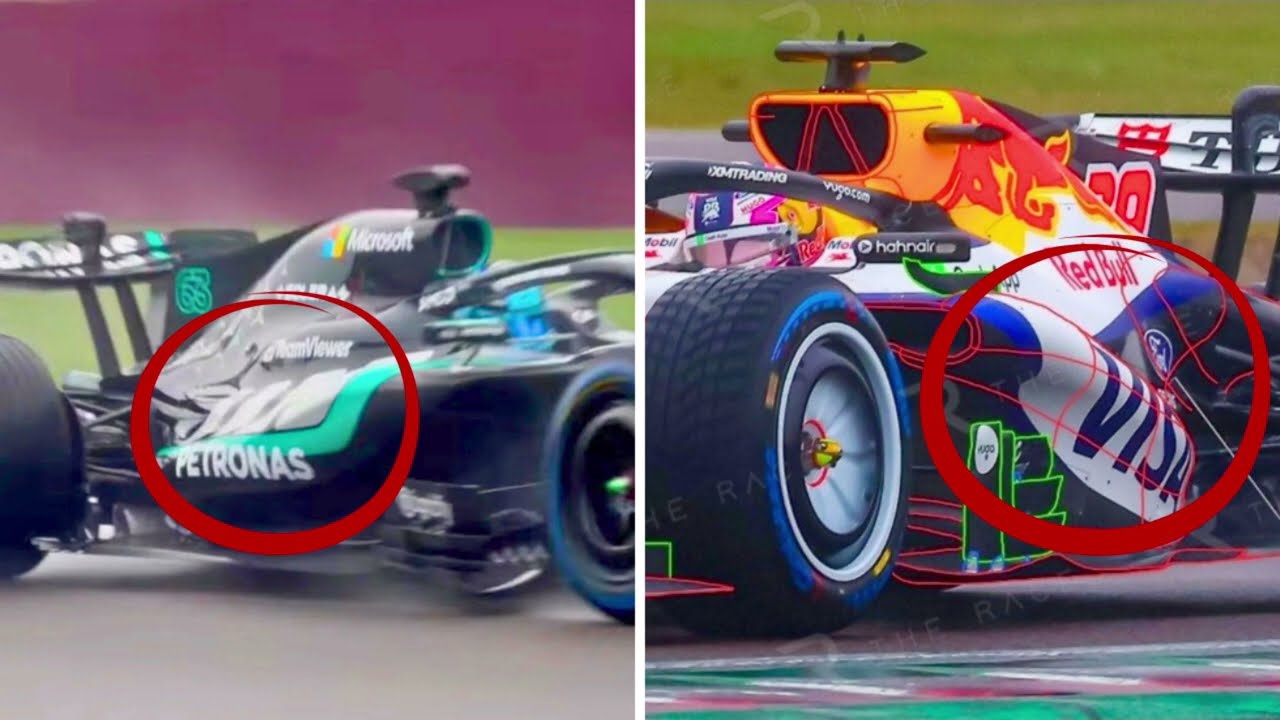
Mercedes has lifted the covers—and subsequently hit the track at Silverstone—with their challenger for the new generation: the W17. Almost simultaneously, we have seen images of the Racing Bulls RB03 conducting its own shakedown. To the untrained eye, these might just look like “new F1 cars.” But look closer. Stare at the details. What we are witnessing is the opening move in a high-stakes chess match that will define the next half-decade of motorsport. And honestly? The difference in approach between these two teams is staggering.
The Reality Check: What Are We Actually Seeing?
Before we dive into the delicious technical details, we need to have a serious, “friends-only” conversation about what these images represent. It is incredibly easy to fall into the trap of over-analyzing a launch car and declaring a World Champion before preseason testing even begins. We must resist that urge.
The Mercedes W17 and the Racing Bulls RB03 we see today are not the cars that will line up on the grid in Melbourne or Bahrain for the first race of the 2026 season. In industry terms, these are “shakedown” cars or rolling development platforms. Their job isn’t to set lap records or crush the competition—yet. Their job is effectively to be a very expensive science experiment.
These vehicles exist to validate the boring-but-critical stuff: Is the engine cooling correctly? Do the suspension geometries work in the real world like they did in the simulator? Is the new power unit integrating properly with the chassis? Are the basic systems reliable?
The aerodynamic surfaces you see now are placeholders. They are the “vanilla” versions of the complex, twisted carbon art we will see later. However, and this is a massive “however,” that doesn’t render these images useless. Quite the opposite. While they don’t tell us about speed, they tell us everything about intent. They reveal the philosophy and the level of confidence each engineering team has in their interpretation of the radically new 2026 rulebook.
The Battle of the Airbox: Confidence vs. Caution
The most striking, “slap-you-in-the-face” difference between the Mercedes W17 and the RB03 is found right above the driver’s head: the airbox.
In Formula 1 design, the airbox is a critical component for feeding air to the engine and cooling the intricate hybrid systems. The Racing Bulls RB03 has arrived with a design that can only be described as massive. It features a wide, upright inlet that sits high above the roll hoop. It looks bulky. It looks safe.
Why would they do that? It’s simple: caution. A larger airbox provides a massive safety net for cooling. It prioritizes airflow volume and thermal management over aerodynamic efficiency. It suggests that the Racing Bulls engineers are saying, “We don’t know exactly how hot this new power unit will get, so let’s make sure it doesn’t melt.” They are prioritizing reliability and flexibility. They want a car that runs without issues so they can gather data, even if that big airbox creates a bit more drag.
Now, look at the Mercedes W17. The contrast is jarring.
The Mercedes airbox is significantly tighter. It is more integrated, wrapping closely around the roll hoop and halo structure. Visually, it is far less dominant than the RB solution. This isn’t just an aesthetic choice; it’s a flex. By committing to a smaller, more aerodynamically efficient airbox this early in the game, Mercedes is signaling immense confidence in their cooling architecture. They seem to be saying, “We know our math is right. We don’t need the safety net.”
This doesn’t necessarily mean the Mercedes is faster today, but it shows they are willing to push the packaging limits right out of the gate, whereas Racing Bulls is establishing a safe baseline.

Sidepods: Sculpture vs. Simplicity
Moving down the chassis, the philosophical divide widens. The sidepods are where the aerodynamic magic usually happens, and even on these basic shakedown cars, the difference is telling.
The RB03 features sidepods that are remarkably conservative. They are upright, the inlets are narrow, and the bodywork is relatively flat. There is no aggressive “undercut” (the area where the bodywork tucks in to channel air). It looks… plain. Again, this points to a team that wants to keep the airflow simple. They want a predictable car. If you create complex shapes too early, you introduce variables that can confuse your data. Racing Bulls is building a “control” for their experiment.
Mercedes, on the other hand, couldn’t resist showing a bit of flair. The W17’s sidepods are already showing signs of contouring. They aren’t the extreme shapes we see on the current 2025 grid, but they are far from flat. The transition from the inlet to the rear of the car is smoother, and the bodywork is clearly shaped to guide air specifically toward the rear suspension and diffuser.
This hints that Mercedes is already testing aerodynamic interactions. They aren’t just checking if the engine works; they are already trying to understand how the air flow from the front of the car talks to the back of the car. It is a more advanced starting point.
The Wings: Modular vs. Integrated
The 2026 regulations have forced teams to simplify their wings massively to reduce “dirty air,” but how they handle that simplification is fascinating.
The RB03’s front wing looks like a kit car part—and I mean that in the best, most engineering-focused way possible. It looks modular. The endplates are prominent, and the elements look like they are designed to be swapped out easily. It screams “function over form.” It is designed for iteration.
The Mercedes front wing, however, looks like a single, cohesive unit. The elements flow into the endplates with a sense of deliberate integration. It looks less like a collection of parts and more like a unified system. This suggests Mercedes is already looking at the wing not just as a downforce generator, but as a flow conditioner for the rest of the car.
The same story plays out at the rear. The RB03 rear wing is straightforward and simple—perfect for a learning platform. The Mercedes version? Restrained, yes, but integrated. There are subtle signs that they are already thinking about how the rear wing interacts with the new active aero systems and drag reduction mandates.
The Verdict: Asking Questions vs. Confirming Assumptions
So, what does this all mean for us, the fans?
When you step back and look at these two machines, you see two different mindsets entering a brave new world.
The Racing Bulls RB03 is a “Question Asker.” Its design is open, safe, and flexible. It is built to go out on track and ask, “What happens if we do this?” It is a humble approach, acknowledging the unknowns of the 2026 regulations. It prioritizes gathering clean, uncorrupted data to build a foundation for the future.
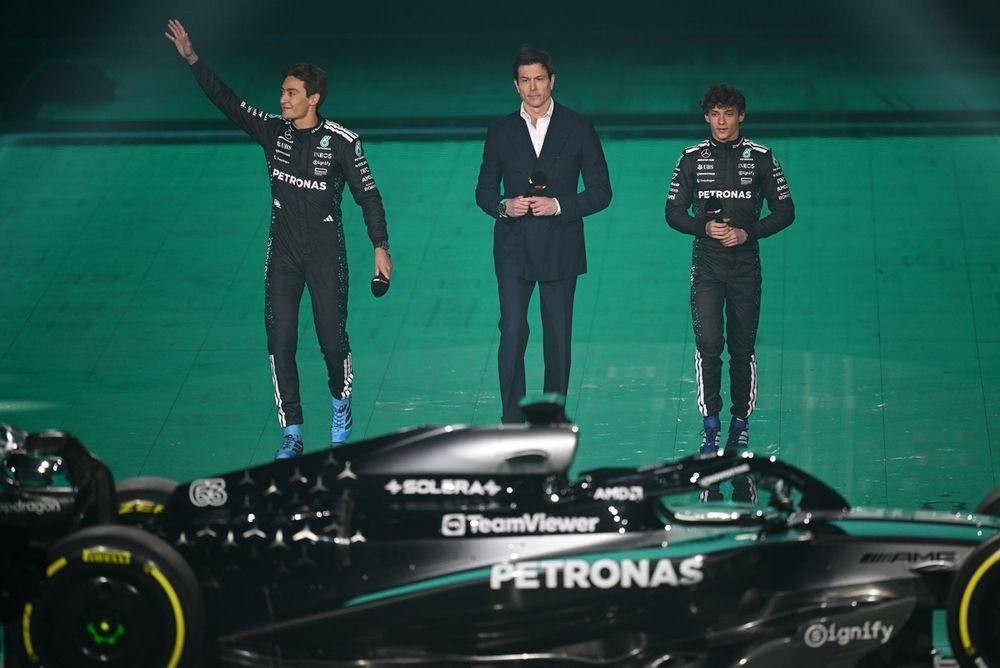
The Mercedes W17 is an “Assumption Confirmer.” Its tighter packaging, sculpted surfaces, and integrated design suggest that the team has already done the heavy lifting in the simulator and they believe in their numbers. They aren’t just asking questions; they are trying to prove that their answers are already correct.
Does this mean Mercedes has won the 2026 championship before it started? Absolutely not. History is littered with “confident” cars that failed to perform (remember the “zero-sidepod” concept?). And the conservative RB03 might eventually evolve into a rocket ship once they have their reliable data.
But one thing is undeniable: The game has changed. The 2026 era isn’t coming; it’s here. And if these shakedowns are any indication, we are in for a technical war the likes of which we haven’t seen in years. Mercedes has thrown down the gauntlet with a design that refuses to play it safe. Now, we wait to see how the rest of the grid responds.
Buckle up, everyone. This is going to be a wild ride.
News

Inside Shane Richie’s love life: Drug – fuelled orgy with six blondes; real reason he split from Coleen Nolan; six-year ‘affair with fan’
Inside Shane Richie’s love life: Orgy with six blondes; real reason he split from Coleen Nolan; six-year ‘affair with fan’ He’s popular with the ladies… Shane Richie…

SH0CKING REVELATI0N:A sh0cking behind-the-scenes secret revealed about Lizzie Rizzini, the woman replacing Carol Kirkwood on the 6pm weather bulletin
BBC viewers still reeling from the departure of Carol Kirkwood got another surprise last night when presenter Lizzie Rizzini appeared to flash her black lace stockings on…

HEARTBREAKING: Peter Andre’s Tearful Message to Son Junior After SHOCKING Revelation About How He Truly Feels Toward Mum Katie Price — Katie Price’s reaction scares fans.
Peter Andre’s emotional message to son Junior after it’s revealed how he really feels about mum Katie Pri… PETER Andre has shared an emotional message to his…

Ben Shephard opens up about the devastating health battle his wife is facing: “She wakes up crying every single morning…”
Inside This Morning Ben Shephard’s Life Including Rarely Seen Wife and Health Battle Ben Shephard is a name synonymous with British television, renowned for his engaging presentation…

🚨 LIVE TV HEARTBREAK: Good Morning Britain Host Announces ‘Devastating’ Dɘath of Guest Minutes Into Show
Viewers of Good Morning Britain were met with heartbreaking news just minutes into Friday’s (January 30) episode, as co-hosts Kate Garraway and Ranvir Singh reported the tragic…

Emmerdale legend Cain Dingle will never be the same again after a shock cancer diagnosis turns his world upside down
FROure Desk. Full Terms and conditions are available on the website http://www.itv.com/presscentre/itvpictures/terms Emmerdale wouldn’t be Emmerdale without the glowering, grunting embodiment of manliness that is Cain Dingle (Jeff Hordley) But…
End of content
No more pages to load






