The Formula 1 world has officially been put on notice. In the cold, gray air of Silverstone, the Mercedes-AMG PETRONAS F1 Team didn’t just unveil a car; they fired the first, deafening shot of the 2026 championship battle. While the rest of the grid tentatively dipped their toes into the new regulatory era, Mercedes dove in headfirst, executing a testing programme so flawless and aggressive that it has likely sent a shiver down the spine of every rival team principal from Maranello to Milton Keynes.
A Statement of Intent: The Perfect Shakedown
The headline story from Silverstone isn’t just that the W17 exists—it’s how remarkably reliable it already appears to be. In a sport where “shakedowns” and “filming days” are often plagued by teething issues, minor leaks, and cautious installation laps, Mercedes delivered a masterclass in preparation.
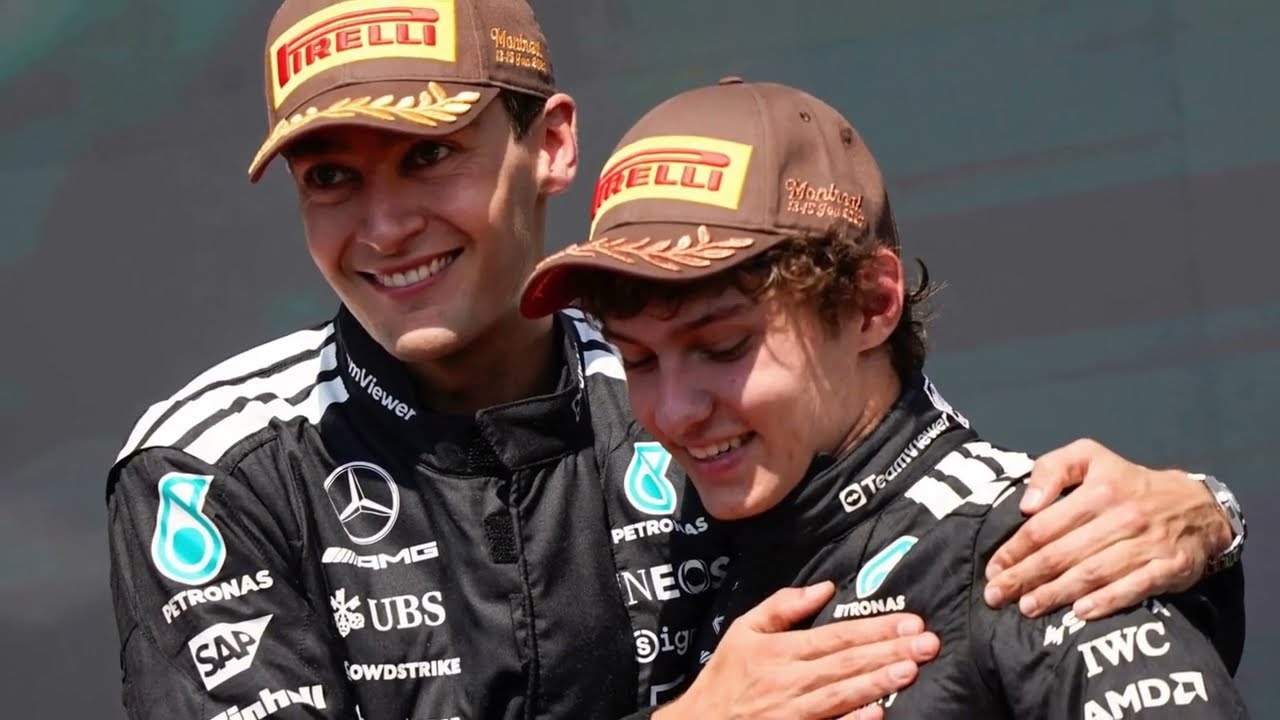
Drivers George Russell and Kimi Antonelli took turns behind the wheel of the striking new machine, completing a total of 67 laps around the Silverstone International Circuit. This equates to just under 200 kilometers—the absolute maximum distance allowed by the FIA for a promotional filming day. They didn’t leave a single meter on the table.
To understand the magnitude of this achievement, one only needs to look at the competition. When German giant Audi conducted their shakedown earlier this month, they managed a mere 50 kilometers—roughly a quarter of what Mercedes achieved. The Racing Bulls team was even more conservative, capping their demonstration at a scant 15 kilometers. Even Cadillac, backed by the might of a Ferrari power unit, failed to utilize their full allocation.
In stark contrast, Mercedes came out of the box swinging. They didn’t just run; they sprinted. Andrew Shovlin, the team’s typically reserved Trackside Engineering Director, described the session as a “sensible first day,” noting that the primary focus was on safety and reliability. However, his measured words barely concealed the team’s underlying satisfaction. For a brand-new car built to a radically new set of regulations to run its full 200km allocation without a single major reported issue is a testament to the engineering might of the Brackley factory. It suggests a level of readiness that customer teams and new manufacturers simply cannot match at this stage.
The “Zebra” Earns Its Stripes
Visually, the W17 is an aggressor. Draped in a unique “zebra-style” testing livery that transitions from the classic Silver Arrow hue into menacing black, accented by the signature Petronas green, the car looks fast even when standing still. But beyond the aesthetics, the packaging reveals the maturity of a works team operation.
Comparing the W17 to the Alpine—which also runs the new Mercedes power unit—the differences are stark. Alpine had a productive day, logging 140 kilometers before bad light stopped play, but the Mercedes chassis displays a tighter, more refined packaging around the engine and sidepods. This is the inherent advantage of a works team: years of lead time allowing for a seamless integration of chassis and power unit that customers, still learning the intricacies of the new engine, struggle to replicate immediately.
The 15-Horsepower Controversy: Genius or Illegal?
However, the smooth running at Silverstone is only half the story. The real drama is unfolding behind closed doors, centering on what lies beneath the W17’s bodywork.
For months, whispers in the paddock have suggested that Mercedes has aced the new 2026 power unit regulations. Now, those whispers have turned into shouts of protest. Late last year, rival manufacturers expressed deep frustration over a specific interpretation of the rules regarding compression ratios.
Reports indicate that Mercedes engineers have found a way to increase the effective compression ratio of their internal combustion engine through “thermal expansion.” Essentially, as the engine heats up during operation, certain internal components expand in a calculated manner, pushing the compression ratio beyond what static, pre-run measurements would indicate. Rivals estimate this engineering sleight-of-hand could be worth anywhere from 10 to 15 horsepower—a massive advantage in a sport often decided by thousandths of a second.
The situation is so volatile that the FIA held a meeting with all manufacturers just hours before the W17 hit the track. While no immediate rule changes were announced, the governing body acknowledged that discussions on measurement methodologies are ongoing. Ferrari is reportedly considering a formal complaint once the season begins, and Red Bull, now manufacturing their own engines, are scrambling to implement similar solutions.
For now, Mercedes has been transparent with the FIA, seeking clarification before committing to the design. But as F1 history shows, “transparent” doesn’t always mean “legal” in the eyes of frustrated competitors. If Mercedes starts the season with a clear power advantage, expect this technical controversy to explode into a full-blown political war.
Redemption for the Silver Arrows?
The context of this test cannot be overstated. Mercedes enters the 2026 era as the betting favorite, a position that seemed impossible just two years ago when they were lost in the wilderness of the “ground effect” regulations. After dominating the sport from 2014 to 2021, the team famously lost its way in 2022, watching helplessly as Red Bull and then their own customer, McLaren, surpassed them.
The W17 represents their great reset—a chance at redemption. The 2026 regulations, which overhaul both chassis and engine rules and introduce a 50/50 power split between electric and combustion systems, have leveled the playing field. For the first time in years, everyone is starting from zero. And based on the evidence from Silverstone, Mercedes has done their homework better than anyone else.

Drivers Under Pressure
The human element of this story is just as compelling. George Russell, now the undisputed team leader following Lewis Hamilton’s departure, enters the season on a one-year contract. The pressure is immense. He has waited patiently for a championship-caliber car; if the W17 is that car, he has no excuses left. He must deliver.
Beside him sits Kimi Antonelli, the young Italian prodigy entering his second season. After showing flashes of brilliance mixed with rookie errors in his debut campaign, Antonelli now faces the true test. The playing field has been reset, nullifying the experience gap of his older rivals. This is his opportunity to establish himself not just as a future star, but as a present-day contender.
The Road to Melbourne
As the team packs up and heads to Barcelona for the first official test—where they can choose any three days from a five-day window to run behind closed doors—the mood at Mercedes will be one of quiet confidence. They have maxed their mileage. Their drivers are comfortable. Their controversial engine is running reliably.
Of course, testing is notorious for deception. Fuel loads, engine modes, and sandbagging can hide the true pecking order until the lights go out in Melbourne. But one thing is undeniable: Mercedes has started exactly how a championship team should. They have warned the grid that the sleeping giant is not only awake but sprinting.
The hard work of the struggling years has seemingly culminated in a machine that works straight out of the box. Now comes the hardest part: turning that reliability into dominance, and turning the W17 into a legend. The rest of the grid has been warned—Mercedes is back, and they aren’t waiting for anyone.
News

Inside Shane Richie’s love life: Drug – fuelled orgy with six blondes; real reason he split from Coleen Nolan; six-year ‘affair with fan’
Inside Shane Richie’s love life: Orgy with six blondes; real reason he split from Coleen Nolan; six-year ‘affair with fan’ He’s popular with the ladies… Shane Richie…

SH0CKING REVELATI0N:A sh0cking behind-the-scenes secret revealed about Lizzie Rizzini, the woman replacing Carol Kirkwood on the 6pm weather bulletin
BBC viewers still reeling from the departure of Carol Kirkwood got another surprise last night when presenter Lizzie Rizzini appeared to flash her black lace stockings on…

HEARTBREAKING: Peter Andre’s Tearful Message to Son Junior After SHOCKING Revelation About How He Truly Feels Toward Mum Katie Price — Katie Price’s reaction scares fans.
Peter Andre’s emotional message to son Junior after it’s revealed how he really feels about mum Katie Pri… PETER Andre has shared an emotional message to his…

Ben Shephard opens up about the devastating health battle his wife is facing: “She wakes up crying every single morning…”
Inside This Morning Ben Shephard’s Life Including Rarely Seen Wife and Health Battle Ben Shephard is a name synonymous with British television, renowned for his engaging presentation…

🚨 LIVE TV HEARTBREAK: Good Morning Britain Host Announces ‘Devastating’ Dɘath of Guest Minutes Into Show
Viewers of Good Morning Britain were met with heartbreaking news just minutes into Friday’s (January 30) episode, as co-hosts Kate Garraway and Ranvir Singh reported the tragic…

Emmerdale legend Cain Dingle will never be the same again after a shock cancer diagnosis turns his world upside down
FROure Desk. Full Terms and conditions are available on the website http://www.itv.com/presscentre/itvpictures/terms Emmerdale wouldn’t be Emmerdale without the glowering, grunting embodiment of manliness that is Cain Dingle (Jeff Hordley) But…
End of content
No more pages to load






