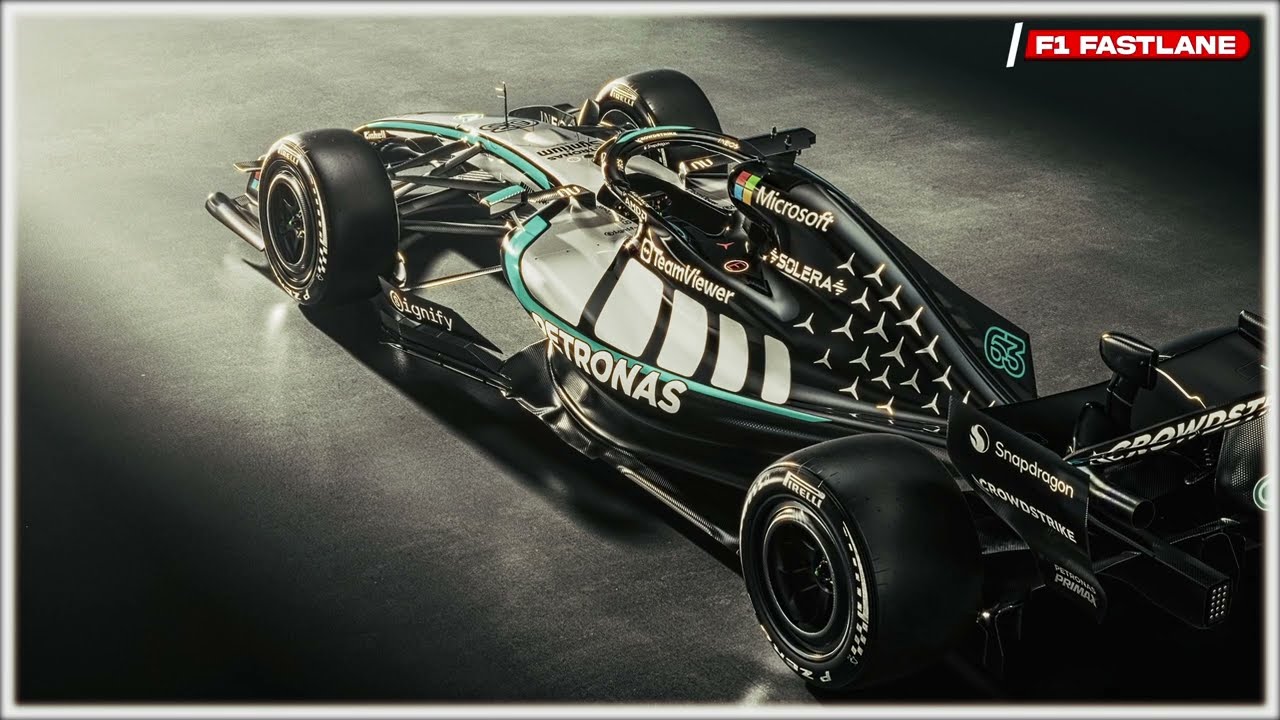
In the high-stakes, ruthless world of Formula 1, the line between genius innovation and rule-breaking is often razor-thin. As the paddock prepares for the 2026 season, a massive technical controversy has erupted that threatens to derail Mercedes’ campaign before it truly begins. Reports have emerged detailing a sophisticated “trick” employed by Mercedes engineers to bypass engine regulations, potentially granting them a significant—and controversial—performance advantage.
The heart of the issue lies deep within the internal combustion engine of the new 2026 power units. At the center of the storm is a clever, if not devious, manipulation of the compression ratio rules. The technical regulations for 2026 set a strict maximum compression ratio of 16:1. This limit is designed to cap performance and ensure a level playing field among manufacturers. However, it appears Mercedes found a way to adhere to the letter of the law while completely shattering its spirit.
The “Phantom” Chamber: How It Works
According to technical analysis and reports from German publication Auto Motor und Sport, Mercedes engineers designed a “supplementary micro-chamber” located adjacent to the spark plug ignition zone. This tiny cavity, approximately 1 cubic centimeter in volume, is connected to the main combustion chamber by a thin passage.
Here is the genius—and the problem—of the design. When the engine is measured “cold” by FIA scrutineers (as per the original testing protocols), this extra volume is included in the total combustion chamber calculation. This ensures the engine mathematically stays within the legal 16:1 compression ratio limit.
However, the magic happens when the engine is running at race temperatures. During the combustion phase, the high-pressure gases rapidly fill this small supplementary chamber through the thin connecting passage. Once filled and saturated, the chamber effectively becomes “plugged” by the pressure. For the rest of the combustion cycle, that 1cc of volume is essentially removed from the equation.
By “deleting” this volume during operation, the effective volume of the combustion chamber decreases. As any gearhead knows, a smaller combustion chamber with the same displacement results in a higher compression ratio. Estimates suggest this trick pushes the ratio from the legal 16:1 up to a staggering 18:1.
The Impact: 15 Horsepower and Efficiency Gains
In a sport where championships are won by milliseconds, the gains from this system are massive. The higher compression ratio is estimated to unlock an additional 15 horsepower. But beyond raw speed, the true advantage lies in efficiency. A higher compression ratio allows for a more complete and powerful burn of the fuel-air mixture, meaning the engine squeezes more energy out of every drop of fuel. In the efficiency-obsessed era of modern F1, this is the holy grail.
Critics, however, are calling it “tax evasion” engineering. It is technically lawful under the old testing procedures, but morally questionable. It is a system designed solely to evade a regulatory limit, not to improve the engine’s fundamental architecture in a legal way.
The Crackdown: FIA Changes the Rules
The existence of this trick did not go unnoticed. Rival manufacturers, specifically Ferrari, Honda, and Audi, grew suspicious and sent a formal clarification letter to the FIA months ago. They argued that such a system violated the intent of the regulations.
For a while, the situation was in a stalemate. But recent developments suggest the FIA has decided to act. According to reports from Corriere dello Sport, the governing body will introduce a new testing procedure starting from the Australian Grand Prix.
Previously, compression ratio checks were performed at ambient temperature. The new protocol will see these checks performed “hot,” with engine components statically heated to simulate operating conditions. Under these conditions, the physics of the Mercedes trick would be exposed, and the ratio would visibly exceed the 16:1 limit.
Red Bull’s Pivotal Role
Changing the regulations mid-stream usually requires unanimity among teams, a near-impossible feat in F1. However, for this specific type of technical directive, a “qualified majority” is sufficient. This majority requires the FIA, Formula 1 management, and four out of the five engine manufacturers to agree.
Ferrari, Honda, and Audi were already united against the Mercedes device. The swing vote belonged to Red Bull Powertrains. Initially neutral, reports now indicate that Red Bull has decisively shifted its stance, siding with the other challengers. This provides the necessary majority to push the rule change through, effectively outlawing the Mercedes design.
A Blow to the Silver Arrows?
This decision places Mercedes in a precarious position. If the new “hot” testing procedures are implemented in Australia, they will be forced to physically remove or modify the micro-chamber to pass scrutiny. This isn’t just a matter of flipping a switch; it could involve redesigning cylinder heads and re-mapping the engine, potentially costing them performance and reliability.
Furthermore, it sends a clear message that the FIA is willing to close loopholes aggressively. Enrico Gualtieri, Ferrari’s power unit head, expressed confidence that the FIA would resolve the issue before the season started, and it seems his faith was well-placed.
As the paddock heads to Melbourne, the technical war is heating up faster than a V6 turbo. Mercedes may have tried to outsmart the rulebook, but the collective power of their rivals and the FIA seems to have cornered them. The question now is: without their “magic trick,” does the Mercedes engine still have the pace to fight for the title, or was their optimism built on a loophole that just closed?
News

Inside Shane Richie’s love life: Drug – fuelled orgy with six blondes; real reason he split from Coleen Nolan; six-year ‘affair with fan’
Inside Shane Richie’s love life: Orgy with six blondes; real reason he split from Coleen Nolan; six-year ‘affair with fan’ He’s popular with the ladies… Shane Richie…

SH0CKING REVELATI0N:A sh0cking behind-the-scenes secret revealed about Lizzie Rizzini, the woman replacing Carol Kirkwood on the 6pm weather bulletin
BBC viewers still reeling from the departure of Carol Kirkwood got another surprise last night when presenter Lizzie Rizzini appeared to flash her black lace stockings on…

HEARTBREAKING: Peter Andre’s Tearful Message to Son Junior After SHOCKING Revelation About How He Truly Feels Toward Mum Katie Price — Katie Price’s reaction scares fans.
Peter Andre’s emotional message to son Junior after it’s revealed how he really feels about mum Katie Pri… PETER Andre has shared an emotional message to his…

Ben Shephard opens up about the devastating health battle his wife is facing: “She wakes up crying every single morning…”
Inside This Morning Ben Shephard’s Life Including Rarely Seen Wife and Health Battle Ben Shephard is a name synonymous with British television, renowned for his engaging presentation…

🚨 LIVE TV HEARTBREAK: Good Morning Britain Host Announces ‘Devastating’ Dɘath of Guest Minutes Into Show
Viewers of Good Morning Britain were met with heartbreaking news just minutes into Friday’s (January 30) episode, as co-hosts Kate Garraway and Ranvir Singh reported the tragic…

Emmerdale legend Cain Dingle will never be the same again after a shock cancer diagnosis turns his world upside down
FROure Desk. Full Terms and conditions are available on the website http://www.itv.com/presscentre/itvpictures/terms Emmerdale wouldn’t be Emmerdale without the glowering, grunting embodiment of manliness that is Cain Dingle (Jeff Hordley) But…
End of content
No more pages to load






