A Terrifying Calm Has Descended on Brackley
It is all over. Shut it down, folks. If the 2026 Formula 1 season were decided on looks alone, Mercedes would have already won the world title. But as we peel back the layers of the newly unveiled W17, it becomes clear that the team isn’t just relying on aesthetics. There is a shift in the air at Brackley—a shift that should make every other team on the grid incredibly nervous.
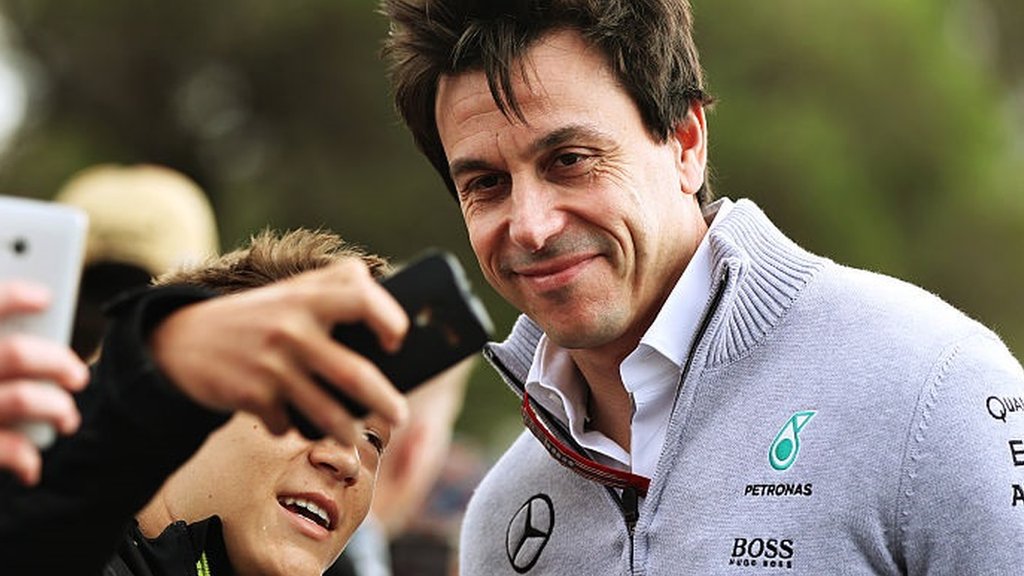
Toto Wolff, the team principal who has spent the last few years managing crises and apologizing to fans, has returned to a state of eerie, stoic calm. The desperate need to prove themselves is gone, replaced by a quiet confidence that feels remarkably like the dominant Mercedes of old. The W17 livery launch wasn’t just a car reveal; it was a statement of intent. The team has stopped looking back at their past glory and has fully committed to a future where the machine is the star, and everything else—including the drivers—is secondary.
The W17: A Masterclass in Design and Identity
Let’s start with the obvious: the car is a stunner. The W17 livery has dropped, and it did not disappoint. In a preseason where competitors like Audi offered somewhat recycled concepts, Mercedes has delivered a visual feast. The design carries a dynamic Petronas green flow line that “swooshes” across the chassis, perfectly bridging the team’s “Silver Arrows” heritage with its modern, menacing black identity.
It works from every perspective. The top-down angle is particularly striking, showcasing a cohesive design language that screams speed. However, it wouldn’t be a modern F1 launch without a little controversy. The new Microsoft logo, representing a massive estimated $60 million-a-year partnership, sits somewhat awkwardly on the car, clashing slightly with the overall flow. But let’s be honest—if a tech giant is paying that much to help you win, they can carve their logo wherever they please. From the front, it disappears, leaving only the aggressive, aerodynamic lines of a challenger ready to hunt.
Toto Wolff’s “Nerd-Speak” Strategy
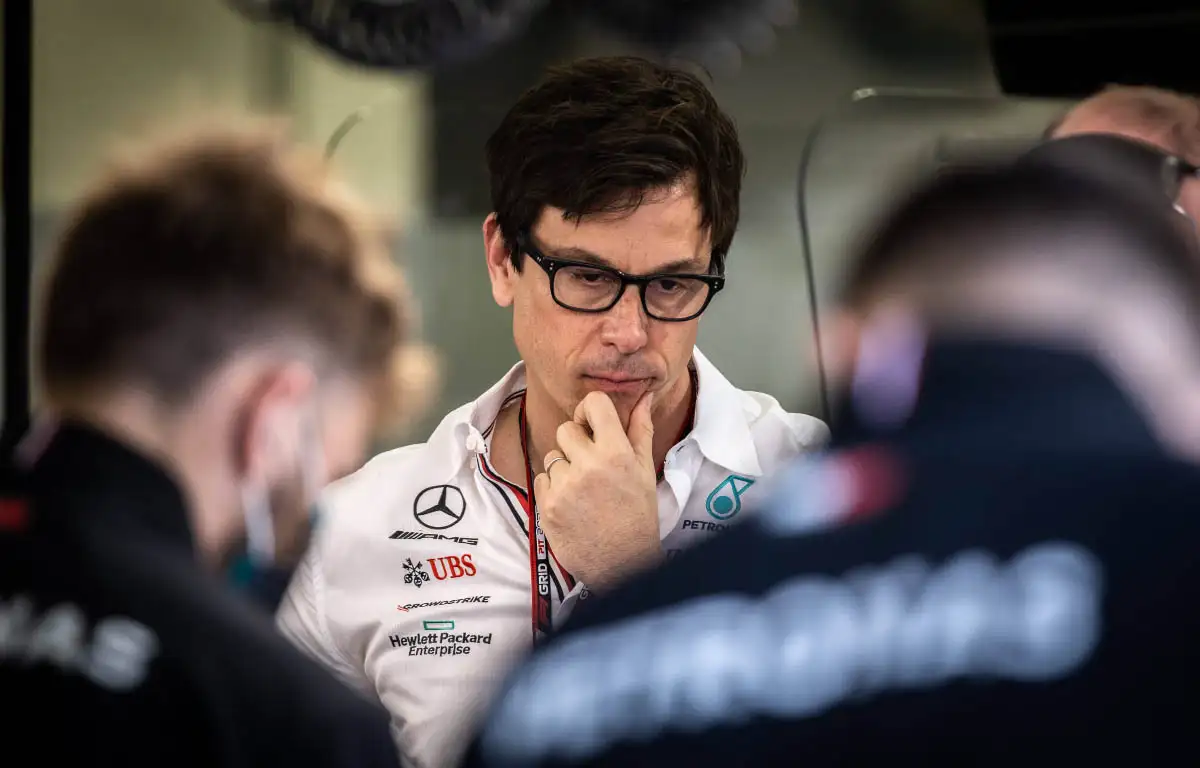
What is even more interesting than the paint job is what Toto Wolff actually said—or rather, what he didn’t say. There was no usual preseason fixation on “being the fastest” or “fighting for wins.” Instead, Wolff’s first words of the new season were dry, technical, and frankly, a little scary.
He spoke about “significant change,” “transition,” and the “absolute focus across every area of performance.” He highlighted three main pillars: the car, the engine, and the fuel. This isn’t the emotional Toto of 2021 or the frustrated Toto of 2022. This is a man who has rebuilt his organization into an integrated engineering powerhouse. He is talking about energy flows, data flows, and sustainable fuels. It is absolute “nerd-speak,” and for the die-hard F1 fans who understand the technical depths of the sport, it is music to their ears. It signals that Mercedes has stopped trying to meme their way back to popularity and has returned to the cold, hard science of winning.
The Shift: Machine Over Man
Perhaps the most ruthless aspect of this new era is how Mercedes views its drivers. The days of the team revolving around a superstar personality like Lewis Hamilton are officially over. The W17 era is defined by the system, not the savior.
This philosophy explains the curious contract situations of George Russell and Kimi Antonelli. Despite being highly talented, both are on short, one-year deals. They are, in the coldest sense of the word, replaceable pawns in a much larger game. The message from the top is clear: the team, the engineers, and the factory matter more than the person behind the wheel. The drivers are simply there to operate the operating system. If they don’t gel with the engineering side, they can be ejected.
It is a harsh reality, reminiscent of the Williams team in the 1990s, where the car was the hero and the driver was just an employee. But this approach offers Mercedes massive leverage. It keeps the drivers hungry and reminds them that no one is bigger than the three-pointed star.
The Verstappen Shadow
Ironically, this “system-first” approach might be exactly what tempts Max Verstappen to jump ship. While it seems counterintuitive to lure a superstar to a team that de-emphasizes drivers, Mercedes is building something that appeals to Verstappen’s specific desires: freedom and competence.
Toto Wolff is discreetly building an ecosystem that supports Verstappen’s off-track passions. The team is signaling that they can offer the support, logistics, and political weight to help a driver compete in GT3 racing or events like the Nürburgring 24 Hours—things Max loves. By positioning Mercedes as a “works manufacturer” that can facilitate his racing life outside of F1, they are offering him a level of freedom Red Bull might struggle to match.
The W17 is the billboard for this pitch. It says, “We have the best car, the best system, and we can give you the best life.” It is a flirtation conducted through engineering excellence rather than public love letters.
Software is Performance: The Microsoft & CrowdStrike Edge
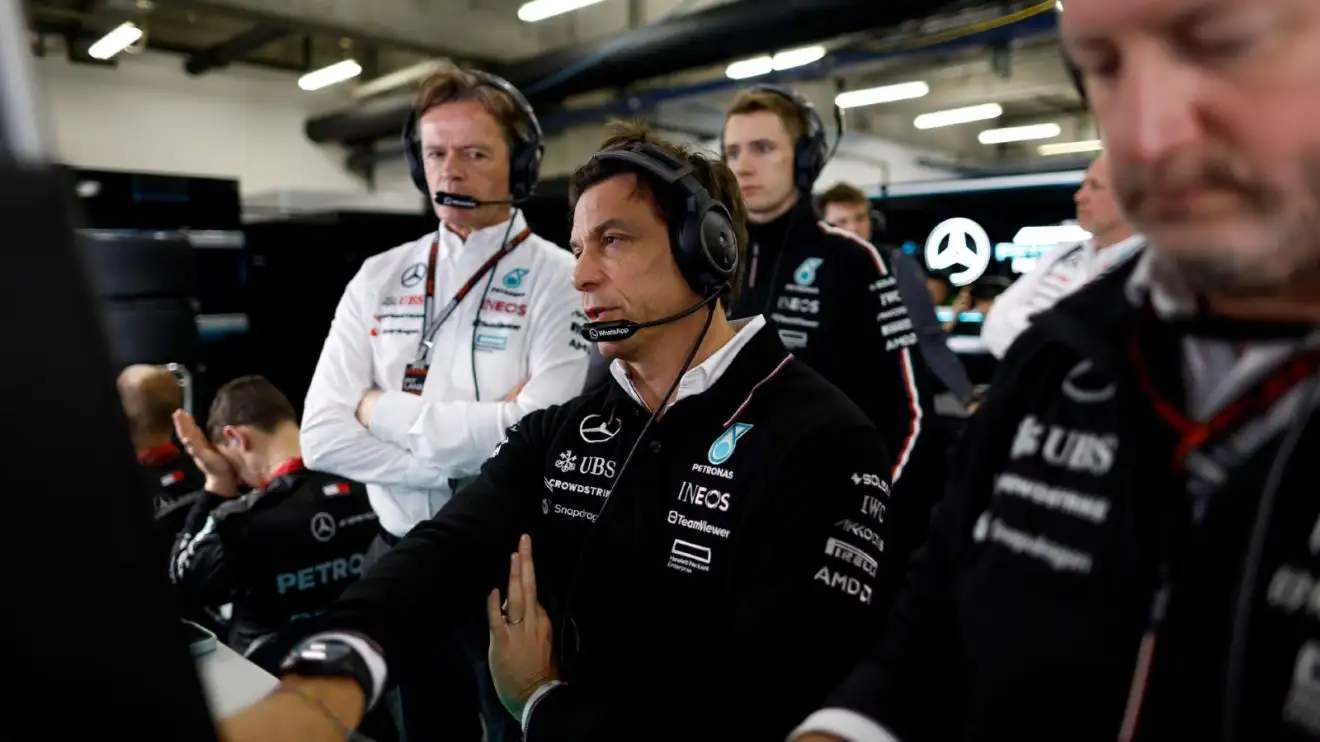
The final piece of the puzzle is the team’s transformation into a technology firm. The partnership with Microsoft is not just a sponsorship; it is a declaration that software is now a raw performance differentiator. In the 2026 era, managing energy deployment, simulation tools, and strategy modeling is just as critical as horsepower.
CrowdStrike CEO George Kurtz, a tech heavyweight and amateur racer, has also increased his influence within the team. This isn’t just big money; it is big data. Mercedes is betting that the team with the best code will win the championship. They are building an “operating system for racing,” moving away from the old-school “engine and aero” gods to a new trinity that includes digital intelligence.
Conclusion: The Empire Strikes Back
After years of wandering in the wilderness, suffering through the “porpoising” disasters of the W13 and the confusion of the W14 and W15, Mercedes has finally found its footing. They aren’t promising miracles. They aren’t asking for patience. They are simply presenting a weapon.
The W17 represents a collective, sustained effort from a team that has unified its chassis and engine departments into one glorious whole. They have adapted to the cost cap, embraced the technical transition, and removed the emotional baggage of the past. Toto Wolff’s warning is quiet, but it echoes loudly across the paddock: Mercedes is ready. The transition is complete. And if this car is as fast as it looks, the rest of the grid should be very, very afraid.
News

Inside Shane Richie’s love life: Drug – fuelled orgy with six blondes; real reason he split from Coleen Nolan; six-year ‘affair with fan’
Inside Shane Richie’s love life: Orgy with six blondes; real reason he split from Coleen Nolan; six-year ‘affair with fan’ He’s popular with the ladies… Shane Richie…

SH0CKING REVELATI0N:A sh0cking behind-the-scenes secret revealed about Lizzie Rizzini, the woman replacing Carol Kirkwood on the 6pm weather bulletin
BBC viewers still reeling from the departure of Carol Kirkwood got another surprise last night when presenter Lizzie Rizzini appeared to flash her black lace stockings on…

HEARTBREAKING: Peter Andre’s Tearful Message to Son Junior After SHOCKING Revelation About How He Truly Feels Toward Mum Katie Price — Katie Price’s reaction scares fans.
Peter Andre’s emotional message to son Junior after it’s revealed how he really feels about mum Katie Pri… PETER Andre has shared an emotional message to his…

Ben Shephard opens up about the devastating health battle his wife is facing: “She wakes up crying every single morning…”
Inside This Morning Ben Shephard’s Life Including Rarely Seen Wife and Health Battle Ben Shephard is a name synonymous with British television, renowned for his engaging presentation…

🚨 LIVE TV HEARTBREAK: Good Morning Britain Host Announces ‘Devastating’ Dɘath of Guest Minutes Into Show
Viewers of Good Morning Britain were met with heartbreaking news just minutes into Friday’s (January 30) episode, as co-hosts Kate Garraway and Ranvir Singh reported the tragic…

Emmerdale legend Cain Dingle will never be the same again after a shock cancer diagnosis turns his world upside down
FROure Desk. Full Terms and conditions are available on the website http://www.itv.com/presscentre/itvpictures/terms Emmerdale wouldn’t be Emmerdale without the glowering, grunting embodiment of manliness that is Cain Dingle (Jeff Hordley) But…
End of content
No more pages to load






