The Formula 1 paddock is rarely quiet, even in the off-season, but the noise currently emanating from the technical headquarters of Ferrari, Audi, and Honda is deafening. A storm is brewing over the 2026 regulations, and at the center of the hurricane sits a familiar protagonist: Mercedes-AMG Petronas.
Reports have surfaced that the Brackley-based team has identified and exploited a significant “gray area” in the upcoming 2026 power unit regulations. The discovery has sent shockwaves through the sport, with rival manufacturers frantically petitioning the FIA for clarification. The fear? That Mercedes has just secured an advantage reminiscent of their crushing dominance at the start of the turbo-hybrid era in 2014.
The “Dirty” Secret: A Physics Lesson
At the heart of the controversy is a clever, if contentious, manipulation of physics involving the engine’s compression ratio. Under the new 2026 rules, the FIA has mandated a reduced compression ratio limit of 16:1, down from the current 18:1. This rule is found in Article 5.4.3 of the technical regulations.
However, Mercedes engineers noticed a critical detail in the wording: compliance measurements are executed at “ambient temperature.” In other words, the FIA checks the engine when it is cold, sitting in the garage.
According to technical analysis, Mercedes has reportedly constructed engine components using specific materials designed to expand significantly when heated. When the engine reaches its operating temperature of around 120°C (248°F) on the track, this thermal expansion alters the internal geometry of the combustion chamber. The result? The compression ratio shifts from the legal 16:1 up to a more potent 18:1.
In the garage, the car is perfectly legal. On the track, it is a different beast entirely.
The 13 Horsepower Goldmine
To the casual observer, a shift in compression ratio might sound like negligible technical jargon. However, in the razor-thin margins of Formula 1, it is a goldmine.
Former Jordan technical director Gary Anderson has crunched the numbers, explaining that with the mandated 80mm piston diameter, a mere half-millimeter of expansion is enough to trigger this shift. The result is a performance gain of approximately 10 kilowatts, or roughly 13 horsepower.
While 13 horsepower might seem modest compared to the 1,000+ horsepower total output, its on-track impact is massive. This power boost translates to roughly 0.3 to 0.4 seconds per lap, depending on the circuit. In a sport where pole position is often decided by hundredths of a second, a four-tenth advantage is not just a gap; it is a chasm. It is the difference between fighting in the midfield and cruising to victory.
Rivals in Revolt: The Joint Letter
The reaction from the rest of the grid has been swift and severe. Ferrari, Honda, and newcomer Audi—who will supply engines to Aston Martin and Sauber (as the factory Audi team) respectively—have reportedly submitted a joint letter to the FIA demanding immediate clarification.
Their argument hinges on Article 5.1.5, which states that cars must comply with regulations “in their entirety at all times during a competition.” The rival manufacturers argue that this clause implies the 16:1 limit should apply when the car is actually racing, not just when it is parked. They contend that Mercedes is violating the spirit of the rules, if not the letter.
Ferrari Team Principal Fred Vasseur offered a measured but telling response when pressed on the issue. He acknowledged that teams have “grown up massively” in their ability to find loopholes but warned of the dangers of allowing such gaps to exist. He drew a chilling parallel to the 2009 season, where Brawn GP arrived with the “double diffuser” and obliterated the field, leaving established giants scrambling to catch up.
“This time around, with the 2026 rule change being even bigger, the potential for surprises runs even greater,” Vasseur noted.
The FIA’s Stance: Legal or Not?
For now, the FIA appears to be standing its ground. The governing body’s position is straightforward: they wrote the rules, they defined the measurement method (ambient temperature), and Mercedes passed the test.
Crucially, Mercedes did not try to hide this development. Reports indicate the team remained in constant dialogue with the FIA throughout the design process. They sought reassurance that their interpretation was valid before committing to the philosophy. This transparency makes it incredibly difficult for the FIA to retroactively ban the design without looking incompetent or unfair.
This situation echoes the 2020 DAS (Dual-Axis Steering) controversy. Mercedes developed a system that allowed drivers to adjust the toe angle of the front wheels by pushing and pulling the steering wheel. Rivals cried foul, but the FIA ruled it legal for that season because it complied with the existing text of the regulations, even if it was later banned for the following year.

Deja Vu: The Ghost of 2014
For long-time F1 fans, the current panic feels incredibly familiar. In 2014, when the sport switched to V6 turbo-hybrid engines, Mercedes unveiled a split-turbo architecture that their rivals had completely missed. That singular design choice helped them secure seven consecutive Constructors’ Championships.
James Allison, Mercedes’ Technical Director, has only fueled the fire. He recently described the 2026 regulations as a “complete tear-up” and, most alarmingly for his rivals, hinted that the team’s confidence level is similar to where it was in 2014.
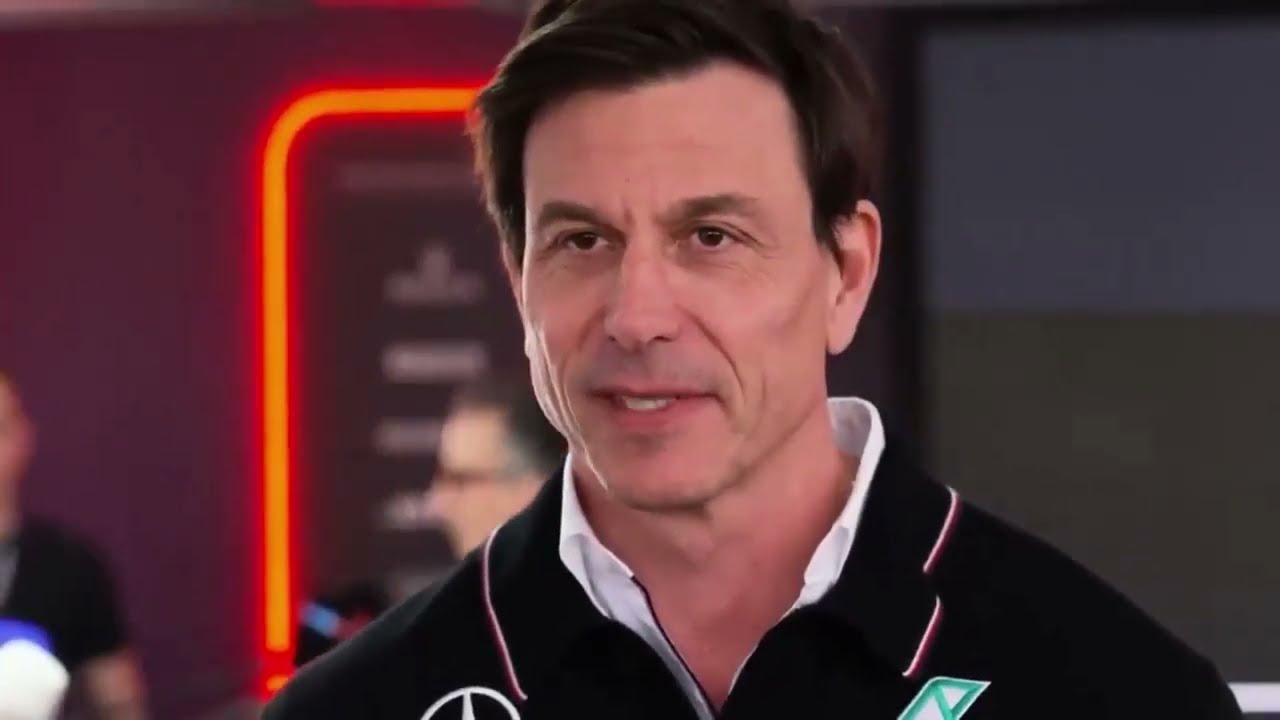
“The moment you think you’ve aced it, you’re going to get caught out massively,” Team Principal Toto Wolff said, characteristically playing down expectations. Yet, the reported 13hp advantage suggests the team knows exactly where they stand.
Innovation or Cheating?
So, is this cheating? Gary Anderson offers perhaps the most honest assessment: “This sort of thing exists for everyone to exploit as best they see fit.”
In his view, pushing engineering to the absolute limit is the very definition of Formula 1. If other teams failed to spot the opportunity to use thermal expansion to their advantage, that is a failure of their own imagination, not a crime by Mercedes. “It is time to cry wolf,” Anderson added, suggesting rivals are simply bitter about being outsmarted.
However, the controversy highlights the immense complexity of the 2026 rules. The new cars will feature a 50/50 split between electrical and internal combustion power, sustainable fuels, and active aerodynamics. With so many variables, the team that nails the engine regulations first will likely hold the keys to the kingdom.
What Happens Next?
The FIA now faces a difficult choice. They could maintain the status quo, forcing Ferrari, Audi, and Honda to play catch-up—a process that could take years. Alternatively, a formal protest could be lodged at the season-opening Australian Grand Prix in March 2026. This would force the stewards to make a definitive legal ruling that could disqualify Mercedes (and potentially McLaren and Williams, who use Mercedes customer engines) or vindicate them entirely.
There is also talk of a compromise: allowing the system for 2026 but banning it for 2027. But in F1, a one-year head start is often all a team needs to cement a dynasty.
As the paddock prepares for pre-season testing in Barcelona, one thing is certain: the race for the 2026 championship has already begun, and Mercedes may have just taken pole position before a single wheel has turned.
News

Inside Shane Richie’s love life: Drug – fuelled orgy with six blondes; real reason he split from Coleen Nolan; six-year ‘affair with fan’
Inside Shane Richie’s love life: Orgy with six blondes; real reason he split from Coleen Nolan; six-year ‘affair with fan’ He’s popular with the ladies… Shane Richie…

SH0CKING REVELATI0N:A sh0cking behind-the-scenes secret revealed about Lizzie Rizzini, the woman replacing Carol Kirkwood on the 6pm weather bulletin
BBC viewers still reeling from the departure of Carol Kirkwood got another surprise last night when presenter Lizzie Rizzini appeared to flash her black lace stockings on…

HEARTBREAKING: Peter Andre’s Tearful Message to Son Junior After SHOCKING Revelation About How He Truly Feels Toward Mum Katie Price — Katie Price’s reaction scares fans.
Peter Andre’s emotional message to son Junior after it’s revealed how he really feels about mum Katie Pri… PETER Andre has shared an emotional message to his…

Ben Shephard opens up about the devastating health battle his wife is facing: “She wakes up crying every single morning…”
Inside This Morning Ben Shephard’s Life Including Rarely Seen Wife and Health Battle Ben Shephard is a name synonymous with British television, renowned for his engaging presentation…

🚨 LIVE TV HEARTBREAK: Good Morning Britain Host Announces ‘Devastating’ Dɘath of Guest Minutes Into Show
Viewers of Good Morning Britain were met with heartbreaking news just minutes into Friday’s (January 30) episode, as co-hosts Kate Garraway and Ranvir Singh reported the tragic…

Emmerdale legend Cain Dingle will never be the same again after a shock cancer diagnosis turns his world upside down
FROure Desk. Full Terms and conditions are available on the website http://www.itv.com/presscentre/itvpictures/terms Emmerdale wouldn’t be Emmerdale without the glowering, grunting embodiment of manliness that is Cain Dingle (Jeff Hordley) But…
End of content
No more pages to load






