In the high-octane world of Formula 1, where victories are measured in thousandths of a second, the Qatar Grand Prix was poised to be a coronation for McLaren. The Woking-based outfit arrived at the Lusail International Circuit with a swagger that has defined their late-season surge. They had the fastest car in every practice session. They locked out the front row in qualifying. Both Lando Norris and Oscar Piastri looked untouchable, perfectly positioned to dictate the pace and potentially seal a historic result.
But in a sport that punishes the slightest hesitation, McLaren didn’t just blink; they closed their eyes completely.
What unfolded on Lap 7 wasn’t just a missed opportunity—it was a strategic collapse so fundamental and so “baffling” that it has triggered an immediate internal investigation. As the dust settles in the desert, the repercussions of a single decision are sending shockwaves through the paddock, placing Lando Norris’s championship lead in severe jeopardy with just one race remaining.
The Moment It All Went Wrong
The catastrophe began with a safety car deployment on Lap 7, triggered by a collision involving Pierre Gasly and Nico Hülkenberg. For every strategist on the pit wall, the “Golden Rule” of the Qatar weekend was clear: the mandatory 25-lap tire limit. This rigid constraint meant that pit stops were not just tactical options but mathematical necessities. When the safety car neutralized the field, it opened a “golden window” to complete one of the mandatory stops with minimal time loss.
The reaction from the pit lane was almost unanimous. Red Bull, Mercedes, Williams, Aston Martin, Alpine—the entire grid dove into the pits. It was a mass exodus driven by simple logic: clear a mandatory stop while the cars are slow.
The entire grid, that is, except for two cars.
In a sight that left commentators and rival teams stunned, both Oscar Piastri, who was leading, and Lando Norris stayed out. They swept past the pit entry, continuing on their aging tires while their competitors capitalized on the “free” pit stop.
At that specific moment, the race was effectively over. McLaren had gambled on track position in a race where tire life was the only currency that mattered.
“We Gave the Win Away”
The post-race atmosphere at McLaren was funereal. There was no attempt to spin the narrative, no hiding behind “unlucky timing” or vague technical jargon. Zak Brown, McLaren’s CEO, was brutally honest in his assessment, delivering a verdict that will sting the team for a long time.
“We made a huge mistake,” Brown admitted to the press, his frustration palpable. “We gave Oscar’s win away, and Lando’s podium was thrown in the bin.”
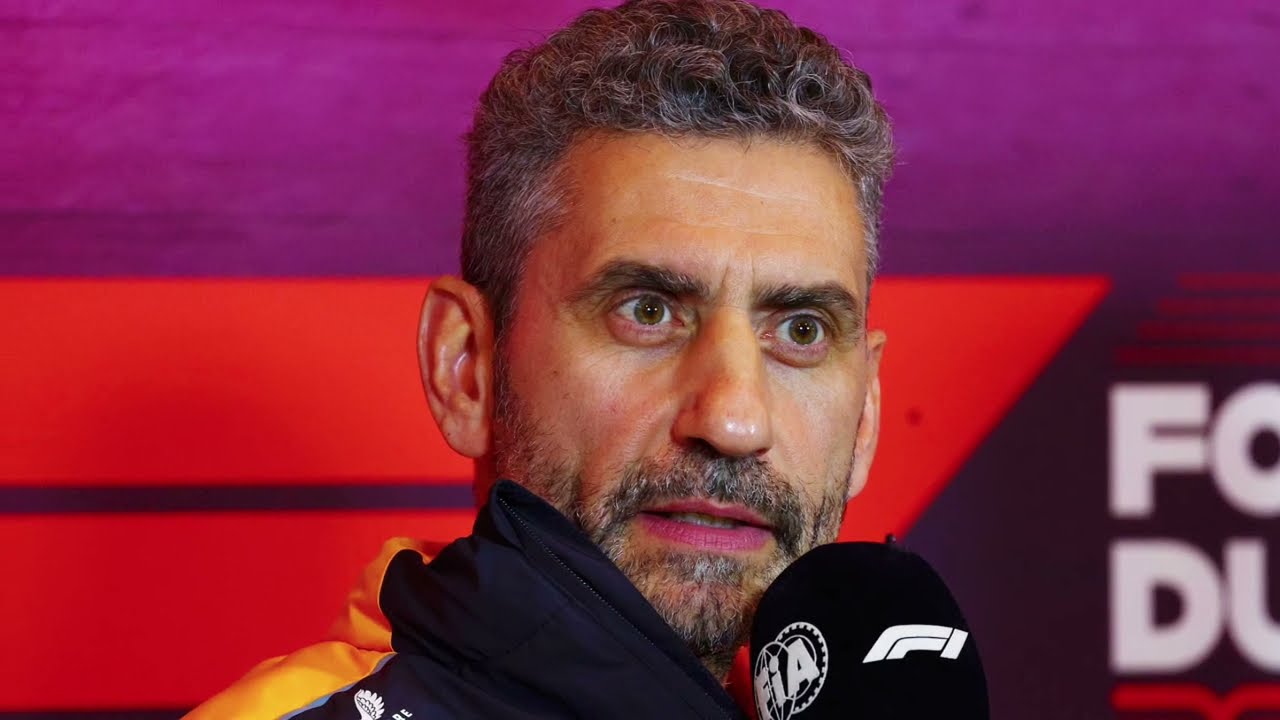
For a team principal to speak with such candor is rare. It signals that the failure wasn’t just a slip-up; it was a systemic breakdown. Andrea Stella, the team’s typically composed Team Principal, added to the shock by confessing that the team simply “did not expect everyone else to pit.”
This admission is perhaps the most damning aspect of the weekend. In a sport dominated by predictive modeling and simulations, McLaren’s internal software and human analysts failed to foresee the most obvious strategic move available. They believed that rivals would stay out to keep track position. Instead, they found themselves on an island, out of sync with reality and the fixed tire rules that governed the event.

The Cockpit Perspective: Drivers Knew Better
What makes this failure even more painful is that the men behind the wheel knew it was wrong immediately. Inside the cockpit, stripped of the banks of monitors and data feeds available to the pit wall, both Piastri and Norris sensed the danger.
Oscar Piastri, who had been managing a comfortable two-second lead, realized the race had slipped away the moment he saw Max Verstappen pit. He labeled the mistake “pretty obvious” over the radio, a polite understatement for a driver who had just seen a dominant victory evaporate.
Lando Norris was furious. He understood the mathematical trap instantly: by staying out, McLaren was now forced to pit later under green flag conditions, losing massive amounts of time while Verstappen and the others could manage their race on fresh rubber. The drivers’ instincts were sharper than the team’s complex algorithms. They were trapped in a countdown dictated by the 25-lap limit, with zero flexibility, while their rivals had absolute strategic freedom.
The “Autopsy” of a Meltdown
McLaren has now launched a full internal review—a “necessary autopsy”—to understand how such a glaring error occurred. Zak Brown clarified that this was not a communication issue. “It was an evaluation issue,” he stated.
Those two words reveal a terrifying flaw for a championship contender. It implies that the system McLaren uses to weigh risk, predict opponent behavior, and model outcomes is fundamentally broken. The modeling prioritized track position over tire security, failing to account for the aggressive nature of the 25-lap limit.
The team must now reconstruct the decision-making chain. Why did the software suggest staying out? Why did no human voice on the pit wall overrule the data when the entire pit lane flooded with cars? Why was the threat of Max Verstappen on fresh tires underestimated?
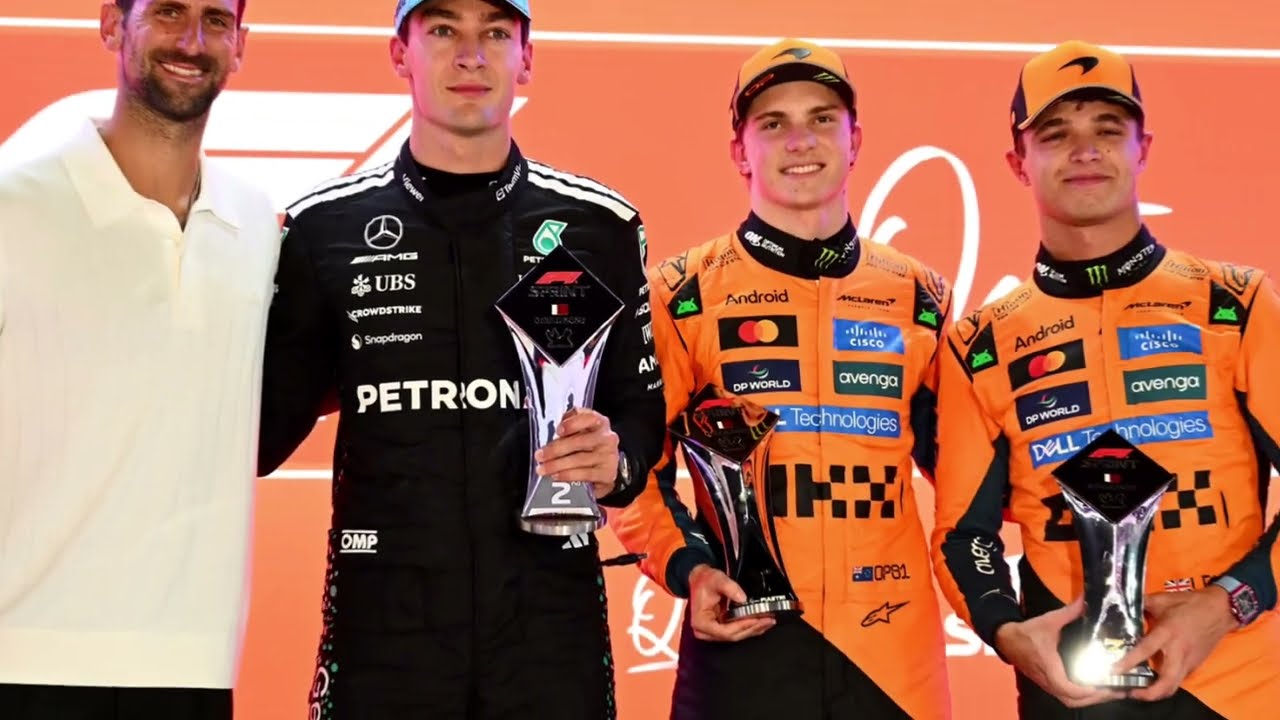
The Championship Implications: Abu Dhabi Showdown
The consequences of this “evaluation issue” are not limited to a single bad Sunday. They have fundamentally altered the landscape of the 2025 World Championship.
Lando Norris leaves Qatar with his championship lead slashed to a fragile 12 points. Max Verstappen, who finished second thanks to McLaren’s gift, now heads to the season finale in Abu Dhabi with massive momentum.
Whatever comfort McLaren had—a points buffer, a faster car, a confident team—has been eroded. They should have arrived in Abu Dhabi with one hand on the trophy. Instead, they arrive under immense pressure, needing perfection to hold off a relentless Red Bull charge.
The psychological damage cannot be overstated. Drivers need to trust the voices in their ears. When Piastri and Norris are told to “box” or “stay out” in Abu Dhabi, there will be a seed of doubt that wasn’t there before. The burden is now on the team to restore that confidence in a matter of days.
Conclusion: No Margin for Error
As the Formula 1 circus packs up and heads to the Yas Marina Circuit for the final showdown, the narrative has shifted. It is no longer just about Lando Norris vs. Max Verstappen. It is about McLaren vs. Themselves.
Zak Brown and Andrea Stella have promised that they will learn fast. They know that the margins are microscopic and that another “evaluation issue” will hand the title to Verstappen. The investigation is not about assigning blame but about ensuring survival.
In Qatar, McLaren had the pace to win but lacked the wisdom to secure it. In Abu Dhabi, pace alone will not be enough. They need a strategy that is bulletproof, a pit wall that is decisive, and a team that can shake off the nightmare of Qatar to deliver when it matters most. The $$100 million question remains: Can they fix the system in time, or did they just watch the championship slip through their fingers in the desert night?






