The Hidden Cost of Victory
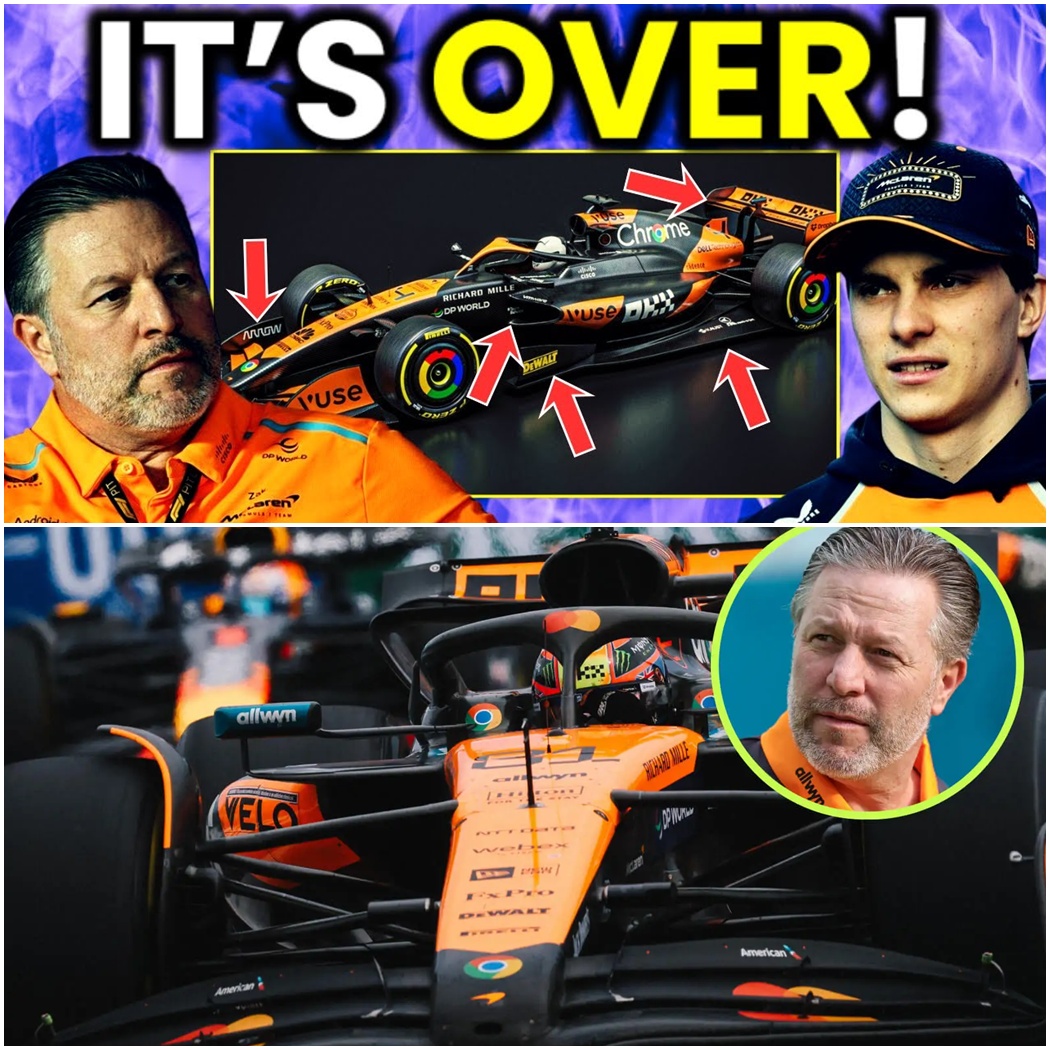
As the champagne dries and the celebrations fade from McLaren’s 2025 Constructor’s Championship victory, a chilling realization is settling over the paddock. On the surface, the team looks unassailable. The MCL39 was a beast, winning seven of the first ten races and delivering the team’s first title in decades. Lando Norris is a world champion, and Oscar Piastri has proven himself to be a generational talent. But beneath the trophies and the accolades lies a fragile reality that threatens to undo everything the team has built.
The 2025 season wasn’t just a triumph; it was a warning. What began as a dominant march to glory dissolved into a desperate scramble for survival, culminating in a title fight decided by a razor-thin two-point margin. This collapse in performance wasn’t an accident—it was a calculated choice. In a move that defines high-stakes gambling, McLaren decided to halt development on their championship-winning car mid-season to pour every ounce of resource into the upcoming 2026 regulation changes.
It is a decision that CEO Zak Brown is now publicly grappling with, admitting to a level of uncertainty that few leaders of winning teams ever voice. By stepping away from the fight early, McLaren didn’t just slow their own momentum; they invited their fiercest rival back into the ring. And as the sport stares down the barrel of the most significant technical overhaul in its history, the question on everyone’s mind is simple: Did McLaren just hand the leverage back to Red Bull?

The Red Bull Resurgence: Unfinished Business
While McLaren locked their wind tunnel doors and shifted focus to the future, Red Bull Racing took a radically different approach. For the Milton Keynes outfit, 2025 was unfinished business. They treated every race as a battleground, pushing updates and refining their operations right down to the final lap of the season.
This philosophical divergence created a stark contrast on the track. McLaren, sitting on their early lead, began to stagnate. Red Bull, hungry and relentless, accelerated. Every upgrade they brought to the track chipped away at McLaren’s advantage, and with every tenth of a second found, Max Verstappen grew more dangerous. The result was a psychological shift that could carry massive implications for 2026.
Red Bull finished the season in “attack mode.” Their operations were sharpened by the pressure of the chase. Their aerodynamic direction was validated under the harshest race conditions. They enter the winter break not as a defeated giant, but as a predator that just ran out of laps. McLaren, conversely, limps into the new era having survived a “stress test” that exposed deep operational cracks. The decision to wait for 2026 meant that while Red Bull was learning how to win under pressure, McLaren was learning how to manage a decline.
The 2026 Trap: Innovation vs. Execution
The looming 2026 regulations are not a mere tweak; they are a rupture in the fabric of the sport. With active aerodynamics, revised energy deployment systems, and a fundamentally different power unit architecture, the rulebook has been torn up and rewritten. McLaren’s logic was sound on paper: by sacrificing the end of 2025, they could arrive at the 2026 battlefield first, establishing a dominant concept before rivals could even react.
However, in Formula 1, being first isn’t always the same as being right.
The danger of an early start is that you lock yourself into assumptions. McLaren has spent months developing a car based on theoretical data, without the benefit of seeing how competitors interpret the rules. If their fundamental philosophy—their “guess”—is wrong, there is no safety net. Unlike 2025, where a good baseline could be developed further, a fundamental miss in 2026 could leave them months behind, with no way to catch up before the championship is decided.
Zak Brown has labeled the 2025 struggles a “stress test,” but the reality is far more concerning. Regulation resets don’t fix operational weaknesses; they amplify them. In 2025, despite having the fastest car for much of the year, McLaren suffered from critical errors. The operational meltdown in Las Vegas, misjudgments under safety cars, and sluggish pit stops were not aerodynamic failures—they were human ones. If McLaren arrives in 2026 with a rocket ship of a car but the same fragile execution, any technical advantage they gained by sacrificing 2025 will evaporate instantly. Speed earns you the opportunity to win; execution is what actually decides titles.
The Internal War: Clarity vs. Harmony
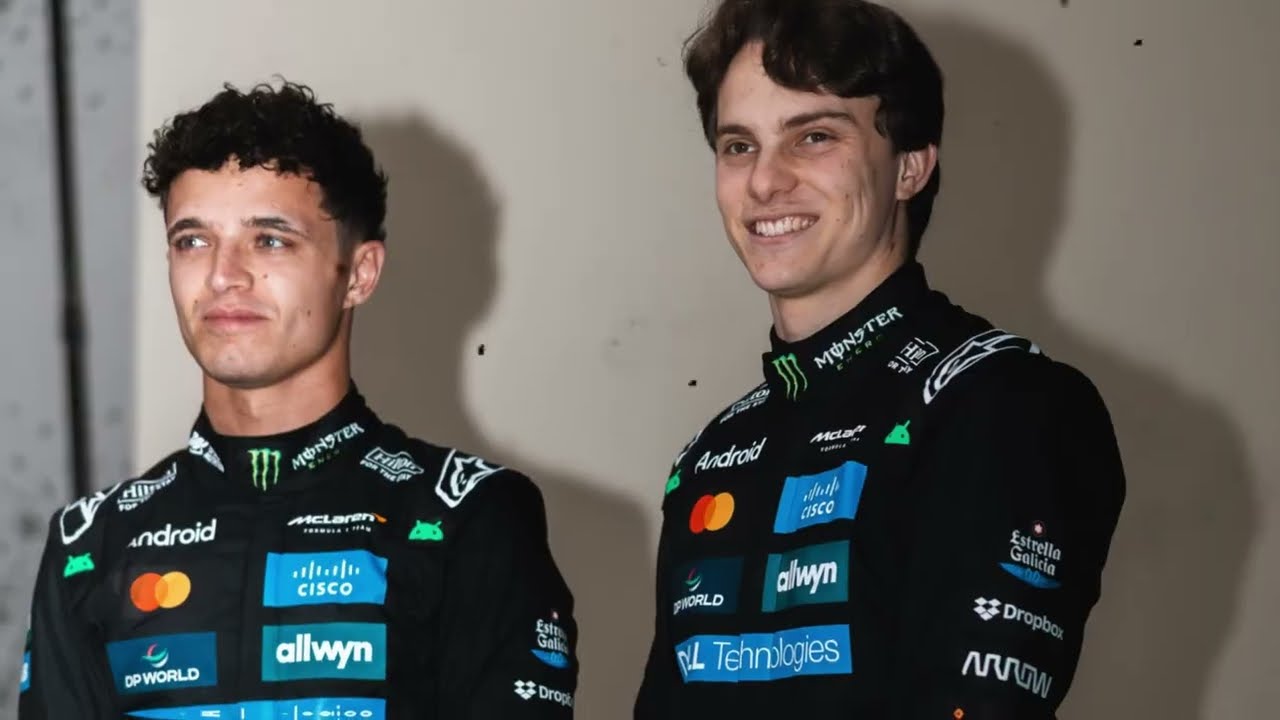
Perhaps the most volatile variable in McLaren’s 2026 equation is the one sitting in the cockpit. The team boasts arguably the strongest driver pairing on the grid, but that strength is a double-edged sword. Lando Norris may be the champion, but Oscar Piastri is no longer a “future project.” He is a present threat who led the championship for stretches of 2025 and displayed a composure that rivals veterans.
In a regulation reset, driver feedback is the compass that guides development. When you have two elite drivers with subtly different driving styles and preferences, that compass can start spinning. If Norris wants the car to behave one way and Piastri another, the engineering team faces a dilemma: do they compromise, creating a car that is “balanced” but master of none? Or do they pick a side?
Red Bull faces no such ambiguity. Their entire ecosystem is optimized around one constant: Max Verstappen. Their development path is singular, focused, and ruthless. In a sport where performance gaps are measured in thousandths of a second, the clarity of having a single reference point can be the difference between a championship contender and a midfield car. While McLaren strives for internal harmony, Red Bull is prepared for war, unencumbered by the need to manage egos.
The Ford Factor and the Verdict
Hanging over everything is the enigma of the Red Bull-Ford powertrain project. Skeptics have questioned whether Red Bull can build a competitive engine from scratch, but inside the paddock, the whispers are changing. Confidence is growing that the program has been vastly underestimated. Red Bull hasn’t just built an engine; they’ve built an ecosystem, combining their agility with Ford’s immense technical depth. If the Red Bull-Ford power unit is even slightly ahead of the competition, McLaren’s early aerodynamic investments might be rendered irrelevant.
McLaren enters 2026 psychologically tested, but not psychologically dominant. They have sacrificed certainty for potential, trading the momentum of today for a head start on tomorrow. It is a gamble that defines careers and legacies.
If their concept is right, Zak Brown will be hailed as a visionary who secured McLaren’s place at the top for years to come. But if they have guessed wrong, they will find themselves facing a Red Bull team that is operationally sharper, strategically clearer, and powered by a singular drive to reclaim the throne. The lights are about to go out on a new era, and McLaren has nowhere left to hide. They made their move early; now, they must wait to see if it was the winning one.
News

Inside Shane Richie’s love life: Drug – fuelled orgy with six blondes; real reason he split from Coleen Nolan; six-year ‘affair with fan’
Inside Shane Richie’s love life: Orgy with six blondes; real reason he split from Coleen Nolan; six-year ‘affair with fan’ He’s popular with the ladies… Shane Richie…

SH0CKING REVELATI0N:A sh0cking behind-the-scenes secret revealed about Lizzie Rizzini, the woman replacing Carol Kirkwood on the 6pm weather bulletin
BBC viewers still reeling from the departure of Carol Kirkwood got another surprise last night when presenter Lizzie Rizzini appeared to flash her black lace stockings on…

HEARTBREAKING: Peter Andre’s Tearful Message to Son Junior After SHOCKING Revelation About How He Truly Feels Toward Mum Katie Price — Katie Price’s reaction scares fans.
Peter Andre’s emotional message to son Junior after it’s revealed how he really feels about mum Katie Pri… PETER Andre has shared an emotional message to his…

Ben Shephard opens up about the devastating health battle his wife is facing: “She wakes up crying every single morning…”
Inside This Morning Ben Shephard’s Life Including Rarely Seen Wife and Health Battle Ben Shephard is a name synonymous with British television, renowned for his engaging presentation…

🚨 LIVE TV HEARTBREAK: Good Morning Britain Host Announces ‘Devastating’ Dɘath of Guest Minutes Into Show
Viewers of Good Morning Britain were met with heartbreaking news just minutes into Friday’s (January 30) episode, as co-hosts Kate Garraway and Ranvir Singh reported the tragic…

Emmerdale legend Cain Dingle will never be the same again after a shock cancer diagnosis turns his world upside down
FROure Desk. Full Terms and conditions are available on the website http://www.itv.com/presscentre/itvpictures/terms Emmerdale wouldn’t be Emmerdale without the glowering, grunting embodiment of manliness that is Cain Dingle (Jeff Hordley) But…
End of content
No more pages to load






