In the high-octane world of Formula 1, where billion-dollar manufacturers clash with the egos of superstar athletes, there exists a singular force of nature that defies all conventional logic. As we close out the 2025 season, the narrative surrounding Max Verstappen has shifted from that of a villainous dominator to something far more complex and crucial: the savior of a sport teetering on the edge of predictability. While critics have spent years bemoaning his aggression and the perceived monotony of his victories, a closer look at the 2025 championship reveals a stark truth. Max Verstappen didn’t just win; he dragged the entire sport kicking and screaming into a golden era of entertainment, saving us from what would have otherwise been a sterilized procession of McLaren victories.
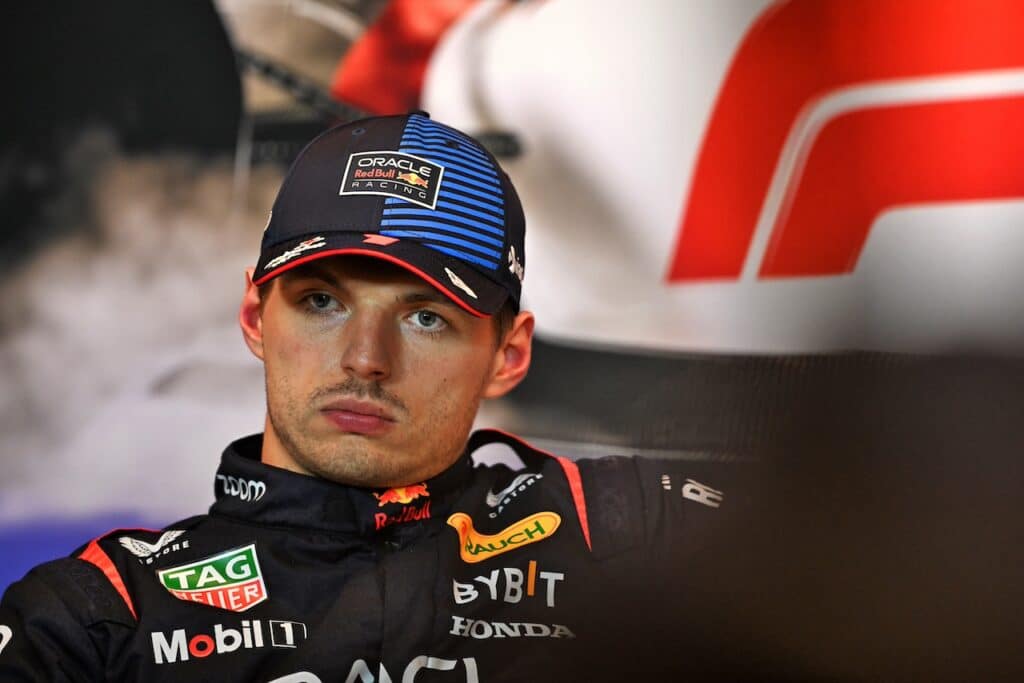
The Beautiful Insanity of the Flying Dutchman
To understand Verstappen’s impact, one must first accept the paradox of his driving style. It is a sport built on chaos, yet required to be operated with surgical precision. Verstappen embodies what can only be described as “beautiful insanity.” He pilots a half-million-dollar machine with the reckless confidence of a toddler holding a fork near an electrical socket, yet possesses the divine control to make it dance.
For years, the paddock has whispered about his temper. Critics point to his radio outbursts—where he sounds less like an elite athlete and more like a malfunctioning microwave—as a sign of immaturity. But in 2025, it became undeniable that this emotional volatility is not a flaw; it is his superpower. When Verstappen gets angry, the laws of physics seem to bend. He gains horsepower through sheer spite, attacks braking zones with an allergy to slowing down, and overtakes rivals as if he’s fleeing a tax audit. His “emotional stability of a firecracker” is exactly what fuels his relentless charge. While other drivers might crumble under the pressure of a slow pit stop or traffic, Verstappen channels that rage into lap times that leave data engineers scratching their heads.
The “What If” Scenario: A World Without Max
The most compelling argument for Verstappen’s necessity lies in the alternate reality where he doesn’t exist. Detractors often claim he makes the sport boring, but this takes a selective view of history. If we were to erase the Dutchman from the grid, the last decade of Formula 1 would resemble a prolonged commercial for sleeping pills.
Without Verstappen’s intervention in 2021, Lewis Hamilton would have likely wrapped up the title by Singapore. In 2022, Charles Leclerc’s sporadic brilliance would have been the only highlight in a vacuum. And most critically, consider the 2024 and 2025 seasons. Without the Red Bull disruptor, we would be staring at a wall-to-wall McLaren domination. Lando Norris and Oscar Piastri, talented as they are, would be trading 1-2 finishes with polite camaraderie. The championship would be decided by mid-season, and the tension that keeps fans glued to their screens would evaporate. Verstappen forces the rest of the grid, particularly the rising stars at McLaren, to “level up.” He is the final boss with maxed-out stats that makes the game worth playing.
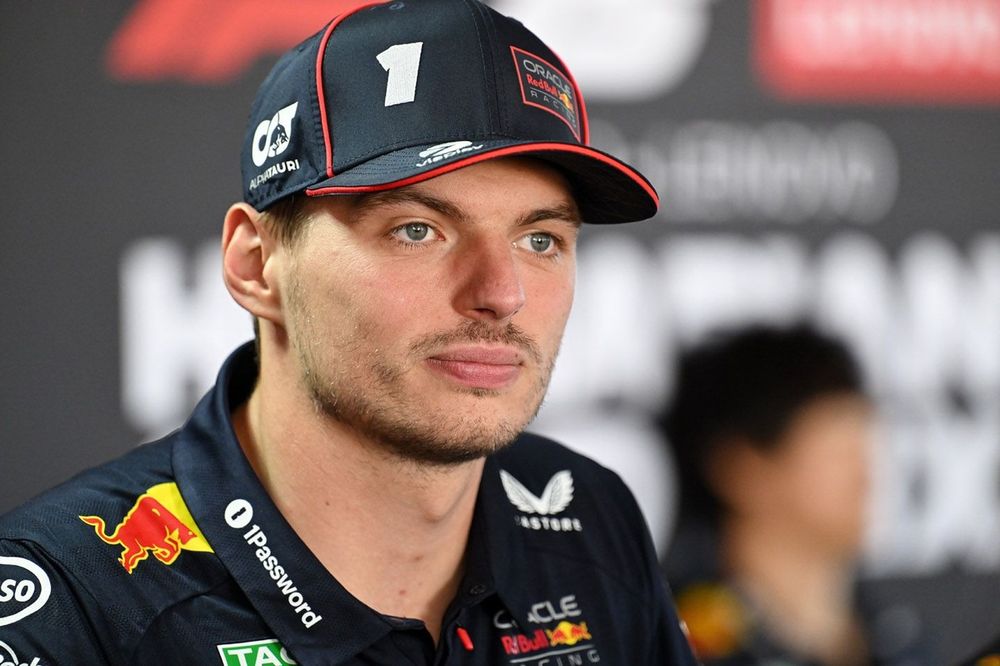
The Sim Racing Double Life: The Legend of “France Hamman”
Perhaps the most endearing, and terrifying, aspect of Verstappen’s 2025 campaign has been the revelation of just how deeply his obsession with racing runs. While his rivals spend their downtime attending fashion weeks or PR galas, Verstappen is winning the 24 Hours of Le Mans—virtually. The stories of his sleep schedule have become legendary, with the World Champion frequently sim racing until 4:00 AM the night before a Grand Prix, only to wake up, grab pole position in the real car, and win the race.
But nothing tops the “France Hamman” incident. Seeking to avoid the media circus, Verstappen reportedly entered a GT3 race under this alias. The disguise didn’t last long. He proceeded to unofficially break the track record, qualify third (after overtaking on the grass), and win his debut race by a staggering 25 seconds. He wasn’t just racing; he was treating professional drivers like non-playable characters (NPCs) in a video game. It highlights a dedication that borders on addiction. For Verstappen, racing isn’t a job; it’s a biological imperative. He is just as happy raging at 12-year-old campers in Call of Duty or designing chaotic liveries in Minecraft as he is lifting the F1 World Championship trophy. This relatability—the billionaire athlete who acts like a chaotic frat boy gamer—bridges the gap between the elite paddock and the average fan in a way no PR campaign ever could.
The McLaren Comedy Hour and The Red Bull Circus
The 2025 season also highlighted the stark contrast between Verstappen’s ruthlessness and the internal disarray of his rivals. McLaren, despite having the fastest car on paper for much of the year, became the paddock’s leading supplier of unintentional comedy. Their pit wall communications often sounded less like strategic directives and more like a therapy session for divorced parents trying not to upset their favorite child.
The indecision, the “please Oscar, let Lando through” pleas, and the polite refusals created a dynamic that Verstappen watched with glee. During the Monza Grand Prix, as Norris and Piastri fumbled positions due to a slow stop, Verstappen was heard giggling on the radio, mocking the “kindergarten drama” unfolding ahead of him. If pettiness were a ranked skill, Verstappen would be a 99 overall. He thrives on the instability of others.
Meanwhile, his own team, Red Bull Racing, has been no sanctuary of peace. The organization has been a whirlwind of internal politics, with turnover so high that drivers treat contracts like tax audits—something to be avoided. Yet, amidst the crashes of his teammates and the reported power struggles involving Christian Horner, Verstappen has carried the team like an overfilled backpack. He has taken a car that, by all metrics, should be fighting for the lower points, and placed it on pole position through sheer force of will.

Conclusion: The Hero We Didn’t Know We Needed
As we look back at the chaotic tapestry of the 2025 season, one thing is clear: Formula 1 needs Max Verstappen more than he needs Formula 1. He stands as a bulwark against mediocrity and corporate sterilization. He is a throwback to a rawer era of motorsport, combined with the thoroughly modern sensibilities of a digital-native gamer.
He may crash half-million-dollar machinery, he may scream at his engineers, and he may humiliate the opposition with a smile on his face. But in doing so, he provides the one thing money cannot buy: genuine, unscripted entertainment. He is the villain, the hero, and the comic relief all rolled into one. And as long as he is on the grid, we are safe from the boredom that threatens to engulf the sport. The only thing Max Verstappen truly cannot do, it seems, is be disappointing.






