Lando Norris. The name alone is enough to send some Formula 1 fans into a fit of rage and others into a state of unwavering devotion. In the high-octane world of motorsport, rarely do we see a figure so intensely polarizing who isn’t named Verstappen or Hamilton. But unlike the titans before him, the controversy surrounding the McLaren superstar isn’t usually about his aggression or his politics—it’s about something far more intangible: his luck.
As we reach the tail end of the 2025 season, the debate has reached a fever pitch. Is Lando Norris truly one of the elite, a driver capable of carving his name into history on merit? Or is he simply the beneficiary of chaotic safety cars, well-timed red flags, and the misfortunes of his rivals? It is time to strip away the emotion and look at the cold, hard reality of his career to answer the burning question: Is Lando Norris good, or is he just really, really lucky?
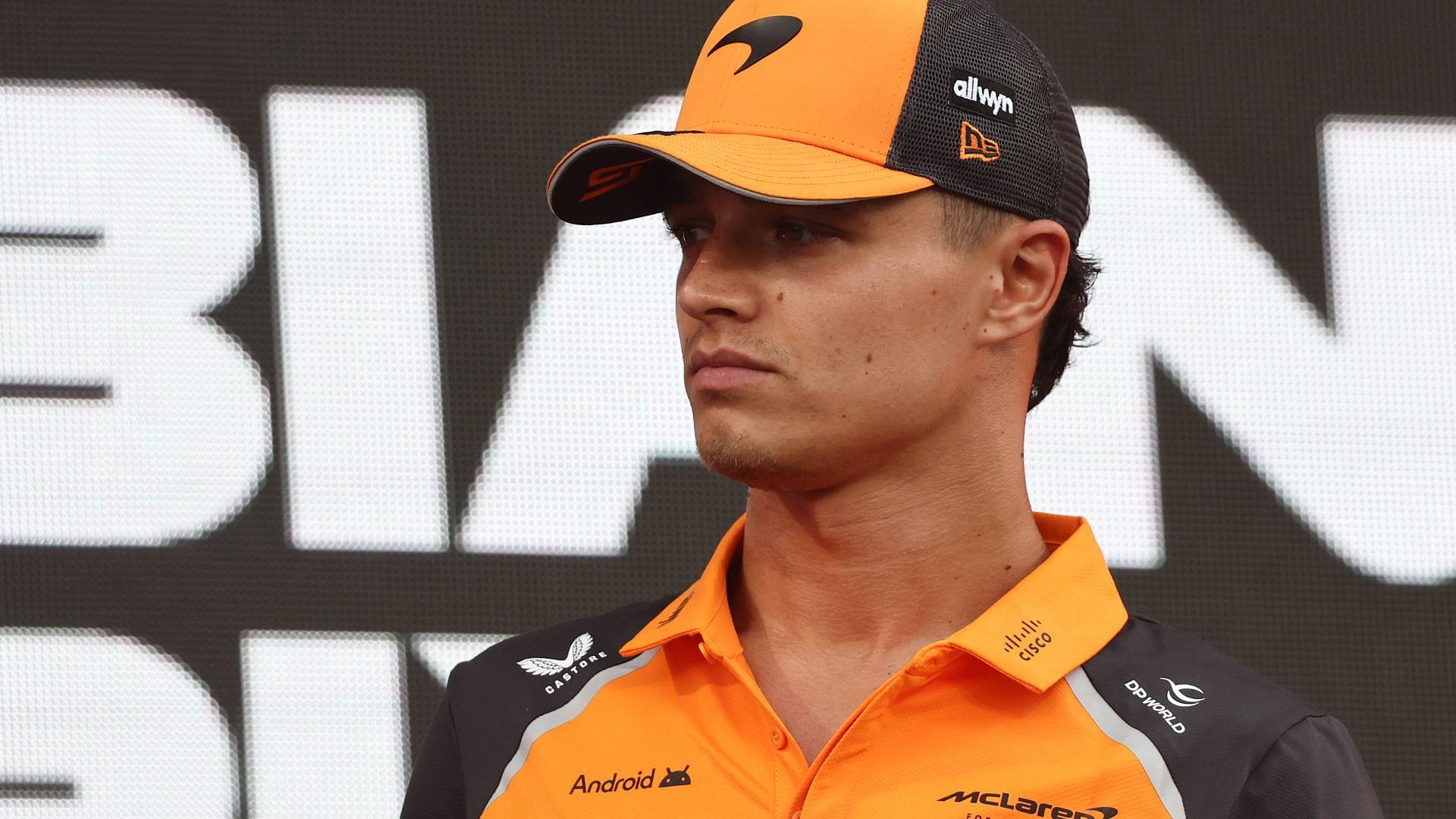
The Definition of a “Lucky” Win
To judge Norris fairly, we first have to agree on what “luck” in F1 actually looks like. If we label every driver who wins in the fastest car as “lucky,” then every legend from Michael Schumacher to Lewis Hamilton would have an asterisk next to their titles. That is not luck; that is engineering.
True luck in racing is when external factors—unpredictable events like crashes, engine failures of rivals, or safety car interventions—hand a driver a result they wouldn’t have achieved on pure pace alone. If a driver qualifies P8 but finishes P1 because the three leaders crashed into each other, that is luck. If they qualify P8 and finish P5 because they overtook three cars on track, that is skill.
Applying this filter to Norris’s career reveals a fascinating, and often contradictory, picture.
The “Gifted” Podiums: A History of Good Fortune?
Critics of Norris often point to a handful of races where the stars seemed to align a little too perfectly. Take the 2024 Miami Grand Prix, for instance. Norris himself admitted that luck played a massive role. He was running a solid race, but it was the perfectly timed Safety Car—triggered by a collision involving Logan Sargeant—that gifted him a “free” pit stop. He came out ahead and controlled the race to the flag, but without that intervention, a win was highly unlikely. It was a “slam dunk” lucky break.
Then there was Imola 2022, where he secured a podium only after Charles Leclerc spun while chasing Sergio Perez. Or look at his rookie season in 2019 at Bahrain, where he finished P6 largely because both Renaults retired simultaneously late in the race.
Fast forward to the 2025 season, and the narrative of “Lucky Lando” persisted. In Australia, a chaotic race involving Oscar Piastri and safety cars seemingly played into his hands. At the Miami Sprint, history repeated itself with another fortuitous win. It is easy to see why the “luck merchant” label sticks when you view his highlight reel through this lens.
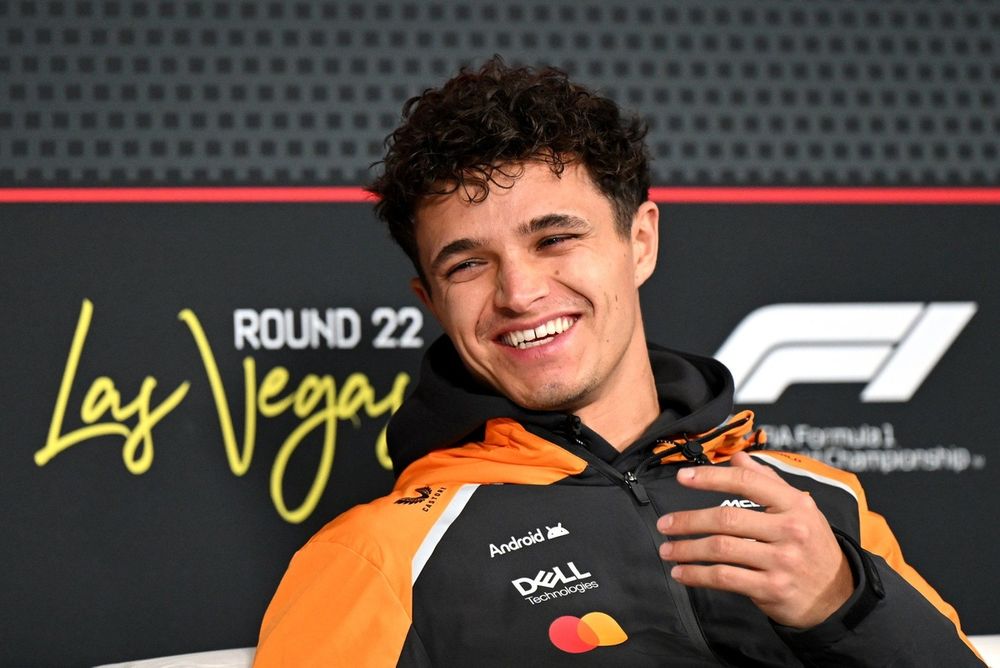
The Skill Behind the Chaos
However, to claim his success is solely down to luck is to ignore the immense talent behind the wheel. You still have to drive the car to the finish line. You still have to manage the tires, nail the restarts, and keep the sharks behind you.
Take the 2021 Italian Grand Prix. While Daniel Ricciardo took the glory, Norris played the perfect team game, holding off Lewis Hamilton and showing blistering pace. He could have fought for the win if not for team orders. That wasn’t luck; that was discipline and speed.
Even in 2025, a year where critics claim he “lucked” his way into contention, we saw drives of pure class. In Hungary, he recovered from a poor start with a one-stop strategy that required tire management wizardry to hold off a charging teammate. In Monza, he finished second on merit, outpacing his teammate for the majority of the race. These weren’t gifts from the racing gods; they were the results of a driver extracting the absolute maximum from his machinery.
The “Champion’s Luck” Phenomenon
Perhaps the most important realization is that luck is not an anomaly in Formula 1; it is a prerequisite for greatness. We often look back at legends with rose-tinted glasses, forgetting the breaks they caught along the way.
Would Sebastian Vettel be a four-time champion if Timo Glock hadn’t gone wide in Brazil 2008, affecting the title fight years later? Would Lewis Hamilton have seven titles if the rules had been applied differently in Abu Dhabi 2021, or if mass retirements hadn’t helped him in early title fights? Even the great Michael Schumacher benefited from rivals’ engine blowouts.
Luck decides championships. A blown engine here, a red flag there—these moments define careers. To penalize Norris for capitalizing on these moments is unfair. The reality is, “luck” only matters if you are fast enough to be in a position to take advantage of it. Norris has consistently put himself in that position.

The Verdict: Maturation of a Star
The hate Lando Norris receives often stems from a perception of arrogance in his earlier years—a defense mechanism against the brutal pressure of the sport. But the Lando of late 2025 is different. He has dropped the ego. He is more grounded, more self-aware, and focused on his own performance rather than comparing himself to others.
Is he lucky? Yes. Every race winner is lucky to some degree. But is he only lucky? Absolutely not.
Lando Norris has proven time and again that he possesses the raw speed and racecraft to fight at the very front. He has outdriven his car, outlasted his rivals, and survived the mental toll of being the sport’s punching bag. His speed is his deadliest asset, and while fortune may have opened the door, it was his talent that walked through it.
So, the next time you see Lando Norris spraying champagne on the podium, don’t just call it luck. Call it what it is: a top-tier driver seizing his moment in a sport where you need every single ounce of help you can get.






