The Hidden Sanctuary of Speed
Deep within the heart of Maranello, Italy, shielded from the prying eyes of the public and the relentless flash of paparazzi cameras, lies a facility that can only be described as the Holy Grail of motorsport. It is not a museum, nor is it a dusty storage unit. It is a living, breathing cathedral of speed known as the Ferrari Corsa Clienti.
For decades, Formula 1 fans have wondered where the legends go to rest. Do they end up in private collections, never to run again? Are they stripped for parts? The answer, revealed in a rare and exclusive tour by Scott Mansell of Driver61, is far more exciting. They are gathered here, in a secret bunker containing nearly 100 Ferrari F1 cars spanning over 50 years of racing history.
This is the most exclusive customer racing program on the planet. The cars you see lined up in immaculate rows—worth hundreds of millions of dollars collectively—are not owned by Ferrari. They are owned by private customers, the ultra-wealthy enthusiasts who purchase these retired gladiators of the tarmac. But rather than parking them in a lonely garage, they pay Ferrari to keep them here, maintained by the very hands that built them, ready to be unleashed on race tracks around the world at a moment’s notice.

A Technical Time Capsule
Walking through the facility is like physically traversing the timeline of automotive engineering. The sheer variety of machinery on display highlights the rapid and sometimes violent evolution of Formula 1 technology.
The tour begins in the raw, mechanical era of the 1970s with the 1975 Ferrari 312T3, a machine driven by the legendary Gilles Villeneuve. In stark contrast to today’s computer-aided designs, this car is a testament to analog bravery. The cockpit is a claustrophobic aluminum tub with zero creature comforts. There are no buttons on the steering wheel, just a simple Ferrari badge. The dashboard consists of three analog dials: water temperature, RPM, and oil pressure.
Perhaps the most fascinating detail of this era is the manual adjustability available to the driver. A small lever inside the cockpit allowed the pilot to physically stiffen or soften the rear roll bar mid-race—a crude but effective way to manage handling while wrestling a 500-horsepower beast. It was an era of dog-leg gearboxes and pure mechanical grip, where the driver was the most critical component of the car’s performance.
The End of the Analog Era
Fast forward two decades, and the atmosphere in the bunker shifts dramatically. We arrive at the 1995 Ferrari 412 T2, a car that holds a special place in the hearts of purists. It was the last Ferrari F1 car to be powered by a V12 engine.
The 412 T2 represents the end of an era of acoustic violence. Those lucky enough to hear it run describe the sound as visceral—a sensation you feel in your chest as much as you hear with your ears. But 1995 was also a turning point for safety and aerodynamics. Following the tragic events at Imola in 1994, regulations forced cars to adopt stepped floors to prevent them from bottoming out, a feature that remains in the sport to this day.
Despite the nostalgia for the V12 scream, this period was merely the calm before the storm. The true golden age of Ferrari dominance was just around the corner.
The Schumacher Dynasty
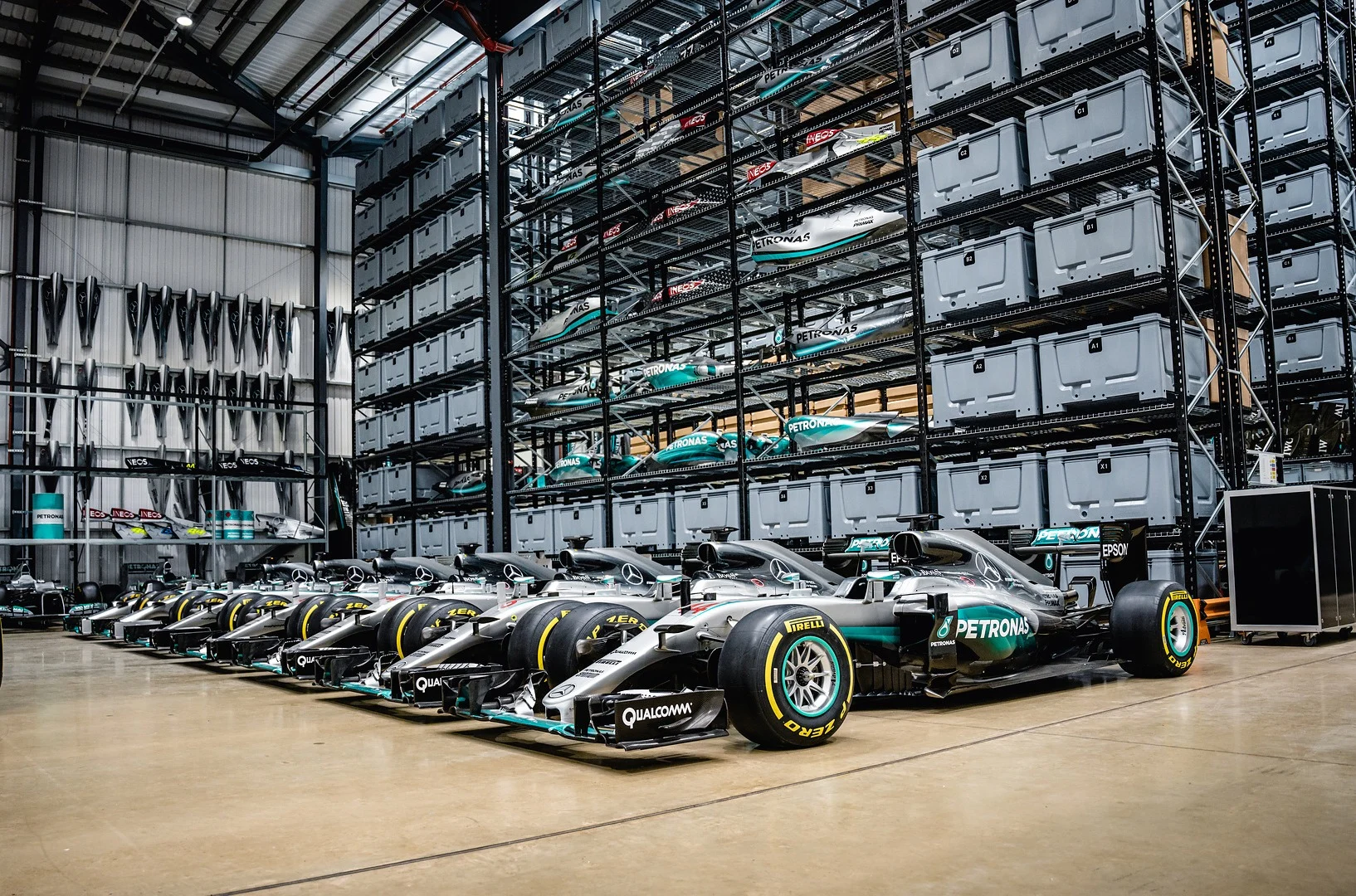
No tour of Ferrari’s history is complete without paying homage to the Michael Schumacher era. The bunker houses the F2003-GA, the machine that delivered Schumacher his sixth Driver’s Championship, breaking Juan Manuel Fangio’s 46-year-old record.
Standing next to this car, the sensory details are overwhelming. It still smells of a race track—a heady mix of oil, petrol, and burnt rubber. By 2003, the cars had transformed into sophisticated, electronic marvels. The V10 engines were pushing 900 horsepower, and driver aids like traction control meant that these machines were glued to the track in a way their predecessors could never dream of.
It was a time of stability in regulations, allowing Ferrari to refine their designs to perfection. The F2003-GA is a prime example of this iterative brilliance, winning seven races and securing both championships. Yet, for all its glory, it was merely the prelude to the F2004, a car so fast that its lap records stood for nearly two decades.
The Aerodynamic Revolution
As the timeline moves into the late 2000s, the visual language of the cars changes again. The 2007 F2007 and 2008 models mark the peak of the “winglet” era. These cars are covered in intricate aerodynamic devices—flip-ups, winglets, and sculpted barge boards designed to manipulate every molecule of air flowing over the bodywork.
This period, culminating in Kimi Räikkönen’s dramatic championship win in Brazil, produced some of the most beautiful, albeit busy, cars in history. They were pieces of aerodynamic art, created before the 2009 regulation changes swept the slate clean and simplified the designs.
However, the complexity ramped up again in the hybrid era. The 2018 SF71H and 2021 SF21 are mind-blowing in their detail. The front wings evolved into seven-element structures, and the barge boards became incredibly dense forests of carbon fiber, designed to seal the floor and generate immense downforce. Seeing these modern giants up close reveals details that television cameras simply cannot capture—the sheer density of parts in the side-pod area is overwhelming.
The Modern Behemoths
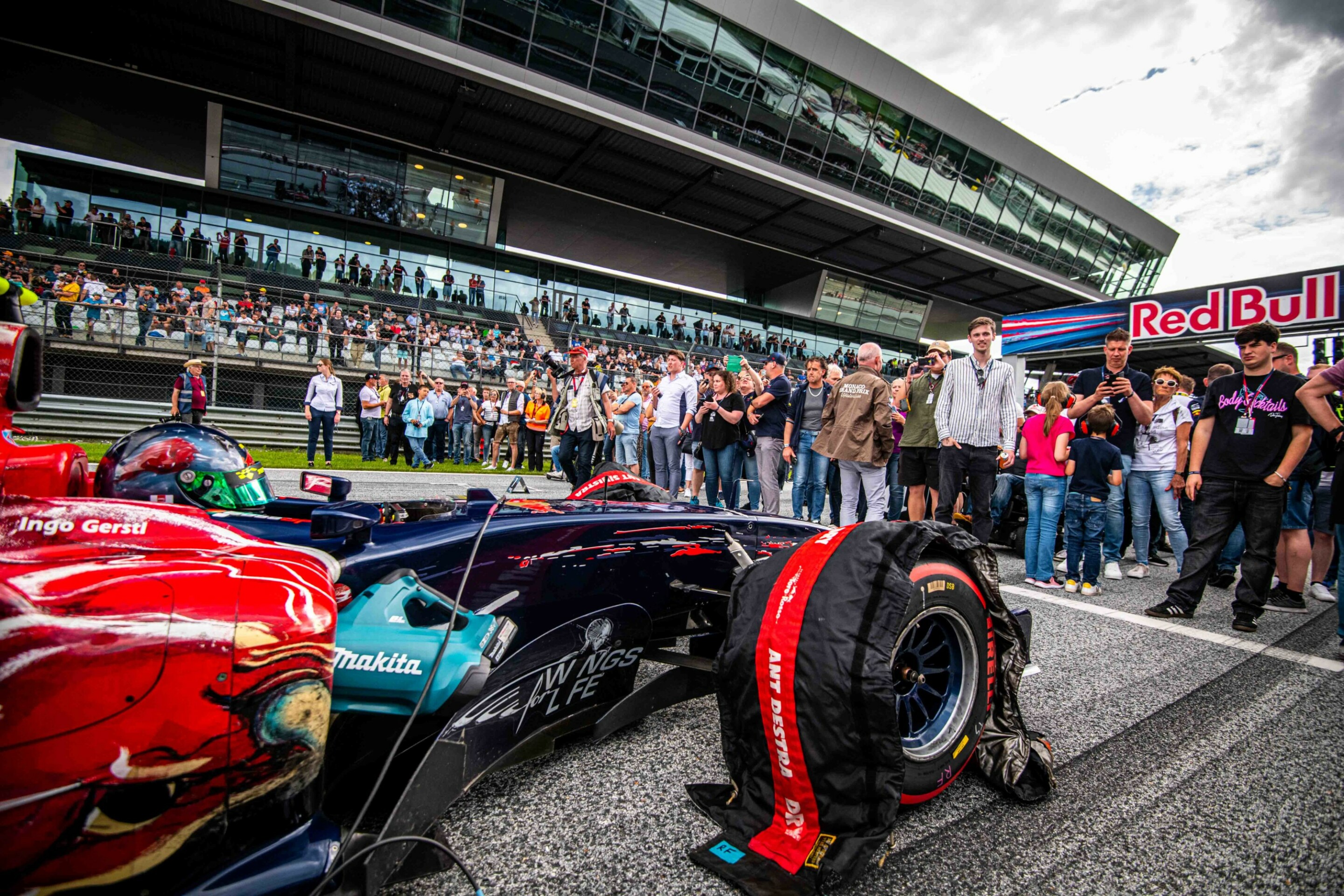
The contrast becomes most striking when comparing the 2021 cars to the new generation of 2022 ground-effect machines. Side-by-side, the size difference is palpable. The modern cars are longer, wider, and run on massive tires that dwarf the rubber of the past.
The visual obstruction for the driver is significant; with the cockpit positioned so low and the wheels so high, it is a miracle they can spot the apex of a corner at all. The 2022 F1-75 stands out with its radical “bathtub” side pods, a bold engineering choice that differentiated Ferrari from its rivals at Red Bull and Mercedes. It represents the latest chapter in a 50-year story of innovation, where the only constant is the relentless pursuit of speed.
The Forbidden Workshop
The tour of the main hall is breathtaking, but the true jewel of the Corsa Clienti facility is hidden even deeper. Downstairs, away from the static display, lies the active workshop. This is where the magic happens.
It is here that the elusive F2004—arguably the greatest F1 car ever made—was found, stripped down and in the process of a complete rebuild. Ferrari rarely grants access to this sanctum, but for this occasion, the cameras were allowed to roll.
The workshop is unique in the world of motorsport. Because Ferrari has always manufactured both its chassis and engines (unlike teams like McLaren or Williams who often bought engines from suppliers), they possess the original technical drawings and tooling for every single component they have ever made.
This capability allows them to keep cars running that rely on obsolete technology. Maintaining a 1990s F1 car is infinitely harder than maintaining a 1970s one. The software, the laptops, and the diagnostic tools from the 90s simply do not exist anymore. Ferrari’s technicians must be part mechanic, part computer historian, keeping ancient digital systems alive to ensure the V10s can still fire up.
Preserving the Legacy
The Ferrari Corsa Clienti bunker is more than just a garage for the super-rich. It is a preservation effort of massive scale. In this underground vault, the history of Formula 1 is not just remembered; it is kept alive. The smell of oil, the roar of the engines, and the gleam of carbon fiber serve as a reminder that these machines were built for one purpose: to race. Thanks to this program, they will continue to do so, long after their professional careers have ended.
For the rest of us, we can only dream of the day we might hold the keys to a retired Ferrari F1 car. But knowing they are down there, safe, maintained, and ready to scream around Fiorano once more, is a comfort to petrolheads everywhere.






