The roar of Formula 1’s current era is still loud, but a distinct, futuristic hum is already beginning to echo from Maranello. During the high-stakes finale of the season in Abu Dhabi and the subsequent postseason testing, Scuderia Ferrari—never one to shy away from grand statements—gave the world a stunning, unfiltered glimpse into the radical technological landscape of F1’s future: 2026.
What was quietly debuted was not just another minor aerodynamic tweak, but a paradigm-shifting commitment to the new regulations, revealed through a prototype steering wheel and a rudimentary front wing design. This early, public exposure to the 2026 hardware is far more than an engineering exercise; it is a profound declaration of intent by the Italian giants, and a compelling hint at the convergence of two distinct worlds of high-speed competition.
The Death of the ‘Spaceship’ Steering Wheel
For years, Formula 1 steering wheels have been affectionately—or perhaps accurately—nicknamed ‘spaceships.’ They are bewilderingly complex instruments, bristling with up to six main rotary switches, dozens of buttons, and multi-functional screens, requiring drivers to constantly make minute, critical adjustments across complex engine, energy, and braking settings. The skill required to manage this cockpit chaos while hurtling at 200 mph has often been cited as a defining challenge of modern F1.
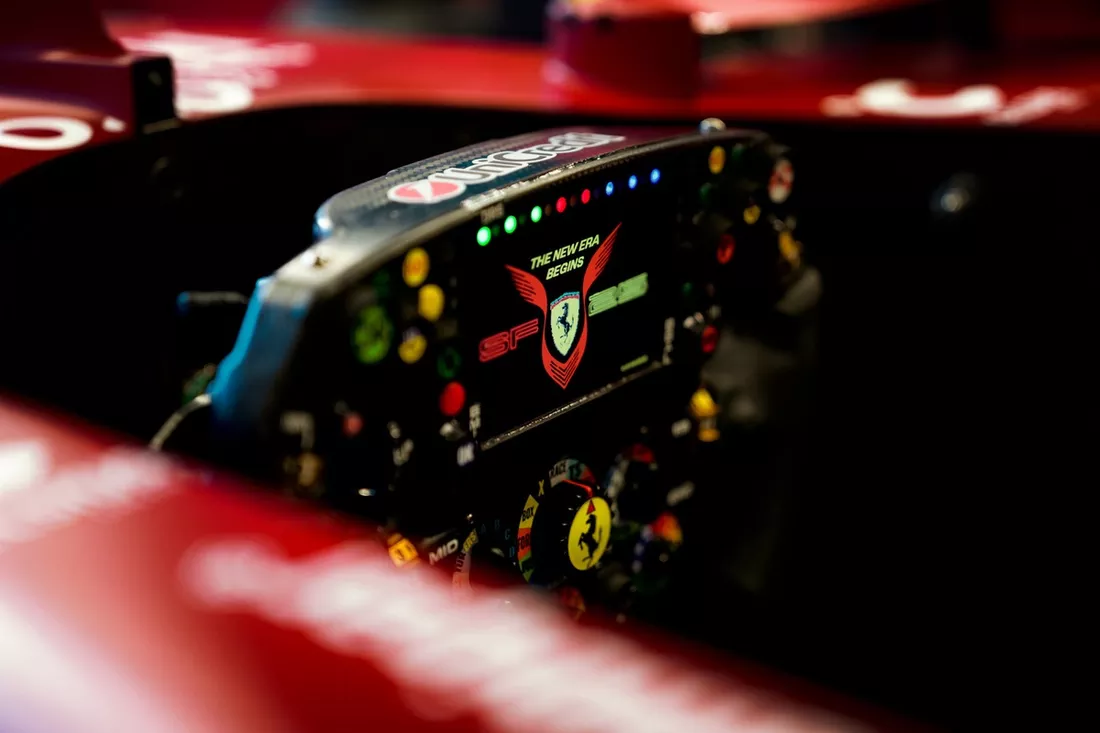
The prototype 2026 steering wheel, initially trialled during Free Practice 1 (FP1) and refined for the postseason test, suggests a stunning and shocking departure from this complexity. The visible changes are immediate and profound. While the overall aesthetics have been refined, the major structural shift lies in a dramatic reduction in the amount of driver-controlled functions.
Upon close inspection and comparison with the 2025 specification, the number of main rotary switches has been visibly slashed. The 2025 Ferrari wheel featured six prominent rotary switches. The 2026 prototype, however, has decreased this count to just three. This is an incredibly significant structural change that hints at a substantial simplification of the car’s operational settings—a potential result of the fundamental changes to the 2026 engine and energy recovery regulations which are expected to lessen the level of minute, in-race management required from the drivers.
Furthermore, the prototype features a significant increase in the size and resolution of the integrated LED display. This larger screen promises to give the drivers a much clearer and more immediate view of crucial telemetry and car status information, simplifying the visual communication between man and machine. While the aesthetic change is apparent, the underlying message is clear: the complexity that has defined the F1 cockpit for the last decade may be set to diminish, transitioning from piloting a ‘spaceship’ to something more focused and distilled.
The Hamilton and Hypercar Connection: A Design Stolen from Le Mans
What makes this design shift truly sensational are the two distinct, high-profile influences Ferrari has pulled from.
The first, and most immediately tantalizing, is the connection to a future icon of the Scuderia: Lewis Hamilton. As the seven-time World Champion prepares to transition to Ferrari for the 2025 season, the influence of his former team is already apparent. Hamilton’s steering wheel design during his tenure at Mercedes was famed for its relative simplicity, utilizing only three main rotary switches. The striking similarity of the new Ferrari prototype, which also uses this reduced configuration, has led many to speculate that the design is a subtle nod to Hamilton’s preferences and methodologies, aligning the team’s operational philosophy with that of its impending star driver. It suggests that Ferrari is not just preparing a new car, but an entirely new culture of operation designed around the man they hope will lead them back to championship glory.
The second influence is perhaps the most shocking and aggressive demonstration of technology transfer in recent memory. The overall layout and design of the 2026 steering wheel prototype is almost identical to the wheel used in the Ferrari hypercar—the 499P—which competes in the World Endurance Championship and recently conquered the legendary Le Mans 24 Hours.
This direct lineage is unprecedented. Ferrari has effectively taken a highly successful, race-proven component from its endurance racing division and transplanted its core design principles directly into its Formula 1 program. This decision is a testament to the new structural unity and technical ambition sweeping through Maranello, demonstrating a willingness to break down traditional silos between racing categories in pursuit of the ultimate competitive edge. The 499P steering wheel is a model of robustness and operational clarity tailored for 24 hours of grueling concentration, and injecting that DNA into the F1 car suggests a focus on reliability, intuitive control, and distilled functionality for the next generation.
The Adjustable Front Wing: Real-World Data for a Virtual Future
The reason Ferrari chose to debut the new steering wheel wasn’t solely for a fashion statement; it was a crucial, necessary component for testing the second major piece of 2026 technology: the prototype front wing.
The 2026 regulations mandate a significant aerodynamic concept known as active or adjustable aerodynamics. This is a game-changer, giving the drivers control over certain aerodynamic surfaces to change the car’s drag and downforce profile dynamically. The main surface that will be adjustable is the front wing. The driver will be able to adjust this element from the cockpit, much like the current DRS (Drag Reduction System) mechanism, to optimize the car’s performance both in clear air and when following another car.
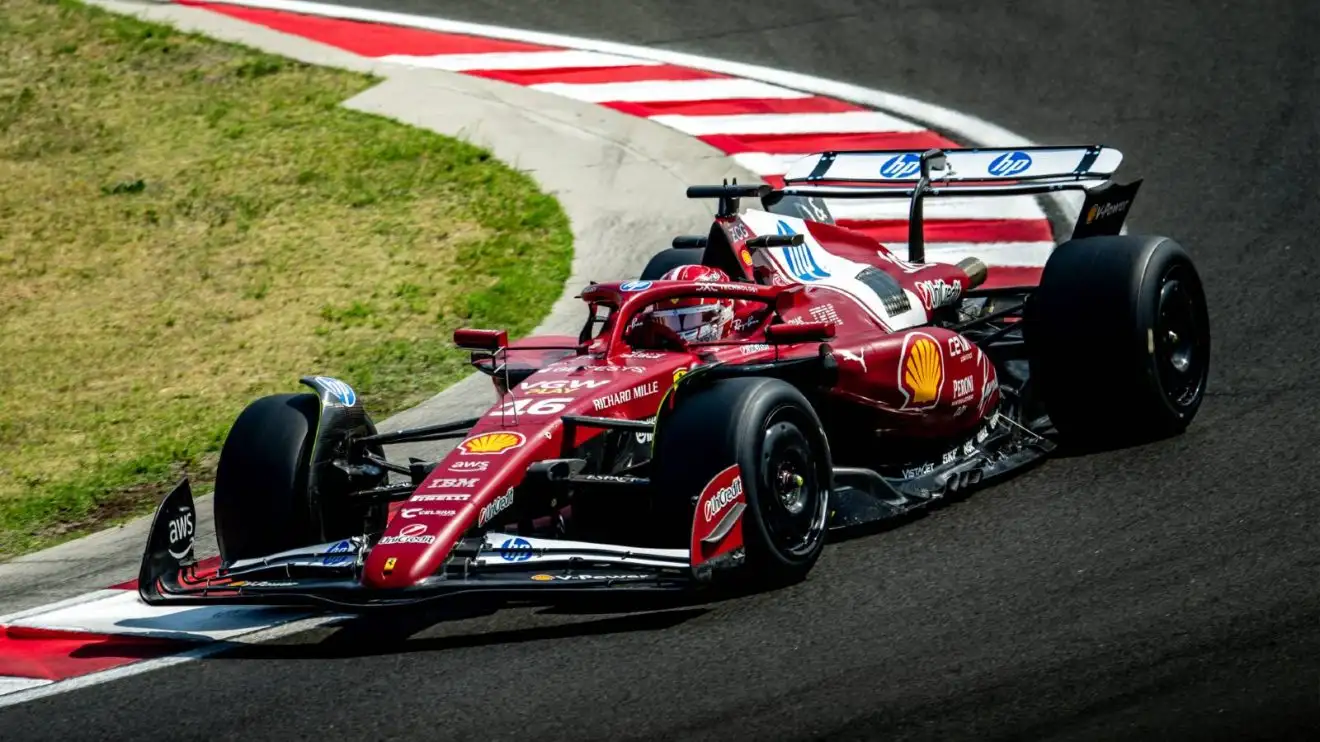
Ferrari’s test featured a “somewhat rudimentary” version of this front wing. Mercedes was also seen testing a similarly basic prototype, underscoring the industry-wide focus on this key area. The purpose of deploying this hardware so early, nearly two years before the regulations go live, is crystal clear: to gather real-world data and test the functional integration of the driver controls.
While simulator data is invaluable, it cannot fully replicate the nuances of airflow, suspension response, and driver feel under real-world track conditions. The adjustable front wing requires new input methods and driver-feedback mechanisms that are integrated through the steering wheel. By trialling the systems now, Ferrari can collect crucial data, learn the indications, and understand the real-world implications of the driver-governed adjustable wing mechanism, allowing them to refine the design before the finalized specifications are required for the first official test in Bahrain.
Implications for the Scuderia and the Sport
This early preview from Ferrari is a powerful statement about their approach to the new regulatory cycle. They are not waiting; they are leading the charge in structural and component testing. The willingness to introduce such sweeping changes—from the Hypercar-derived ergonomics to the Hamilton-esque functional simplification—demonstrates a proactive, aggressive, and highly motivated development philosophy.
While the speaker notes that this is “not a game-changer by any sense of the imagination” in terms of performance right now, the long-term strategic value is immense. The data gleaned from this early testing, particularly concerning the interaction between the new, simplified steering wheel controls and the adjustable front wing, will provide Ferrari with an invaluable head start.
The overarching theme of the 2026 F1 rules appears to be a shift towards a less complex, more driver-focused experience, potentially moving away from the microscopic managerial tasks that have burdened drivers. Ferrari, by embracing a stripped-down, streamlined steering wheel, is signaling that the era of the overly complex ‘spaceship’ cockpit may be drawing to a close, replaced by a design philosophy prioritizing clarity, efficiency, and proven performance pedigree from their most successful racing programs. All eyes will now be on Maranello as they take these crucial learnings back home to shape the final design that will debut in Bahrain.






