The Dream That Turned Into a Nightmare
When Lewis Hamilton announced his shock departure from Mercedes to join Ferrari, the Formula 1 world viewed it as a romantic final chapter for the sport’s most successful driver. It was a gamble driven by passion, history, and a desire to bring the championship back to Maranello. However, as the dust settles on a disastrous 2025 season and news breaks of a controversial technical breakthrough by his former team, that romantic dream is rapidly beginning to look like a career-defining mistake.
Hamilton’s timing appears to be spectacularly unfortunate. He left a team he spent 12 years building—a team that now appears poised to dominate the sport’s new era—to join a legendary outfit that is currently stumbling in the dark.
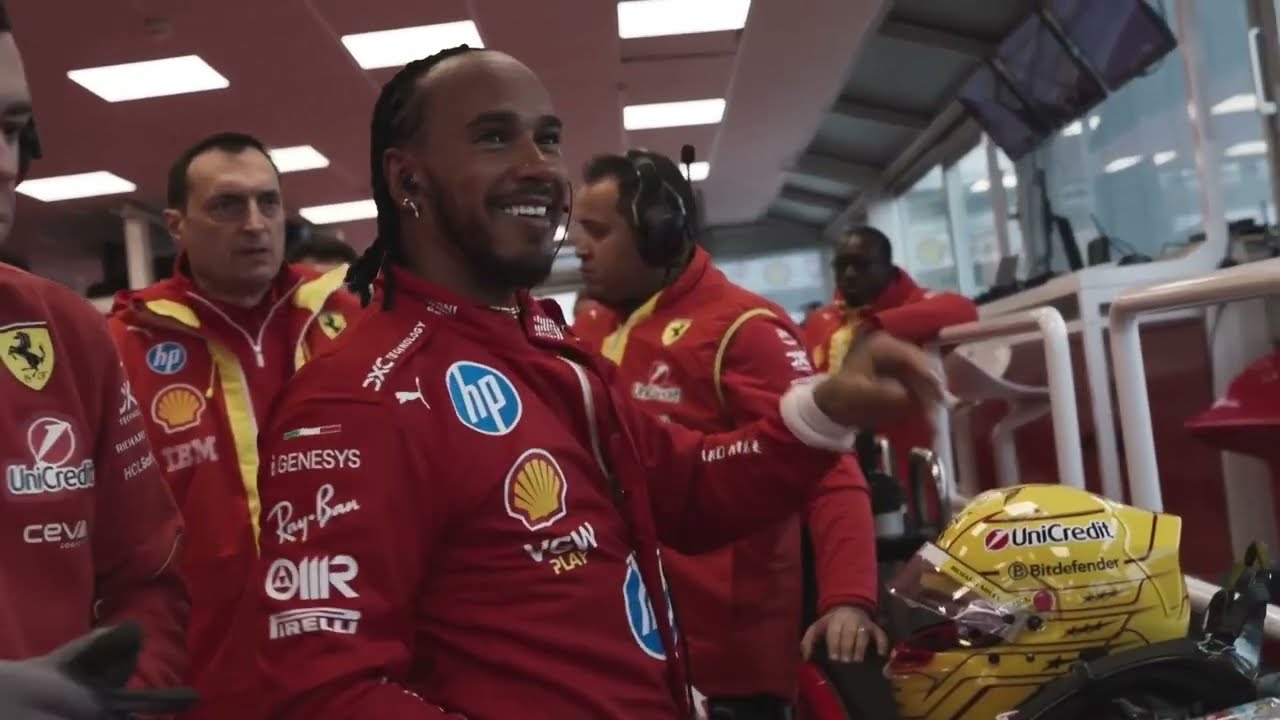
A Season to Forget: The 2025 Low Point
The warning signs were evident throughout the 2025 season, which stands statistically as the worst in Hamilton’s illustrious career. Wearing the iconic Ferrari red, the seven-time world champion finished a dismal sixth in the standings. For a driver accustomed to breaking records, the numbers were sobering: zero wins and zero podiums.
He was consistently outperformed by his teammate, Charles Leclerc, and struggled visibly to adapt to the handling characteristics of the Ferrari car. The frustration boiled over publicly, with Hamilton describing himself as “absolutely useless” after poor qualifying sessions and admitting to the media that he couldn’t wait to “disconnect” from the sport. It got so tense that Ferrari Chairman John Elkann reportedly had to step in, telling his drivers to focus more on driving and less on talking. But while the on-track struggles of 2025 were painful, the looming threat for 2026 is potentially devastating.
The 2026 Bombshell: Mercedes’ “Genius” Loophole
The Formula 1 paddock has been rocked by reports that Mercedes and Red Bull have discovered a clever loophole in the upcoming 2026 power unit regulations. These new rules were intended to level the playing field by mandating a maximum engine compression ratio of 16:1, a reduction from the current standards to limit power and increase parity.
However, sources suggest that Mercedes has engineered a way to legally circumvent this limit. The controversy centers on how the rule is written: the compression ratio is measured at “ambient temperature” in the garage, meaning static conditions.
Mercedes engineers have reportedly developed components—specifically in the connecting rods and crankshaft—that are designed to thermally expand when the engine heats up during a race. This expansion effectively alters the geometry of the engine internals while running, pushing the compression ratio well beyond the 16:1 limit. Because the car passes the static check in the garage, the trick appears to be entirely legal under the current wording of the regulations.
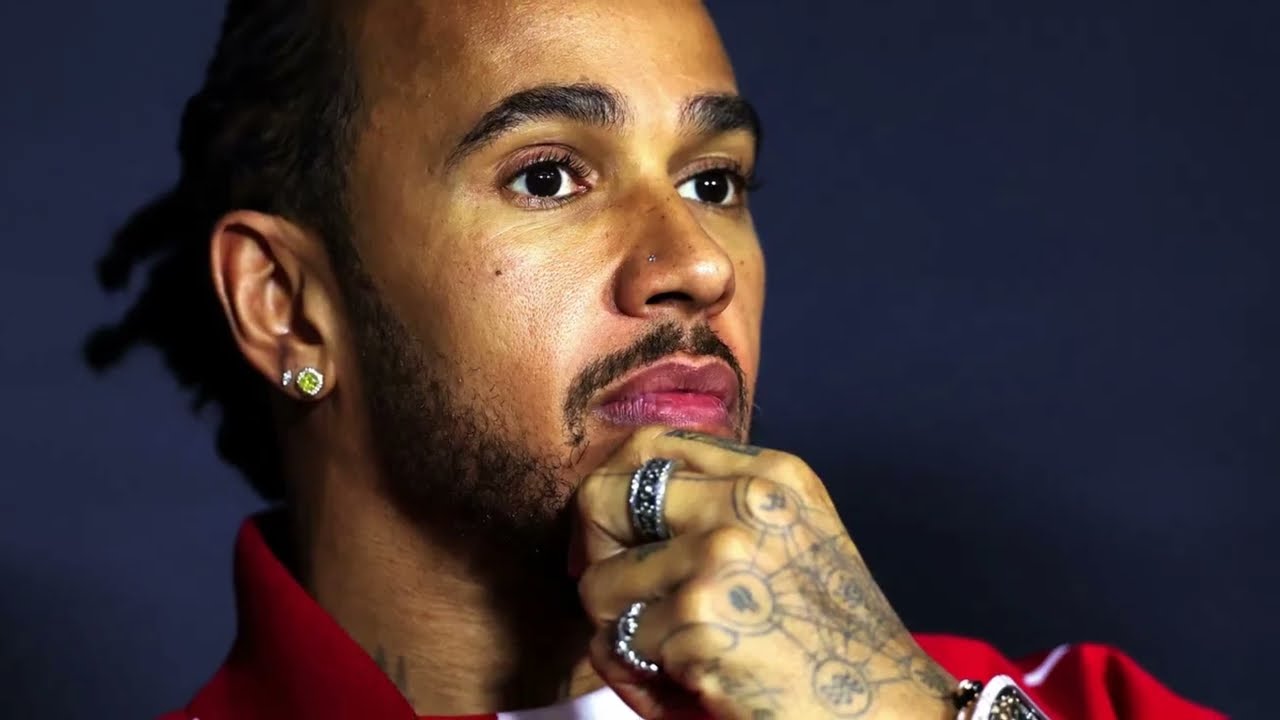
The Balance of Power Shifts
If these reports are accurate, the implications are seismic. A higher compression ratio equals more power and better fuel efficiency—the holy grail of F1 engine performance. Estimates suggest this advantage could be worth several tenths of a second per lap, a lifetime in Formula 1 terms.
This leaves Ferrari, along with fellow manufacturers Honda and Audi, in a furious panic. They are reportedly protesting the loophole, but the FIA has acknowledged that thermal expansion is a natural phenomenon and difficult to outlaw completely.
The grid is now potentially split into two tiers for the start of the new era. Mercedes (supplying McLaren, Alpine, and Williams) and Red Bull (supplying VCARB) could start 2026 with a significant mechanical advantage. Ferrari, and by extension Lewis Hamilton, would be left fighting an uphill battle with a severe power deficit before the lights even go out in the first race.
Ferrari’s Uncertain Future
While Mercedes seems to have cracked the code, Ferrari’s preparation for 2026 is reportedly fraught with uncertainty. There are whispers of delays in their power unit development, and their aggressive protest of the Mercedes loophole suggests they do not have a similar solution ready.
Team Principal Fred Vasseur has tried to manage expectations, admitting that the team underestimated the challenge of Hamilton’s transition. Ferrari plans to launch their 2026 challenger on January 23rd, but they are already tempering excitement by calling it a “Spec A” car—a version focused on reliability rather than outright performance.
Vasseur has promised an aggressive upgrade schedule between pre-season testing and the first race in Australia, but in Formula 1, hope is not a strategy. If the engine deficit is real, no amount of aerodynamic wizardry or chassis development will be enough to close the gap to a Mercedes engine that is fundamentally more powerful.
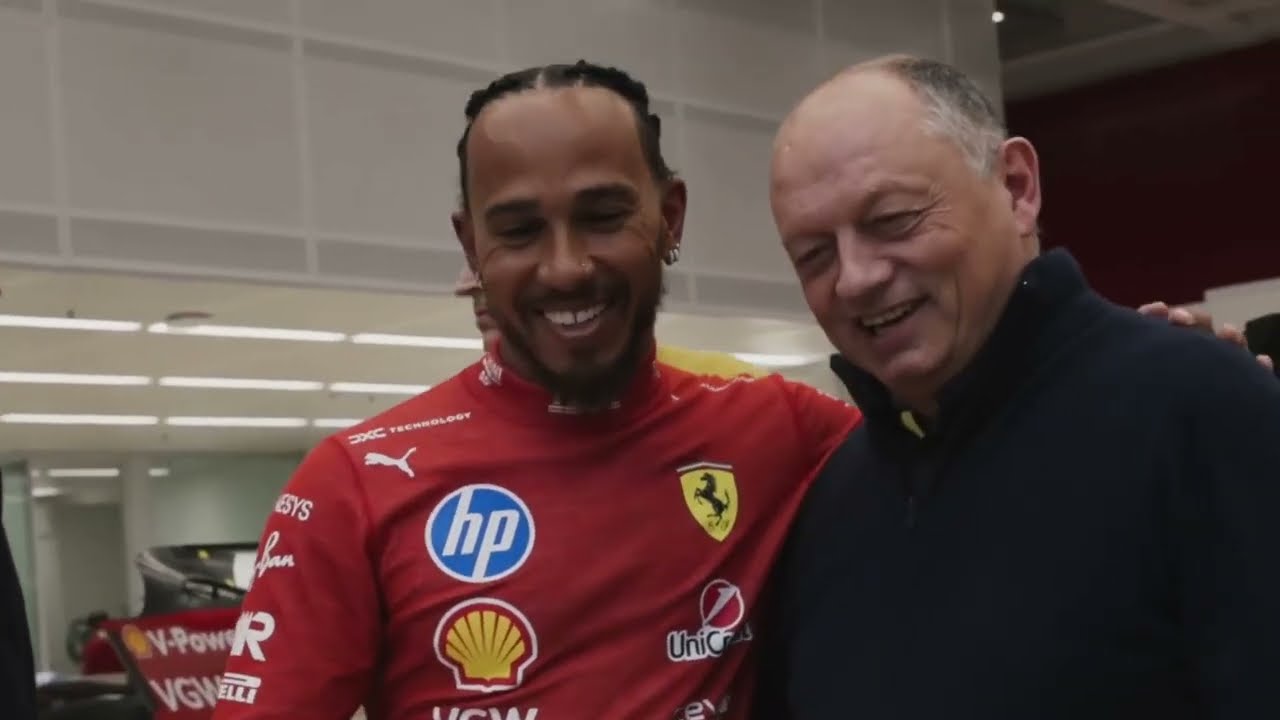
A Legacy Defined by a Gamble
The irony of the situation is palpable. In 2023, Hamilton was filmed for Drive to Survive discussing his impatience, telling Toto Wolff he didn’t want to wait until 2026 to win again. He left Mercedes because he lost faith in their ability to deliver a championship car in the short term.
Now, it appears he has walked away from the team just as they have found the “silver bullet” for the next generation of regulations. Hamilton maintains that he has no regrets, citing his childhood dream of racing for Ferrari and his love for the sport’s history. But history is written by the victors.
If Mercedes returns to the dominance they enjoyed from 2014 to 2020 using a car Hamilton helped develop but chose to leave, and if Ferrari spends the next few years chasing their tail, Hamilton’s move will not be remembered as a romantic swan song. It will be remembered as the moment the greatest driver of his generation folded his hand just before he was dealt the winning card. Only time will tell if the gamble pays off, but right now, the odds are stacked heavily against the man in red.
News

Inside Shane Richie’s love life: Drug – fuelled orgy with six blondes; real reason he split from Coleen Nolan; six-year ‘affair with fan’
Inside Shane Richie’s love life: Orgy with six blondes; real reason he split from Coleen Nolan; six-year ‘affair with fan’ He’s popular with the ladies… Shane Richie…

SH0CKING REVELATI0N:A sh0cking behind-the-scenes secret revealed about Lizzie Rizzini, the woman replacing Carol Kirkwood on the 6pm weather bulletin
BBC viewers still reeling from the departure of Carol Kirkwood got another surprise last night when presenter Lizzie Rizzini appeared to flash her black lace stockings on…

HEARTBREAKING: Peter Andre’s Tearful Message to Son Junior After SHOCKING Revelation About How He Truly Feels Toward Mum Katie Price — Katie Price’s reaction scares fans.
Peter Andre’s emotional message to son Junior after it’s revealed how he really feels about mum Katie Pri… PETER Andre has shared an emotional message to his…

Ben Shephard opens up about the devastating health battle his wife is facing: “She wakes up crying every single morning…”
Inside This Morning Ben Shephard’s Life Including Rarely Seen Wife and Health Battle Ben Shephard is a name synonymous with British television, renowned for his engaging presentation…

🚨 LIVE TV HEARTBREAK: Good Morning Britain Host Announces ‘Devastating’ Dɘath of Guest Minutes Into Show
Viewers of Good Morning Britain were met with heartbreaking news just minutes into Friday’s (January 30) episode, as co-hosts Kate Garraway and Ranvir Singh reported the tragic…

Emmerdale legend Cain Dingle will never be the same again after a shock cancer diagnosis turns his world upside down
FROure Desk. Full Terms and conditions are available on the website http://www.itv.com/presscentre/itvpictures/terms Emmerdale wouldn’t be Emmerdale without the glowering, grunting embodiment of manliness that is Cain Dingle (Jeff Hordley) But…
End of content
No more pages to load






