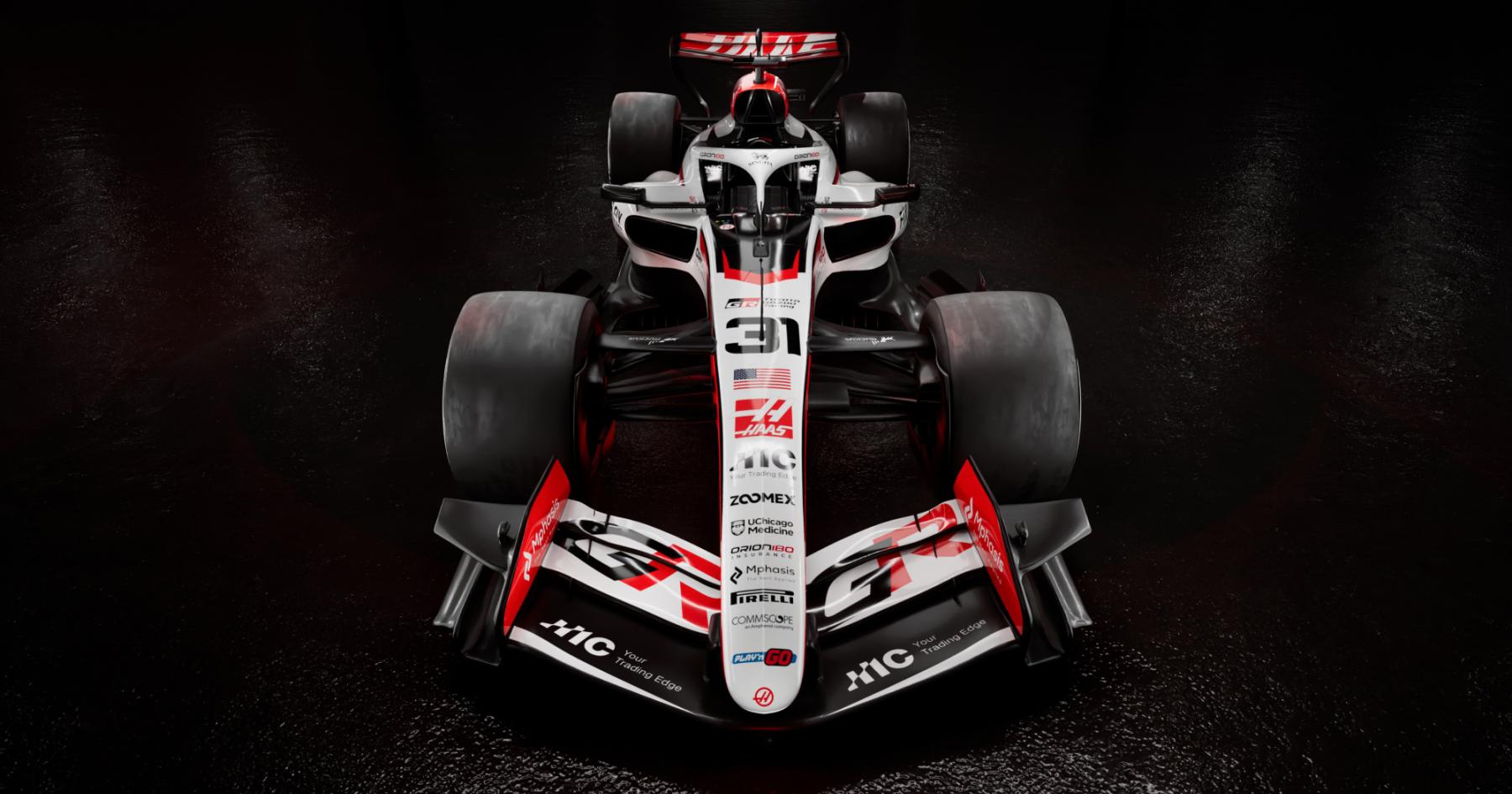
The long winter wait is finally over. The 2026 Formula 1 season has roared into life, not with a whisper, but with a “wacky and bonkers” launch week that promises to reset the pecking order of the pinnacle of motorsport. Kicking off the festivities is the newly rebranded TGR Haas F1 Team, unveiling a machine that signals a bold new era for the American outfit: the VF26.
But beneath the gleaming new paintwork lies a team navigating a minefield of pressure, technical uncertainty, and high-stakes driver drama. From the undeniable return of a Japanese giant to a young British star teetering on the edge of a race ban, the narrative surrounding Haas this season is anything but ordinary.
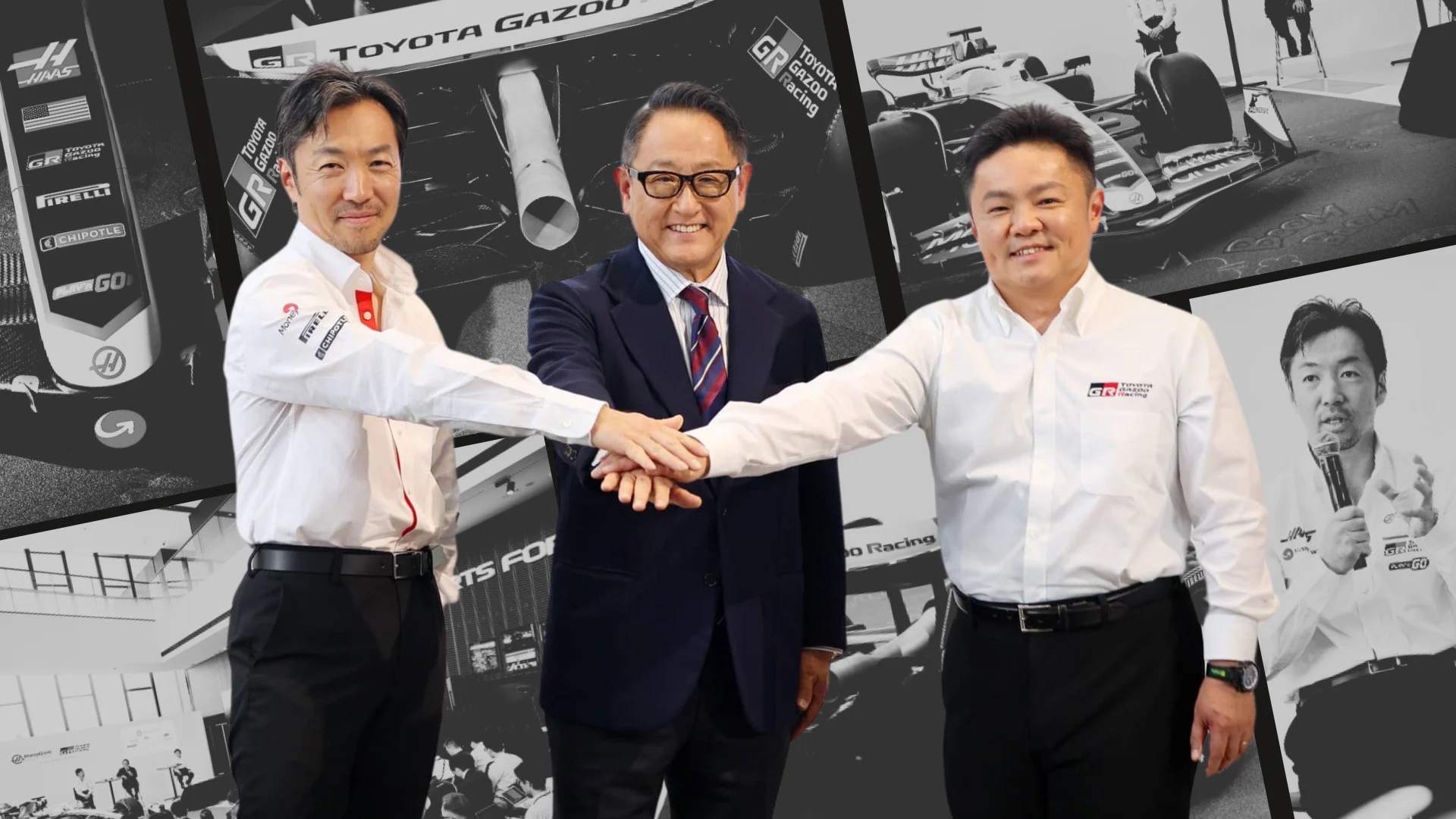
The Red and White Revolution: Toyota’s “Striking” Return
The first thing that grabs you about the VF26 is the livery. Gone is the predominantly black carbon look of yesteryear. In its place sits a clean, crisp, and undeniably “striking” white design slashed with aggressive red streaks. It’s a visual declaration of the team’s deepening tie-up with Toyota Gazoo Racing (TGR).
While Toyota officially exited the sport in 2009, their ghost has returned to the machine. The partnership, which began as a technical alliance late in 2024, has blossomed into a full title sponsorship. The “TGR” branding is prominent, and the aesthetic screams corporate Toyota.
This visual transformation has inevitably fueled the fire of speculation: Is this a soft launch for a full Toyota factory return?
“It wouldn’t surprise me in all honesty if we see 2027, maybe 2028, that it becomes… the new Toyota Formula 1 team,” noted F1 experts during the launch coverage.
Despite team owner Gene Haas consistently maintaining that he is not in the market to sell—especially with F1 team valuations now hovering around the billion-dollar mark—the trajectory is hard to ignore. For now, however, Haas is leveraging the immense knowledge and history of Toyota Gazoo Racing to elevate their standing. After a respectable eighth-place finish in 2025, the team is banking on this collaboration to propel them further up the grid.
A “Nerve-Wracking” Step into the Unknown
While the livery is set, the performance is a massive question mark. The 2026 regulations represent one of the biggest technical shake-ups in the sport’s history, introducing a radical 50/50 power split between the internal combustion engine and electrical power.
Haas Team Principal Ayao Komatsu has not minced words, describing the approach to the season as “nerve-wracking.” Despite improved cohesion and collaboration between the team’s UK base, the Maranello aerodynamic department, and their new partners at Toyota, the on-track reality remains a mystery.
“Everyone is completely in the dark,” the analysis suggests. The car unveiled today—and even the machine that will run during the private test in Barcelona next week—is likely a “mule,” a placeholder. Komatsu has warned that what fans see now will be drastically different from the car that lines up on the grid in Melbourne for the Australian Grand Prix.
With 11 days of testing scheduled—five in Barcelona followed by two three-day sessions in Bahrain—the development curve will be vertical. Drivers will need to relearn how to drive these machines, managing energy levels in a way that is entirely foreign compared to the previous era.
The Bearman Dilemma: One Step from Disaster
Perhaps the most compelling storyline at Haas is the precarious situation of their star driver, Oliver Bearman. Entering his second season, the young Briton carries a heavy burden: 10 penalty points on his superlicence.
In Formula 1, accumulating 12 points results in an automatic race ban. Bearman, who had a propensity for on-track incidents during his rookie campaign, is walking a tightrope. Crucially, he will not shed any of these points until the seventh round of the season in Canada.
For the first six races, Bearman must drive with the aggression required to score points but the caution needed to keep his licence. It is a paradoxical challenge for a driver who is currently the pundit’s favorite to replace Lewis Hamilton at Ferrari, potentially as early as 2027.
“It’s a lot of pressure on very young shoulders,” analysts warn. “He’s got to deliver to get Lewis’s seat, and at the same time make sure he doesn’t get a race ban.”
Bearman cannot afford to play it safe; no F1 driver makes it to the top by driving at 90%. Yet, one clumsy overtake or a red-flag infringement in practice could see him sidelined, potentially damaging his momentum and his chances of securing that dream Ferrari drive.
Ocon’s Fight for Redemption
On the other side of the garage, Esteban Ocon faces his own demons. The experienced Frenchman joined Haas in 2025 expected to be the team leader. Instead, he was largely outperformed by the rookie Bearman, with the younger driver holding sway in the standings.
For a driver of Ocon’s caliber, 2025 was “not good enough.” With his contract situation always a factor and the relentless churn of the driver market, Ocon needs to reassert his authority. The internal battle at Haas will be fierce. Bearman has the momentum and the Ferrari connections; Ocon has the experience and the desperate need to prove he is still a top-tier talent.
Launch Week Fever
As the dust settles on the Haas reveal, the F1 world turns its attention to the rest of the “bonkers” week. Audi launches tomorrow, followed by events for Mercedes, Alpine, and Ferrari, all culminating in the Daytona 24 Hours this weekend.
The VF26 may just be the appetizer, but it has set a flavorful tone for the season. With the might of Toyota in their corner, a terrified but hopeful team boss, and a driver lineup fighting for their futures, Haas has ensured that all eyes are firmly on them. The 2026 season hasn’t just started; it has exploded out of the blocks.
Buckle up. If launch week is anything to go by, we are in for a legendary year.
News

Inside Shane Richie’s love life: Drug – fuelled orgy with six blondes; real reason he split from Coleen Nolan; six-year ‘affair with fan’
Inside Shane Richie’s love life: Orgy with six blondes; real reason he split from Coleen Nolan; six-year ‘affair with fan’ He’s popular with the ladies… Shane Richie…

SH0CKING REVELATI0N:A sh0cking behind-the-scenes secret revealed about Lizzie Rizzini, the woman replacing Carol Kirkwood on the 6pm weather bulletin
BBC viewers still reeling from the departure of Carol Kirkwood got another surprise last night when presenter Lizzie Rizzini appeared to flash her black lace stockings on…

HEARTBREAKING: Peter Andre’s Tearful Message to Son Junior After SHOCKING Revelation About How He Truly Feels Toward Mum Katie Price — Katie Price’s reaction scares fans.
Peter Andre’s emotional message to son Junior after it’s revealed how he really feels about mum Katie Pri… PETER Andre has shared an emotional message to his…

Ben Shephard opens up about the devastating health battle his wife is facing: “She wakes up crying every single morning…”
Inside This Morning Ben Shephard’s Life Including Rarely Seen Wife and Health Battle Ben Shephard is a name synonymous with British television, renowned for his engaging presentation…

🚨 LIVE TV HEARTBREAK: Good Morning Britain Host Announces ‘Devastating’ Dɘath of Guest Minutes Into Show
Viewers of Good Morning Britain were met with heartbreaking news just minutes into Friday’s (January 30) episode, as co-hosts Kate Garraway and Ranvir Singh reported the tragic…

Emmerdale legend Cain Dingle will never be the same again after a shock cancer diagnosis turns his world upside down
FROure Desk. Full Terms and conditions are available on the website http://www.itv.com/presscentre/itvpictures/terms Emmerdale wouldn’t be Emmerdale without the glowering, grunting embodiment of manliness that is Cain Dingle (Jeff Hordley) But…
End of content
No more pages to load






