Formula 1 is often perceived through the lens of its drivers—the gladiators who wrestle high-tech machinery at breakneck speeds. However, the true stage for this drama is the asphalt itself. Over the past 75 years, the sport has traversed the globe, laying down rubber on 77 different circuits in 34 countries. From the windswept airfields of England to the neon-soaked streets of Las Vegas, the evolution of the Formula 1 racetrack is a saga of ambition, tragedy, political maneuvering, and engineering marvels.
The history of these circuits is not merely a list of locations; it is a mirror reflecting the changing face of the world and the sport’s desperate struggle to balance the spectacle of speed with the sanctity of human life. To understand F1, one must understand the pavement it drives on.
The Era of the Road Warriors and Death Traps
In the beginning, there were no “racetracks” as we know them today. The inaugural 1950 season relied heavily on public roads closed off for the weekend, creating venues that were as breathtaking as they were homicidal. The “Green Hell” of the Nürburgring Nordschleife in Germany stands as the ultimate testament to this era. Stretching over 14 miles through the Eifel mountains, it was less a circuit and more a endurance test of survival, claiming dozens of lives before safety concerns finally forced its removal from the calendar in 1976 following Niki Lauda’s fiery near-fatal crash.
Similarly, the original Spa-Francorchamps in Belgium was a terrifying 9-mile triangular blast through public villages, where telegraph poles and barns served as the track limits. It was a time when safety barriers were non-existent, and a mistake often meant colliding with a house or plummeting into a ravine. This raw, unfiltered danger defined the sport’s early identity, creating legends out of those brave—or mad—enough to push the limits.
Across the border in France, the Reims-Gueux circuit utilized long country straights, creating slipstream battles that are the stuff of legend. Today, the preserved pit buildings of Reims stand as ghostly monuments to a bygone era, silent witnesses to the speed and fury that once roared past their crumbling facades.
The Shift to Safety and the Rise of the Autodrome
As the death toll mounted in the 1960s and 70s, the sport began an awkward transition. The primitive road courses were slowly replaced or heavily modified. The majestic but lethal 16-mile Pescara circuit, the longest in F1 history, vanished. In their place came purpose-built facilities like Paul Ricard in France, which introduced the concept of extensive runoff areas.
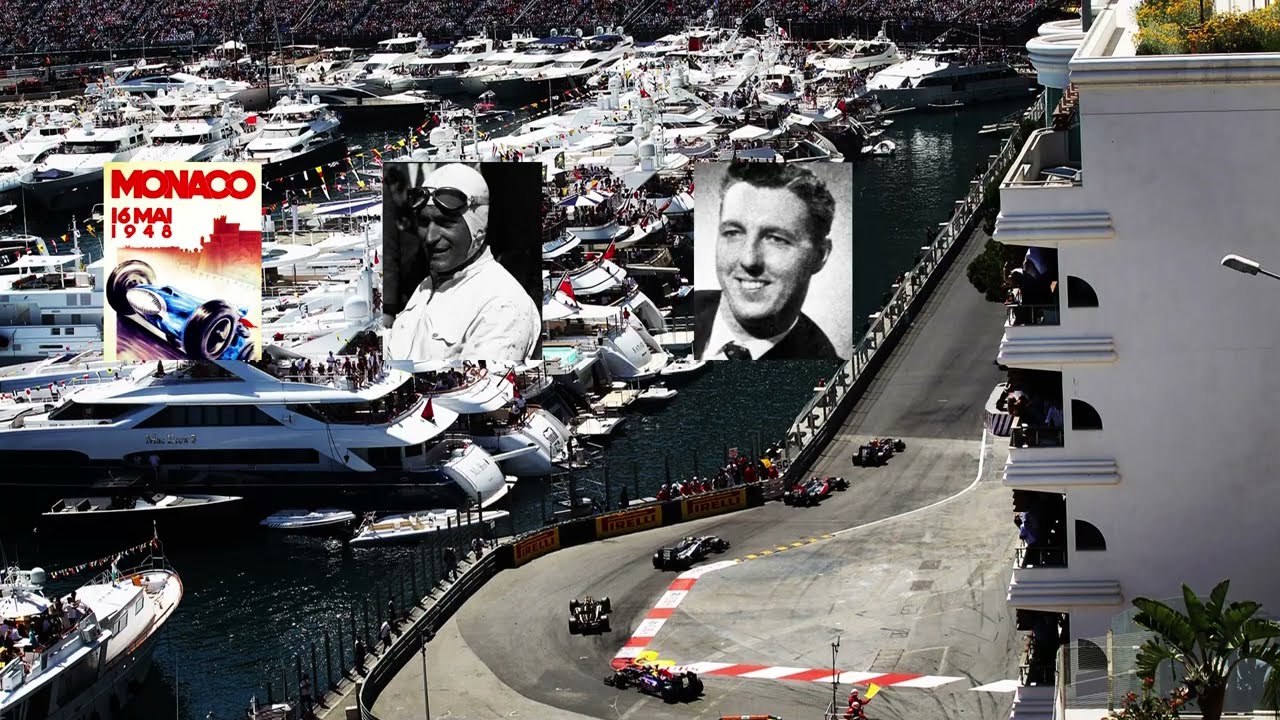
However, this transition was not without its failures. The sheer desperation to tap into the American market led to some of the most bizarre venues in history. The Caesar’s Palace Grand Prix in Las Vegas remains a punchline in motorsport circles—a repetitive, physically grueling track laid out in the parking lot of a hotel. It was a far cry from the glamour of Monaco, yet it highlighted the commercial thirst that was beginning to drive the sport’s expansion.
This era also saw the birth of iconic tracks that balanced challenge with safety. Suzuka in Japan, designed by John Hugenholtz originally as a Honda test track, gifted the world its unique figure-eight layout. It became the site of legendary duels, most notably the collision between Ayrton Senna and Alain Prost, cementing its status as a driver favorite. Meanwhile, Interlagos in Brazil provided a chaotic, undulating stage for local heroes like Senna to showcase their brilliance amidst torrential tropical downpours.
The Tilke Revolution and the Billion-Dollar White Elephants
The turn of the millennium ushered in the age of Hermann Tilke, the German engineer commissioned to design the vast majority of modern F1 circuits. Beginning with Sepang in Malaysia, Tilke introduced a new philosophy: wide tracks, massive grandstands, and technical corners designed to encourage overtaking.
While Sepang and the Bahrain International Circuit were successes, bringing F1 to new regions in the Middle East and Asia, the “Tilke Era” also produced colossal failures. The Korea International Circuit, built 200 miles from Seoul in a swampy industrial area, was meant to anchor a new city that never materialized. It hosted just four rain-soaked, sparsely attended races before being abandoned to the elements.
Similarly, the Buddh International Circuit in India was a masterpiece of design that fell victim to bureaucracy. Despite being loved by drivers for its elevation changes and flow, a tax dispute with the local government—who classified F1 as “entertainment” rather than “sport”—strangled the event after just three years. These “White Elephants” serve as cautionary tales of what happens when ambition outstrips reality, leaving behind billion-dollar strips of tarmac that now host little more than track days and weeds.
The Modern Street Fight
In recent years, Formula 1 has circled back to its roots, but with a twist. The sport has aggressively pivoted towards street circuits, not on rural roads, but in the heart of global metropolises. The Baku City Circuit in Azerbaijan proved that modern street tracks could offer insane speeds, with a 2.2km straight that sees cars topping 220mph before diving into the tightest, medieval castle section on the calendar.
This philosophy reached its zenith—or perhaps its nadir, depending on your perspective—with the Jeddah Corniche Circuit in Saudi Arabia. Marketed as the “fastest street circuit in the world,” it is a dizzying, wall-lined tunnel of speed that has drawn sharp criticism for its danger. It represents the modern ethos of F1: high risk, high speed, and high dollar, set against the backdrop of glittering skylines.
The culmination of this journey is the return to Las Vegas in 2023. Unlike the parking lot of the 80s, the new Las Vegas Strip Circuit utilizes the famous boulevard itself. It is a spectacle of pure entertainment, prioritizing the show as much as the racing. It marks the complete transformation of the circuit from a mere sporting venue to a global entertainment hub.
A Legacy Written in Asphalt
From the banked concrete of Monza to the sterile runoff of Paul Ricard, and from the dusty heat of Dallas to the rainy gloom of Spa, these 77 circuits tell the story of a sport constantly reinventing itself. They are the silent partners in every championship won and lost.
While fans may mourn the loss of the historic road courses, the evolution of track design has undoubtedly saved countless lives. Yet, the sterile perfection of some modern tracks often leaves enthusiasts yearning for the character and unforgiving nature of the past. As Formula 1 continues to expand into new territories, the balance between heritage, safety, and spectacle will continue to shift. But one thing remains certain: whether it’s a dusty airfield or a neon-lit street, as long as there is asphalt, there will be racers willing to conquer it.
News

Inside Shane Richie’s love life: Drug – fuelled orgy with six blondes; real reason he split from Coleen Nolan; six-year ‘affair with fan’
Inside Shane Richie’s love life: Orgy with six blondes; real reason he split from Coleen Nolan; six-year ‘affair with fan’ He’s popular with the ladies… Shane Richie…

SH0CKING REVELATI0N:A sh0cking behind-the-scenes secret revealed about Lizzie Rizzini, the woman replacing Carol Kirkwood on the 6pm weather bulletin
BBC viewers still reeling from the departure of Carol Kirkwood got another surprise last night when presenter Lizzie Rizzini appeared to flash her black lace stockings on…

HEARTBREAKING: Peter Andre’s Tearful Message to Son Junior After SHOCKING Revelation About How He Truly Feels Toward Mum Katie Price — Katie Price’s reaction scares fans.
Peter Andre’s emotional message to son Junior after it’s revealed how he really feels about mum Katie Pri… PETER Andre has shared an emotional message to his…

Ben Shephard opens up about the devastating health battle his wife is facing: “She wakes up crying every single morning…”
Inside This Morning Ben Shephard’s Life Including Rarely Seen Wife and Health Battle Ben Shephard is a name synonymous with British television, renowned for his engaging presentation…

🚨 LIVE TV HEARTBREAK: Good Morning Britain Host Announces ‘Devastating’ Dɘath of Guest Minutes Into Show
Viewers of Good Morning Britain were met with heartbreaking news just minutes into Friday’s (January 30) episode, as co-hosts Kate Garraway and Ranvir Singh reported the tragic…

Emmerdale legend Cain Dingle will never be the same again after a shock cancer diagnosis turns his world upside down
FROure Desk. Full Terms and conditions are available on the website http://www.itv.com/presscentre/itvpictures/terms Emmerdale wouldn’t be Emmerdale without the glowering, grunting embodiment of manliness that is Cain Dingle (Jeff Hordley) But…
End of content
No more pages to load






