In the high-octane world of Formula 1, the spotlight usually falls on the gladiators in the cockpit. We marvel at their precision, their bravery, and their ability to extract milliseconds of performance from the world’s fastest machines. However, hovering above the asphalt, often tucked away in a room filled with monitors and data streams, sits a separate entity that holds the power of a god: Race Control.
While their mandate is to ensure safety and uphold the sporting regulations, the history of Formula 1 is peppered with moments where the officials didn’t just referee the game—they inadvertently broke it. Whether through bureaucratic rigidity, baffling incompetence, or decisions that seemed to defy common sense, there are races where the biggest talking point wasn’t the driving, but the officiating. When the dust settles and the engines cool, fans are sometimes left not with the thrill of victory, but with the bitter aftertaste of a ruined contest. Let’s take a deep dive into the archives to relive the moments when Race Control got it spectacularly wrong.
The Political Storm of Suzuka (1989)
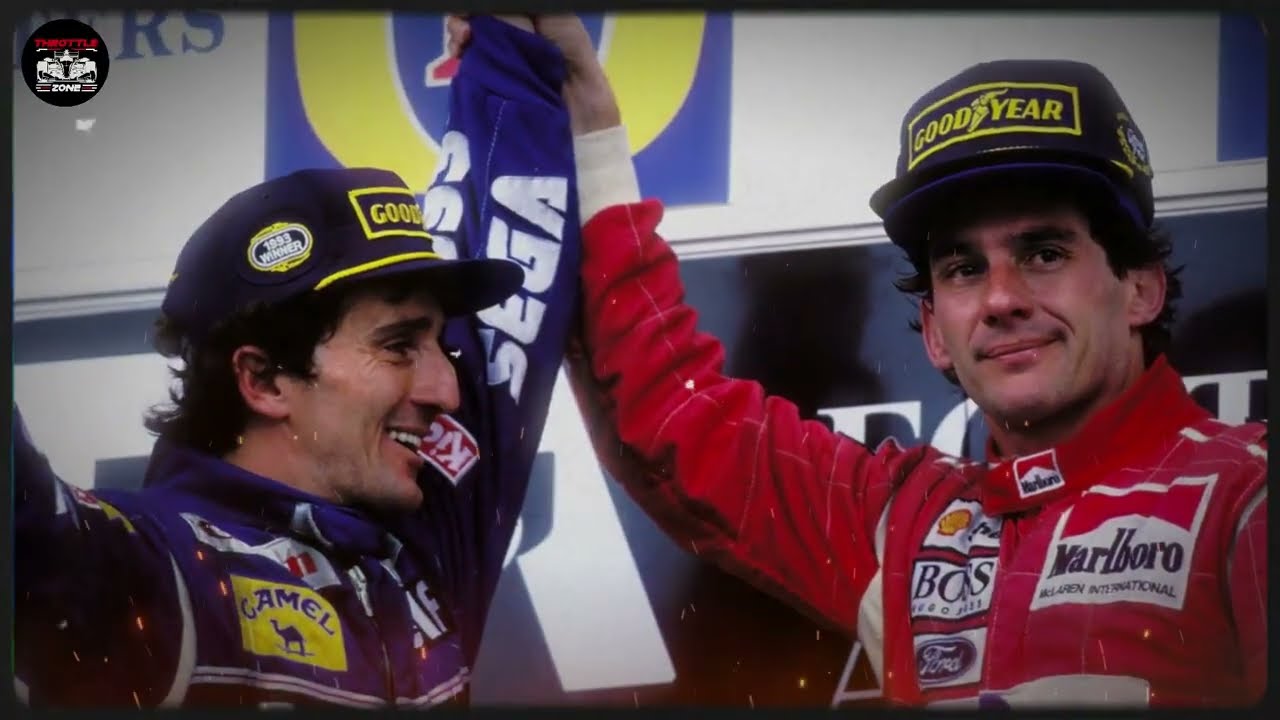
No list of controversial officiating is complete without the seismic collision between Ayrton Senna and Alain Prost at the 1989 Japanese Grand Prix. This wasn’t just a race; it was the climax of a toxic civil war within McLaren. Prost, holding a championship lead, knew that a collision would likely hand him the title. When Senna attempted an ambitious dive up the inside at the Casio Triangle, Prost closed the door. The resulting tangle stopped both cars, but the aftermath is where the true controversy lies.
While Prost climbed out, thinking the job was done, Senna signaled for a push-start. He rejoined via the escape road, pitted for a new nose, and drove like a man possessed to win the race on track. It was a heroic recovery that should have extended the title fight. Instead, Race Control—heavily influenced by FISA President Jean-Marie Balestre—disqualified Senna for cutting the chicane. The decision was technically rigid but spiritually crushing, robbing fans of a title showdown and handing the crown to Prost in a boardroom rather than on the tarmac. It remains perhaps the most politically charged disqualification in the sport’s history.
Chaos and Confusion in Brazil (2003)
If Suzuka 1989 was malicious, the 2003 Brazilian Grand Prix was sheer incompetence. Interlagos is known for its chaotic wet races, and this edition was a demolition derby. As the rain intensified, Mark Webber suffered a massive shunt coming up the hill, scattering debris across the track. Fernando Alonso, arriving at full speed, plowed into a loose wheel in a terrifying impact that littered the circuit with wreckage.
Race Control rightly threw the red flag to stop the race. However, the confusion that followed was farcical. Formula 1 regulations dictate that in the event of a red flag, results are taken from the running order two laps prior. The officials, struggling with their own timing software, couldn’t decide whether that was lap 52 or 53. In the heat of the moment, they declared Kimi Räikkönen the winner. The Finn stood on the top step, champagne was sprayed, and the world moved on. It wasn’t until days later that the FIA realized they had miscounted. The win actually belonged to Giancarlo Fisichella. The humiliating correction led to an awkward, impromptu ceremony at the next race in Imola, where Räikkönen had to physically hand the trophy to Fisichella. It was a bad look for a sport that prides itself on precision engineering.
The Theft of a Duel (Canada 2019)
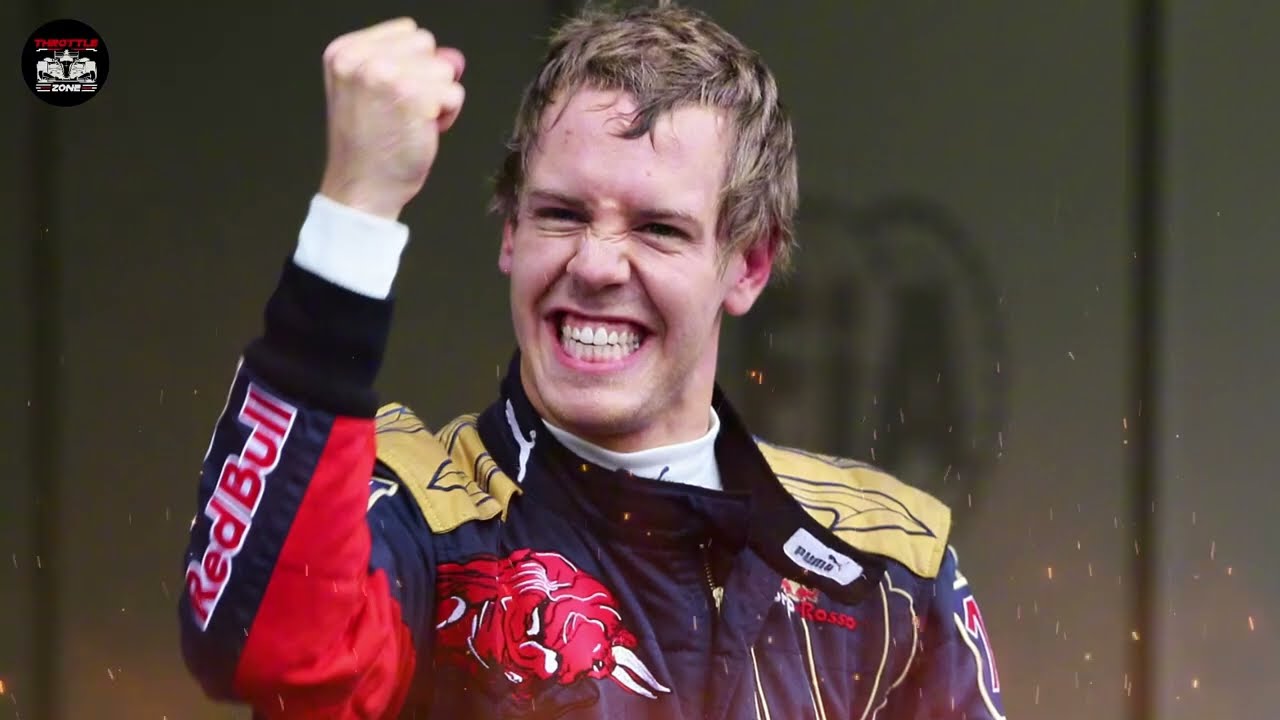
Fast forward to the modern era, where high-definition scrutiny often leads to “over-policing.” The 2019 Canadian Grand Prix featured a vintage battle between two titans: Sebastian Vettel in the Ferrari and Lewis Hamilton in the Mercedes. Vettel, under immense pressure, made a mistake at the chicane, sliding across the grass and rejoining the track just as Hamilton was trying to pass.
It was a clumsy rejoin, certainly, but it was also raw racing. Hamilton had to brake to avoid a collision, but they both continued. The stewards, however, saw it as a “dangerous reentry” and slapped Vettel with a five-second time penalty. The decision effectively killed the race. Vettel crossed the line first but was demoted to second. The German’s fury was palpable and iconic; in parc fermé, he refused to park his car in the runner-up spot, instead rearranging the finishing boards to place the number “1” in front of his empty space. It was a powerful visual protest against a system that many felt was sanitizing the “racing” out of racing.
The Shortest “Race” in History (Belgium 2021)
Sometimes, Race Control ruins a race by refusing to let it happen at all. The 2021 Belgian Grand Prix at Spa-Francorchamps stands as a nadir for modern F1. Faced with relentless heavy rain, officials were paralyzed. Safety is paramount, of course, but the handling of the event was a masterclass in indecision.
After hours of delays, Race Control sent the cars out behind the Safety Car for a few laps—just enough to fulfill the regulatory requirement to award half points—before waving the red flag for good. Fans who had sat in the cold and mud for hours watched a parade, not a race. Drivers were awarded points for a contest that never took place, a decision that felt cynical and commercially driven. It was a stark reminder that in the quest to eliminate all risk, the sport can sometimes eliminate the entertainment entirely.
The “Over-Regulation” of Battle (Mexico 2016 & Spa 2008)
The desire to penalize every infraction often leads to bizarre podium shuffles. The 2016 Mexican Grand Prix ended with a comedy of errors. Max Verstappen finished third on the road but was penalized for cutting a corner. Sebastian Vettel was promoted to third, stood on the podium, and celebrated—only to be penalized hours later for “moving under braking” while defending against Daniel Ricciardo. In the end, Ricciardo, who finished fifth on track, was awarded third place. The podium ceremony was a sham, and the fans left the track not knowing who had actually finished where.
Similarly, the 2008 Belgian Grand Prix saw one of the sport’s greatest battles nullified. Lewis Hamilton and Kimi Räikkönen were dueling on a damp track in the closing stages. Hamilton cut the chicane to avoid a crash, gave the position back, and then immediately re-passed Räikkönen. It was thrilling, edge-of-the-seat stuff. Yet, hours after the champagne, Hamilton was hit with a 25-second penalty, handing the win to Felipe Massa. McLaren argued he had gained no advantage as he ceded the position, but the “letter of the law” prevailed over the spirit of the sport.
Recent Debacles (2024 & 2025)
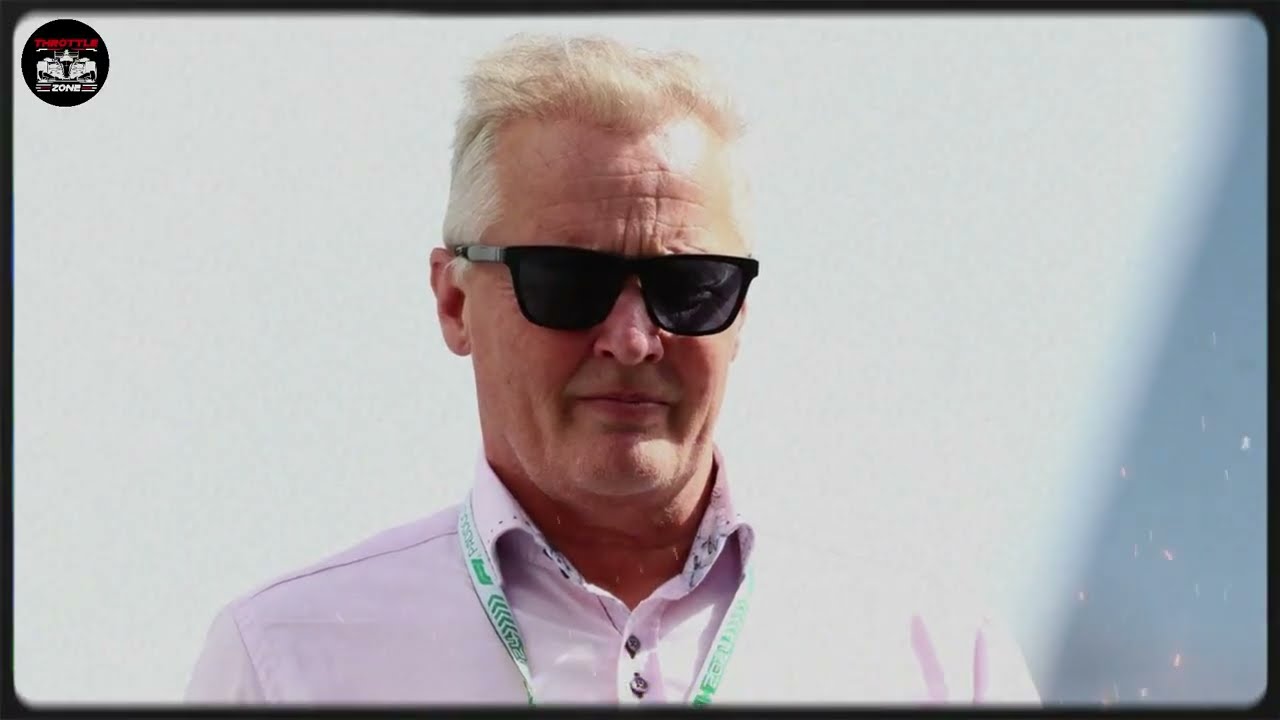
The specter of controversial calls has not faded. The 2024 São Paulo Grand Prix weekend saw a qualifying session marred by a sluggish response to a crash. When Lance Stroll slammed into the wall, Race Control inexplicably waited nearly a minute before throwing the red flag. This delay allowed some drivers to complete their laps while stranding Max Verstappen, who was eliminated in Q2. Accusations of bias flew, with figures like Johnny Herbert coming under fire, but Verstappen silenced the noise with a legendary drive from 17th to 1st.
Even in 2025, Spa-Francorchamps proved to be a magnet for disappointment. Much like 2021, a wet race was effectively neutralized by an overly cautious Race Control, turning what could have been a strategic thriller into a procession behind the Safety Car. The reliance on red flags over wet-weather racing tires has sparked a fresh debate about whether the sport has become too risk-averse to function in adverse conditions.
The Verdict
Formula 1 is a complex beast, balancing the cutting edge of technology with the primal danger of speed. Race Directors have an unenviable job, making split-second decisions with the world watching. However, when the rulebook becomes a straitjacket, or when indecision paralyzes the event, the losers are always the fans. The best races are those where the officials are invisible, allowing the drama to unfold on the asphalt, not in the steward’s office. As history shows, when Race Control steps too far into the limelight, they don’t just manage the race—they ruin it.






