The Silence After the Storm
As the paddock dust settles and the Formula 1 world holds its collective breath for the dawn of the 2026 season, a strange mix of trepidation and quiet optimism hangs over the Brackley headquarters. For a team that once treated winning World Championships as a birthright, the last four years have been a humbling, bruising, and often confusing journey through the wilderness.
It is January 2026. The slate has technically been wiped clean. New regulations, new power units, and a redefined aerodynamic philosophy promise a fresh start. But to understand where Mercedes is going, we must first unflinchingly examine where they have been. The “Ground Effect” era of 2022 to 2025 will go down in history not as another chapter of Silver Arrows dominance, but as a period of stubbornness, “false dawns,” and technical missteps that saw the mighty manufacturer finish behind its own customer teams.
How did a team with the best personnel, the best facilities, and the deepest pockets get it so wrong, for so long? And more importantly, have they truly exorcised the ghosts of the W13, W14, W15, and W16?
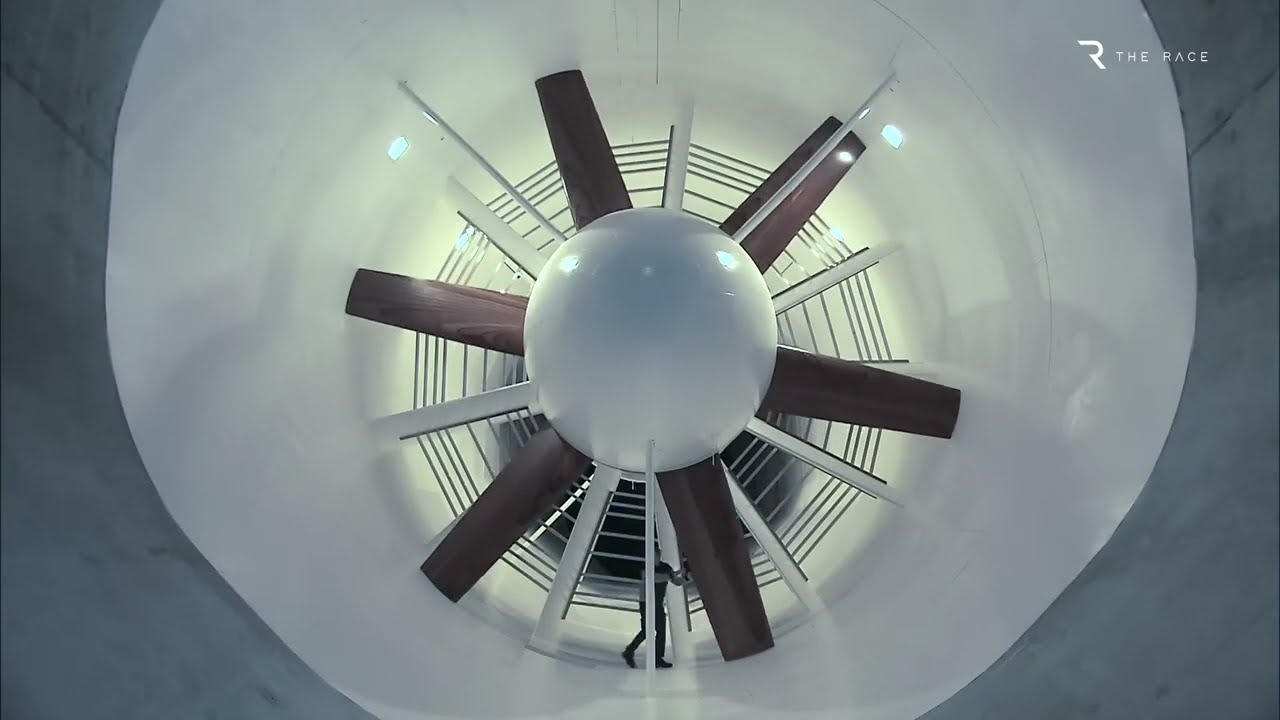
The “Zero Sidepod” Trap: Innovation vs. Reality
The story of Mercedes’ fall begins with a single, bold decision: the “Zero Sidepod” concept. When the 2022 regulations were announced, reintroducing ground effect cars to F1, Mercedes swung for the fences. Their simulation tools—state-of-the-art systems that had helped Lewis Hamilton secure six of his seven titles—predicted eye-watering levels of downforce. In the virtual world, the car was a rocket ship.
But F1 is not raced in a simulator.
When the car hit the asphalt, the reality was a violent, physical rejection of their theory. The car didn’t just drive; it bounced. The phenomenon known as “porpoising” became the defining image of Mercedes’ 2022 campaign. Drivers were rattled—physically and mentally—as the car slammed into the track surface at high speeds. While rival teams like Red Bull and Ferrari quickly identified the problem and adapted, Mercedes found themselves trapped in a prison of their own making.
The tragedy wasn’t just the error; it was the duration of the denial. Because the wind tunnel numbers promised such immense potential, the engineering team, led by brilliant minds who had rarely failed before, became convinced that if they could just “unlock” the performance, they would blow the field away. They spent precious months chasing a ghost, tweaking a concept that was fundamentally flawed for the real world, while their rivals simply built faster, more stable cars.
The Cruel Mirage of the “False Dawn”
What made the last four years so agonizing for Mercedes fans wasn’t just the lack of pace—it was the cruelty of hope. Time and again, the team would find a glimmer of speed, only for it to be snuffed out weeks later.
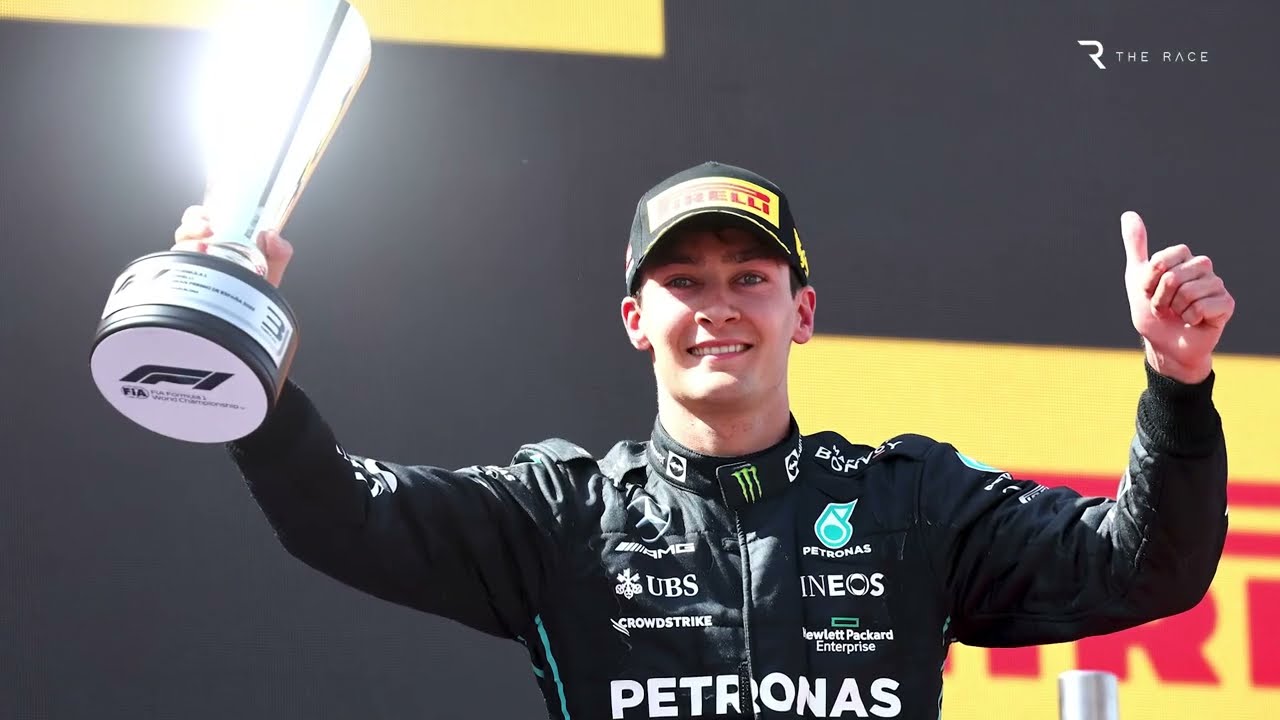
Take the 2022 season. Updates brought to Miami and Spain seemed to cure the bouncing. George Russell finished third; Lewis Hamilton charged through the field. James Vowles, then the team’s strategy director, boldly claimed they had a car that could fight for the championship. It was a mirage. As soon as they pushed the car lower to find that theoretical performance, the bouncing returned, or the car refused to rotate in slow corners.
The ultimate deception came in Brazil, late in 2022. George Russell took a commanding victory. It felt like the breakthrough. It felt like proof that the “Zero Pod” concept worked. In hindsight, this victory was the worst thing that could have happened to them. It convinced the team to double down on an evolution of the flawed car for 2023.
The result? The W14 was a disaster that failed to win a single race—the first winless season for the team in over a decade. They had been tricked by a specific set of track conditions in Brazil, leading them down another blind alley of development.
2024 and 2025: One Step Forward, Two Steps Back
By 2024, the “Zero Sidepods” were gone, but the confusion remained. The team introduced a flexi-wing that brought a sudden, searing hot streak in the summer, winning three out of four races. For a moment, it seemed the empire had struck back. But the inherent weakness of the ground effect regulations bit them again: the car had a setup window so narrow it was like walking a tightrope.
If they set the car up for fast corners, it wouldn’t turn in the slow ones. If they fixed the slow corners, the rear end became unstable at high speed. The drivers were forced into unnatural driving styles, using the throttle to rotate the car, shredding their rear tires in the process.
The low point—and perhaps the most concerning for their 2026 prospects—came in 2025. With rookie sensation Kimi Antonelli now in the seat alongside Russell, the team needed stability. Instead, they delivered a suspension “upgrade” at Imola that made the car objectively worse.
It was intended to work with a new, softer suspension setup, but dynamically, it destabilized the entire platform. Antonelli, trying to find his footing in F1, was fighting a car that was unpredictable and spiteful. It took the team months—until the Hungarian Grand Prix—to fully admit the mistake and remove the parts. For a team of Mercedes’ caliber to spend half a season validating that an “upgrade” was actually a “downgrade” speaks to a fundamental disconnect between their simulation tools and the track—a legacy problem that has plagued them for four years.
The “Soul Searching” at Brackley
So, why should we believe 2026 will be different?
According to insiders, the atmosphere at Brackley has shifted. The arrogance of the dominance era is gone, replaced by a gritty, “soul-searching” humility. Toto Wolff, the team principal who guided them through the golden years, is now famously cautious. “I’m never confident,” Wolff says regarding the new season. It’s a defense mechanism, a shield against the complacency that perhaps blinded them in 2021.
Andrew Shovlin, the Trackside Engineering Director, has admitted that the team was too rigid. They held onto their unique designs long after it was clear that the rest of the grid was converging on a different solution. “You don’t win world championships simply by copying,” Shovlin argued in 2022. By late 2025, the tune had changed to an admission that they should have been more adaptable.
This cultural reset is vital. The team has spent the last year refining their tools, trying to understand why their virtual models lied to them. They’ve moved to push-rod rear suspension (following the trend) and have seemingly accepted that sometimes, the simple solution is the effective one.
The 2026 Power Unit: A Secret Weapon?
If there is a beacon of genuine hope for the Silver Arrows, it lies under the engine cover. The 2026 regulations mark the biggest shake-up in engine rules since 2014—the year Mercedes began their original streak of dominance. The new power units, with a 50/50 split between internal combustion and electric power, are a brand-new engineering challenge.
Rumors in the paddock suggest that Mercedes High Performance Powertrains (HPP) has done it again. There is talk of a breakthrough in compression ratios that could give them a significant horsepower advantage over Ferrari, Red Bull-Ford, and Audi. While Hywel Thomas, head of the power unit project, plays his cards close to his chest, the paddock rumor mill is rarely entirely wrong about engine hierarchies.
If Mercedes has a power advantage, it could mask any lingering deficiencies in the chassis. It was a horsepower advantage that launched their dynasty in 2014; could history be repeating itself?
The Verdict: A Dangerous Competitor Wakes Up
As we stand on the brink of the new season, Mercedes is an enigma. They are a team bruised by failure but hardened by it. They have spent four years learning exactly what not to do.
The 2026 car will feature a return to higher ride heights and a step-plane floor—concepts that move away from the sensitive ground-effect venturi tunnels that tripped Mercedes up so badly. This “clean slate” removes the baked-in disadvantages of the W13 lineage.
Past failure is no guarantee of future success, but it is a powerful motivator. If the team has truly sharpened its tools, fixed the correlation issues between factory and track, and delivered the monster engine that everyone fears they have, the rest of the grid should be worried.
Mercedes has been asleep at the wheel for four years. But if they have truly woken up, the 2026 season won’t just be a comeback; it will be a reckoning. For George Russell and Kimi Antonelli, the time for excuses is over. The Silver Arrows are polished. The engine is fired up. Now, we wait to see if they fly or fall.
News

Inside Shane Richie’s love life: Drug – fuelled orgy with six blondes; real reason he split from Coleen Nolan; six-year ‘affair with fan’
Inside Shane Richie’s love life: Orgy with six blondes; real reason he split from Coleen Nolan; six-year ‘affair with fan’ He’s popular with the ladies… Shane Richie…

SH0CKING REVELATI0N:A sh0cking behind-the-scenes secret revealed about Lizzie Rizzini, the woman replacing Carol Kirkwood on the 6pm weather bulletin
BBC viewers still reeling from the departure of Carol Kirkwood got another surprise last night when presenter Lizzie Rizzini appeared to flash her black lace stockings on…

HEARTBREAKING: Peter Andre’s Tearful Message to Son Junior After SHOCKING Revelation About How He Truly Feels Toward Mum Katie Price — Katie Price’s reaction scares fans.
Peter Andre’s emotional message to son Junior after it’s revealed how he really feels about mum Katie Pri… PETER Andre has shared an emotional message to his…

Ben Shephard opens up about the devastating health battle his wife is facing: “She wakes up crying every single morning…”
Inside This Morning Ben Shephard’s Life Including Rarely Seen Wife and Health Battle Ben Shephard is a name synonymous with British television, renowned for his engaging presentation…

🚨 LIVE TV HEARTBREAK: Good Morning Britain Host Announces ‘Devastating’ Dɘath of Guest Minutes Into Show
Viewers of Good Morning Britain were met with heartbreaking news just minutes into Friday’s (January 30) episode, as co-hosts Kate Garraway and Ranvir Singh reported the tragic…

Emmerdale legend Cain Dingle will never be the same again after a shock cancer diagnosis turns his world upside down
FROure Desk. Full Terms and conditions are available on the website http://www.itv.com/presscentre/itvpictures/terms Emmerdale wouldn’t be Emmerdale without the glowering, grunting embodiment of manliness that is Cain Dingle (Jeff Hordley) But…
End of content
No more pages to load






