The Shadow of a “Nightmare” Season
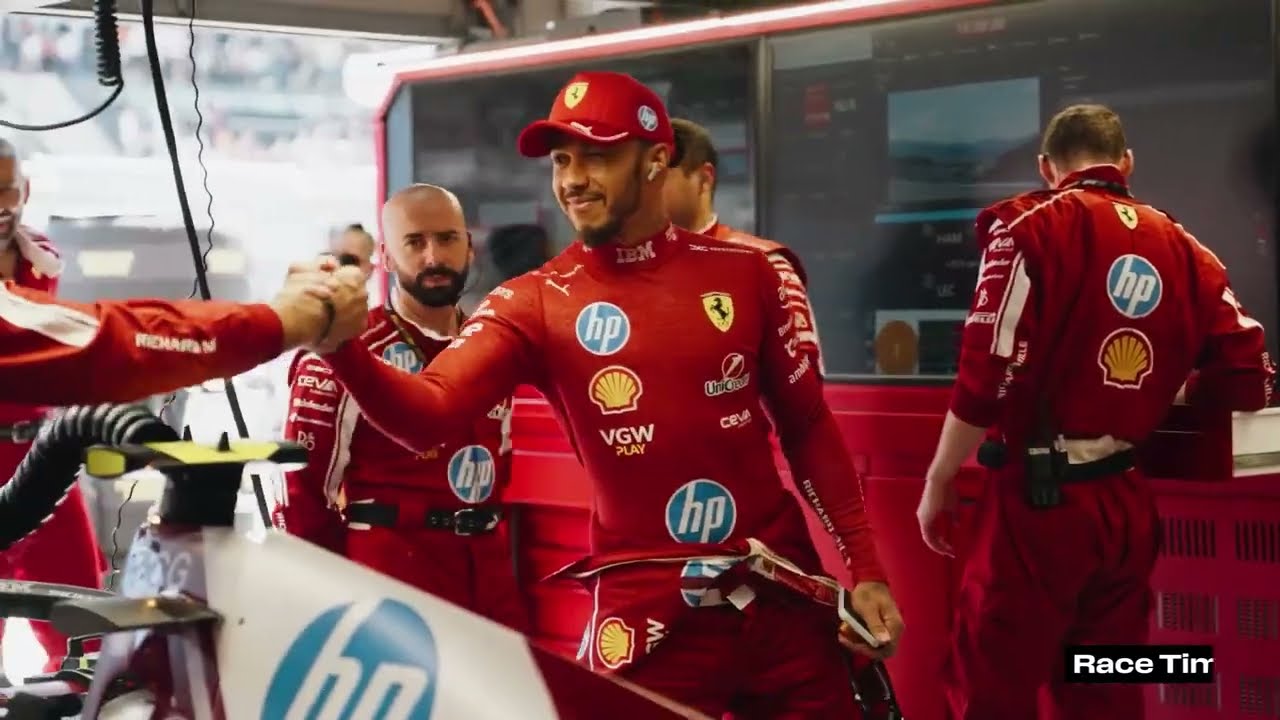
The image of Lewis Hamilton on his first day at Ferrari was supposed to be iconic—a symbol of a new golden era. Instead, as we look back at the 2025 season, that moment now feels like a “photo taken before a disaster.” The seven-time world champion’s debut campaign in red was nothing short of catastrophic. Hamilton, a driver defined by his pursuit of excellence, found himself trapped in a season he described as a “nightmare,” filled with “unbearable amount of anger and rage.”
Finishing sixth in the driver’s championship—behind his teammate Charles Leclerc and without a single podium finish—was a nadir in Hamilton’s illustrious career. Ferrari languished in fourth place in the constructors’ standings, a staggering 435 points behind the champions, McLaren. The dream marriage between the sport’s most successful driver and its most historic team seemed to be crumbling before it even truly began. But as the 2026 season approaches, the winds of change are blowing through Maranello. With a radical technical overhaul and crucial personnel changes, Ferrari is scrambling to prove the doubters wrong and deliver the championship machinery Hamilton desperately seeks.
Fixing the Human Element: A New Voice in the Ear
One of the most critical components of Formula 1 success is the symbiotic relationship between a driver and their race engineer. They must be one mind, balancing support with critical feedback. In 2025, this relationship for Hamilton was fundamentally broken. His dynamic with race engineer Riccardo Adami was fraught with tension and confusion. The nadir of their communication breakdown occurred in Monaco, where a frustrated Hamilton asked, “Are you upset with me or something?” only to receive silence.
While Hamilton publicly defended Adami at the time, his patience had clearly evaporated by the season finale in Abu Dhabi. He hinted heavily that personnel changes were necessary to “optimize our teamwork.” Ferrari has finally acted on this feedback. In an official statement, the team announced that Adami has moved to a new role within the Scuderia Ferrari Driver Academy, focusing on future talent.
This departure paves the way for a reunion that could reignite Hamilton’s confidence. The frontrunner to replace Adami is Luca Della, a familiar face from Hamilton’s championship-winning days at Mercedes. Della, who joined Ferrari in 2025 after working as Hamilton’s performance engineer at Mercedes since 2021, brings an invaluable asset to the garage: rapport. Having worked together for years, they already speak the same language. In a sport where split-second decisions define outcomes, having an engineer who intuitively understands the driver’s needs is a game-changer. As reports suggest, this move mirrors the successful engineering shuffle implemented for Charles Leclerc earlier, proving Ferrari is willing to restructure to keep its stars happy.
The 2026 Engine War: Mercedes’ Loophole vs. Ferrari’s Revolution
Beyond the internal politics, the 2026 season marks the beginning of a new era in Formula 1 technical regulations, particularly concerning power units. This regulatory reset offers a rare opportunity for teams to leapfrog the competition, and the battle lines are already being drawn.
Early whispers from the paddock suggest Mercedes may have found a clever “loophole” in the regulations. They have reportedly managed to increase their engine’s compression ratio beyond the standard 16:1 limit set in the rules, potentially unlocking an extra 15 horsepower. The FIA has scrutinized this innovation and, for now, deemed it legal—a classic case of F1 ingenuity pushing the boundaries.
However, Ferrari is not entering this gunfight with a knife. While Mercedes chases loopholes, Ferrari has opted for a “revolutionary engine design” that adheres strictly to the rules but reimagines the materials used. The Scuderia has committed to using steel cylinder heads for their 2026 power unit, a significant departure from the traditional lightweight aluminium used by competitors.
The Gamble on Steel: Weight vs. Power
The decision to switch to steel is a calculated risk. Historically, aluminium was the material of choice due to its lightness. But with the minimum weight of the power unit increasing from 120kg to 150kg in 2026, Ferrari’s engineers determined that “maximum lightweight construction” is no longer the primary constraint.
The advantage of steel lies in its durability under extreme conditions. It allows for combustion pressures and temperatures that were previously unattainable, leading to significantly more efficient combustion. This efficiency is crucial in an era where fuel flow is limited and sustainability is key. Initially, there were concerns about reliability, leading to the temporary abandonment of the design. However, with the assistance of Austrian engine specialist AVL, Ferrari has reportedly resolved these durability issues, giving them the confidence to go all-in on steel.
Furthermore, Ferrari has developed a new high-tech battery that is lighter and more compact than previous iterations. This, combined with the smaller radiators required for the new engine, allows for a tighter aerodynamic packaging at the rear of the car. This aerodynamic flexibility could be the “secret weapon” that offsets any raw power deficit, allowing the car to slice through the air more efficiently.
Confidence from the Customer Teams
The confidence in Ferrari’s new power unit isn’t just internal propaganda; it’s echoed by their partners. Graeme Lowdon, chief of the new Cadillac F1 team, expressed high confidence in the Ferrari engine following a private shakedown at Silverstone. Emphasizing the legality of their package in a subtle dig at Mercedes, Lowdon stated, “We know that Ferrari have completely followed the rules… That gives us a lot of confidence.”
Cadillac’s successful firing up and shakedown of the engine marks a significant milestone. “I guess we were the first to fire up,” Lowdon noted, highlighting that the Ferrari ecosystem is ahead of the curve in terms of on-track validation. If a brand-new team can run the unit reliably, it bodes well for the factory team in Maranello.
The Verdict: Hope or Hype?
As we stand on the precipice of the 2026 season, the narrative surrounding Ferrari is a mix of caution and optimism. Unconfirmed reports of delays and a “raging” Fred Vasseur contrast sharply with the calm confidence emanating from Italian insiders who claim everything is going to plan.
The reality is that 2026 is a journey into the unknown. With electric power now accounting for nearly 50% of the unit’s output and cars running on 100% sustainable fuels, the variables are immense. No simulation can fully predict the pecking order until the cars hit the track for qualifying in Australia.
For Lewis Hamilton, the stakes couldn’t be higher. He moved to Ferrari to chase an eighth world title, not to fight for the scraps of the top ten. The changes made—both in the garage with Luca Della and in the engine bay with the steel cylinder heads—demonstrate that Ferrari is not accepting mediocrity. They are swinging for the fences. After a year of “nightmares,” the pieces are in place for a dream resurrection. Whether it leads to glory or another season of heartbreak remains to be seen, but one thing is certain: Ferrari is doing everything in its power to ensure 2026 is their year.
News

Inside Shane Richie’s love life: Drug – fuelled orgy with six blondes; real reason he split from Coleen Nolan; six-year ‘affair with fan’
Inside Shane Richie’s love life: Orgy with six blondes; real reason he split from Coleen Nolan; six-year ‘affair with fan’ He’s popular with the ladies… Shane Richie…

SH0CKING REVELATI0N:A sh0cking behind-the-scenes secret revealed about Lizzie Rizzini, the woman replacing Carol Kirkwood on the 6pm weather bulletin
BBC viewers still reeling from the departure of Carol Kirkwood got another surprise last night when presenter Lizzie Rizzini appeared to flash her black lace stockings on…

HEARTBREAKING: Peter Andre’s Tearful Message to Son Junior After SHOCKING Revelation About How He Truly Feels Toward Mum Katie Price — Katie Price’s reaction scares fans.
Peter Andre’s emotional message to son Junior after it’s revealed how he really feels about mum Katie Pri… PETER Andre has shared an emotional message to his…

Ben Shephard opens up about the devastating health battle his wife is facing: “She wakes up crying every single morning…”
Inside This Morning Ben Shephard’s Life Including Rarely Seen Wife and Health Battle Ben Shephard is a name synonymous with British television, renowned for his engaging presentation…

🚨 LIVE TV HEARTBREAK: Good Morning Britain Host Announces ‘Devastating’ Dɘath of Guest Minutes Into Show
Viewers of Good Morning Britain were met with heartbreaking news just minutes into Friday’s (January 30) episode, as co-hosts Kate Garraway and Ranvir Singh reported the tragic…

Emmerdale legend Cain Dingle will never be the same again after a shock cancer diagnosis turns his world upside down
FROure Desk. Full Terms and conditions are available on the website http://www.itv.com/presscentre/itvpictures/terms Emmerdale wouldn’t be Emmerdale without the glowering, grunting embodiment of manliness that is Cain Dingle (Jeff Hordley) But…
End of content
No more pages to load






