In the high-octane world of motorsport, there is an unwritten rule: you start young. Usually, that means four years old, barely out of diapers, gripping a steering wheel before you can even read. You spend a decade grinding through the karting ranks, burning through money and tires, hoping that by the time you hit your teenage years, someone, anyone, notices you. It is a slow, brutal, and often heartbreaking ascent.
But rules, as they say, are meant to be broken. And Alba Larsen didn’t just break them; she shattered them into a million pieces.
At 16 years old, this Danish phenomenon has just achieved what most drivers spend a lifetime chasing: a spot in the Ferrari Driver Academy. For the 2026 F1 Academy season, she won’t just be another driver on the grid; she will be the face of the Prancing Horse, carrying the weight of the most iconic brand in motorsport history on her shoulders. But the truly shocking part isn’t where she is—it’s how fast she got there.
The Three-Year Miracle
To understand the magnitude of Larsen’s achievement, you have to rewind to 2020. The world was in lockdown. While most of us were learning to bake sourdough bread or binge-watching TV series, Alba Larsen decided to try karting. She wasn’t a toddler with a racing lineage; she was a pre-teen starting from scratch.
In a sport where experience is the only currency that matters, she was technically bankrupt. Her rivals had been racing since they were four. They had thousands of laps, hundreds of race starts, and years of muscle memory banked away. Alba had none of that.
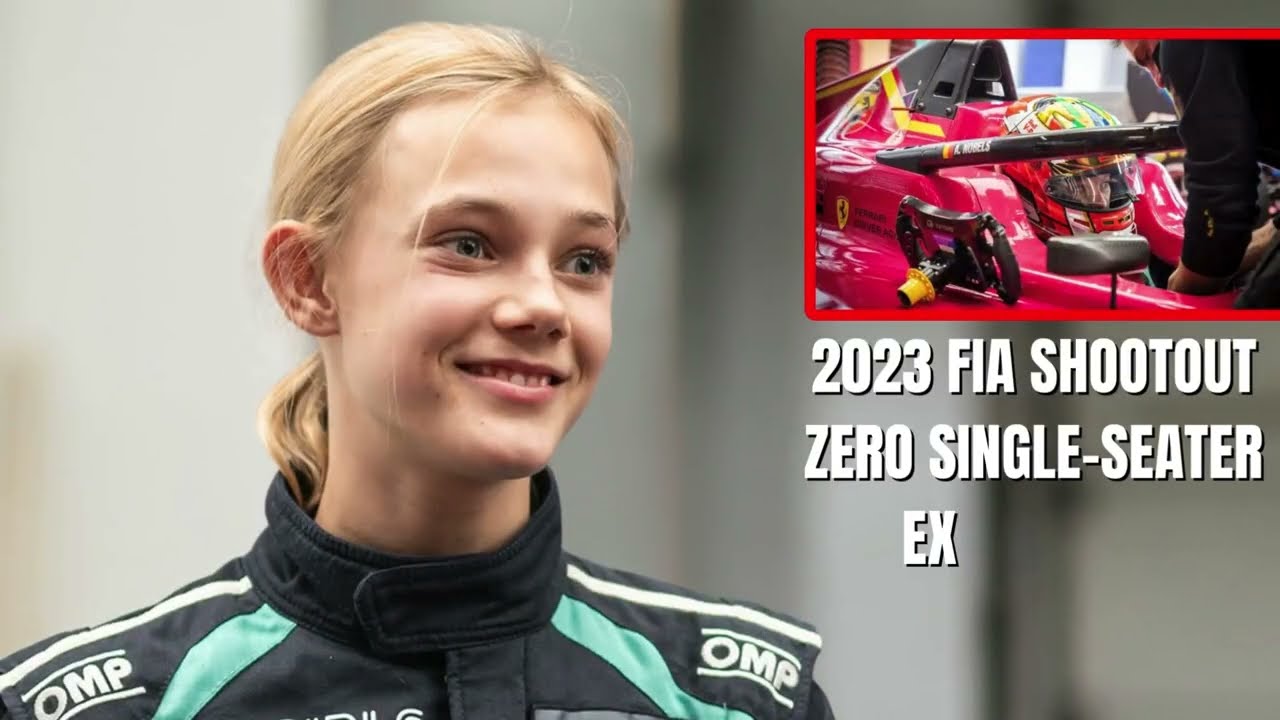
Yet, by 2023, just three years after sitting in a kart for the first time, she entered the FIA Girls on Track shootout. The catch? She had zero experience in a single-seater car. None. It should have been a disaster. It should have been a humbling learning experience where she was outpaced by the veterans. Instead, within days, she was matching professional reference lap times.
This wasn’t just talent; it was a freakish ability to adapt. While others struggled with the transition from karts to cars, struggling with the weight transfer and the braking points, Alba simply figured it out. It was this specific trait—this “adapt or die” mentality—that caught the eye of the scouts. Ferrari saw someone who didn’t need ten years to learn a track; she needed ten laps.
The Raw Speed of a Rookie
Fast forward to her rookie season in the 2025 F1 Academy. The expectations were managed; after all, she was still arguably the least experienced driver in the field. But the data told a different story.
Alba Larsen proved to be a “Qualifying Queen.” In motorsport, Saturday pace is often considered the purest measure of a driver’s raw talent. You can learn racecraft, you can learn tire management, but raw, blistering speed over a single lap? You either have it, or you don’t. Alba has it.
On her debut in Shanghai, a track known for its technical difficulty, she grabbed P3. It was a statement. Later, in the neon-lit streets of Las Vegas, she missed out on P2 by a microscopic 0.017 seconds. These aren’t the stats of a rookie finding her feet; these are the stats of a predator finding her range.
However, raw speed comes with its own volatility. Her weakness, as exposed in that same Las Vegas weekend, has been race management under extreme pressure. While leading the race, a brush with the wall ended her day. It was a heart-stopping moment, a reminder of the razor-thin margins of street circuits. But even in that failure, there was a silver lining. Ferrari doesn’t mind a driver who crashes while pushing for the win; they worry about the driver who is slow and safe. You can teach a fast driver to stop crashing, but you can’t teach a slow driver to be fast.
The Magnussen Connection
No driver makes it to the top alone, and Alba has a weapon in her arsenal that few others can claim: Kevin Magnussen. The F1 veteran and fellow Dane isn’t just a distant figurehead; he is an active mentor.
This relationship goes beyond simple PR photos. Magnussen, known for being one of the grittiest, hardest-to-pass drivers on the Formula 1 grid, is teaching Alba the “dark arts” of racecraft. How to defend when your tires are gone, how to position your car to make yourself wide, how to psychologically break the driver behind you—these are lessons you can’t learn from a simulator.
Speaking of simulators, Alba’s induction into the Ferrari Driver Academy grants her access to the hallowed grounds of Maranello. She is now plugging into the same data streams, the same engineers, and the same simulator technology used by Charles Leclerc and Lewis Hamilton. This is an education that money literally cannot buy. It turns a trendy, raw talent into a lethal, driven weapon.
The Pressure of the Red Suit
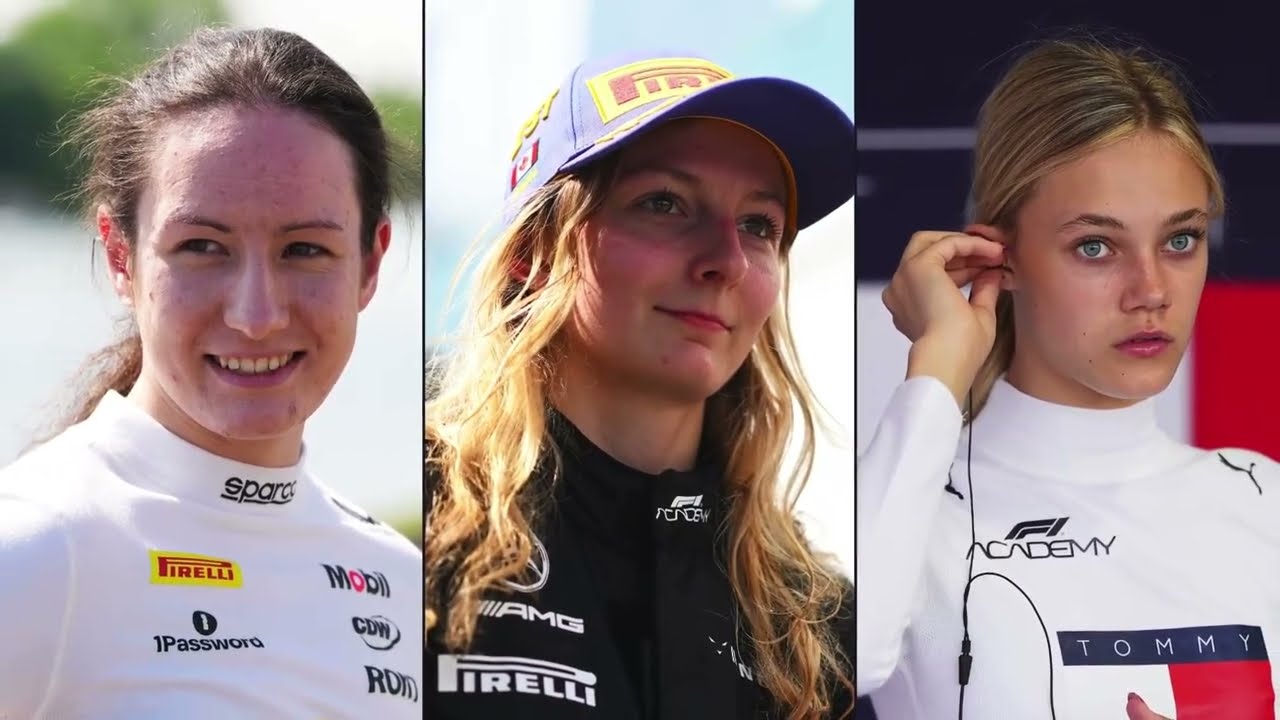
The transition to 2026 is not just a change of year; it’s a change of identity. In 2025, Alba raced under the developmental branding of Tommy Hilfiger. It was prestigious, sure, but it wasn’t Ferrari.
In 2026, the car turns red. The suit turns red. The expectations turn heavy.
Ferrari is not a team that celebrates participation. They celebrate victory. The P4 finishes that were impressive in her rookie year will no longer be enough. The roadmap is clear and brutal: dominate the F1 Academy, graduate to Formula 3, and keep climbing toward the ultimate ceiling that has held firm for decades.
The last time a woman entered a Formula 1 Grand Prix weekend was in 1992. That is a drought of nearly half a century. Ferrari, a team that loves history more than any other, wants to be the one to break that streak. They have placed their bet on Alba Larsen.
The Road Ahead
Alba knows that 2026 is the “make or break” year. To prepare, she is undertaking a punishing winter schedule. She is racing in the F4 UAE championship and returning to the brutal proving grounds of the British F4 championship. She is quite literally doing double the work of her peers, logging more miles, facing more starts, and experiencing more chaos to ensure that when the lights go out for the F1 Academy season, she is ready.
This is a high-stakes gamble. Ferrari is banking on the idea that her steep learning curve hasn’t plateaued. They believe that the girl who went from lockdown hobbyist to pro racer in three years has another gear left to find.
Is the pressure of the Prancing Horse too much, too soon? Perhaps. But if there is one thing we have learned about Alba Larsen, it’s that she doesn’t care about timelines. She doesn’t care about how long it’s supposed to take. She only cares about how fast she can go. And right now, she looks unstoppable.
News

Inside Shane Richie’s love life: Drug – fuelled orgy with six blondes; real reason he split from Coleen Nolan; six-year ‘affair with fan’
Inside Shane Richie’s love life: Orgy with six blondes; real reason he split from Coleen Nolan; six-year ‘affair with fan’ He’s popular with the ladies… Shane Richie…

SH0CKING REVELATI0N:A sh0cking behind-the-scenes secret revealed about Lizzie Rizzini, the woman replacing Carol Kirkwood on the 6pm weather bulletin
BBC viewers still reeling from the departure of Carol Kirkwood got another surprise last night when presenter Lizzie Rizzini appeared to flash her black lace stockings on…

HEARTBREAKING: Peter Andre’s Tearful Message to Son Junior After SHOCKING Revelation About How He Truly Feels Toward Mum Katie Price — Katie Price’s reaction scares fans.
Peter Andre’s emotional message to son Junior after it’s revealed how he really feels about mum Katie Pri… PETER Andre has shared an emotional message to his…

Ben Shephard opens up about the devastating health battle his wife is facing: “She wakes up crying every single morning…”
Inside This Morning Ben Shephard’s Life Including Rarely Seen Wife and Health Battle Ben Shephard is a name synonymous with British television, renowned for his engaging presentation…

🚨 LIVE TV HEARTBREAK: Good Morning Britain Host Announces ‘Devastating’ Dɘath of Guest Minutes Into Show
Viewers of Good Morning Britain were met with heartbreaking news just minutes into Friday’s (January 30) episode, as co-hosts Kate Garraway and Ranvir Singh reported the tragic…

Emmerdale legend Cain Dingle will never be the same again after a shock cancer diagnosis turns his world upside down
FROure Desk. Full Terms and conditions are available on the website http://www.itv.com/presscentre/itvpictures/terms Emmerdale wouldn’t be Emmerdale without the glowering, grunting embodiment of manliness that is Cain Dingle (Jeff Hordley) But…
End of content
No more pages to load






