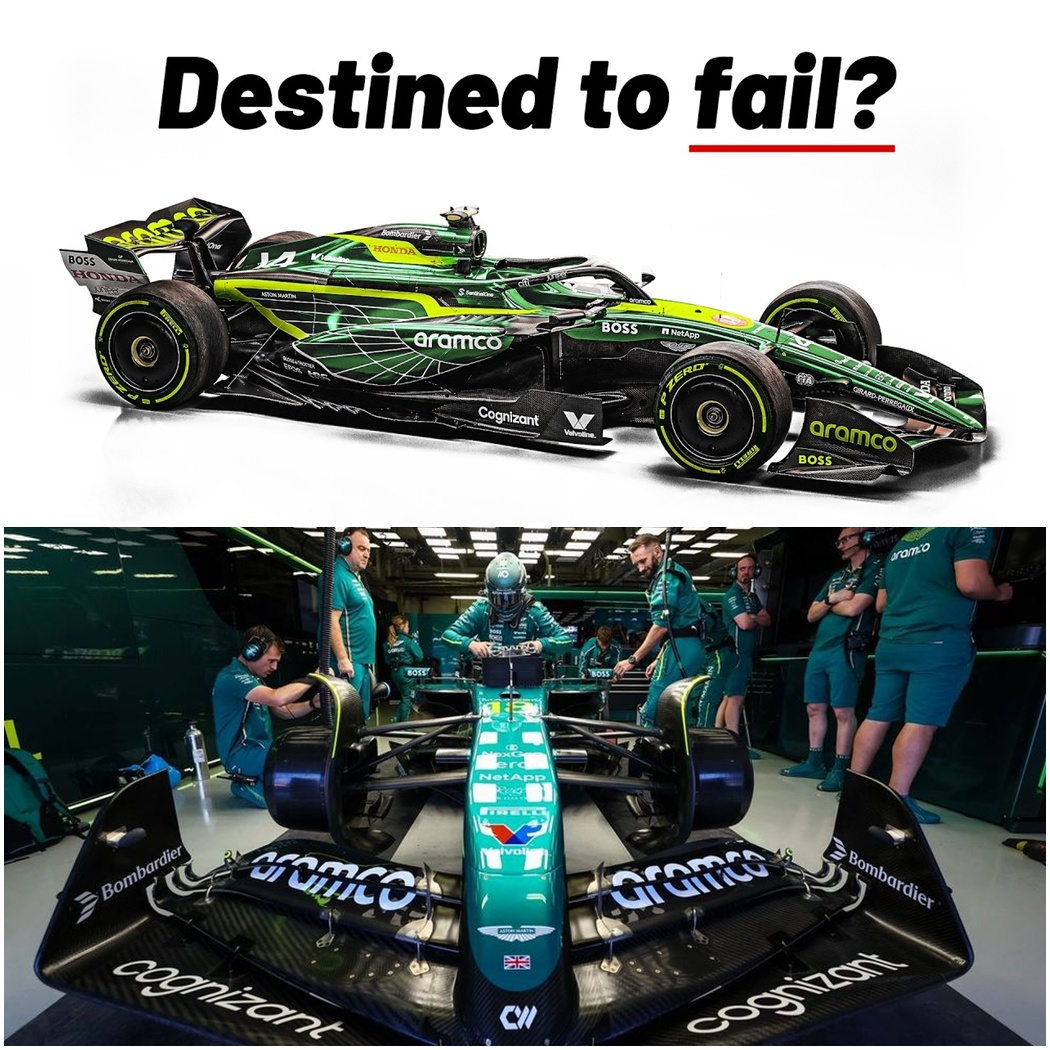
In the high-octane world of Formula 1, cash is king, but culture is the kingdom. Back in 2021, when the iconic British racing green of Aston Martin returned to the grid, the team’s billionaire owner, Lawrence Stroll, made a bold proclamation. He stated that, realistically, it would take four to five years for the Silverstone-based outfit to be fighting for the World Championship. It was a timeline that fans and pundits alike accepted as ambitious but plausible, given the sheer scale of investment being poured into the project.
Fast forward to today. We are standing on the precipice of the 2026 season—the very deadline Stroll set for success—and the reality is starkly different from the dream. Despite the glitzy launch of state-of-the-art facilities, the recruitment of top-tier engineering talent, and the backing of global giants like Aramco and Honda, Aston Martin appears no closer to the title fight than they were five years ago. In fact, a deep dive into their trajectory suggests they might be on course to become one of the most expensive flops in the history of the sport.
The Illusion of Progress: A Revolving Door of Chaos
The fundamental pillar of any successful Formula 1 team is stability. You can look at the dominance of Red Bull Racing or the resurgence of McLaren as prime examples. These teams identified their core leadership, stuck by them through the lean years, and allowed a culture of continuous improvement to mature. Aston Martin, however, has seemingly done the exact opposite, falling into the same trap that has plagued manufacturer teams like Alpine for the last decade.
Since their rebranding, the team has operated with a chaotic “revolving door” policy regarding their senior personnel. It is a managerial merry-go-round that is almost dizzying to track.
It began with a leadership team that actually had a proven track record of punching above its weight. The original lineup featured Otmar Szafnauer as Team Principal and Andrew Green as Technical Director—men who had steered the team through its Force India and Racing Point eras with shoestring budgets. They were joined by former McLaren boss Martin Whitmarsh as CEO. But this stability was short-lived.
By 2022, the purge had begun. Szafnauer was out, replaced by Mike Krack. Dan Fallows was poached from Red Bull to be the new Technical Director, eager to step out of Adrian Newey’s shadow. For a brief moment in 2023, things seemed to settle, and the arrival of Fernando Alonso brought a renewed sense of hope. But the chaos returned with a vengeance in 2024 and 2025.
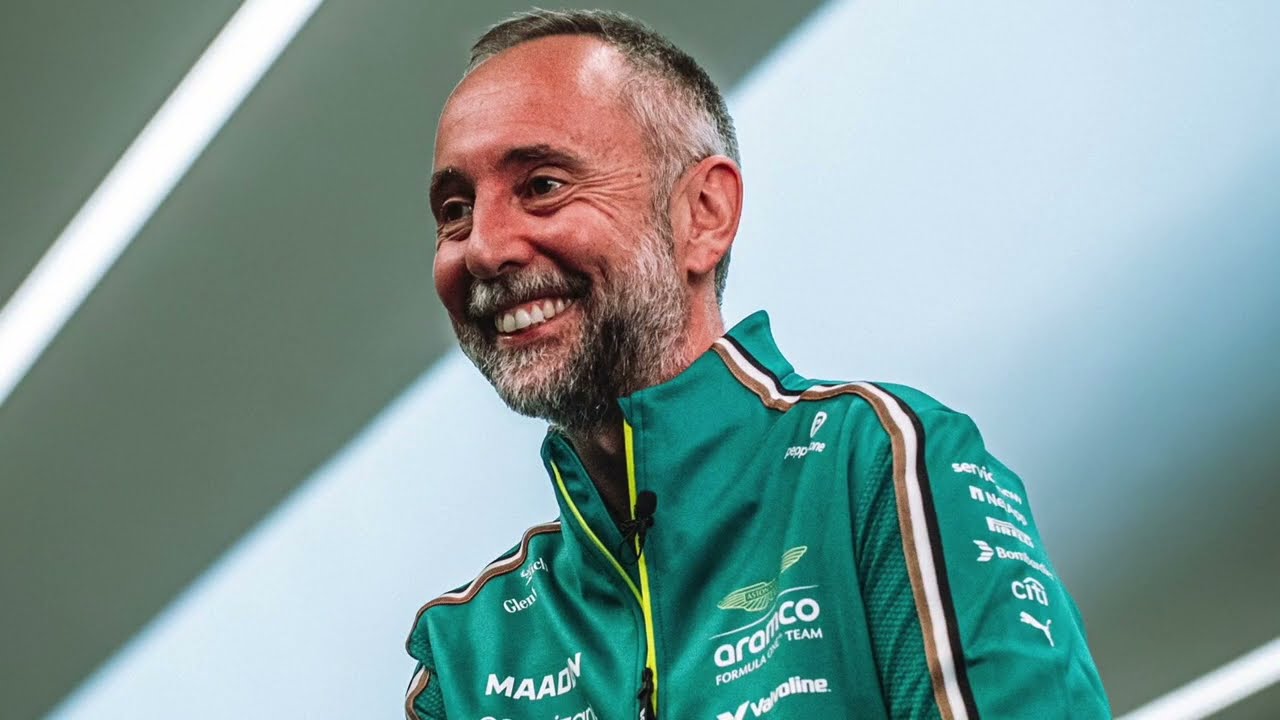
In a staggering sequence of moves, Martin Whitmarsh departed, and Mercedes’ legendary engine guru Andy Cowell was brought in as CEO. Enrico Cardile joined from Ferrari as Chief Technical Officer. Then, in yet another shake-up, Mike Krack was demoted to “Chief Trackside Officer,” effectively sidelining him, while Cowell took on the dual role of CEO and Team Principal. Just when observers thought the dust had settled, Dan Fallows—once heralded as the key to their technical future—left the team.
The Adrian Newey Gamble
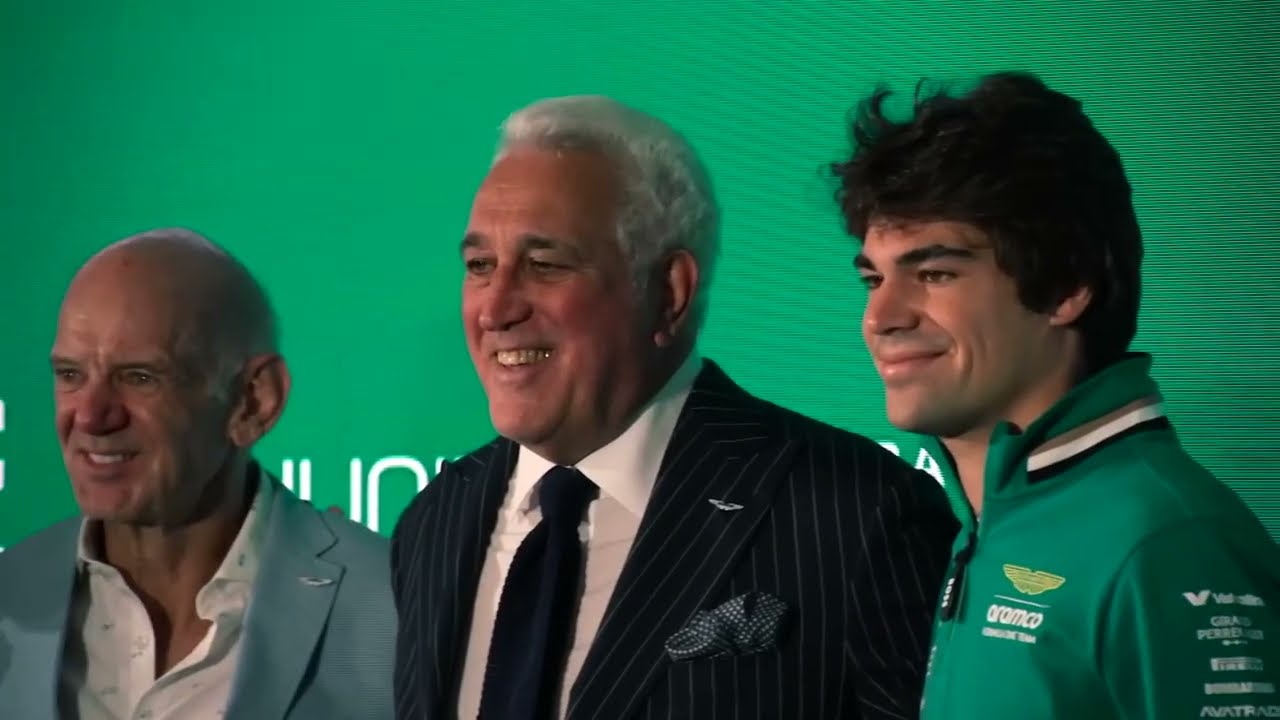
The crowning jewel in Lawrence Stroll’s recruitment drive is undoubtedly Adrian Newey, the most decorated designer in F1 history. However, his arrival has triggered what can only be described as a nuclear restructuring. Newey didn’t just join as a designer; he joined as a “Managing Technical Partner” and, in a move that shocked the paddock, was announced as the Team Principal for 2026.
This unprecedented move has come at a cost. Reports indicate that Newey’s restructuring has led to the removal of seven senior engineers, including Aerodynamics Director Eric Blandin. While Newey’s genius is unquestionable, his commitment to the day-to-day grind of the Team Principal role is already in doubt. When asked about the position, Newey conspicuously left the door open to stepping down from the role partway through the season, hinting that yet another person could take the helm by the end of 2026. This suggests that the instability is far from over, with the team facing the prospect of having multiple Team Principals within a single regulation cycle.
The Mirage of 2023
Defenders of the Aston Martin project often point to the start of the 2023 season as proof of concept. It was, admittedly, a glorious period where the team finished fifth in the championship, bagging eight podiums courtesy of Fernando Alonso’s brilliance. However, context is everything. Even Mike Krack admitted at the time that their success was largely due to Mercedes and Ferrari dropping the ball with their car concepts.
Once the heavy hitters found their footing in 2024, Aston Martin didn’t just stall; they regressed. The team has shown a worrying inability to develop their car throughout a season—a critical weakness in the development war of F1. A prime example occurred at the 2024 United States Grand Prix, where a major upgrade package performed so poorly that the team had to revert to an older specification, effectively tanking their performance for the remainder of the year. This failure to correlate wind tunnel data with on-track performance is a damning indictment of a team that supposedly possesses the best tools money can buy.
The Lance Stroll Dilemma
Perhaps the most uncomfortable conversation surrounding Aston Martin is the one about its drivers. On one side of the garage, you have Fernando Alonso, a double World Champion who, despite his age, remains the team’s only consistent competitive force. On the other side is Lance Stroll, the owner’s son.
Critics argue that Lance Stroll’s permanent seat at the team is a “contradiction” to their championship aspirations. How can a team that aggressively headhunts the best engineers and managers settle for a driver who is consistently outperformed by his teammate? Stroll’s presence imposes a “self-created cap” on the team’s results.
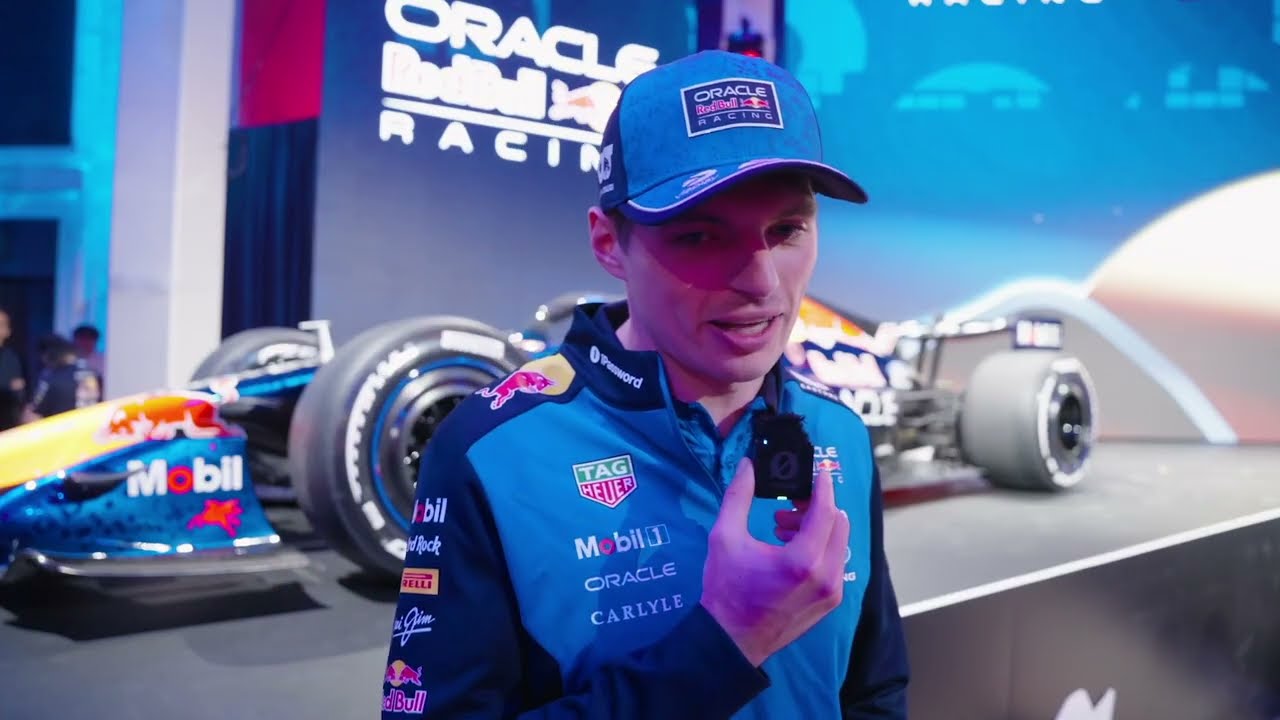
This creates a massive strategic vulnerability. With Alonso nearing retirement, Aston Martin needs to attract a top-tier replacement—someone of the caliber of Max Verstappen or George Russell. But why would a future World Champion join a midfield team that is effectively being dragged along by a single driver, knowing that the second seat is occupied by someone who cannot help in the constructors’ battle?
2026: No More Excuses
As the sport heads into the revolutionary 2026 regulations—featuring major changes to both aerodynamics and power units—Aston Martin has run out of excuses. They have the “shiny new” factory, the cutting-edge wind tunnel, and the status of a Honda Works team. They have partners like Valvoline and Aramco delivering sustainable fuels and lubricants.
The pieces are there, but the puzzle remains unsolved. The pressure now falls squarely on Adrian Newey and Andy Cowell to deliver immediate results. If the team starts 2026 on the back foot and fails to show a clear curve of development, the project could be deemed a colossal failure.
In Formula 1, spending money is the easy part. Building a winning culture takes time, patience, and stability—luxuries that Aston Martin seems unwilling to afford itself. Unless they can stop the internal chaos and bridge the gap between their ambition and their reality, the “British Ferrari” risks becoming nothing more than a cautionary tale of how not to run a racing team.
News

Inside Shane Richie’s love life: Drug – fuelled orgy with six blondes; real reason he split from Coleen Nolan; six-year ‘affair with fan’
Inside Shane Richie’s love life: Orgy with six blondes; real reason he split from Coleen Nolan; six-year ‘affair with fan’ He’s popular with the ladies… Shane Richie…

SH0CKING REVELATI0N:A sh0cking behind-the-scenes secret revealed about Lizzie Rizzini, the woman replacing Carol Kirkwood on the 6pm weather bulletin
BBC viewers still reeling from the departure of Carol Kirkwood got another surprise last night when presenter Lizzie Rizzini appeared to flash her black lace stockings on…

HEARTBREAKING: Peter Andre’s Tearful Message to Son Junior After SHOCKING Revelation About How He Truly Feels Toward Mum Katie Price — Katie Price’s reaction scares fans.
Peter Andre’s emotional message to son Junior after it’s revealed how he really feels about mum Katie Pri… PETER Andre has shared an emotional message to his…

Ben Shephard opens up about the devastating health battle his wife is facing: “She wakes up crying every single morning…”
Inside This Morning Ben Shephard’s Life Including Rarely Seen Wife and Health Battle Ben Shephard is a name synonymous with British television, renowned for his engaging presentation…

🚨 LIVE TV HEARTBREAK: Good Morning Britain Host Announces ‘Devastating’ Dɘath of Guest Minutes Into Show
Viewers of Good Morning Britain were met with heartbreaking news just minutes into Friday’s (January 30) episode, as co-hosts Kate Garraway and Ranvir Singh reported the tragic…

Emmerdale legend Cain Dingle will never be the same again after a shock cancer diagnosis turns his world upside down
FROure Desk. Full Terms and conditions are available on the website http://www.itv.com/presscentre/itvpictures/terms Emmerdale wouldn’t be Emmerdale without the glowering, grunting embodiment of manliness that is Cain Dingle (Jeff Hordley) But…
End of content
No more pages to load






