The sound inside the Red Bull Powertrains facility is deafening, a mechanical scream tearing through the sterile air at 15,000 revolutions per minute. For the first time in two decades, a Ford badge is blurring on a Formula 1 power unit, spinning violently on the dynamometer.
To the casual observer, this is just the return of a racing giant. But for Mark Rushbrook, Ford’s Global Director of Motorsports, and the anxious engineers watching data streams flicker across their monitors, this is not a game. It is a rescue mission.
As the automotive world stands on the precipice of the 2026 Formula 1 regulations, Ford has pushed all its chips—half a billion dollars’ worth—into the center of the table. Their bet? That the global rush toward fully electric vehicles is premature, flawed, and potentially ruinous. And they are using the world’s fastest sport to prove it.
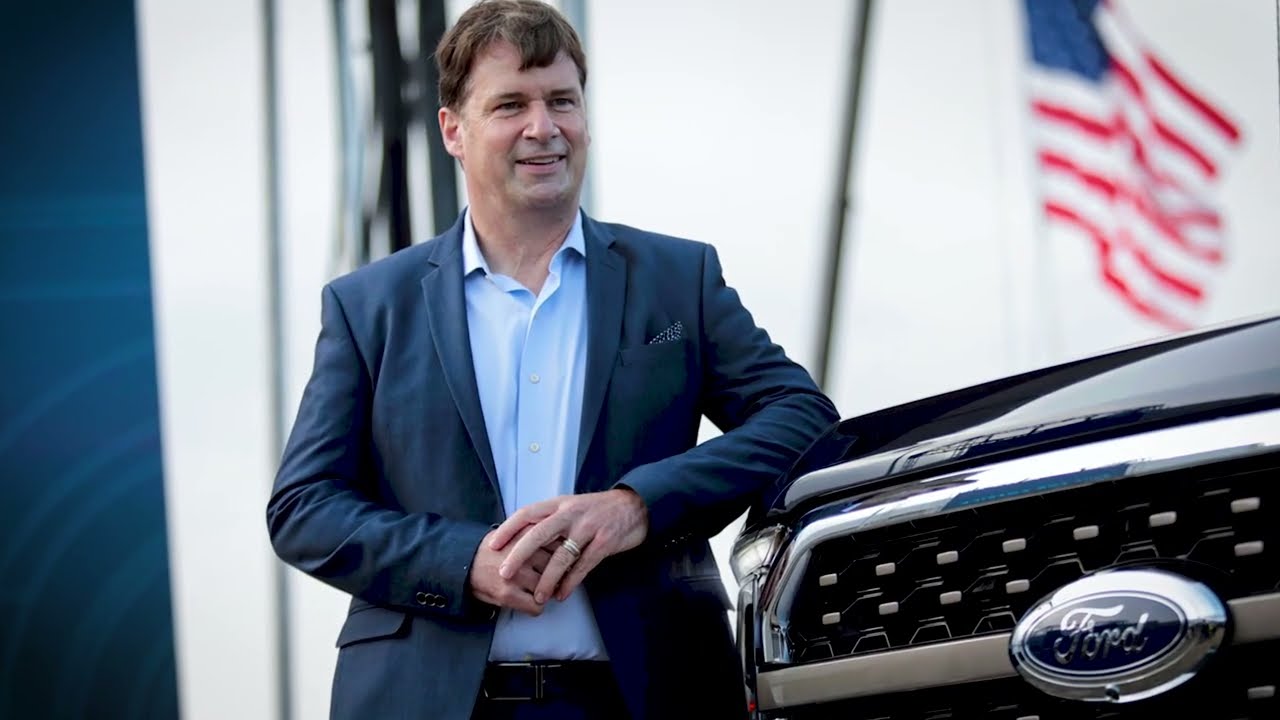
The Bleeding Blue Oval
To understand why Ford is desperate for this partnership to work, you have to look away from the race track and toward the balance sheets. The reality is stark: Ford’s electric dream has turned into a financial nightmare.
By late 2024, the company’s “Model E” electric vehicle division reported a staggering loss of $5.1 billion—an even deeper wound than the $4.7 billion bled the year prior. The losses are projected to continue through 2025. In the fourth quarter of 2024 alone, Ford lost approximately $36,000 on every single electric vehicle it sold.
Dealership lots across America are becoming graveyards for unsold inventory. The F-150 Lightning, once heralded as the truck that would change the world, sits stagnant. The Mustang Mach-E isn’t moving fast enough to justify the factory lights staying on.
“CEO Jim Farley admitted in February 2025 that large electric vehicles have unresolvable issues,” an industry insider notes. “The batteries are too heavy, the aerodynamics are a mess for trucks, and the towing capacity destroys the range. They canceled a three-row electric SUV and ate $1.9 billion in losses because they knew they couldn’t make a dime on it.”
Ford needed an escape hatch. They needed a way to tell the world, regulators, and shareholders that there is another path—one that doesn’t involve alienating their core customers or bankrupting the company.
Enter Formula 1.
The 2026 Hybrid Battlefield
The timing of Ford’s return is surgical. They aren’t coming back for the old V8 era, nor did they rush into the early hybrid dominance of Mercedes. They waited for the 2026 regulations—the most extreme engineering challenge in racing history.
The new rules call for a radical split: the raw power of the internal combustion engine is being slashed from 750 horsepower to 540. To fill that void, the electric hybrid system is being supercharged, tripling its output to 470 horsepower. It is a true 50/50 partnership between gas and electricity, creating a 1,000-horsepower beast running on 100% sustainable fuels.
This is the narrative Ford craves. By mastering this “high-speed balancing act,” Ford intends to demonstrate that the future of performance isn’t pure electric—it’s hybrid.
“If electric powertrains were genuinely superior for performance, F1 would have gone full electric years ago,” argues a leading F1 technical analyst. “They didn’t. They looked at Formula E, where cars are still 16 seconds a lap slower than F1 around Monaco, and said ‘No thanks.’ Formula 1 knows that to keep the soul of the sport—the sound, the speed, the drama—you need combustion.”
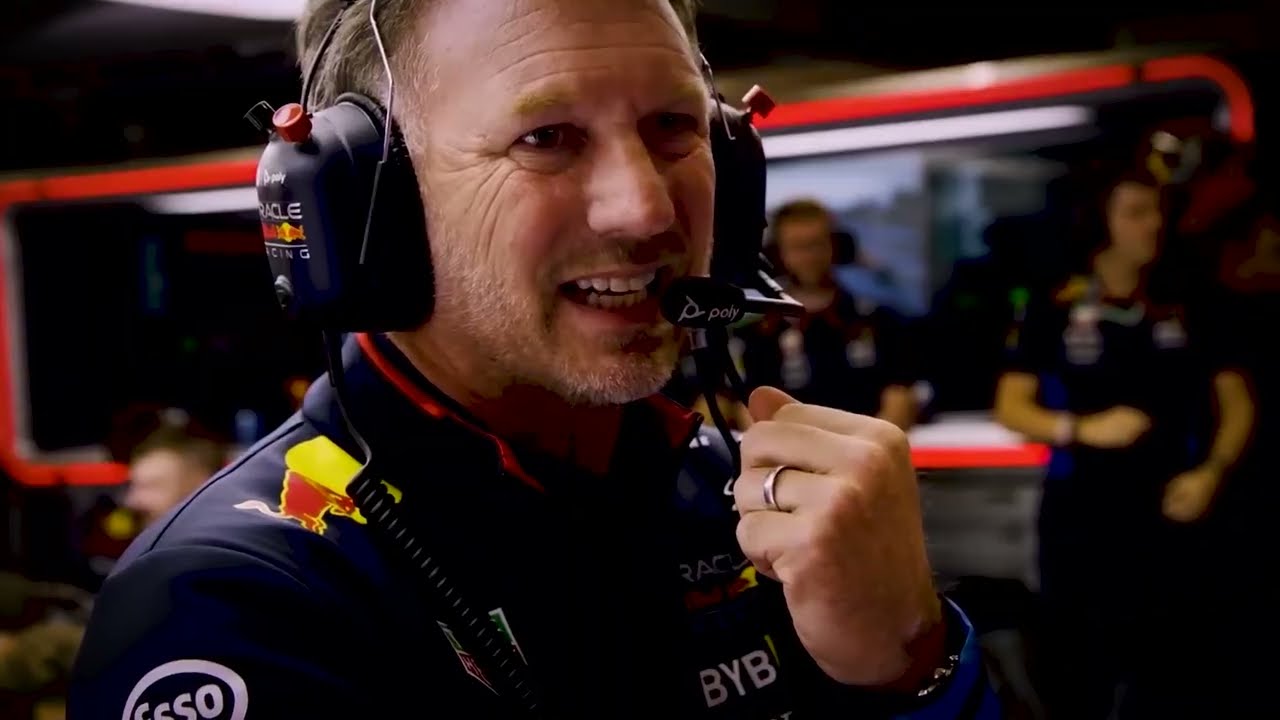
The Enemy of My Enemy
Perhaps the most telling aspect of this saga is Ford’s choice of partner. They didn’t choose Ferrari or Mercedes, the established masters of hybrid tech. They chose Red Bull.
Red Bull has been the most vocal critic of the 2026 regulations. Team figures like Christian Horner and Helmut Marko have publicly worried that the new cars might be “Frankenstein monsters”—forced to burn fuel just to charge batteries, or running out of electrical juice halfway down a straight.
“Red Bull represents skepticism toward over-electrification,” says a source close to the deal. “That is exactly the philosophical alignment Ford needs.”
The partnership solves a critical crisis for Red Bull, too. With Honda departing (technically) and the team facing the daunting task of building an engine from scratch, they needed a manufacturing giant to share the load. Ford steps in not to build the engine from the ground up, but to stamp its badge on Red Bull’s work and provide the specific high-voltage expertise they lack. It is a marriage of necessity, born from a shared suspicion that the rest of the world is getting the energy transition wrong.
Automotive Diplomacy
This is where the rubber meets the road—literally and politically. Ford is engaging in “automotive diplomacy.”
As governments in Europe and the US debate the ban dates for combustion engines, Ford can point to their F1 car and say, Look. Look at this machine doing 200 mph on sustainable fuel. Look at this hybrid engine delivering efficiency that pure batteries can’t touch.
“When environmental groups criticize them for not going full electric, Ford points to F1,” the analysis continues. “When competitors claim combustion is dead, Ford points to the pinnacle of motorsport keeping it alive. It gives them political ammunition to fight for a future where the gas engine survives.”
The strategy is already working. By late 2024, the consensus on a total EV takeover began to crack. The UK pushed its combustion ban back to 2035. Germany questioned the wisdom of banning engines that could run on synthetic fuels. Ford is positioning itself as the rational middle ground—the adult in the room offering a compromise that works.
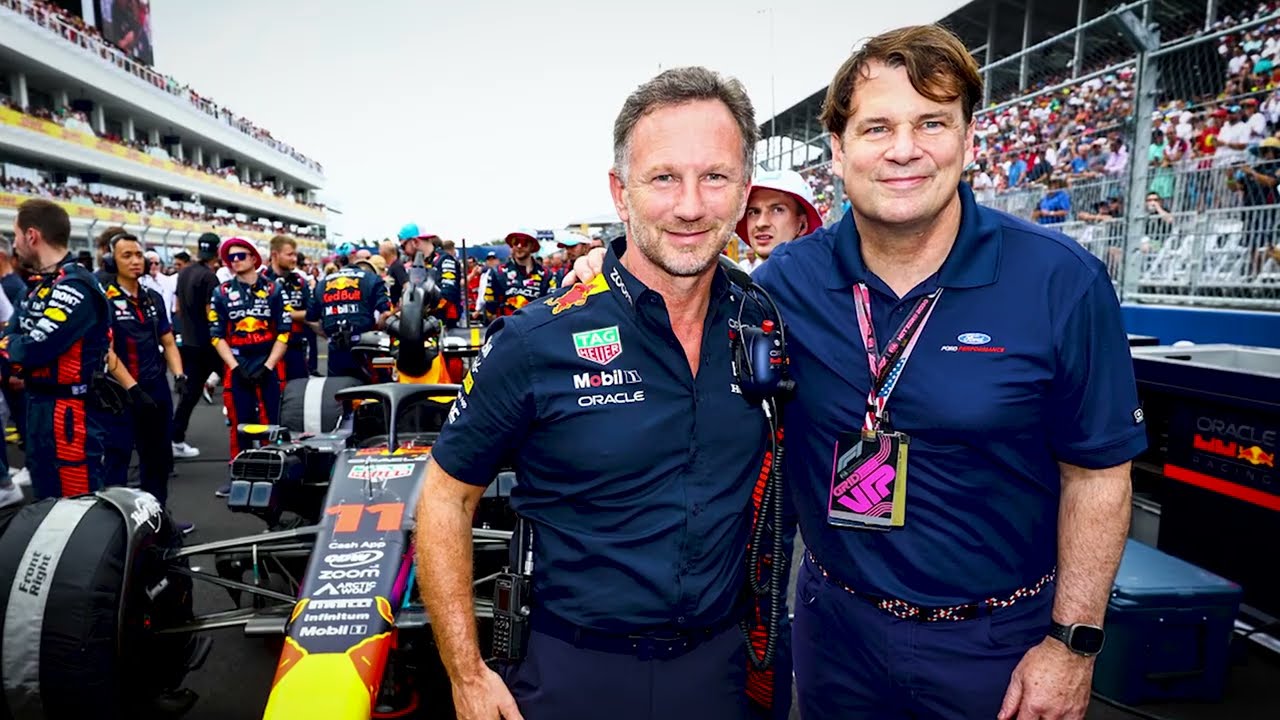
The Verdict in Barcelona
However, all the political maneuvering and marketing spin means nothing if the engine blows up.
The pressure inside the Milton Keynes facility is currently at a breaking point. We are mere weeks away from January 26, 2026—the first day of winter testing in Barcelona. It will be the first time the Ford-Red Bull power unit faces the harsh reality of a race track.
Max Verstappen, the four-time world champion, is watching closely. His future is tied to this machinery. If Ford and Red Bull have miscalculated—if the “50/50 split” leaves the car un-drivable or slow—Verstappen could walk away, and Ford’s half-billion-dollar investment will look like a colossal failure.
“The engine roaring in Milton Keynes today is a prophecy,” the report concludes. “It’s a bet that the hybrid future is the real future.”
For Ford, this isn’t just about winning trophies on Sunday. It’s about selling trucks on Monday, keeping the factory lights on, and proving that the internal combustion engine still has a long, loud life ahead of it. The dyno is spinning. The world is watching. And in just a few weeks, we find out if Ford is a visionary genius or the latest victim of F1’s brutal Darwinism.
News

Inside Shane Richie’s love life: Drug – fuelled orgy with six blondes; real reason he split from Coleen Nolan; six-year ‘affair with fan’
Inside Shane Richie’s love life: Orgy with six blondes; real reason he split from Coleen Nolan; six-year ‘affair with fan’ He’s popular with the ladies… Shane Richie…

SH0CKING REVELATI0N:A sh0cking behind-the-scenes secret revealed about Lizzie Rizzini, the woman replacing Carol Kirkwood on the 6pm weather bulletin
BBC viewers still reeling from the departure of Carol Kirkwood got another surprise last night when presenter Lizzie Rizzini appeared to flash her black lace stockings on…

HEARTBREAKING: Peter Andre’s Tearful Message to Son Junior After SHOCKING Revelation About How He Truly Feels Toward Mum Katie Price — Katie Price’s reaction scares fans.
Peter Andre’s emotional message to son Junior after it’s revealed how he really feels about mum Katie Pri… PETER Andre has shared an emotional message to his…

Ben Shephard opens up about the devastating health battle his wife is facing: “She wakes up crying every single morning…”
Inside This Morning Ben Shephard’s Life Including Rarely Seen Wife and Health Battle Ben Shephard is a name synonymous with British television, renowned for his engaging presentation…
🚨 LIVE TV HEARTBREAK: Good Morning Britain Host Announces ‘Devastating’ Dɘath of Guest Minutes Into Show
Viewers of Good Morning Britain were met with heartbreaking news just minutes into Friday’s (January 30) episode, as co-hosts Kate Garraway and Ranvir Singh reported the tragic…

Emmerdale legend Cain Dingle will never be the same again after a shock cancer diagnosis turns his world upside down
FROure Desk. Full Terms and conditions are available on the website http://www.itv.com/presscentre/itvpictures/terms Emmerdale wouldn’t be Emmerdale without the glowering, grunting embodiment of manliness that is Cain Dingle (Jeff Hordley) But…
End of content
No more pages to load






