In the high-octane world of Formula 1, expectations can be a heavy burden. But for Scuderia Ferrari, entering the dawn of the revolutionary 2026 era, the weight of expectation was surprisingly light. Following a “miserable” and winless 2025 campaign, where the team fell victim to engine loopholes exploited by rivals, the mood surrounding Maranello was one of caution.
The team openly admitted they would arrive at the first test in Barcelona with a “basic spec” car—a reliable gatherer rather than a headline-grabber.
Yet, as the engines fell silent at the Circuit de Barcelona-Catalunya, the timesheets told a different story. Ferrari hadn’t just survived the test; they had conquered it.
In a stunning twist that has sent shockwaves through the paddock, the Prancing Horse emerged as the “sleeper hit” of the pre-season. Lewis Hamilton, the seven-time world champion looking for redemption in red, set the fastest overall time on the final day, turning a quiet week of testing into a loud declaration of intent.
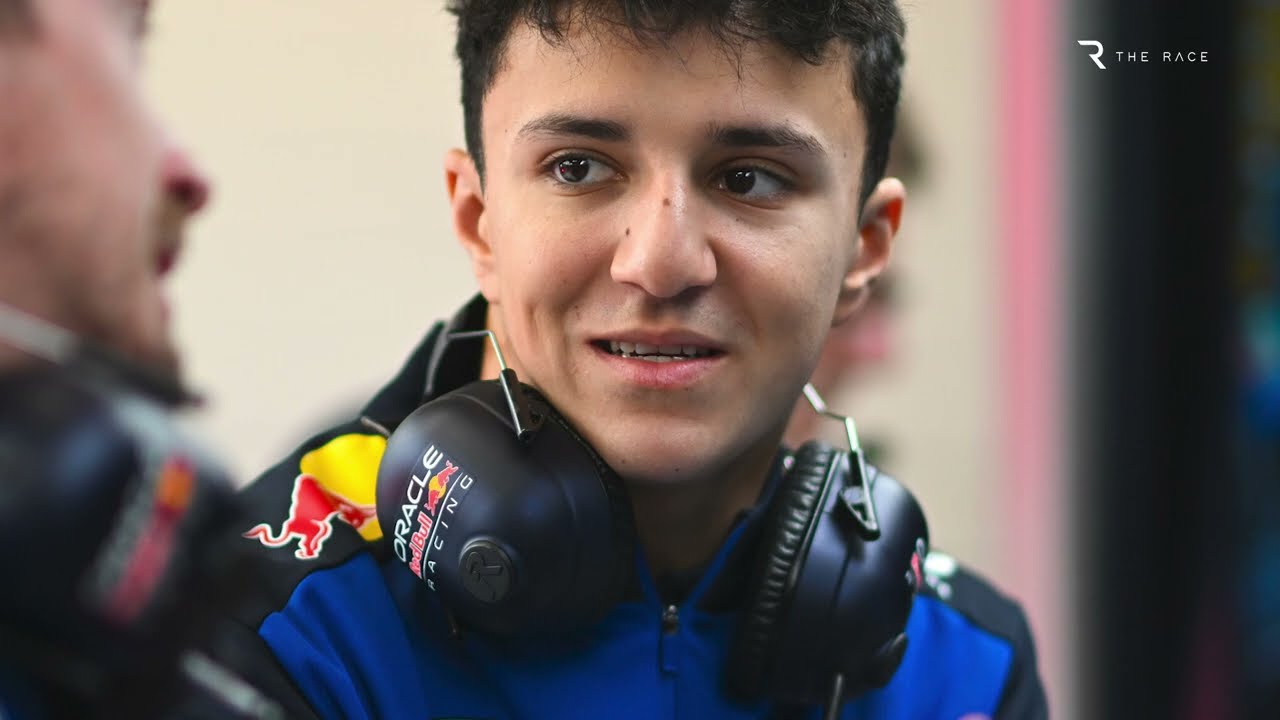
The “Sleeper Hit” of 2026
Ferrari’s approach to the Barcelona test was one of stealth. While Mercedes grabbed headlines with their colossal mileage and Red Bull’s new in-house engine drew scrutiny, Ferrari flew largely “below the radar.”
However, the numbers don’t lie. Even before Hamilton’s headline lap on the final day, analysts had provisionally ranked Ferrari as the “second best impression” behind the mighty Mercedes.
“Ferrari had a good week in Spain,” insiders confirmed. “Its new car ran extremely reliably… and some early whispers suggest rivals think Ferrari is heading the chasing pack behind Mercedes and ahead of McLaren and Red Bull.”
This positioning—second in F1’s “Big Four”—is a massive leap forward for a team that looked lost just months ago. The works teams, it seems, have secured an early edge in understanding the complex new power units, and Ferrari’s preparation appears far more robust than their conservative public statements suggested.
Quality Over Quantity
While Mercedes set an “incredible standard” for mileage—running nearly 2,500km—Ferrari wasn’t far off in terms of quality. The Italian squad completed around 440 laps, effectively half a day less than Mercedes, but crucial miles ahead of everyone else.
Haas, the next most productive team (and notably a Ferrari customer), was over 100 laps behind. Red Bull and McLaren, plagued by crashes and fuel system issues respectively, were left trailing by a full day’s worth of running.
“From a mileage perspective, Ferrari heads to the main tests in Bahrain already in better shape than many of its rivals,” the report notes.
The reliability was near-bulletproof. Team Principal Fred Vasseur noted they covered “tons of laps,” while Hamilton remarked, “We didn’t really have any downtime moments.” For a brand new car built to a radically new set of regulations, such stability is gold dust.
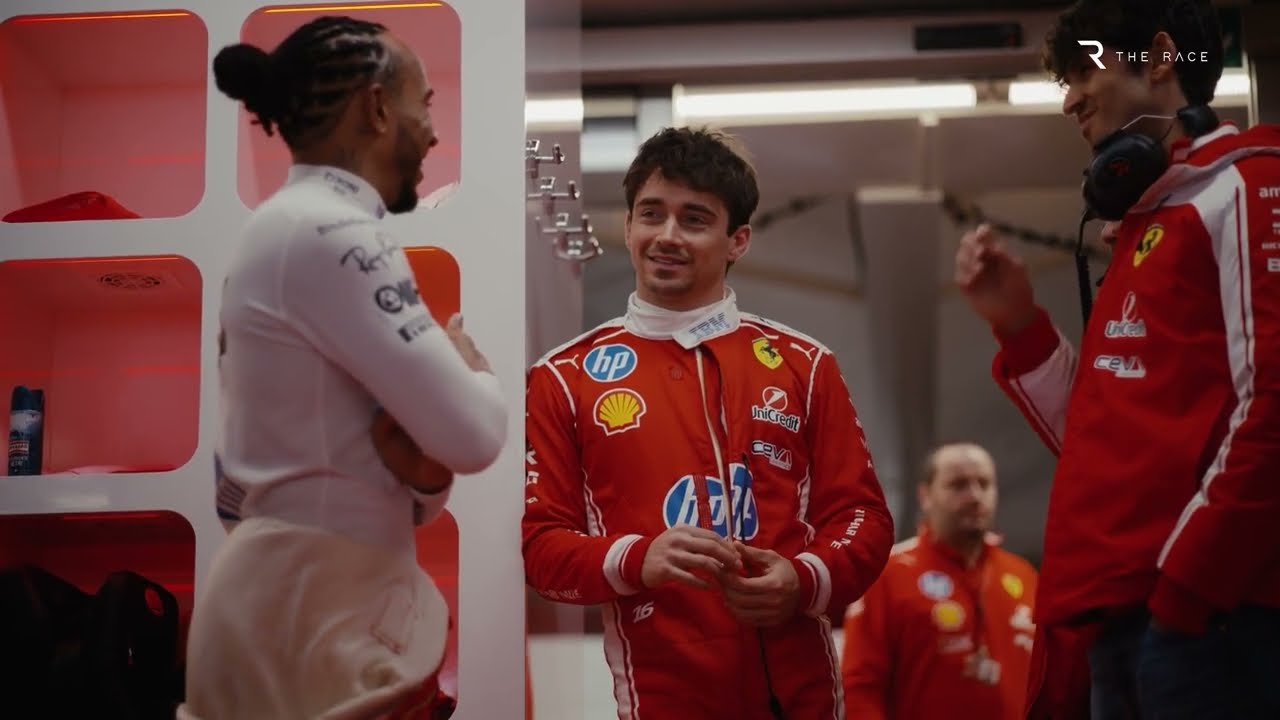
Lewis Hamilton: “Positively Fizzing”
Perhaps the most encouraging sign for the Tifosi wasn’t the car itself, but the man driving it. Lewis Hamilton’s transition to Ferrari has been the subject of intense scrutiny, with questions lingering about his form after a difficult few years under the ground effect regulations.
In Barcelona, however, Hamilton was described as “positively fizzing”—a stark contrast to the frustrated figure seen in recent seasons.
The 2026 regulations, which have produced cars that are “oversteery, snappy, and sliding,” seem to have reignited Hamilton’s passion. He declared the new machines “definitely more enjoyable,” a sentiment that suggests the new formula plays to his natural strengths in a way the previous era did not.
“He’s pushed hard for internal changes within the team to turn it into what he feels a championship-caliber late 2020s F1 squad should be,” the analysis highlights. A competitive car makes that internal politicking much easier.
A Critical Juncture for Leclerc
On the other side of the garage, Charles Leclerc remains the team’s barometer for long-term faith. The Monegasque driver has famously called the 2026 cycle a “now or never” chance for Ferrari.
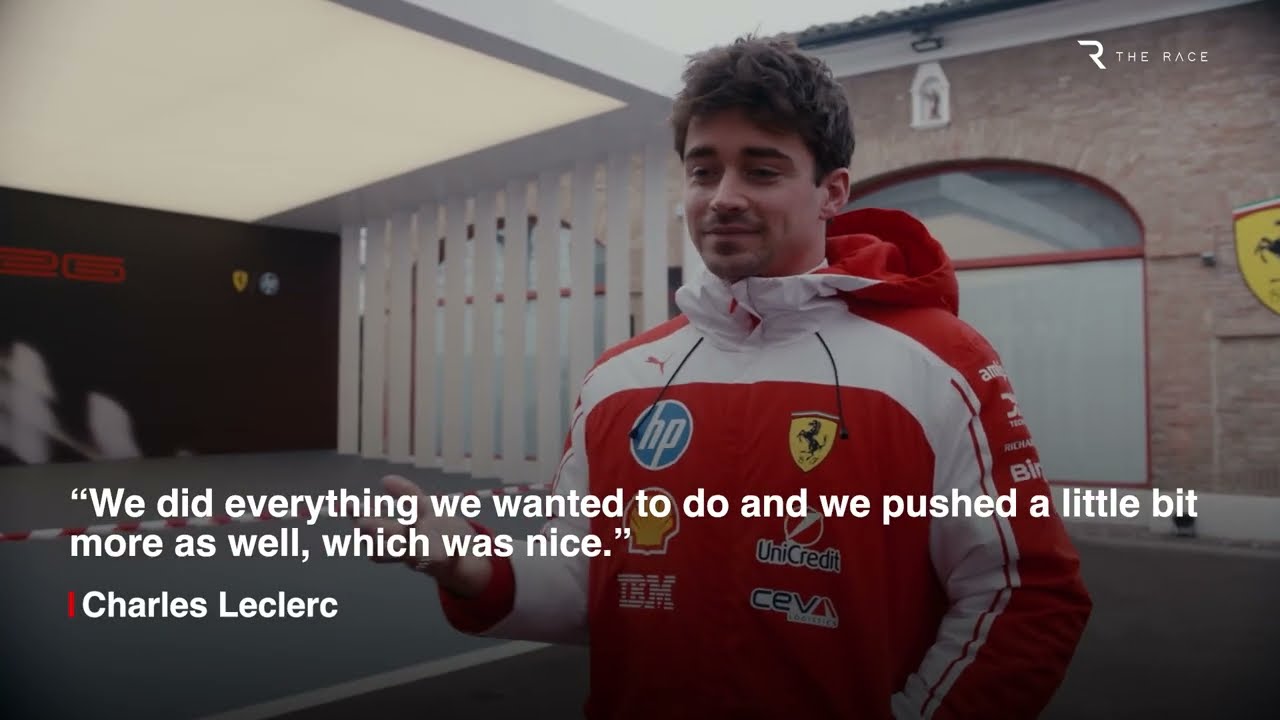
Leclerc’s feedback in Spain was cautiously optimistic. After limited running on the opening days, he was finally able to “push a little bit more” on the final day, getting a feel for the car’s limits on the softer C3 tires.
“By the time we get to his home race in Monaco in June, we might also have a very good idea of Leclerc’s long-term Ferrari prospects,” the report warns. If the car delivers, he stays. If it flops, the rumors of an exit strategy will surely ignite.
The Technical Reality: “A-Spec” vs. “B-Spec”
Despite the optimism, Ferrari remains realistic. The car seen in Spain was strictly an “A-Spec” design—standard, visually conservative, and lacking the aggressive “high nose” concepts seen on the Mercedes.
Crucially, Ferrari cannot simply copy that high nose later, as it is “baked into the design by the cockpit position and front axle line.” This means the team is committed to their current philosophy for the season.
However, upgrades are coming. The first major package is expected for the Bahrain test, and Ferrari’s ability to develop in-season will be the true test of their mettle. Their record on this front has been “hit and miss” lately, with last year’s upgrades failing to solve underlying issues.
“It’s all about what it does with that initial learning,” Vasseur admitted, promising a “very intense process” ahead of the next test.
Final Thoughts
As the paddock packs up and heads to Bahrain, the narrative has shifted. Ferrari is no longer the wounded giant of 2025. They are a sharp, reliable, and fast contender sitting right on the heels of the favorites.
They might not have won the mileage war, but they won the narrative. And with a re-energized Lewis Hamilton and a focused Charles Leclerc, the “sleeper hit” of 2026 might just be waking up at the perfect time.
News

Inside Shane Richie’s love life: Drug – fuelled orgy with six blondes; real reason he split from Coleen Nolan; six-year ‘affair with fan’
Inside Shane Richie’s love life: Orgy with six blondes; real reason he split from Coleen Nolan; six-year ‘affair with fan’ He’s popular with the ladies… Shane Richie…

SH0CKING REVELATI0N:A sh0cking behind-the-scenes secret revealed about Lizzie Rizzini, the woman replacing Carol Kirkwood on the 6pm weather bulletin
BBC viewers still reeling from the departure of Carol Kirkwood got another surprise last night when presenter Lizzie Rizzini appeared to flash her black lace stockings on…

HEARTBREAKING: Peter Andre’s Tearful Message to Son Junior After SHOCKING Revelation About How He Truly Feels Toward Mum Katie Price — Katie Price’s reaction scares fans.
Peter Andre’s emotional message to son Junior after it’s revealed how he really feels about mum Katie Pri… PETER Andre has shared an emotional message to his…

Ben Shephard opens up about the devastating health battle his wife is facing: “She wakes up crying every single morning…”
Inside This Morning Ben Shephard’s Life Including Rarely Seen Wife and Health Battle Ben Shephard is a name synonymous with British television, renowned for his engaging presentation…

🚨 LIVE TV HEARTBREAK: Good Morning Britain Host Announces ‘Devastating’ Dɘath of Guest Minutes Into Show
Viewers of Good Morning Britain were met with heartbreaking news just minutes into Friday’s (January 30) episode, as co-hosts Kate Garraway and Ranvir Singh reported the tragic…

Emmerdale legend Cain Dingle will never be the same again after a shock cancer diagnosis turns his world upside down
FROure Desk. Full Terms and conditions are available on the website http://www.itv.com/presscentre/itvpictures/terms Emmerdale wouldn’t be Emmerdale without the glowering, grunting embodiment of manliness that is Cain Dingle (Jeff Hordley) But…
End of content
No more pages to load






