The pressure cooker that is Scuderia Ferrari is whistling at a fever pitch. Following what insiders are describing as a “disappointing” 2025 campaign, the most storied team in Formula 1 history is staring down the barrel of the sport’s most significant regulatory overhaul in decades. The 2026 season isn’t just a new chapter; it’s a hard reset. And if the leaks surrounding Ferrari’s clandestine “Project 678” are to be believed, the Prancing Horse is not just galloping into this new era—they are trying to kick the stable doors down with some of the most radical technical gambles seen in modern motorsport.
For the Tifosi, the wait has been agonizing. But the details emerging from Maranello regarding their 2026 challenger suggest that Ferrari is done playing it safe. From a controversial return to heavy metals in their engine block to a confusing “two-car” launch strategy, Ferrari is betting the house on a revolution.
The Power Unit Revolution: A “Steel” Resolve?
The headline-grabbing news of the 2026 regulations is the power unit. For the first time, F1 cars will see a near 50/50 split in power generation between the internal combustion engine (ICE) and the electric motor. It’s a massive philosophical shift away from the ICE-dominant era we know. But while every manufacturer is scrambling to adapt, Ferrari’s approach has raised eyebrows across the paddock.
Under the technical leadership of Enrico Gualtieri, Ferrari has reportedly made a decision that flies in the face of conventional F1 wisdom: they are embracing weight.
In a sport where every gram is usually shaved off with obsession, Ferrari has chosen steel cylinder heads for their new power unit, ditching the industry-standard aluminum used by nearly all their rivals. It sounds counterintuitive—steel is heavy. However, Ferrari’s engineers argue that the new regulations, which demand engines to withstand unprecedented pressure and temperature limits, require structural integrity that aluminum simply cannot guarantee over a long season.
This isn’t just off-the-shelf steel, either. Reports indicate Maranello has concocted a sophisticated alloy blend integrating copper and ceramic elements. The goal? To optimize thermal efficiency and bomb-proof reliability. In a season where the mechanical limits will be pushed more aggressively than ever, Ferrari is betting that a slightly heavier, bulletproof engine will outperform a lighter, fragile one. If they are right, they could have a reliability advantage that lasts the entire season. If they are wrong, they will be carrying a heavy anchor around every circuit.
Solving the Energy Crisis
The 2026 rules also axe the MGU-H (Motor Generator Unit – Heat), the complex component that harvested energy from exhaust gases. This removal creates a terrifying scenario for teams: the risk of “clipping,” or running out of electrical boost on long straights. Without the MGU-H, the hybrid system relies entirely on braking energy (MGU-K) to recharge.
The fear is that on high-speed tracks like Monza or Spa, cars could turn into sitting ducks as their batteries run dry mid-straight.
However, sources close to Project 678 claim Ferrari has cracked this code. Utilizing a “dynamic dyno”—a state-of-the-art simulation tool that replicates real-world G-forces, braking loads, and track fluctuations—Ferrari’s internal data allegedly shows energy recovery rates exceeding their initial targets. They aren’t just looking for peak horsepower; they are chasing a “linear power curve.” The philosophy is clear: a 1,000-horsepower engine is useless if it delivers power so unpredictably that the driver can’t control it. By focusing on drivability, Ferrari hopes to give their world-class driver lineup a weapon they can actually trust.
The “Super Compact” Concept and Active Aero
The innovation doesn’t stop at the engine. The layout of the car itself is undergoing a “radical overhaul.” The catchphrase echoing through the halls of Maranello is “Super Compact.”
Engineers have reportedly managed to shrink the packaging of the power unit and cooling systems to unprecedented levels. This miniaturization is crucial. By tightly integrating a denser, lighter battery and redesigning the cooling airflow paths, Ferrari has created a significantly sleeker rear end. This allows for cleaner airflow to the diffuser and rear wing—critical in 2026, where “Active Aerodynamics” become legal.
Ferrari has already been spotted testing active front wings on a mule car (based on the 2025 chassis). This technology allows the wing angles to change on the fly—reducing drag on straights for top speed and increasing downforce in corners for grip. It’s a complex system that could be a “deadly weapon” if mastered, and Ferrari’s compact rear packaging suggests they are looking to maximize the efficiency of this active air movement.
Suspension: Back to the Future
In another twist, Ferrari is turning back the clock. For the first time since 2010, the Scuderia is expected to utilize push-rod suspension on both the front and rear of the car.
This isn’t just a nostalgic throwback; it’s a calculated technical decision to cope with the new, lighter, and narrower chassis regulations. Suspension is no longer just about bumps; it’s about aerodynamic platform control—keeping the car stable so the floor and wings can work. Interestingly, rumors suggest Red Bull is moving in the exact same direction, validating Ferrari’s theory that this is the optimal path for 2026.
The Master Plan: Two Launches?
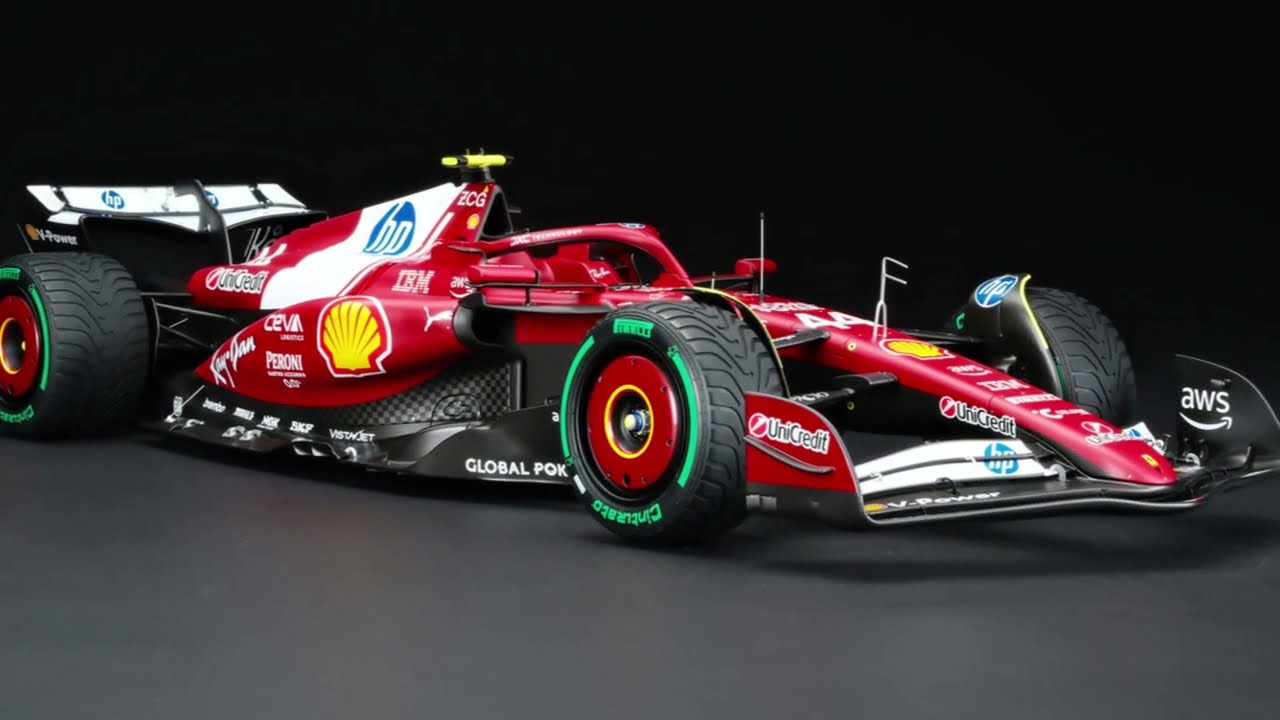
Perhaps the most confusing—and intriguing—aspect of Project 678 is the launch schedule. Ferrari is seemingly planning a “bait and switch” strategy to maximize their development time.
The car is scheduled to launch on January 23rd, just days before pre-season testing in Barcelona. However, insiders suggest there will be two distinct versions of the Ferrari.
The Launch Spec: This version will focus on validating the engine, cooling, and electronic integration. It is the “foundation” car.
The B-Spec: Scheduled for the final tests in Bahrain, this version will feature the “final evolution” of aerodynamics and technical details based on the data gathered from the first car.
This phased approach allows Ferrari to identify weaknesses early with a reliable base car before bolting on their high-performance parts closer to the first race. It’s a disciplined, methodical strategy that suggests a team no longer interested in “winning the winter championship” of headlines, but winning the actual war on track.
Revival or Ruin?
The stakes for Project 678 could not be higher. The 2026 regulations are a blank sheet of paper, the kind of disruption that historically topples giants and crowns new kings. Ferrari has the resources, the drivers, and the history. Now, with a steel-hearted engine and a daring two-car strategy, they have a plan.
Will this radical machine be the catalyst for the revival the Tifosi have prayed for? Or will the ghost of failure continue to haunt Maranello? One thing is certain: when the covers come off on January 23rd, the entire world will be watching.
News

Inside Shane Richie’s love life: Drug – fuelled orgy with six blondes; real reason he split from Coleen Nolan; six-year ‘affair with fan’
Inside Shane Richie’s love life: Orgy with six blondes; real reason he split from Coleen Nolan; six-year ‘affair with fan’ He’s popular with the ladies… Shane Richie…

SH0CKING REVELATI0N:A sh0cking behind-the-scenes secret revealed about Lizzie Rizzini, the woman replacing Carol Kirkwood on the 6pm weather bulletin
BBC viewers still reeling from the departure of Carol Kirkwood got another surprise last night when presenter Lizzie Rizzini appeared to flash her black lace stockings on…

HEARTBREAKING: Peter Andre’s Tearful Message to Son Junior After SHOCKING Revelation About How He Truly Feels Toward Mum Katie Price — Katie Price’s reaction scares fans.
Peter Andre’s emotional message to son Junior after it’s revealed how he really feels about mum Katie Pri… PETER Andre has shared an emotional message to his…

Ben Shephard opens up about the devastating health battle his wife is facing: “She wakes up crying every single morning…”
Inside This Morning Ben Shephard’s Life Including Rarely Seen Wife and Health Battle Ben Shephard is a name synonymous with British television, renowned for his engaging presentation…

🚨 LIVE TV HEARTBREAK: Good Morning Britain Host Announces ‘Devastating’ Dɘath of Guest Minutes Into Show
Viewers of Good Morning Britain were met with heartbreaking news just minutes into Friday’s (January 30) episode, as co-hosts Kate Garraway and Ranvir Singh reported the tragic…

Emmerdale legend Cain Dingle will never be the same again after a shock cancer diagnosis turns his world upside down
FROure Desk. Full Terms and conditions are available on the website http://www.itv.com/presscentre/itvpictures/terms Emmerdale wouldn’t be Emmerdale without the glowering, grunting embodiment of manliness that is Cain Dingle (Jeff Hordley) But…
End of content
No more pages to load






