It is often said that in Formula 1, the definition of insanity is doing the same thing over and over again and expecting different results. For years, Ferrari seemed trapped in that very cycle, chasing peak aerodynamic numbers in a wind tunnel while their cars fell apart in the real world. But as the paddock gears up for the monumental regulations shift of 2026, something has changed inside the hallowed halls of Maranello.
Ferrari has stopped chasing ghosts.
In a move that has stunned technical analysts and delighted Tifosi, the Scuderia has unveiled the philosophy behind their 2026 challenger, codenamed “Project 678.” It isn’t just an update. It isn’t a refinement. It is a full-blown admission that their previous approach was fundamentally broken—and a radical, “insane” commitment to fixing it.
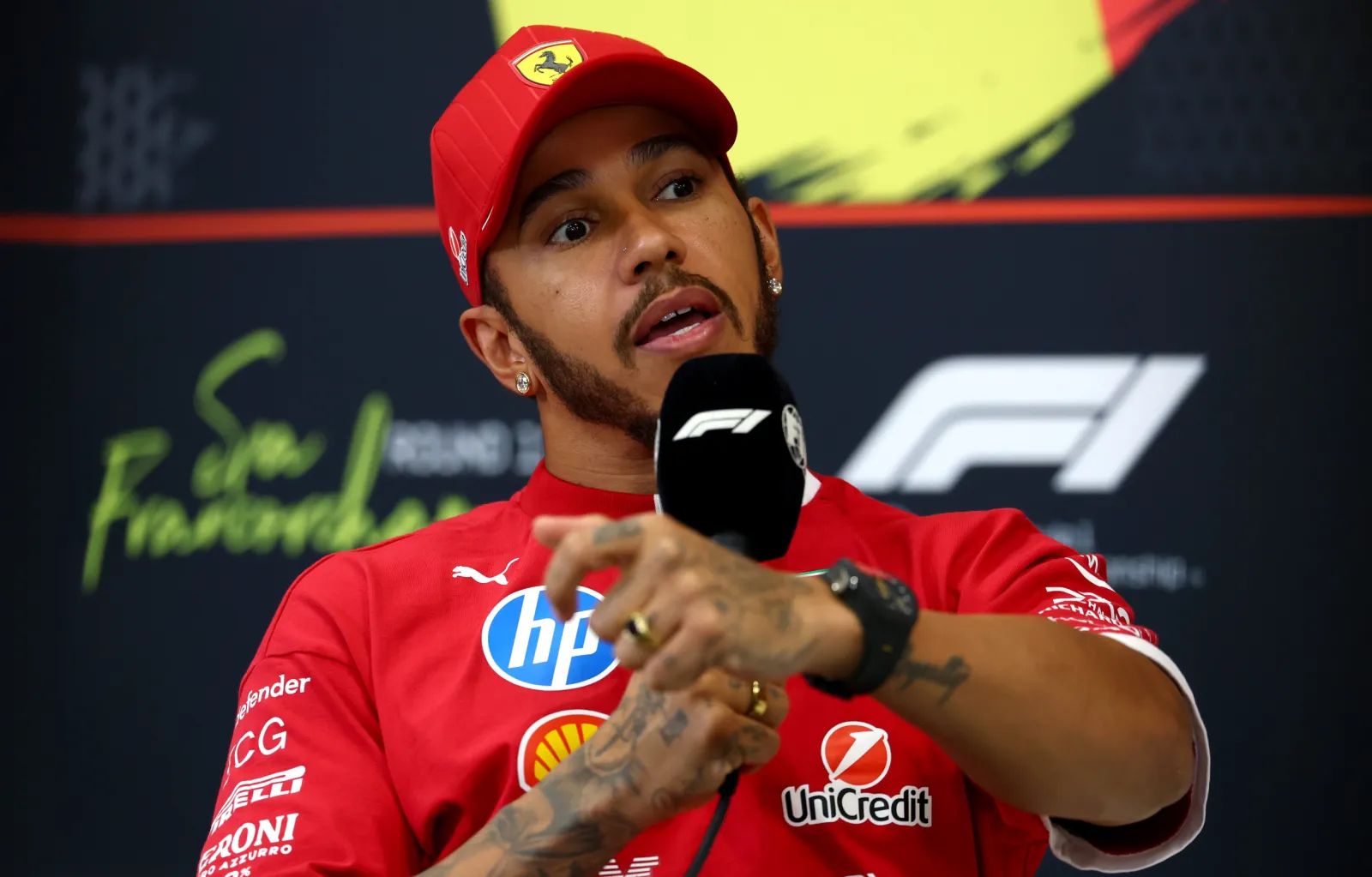
The Admission of Failure
To understand why this new car is such a big deal, we have to be brutally honest about 2025. On paper, the SF-25 was a masterpiece. In the simulator, it was a rocket. But on the track? It was a nightmare.
Ferrari’s leadership, now under the technical direction of Loic Serra, has openly admitted that the team spent too long blaming aerodynamics for problems that were mechanical at their core. The SF-25 was a “diva” in the worst sense of the word. It demanded a perfect track, perfect temperatures, and a perfect ride height. The moment any of those variables shifted—a bump in the road, a drop in tire grip—the performance simply vanished.
It punished drivers for pushing. It forced Lewis Hamilton and Charles Leclerc to tiptoe around corners, managing risk rather than attacking the apex. You could hear the frustration in Hamilton’s radio messages all season long; he wasn’t driving the car, he was negotiating with it.
The “Insane” Fix: Project 678
For 2026, Ferrari has thrown the old rulebook into the furnace. The headline change? A complete switch to push-rod suspension at both the front and the rear.
This might sound like technical jargon, but it represents a seismic shift in philosophy. For the first time since 2010, Ferrari will run a push-rod rear layout. Why does this matter? Because the old pull-rod system, while aerodynamically sleek, was a nightmare to set up and too sensitive to ride-height changes.
By moving to push-rod, Ferrari isn’t “going backwards.” They are prioritizing control. This layout gives engineers more freedom to package internal components and, crucially, allows them to control how the car reacts to bumps and braking forces without disturbing the aerodynamics.
But that’s not the “insane” part. The real revolution is happening at the front of the car.

Controlled Flexibility: The Secret Weapon
Here is where Loic Serra’s influence really shines. The new suspension features what insiders are calling “controlled mechanical flexibility,” particularly in the upper wishbone.
Now, usually, “flexibility” in suspension is a bad thing. You want parts to be stiff and predictable. But Ferrari has engineered a specific type of compliance that changes depending on the load. The goal? To allow the tire to maintain the perfect contact patch with the road during the initial phase of a corner (corner entry) without making the car sloppy in the middle of the turn.
Think of it as a suspension system that “knows” what the driver is trying to do. It loads progressively, communicating clearly through the steering wheel, and eliminates that terrifying split-second of doubt where a driver doesn’t know if the front end will bite or wash out.
The Hamilton Factor
This brings us to the elephant in the room: Lewis Hamilton.
The clickbait headlines might scream that he’s “OUT,” but the technical reality suggests he’s about to be more “IN” than ever. The SF-25’s biggest weakness—instability on corner entry—was kryptonite to Hamilton’s driving style. Lewis is a late-braking monster; he relies on supreme confidence in the front axle to carry speed into the corner while rotating the car. When a car is unpredictable, Lewis Hamilton looks average. When a car is predictable? He becomes a seven-time World Champion.
This new suspension philosophy is practically a love letter to Hamilton’s instincts. It is designed to provide a stable, consistent platform that rewards aggressive braking and commitment. If the car does what Ferrari claims it will, we could see a revitalized Hamilton reconnecting with the raw speed that defined his career.
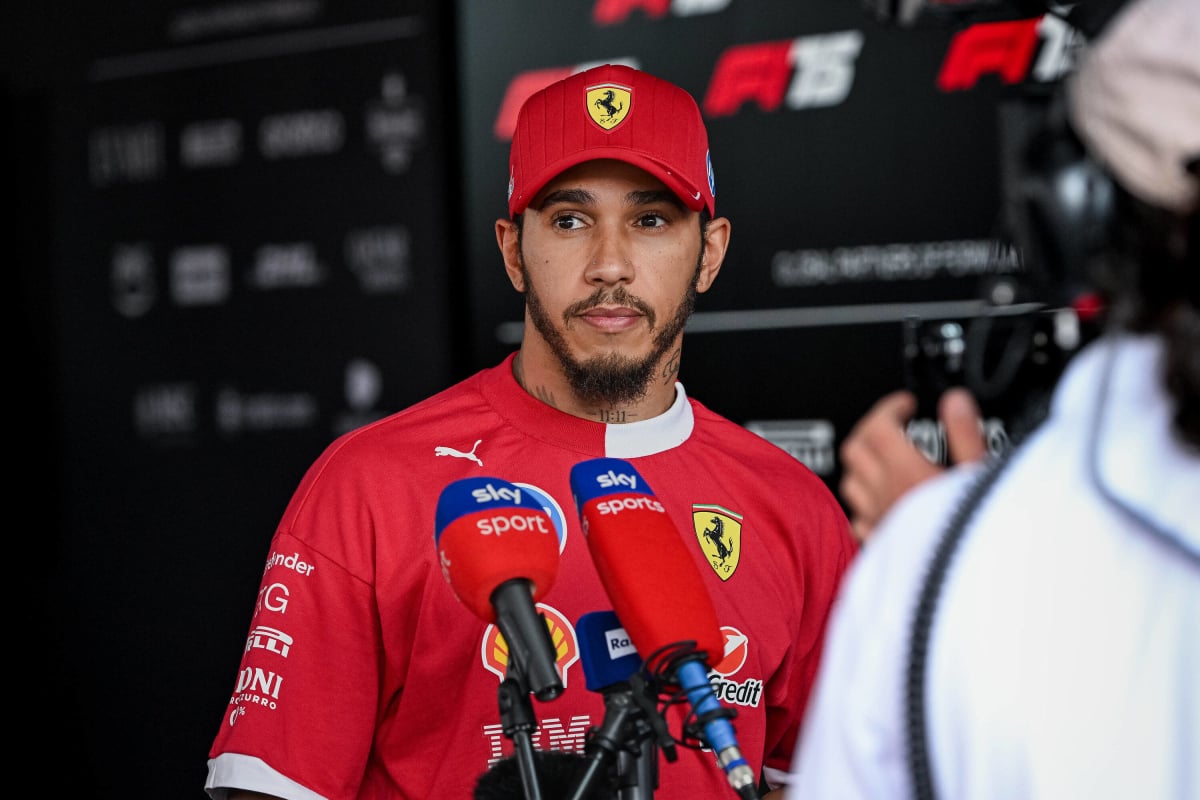
A Cultural Revolution
Perhaps the most impressive aspect of this reveal isn’t the metal or carbon fiber, but the people. Ferrari has shattered the silos that used to divide their departments. Aerodynamicists, vehicle dynamics engineers, and tire specialists are now working in cross-functional groups.
In the past, a driver’s complaint about “handling” might have been dismissed by the aero department as “not our problem.” Now, under Serra, the car is treated as a single, living organism. They aren’t just trying to make a car that generates a big number on a computer screen; they are trying to make a car that works in the real world, with real bumps and real pressure.
The Verdict
Ferrari is taking a massive risk. Radical changes always invite scrutiny, and if this “flexible” concept fails, there is no backup plan. But playing it safe is what got them beaten in 2025.
By prioritizing driver confidence over theoretical perfection, Ferrari is betting on the human element. They are betting that if you give Lewis Hamilton and Charles Leclerc a car they can trust, the lap times will follow. It’s a brave, bold, and slightly crazy strategy. But after a season of mediocrity, “crazy” might be exactly what the Scuderia needs to return to the top step of the podium.
The 2026 season hasn’t started yet, but the race has already begun. And for the first time in a long time, Ferrari isn’t just participating; they are changing the game.
News

Inside Shane Richie’s love life: Drug – fuelled orgy with six blondes; real reason he split from Coleen Nolan; six-year ‘affair with fan’
Inside Shane Richie’s love life: Orgy with six blondes; real reason he split from Coleen Nolan; six-year ‘affair with fan’ He’s popular with the ladies… Shane Richie…

SH0CKING REVELATI0N:A sh0cking behind-the-scenes secret revealed about Lizzie Rizzini, the woman replacing Carol Kirkwood on the 6pm weather bulletin
BBC viewers still reeling from the departure of Carol Kirkwood got another surprise last night when presenter Lizzie Rizzini appeared to flash her black lace stockings on…

HEARTBREAKING: Peter Andre’s Tearful Message to Son Junior After SHOCKING Revelation About How He Truly Feels Toward Mum Katie Price — Katie Price’s reaction scares fans.
Peter Andre’s emotional message to son Junior after it’s revealed how he really feels about mum Katie Pri… PETER Andre has shared an emotional message to his…

Ben Shephard opens up about the devastating health battle his wife is facing: “She wakes up crying every single morning…”
Inside This Morning Ben Shephard’s Life Including Rarely Seen Wife and Health Battle Ben Shephard is a name synonymous with British television, renowned for his engaging presentation…

🚨 LIVE TV HEARTBREAK: Good Morning Britain Host Announces ‘Devastating’ Dɘath of Guest Minutes Into Show
Viewers of Good Morning Britain were met with heartbreaking news just minutes into Friday’s (January 30) episode, as co-hosts Kate Garraway and Ranvir Singh reported the tragic…

Emmerdale legend Cain Dingle will never be the same again after a shock cancer diagnosis turns his world upside down
FROure Desk. Full Terms and conditions are available on the website http://www.itv.com/presscentre/itvpictures/terms Emmerdale wouldn’t be Emmerdale without the glowering, grunting embodiment of manliness that is Cain Dingle (Jeff Hordley) But…
End of content
No more pages to load






