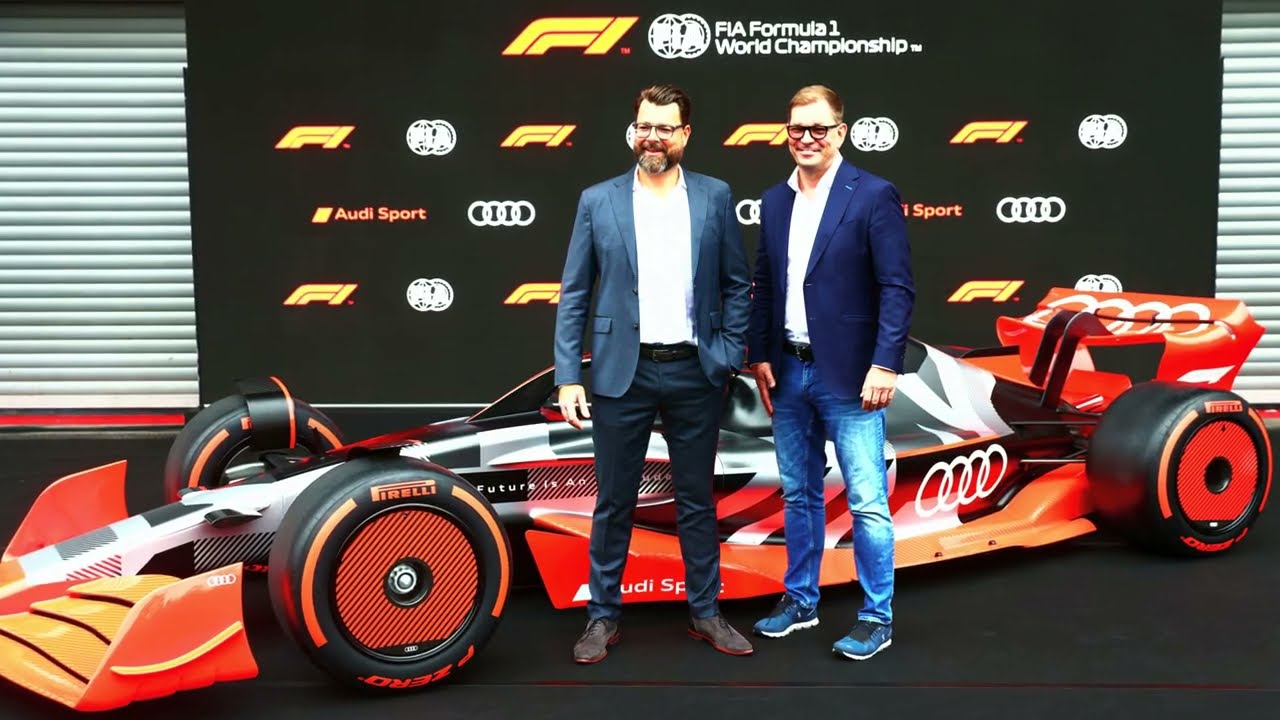
It is the end of a long, winding, and often emotional road. As of January 2026, the name “Sauber” has officially been retired from the Formula 1 grid, marking the conclusion of one of the sport’s most enduring and beloved sagas. After 32 years, 33 cars, and countless heart-stopping moments, the Swiss outfit from Hinwil has handed over the keys to German automotive giant Audi in a deal valued at a staggering $700 million.
For fans who have followed the sport since the early 90s, the departure of Sauber feels like losing a close friend. They were the ultimate “garagistas” of the modern era—a team that often punched above its weight, launched the careers of world champions, and survived financial crises that buried their rivals. As we stand on the precipice of the new Audi era, it is time to look back at the incredible legacy of Peter Sauber’s dream.
The Humble Beginnings and the “Black Beauty”
The story didn’t start with a massive corporate budget, but with a traffic light builder named Peter Sauber. Born in Zurich, Sauber’s passion for motorsport led him to build hill-climb cars in his parents’ basement. By the late 80s, his partnership with Mercedes-Benz in Group C sports car racing had forged a path to the pinnacle of motorsport.
When Sauber entered Formula 1 in 1993, they did so with a car that is still regarded as one of the most beautiful in history: the C12. With its “stealth” black livery and clean lines, it was a stunner. Under the hood, it carried a “Concept by Mercedes” sticker—a hint at the German manufacturer’s tentative return to F1. Drivers Karl Wendlinger and JJ Lehto immediately proved the team wasn’t just there to make up the numbers, scoring points on debut. It was a promising start, but one marred by the realities of F1; the engine was heavy, and reliability was a nightmare.
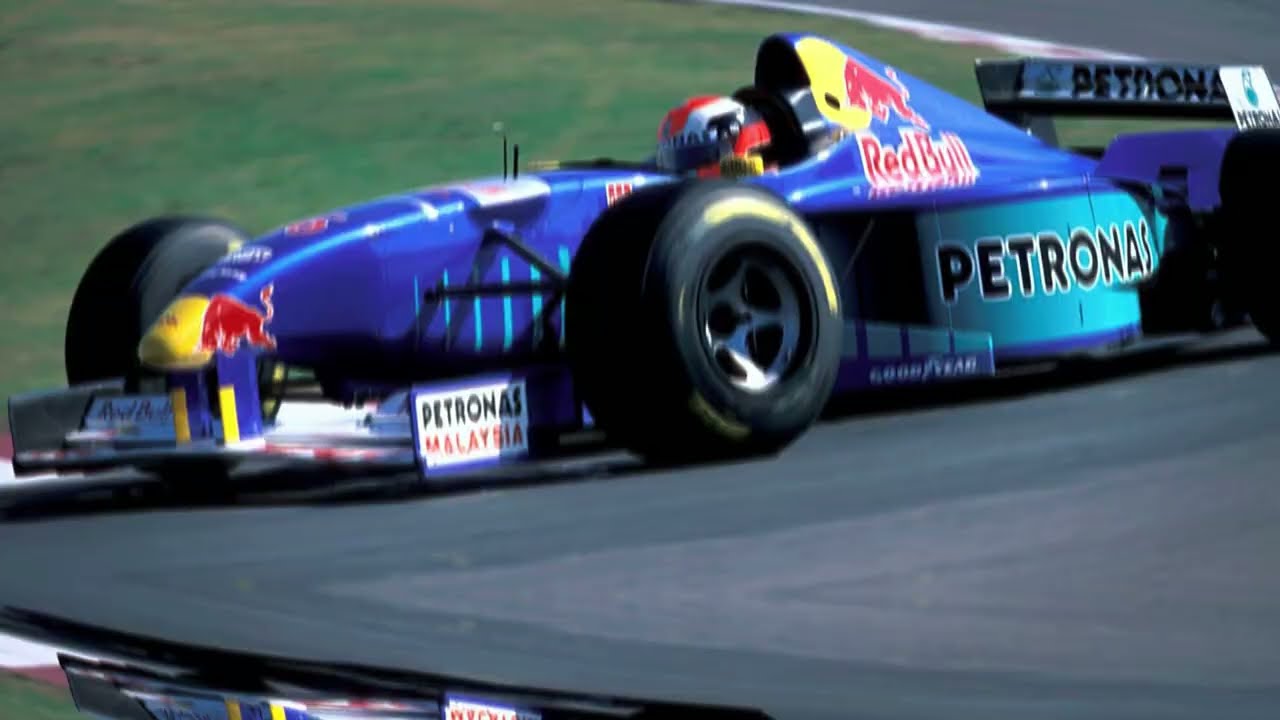
The following year, 1994, brought tragedy and resilience. The terrifying crash of Karl Wendlinger at Monaco, which left him in a coma for 19 days, shook the team to its core. Yet, they soldiered on. They navigated the chaotic post-Senna era, transitioning from Mercedes to Ford works support, and eventually finding a lifeline in unlikely partners: Red Bull and Petronas. The deep blue cars of the mid-90s, driven by Heinz-Harald Frentzen and Johnny Herbert, became midfield staples, securing podiums and cementing Sauber as a respectable, if underfunded, competitor.
The “Kimi” Moment and the BMW Glory Days
Perhaps Sauber’s greatest gift to Formula 1 was its eye for talent. In 2001, Peter Sauber took a massive gamble on a young, mumbling Finn named Kimi Räikkönen, who had only 23 single-seater races to his name. Critics called it dangerous; Peter called it instinct. Kimi scored points on his debut, silencing the doubters and proving that Hinwil was a factory of stars. They repeated the trick just a year later with Felipe Massa.
However, the team’s true “Golden Era” arrived in 2006 when BMW bought a majority stake. For the first time, Sauber had the budget to match their engineering prowess. The BMW Sauber F1.06 through F1.09 were serious machines. The partnership peaked in 2008 with the F1.08, a car that allowed Robert Kubica to claim the team’s first—and only—victory at the Canadian Grand Prix.
That day in Montreal remains a bittersweet memory. It was a glorious one-two finish, with Nick Heidfeld taking second, redeeming the team’s heartbreak from years prior. Yet, it also serves as one of F1’s biggest “what ifs.” Kubica was leading the championship, but BMW famously halted development to focus on the 2009 regulations—a gamble that failed spectacularly. They could have been champions; instead, they slowly faded as BMW pulled the plug following the 2009 financial crisis.
Survival Mode: The Privateer Years
The 2010s defined Sauber’s grit. When BMW walked away, Peter Sauber bought his team back to save it from oblivion. The C29 and subsequent cars were born of necessity and ingenuity. Who could forget the C31 in 2012? It was a masterpiece of tire management. Sergio Perez, then a young hotshot, drove like a man possessed, nearly hunting down Fernando Alonso for a win in a rainy Malaysia and racking up podiums at Monza and Canada.
Kamui Kobayashi, the fan-favorite Japanese driver, added to the legend with his fearless overtaking and a podium at his home race in Suzuka—a moment that saw fans chanting his name in pure ecstasy. But financial realities were harsh. By 2014, the team hit rock bottom with the C33, suffering their first-ever point-less season. The “Pay Driver” era followed, and legal battles over driver contracts in 2015 threatened to embarrass the team. Yet, through the leadership struggles and the dangerously thin budgets, the factory in Hinwil kept the lights on.
The Alfa Romeo Rebrand and the Final Goodbye
In 2018, a commercial partnership with Alfa Romeo breathed new life—and style—into the team. The livery became one of the best on the grid, and a young Charles Leclerc dazzled the world in the C37, dragging the car into Q3 and points finishes that defied logic. It was a poetic cycle: just as they had launched Kimi Räikkönen’s career, they brought him back for his final seasons to partner Antonio Giovinazzi.
But all good things must end. The transition to the “Stake F1 Team” and “Kick Sauber” in 2024 and 2025 was a bridge to the future. The C44 was a difficult beast, marked by neon green liveries and agonizing pit stop issues.
However, the 2025 season—the final chapter—offered one last flash of brilliance. The C45, driven by the returning veteran Nico Hülkenberg and rookie champion Gabriel Bortoleto, seemed destined for another year of obscurity. But then came the upgrade package in Spain. Suddenly, the car came alive.
In a storyline that felt scripted by the racing gods, Hülkenberg finally broke his curse at the British Grand Prix. Crossing the line in third place, he secured his first-ever podium and the team’s first silverware since 2012. It was the perfect send-off—a reminder of the “Never Give Up” spirit that defined Peter Sauber’s squad.
A Legacy Etched in Carbon Fiber
As Audi prepares to paint the cars in their corporate colors for 2026, the factory in Hinwil remains, but the soul has shifted. Sauber was the team that gave us the “Schumacher Academy” graduates, the daring overtakes of Kobayashi, and the sheer persistence of a privateer taking on the automotive Goliaths.
They leave Formula 1 not as champions, but as survivors and innovators. They proved that with passion, smart engineering, and a bit of Swiss precision, you could race with the best. The $700 million check from Audi is validation of what Peter Sauber built from his parents’ basement: a world-class team that stood the test of time.
Danke, Peter. Goodbye, Sauber. Formula 1 won’t be the same without you.
News

Inside Shane Richie’s love life: Drug – fuelled orgy with six blondes; real reason he split from Coleen Nolan; six-year ‘affair with fan’
Inside Shane Richie’s love life: Orgy with six blondes; real reason he split from Coleen Nolan; six-year ‘affair with fan’ He’s popular with the ladies… Shane Richie…

SH0CKING REVELATI0N:A sh0cking behind-the-scenes secret revealed about Lizzie Rizzini, the woman replacing Carol Kirkwood on the 6pm weather bulletin
BBC viewers still reeling from the departure of Carol Kirkwood got another surprise last night when presenter Lizzie Rizzini appeared to flash her black lace stockings on…

HEARTBREAKING: Peter Andre’s Tearful Message to Son Junior After SHOCKING Revelation About How He Truly Feels Toward Mum Katie Price — Katie Price’s reaction scares fans.
Peter Andre’s emotional message to son Junior after it’s revealed how he really feels about mum Katie Pri… PETER Andre has shared an emotional message to his…

Ben Shephard opens up about the devastating health battle his wife is facing: “She wakes up crying every single morning…”
Inside This Morning Ben Shephard’s Life Including Rarely Seen Wife and Health Battle Ben Shephard is a name synonymous with British television, renowned for his engaging presentation…

🚨 LIVE TV HEARTBREAK: Good Morning Britain Host Announces ‘Devastating’ Dɘath of Guest Minutes Into Show
Viewers of Good Morning Britain were met with heartbreaking news just minutes into Friday’s (January 30) episode, as co-hosts Kate Garraway and Ranvir Singh reported the tragic…

Emmerdale legend Cain Dingle will never be the same again after a shock cancer diagnosis turns his world upside down
FROure Desk. Full Terms and conditions are available on the website http://www.itv.com/presscentre/itvpictures/terms Emmerdale wouldn’t be Emmerdale without the glowering, grunting embodiment of manliness that is Cain Dingle (Jeff Hordley) But…
End of content
No more pages to load






