The roar of the engines, the blinding speed, the adulation of the crowd—it is the singular dream that drives every young racer from the moment they first step into a kart. For decades, however, that dream has been filtered through a harsh lens for female drivers; it has felt more distant, more fragile, and at times, completely unreachable. When Formula 1 launched the F1 Academy in 2023 under the guidance of Susie Wolff, it came with a singular, bold promise: to create a real, tangible road to Formula 1 for women.
Now, as we settle into 2026, the initial sheen of the launch has faded, leaving behind a stark and uncomfortable question that is echoing through paddocks around the world: Is the F1 Academy a genuine launchpad for elite talent, or is it simply the most polished, high-budget PR stunt in the history of motorsport?
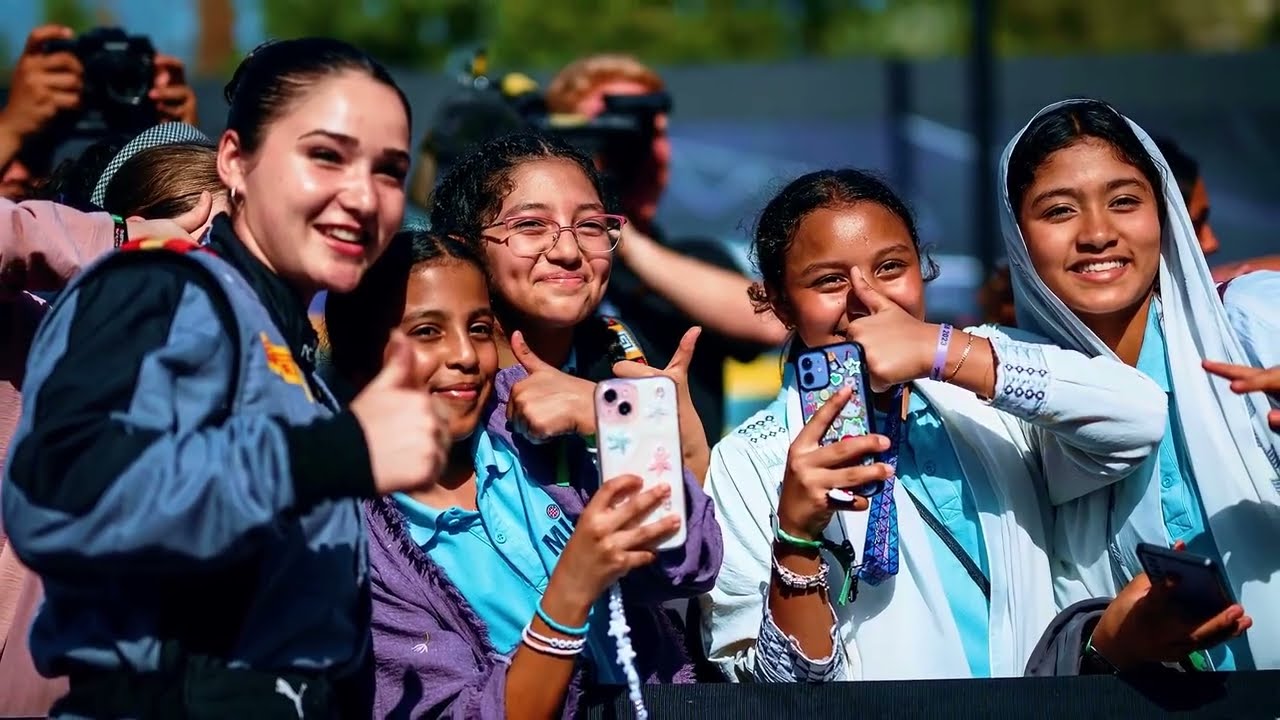
The Surface Success: A Marketing Masterclass
To dismiss the F1 Academy entirely would be unfair. Under Susie Wolff’s leadership, the series has achieved things that were previously thought impossible. The commitment is undeniable—all ten Formula 1 teams are involved, livery support is visible, and the funding is long-term. The metrics, on the surface, are a triumphs of modern sports marketing.
Since its inception, the series has driven a staggering 60% increase in the female audience for the sport. The release of the docu-series sparked a massive spike in global interest, creating momentum that feels tangible and electric. You can see it in the stands; you can feel it in the engagement online. The Academy has successfully shifted perception, telling the world that women belong in the cockpit. But in motorsport, perception is not performance, and engagement does not equal lap times.
The “Time Crunch”: Where the System Fractures
The harsh reality lies in the machinery and the timeline. The F1 Academy runs F4-specification cars. While this is a necessary entry point, it creates a severe developmental lag when compared to the ruthless trajectory of male counterparts.
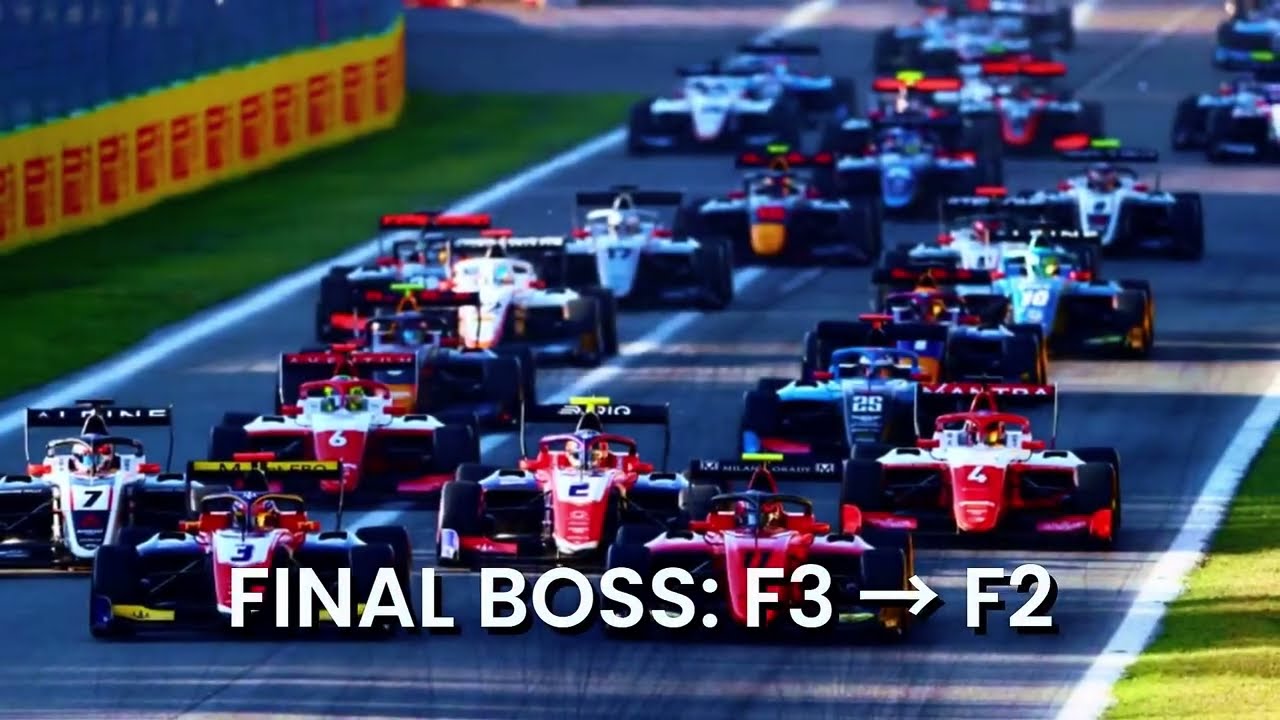
Consider the landscape: male drivers of the same age are often already racing in Formula 3 machinery. Many are running dual campaigns, effectively doubling their seat time and accelerating their development curve. In the brutally competitive world of open-wheel racing, this isn’t just about speed—it is about time. The traditional pathway is a relentless march: Karting, F4, F3, F2, and then, for the chosen few, Formula 1.
The gap between the F1 Academy (F4 level) and Formula 3 is not just a step; it is a canyon. It is a gap so wide that raw talent, no matter how brilliant, often struggles to jump it without intermediate steps that simply do not exist for many female drivers.
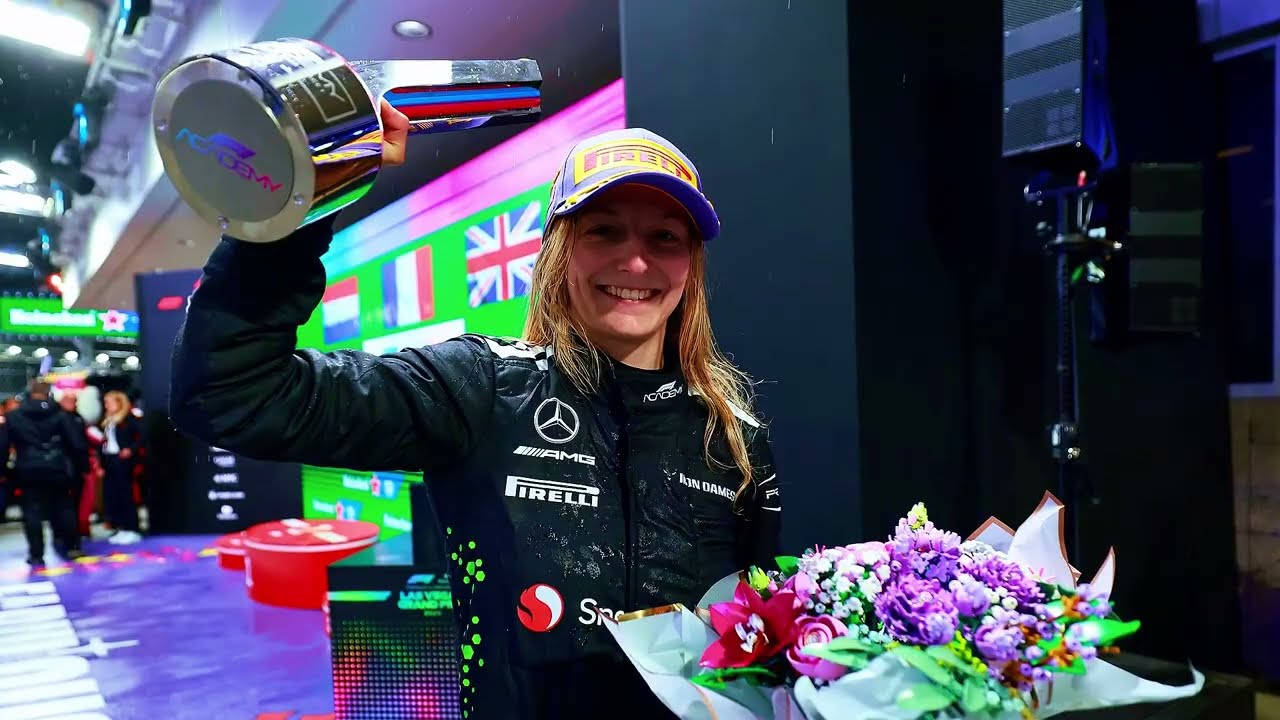
The Doriane Pin Dilemma
There is no clearer example of this systemic flaw than the case of Doriane Pin, the 2025 F1 Academy Champion. Pin is a name that has become synonymous with dominance. She was relentless, winning everything there was to win, answering every question asked of her on the track. Fans and pundits alike demanded the next logical step: a full Formula 3 seat, an FP1 session, a real test in faster machinery.
But here is the problem that 2026 has laid bare: winning the F1 Academy does not guarantee graduation. We have not seen a woman race in Formula 2 since Tatiana Calderón. Contrast this with the trajectory of male prodigies like Oscar Piastri or Gabriel Bortoleto, who won F3 and F2 back-to-back as rookies and found themselves in Formula 1 seats before they hit their twenties.
The average male F1 rookie today is an F2 veteran by the age of 18 or 19. Meanwhile, F1 Academy drivers are capped at age 25, still developing their craft in F4-level cars. This discrepancy creates a “time crunch” that is almost impossible to beat. By the time a female driver dominates the Academy, she may already be “too old” in the eyes of a paddock obsessed with finding the next teenage sensation. If the system fails to graduate a dominant champion like Pin to F3 and subsequently F2, it fails its most fundamental test.
2026: A Critical Pivot Point
Cognizant of these criticisms, the 2026 season introduces changes designed to change the equation. The calendar now features seven races at iconic circuits like Silverstone and the Circuit of the Americas. This move finally brings the series the prestige it deserves, placing the drivers on the same asphalt as their F1 idols.
Furthermore, a key rule change now allows top drivers to earn an exemption for a third season. This is an admission that better drivers aren’t just born; they are built through seat time. The introduction of rookie tests that measure physical limits, cognitive load, and reaction thresholds suggests a move toward a more scientific, performance-based approach.
But is it enough? The structure is still being judged by its foundation. If the Academy remains an island—a destination rather than a stepping stone—it fails the dream it sold to thousands of young girls.
The Financial Firewall
Beyond the technical regulations, we arrive at the hardest truth in motorsport: money decides how far you walk. While the F1 Academy is significantly cheaper than a standard full F4 season—a crucial factor in its accessibility—the jump to Formula 3 sees costs explode.
The expectation for a professional driver today is a dual campaign: the Academy season plus regional F4 championships to gain mileage. This means more travel, more risk, and significantly more funding. This is the juncture where F1 teams must step up. It is not enough to slap a logo on a car in the Academy; the investment must follow the driver up the ladder. Only when we see teams funding female drivers in genuine, mixed-gender F3 and F2 competitions can we measure real progression.
The Verdict
The F1 Academy is not a gimmick. It is a necessary platform, a vital doorway that did not exist three years ago. The fact that 87% of young girls now express a desire for more opportunities in motorsport is a testament to its cultural impact.
However, a cultural victory is not a sporting one. The numbers don’t lie regarding engagement, but the final test remains graduation. Until we see champions move seamlessly into Formula 3 and then Formula 2, the question of “PR vs. Pathway” will remain unanswered. The dream is closer than ever, but the bridge over that final gap is still under construction.
As we watch the lights go out in 2026, we are not just watching a race; we are watching a litmus test for the sport itself. Will we see a female Formula 1 driver in our lifetime? The Academy has started the engine, but the sport has yet to put its foot on the gas.
News

Inside Shane Richie’s love life: Drug – fuelled orgy with six blondes; real reason he split from Coleen Nolan; six-year ‘affair with fan’
Inside Shane Richie’s love life: Orgy with six blondes; real reason he split from Coleen Nolan; six-year ‘affair with fan’ He’s popular with the ladies… Shane Richie…

SH0CKING REVELATI0N:A sh0cking behind-the-scenes secret revealed about Lizzie Rizzini, the woman replacing Carol Kirkwood on the 6pm weather bulletin
BBC viewers still reeling from the departure of Carol Kirkwood got another surprise last night when presenter Lizzie Rizzini appeared to flash her black lace stockings on…

HEARTBREAKING: Peter Andre’s Tearful Message to Son Junior After SHOCKING Revelation About How He Truly Feels Toward Mum Katie Price — Katie Price’s reaction scares fans.
Peter Andre’s emotional message to son Junior after it’s revealed how he really feels about mum Katie Pri… PETER Andre has shared an emotional message to his…

Ben Shephard opens up about the devastating health battle his wife is facing: “She wakes up crying every single morning…”
Inside This Morning Ben Shephard’s Life Including Rarely Seen Wife and Health Battle Ben Shephard is a name synonymous with British television, renowned for his engaging presentation…

🚨 LIVE TV HEARTBREAK: Good Morning Britain Host Announces ‘Devastating’ Dɘath of Guest Minutes Into Show
Viewers of Good Morning Britain were met with heartbreaking news just minutes into Friday’s (January 30) episode, as co-hosts Kate Garraway and Ranvir Singh reported the tragic…

Emmerdale legend Cain Dingle will never be the same again after a shock cancer diagnosis turns his world upside down
FROure Desk. Full Terms and conditions are available on the website http://www.itv.com/presscentre/itvpictures/terms Emmerdale wouldn’t be Emmerdale without the glowering, grunting embodiment of manliness that is Cain Dingle (Jeff Hordley) But…
End of content
No more pages to load






