The dawn of the 2026 Formula 1 season brings with it a fresh scent of ozone and asphalt. It is a landmark year—the first time in a decade we have seen 11 teams on the grid, thanks to the arrival of Cadillac, and a grid expanded to 22 drivers. New regulations have reset the engineering landscape, washing away the dominance of previous eras and promising a clean slate. But for a select group of six drivers, this “clean slate” feels less like an opportunity and more like a precipice.
While rookies are eager to make their mark and established champions look to cement legacies, these six individuals find themselves in the “Last Chance Saloon.” Whether battling age, reputation, or the sheer weight of expectations, their performance in 2026 will likely dictate whether they remain in the pinnacle of motorsport or fade into history. Here is why the stakes have never been higher for Sergio Perez, Franco Colapinto, Liam Lawson, Esteban Ocon, Lance Stroll, and Lewis Hamilton.

Sergio Perez: The Cadillac Gamble
It is genuinely heartwarming to see Sergio “Checo” Perez back on the grid. After a tumultuous end to his Red Bull career, where he was arguably “demolished” by Max Verstappen, his move to the brand-new Cadillac team offers a fresh start. The 35-year-old brings immense experience, a massive fan base, and the “Minister of Defense” reputation that once made him a hot commodity.
However, nostalgia won’t score points. Perez finds himself paired with Valtteri Bottas, another veteran with a point to prove. The dynamic is fascinating: Bottas will likely hold the edge in raw one-lap qualifying pace, but Perez’s race craft and tire management remain elite. The Cadillac package itself is a massive unknown. While they are running a known quantity in the Ferrari power unit, their chassis is a question mark.
For Perez, 2026 is about rewriting the narrative. He needs to ensure his career isn’t defined by the gap to Verstappen but by his ability to lead a new American outfit. If he is consistently outperformed by Bottas, the calls for him to step aside for younger talent will become deafening. He is fighting not just for points, but for his reputation as a top-tier driver.
Franco Colapinto: The Pressure of the Podium
Franco Colapinto’s journey to the 2026 grid has been nothing short of cinematic. Plucked from relative obscurity to replace Logan Sargeant at Williams, he showed flashes of brilliance and top-tier pace. His move to Alpine places him in a fascinating position. With the new engine regulations, the Mercedes power unit in the back of the Alpine is widely expected to be the class of the field.
This creates a dangerous paradox for the Argentine. If Alpine indeed has a “rocket ship” capable of podiums, Colapinto has nowhere to hide. In a lower midfield car, a rookie can get away with the occasional crash or off-weekend. But in a top-four car? Every mistake is magnified.
Colapinto’s 2025 campaign was marred by a “crash-happy” nature towards the end, and while his pace relative to Pierre Gasly was respectable, he needs to iron out the errors immediately. With a car that could potentially challenge for silverware, Colapinto must deliver consistent points. If he spends the season repairing carbon fiber while Gasly sprays champagne, his fairytale introduction to F1 could have a very abrupt ending.
Liam Lawson: Escaping the Red Bull Grinder
Liam Lawson has had perhaps the most disjointed start to an F1 career in modern history. From substitute drives at AlphaTauri to a brief, high-pressure stint at Red Bull Racing in 2025 (only to be swapped back), he has been moved around like a chess piece. Now settled at Racing Bulls (VCarb) for a full season, the excuses are gone.
The worry for Lawson is his trajectory. In the latter half of 2025, he often looked second-best to Isack Hadjar. Now, paired with the highly-rated Arvid Lindblad, Lawson is the senior driver who must assert dominance. The Red Bull program is notoriously ruthless—just ask the lengthy list of drivers they have discarded.
If Lawson can crush Lindblad and deliver those standout “hero” drives we saw in his debut cameos, he puts himself back in the conversation for a top seat—perhaps even a return to Red Bull if Verstappen departs in 2027. But if he is mediocre? The Red Bull junior program has a long memory and very little patience. This is his year to prove he is a franchise driver, not just a reliable reserve.
Esteban Ocon: The Toyota Threat
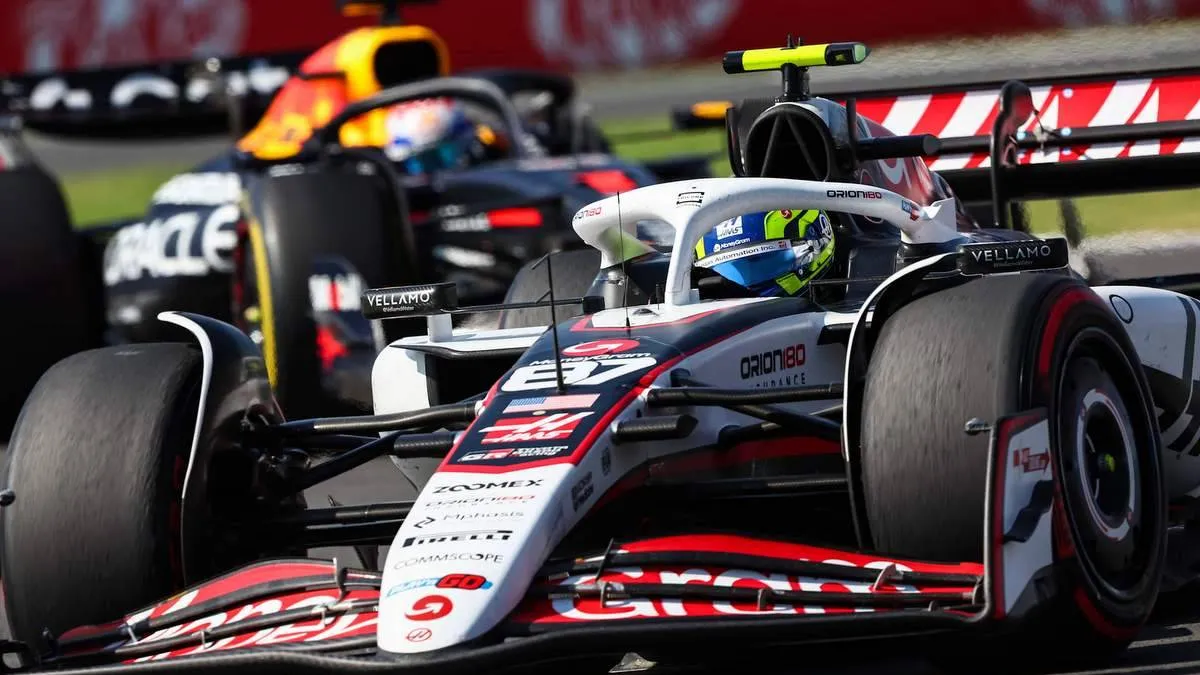
Esteban Ocon moves to Haas—now formally the Haas Toyota Gazoo Racing team—under a cloud of skepticism. His 2025 season alongside rookie Ollie Bearman was, frankly, damaging. Being consistently outperformed by a teenager in the same machinery is a stain that is hard to scrub out.
Ocon’s reputation as a combative teammate precedes him, having scrapped with Perez and Alonso in the past. But at Haas, the threat comes from outside the cockpit. With Toyota increasing their technical involvement, the specter of a Japanese factory driver looms large. Names like Ritomo Miyata and Ryo Hirakawa are already in the Toyota ecosystem.
If Ocon fails to lead the team and continues to lag behind, Toyota will have little reason to keep him in the seat for 2027. They will want “one of their own” in the car eventually. Ocon needs to prove to Team Principal Ayao Komatsu that he is indispensable. He is effectively driving to keep a seat that a global automotive giant might already have earmarked for someone else.
Lance Stroll: No More Excuses
We have been having the “Lance Stroll conversation” for a decade. Is he fast? Sometimes. Is he consistent? Rarely. But 2026 changes the equation entirely. Aston Martin has gone “all in.” They have the Honda engine, the state-of-the-art factory, and most importantly, the genius of Adrian Newey designing the car.
If the 2026 Aston Martin is a championship contender—a distinct possibility with Newey at the helm—Stroll’s performance will be under a microscope like never before. It is one thing to be a few tenths off Fernando Alonso when fighting for P9; it is entirely another to be fighting for P6 when your teammate is winning races.
We saw a glimpse of this in early 2023, where Alonso racked up podiums while Stroll struggled. The points gap was staggering (117 to 37 in the opening rounds). If that history repeats itself in a title-winning car, the “privilege” argument will reach a fever pitch. Stroll doesn’t need to beat Alonso, but he must be in the same zip code. If he wastes a championship-caliber car, even his father’s ownership might not be enough to shield him from the public and internal backlash.
Lewis Hamilton: The Ferrari Dream or Nightmare?
Finally, we turn to the seven-time World Champion. Lewis Hamilton’s move to Ferrari was the romantic capstone to a legendary career, but the reality of 2025 was stark. It was, at times, a “tough watch.” The negative self-talk over the radio, the struggle to match Charles Leclerc in qualifying, and the visible discomfort with the car painted a picture of a driver at odds with his machinery.
2026 was always the target, the reason for the move. A new regulation set offers Hamilton a chance to use his immense experience to help shape a car from the ground up. However, the clock is ticking. At 41, he is fighting biology as much as he is fighting Leclerc.
Hamilton needs to be close to Charles. He doesn’t necessarily need to beat him over a season—Leclerc is in his prime and entrenched at Ferrari—but he cannot be left behind. If the gap remains wide, and if the Ferrari car isn’t a title contender, one has to wonder how long Lewis’s motivation will last. With the specter of Ollie Bearman (a Ferrari academy product) rising, Ferrari has a succession plan ready. Hamilton needs a season that reminds the world why he is the GOAT, or his Ferrari dream could end in a quiet, frustrated retirement.
Conclusion
The 2026 season promises to be a spectacle of engineering and speed, but for these six men, it is a psychological thriller. From the back of the grid to the podium fight, Perez, Colapinto, Lawson, Ocon, Stroll, and Hamilton are racing for their professional lives. In Formula 1, you are only as good as your last race, and for these drivers, the next 20 races will define their entire futures. Strap in; it’s going to be a bumpy ride.
News

Inside Shane Richie’s love life: Drug – fuelled orgy with six blondes; real reason he split from Coleen Nolan; six-year ‘affair with fan’
Inside Shane Richie’s love life: Orgy with six blondes; real reason he split from Coleen Nolan; six-year ‘affair with fan’ He’s popular with the ladies… Shane Richie…

SH0CKING REVELATI0N:A sh0cking behind-the-scenes secret revealed about Lizzie Rizzini, the woman replacing Carol Kirkwood on the 6pm weather bulletin
BBC viewers still reeling from the departure of Carol Kirkwood got another surprise last night when presenter Lizzie Rizzini appeared to flash her black lace stockings on…

HEARTBREAKING: Peter Andre’s Tearful Message to Son Junior After SHOCKING Revelation About How He Truly Feels Toward Mum Katie Price — Katie Price’s reaction scares fans.
Peter Andre’s emotional message to son Junior after it’s revealed how he really feels about mum Katie Pri… PETER Andre has shared an emotional message to his…

Ben Shephard opens up about the devastating health battle his wife is facing: “She wakes up crying every single morning…”
Inside This Morning Ben Shephard’s Life Including Rarely Seen Wife and Health Battle Ben Shephard is a name synonymous with British television, renowned for his engaging presentation…
🚨 LIVE TV HEARTBREAK: Good Morning Britain Host Announces ‘Devastating’ Dɘath of Guest Minutes Into Show
Viewers of Good Morning Britain were met with heartbreaking news just minutes into Friday’s (January 30) episode, as co-hosts Kate Garraway and Ranvir Singh reported the tragic…

Emmerdale legend Cain Dingle will never be the same again after a shock cancer diagnosis turns his world upside down
FROure Desk. Full Terms and conditions are available on the website http://www.itv.com/presscentre/itvpictures/terms Emmerdale wouldn’t be Emmerdale without the glowering, grunting embodiment of manliness that is Cain Dingle (Jeff Hordley) But…
End of content
No more pages to load






