The countdown is finally over. The hypothetical debates, the endless simulator hours, and the frantic engineering sprints are about to collide with reality. We are just weeks away from the first pre-season test in Barcelona, and the atmosphere in the Formula 1 paddock is a potent cocktail of adrenaline, curiosity, and, let’s be honest, a healthy dose of fear.
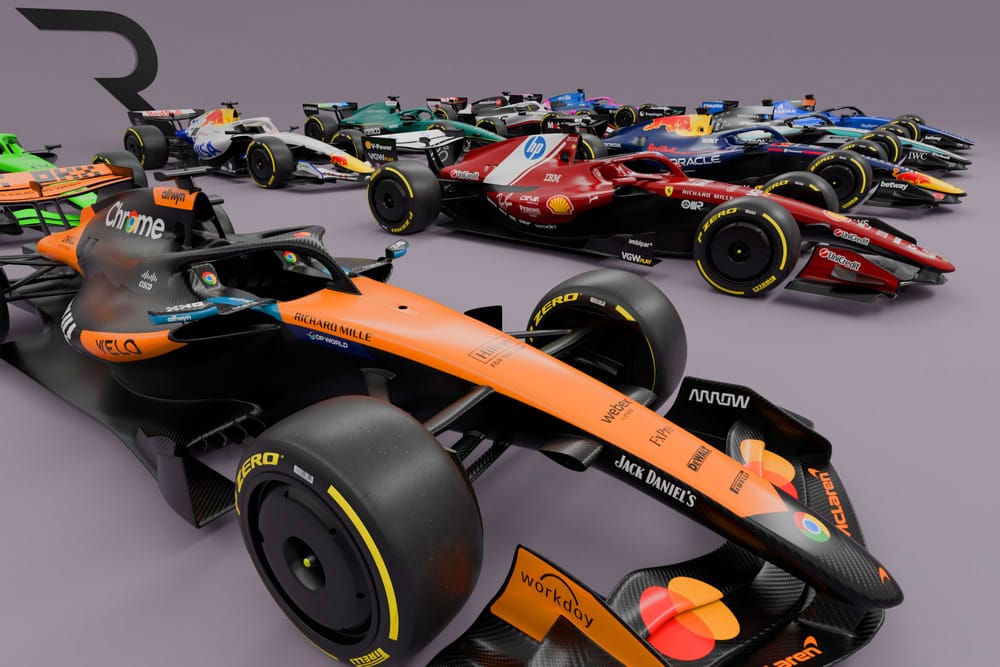
Welcome to the 2026 Formula 1 season. This isn’t just a new coat of paint or a tweaked front wing; this is arguably the single most significant regulation overhaul in the history of the sport. We have brand-new power units, completely redesigned chassis regulations, and the introduction of 100% advanced sustainable fuels. It is a revolution on wheels. But as we stand on the precipice of this new era, one burning question overrides all others: Will the racing actually be any good?

The “Economy Drive” Nightmare
The biggest anxiety keeping team principals awake at night involves the new power units. With a roughly 50/50 split between the internal combustion engine and electrical power, the reliance on energy harvesting is massive. The fear? That the cars will be “energy-starved.”
Critics warn of a scenario where Grand Prix racing descends into an “economy run,” where drivers spend the first half of the race lifting and coasting, desperate to save battery life, only to sprint at the end. It’s a style of racing familiar to fans of Formula E—often referred to as “peloton racing”—where leading is a disadvantage due to air resistance and energy consumption.
“The battle will be in understanding: are these cars too energy-starved to allow good racing?” notes F1 expert Ed Straw. “Are we heading for boring Sundays until we come up with some rule changes, or are things going to be good from the start?”
The concern is valid. If the performance disparity is dictated purely by who has the most battery left at the end of a straight, we risk seeing “drive-by” overtakes. Imagine a driver pressing a button and breezing past a rival on the straight with zero defense possible, rendering the braking zones—the traditional arena of gladiatorial combat—completely irrelevant.
However, there is a flip side. This complexity introduces a massive variable. Drivers will need to be smarter than ever. The “brain drain” inside the cockpit will be immense as they toggle between “Overtake” modes and “Boost” modes, managing a complex torque map that delivers immediate, neck-snapping power. The drivers who can adapt their style to these new demands, much like adapting to the ground-effect cars of 2022, will thrive.
Active Aero: Innovation or Gimmick?
Visually, the 2026 cars will offer something fans have never seen before: Active Aerodynamics.
Gone is the simple DRS flap. In its place is a system where both front and rear wings adjust dynamically. On straights, the car enters “Z-Mode” (or “Straight-Line Mode”), shedding downforce to minimize drag and maximize top speed. Approaching a corner, the wings flip back up into high-downforce mode to glue the car to the track.
It sounds futuristic, but it hasn’t been without its teething problems. Late in 2025, the FIA had to scramble to introduce a “Partial Aero Mode” to solve a terrifying safety concern: in changeable or wet conditions, a car set up for low drag could suffer catastrophic understeer if the driver lost grip, potentially sending them straight into the barriers at high speed.
This “Partial Mode” allows the front wing to adjust while keeping the rear wing stable, balancing the car and saving the floor plank from excessive wear—a compromise that highlights just how experimental these rules still are.
Will it look cool on TV? Absolutely. Seeing the wings morph in real-time will be a visual feast. But it also risks over-complicating the show. If everyone is doing it at the same time, does it add anything to the racing? Or does it just become background noise? The hope is that it creates different drag profiles, allowing cars to follow closely and attack in new, inventive ways.

The Competitive Order: Who is King of the New Era?
Predicting the pecking order before a wheel has turned is a fool’s errand, but that’s never stopped the F1 rumor mill.
The “accepted truth” whispering through the pit lane is that Mercedes is the team to beat. Since the regulations were announced, the Silver Arrows have reportedly poured massive resources into their power unit, aiming to replicate their crushing dominance of 2014. If they have nailed the split-turbo and battery efficiency, George Russell and rookie sensation Kimi Antonelli could be untouchable.
McLaren, however, enters 2026 as the most fundamentally sound race team. Having out-developed everyone in the previous era, Woking is confident. Their challenge isn’t just the car; it’s the engine. As a Mercedes customer, they will have the same grunt as the works team, but can they integrate it as effectively?
And then there is the elephant in the room: Red Bull Ford.
For the first time in its history, Red Bull is manufacturing its own engine, with Ford as a technical partner. It is a monumental task. Skeptics argue that an energy drink company (albeit a technologically advanced one) cannot simply wake up and beat Mercedes and Ferrari at the engine game.
“If the Red Bull engine is bad, the Max Verstappen exit rumors will start before we even leave Bahrain,” predicts analyst Scott Mitchell-Malm. “The worst-case scenario is they are miles off, and Max looks at his contract and starts making phone calls.”
Conversely, if Red Bull pulls this off—if they show up in Barcelona with a rocket ship—it will be the ultimate mic drop, cementing their status as a true constructor legend.
Ferrari, as always, is the wildcard. Lewis Hamilton didn’t join the Scuderia to drive in the midfield. He is gambling his legacy on Ferrari getting these regulations right. If the car is a winner, the narrative of Hamilton chasing an eighth title in red will dwarf everything else. If the car is a dud? It could be a long, painful farewell for the sport’s most successful driver.
The Political Battlefield: “AUDO” and the Catch-Up Game
Perhaps the most controversial element of the 2026 regulations is hidden in the fine print. It’s an acronym you’ll be hearing a lot: AUDO (Additional Upgrade Development Opportunity).
In an attempt to prevent a single manufacturer from locking in an advantage for years (like Mercedes in 2014), the FIA has introduced a mechanism to help struggling engine manufacturers catch up. If a power unit is significantly down on performance, that manufacturer gets extra dyno time and development upgrades.
It sounds fair on paper, but in the piranha tank of F1, it’s a recipe for war. Imagine Mercedes nails the design and dominates the first six races. Suddenly, Red Bull or Ferrari is granted extra development time to catch up. Toto Wolff will be furious. We could see teams lobbying, arguing over data, and accusing each other of “sandbagging” to game the system.
“It will be a huge political fight,” warns expert John Noble. “If a manufacturer has done a brilliant job, why should they be penalized by letting others catch up? But if one team is winning by 30 seconds every race, the sport suffers. It’s a fine balance.”
The Sustainable Fuel Revolution
Amidst the technical chaos, there is a genuine triumph of science. 2026 marks the arrival of 100% sustainable fuels. Shell’s Principal Scientist, Valeria Loretti, describes it as “designing a dress for a specific body.” These aren’t just eco-friendly additives; the fuel molecules are synthesized from municipal waste, agricultural residue, and even recycled plastics.
This is critical for F1’s survival and relevance. By proving that high-performance internal combustion engines can run on carbon-neutral fuel, F1 is offering a lifeline to the combustion engine globally. It’s a message that resonates with manufacturers like Audi (taking over Sauber) and Honda (partnering with Aston Martin), who see the track as the ultimate laboratory.
The Verdict: Chaos is Guaranteed
So, what should we expect?
Expect unpredictability. The first few races will likely be a scramble. We might see reliable but slow cars beating fast but fragile ones. We might see a midfield team like Alpine or Williams score a shock podium because they managed their energy better than the big boys.
“The best engineers love nothing more than winning in the most boring way possible,” Straw jokes. “But with so many variables, perfection is impossible initially.”
The 2026 season will not just be a test of speed; it will be a test of intelligence, adaptability, and political maneuvering. The cars will look different, sound different, and race different.
Will it be perfect from race one? Probably not. There will be confusion. There will be complaints about tires, wake turbulence, and battery usage. But for the first time in years, we genuinely do not know what is going to happen. And in a sport that often suffers from predictability, that unknown is the most exciting prospect of all.
Buckle up. The green light is about to flash on the wildest ride in motorsport history.
News

Inside Shane Richie’s love life: Drug – fuelled orgy with six blondes; real reason he split from Coleen Nolan; six-year ‘affair with fan’
Inside Shane Richie’s love life: Orgy with six blondes; real reason he split from Coleen Nolan; six-year ‘affair with fan’ He’s popular with the ladies… Shane Richie…

SH0CKING REVELATI0N:A sh0cking behind-the-scenes secret revealed about Lizzie Rizzini, the woman replacing Carol Kirkwood on the 6pm weather bulletin
BBC viewers still reeling from the departure of Carol Kirkwood got another surprise last night when presenter Lizzie Rizzini appeared to flash her black lace stockings on…

HEARTBREAKING: Peter Andre’s Tearful Message to Son Junior After SHOCKING Revelation About How He Truly Feels Toward Mum Katie Price — Katie Price’s reaction scares fans.
Peter Andre’s emotional message to son Junior after it’s revealed how he really feels about mum Katie Pri… PETER Andre has shared an emotional message to his…

Ben Shephard opens up about the devastating health battle his wife is facing: “She wakes up crying every single morning…”
Inside This Morning Ben Shephard’s Life Including Rarely Seen Wife and Health Battle Ben Shephard is a name synonymous with British television, renowned for his engaging presentation…

🚨 LIVE TV HEARTBREAK: Good Morning Britain Host Announces ‘Devastating’ Dɘath of Guest Minutes Into Show
Viewers of Good Morning Britain were met with heartbreaking news just minutes into Friday’s (January 30) episode, as co-hosts Kate Garraway and Ranvir Singh reported the tragic…

Emmerdale legend Cain Dingle will never be the same again after a shock cancer diagnosis turns his world upside down
FROure Desk. Full Terms and conditions are available on the website http://www.itv.com/presscentre/itvpictures/terms Emmerdale wouldn’t be Emmerdale without the glowering, grunting embodiment of manliness that is Cain Dingle (Jeff Hordley) But…
End of content
No more pages to load






