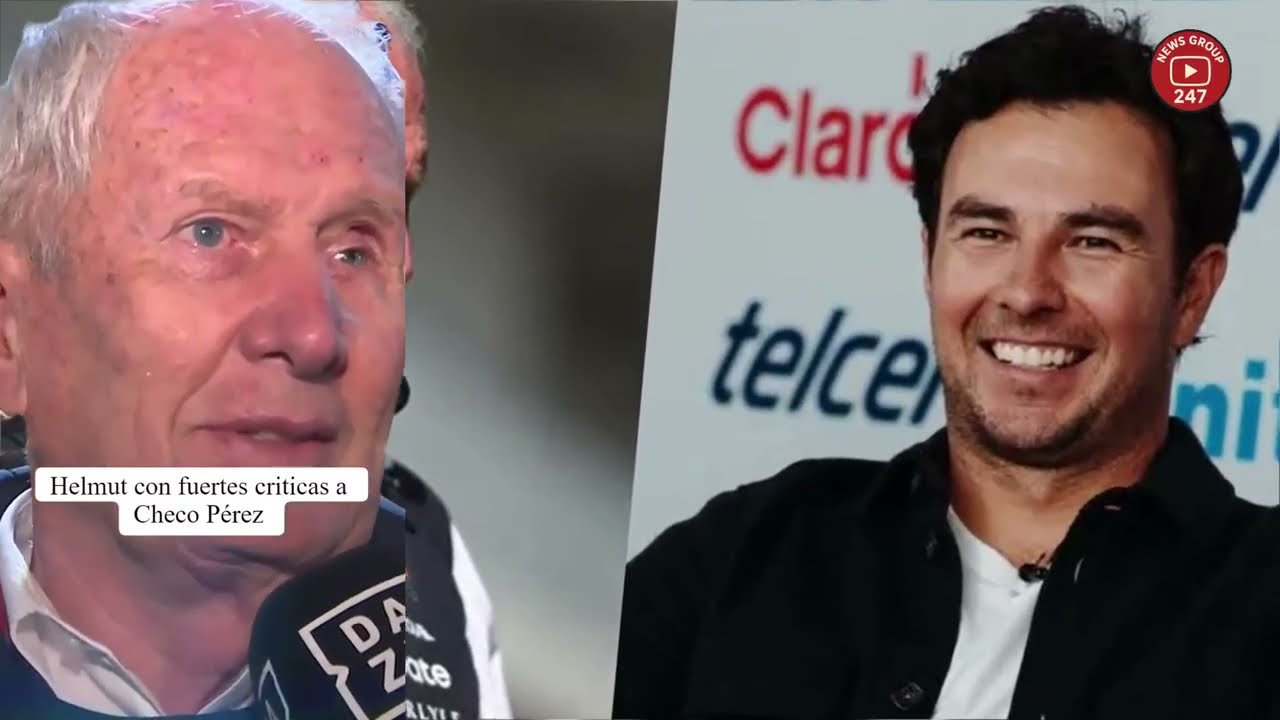
In the high-octane world of Formula 1, the roar of the engines is often drowned out by the whispers in the paddock. But this week, those whispers have turned into a deafening roar as a simmering conflict between Sergio “Checo” Pérez and Red Bull’s uncompromising advisor, Helmut Marko, has erupted into open warfare. The trigger? A candid, no-holds-barred podcast appearance by the Mexican driver that has peeled back the glossy veneer of the championship-winning team to reveal a culture of tension, perceived bias, and psychological warfare.
The Spark That Lit the Fuse
The drama unfolded when Checo Pérez, now looking toward a future sabbatical before a highly anticipated return with Cadillac, appeared on the “Cracks” podcast. Usually known for his diplomatic and calm demeanor, Pérez unleashed a rare torrent of frustration regarding his tenure at Red Bull Racing. His words painted a picture of a driver trapped in a paradox—a “no-win” scenario where success and failure were treated with equal disdain.
“At Red Bull, everything was a problem,” Pérez revealed, his words cutting through the usual PR-sanctioned fluff of driver interviews. “If I was very fast, it was a problem because then there was a very tense atmosphere within Red Bull. If I was faster than Max, it was a problem. If I was slower than Max, it was a problem. So everything was a problem.”
These comments strike at the very heart of a long-held fan theory: that the second seat at Red Bull is not just difficult, but actively cursed by a team culture designed solely to prop up Max Verstappen. Pérez described an environment where his own performance, whether stellar or lackluster, allegedly disrupted the team’s delicate equilibrium, implying that his primary role was never to win, but simply to exist within a narrow margin that didn’t threaten the team’s golden boy.
Marko Strikes Back: The “Savior” Narrative
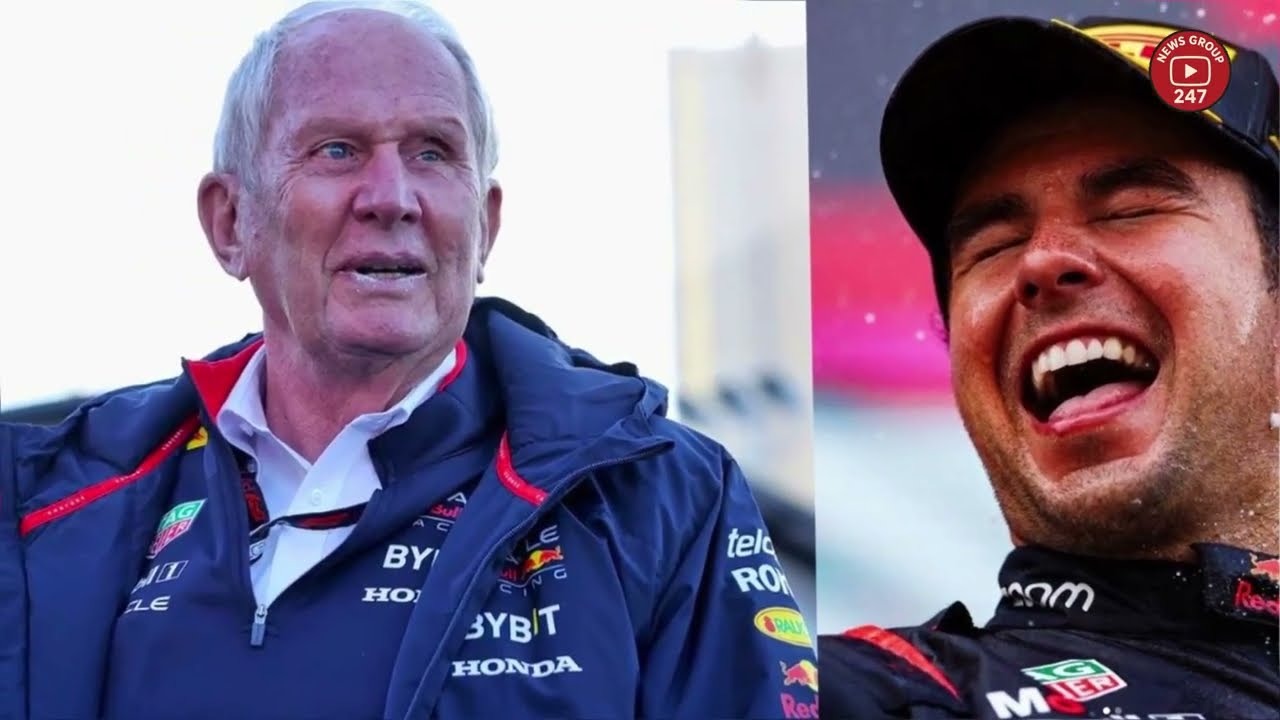
It didn’t take long for the Empire to strike back. Helmut Marko, the 81-year-old architect of Red Bull’s driver program and a man known for his blunt, often abrasive communication style, responded with a mixture of shock and wounded pride. For Marko, Pérez’s narrative is a rewriting of history that conveniently omits the dire straits the driver was in before Red Bull came calling.
“It is somewhat surprising,” Marko told reporters, his tone icy. “We should not forget that Checo Pérez did not have a contract. He was fired from the racing team he practically kept alive.”
Marko’s rebuttal is sharp and calculated. He is reminding the world—and Pérez—that in late 2020, the Mexican driver was facing a forced exit from Racing Point (now Aston Martin) despite a stellar season. He was, for all intents and purposes, unemployed until Red Bull threw him a lifeline. Marko portrays the team not as an oppressor, but as a benefactor that rescued a drowning talent and gave him the machinery to fight for wins and podiums.
“I don’t know exactly how many Grand Prix races he won,” Marko added, employing a rhetorical flourish to downplay the specifics while highlighting the opportunity provided. “But especially in 2022, he was in the race for the world championship for a while. That he eventually stopped performing had several reasons, but overall I think Checo made his career with us.”
The “Number Two” Curse and the Human Cost
This clash represents a collision of two valid but incompatible truths. On one side, there is the undeniable fact that Red Bull resurrected Pérez’s career, placing him in a car capable of winning when no one else would. On the other, there is the visceral human experience of working in an environment where your colleague’s success is paramount, and your own ambition must be constantly curbed or scrutinized.
The “Number Two Driver” trope is as old as the sport itself, but at Red Bull, it seems to have evolved into a particularly brutal psychological test. To be Max Verstappen’s teammate is to measure oneself against a generational talent who is fully embedded in the team’s DNA. As Pérez noted, the demands are unique. You must be fast enough to help with strategy and the Constructors’ Championship, but never fast enough to destabilize the hierarchy.
Pérez’s claim that being “faster than Max” caused tension is particularly damning. It suggests that the team’s internal harmony relies on a specific pecking order, and any deviation—even a positive one for Pérez—was viewed as a disruption rather than a bonus. This aligns with the whispers of “paddock denizens” who have long suspected that Red Bull’s culture, while ruthlessly efficient at winning, is corrosive to anyone not named Verstappen.
Strategic Missteps and a Legacy in Question
The timing of this public airing of grievances is significant. Red Bull has just lost the 2024 Constructors’ Championship to McLaren, a blow that has shaken the team’s aura of invincibility. While technical issues and strategic missteps played a role, one has to wonder how much the “internal tensions” described by Pérez contributed to the distraction. A team at war with itself rarely performs at its peak.
Furthermore, Pérez’s upcoming move to Cadillac adds a fascinating layer to the saga. He is not fading into obscurity; he is taking a sabbatical to recharge before joining a new, ambitious manufacturer with deep pockets and global aspirations. His willingness to speak out now, knowing he has a secure future, suggests a burning desire to set the record straight before he closes this chapter.
Conclusion: A Warning to the Future
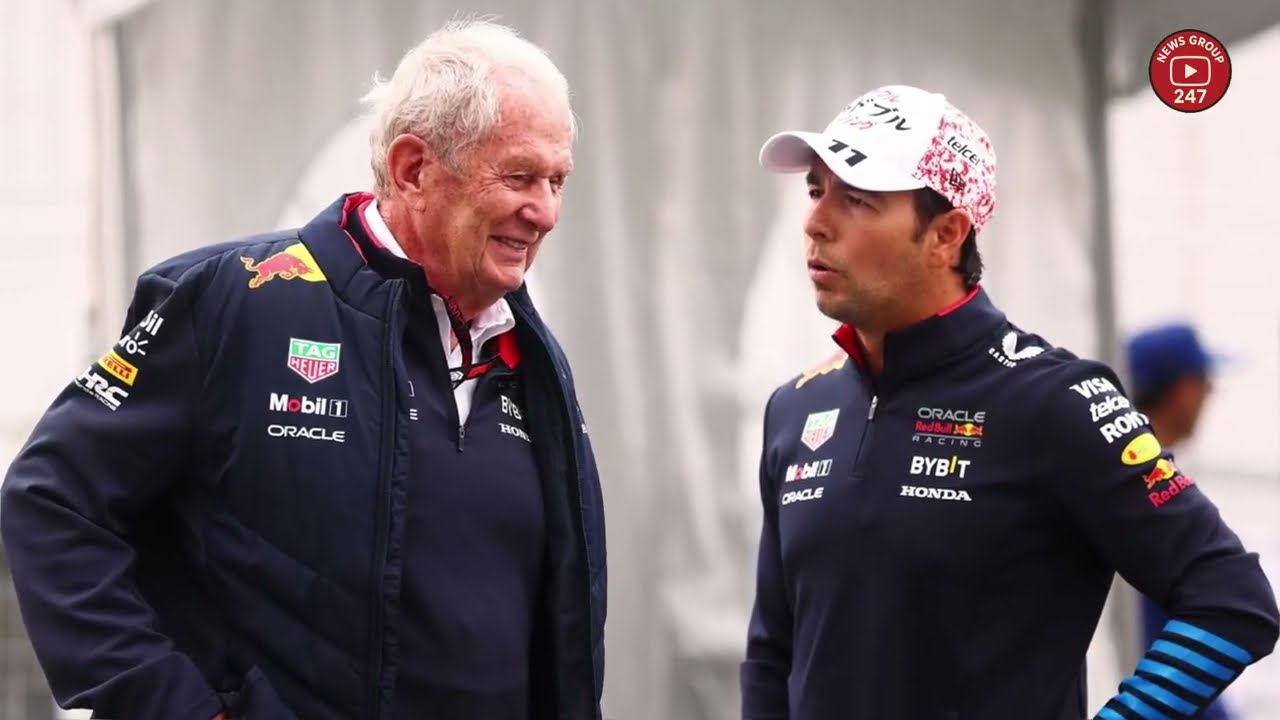
As the dust settles on this verbal skirmish, the paddock is left with a new script. The romantic notion of loyalty in Formula 1 has been shattered once again, replaced by the stark reality of transactional relationships. Red Bull views loyalty as debt repayment for the seat they provided; Pérez views it as a two-way street that was blocked by favoritism and politics.
Marko’s “wounded pride” suggests that Red Bull is genuinely baffled by the accusation, viewing their ruthless pragmatism as simple fairness. Meanwhile, Pérez’s “catharsis” on the podcast reveals the deep emotional toll of trying to survive in the shark tank.
Ultimately, this feud serves as a cautionary tale for any driver eyeing that second Red Bull seat. It is a coveted position, yes, but it comes with a price tag that isn’t written in the contract. As Pérez heads toward his new beginning with Cadillac and Red Bull licks its wounds from a lost title fight, the question remains: Can a team maintain a winning culture without breaking the spirits of the men who drive for them? Or is the “human compromise” simply the cost of doing business at the pinnacle of motorsport?
One thing is certain: until the engines fire up again, the echoes of this conflict will ring louder than any V6 hybrid turbo. The “tense atmosphere” Pérez described has now spilled out into the open, and it will take more than a PR statement to clean it up.
News

Inside Shane Richie’s love life: Drug – fuelled orgy with six blondes; real reason he split from Coleen Nolan; six-year ‘affair with fan’
Inside Shane Richie’s love life: Orgy with six blondes; real reason he split from Coleen Nolan; six-year ‘affair with fan’ He’s popular with the ladies… Shane Richie…

SH0CKING REVELATI0N:A sh0cking behind-the-scenes secret revealed about Lizzie Rizzini, the woman replacing Carol Kirkwood on the 6pm weather bulletin
BBC viewers still reeling from the departure of Carol Kirkwood got another surprise last night when presenter Lizzie Rizzini appeared to flash her black lace stockings on…

HEARTBREAKING: Peter Andre’s Tearful Message to Son Junior After SHOCKING Revelation About How He Truly Feels Toward Mum Katie Price — Katie Price’s reaction scares fans.
Peter Andre’s emotional message to son Junior after it’s revealed how he really feels about mum Katie Pri… PETER Andre has shared an emotional message to his…

Ben Shephard opens up about the devastating health battle his wife is facing: “She wakes up crying every single morning…”
Inside This Morning Ben Shephard’s Life Including Rarely Seen Wife and Health Battle Ben Shephard is a name synonymous with British television, renowned for his engaging presentation…

🚨 LIVE TV HEARTBREAK: Good Morning Britain Host Announces ‘Devastating’ Dɘath of Guest Minutes Into Show
Viewers of Good Morning Britain were met with heartbreaking news just minutes into Friday’s (January 30) episode, as co-hosts Kate Garraway and Ranvir Singh reported the tragic…

Emmerdale legend Cain Dingle will never be the same again after a shock cancer diagnosis turns his world upside down
FROure Desk. Full Terms and conditions are available on the website http://www.itv.com/presscentre/itvpictures/terms Emmerdale wouldn’t be Emmerdale without the glowering, grunting embodiment of manliness that is Cain Dingle (Jeff Hordley) But…
End of content
No more pages to load






