The Silence Before the Storm
In the high-octane world of Formula 1, silence is rarely empty; it is usually heavy with anticipation. Since July 9, 2025, the paddock has felt a distinct void. That was the day Christian Horner, the man who built Red Bull Racing from a chaotic startup into a global juggernaut, was unceremoniously dismissed. The shockwaves were seismic. For two decades, Horner was Red Bull Racing. He survived engine failures, driver tantrums, and intense rivalries, only to be ousted in a move that left fans and insiders bewildered.
But if you thought Christian Horner was going to fade quietly into a luxurious retirement, you haven’t been paying attention.
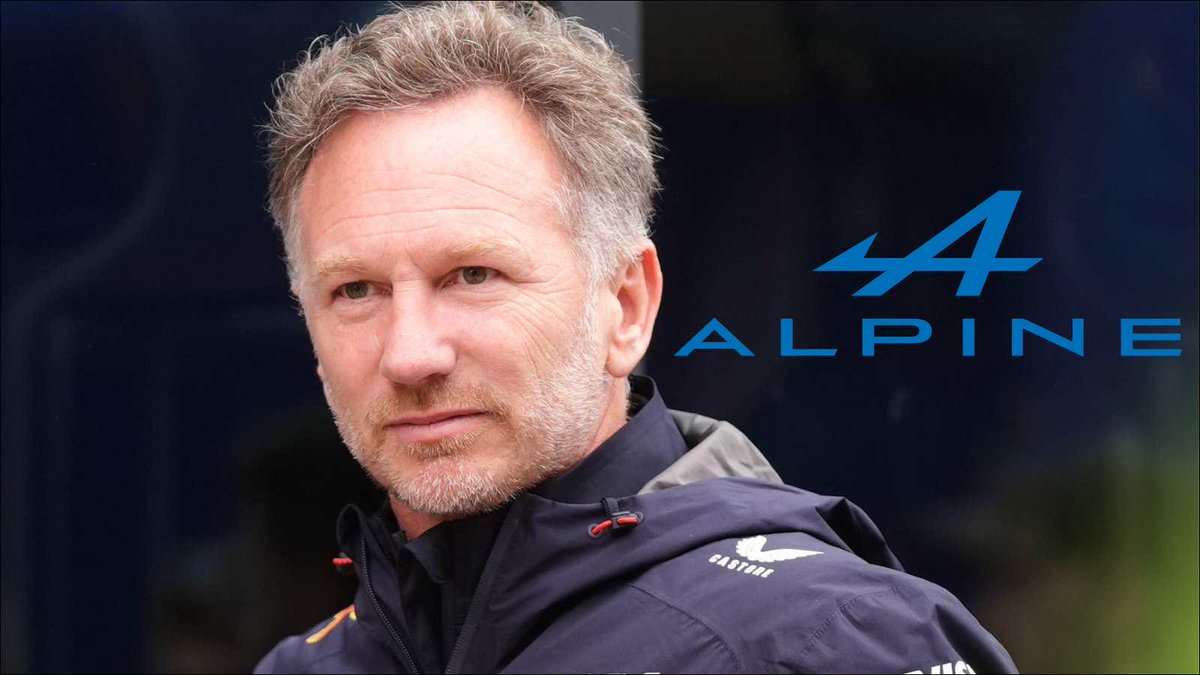
New reports circulating this week suggest that the 51-year-old Briton is not merely planning a return to the sport he loves; he is engineering a comeback that could eclipse his previous tenure in both scale and ambition. The narrative is shifting from one of disgrace to one of potential domination. Horner isn’t just looking for a job—he’s looking for a kingdom. And the target of his ambition appears to be none other than the beleaguered Alpine F1 Team.
The Golden Parachute and the Iron-Clad Ban
To understand the magnitude of this potential comeback, we first have to unpack the exit. Horner’s departure from Red Bull wasn’t just a firing; it was a divorce settled with an eye-watering sum. Confirmed reports indicate that Horner walked away with a settlement in the region of €60 million.
This figure isn’t arbitrary. At the time of his dismissal, Horner was believed to be earning around €12 million annually, with a contract securing his services through 2030. The €60 million payout essentially covers the remaining five years of his deal. In the cutthroat corporate world of F1, this signals a compromise: Red Bull likely argued for a “just cause” dismissal to pay nothing, while Horner’s camp demanded full compensation. They met in the middle—or rather, quite near the top—likely acknowledging his undeniable contribution to their eight Drivers’ Championships and six Constructors’ titles.
However, this golden parachute came with strings attached—heavy ones. Embedded within his exit agreement is a specific “Garden Leave” clause that bans Horner from the Formula 1 paddock until the end of April 2026. This is a strategic lockout, designed to keep him away from competitors until after the fifth round of the 2026 season in Saudi Arabia. The intention is clear: prevent him from taking sensitive intellectual property or immediate strategic insights to a rival.
But April is just around the corner. And while he may be physically barred from the paddock, his influence and ambition recognize no such boundaries.
The “Toto Wolff Model”: Envy as Motivation
For years, the rivalry between Christian Horner and Mercedes boss Toto Wolff has been the fuel for F1’s most dramatic narratives. They have traded barbs, broken headsets, and battled for every inch of tarmac. Yet, beneath the animosity, sources close to Horner suggest a deep-seated professional envy.
Unlike Horner, who was a paid employee of Red Bull (albeit a highly paid one), Toto Wolff owns a significant 33% stake in the Mercedes F1 team. This ownership grants Wolff a level of autonomy, security, and wealth generation that a mere Team Principal can never achieve. Horner has long coveted this “owner-operator” status. He doesn’t just want to run the show; he wants to own a piece of the theater.
With €60 million in fresh capital and a burning desire to prove his former employers wrong, Horner is reportedly seeking to transition from employee to shareholder. But €60 million, while a fortune to most, is a drop in the ocean in modern F1 valuations. To buy a seat at the table, he needs backing.

Enter Alpine: The Distressed Asset
Opportunity often wears the mask of disaster, and nowhere is there more disaster right now than at Alpine. The French outfit, majority-owned by the Renault Group, has endured a catastrophic fall from grace. The 2025 season was a nadir for the team, seeing them finish a distant last in the Constructors’ Championship with a meager 22 points.
To put that failure in perspective, they finished 48 points behind Sauber. Their driver lineup struggled immensely: rookies Franco Colapinto and Jack Doohan failed to score a single point, while the experienced Pierre Gasly could only scrape together a handful of top-10 finishes. The car was slow, the strategy was confused, and the morale was shattered.
However, where others see a sinking ship, Horner sees a hull he can patch and an engine he can reignite. He has done it before. Let’s not forget that Red Bull Racing was born from the ashes of the failing Jaguar team—a team that finished 7th in 2004 with barely any points. Horner knows the blueprint for turning a midfield mess into a championship contender.
The Deal: Buying Out Otro Capital
The mechanism for Horner’s entry appears to be the sale of a minority stake currently held by Otro Capital. In 2023, Otro—an investment group featuring stars like Anthony Joshua, Rory McIlroy, and Ryan Reynolds—purchased 24% of Alpine for roughly €175 million.
Fast forward to today, and despite the team’s on-track struggles, the valuation of F1 franchises has skyrocketed. Reports indicate Otro Capital is looking to cash out, valuing their 24% stake at a staggering €700 million. It’s a massive markup, but for an entry ticket into the exclusive club of F1 ownership, it’s the going rate.
Horner is reportedly leading a consortium of unnamed investors to meet this valuation. While the identity of his backers remains a tightly guarded secret, speculation is rife that he has secured funding from the Middle East—a region with a growing appetite for F1 investments. If the deal goes through, Horner wouldn’t just be an employee; he would be a significant shareholder, finally achieving parity with his nemesis, Toto Wolff.
Clash of the Titans: Horner vs. Briatore
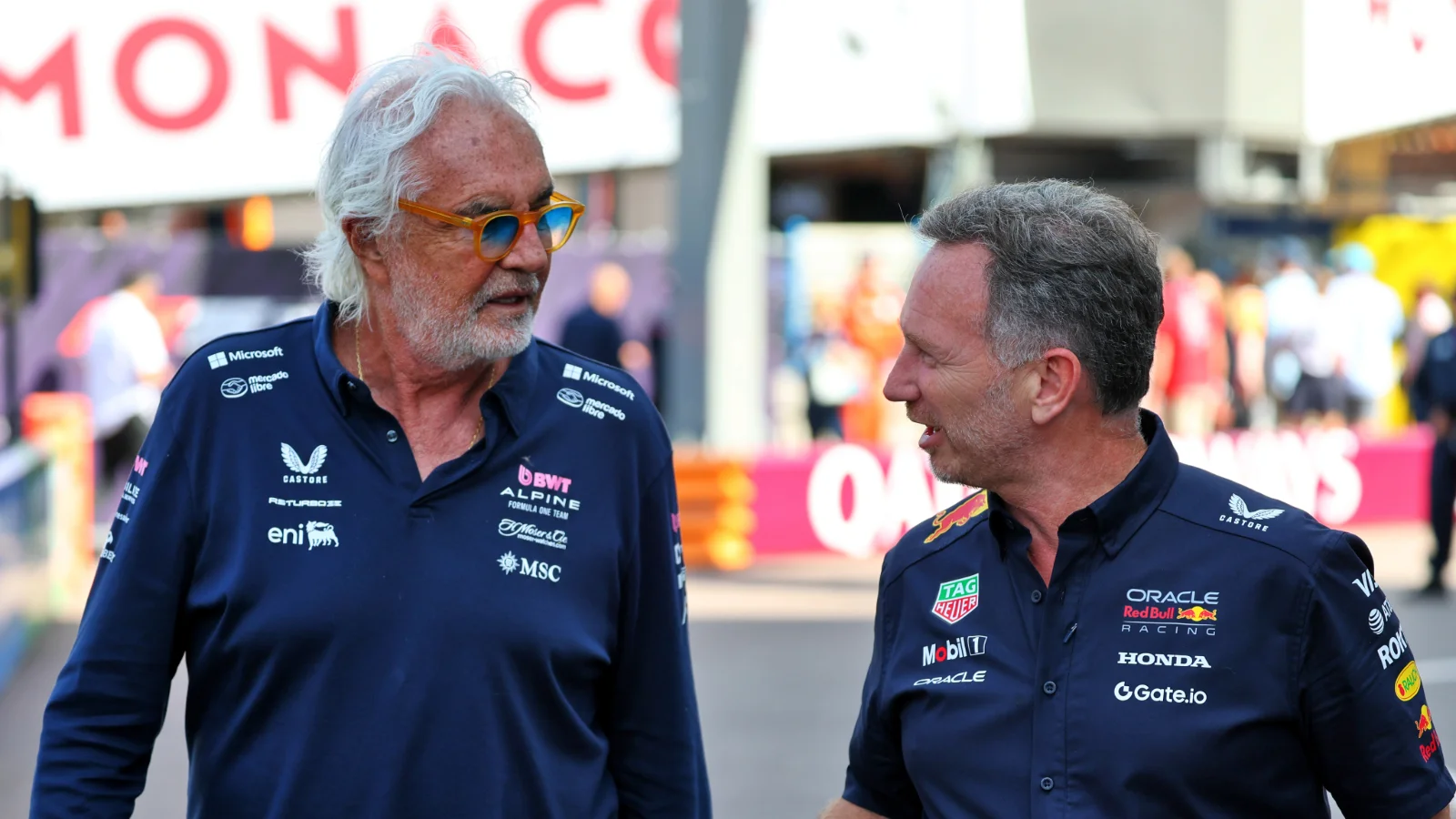
Perhaps the most spicy element of this potential takeover is the personnel dynamic. Alpine is currently under the heavy influence of Flavio Briatore, the flamboyant and controversial Italian brought back by Renault CEO Luca de Meo as a special executive advisor. Briatore currently wields immense power, arguably more than the acting team boss, Steve Nielsen.
Briatore and Horner have historically maintained a cordial relationship, but history is littered with friends who became enemies when they tried to share power. Both men are alpha leaders who demand absolute control. It is highly improbable that Horner, entering as an owner-principal, would tolerate Briatore whispering in his ear or second-guessing his decisions.
Horner’s leadership style is autocratic and direct. He would almost certainly look to streamline the chaotic management structure at Alpine. If Horner takes the reins, Briatore’s role would likely be the first casualty. We’ve already seen flashes of friction in the past—remember 2019? When rumors linked Fernando Alonso to Red Bull, Horner publicly dismissed the idea, saying Alonso “causes chaos.” Briatore, Alonso’s longtime manager and confidant, fired back immediately. That old spark could easily ignite a new inferno if they find themselves in the same boardroom.
Can History Repeat Itself?
The skepticism surrounding this rumor is natural. Can one man really turn around a manufacturer team that has lost its way so profoundly? The answer, looking at Horner’s CV, is a tentative “yes.”
When he took over Jaguar in 2005, the team was a corporate laughingstock—well-funded but poorly managed, much like modern Alpine. Horner stripped away the corporate bloat, hired the right technical minds (hello, Adrian Newey), and instilled a racer’s mentality. He built a culture of winning from the ground up.
Alpine desperately needs that culture reset. They have the facilities, the budget, and the manufacturer backing of Renault. What they lack is cohesive leadership and a clear direction. Horner offers both in spades.
Moreover, the timing is poetic. His ban lifts in April 2026. This would allow him to take charge just as the sport gears up for the revolutionary regulation changes coming in the future. He would have the remainder of the 2026 season to restructure the team, hire key personnel, and prepare for a full assault in 2027.
The Verdict
While neither Horner nor Alpine have officially confirmed the negotiations—with Horner offering a classic “no comment” rather than a denial—the puzzle pieces fit too perfectly to ignore. A wealthy, ambitious leader scorned by his former team; a struggling outfit in desperate need of a savior; and a minority stake up for sale.
If Christian Horner returns to the grid in 2026 wearing Alpine blue, it won’t just be a new job. It will be a statement. It will be a declaration of war against Red Bull and Mercedes. And for F1 fans, it promises to be the most thrilling subplot of the next decade.
The paddock may be quiet now, but the engine of Christian Horner’s ambition is revving louder than ever. Stay tuned—April 2026 can’t come soon enough.
News

Inside Shane Richie’s love life: Drug – fuelled orgy with six blondes; real reason he split from Coleen Nolan; six-year ‘affair with fan’
Inside Shane Richie’s love life: Orgy with six blondes; real reason he split from Coleen Nolan; six-year ‘affair with fan’ He’s popular with the ladies… Shane Richie…

SH0CKING REVELATI0N:A sh0cking behind-the-scenes secret revealed about Lizzie Rizzini, the woman replacing Carol Kirkwood on the 6pm weather bulletin
BBC viewers still reeling from the departure of Carol Kirkwood got another surprise last night when presenter Lizzie Rizzini appeared to flash her black lace stockings on…

HEARTBREAKING: Peter Andre’s Tearful Message to Son Junior After SHOCKING Revelation About How He Truly Feels Toward Mum Katie Price — Katie Price’s reaction scares fans.
Peter Andre’s emotional message to son Junior after it’s revealed how he really feels about mum Katie Pri… PETER Andre has shared an emotional message to his…

Ben Shephard opens up about the devastating health battle his wife is facing: “She wakes up crying every single morning…”
Inside This Morning Ben Shephard’s Life Including Rarely Seen Wife and Health Battle Ben Shephard is a name synonymous with British television, renowned for his engaging presentation…

🚨 LIVE TV HEARTBREAK: Good Morning Britain Host Announces ‘Devastating’ Dɘath of Guest Minutes Into Show
Viewers of Good Morning Britain were met with heartbreaking news just minutes into Friday’s (January 30) episode, as co-hosts Kate Garraway and Ranvir Singh reported the tragic…

Emmerdale legend Cain Dingle will never be the same again after a shock cancer diagnosis turns his world upside down
FROure Desk. Full Terms and conditions are available on the website http://www.itv.com/presscentre/itvpictures/terms Emmerdale wouldn’t be Emmerdale without the glowering, grunting embodiment of manliness that is Cain Dingle (Jeff Hordley) But…
End of content
No more pages to load






