The world of Formula 1 is standing on the precipice of its most significant transformation in decades. As the sport hurtles toward the 2026 season, a storm of skepticism, criticism, and apprehension has begun to swirl within the paddock. Teams and drivers have been vocal about their concerns regarding the incoming regulations, with whispers of “Frankenstein cars” and fears of diluted racing spectacles dominating the headlines. But amidst the political posturing and team agendas, what is the scientific reality of the 2026 machinery?
To cut through the noise, we turn to a groundbreaking study conducted by Adrien Villar, a former F1 engineer and current Managing Director of Vfluid Advanced Technologies. Villar and his team have achieved something remarkable: they have constructed a complete, high-fidelity Computational Fluid Dynamics (CFD) model of a 2026-specification Formula 1 car. By running this digital prototype against current performance benchmarks, they have provided the first independent, driven glimpse into the future of the sport. The results are nothing short of fascinating, revealing a radical departure from modern aerodynamic philosophy that could redefine how we watch racing.
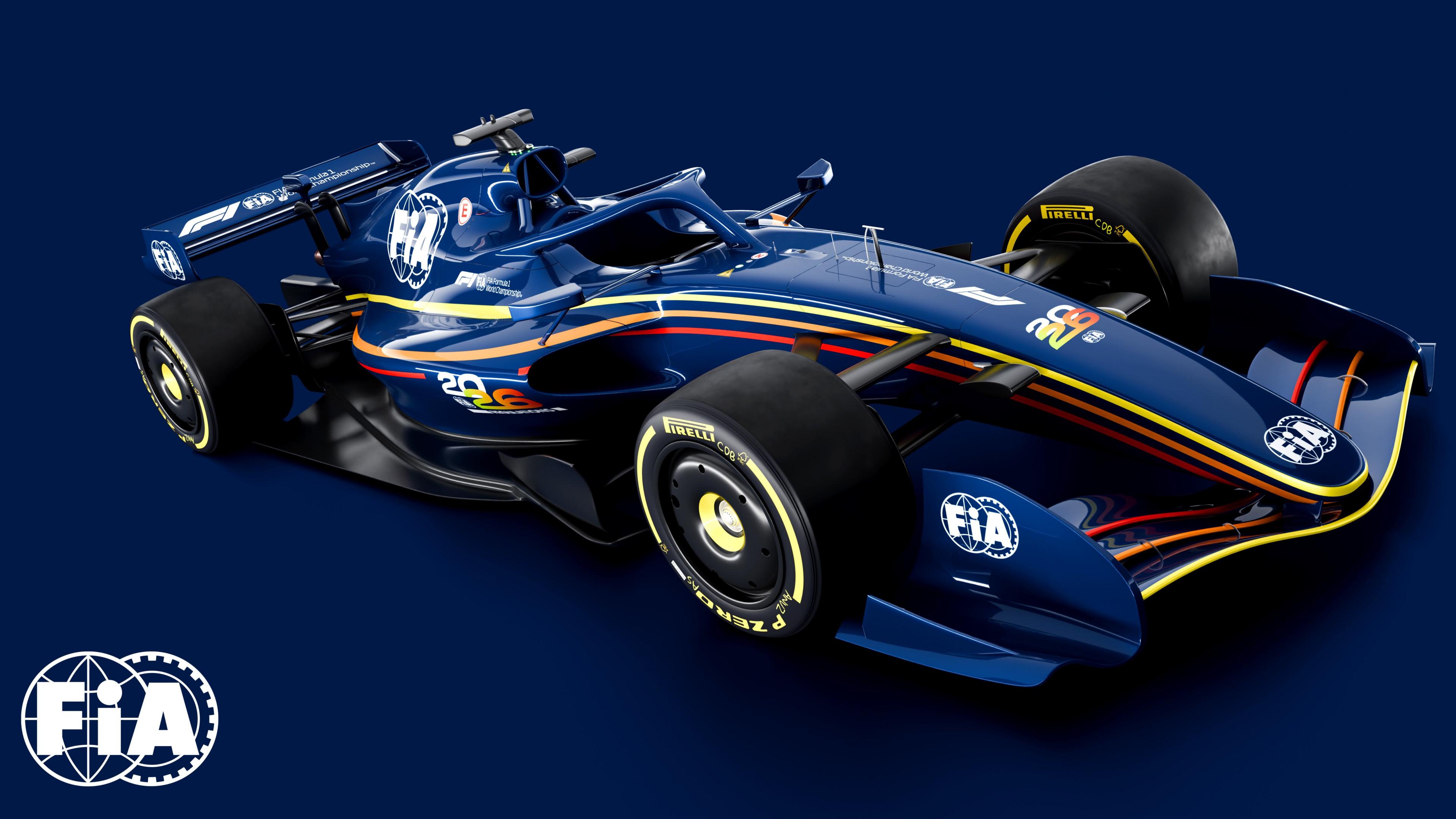
The Battery Dilemma and the Active Aero Solution
To understand the drastic changes in the chassis, one must first look at the power unit. The 2026 regulations mandate a 50/50 split between internal combustion and electric power. While this pushes the sport toward sustainability, it creates a massive engineering headache: energy management. Early simulations suggested a nightmare scenario where drivers would have to lift off the throttle halfway down straights just to save battery power for the rest of the lap. This “lift and coast” style is the antithesis of the high-octane racing fans demand.
This is where the new “Active Aerodynamics” come into play. For the first time, both the front and rear wings will be movable—not just for overtaking, but for efficiency. The idea is to allow cars to shed drag on the straights, enabling them to maintain top speeds without draining the battery excessively. However, Villar’s analysis highlights a critical byproduct of this system: car balance.
Currently, when a driver opens the DRS (Drag Reduction System) on the rear wing, the car loses rear downforce, shifting the aerodynamic balance aggressively forward. This instability makes braking or cornering while DRS is open incredibly dangerous. The 2026 rules aim to solve this by incorporating active front wings. By adjusting the front and rear wings simultaneously, the car maintains a stable aerodynamic center of pressure, restoring balance and potentially allowing drivers to attack corners with more confidence, even during active aero deployment.
The Great Downforce Shift
Perhaps the most startling revelation from Villar’s CFD data is the redistribution of downforce. The 2026 cars will generate significantly less downforce overall, but where that grip comes from is changing fundamentally.
The simulation estimates that the floor will now generate a staggering 46% of the car’s total downforce, up from roughly 34% on current models. Conversely, the front wing’s contribution will drop from 30% to just 23%. This is not an accidental design choice; it is a calculated move to improve racing.
The front wing is notoriously the most sensitive part of an F1 car. When a driver follows a rival closely, the “dirty air” (turbulent wake) from the leading car disrupts the airflow over the trailing car’s front wing, causing a sudden loss of grip known as “understeer.” By reducing the front wing’s reliance on downforce and shifting the workload to the underbody floor—which is less affected by turbulent air—the FIA hopes to make cars much more robust when following in traffic.
The Return of the Flat Floor
For long-time F1 fans, the phrase “flat floor” brings back memories of the pre-ground effect era. Since 2022, F1 cars have utilized “Venturi tunnels”—complex, 3D-shaped channels under the car that suck it to the ground. While effective, these tunnels require the car to run extremely low and stiff, leading to the infamous “porpoising” (bouncing) issues and making cars incredibly sensitive to ride height changes over bumps and curbs.
The 2026 rules scrap the Venturi tunnels in favor of a return to a partially flat floor design, similar to pre-2017 cars. This change is monumental. A flat floor is far less sensitive to ride height, meaning teams won’t have to run their suspensions as rock-hard as they do today. This should result in cars that are more compliant over curbs and more predictable for the drivers.
Furthermore, this change might herald the return of “rake”—a setup philosophy mastered by Adrian Newey and Red Bull in the early 2010s. Rake involves running the rear of the car significantly higher than the front, effectively turning the entire car into a diffuser to generate downforce. With the new flat floor regulations, we could see teams once again jacking up the rear of their cars to claw back lost performance.
A Simpler Front Wing and the “Inwash” Revolution
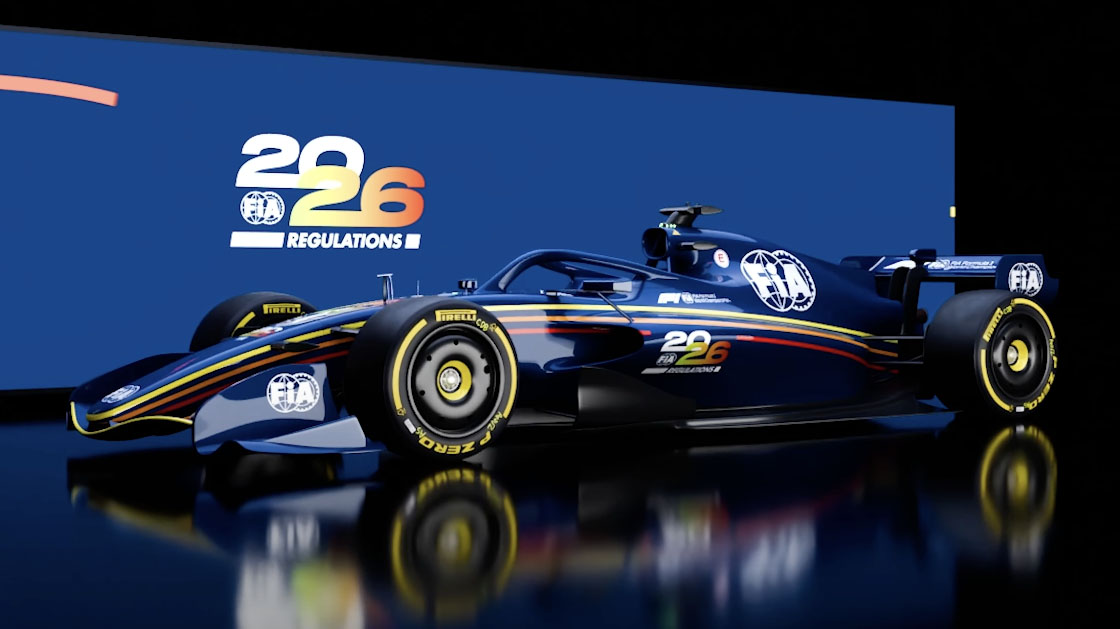
The visual identity of the car is also getting a makeover. The complex, multi-element front wings of the past decade are being simplified. The 2026 front wing will be narrower and limited to three profiles instead of four. More importantly, the aerodynamic philosophy is flipping.
In recent years, teams have used the front wing to create “outwash”—pushing dirty air away from the car and around the tires. While this helps the individual car, it creates a wide, turbulent wake that destroys the race for anyone trying to follow. The new regulations discourage this. Instead, new “floorboards” (replacing the old bargeboards) are designed to pull air inwards, feeding the underfloor to generate downforce. This “inwash” philosophy creates a narrower wake behind the car, theoretically leaving more clean air for the pursuing driver.
The Verdict: Will Overtaking Actually Improve?
Ultimately, the success of these regulations hinges on one question: Will the racing be better?
Adrien Villar’s wake analysis offers a promising, albeit cautious, “yes.” The CFD simulations show that the wake generated by the 2026 car is both higher and narrower than the current generation. The turbulent air is thrown upwards, clearing the space directly behind the gearbox where a following car would sit.
This means the trailing car should encounter cleaner, more energetic airflow, allowing the driver to maintain grip and tire life while hunting down an opponent. The theory is sound: less sensitive cars + cleaner air = closer battles.
However, as Driver61 notes, this is a simulation of the intent of the rules. The reality of Formula 1 is an endless game of cat and mouse. Teams are filled with the world’s brightest engineers whose job is to find loopholes and recover performance, often at the expense of “clean racing.” They will undoubtedly try to disrupt this tidy wake to prevent rivals from passing.
As we inch closer to 2026, the data paints a picture of a sport trying to correct its course—prioritizing the show and the battle over pure, unchecked speed. Whether these digital promises translate to on-track thrillers remains the ultimate unknown, but one thing is certain: the engineering war has already begun.
News

Inside Shane Richie’s love life: Drug – fuelled orgy with six blondes; real reason he split from Coleen Nolan; six-year ‘affair with fan’
Inside Shane Richie’s love life: Orgy with six blondes; real reason he split from Coleen Nolan; six-year ‘affair with fan’ He’s popular with the ladies… Shane Richie…

SH0CKING REVELATI0N:A sh0cking behind-the-scenes secret revealed about Lizzie Rizzini, the woman replacing Carol Kirkwood on the 6pm weather bulletin
BBC viewers still reeling from the departure of Carol Kirkwood got another surprise last night when presenter Lizzie Rizzini appeared to flash her black lace stockings on…

HEARTBREAKING: Peter Andre’s Tearful Message to Son Junior After SHOCKING Revelation About How He Truly Feels Toward Mum Katie Price — Katie Price’s reaction scares fans.
Peter Andre’s emotional message to son Junior after it’s revealed how he really feels about mum Katie Pri… PETER Andre has shared an emotional message to his…

Ben Shephard opens up about the devastating health battle his wife is facing: “She wakes up crying every single morning…”
Inside This Morning Ben Shephard’s Life Including Rarely Seen Wife and Health Battle Ben Shephard is a name synonymous with British television, renowned for his engaging presentation…

🚨 LIVE TV HEARTBREAK: Good Morning Britain Host Announces ‘Devastating’ Dɘath of Guest Minutes Into Show
Viewers of Good Morning Britain were met with heartbreaking news just minutes into Friday’s (January 30) episode, as co-hosts Kate Garraway and Ranvir Singh reported the tragic…

Emmerdale legend Cain Dingle will never be the same again after a shock cancer diagnosis turns his world upside down
FROure Desk. Full Terms and conditions are available on the website http://www.itv.com/presscentre/itvpictures/terms Emmerdale wouldn’t be Emmerdale without the glowering, grunting embodiment of manliness that is Cain Dingle (Jeff Hordley) But…
End of content
No more pages to load






