The polite facade of Formula 1 has shattered. As the teams prepare to ship their freight to Australia for the season-opening Melbourne Grand Prix, the paddock has erupted into what insiders are calling the most complex and vicious engineering crisis in modern history. The era of 2026 was supposed to be a fresh start, but instead, it has begun with a declaration of war.
At the center of the storm is Mercedes. The German manufacturer, whose car looked imperious during pre-season testing in Barcelona, is facing an unprecedented revolt. A “supermajority” of rival manufacturers—Ferrari, Audi, Honda, and now, in a shocking twist, Red Bull—have united with a single goal: to declare the Silver Arrows’ new power unit illegal.
The accusation? That Mercedes has exploited a “sneaky loophole” in the thermal compression rules, granting them an advantage so massive that it could render the championship a foregone conclusion before the lights even go out.

The “Thermal Trick” Uncovered
The controversy revolves around the heart of the new 2026 engine regulations: the compression ratio. To ensure a level playing field for newcomers like Audi, the FIA lowered the maximum compression ratio to 16:1. This figure is critical; the higher the ratio, the more explosive the power.
However, the rulebook contains a fatal flaw. It states that compliance checks are performed at “ambient temperature”—essentially, when the engine is cold in the garage.
According to explosive leaks from the paddock, Mercedes’ High Performance Powertrains (HPP) division has engineered a solution that adheres to the 16:1 limit when cold but transforms once the engine reaches its blistering operating temperature of over 100°C.
The secret lies in advanced metallurgy. It is claimed that Mercedes is using 3D-printed pistons and connecting rods made from special alloys designed to expand millimetrically under heat. This “thermal swelling” effectively shrinks the combustion chamber while the car is on track, raising the compression ratio to a prohibited 18:1.
On paper, the engine is legal. On the track, it is a monster. Rivals estimate this “shape-shifting” technology gifts Mercedes an extra 30 to 40 horsepower and a lap time advantage of up to 0.4 seconds. In the tight world of F1, that is not a margin; it is a canyon.
The “Holy Alliance” and Red Bull’s Betrayal
The reaction from the pit lane has been furious. Ferrari, Audi, and Honda immediately formed what is being called a “holy alliance,” sending a scathing ultimatum to the FIA demanding that testing procedures be changed to measure compression ratios while the engines are hot.
But the real political earthquake occurred when Red Bull Power Trains joined the revolt.
For weeks, rumors swirled that Red Bull was quiet because they were attempting to develop the same technology. However, reports now suggest that Milton Keynes’ engineers failed to make the “thermal expansion” trick work reliably. Faced with the prospect of Mercedes holding a unique advantage, Red Bull executed a ruthless U-turn.
By joining the opposition, Red Bull has tipped the scales. Under the 2026 governance rules, an immediate, emergency change to the regulations requires a “supermajority” of manufacturers—four out of five. With Red Bull’s signature, the alliance now has the numbers to force the FIA’s hand.
Toto Wolff, the Mercedes team principal, now finds himself isolated, fighting a war on four fronts. His response has been characteristically defiant, telling rivals to “get your own business in order” and insisting that his car complies 100% with the written regulations. But with 80% of the grid against him, confidence may not be enough.
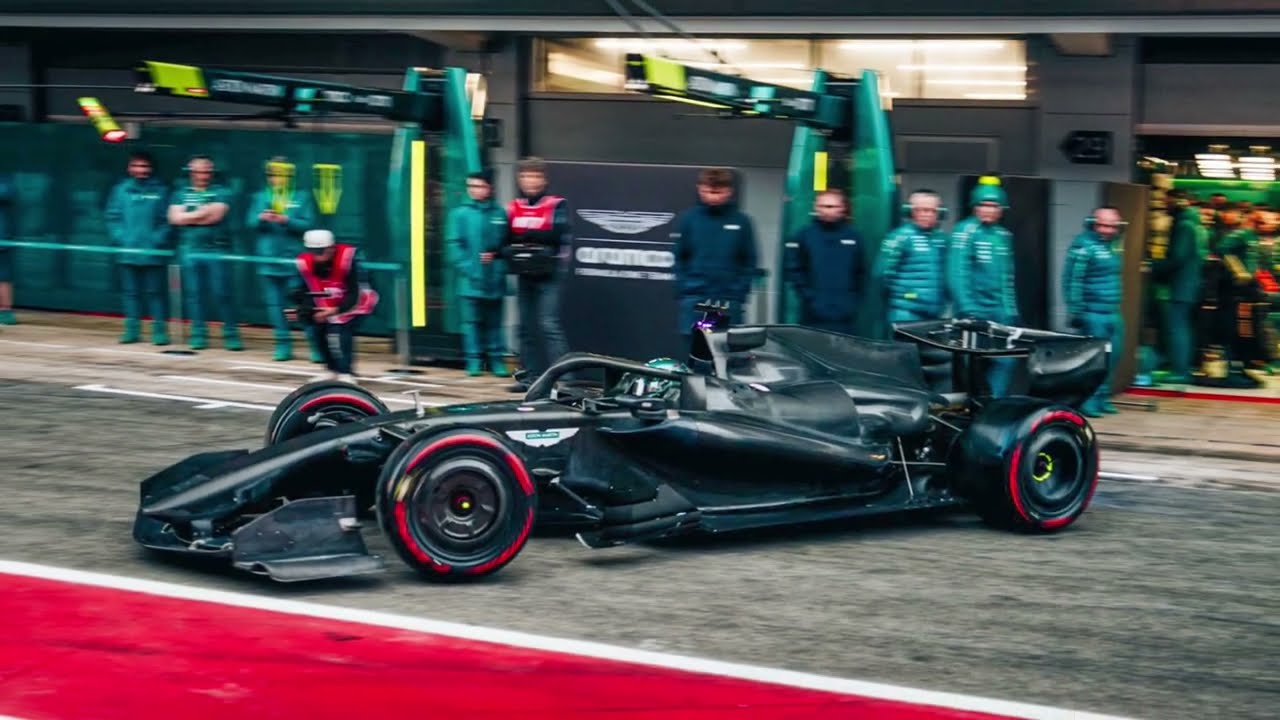
The Nightmare Scenario for Melbourne
The clock is ticking down to March 1st, the deadline for engine homologation. If the alliance succeeds in forcing a rule change before the Australian Grand Prix, Mercedes would be placed in an impossible position.
They would be forced to “detune” their engines, running conservative maps to ensure they stay within the 16:1 limit even when hot. This would neuter their performance, wiping away their advantage instantly.
However, if the FIA stands firm and protects Mercedes’ innovation, the sport faces a nightmare scenario: a Melbourne Grand Prix run under protest. We could see the spectacle of Ferrari and Red Bull racing on Sunday, only to drag the result through the civil courts on Monday. The season opener risks becoming a legal battleground rather than a sporting contest.
Genius or Cheating?
The debate tearing the paddock apart is philosophical as well as technical. Is Mercedes’ innovation a stroke of genius—the kind of “grey area” exploitation that F1 is famous for? Or is it a cynical violation of the “spirit of the rules,” designed to bypass the cost-saving measures intended to help new teams?
Toto Wolff argues that his team simply read the rulebook better than anyone else. His rivals argue that he is breaking the law in spirit, if not in letter.
One thing is certain: the 2026 season has already delivered its first major drama. The hierarchy of the grid, the fate of Lewis Hamilton’s potential eighth title, and the credibility of the sport’s new era are all hanging in the balance.
As the freight travels to Australia, the engineers are working, but the lawyers are working harder. The engine war has begun, and it promises to be brutal.
News

Inside Shane Richie’s love life: Drug – fuelled orgy with six blondes; real reason he split from Coleen Nolan; six-year ‘affair with fan’
Inside Shane Richie’s love life: Orgy with six blondes; real reason he split from Coleen Nolan; six-year ‘affair with fan’ He’s popular with the ladies… Shane Richie…

SH0CKING REVELATI0N:A sh0cking behind-the-scenes secret revealed about Lizzie Rizzini, the woman replacing Carol Kirkwood on the 6pm weather bulletin
BBC viewers still reeling from the departure of Carol Kirkwood got another surprise last night when presenter Lizzie Rizzini appeared to flash her black lace stockings on…

HEARTBREAKING: Peter Andre’s Tearful Message to Son Junior After SHOCKING Revelation About How He Truly Feels Toward Mum Katie Price — Katie Price’s reaction scares fans.
Peter Andre’s emotional message to son Junior after it’s revealed how he really feels about mum Katie Pri… PETER Andre has shared an emotional message to his…

Ben Shephard opens up about the devastating health battle his wife is facing: “She wakes up crying every single morning…”
Inside This Morning Ben Shephard’s Life Including Rarely Seen Wife and Health Battle Ben Shephard is a name synonymous with British television, renowned for his engaging presentation…

🚨 LIVE TV HEARTBREAK: Good Morning Britain Host Announces ‘Devastating’ Dɘath of Guest Minutes Into Show
Viewers of Good Morning Britain were met with heartbreaking news just minutes into Friday’s (January 30) episode, as co-hosts Kate Garraway and Ranvir Singh reported the tragic…

Emmerdale legend Cain Dingle will never be the same again after a shock cancer diagnosis turns his world upside down
FROure Desk. Full Terms and conditions are available on the website http://www.itv.com/presscentre/itvpictures/terms Emmerdale wouldn’t be Emmerdale without the glowering, grunting embodiment of manliness that is Cain Dingle (Jeff Hordley) But…
End of content
No more pages to load






