The dawn of a new era in Formula 1 often brings with it a mixture of electrifying anticipation and nervous energy, but for the Racing Bulls team, their first steps into the 2026 season were nothing short of a rollercoaster. The setting was the historic Imola circuit, a venue steeped in racing legend and conveniently located just 15 kilometers from the team’s factory in Faenza. It was supposed to be a routine shakedown—a day to check systems, gather initial data, and break in the revolutionary VCARB 03. Instead, the team found themselves grappling with unexpected drama, intense scrutiny, and the harsh realities of a sport that takes no prisoners.
The conditions at the track were far from welcoming. A biting cold gripped the air, and the asphalt was slick with dampness, forcing the team to bolt on full wet demonstration tires for the duration of the session. These tires, designed for show runs rather than high-performance testing, offer limited grip, turning an already challenging debut into a treacherous exercise in car control.
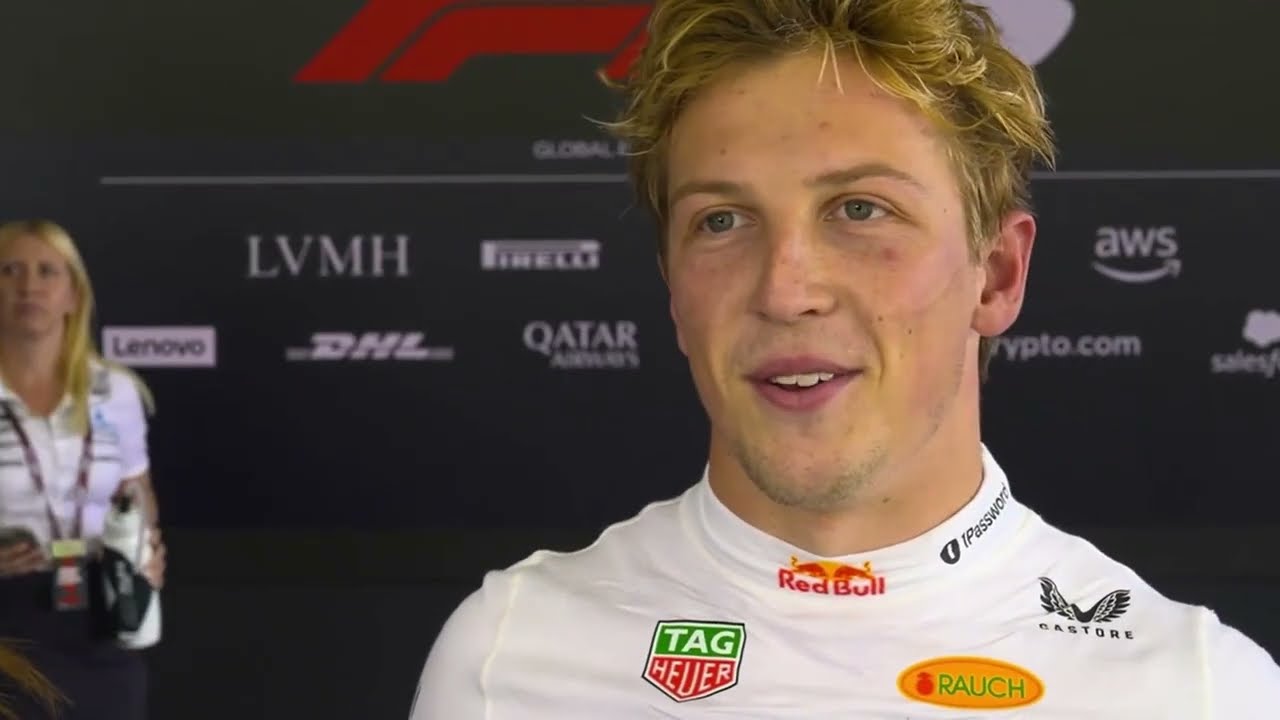
The day began with a sense of disciplined optimism. Liam Lawson, a driver who has already proven his mettle and aggressive capabilities in the midfield, was given the honor of taking the VCARB 03 out for its inaugural laps. Lawson’s run around lunchtime was a textbook display of professionalism. He navigated the tricky conditions with poise, completing his installation lap without a hitch. For a brief moment, it seemed as though Racing Bulls would enjoy a serene start to their 2026 campaign, with the car functioning exactly as the engineers had hoped.
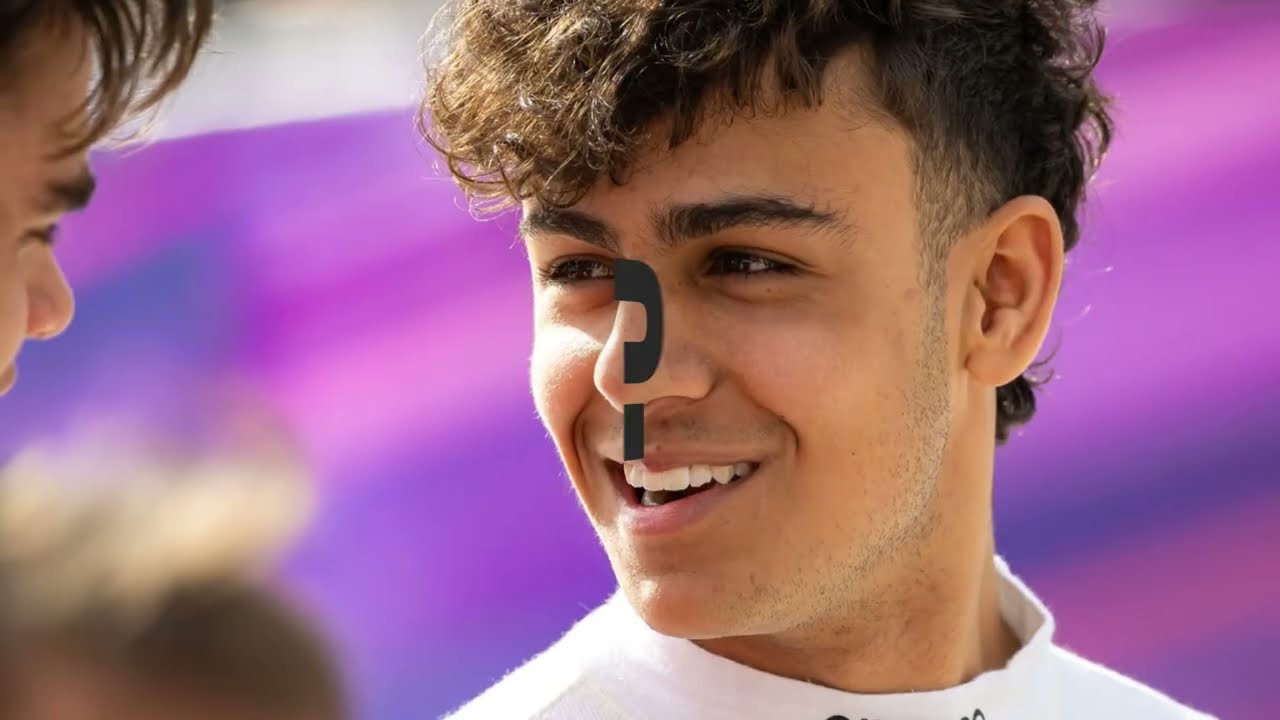
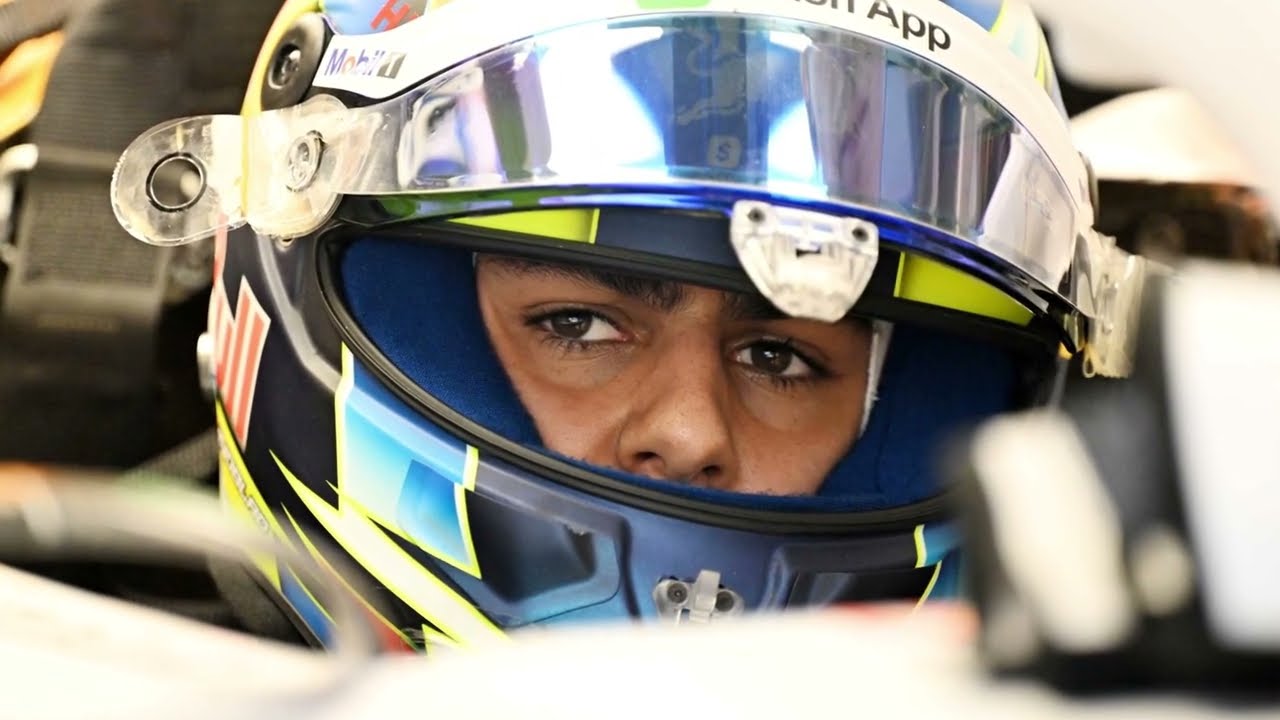
However, the narrative shifted dramatically when the torch was passed to the team’s newest recruit. Arvid Lindblad, the 18-year-old rookie who is set to make his Formula 1 debut this season, climbed into the cockpit with the weight of expectation on his young shoulders. What followed was a moment that stopped conversations in the paddock and sent ripples through social media.
As Lindblad navigated the circuit, disaster struck at the Villeneuve chicane. In a sequence of events that highlights the unforgiving nature of these new machines, the teenager lost control of the car. The VCARB 03 spun, sliding helplessly off the tarmac and coming to a rest deep in the gravel trap. The session was red-flagged, and the sight of a recovery truck trundling out to retrieve the stranded machine was a stark reminder of how quickly fortunes can change in F1.
While the image of a car in the gravel is never what a team wants to see on day one, it is crucial to view the incident with a balanced perspective. Lindblad was tasked with piloting a brand-new car, built to completely overhauled regulations, on a wet track with cold tires that offered little to no feedback. Furthermore, unlike seasoned veterans, Lindblad had zero prior experience with a 2026-spec Formula 1 car. The learning curve was vertical, and the conditions were a recipe for a slip-up.
Fortunately, initial reports suggest that the VCARB 03 escaped without significant structural damage. The spin, while embarrassing and visually dramatic, did not spell the end of the team’s testing program. In the high-stakes world of Formula 1 testing, finding the limit often involves stepping over it, and better to find the gravel at a private shakedown in Imola than during the opening lap of the Australian Grand Prix.
Beyond the drama of the spin, the car itself provided plenty of fodder for technical analysis. The VCARB 03 appeared in the striking livery unveiled at their Detroit launch, but it was the physical design of the car that caught the eyes of observers. Most notably, the airbox situated above the driver’s head is massive—significantly larger than what has been seen on competitor machines.
This design choice has immediately sparked speculation within the paddock. Is the enlarged airbox a simple aerodynamic decision, or does it hint at something more concerning? Some theorists suggest that Red Bull Powertrains might be battling thermal issues, requiring extra cooling capacity to keep the new power unit from overheating. While nothing has been confirmed, the sheer size of the intake is an anomaly that will undoubtedly be scrutinized as the season progresses.
Speaking of the power unit, this shakedown marked a historic milestone: it was the very first time the Red Bull-Ford engine has been driven on a racetrack. After years of development, dyno testing, and simulation, the heart of the car was finally beating in the real world. The 2026 regulations have stripped away the MGU-H (Motor Generator Unit-Heat) and tripled the electrical power output of the MGU-K (Motor Generator Unit-Kinetic), all while running on 100% sustainable fuel.
These changes have resulted in a distinct new acoustic profile for the sport. Fan reaction to the sound of the new engine has been polarized. Some enthusiasts are praising the note, describing it as more “raw” and “aggressive,” reminiscent of a time when Formula 1 cars sounded like dangerous beasts. Others are less convinced, finding the sound unfamiliar. Regardless of personal preference, the fact that the engine ran reliably throughout the session—despite the spin—is a massive technical victory for the Red Bull-Ford partnership.
The broader implications of this test for the Racing Bulls team are fascinating. Positioning themselves as a potential dark horse, the team benefits from the same power unit and technological resources as their championship-winning sister team, Red Bull Racing. In previous eras, Racing Bulls (formerly AlphaTauri and Toro Rosso) was strictly a junior outfit designed to groom drivers. However, with the regulatory reset, the lines are blurring. History has shown that customer teams can sometimes outperform works teams when rules change, especially if the main team takes a wrong turn in development.
The driver dynamic will also be a central theme of the team’s narrative. Liam Lawson represents the present—fast, experienced enough to lead, and hungry to prove he belongs at the sharp end of the grid. Arvid Lindblad represents the future—a wild card with immense potential but a steep mountain to climb. The mental aspect of the sport will be Lindblad’s biggest challenge. Team boss Alan Permane has already cautioned that the rookie’s debut season will be difficult, setting realistic expectations for a year of learning rather than immediate podiums.
Lindblad’s ability to bounce back from this Imola incident will be his first true test. Formula 1 is as much a psychological game as it is a physical one. The greats of the sport are defined not by their mistakes, but by how they respond to them. If Lindblad can return to the cockpit, shake off the memory of the gravel trap, and deliver clean laps, he will prove that he has the mental fortitude required for the pinnacle of motorsport.
The decision to test at Imola, so close to home, was a strategic masterstroke. It allowed engineers to easily shuttle parts and data back to the factory, minimizing the logistical headaches usually associated with pre-season running. Despite the hiccup, the day was largely successful. The systems worked, the engine sang, and the team gathered the data they needed.
As the team looks ahead to the major pre-season test in Barcelona, the paddock remains full of questions. Is the VCARB 03 a hidden gem? Can Lindblad handle the heat? Is the massive airbox a fatal flaw or a stroke of genius? The 2026 season is shaping up to be one of the most unpredictable in recent memory, and if this first shakedown is any indication, fans are in for a wild ride. The puzzle pieces are just starting to fall into place, and the picture they form promises to be nothing short of spectacular.
News

Inside Shane Richie’s love life: Drug – fuelled orgy with six blondes; real reason he split from Coleen Nolan; six-year ‘affair with fan’
Inside Shane Richie’s love life: Orgy with six blondes; real reason he split from Coleen Nolan; six-year ‘affair with fan’ He’s popular with the ladies… Shane Richie…

SH0CKING REVELATI0N:A sh0cking behind-the-scenes secret revealed about Lizzie Rizzini, the woman replacing Carol Kirkwood on the 6pm weather bulletin
BBC viewers still reeling from the departure of Carol Kirkwood got another surprise last night when presenter Lizzie Rizzini appeared to flash her black lace stockings on…

HEARTBREAKING: Peter Andre’s Tearful Message to Son Junior After SHOCKING Revelation About How He Truly Feels Toward Mum Katie Price — Katie Price’s reaction scares fans.
Peter Andre’s emotional message to son Junior after it’s revealed how he really feels about mum Katie Pri… PETER Andre has shared an emotional message to his…

Ben Shephard opens up about the devastating health battle his wife is facing: “She wakes up crying every single morning…”
Inside This Morning Ben Shephard’s Life Including Rarely Seen Wife and Health Battle Ben Shephard is a name synonymous with British television, renowned for his engaging presentation…

🚨 LIVE TV HEARTBREAK: Good Morning Britain Host Announces ‘Devastating’ Dɘath of Guest Minutes Into Show
Viewers of Good Morning Britain were met with heartbreaking news just minutes into Friday’s (January 30) episode, as co-hosts Kate Garraway and Ranvir Singh reported the tragic…

Emmerdale legend Cain Dingle will never be the same again after a shock cancer diagnosis turns his world upside down
FROure Desk. Full Terms and conditions are available on the website http://www.itv.com/presscentre/itvpictures/terms Emmerdale wouldn’t be Emmerdale without the glowering, grunting embodiment of manliness that is Cain Dingle (Jeff Hordley) But…
End of content
No more pages to load






