It is a story of ambition, turmoil, and a checkbook the size of a small country’s GDP. As the dust settles on the 2025 season and the paddock looks toward the radical shifts coming in 2026, one narrative dominates the conversation: Audi. The German automotive giant is not just dipping a toe into Formula 1; they are cannonballing into the deep end with a €600 million acquisition of the Sauber team. But as recent headlines have proven, money buys infrastructure, not stability.
With the March 2026 Australian Grand Prix looming on the horizon, Audi’s road to the grid has been anything but smooth. It has been paved with boardroom bloodbaths, shattered timelines, and a realization that in the piranha tank of F1, corporate heritage means nothing without on-track performance.
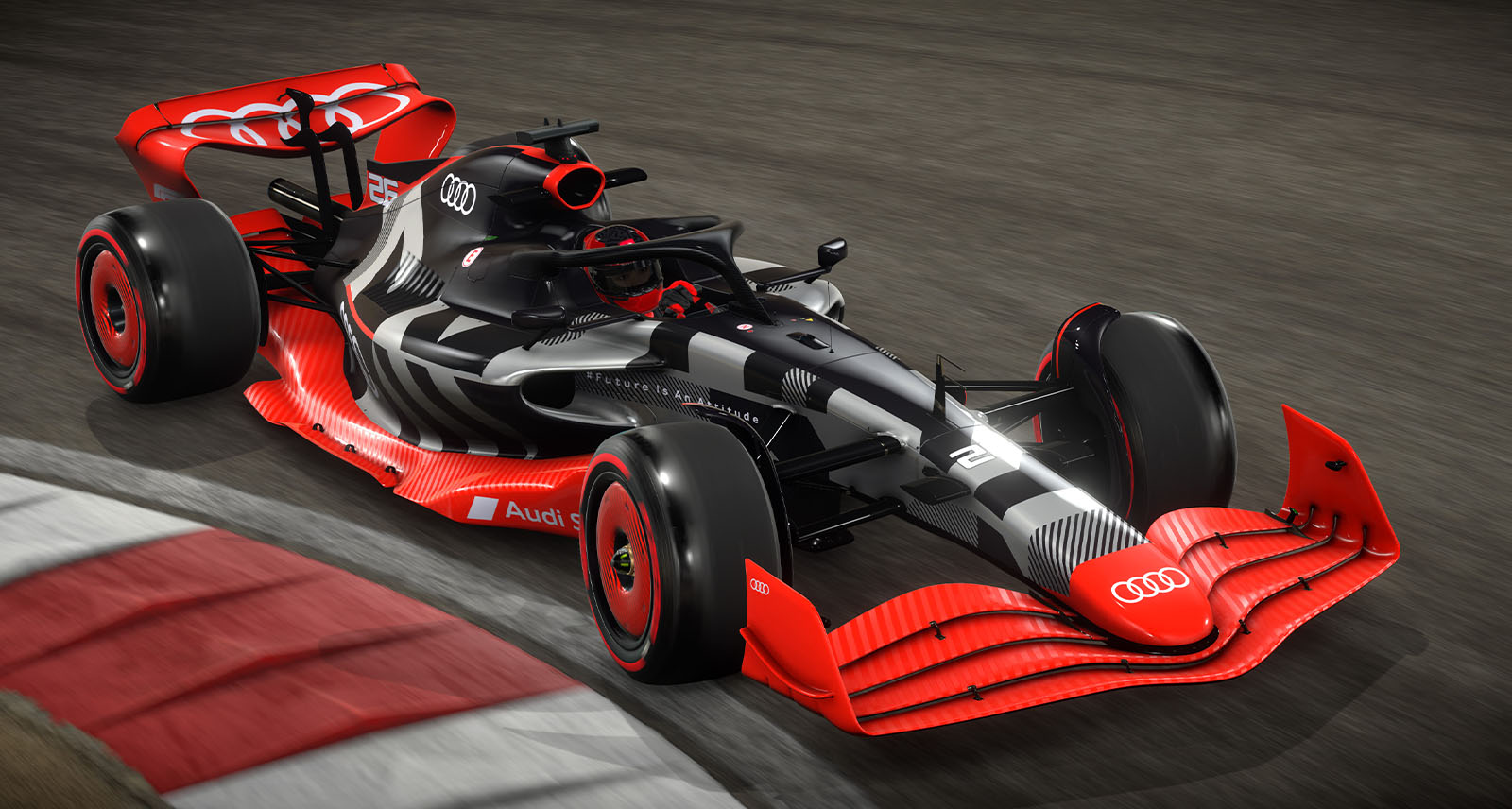
The Perfect Storm: Why 2026?
To understand why Audi is risking its reputation now, you have to look at the rulebook. The 2026 technical regulations are the most significant overhaul since the hybrid era began in 2014, and they were practically written to lure manufacturers like Audi.
Gone is the MGU-H (Motor Generator Unit-Heat), the complex, expensive, and road-irrelevant component that plagued Honda and Renault for years. In its place is a simplified power unit split 50/50 between combustion and electric power, running on 100% sustainable fuel. It leveled the playing field instantly. Audi doesn’t need a decade of hybrid data to catch up; they just need to master the new formula—something they’ve proven adept at in Le Mans and Formula E.
“This is not a minor rule tweak,” says one paddock insider. “It’s a reset button. And Audi hit it harder than anyone.”
The Boardroom Bloodbath
However, the “German Efficiency” stereotype took a serious hit in July 2024. In a move that sent shockwaves through the sport, Audi decapitated its F1 leadership just 18 months before their debut race. Both CEO Andreas Seidl and Chairman Oliver Hoffman were ousted on the same day, casualties of a reported internal power struggle that threatened to derail the entire project.
Enter Mattia Binotto. The former Ferrari team principal, a man who lived and breathed the pressure cooker of Maranello for 25 years, was brought in to steady the ship. His arrival signaled a shift from corporate maneuvering to pure racing pragmatism. But Binotto hasn’t sugarcoated the situation. He has publicly compared the task of making Audi a winner to “climbing Everest,” a stark admission that the team is starting from a base camp far lower than originally thought.
The turmoil didn’t stop there. Engine boss Adam Baker departed in May 2025, and the CEO role was scrapped entirely to streamline decision-making. It was a painful, necessary admission by Audi: you cannot run a Formula 1 team like a car dealership board meeting.

The New Timeline: Patience is a Virtue (and a Necessity)
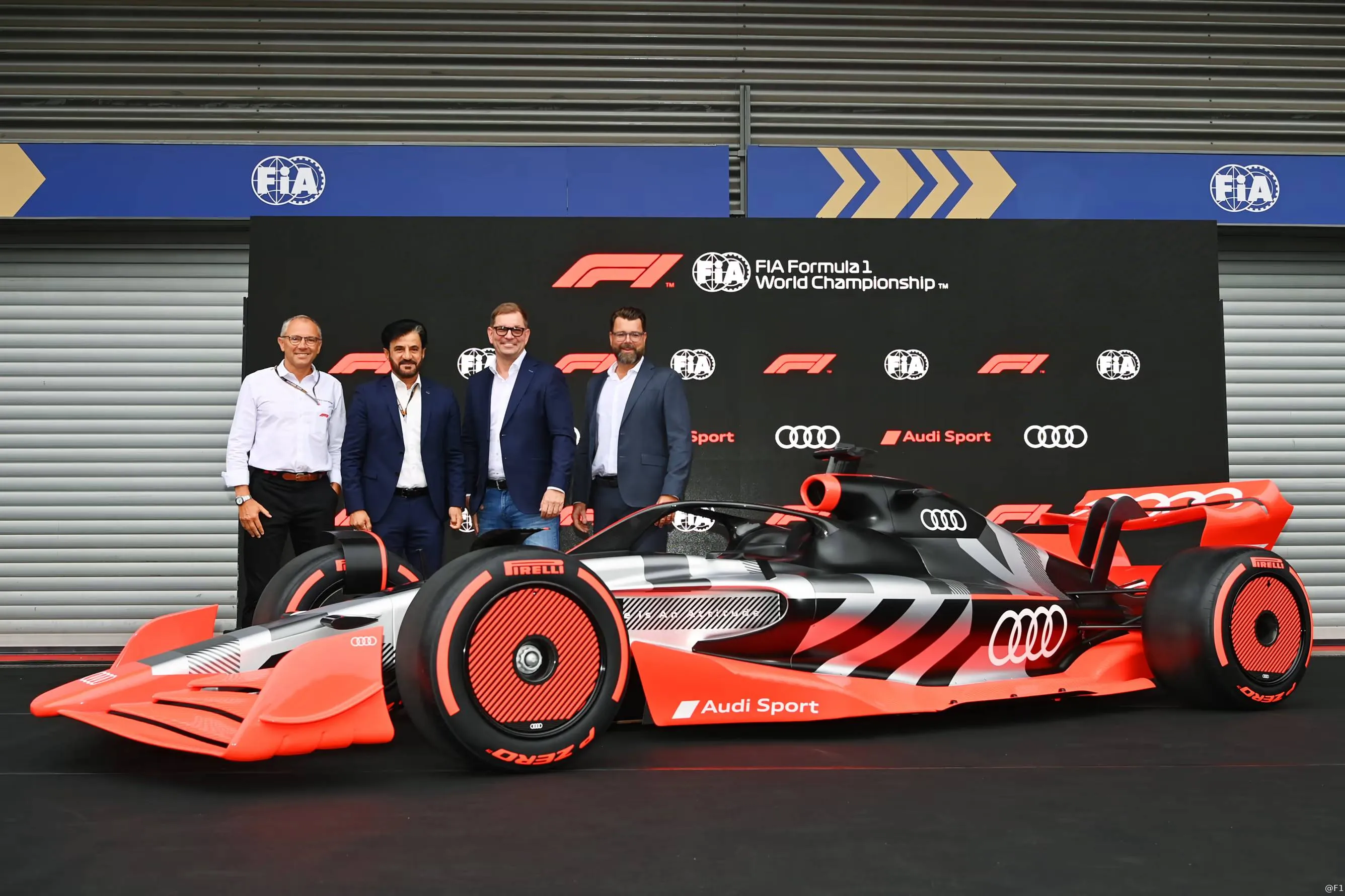
Perhaps the most telling sign of the reality check facing Audi is the revised timeline. When the project was announced at Spa in 2022, the target was aggressive: fight for wins within three years (2028).
That dream is dead. The new roadmap is far more sobering. The team has categorized 2026-2028 as a “challenger” phase focused on reliability and learning. 2029 is marked for regular points and podiums. Championship contention? That’s now a 2030 goal.
It’s a bitter pill for fans expecting instant domination, but a realistic one given the deficit. The Sauber team Audi purchased has 400 fewer staff than a top-tier operation like Red Bull or Mercedes. Their simulator was outdated. They have been operating in “survival mode” for years. Turning that ship around takes more than paint; it takes a cultural revolution.
Youth and Experience: The 2026 Driver Lineup
If the management side is a construction site, the driver lineup is a fascinating piece of architecture. Carrying the hopes of the Four Rings are two drivers at opposite ends of their careers.
First, the veteran: Nico Hulkenberg. At 37 (turning 38 during the season), the German finally shed the “never on the podium” monkey from his back with a stunning drive at Silverstone earlier this year, holding off Lewis Hamilton to take third. It was his first podium in over 238 attempts, a moment of pure redemption that proved he still has the raw speed to lead a factory team.
Beside him sits the future: Gabriel Bortoleto. The 20-year-old Brazilian prodigy has done the unthinkable, winning the Formula 3 and Formula 2 championships in back-to-back rookie seasons. Not since the days of Felipe Massa has Brazil had such a promising talent in a full-time seat. Bortoleto describes the Audi project as “one of the most exciting opportunities in sports,” and his raw speed will be the perfect litmus test for the car’s potential.
The Verdict
As the first engines fire up in the chassis before Christmas 2025, the mood in Neuburg is one of cautious optimism. They have the facilities—the new F7.2 building houses 22 state-of-the-art test benches. They have the pedigree—13 Le Mans victories prove they know how to build endurance and hybrid systems.
But Formula 1 is a cruel mistress. Honda is returning with Aston Martin and the genius of Adrian Newey. Red Bull and Ford are partnering up. The competition is fiercer than ever.
Audi has spent €600 million to buy a ticket to the show. But as they stare up at the “Everest” Mattia Binotto described, the question isn’t whether they can afford the climb. It’s whether they can survive the weather.
Come March 2026, there will be nowhere left to hide.
News

Inside Shane Richie’s love life: Drug – fuelled orgy with six blondes; real reason he split from Coleen Nolan; six-year ‘affair with fan’
Inside Shane Richie’s love life: Orgy with six blondes; real reason he split from Coleen Nolan; six-year ‘affair with fan’ He’s popular with the ladies… Shane Richie…

SH0CKING REVELATI0N:A sh0cking behind-the-scenes secret revealed about Lizzie Rizzini, the woman replacing Carol Kirkwood on the 6pm weather bulletin
BBC viewers still reeling from the departure of Carol Kirkwood got another surprise last night when presenter Lizzie Rizzini appeared to flash her black lace stockings on…

HEARTBREAKING: Peter Andre’s Tearful Message to Son Junior After SHOCKING Revelation About How He Truly Feels Toward Mum Katie Price — Katie Price’s reaction scares fans.
Peter Andre’s emotional message to son Junior after it’s revealed how he really feels about mum Katie Pri… PETER Andre has shared an emotional message to his…

Ben Shephard opens up about the devastating health battle his wife is facing: “She wakes up crying every single morning…”
Inside This Morning Ben Shephard’s Life Including Rarely Seen Wife and Health Battle Ben Shephard is a name synonymous with British television, renowned for his engaging presentation…
🚨 LIVE TV HEARTBREAK: Good Morning Britain Host Announces ‘Devastating’ Dɘath of Guest Minutes Into Show
Viewers of Good Morning Britain were met with heartbreaking news just minutes into Friday’s (January 30) episode, as co-hosts Kate Garraway and Ranvir Singh reported the tragic…

Emmerdale legend Cain Dingle will never be the same again after a shock cancer diagnosis turns his world upside down
FROure Desk. Full Terms and conditions are available on the website http://www.itv.com/presscentre/itvpictures/terms Emmerdale wouldn’t be Emmerdale without the glowering, grunting embodiment of manliness that is Cain Dingle (Jeff Hordley) But…
End of content
No more pages to load






