The atmosphere surrounding Aston Martin’s Formula 1 operation is currently thick with what can only be described as a “weird fog.” For fans and observers alike, the Silverstone-based outfit has become a puzzle of conflicting narratives, oscillating wildly between boundless optimism and stark, grounding reality. As the sport barrels toward the transformative regulations of 2026, the team that promised to be the next great disrupting force seems to be suffering from an identity crisis. Are they on the verge of a Honda-powered dynasty, or are they paralyzed by the fear of their own ambition?
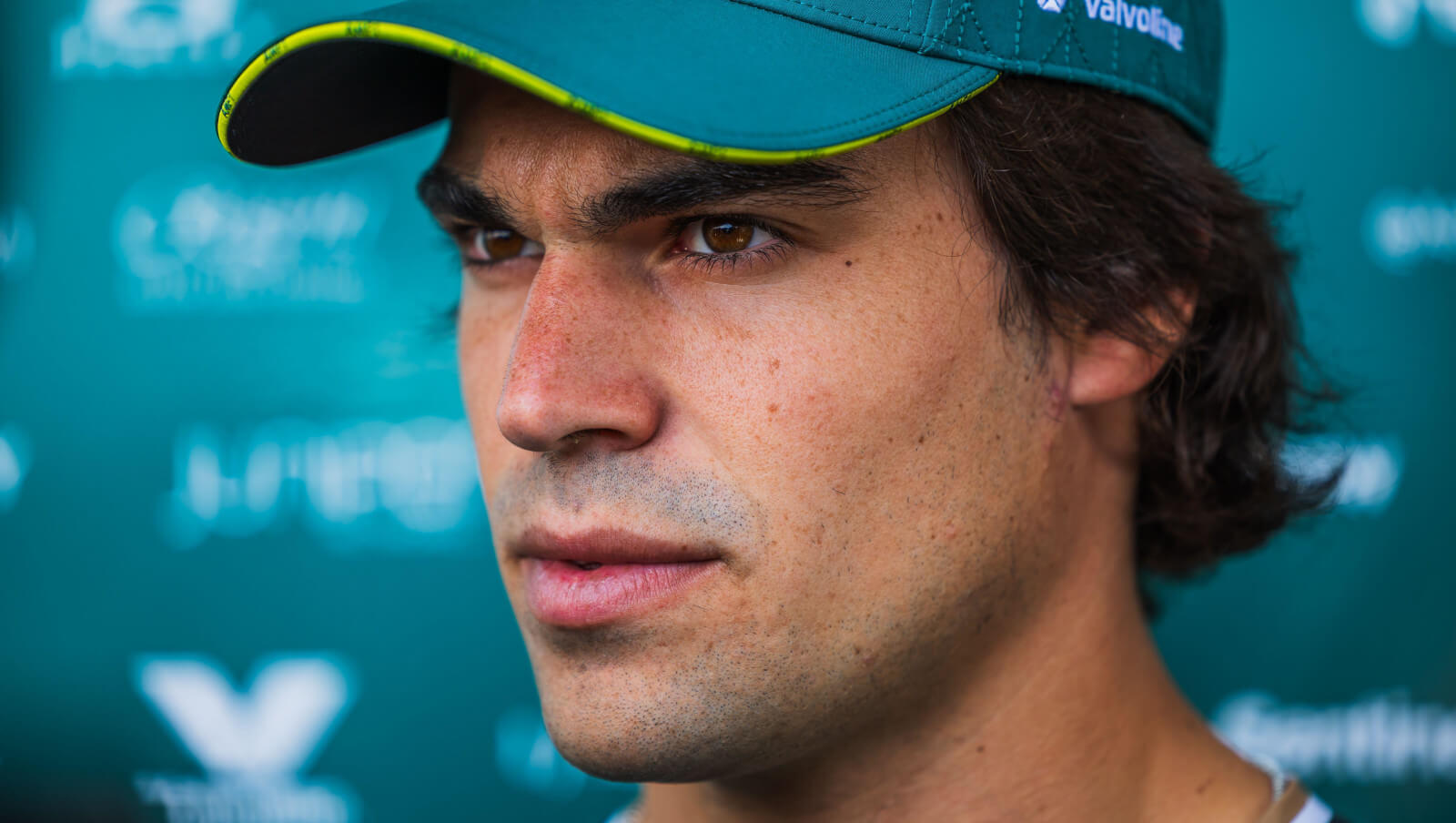
The Honda Rollercoaster: Hype Meets Reality
The partnership with Honda was meant to be the final piece of the championship puzzle—a bespoke engine deal that would elevate Aston Martin from a customer team to a true works outfit. Initially, the rhetoric was dazzling. Koji Watanabe, the usually reserved President of Honda Racing Corporation (HRC), was notably upbeat, speaking of 24-hour operations at the Sakura plant and a synergy with Aston Martin that promised “something special.” The imagery was deliberate: a flare fired into the night sky, signaling to the world that the grind was over and glory was imminent.
However, the tone has shifted dramatically in recent weeks. In a surprising pivot, Watanabe admitted in a separate interview that “not everything is going well.” It wasn’t a declaration of failure, but it was a sobering admission that stands in stark contrast to the promotional fireworks. This shift suggests an engineering program deep in the trenches of discovery, where integrating a complex power unit into a new chassis reveals a hydra of technical headaches.
The timing of this reality check is exacerbated by the progress of their rivals. Audi, the other newcomer to the engine game, recently completed a successful shakedown, generating genuine intrigue and belief among the fandom. While Audi is hitting procedural milestones, Honda is walking back its hype. This caution is likely born of trauma; Honda remembers all too well the public humiliation of their 2015 return with McLaren. They learned the hard way that promising victory while still debugging the system is a recipe for disaster. By lowering expectations now, Honda is attempting to inoculate itself against the toxicity that defined the “GP2 engine” era.
The Broken Tools: Newey’s Warning and Stroll’s Defense
If the engine situation is ambiguous, the chassis side offers its own set of alarms. Adrian Newey, the legendary designer whose arrival was hailed as a coup, has been candid about the team’s infrastructure limitations. Specifically, Newey has highlighted that the team’s simulator—a fundamental research tool in modern F1—is not correlating properly with on-track reality. In an era where testing is strictly limited, a drift between the virtual world and the real world can lead a team down a development cul-de-sac from which it takes months to reverse.
This technical deficit provides context for Lance Stroll’s recent, rare public statement. The Canadian driver, often the target of criticism, bluntly stated that the team simply does not have the “right tools” to compete at the front yet. While cynics might view this as self-preservation or “damage limitation” from a driver eager to avoid being scapegoated, it aligns perfectly with Newey’s assessment. Stroll is essentially asking his father, team owner Lawrence Stroll, for patience and resources. He is signaling that despite the shiny new factory and big-name hires, the feedback loops required to win championships are not yet clean.
The team is in a painful transition, trying to shed its “customer team” skin—analogous to taking off a generic store-bought jacket—and fit into a bespoke Honda tuxedo. The fit isn’t right yet, and until the simulator issues are resolved, Aston Martin will be gambling on upgrades rather than relying on driven certainty. As seen in 2023 and 2024, when promising starts evaporated after failed upgrade packages, the cost of “getting it wrong” is a tumble down the midfield order.
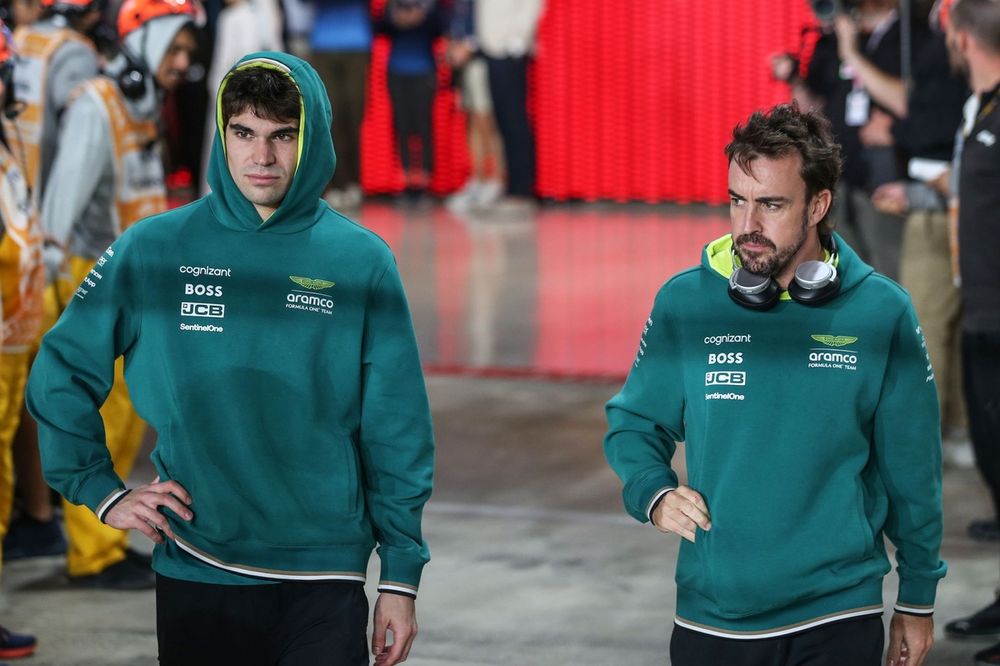
Alonso’s “Piece of String” and the Driver Market
Amidst this technical uncertainty, Fernando Alonso remains a fascinating anchor. The Spaniard, who previously claimed he would retire if the team nailed the 2026 regulations, has shrewdly changed his tune. His commitment is now open-ended, based solely on whether he remains “competitive and fast.” It is a contract as long as a piece of string, allowing him to ride the wave if the car is fast or exit gracefully if the project stalls.
Alonso’s maneuver is a masterclass in leverage. He knows the team needs him—not just for his driving, but for his morale-boosting presence. The “Aston Martin Fernando” is a team player who mucks in with the mechanics and keeps spirits high, a stark contrast to the moody figure seen in his final McLaren years. He provides a necessary counterweight to the uncertainty surrounding Lance Stroll, whose performance has been inconsistent.
But the real intrigue lies in the whispers of who might join him. With Max Verstappen seemingly off the table for now (despite Honda’s flattering comparisons of the Dutchman to Ayrton Senna), rumors of an Aston Martin pursuit of Charles Leclerc refuse to die. While Leclerc is emotionally and contractually tied to Ferrari, the “smoke” suggests legitimate interest from the Silverstone camp. For Aston Martin, courting a driver of Leclerc’s global stature—the second biggest influencer in F1—signals their intent to be a destination for elite talent. For Leclerc, it serves as a warning shot to Ferrari: stepping up, or risk losing their star to a team that is ruthlessly ambitious.
Lawrence Stroll: The Captain’s Dilemma
At the center of this swirling vortex is Lawrence Stroll. His public posture remains one of relentless ambition, but the pressure is mounting. After eight years of ownership (tracing back to the Force India buyout), the operation has secured only one race win. The billionaire’s “captaincy” offers stability, but it also introduces the volatile element of emotional investment.
Engineers and staff crave clarity. They want to know that decisions are made based on data, not nepotism or emotion. The continued presence of Lance Stroll in the seat remains the elephant in the room. If the goal is truly a world championship, hard questions about the driver lineup are inevitable. The fear for many within the team is the “nuclear option”: that if the project fails to deliver or if Lance decides to walk away, Lawrence might simply sell up and leave, abandoning the ship he built.
However, the arrival of heavyweights like Newey and the partnership with Honda suggests a doubling down rather than an exit strategy. The team is trying to behave like a mature front-runner before it actually becomes one. The vague messaging we are seeing now is likely a strategic attempt to temper expectations, buying time for the “super team” elements to actually gel.
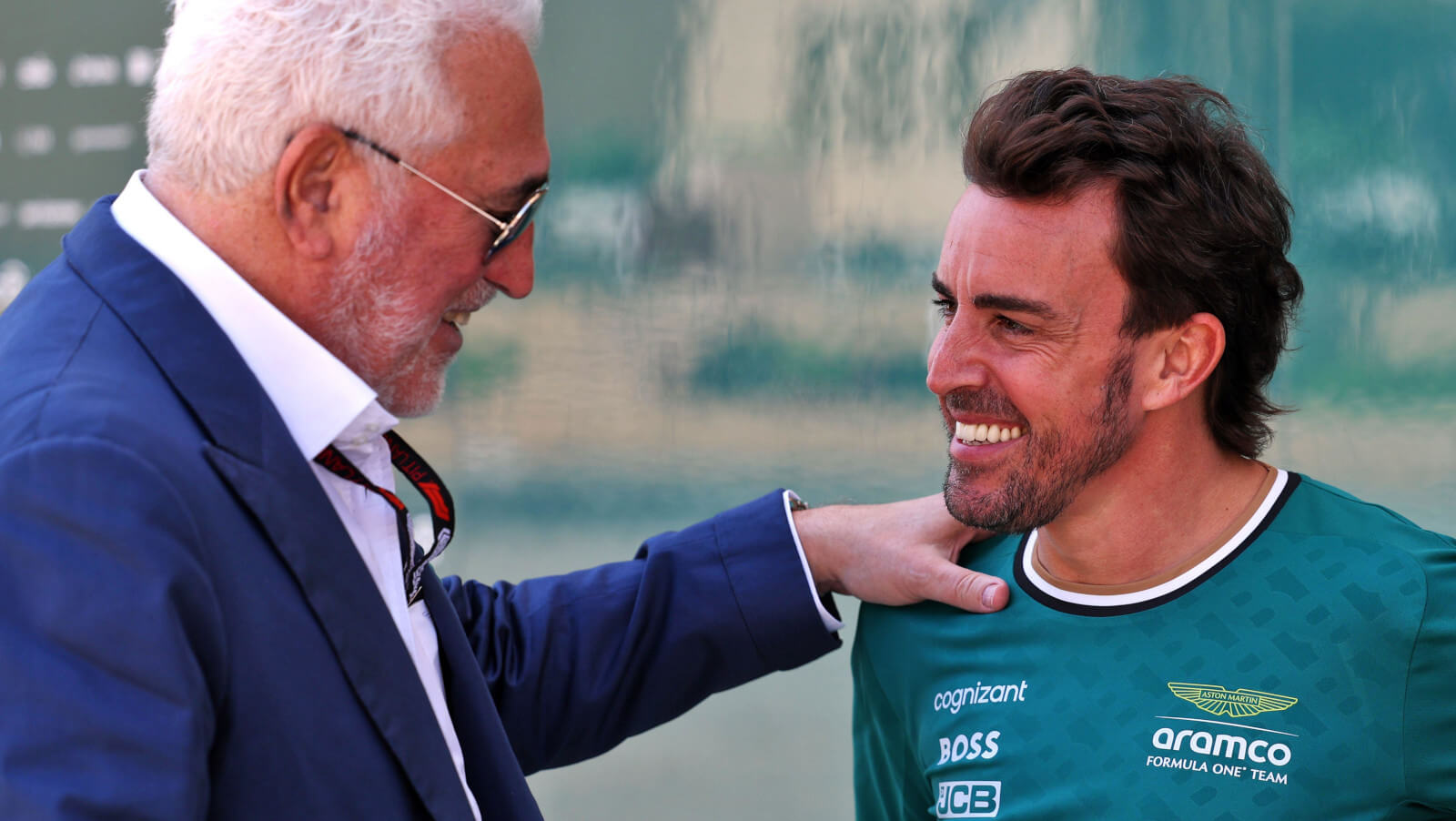
The 2027 Endgame
Ultimately, the confusion around Aston Martin’s 2026 prospects points to a simpler truth: 2026 is likely a year of survival and discovery, not domination. The team’s true target is almost certainly 2027. By then, the Honda partnership will have bedded in, the simulator correlation issues should be resolved, and the influence of Adrian Newey will be fully integrated into the car’s DNA.
Fans craving instant gratification may be disappointed. The team is asking for delayed gratification to prevent a “false dawn.” They are wary of hype because they know how quickly it turns to venom when results don’t follow. The conflicting messages—Honda’s caution vs. the brand’s ambition—are the sounds of a team wrestling with the brutal reality of Formula 1 engineering.
Aston Martin is attempting a metamorphosis that few teams have successfully navigated. They are shedding the “underdog” tag to become a titan. It is a messy, confusing, and high-risk process. But if they can survive the “fog” of 2026 and keep their star talents motivated, the glorious future they have been promising might finally arrive—just a little later than advertised. For now, the hype train has slowed down, but it hasn’t stopped. It’s just checking the tracks to make sure it doesn’t crash.
News

Inside Shane Richie’s love life: Drug – fuelled orgy with six blondes; real reason he split from Coleen Nolan; six-year ‘affair with fan’
Inside Shane Richie’s love life: Orgy with six blondes; real reason he split from Coleen Nolan; six-year ‘affair with fan’ He’s popular with the ladies… Shane Richie…

SH0CKING REVELATI0N:A sh0cking behind-the-scenes secret revealed about Lizzie Rizzini, the woman replacing Carol Kirkwood on the 6pm weather bulletin
BBC viewers still reeling from the departure of Carol Kirkwood got another surprise last night when presenter Lizzie Rizzini appeared to flash her black lace stockings on…

HEARTBREAKING: Peter Andre’s Tearful Message to Son Junior After SHOCKING Revelation About How He Truly Feels Toward Mum Katie Price — Katie Price’s reaction scares fans.
Peter Andre’s emotional message to son Junior after it’s revealed how he really feels about mum Katie Pri… PETER Andre has shared an emotional message to his…

Ben Shephard opens up about the devastating health battle his wife is facing: “She wakes up crying every single morning…”
Inside This Morning Ben Shephard’s Life Including Rarely Seen Wife and Health Battle Ben Shephard is a name synonymous with British television, renowned for his engaging presentation…

🚨 LIVE TV HEARTBREAK: Good Morning Britain Host Announces ‘Devastating’ Dɘath of Guest Minutes Into Show
Viewers of Good Morning Britain were met with heartbreaking news just minutes into Friday’s (January 30) episode, as co-hosts Kate Garraway and Ranvir Singh reported the tragic…

Emmerdale legend Cain Dingle will never be the same again after a shock cancer diagnosis turns his world upside down
FROure Desk. Full Terms and conditions are available on the website http://www.itv.com/presscentre/itvpictures/terms Emmerdale wouldn’t be Emmerdale without the glowering, grunting embodiment of manliness that is Cain Dingle (Jeff Hordley) But…
End of content
No more pages to load






