The checkered flag fell in Abu Dhabi, and with it, a decade of yearning, pressure, and expectation finally culminated in a singular, deafening roar of relief. Lando Norris is the 2025 Formula 1 World Champion. He achieved his maiden title in an Abu Dhabi finale that, while perhaps not the most visually dramatic title decider in recent history, was undoubtedly one of the most psychologically brutal and controversially won.
This victory was not a coronation of perfection; it was an escape from embarrassment.
In the end, Norris clinched the title by a razor-thin two-point margin, barely holding off a phenomenal late-season charge from the reigning champion, Max Verstappen. Verstappen had clawed back points relentlessly, winning three races in the final three weeks. His ferocious comeback meant the pressure on Norris was not just intense—it was crippling. When Norris crossed the line, securing a necessary podium finish, the euphoria on the faces of the McLaren team was inextricably mixed with an overwhelming sense of deliverance. Had this season ended differently, had McLaren lost the Drivers’ Championship after wrapping up the Constructors’ Title six races earlier in Singapore, it would have been an “embarrassment,” a “capitulation on an almost titanic scale.”
This narrative shifts the focus immediately: the headline story is not McLaren’s dominance, but how they managed to avoid disaster.
The Crucible of Abu Dhabi: Nerves and Near-Disaster
The title decider itself was a tight, tense affair, riddled with the sort of high-stakes drama that tests the limits of any athlete’s mental fortitude. Norris’s vulnerability was immediately apparent on Lap 1, a moment that drew parallels to past title collapses. Just as Nico Rosberg was jumped by Lewis Hamilton in 2014, and Max Verstappen by Hamilton in 2021, Norris was overtaken by his teammate, Oscar Piastri, at the end of the back straight.
This lapse, attributed by observers to “a little bit of nerves,” is totally understandable for someone on the cusp of a maiden championship. While Piastri’s impressive move on harder tires was a sign of his own competitive spirit, it was also a clear signal that Norris was fighting his own mind as much as the field.
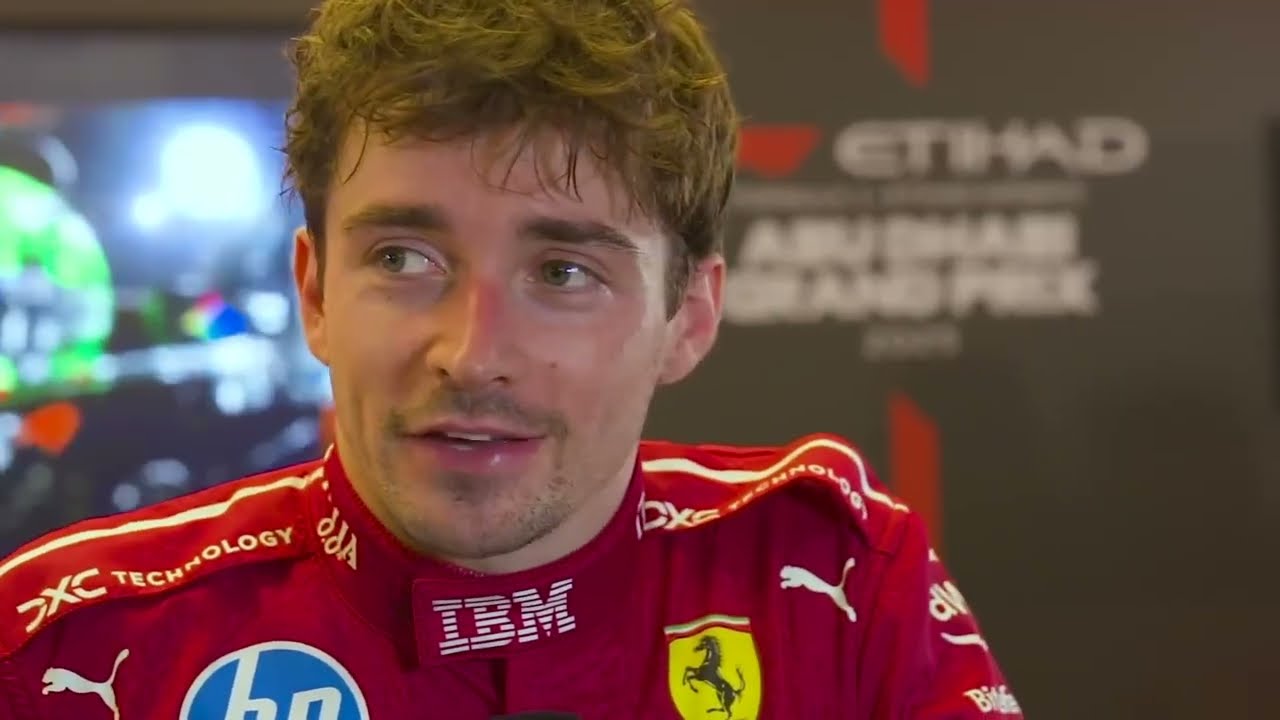
The true moments of jeopardy followed. Charles Leclerc, in a surprisingly competitive Ferrari that had dramatically improved since Friday practice, briefly put Norris under immense pressure. The calculations were simple, yet terrifying: had Leclerc managed to overtake Norris and had Max Verstappen gone on to win the race, Verstappen would have been the world champion. Though the McLaren ultimately proved too fast, the threat was real, a shadow constantly looming in Norris’s mirrors.
The most controversial flashpoint of the race, however, came later in the duel with Yuki Tsunoda. Tsunoda’s weaving on the straight—a move reminiscent of Verstappen’s own 2021 battle with Hamilton—led to a frantic and dangerous situation. Norris was forced all four wheels over the white line as he tried to evade the maneuver. While Tsunoda incurred a penalty, Norris, in the view of some, “got away with one.” The ambiguity of the rules in that moment was profound: a five-second penalty for Norris, served at his next pit stop, would have almost certainly dropped him behind Leclerc, forcing him to reclaim the title on track in a frantic, high-risk fight. The decision not to penalize him—or to penalize both—was a hair’s breadth from rewriting the final result, underscoring that Norris’s victory was secured by the finest margins of luck and judgement.
The Ugliness of Victory: A Dominant Car, A ‘Rough’ Campaign
To truly understand the overwhelming relief felt by the McLaren camp, one must look at the nature of their season. The 2025 McLaren, post-upgrade, was, by all accounts, a dominant piece of machinery. Yet, the team’s campaign was marked by an astonishing number of errors. The sheer chaos that permeated their operation led one observer to describe it as one of the “worst campaigns I have ever seen by a Formula 1 team with a car as dominant.”
The list of self-inflicted wounds is extensive:
Driver Errors: Multiple crucial mistakes from both drivers, notably Piastri, who ultimately paid the highest price by losing the title opportunity to his teammate.
Team Order Fiasco: The season was marred by baffling and confusing instructions—the much-discussed “papaya rules”—that complicated race management and communication, particularly with Piastri.
Strategic Blunders: Poor strategy calls and technical errors, including a car disqualification at the Las Vegas Grand Prix, repeatedly put both drivers on the back foot and kept the championship door ajar for the surging Verstappen.
This constant crumbling under pressure, which analysts suggest stemmed from a severe “lack of experience” in successfully challenging for championships, allowed Verstappen to close a seemingly insurmountable gap. The team was visibly “crumbling under the pressure” as Red Bull, and specifically Max, reeled them in. The championship was won not because McLaren executed flawlessly, but because Norris was able to rise above the team’s endemic disarray.
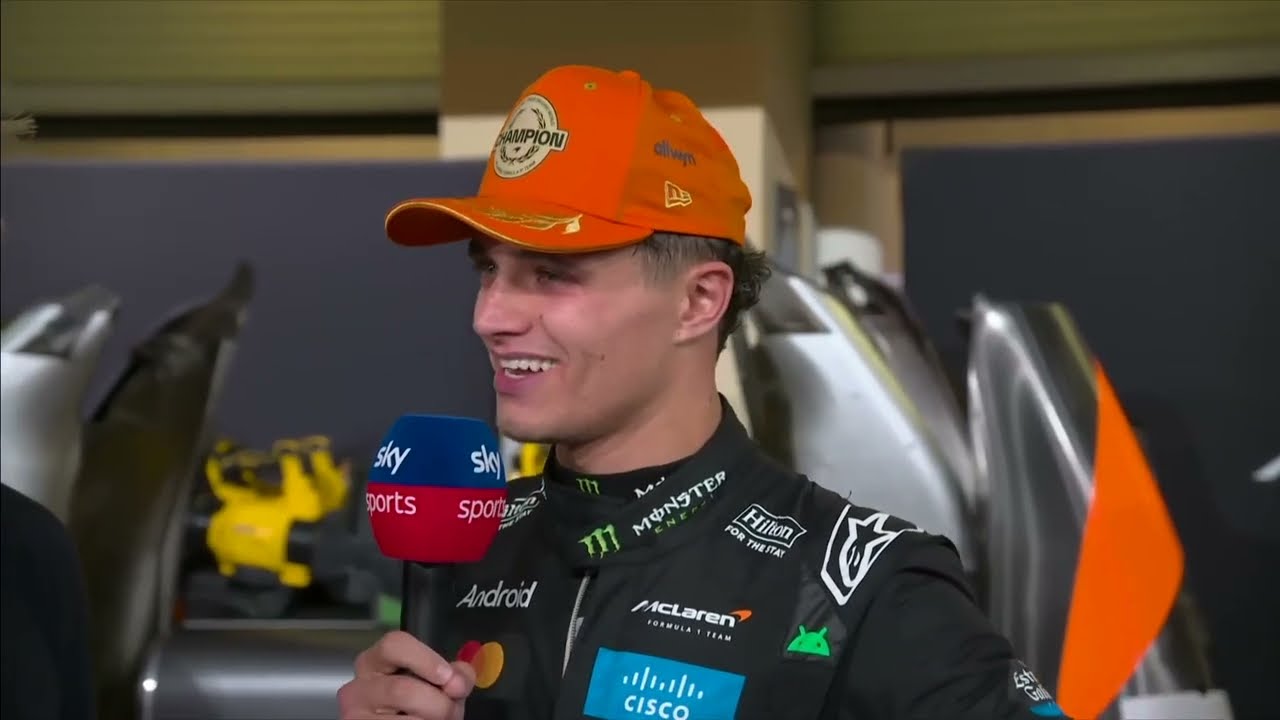
Lando Norris: The Clutch Champion
The pivotal moment of the 2025 season lies not in the final race, but in the dramatic mid-season shift that followed a critical suspension upgrade in Canada. Norris had a turbulent start to the year, feeling uncomfortable with the car’s front end after the ’24-to-’25 redesign. That single technical upgrade fundamentally transformed his confidence and competitiveness.
This newfound stability set the stage for the true championship-winning performances: the back-to-back victories in Mexico and the dominant weekend in Brazil (sprint and Grand Prix). These wins came at the absolute most crucial juncture of the year, exactly when Oscar Piastri was visibly “struggling” and “crumbling” under the pressure, and when Max Verstappen was looking his most threatening. It was an exhibition of “mental strength” that previous iterations of Norris’s racecraft were sometimes accused of lacking.
In these two races, Norris didn’t just win; he clutched. He demonstrated a maturity and resilience that cemented his status as a worthy, if imperfect, champion. It was, in fact, McLaren’s subsequent best efforts to “throw it away” for both drivers—the Vegas disqualification and the questionable strategy in Qatar—that dragged the fight all the way to Abu Dhabi.
Legacy and the Future of the Papaya
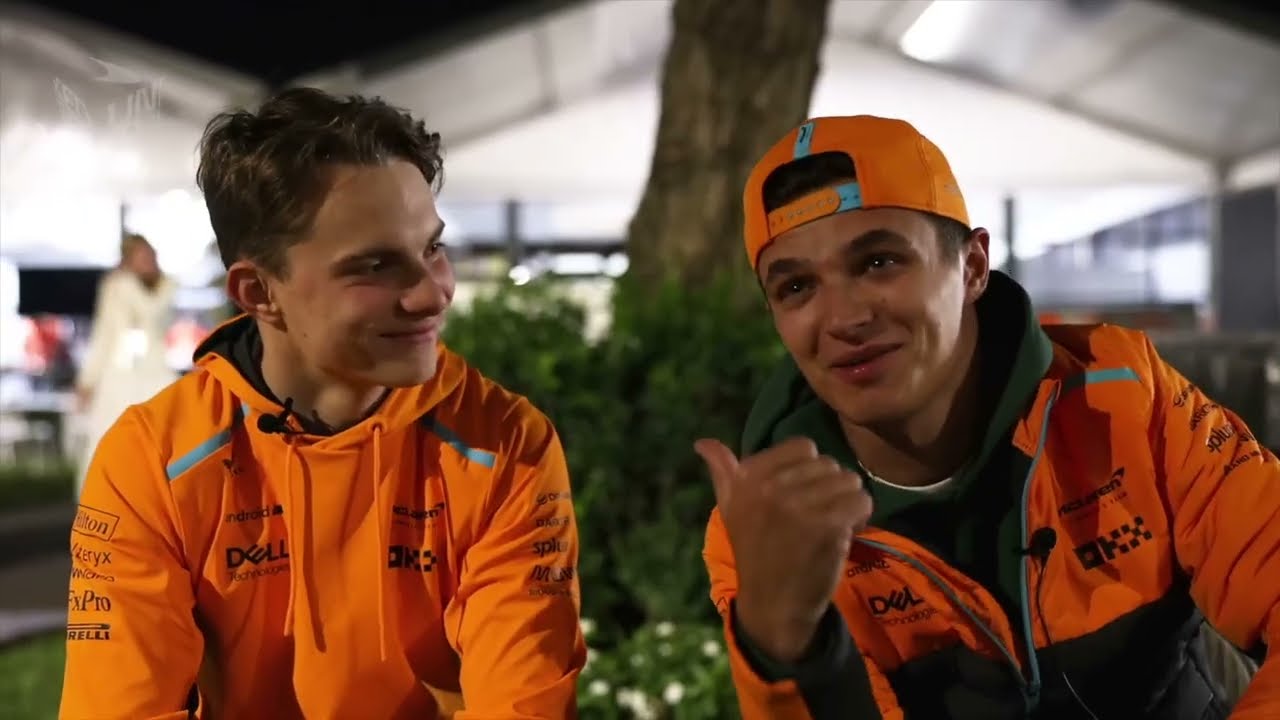
The immediate consequence of Norris’s victory is the cementing of his legacy and his standing within the McLaren team. The psychological landscape of the Woking factory has shifted. While McLaren maintains the public facade of having no number one driver, Norris is now the experienced leader, the proven World Champion.
This achievement puts his talented, young teammate, Oscar Piastri, in a challenging position. Piastri, a Grand Prix winner and a title contender in only his third season, now faces a World Champion as his stablemate. This dynamic will become critical when McLaren has to look toward 2027 and the possibility of a generational talent like Max Verstappen joining the team. McLaren will be forced to choose between the current champion, Lando Norris, and their potentially future champion, Oscar Piastri. With this title, Norris has secured his own future and stature.
For McLaren as a whole, the 2025 double championship completes an almost movie-like redemption arc. From the depths of embarrassment during the Honda-hybrid era of 2015, they have roared back to become back-to-back Constructors’ Champions and now the Drivers’ Champions. Norris is the one who finally broke the incredible run of Max Verstappen. He enters the 2026 rule reset not just as a competitor, but as the reigning title favorite, carrying the momentum of a team that has learned, in the most painful and exhilarating way possible, how to win. The victory was messy, it was stressful, and it was controversial—but ultimately, Lando Norris proved every doubter wrong. He is a worthy champion.






