The Unthinkable Gamble
In a move that has sent shockwaves through the Formula 1 paddock and divided fans across the globe, General Motors has officially confirmed its driver lineup for the Cadillac Formula 1 Team’s 2026 debut. The announcement, made from New York on August 26, 2025, defied every expectation of a youth-focused “American Dream.” Instead of signing the next generation of speed demons or a homegrown American hero, Cadillac has handed the keys of their billion-dollar entry to two men who were effectively discarded by the sport’s elite: Sergio “Checo” Perez and Valtteri Bottas.
It is a decision that screams contradiction. On one hand, it is being hailed by insiders as a pragmatic masterstroke of engineering stability. On the other, it is being savaged by critics as a desperate, uninspired move that relies on “washed-up” talent to lead a brand-new era. With a staggering $450 million entry fee and a total project investment hovering around the $1 billion mark, the stakes could not be higher. Cadillac isn’t just buying a spot on the grid; they are trying to buy credibility. But by signing two 36-year-old veterans coming off the worst seasons of their careers, have they purchased a foundation for success, or a one-way ticket to the back of the grid?
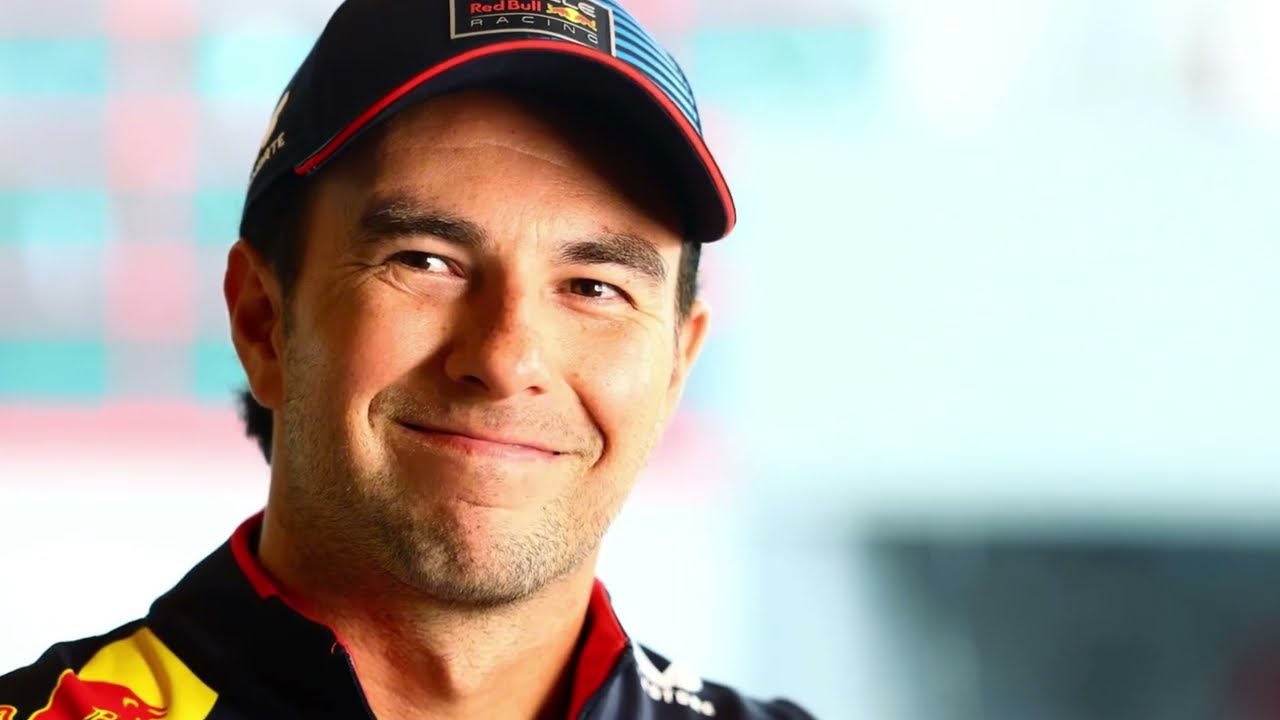
The “Rejects” Redemption Arc
To understand the sheer magnitude of this gamble, one must look at where Perez and Bottas were standing just months before the call from Detroit came. “Departed” is a generous term for their exits.
Sergio Perez’s exit from Red Bull on December 18, 2024, was nothing short of a public dismantling. Reports indicate the team paid roughly £11 million to buy out his contract just to get him out of the car. His 2024 campaign was statistically brutal: eighth in the championship, zero wins, zero pole positions, and a humiliating 285-point deficit to his teammate, Max Verstappen. In the final eight race weekends, Perez scraped together a measly nine points. He looked broken, a shadow of the “Minister of Defence” who had once played the ultimate team game.
Valtteri Bottas faced an arguably bleaker reality. Sauber, in their transition to Audi, didn’t just let him go; they replaced him with rookie Gabriel Bortoleto, a driver with zero F1 starts. Bottas’s final season yielded zero points. A driver with 10 Grand Prix wins and 67 podiums was reduced to fighting for 11th place, his tenure ending with a whimper rather than a roar.
By the start of 2025, both men were out of race seats, their careers seemingly over. They were the discarded “old guard,” victims of a sport that relentlessly chews up veterans to feed the youth. Yet, Cadillac looked at this wreckage and saw treasure.
The Logic of Experience: Why “Old” is Gold
Why would a brand new American team, desperate for marketing appeal, ignore young talent? The answer lies in the harsh reality of Formula 1 survival.
Graeme Lowden, Cadillac’s Team Principal, described the signing as a “bold signal of intent.” The logic is rooted in survival, not marketing. Between them, Perez and Bottas boast a staggering 527 Grand Prix starts. Perez is eighth on the all-time list with 281 starts; Bottas has helped Mercedes secure five consecutive Constructors’ Championships. They possess an institutional knowledge that no rookie, no matter how fast, can replicate.
Guenther Steiner, the man who built the Haas F1 Team from nothing, backed this philosophy without hesitation. “Young teams need experienced people who have done it before,” Steiner noted. “Putting a rookie driver with a rookie team would have been a disaster.” Martin Brundle echoed this sentiment, pointing out that a new team simply cannot afford drivers who damage cars or get lost in setup data when resources are already stretched thin.
History supports this conservative approach. When Haas debuted in 2016, they relied on the experienced Romain Grosjean, who scored points in their very first race. Cadillac is betting that Perez and Bottas offer a similar safety net. They are not there to win the championship in year one; they are there to ensure the car makes it to the finish line, providing the critical data needed to develop a machine that can win in year five.
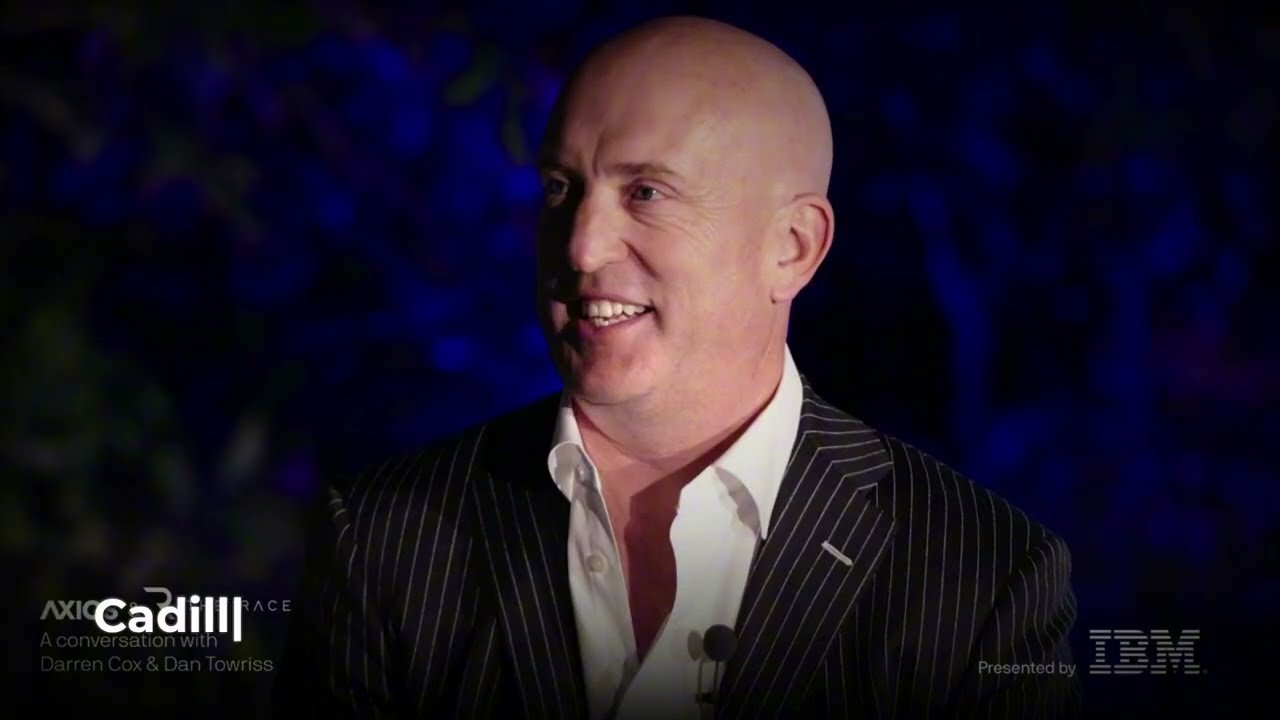
The $130 Million “Mexican Connection”
However, to view this purely as an engineering decision would be naïve. Formula 1 is a business, and Sergio Perez brings something to the table that is arguably more valuable than lap times: the Latin American market.
Perez is not just a driver; he is an economic powerhouse. His career has been underwritten by billionaire Carlos Slim and his Telmex group, a relationship spanning 30 years. It is estimated that Slim’s backing poured $130 million into Red Bull between 2021 and 2024. With four races now taking place in North America—Austin, Miami, Las Vegas, and Mexico City—Perez’s commercial value is astronomical.
Industry analysts suggest that without Perez and the rabid fanbase he cultivated, F1’s expansion in the US might never have stuck. For Cadillac, an American brand trying to establish a global identity, inheriting Perez’s legion of fans is an instant shortcut to relevance. He sells merchandise, he sells tickets, and he brings a passionate following that a rookie like Colton Herta simply doesn’t command yet.
The 2026 Regulation Reset: A New Battlefield
The timing of this debut is critical. The 2026 season brings the most significant regulation reset in modern F1 history. The cars are being reimagined: a 50/50 split between internal combustion and electric power, active aerodynamics with movable wings replacing DRS, lighter chassis, and 100% sustainable fuels.
Every team, from Ferrari to Williams, is starting from scratch. The cars will feel different, behave differently, and require a different driving style. In this chaos, driver feedback is mission-critical. A rookie cannot tell an engineer if the car’s handling is a fundamental flaw or just a quirk of the new rules because they have no reference point. Perez and Bottas, who have driven everything from V8s to V6 hybrids across teams like McLaren, Force India, Williams, and Mercedes, have a “library of feeling” in their hands.
Lowden emphasized this, stating that their “race-hardened instincts” would be essential. When the wind tunnel data doesn’t match the track reality, you need a driver who can articulate why. You need a Bottas who knows how a championship-winning Mercedes felt, and a Perez who knows how a dominant Red Bull turned in.
The “American” Problem and the Age Gap
Despite the strategic soundness, the optics remain messy. Cadillac is the “American Team,” yet when the lights go out in Melbourne 2026, the car will be driven by a Mexican and a Finn. The only American representation in the cockpit will be Colton Herta in a test driver role. For fans hoping to see an American flag on the helmet of the lead driver, this lineup is a bitter pill to swallow.
Furthermore, there is the undeniable issue of age. Both drivers will be 36 years old. They will form the oldest lineup on the grid by a significant margin. Critics argue that their peak performance years are clearly in the rearview mirror. Can they still deliver raw qualifying speed? Can they go wheel-to-wheel with the likes of Verstappen, Norris, and Leclerc? Or will they be expensive mobile chicanes, cruising around on their reputations while younger, hungrier drivers fly past?
The skepticism is valid. Perez’s mental collapse against Verstappen was painful to watch. Bottas’s invisibility at Sauber was prolonged. To assume they can simply “switch it back on” after a year on the sidelines is optimistic at best.
A Long-Term Vision or a Short-Term Fix?
Cadillac’s entry is not a whim; it is a fortress built on cash and ambition. They fought the FIA and F1 Management for years just to get in. They are building their own power unit for 2028/2029. They have facilities in Indiana, Silverstone, Charlotte, and Michigan. This is a project designed to last decades.
In that context, Perez and Bottas are the foundation, not the roof. They are the “bridge” drivers—hired to stabilize the ship, mentor the team, and perhaps groom the eventual American superstar who will replace them. Bottas described the project as a “long-term vision,” an honor to build something from the ground up.
The 2026 Australian Grand Prix will not reveal if Cadillac can beat Ferrari. It will reveal whether two veterans, bruised and battered by the sport they love, have one last fight left in them. It is a gamble on redemption, experience, and the belief that in Formula 1, old dogs don’t need new tricks—they just need a new bite. Cadillac has placed its chips on the table. Now, the world waits to see if the “rejects” can become legends.
News

Inside Shane Richie’s love life: Drug – fuelled orgy with six blondes; real reason he split from Coleen Nolan; six-year ‘affair with fan’
Inside Shane Richie’s love life: Orgy with six blondes; real reason he split from Coleen Nolan; six-year ‘affair with fan’ He’s popular with the ladies… Shane Richie…

SH0CKING REVELATI0N:A sh0cking behind-the-scenes secret revealed about Lizzie Rizzini, the woman replacing Carol Kirkwood on the 6pm weather bulletin
BBC viewers still reeling from the departure of Carol Kirkwood got another surprise last night when presenter Lizzie Rizzini appeared to flash her black lace stockings on…

HEARTBREAKING: Peter Andre’s Tearful Message to Son Junior After SHOCKING Revelation About How He Truly Feels Toward Mum Katie Price — Katie Price’s reaction scares fans.
Peter Andre’s emotional message to son Junior after it’s revealed how he really feels about mum Katie Pri… PETER Andre has shared an emotional message to his…

Ben Shephard opens up about the devastating health battle his wife is facing: “She wakes up crying every single morning…”
Inside This Morning Ben Shephard’s Life Including Rarely Seen Wife and Health Battle Ben Shephard is a name synonymous with British television, renowned for his engaging presentation…

🚨 LIVE TV HEARTBREAK: Good Morning Britain Host Announces ‘Devastating’ Dɘath of Guest Minutes Into Show
Viewers of Good Morning Britain were met with heartbreaking news just minutes into Friday’s (January 30) episode, as co-hosts Kate Garraway and Ranvir Singh reported the tragic…

Emmerdale legend Cain Dingle will never be the same again after a shock cancer diagnosis turns his world upside down
FROure Desk. Full Terms and conditions are available on the website http://www.itv.com/presscentre/itvpictures/terms Emmerdale wouldn’t be Emmerdale without the glowering, grunting embodiment of manliness that is Cain Dingle (Jeff Hordley) But…
End of content
No more pages to load






