In the high-octane world of Formula 1, standing still is equivalent to moving backward. But for the Alpine F1 Team, the 2025 season wasn’t just a slip; it was a freefall into the abyss. Finishing dead last in the Constructors’ Championship is a bitter pill for any team to swallow, but for a manufacturer with the resources and history of Renault, it is nothing short of a catastrophe. Yet, as the dust settles on the Abu Dhabi finale, a strange paradox has emerged. Alpine has unofficially claimed the title of the “Best Worst Team” in F1 history—a dubious honor that highlights just how bizarre and calculated their descent truly was.
The Anatomy of a Historic Failure
To understand the magnitude of Alpine’s 2025 collapse, one must look at the numbers. The team finished 10th, a staggering 48 points behind the next worst competitor. For a squad that was celebrating a fourth-place finish and besting McLaren just three years prior, this is a fall from grace of Icarus-like proportions. The contrast is stark: while McLaren soared to championship contention, Alpine spiraled in the completely opposite direction.
However, 2025 was no ordinary failure. Despite finishing at the bottom, Alpine scored 22 points—a tally that would have been respectable for a backmarker in any other era. Even when adjusting for historical scoring systems, no last-place team has ever been this “successful.” Their qualifying performance tells a similar story of confused competence; Pierre Gasly made 11 Q3 appearances, meaning the “slowest” car on the grid started in the top 10 for nearly half the races. The single-lap pace deficit was just under 1.4%, the smallest margin for a last-place car in the 21st century.
This wasn’t a case of a team being irredeemably slow. It was a case of a team being competitively irrelevant in the tightest midfield F1 has ever seen.
A Management Carousel and a Dangerous Gamble
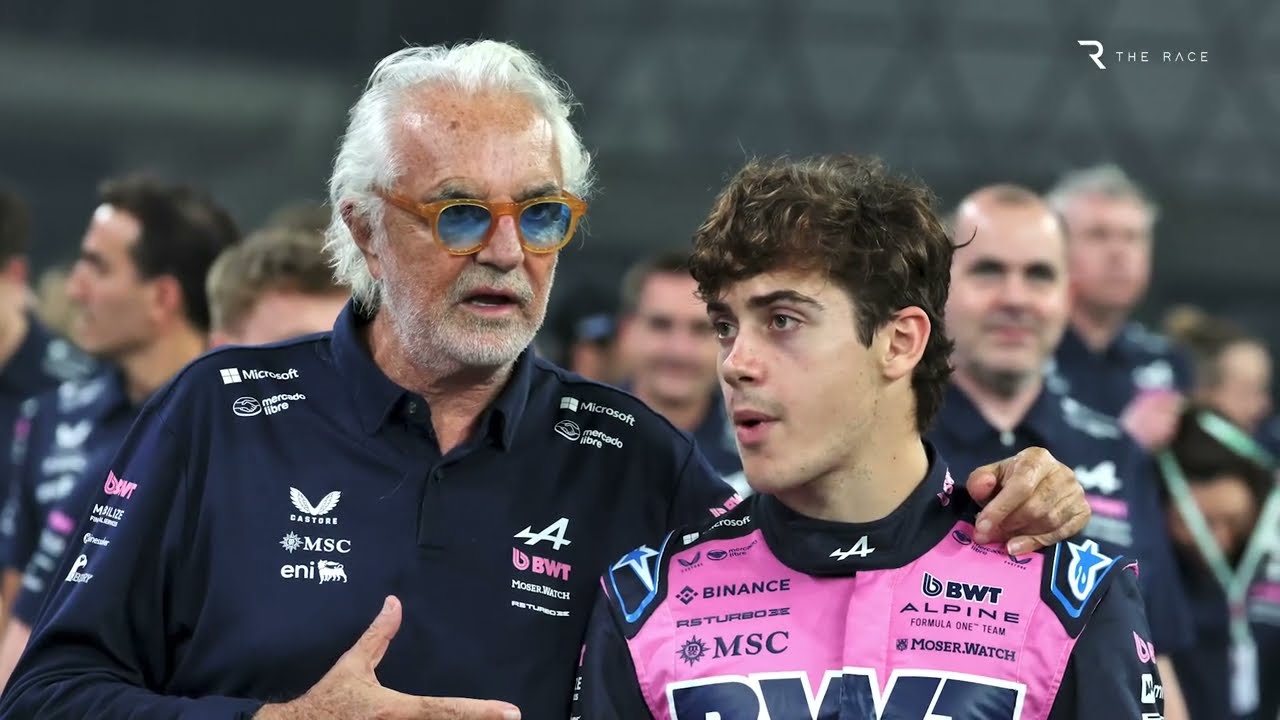
The chaos at Enstone can be traced back to a revolving door of leadership and a strategy that borders on reckless. The return of the flamboyant and controversial Flavio Briatore as Executive Advisor was meant to galvanize the team. Instead, it presided over a season where the Renault works team hit rock bottom. The mismanagement of previous years, particularly under former CEO Laurent Rossi and the ultimate oversight of Renault Group CEO Luca de Meo, created a legacy of instability that came to a head in 2025.
But the root cause of the on-track pain was a deliberate, strategic choice. Alpine essentially wrote off the 2025 season before it even began. In a move that stunned the paddock, development on the 2025 car was halted by the end of January—months before the first race even started. The logic? To throw every ounce of resource, time, and wind tunnel availability into the 2026 regulations.
It was a bold, almost arrogant gamble. By accepting last place, Alpine secured the maximum allocation of aerodynamic testing time for the second half of the year. While rivals like Haas were bringing upgrades as late as October, Alpine’s factory was a ghost town for the current car, with eyes firmly locked on the future.
The Human Cost: Gasly’s Heroics and the Rookie Meat Grinder
The strategic sacrifice of 2025 placed an immense burden on the drivers, and the disparity in performance was brutal. Pierre Gasly emerged as the tragic hero of the campaign, scoring 100% of the team’s 22 points. He dragged a car that had no business fighting for points into scoring positions through sheer grit and experience.
On the other side of the garage, the situation was a nightmare for young talent. The rookie pairing of Jack Doohan and later Franco Colapinto contributed exactly zero points. Thrown into a team in turmoil, with a car that was difficult to drive and management that was publicly uncertain about its driver direction, they were set up to fail. The pressure cooker environment, exacerbated by Briatore’s indecisiveness, meant that neither young driver could find their footing. It was a stark reminder that F1 can be a cruel environment for newcomers, especially when the machinery beneath them is treated as an afterthought.
A “Warm Feeling” or a Delusion?
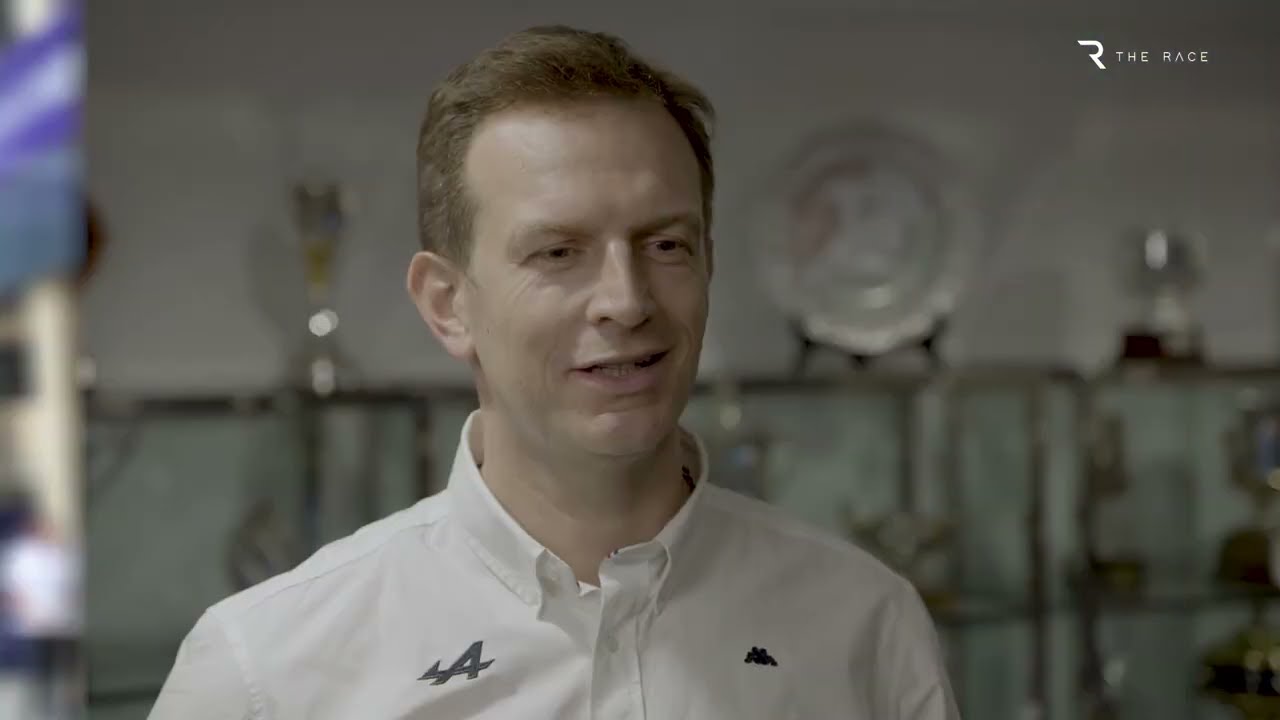
As the season concluded, Alpine Managing Director Steve Nielsen described seeing rivals upgrade their 2025 cars as giving him a “warm feeling.” The implication is clear: every hour a rival spent on their 2025 car was an hour not spent on 2026. Alpine is betting the house that this head start will translate into a sharp, linear progression up the grid when the new regulations drop.
There is logic to the madness. The 2026 reset offers a rare opportunity to leapfrog the competition. With the decision to scrap the Renault engine program and become a Mercedes customer team, Alpine addresses its long-standing power unit deficit. Theoretically, they will have a championship-winning engine and a chassis developed with more wind tunnel time than anyone else.
However, optimism in F1 must be rooted in reality, and Alpine’s reality is sobering. The team has been “restructuring” for a decade. The leap from dead last to the podium is immense, even with a regulation change. Mercedes engines will solve the power issue, but they won’t fix the operational culture, the suspension deficits, or the history of poor decision-making that has plagued Team Enstone.
The Final Verdict
Alpine’s 2025 season will go down in history as a fascinating anomaly—a competitive failure designed by choice. They were the “best worst team” the sport has ever seen, competent enough to qualify in the top 10 but managed disastrously enough to finish last.
The pain of 2025 was a down payment on 2026. If Alpine returns to the front of the grid next year, Briatore and de Meo will be hailed as strategic geniuses who sacrificed a pawn to save the king. But if 2026 brings more of the same, this gamble will be remembered as the final, desperate act of a manufacturer team that lost its way. For the sake of the hundreds of hardworking staff at Enstone, fans can only hope that the suffering was worth it.
News

Inside Shane Richie’s love life: Drug – fuelled orgy with six blondes; real reason he split from Coleen Nolan; six-year ‘affair with fan’
Inside Shane Richie’s love life: Orgy with six blondes; real reason he split from Coleen Nolan; six-year ‘affair with fan’ He’s popular with the ladies… Shane Richie…

SH0CKING REVELATI0N:A sh0cking behind-the-scenes secret revealed about Lizzie Rizzini, the woman replacing Carol Kirkwood on the 6pm weather bulletin
BBC viewers still reeling from the departure of Carol Kirkwood got another surprise last night when presenter Lizzie Rizzini appeared to flash her black lace stockings on…

HEARTBREAKING: Peter Andre’s Tearful Message to Son Junior After SHOCKING Revelation About How He Truly Feels Toward Mum Katie Price — Katie Price’s reaction scares fans.
Peter Andre’s emotional message to son Junior after it’s revealed how he really feels about mum Katie Pri… PETER Andre has shared an emotional message to his…

Ben Shephard opens up about the devastating health battle his wife is facing: “She wakes up crying every single morning…”
Inside This Morning Ben Shephard’s Life Including Rarely Seen Wife and Health Battle Ben Shephard is a name synonymous with British television, renowned for his engaging presentation…

🚨 LIVE TV HEARTBREAK: Good Morning Britain Host Announces ‘Devastating’ Dɘath of Guest Minutes Into Show
Viewers of Good Morning Britain were met with heartbreaking news just minutes into Friday’s (January 30) episode, as co-hosts Kate Garraway and Ranvir Singh reported the tragic…

Emmerdale legend Cain Dingle will never be the same again after a shock cancer diagnosis turns his world upside down
FROure Desk. Full Terms and conditions are available on the website http://www.itv.com/presscentre/itvpictures/terms Emmerdale wouldn’t be Emmerdale without the glowering, grunting embodiment of manliness that is Cain Dingle (Jeff Hordley) But…
End of content
No more pages to load






