The Formula 1 paddock is no stranger to drama, but the arrival of the Aston Martin AMR26 has sparked a level of intrigue and controversy that few could have predicted. For months, whispers have circulated about the first car designed from the ground up by the legendary Adrian Newey for the Silverstone-based squad. Now, the cover has finally been lifted, revealing a machine that screams innovation, aggression, and a complete rejection of conventional thinking. But as the dust settles on pre-season testing in Barcelona, one burning question remains: Is this radical machine a championship contender, or has the team bitten off more than it can chew?
A Dramatic Arrival and a Stuttering Start
The narrative of the AMR26’s debut reads like a thriller script. While rival teams like Mercedes and Ferrari hit the Barcelona circuit running on Monday, clocking up valuable mileage, the Aston Martin garage stood conspicuously empty. The silence was deafening. Speculation mounted immediately—was the car not ready? had a fatal design flaw been found?
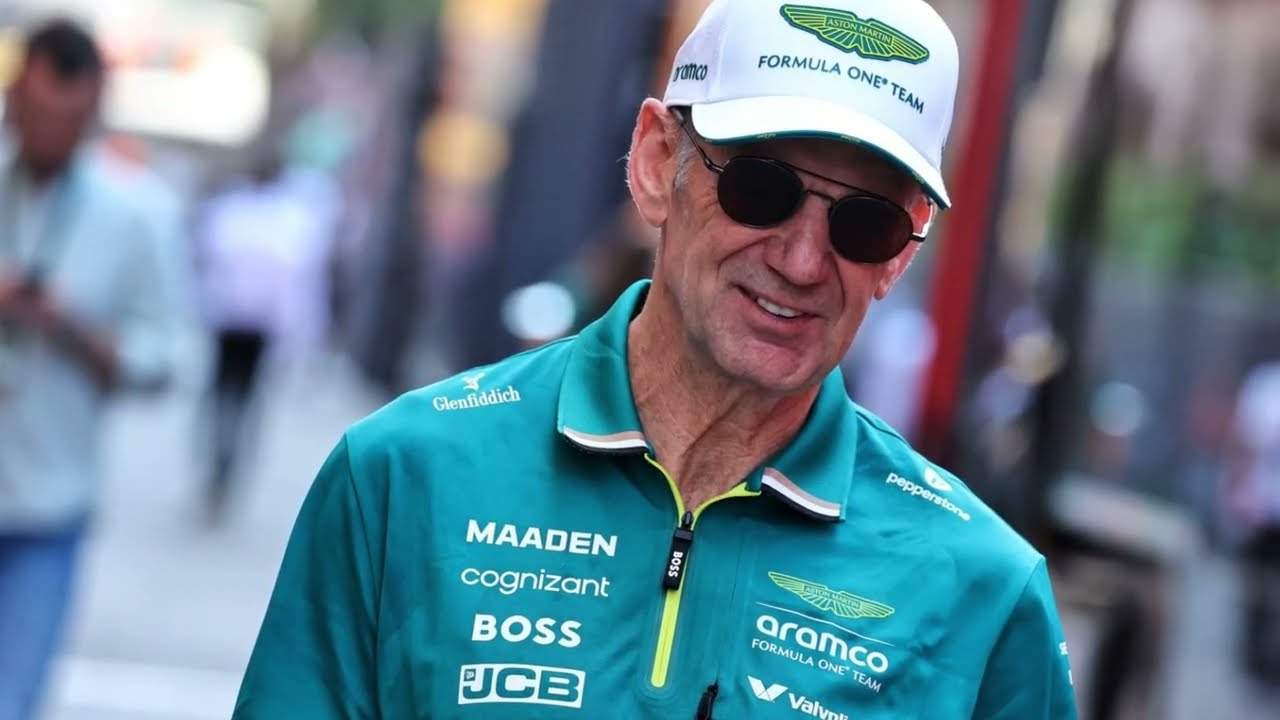
The truth, true to form, lay in the perfectionism of Adrian Newey. Reports suggest that inconsistencies between wind tunnel data and simulator results over the summer led to last-minute delays. Newey, unwilling to sign off on a package that wasn’t optimized to the millimeter, held back production. The car was eventually flown to Spain on a cargo plane, arriving late on Thursday, leaving the team with a mountain to climb.
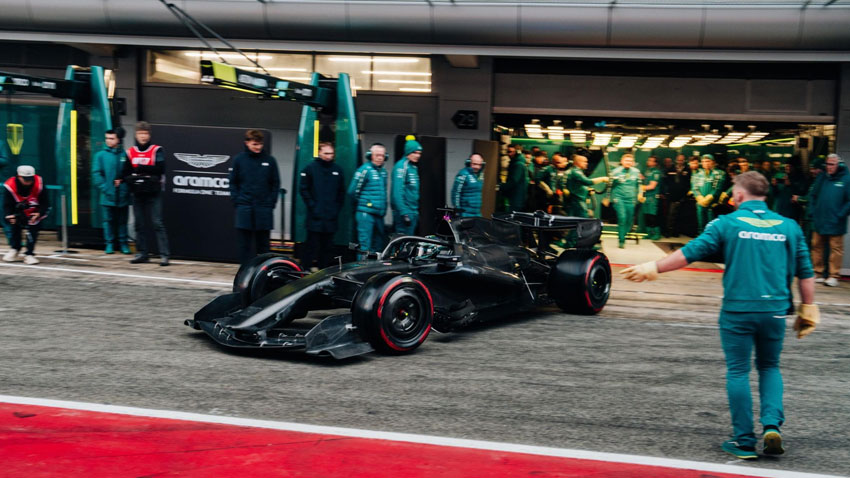
When the car finally hit the track, the drama only intensified. Lance Stroll took the wheel for the initial installation laps, a routine procedure usually devoid of excitement. Yet, after just four laps, the AMR26 ground to a halt, triggering a red flag. It was a heart-stopping moment for the team and a disastrous start to their campaign. Although veteran Fernando Alonso managed to salvage some pride on Friday by completing 61 laps, the damage was done. In total, Aston Martin completed a meager 65 laps for the entire week—the lowest of any team. To put that stark failure into perspective, Mercedes racked up over 500 laps in the same period.
A Design That Defies Logic
Despite the operational nightmares, the car itself is undeniably a work of art. Technical experts have been left scrambling to analyze the “extreme” geometry of the AMR26. It is a machine that bears Adrian Newey’s DNA in every carbon fiber curve, pushing aerodynamic concepts to their absolute breaking point.
The most shocking feature is undoubtedly the sidepods—or rather, the lack of them. Newey has taken the “zero-pod” concept, previously attempted with mixed success by other teams, and dialed it up to eleven. The bodywork is impossibly slim, creating a silhouette that looks almost too narrow to house a modern F1 power unit. The cooling inlets have been reimagined entirely; gone are the wide “letterbox” slots, replaced by upward-facing, periscope-style funnels. This radical layout allows for a massive undercut, creating a cavernous space above the floor to channel air directly to the rear of the car. The goal is simple: maximize downforce and minimize drag with ruthless efficiency.
At the front, the car sports a wide “seagull” or “pelican” style nose, a nostalgic nod to Newey’s dominant Red Bull designs from the early 2010s. This shape is critical for managing airflow under the chassis and feeding the all-important floor aerodynamics. Even the suspension has been weaponized for aero performance. Sticking with a push-rod layout front and rear, Newey has positioned the wishbones in extreme geometries, not for mechanical grip, but to guide air exactly where he wants it.

High Risk, High Reward
The AMR26 represents a massive gamble. In the world of Formula 1, innovation is the key to dominance, but it walks hand-in-hand with risk. The lack of running in Barcelona is a significant red flag. With a new regulation cycle and a freshly integrated Honda power unit, track time is the most valuable currency a team possesses. Aston Martin is currently bankrupt in that regard.
The partnership with Honda adds another layer of complexity. This is the first year of their collaboration, and the Japanese manufacturer is eager to prove it can replicate its Red Bull success. However, with only 65 laps of data, engineers have barely scratched the surface of the engine’s reliability or performance mapping. The team is effectively flying blind heading into the next tests.
Fernando Alonso, a two-time World Champion who has seen it all, remains publicly optimistic but realistic. Following his brief stint in the car, he described the experience as a “special moment” and noted that one quickly gets a sense of a car’s direction. While he confirmed the team completed their specific (albeit limited) program, he admitted that there is “a lot of work to do” before the season opener in Melbourne. His words hint at the colossal challenge ahead: turning a fragile, radical prototype into a reliable race car in a matter of weeks.
The Road to Melbourne
As the F1 circus packs up and looks toward the crucial Bahrain tests, Aston Martin finds itself in a precarious position. The AMR26 is potentially the fastest car on the grid—a theoretical monster born from the mind of the sport’s greatest designer. Conversely, it could be a temperamental, fragile beast that is difficult to set up and prone to breaking down.
The contrast in philosophies is stark. Mercedes has opted for a conservative, reliability-first approach with their W7, building a solid foundation. Aston Martin has thrown caution to the wind, betting everything on aerodynamic supremacy. Only time will tell which strategy pays off.
One thing is certain: Adrian Newey has not lost his touch. At 66, he is still the boldest thinker in the pit lane. Whether the AMR26 becomes a legend or a cautionary tale now depends on the team’s ability to unlock its secrets before the lights go out in Australia. The clock is ticking, and the world is watching.
News

Inside Shane Richie’s love life: Drug – fuelled orgy with six blondes; real reason he split from Coleen Nolan; six-year ‘affair with fan’
Inside Shane Richie’s love life: Orgy with six blondes; real reason he split from Coleen Nolan; six-year ‘affair with fan’ He’s popular with the ladies… Shane Richie…

SH0CKING REVELATI0N:A sh0cking behind-the-scenes secret revealed about Lizzie Rizzini, the woman replacing Carol Kirkwood on the 6pm weather bulletin
BBC viewers still reeling from the departure of Carol Kirkwood got another surprise last night when presenter Lizzie Rizzini appeared to flash her black lace stockings on…

HEARTBREAKING: Peter Andre’s Tearful Message to Son Junior After SHOCKING Revelation About How He Truly Feels Toward Mum Katie Price — Katie Price’s reaction scares fans.
Peter Andre’s emotional message to son Junior after it’s revealed how he really feels about mum Katie Pri… PETER Andre has shared an emotional message to his…

Ben Shephard opens up about the devastating health battle his wife is facing: “She wakes up crying every single morning…”
Inside This Morning Ben Shephard’s Life Including Rarely Seen Wife and Health Battle Ben Shephard is a name synonymous with British television, renowned for his engaging presentation…

🚨 LIVE TV HEARTBREAK: Good Morning Britain Host Announces ‘Devastating’ Dɘath of Guest Minutes Into Show
Viewers of Good Morning Britain were met with heartbreaking news just minutes into Friday’s (January 30) episode, as co-hosts Kate Garraway and Ranvir Singh reported the tragic…

Emmerdale legend Cain Dingle will never be the same again after a shock cancer diagnosis turns his world upside down
FROure Desk. Full Terms and conditions are available on the website http://www.itv.com/presscentre/itvpictures/terms Emmerdale wouldn’t be Emmerdale without the glowering, grunting embodiment of manliness that is Cain Dingle (Jeff Hordley) But…
End of content
No more pages to load






