Author: Ms Bich

  • The Real Story Behind the Discovery of Titanic’s Watery Grave

    The Real Story Behind the Discovery of Titanic’s Watery Grave

    In 1985, a joint American-French expedition tracked down one of the biggest prizes in maritime archeology: the 73-year-old wreck of the ‘unsinkable’ ocean liner Titanic.

    RALPH WHITE/GETTY IMAGES

    Dr. Robert Ballard couldn’t sleep. It was the early morning of September 1, 1985, and the 43-year-old oceanographer was lying in his bunk aboard the research vessel Knorr. Ballard had led the ship to the North Atlantic in search of the long-lost wreck of Titanic, but despite combing the seafloor for more than a week, his team’s camera-outfitted robot had yet to find anything other than miles of sand and sediment. With only a few days left before the mission ended, he was beginning to worry the iconic “Ship of Dreams” might never be found.

    The Discovery of the Titanic Wreck

    As Ballard tried to distract himself with a book, the Knorr’s cook appeared and said the on-duty watch team had called for him. Ballard pulled a jumpsuit over his pajamas and dashed to the ship’s control van. When he arrived, his colleagues replayed what had just appeared on their robot’s live video feed of the seafloor. The footage was dim and grainy, but the metal object it showed was unmistakable: one of Titanic’s boilers. Ballard and his crew erupted with cheers and applause. Someone opened a bottle of champagne for a toast, but the mood suddenly darkened after they noticed that it was nearly 2:20 a.m.—the exact time the ocean liner had sunk and taken more than 1,500 passengers and crew to their deaths. The thought of it hit Ballard like a shock. “We were embarrassed we were celebrating,” he later told 60 Minutes. “And all of a sudden we realized that we should not be dancing on someone’s grave.”

    By the time of the crew’s discovery, 73 years had passed since the Titanic left on its doomed maiden voyage to New York. After the liner sank, would-be treasure hunters had proposed using everything from electromagnets to nylon balloons to raise it from the depths. The only problem was that no one knew where it was. Titanic had continued to drift after last reporting its location in a distress call, leaving explorers with a search area that spanned hundreds of miles. Several missions had set off to look for its watery grave. All of them—including a 1977 expedition led by Ballard—had come home empty-handed.

    Ballard’s second search attempt had been in the works since the early 1980s, when he asked the U.S. Navy to fund the development of the Argo, an unmanned camera sled that could be towed behind a surface ship at depths of up to 20,000 feet. The Navy balked at footing the bill for a Titanic search, but they were interested in using Ballard’s new robot to survey the wrecks of the U.S.S. Thresher and Scorpion, two nuclear submarines that had been lost in the Atlantic in the 1960s. The two parties eventually came to a compromise: if Ballard could successfully locate and map the two sunken subs, he could use whatever time he had left to look for Titanic.

    A Top-Secret Expedition

    Since the United States was still embroiled in the Cold War, the operation was kept top-secret. Ballard was given special instructions and put on active duty as a Naval officer, but as far as the rest of the world was concerned, he was simply an oceanographer on a search for Titanic. It wasn’t until the 2000s that the mission’s military agenda was fully declassified.

    Ballard began his clandestine expedition by photographing Thresher in the summer of 1984. The following year, he and a team from the Woods Hole Oceanographic Institution returned to the Atlantic and tracked down the wreck of Scorpion off the coast of the Azores. Ballard knew the Navy mission would leave him with precious little time to seek out Titanic, so he asked the French Research Institute for Exploitation of the Sea, or IFREMER, to partner with him.

    In July 1985, the French research vessel Le Suroit began scouting the area where Titanic was believed to have sunk. Using a technique known as “mowing the lawn,” expedition leader Jean-Louis Michel towed a side-scan sonar system back and forth across the search zone in the hope of detecting large metal objects on the seafloor. Despite trawling the Atlantic for five weeks, the sonar failed to uncover any promising leads. The job of finding Titanic fell to Ballard and the crew of Knorr, who had just wrapped up their survey of Scorpion.

    Titanic construction

    RALPH WHITE/CORBIS/GETTY IMAGES
    CONSTRUCTION OF THE TITANIC.
    Ballard’s military project left him with just 12 days to look for Titanic, but it had also given him an idea for a new search technique. While photographing Thresher and Scorpion, he’d noticed that the current had carried small bits of wreckage from the ships as they fell to the seafloor, creating a long chain of debris. With this in mind, he decided not to search for Titanic’s hull. Instead, he would use Argo to scour the bottom for its much larger debris trail, which might stretch as far as a mile. Once he found it, he could use it to track down the ship itself.

    The new approach allowed Ballard to expand the search area and move through it in a much wider pattern. Rather than “mowing the lawn” with sonar, he dragged Argo along the seafloor and monitored the live video feed from its onboard cameras. Seven people were needed to keep the submarine and Knorr in synch and analyze all the data, and the crew worked in shifts to keep the watch going around the clock. After several grueling days, they were rewarded with the sight of riveted hull plates and the telltale boiler. Argo continued stalking the debris trail, and the following morning, Titanic’s bow came looming out of the inky depths.

    Weather Forces Hasty Work Documenting the Wreck

    For Ballard, the discovery came with mixed emotions. “It was one thing to have won—to have found the ship,” he later wrote. “It was another thing to be there. That was the spooky part. I could see the Titanic as she slipped nose first into the glassy water. Around me were the ghostly shapes of the lifeboats and the piercing shouts and screams of people freezing to death in the water.” As many had long suspected, Titanic had broken in two as it sank to the bottom. Its bow sat upright and was still surprisingly intact. The more heavily damaged stern lay some 400 meters away.

    Ballard and his crew scrambled to document the wreck with both Argo and Angus, another unmanned submarine designed to take still photographs. The shots revealed large sections of Titanic’s hull and mast, including the crow’s nest where the fatal iceberg had first been spotted. Several of the hatches had been torn off, and a missing skylight allowed a tantalizing glimpse down into where the ship’s “grand staircase” had once been located. The large debris field included pristine china plates, pieces of furniture and even an unopened case of champagne. Sea scavengers had long since consumed any human remains. The only remnants of the victims were the many pairs of leather shoes still lying on the sandy bottom.

    Could the Titanic Disaster Have Been Avoided?

    In 1912, Titanic only had 37 seconds to avoid an iceberg. Why so little time? Was it that the lookouts lacked binoculars, or that a huge ship can’t turn quickly? William Murdock investigates whether Titanic’s sinking was caused by the lookouts or the navigation team—and if Titanic’s tragedy could have been avoided.

    Coroner’s Report: Titanic

    When the “unsinkable” ocean liner Titanic was lost after hitting an iceberg on April 15, 1912, lifeboats saved only 700 of her passengers. What did the 1,500 people who went down with the ship experience in the icy waters of the North Atlantic?

    Titanic: Stewardess Survival

    This video clip from ‘What Happened After’ looks at the life of Violet Jessup, a stewardess aboard the Titanic who would ultimately become the only woman to survive the sinking of the Titanic and her sister ship, the Britannic.

    Just four days after they laid eyes on Titanic, stormy weather forced the crew to pack up their supplies and steer Knorr toward home. Dozens of scientists would later study the site more thoroughly, including Ballard, who returned the following summer to get a firsthand glimpse of the wreck from inside a manned submersible called Alvin.

    In the meantime, photos of the momentous discovery were splashed on the front pages of newspapers across the globe, and an army of reporters and television cameras greeted Knorr when it docked in Massachusetts. Ballard, who would later become a fierce opponent of attempts to salvage artifacts from Titanic, used his first press conference to stress the need for the wreck to be treated with reverence.

    “The Titanic lies now in 13,000 feet of water on a gently sloping alpine-like countryside overlooking a small canyon below,” he said. “There is no light at this great depth and little life can be found. It is a quiet and peaceful place—and a fitting place for the remains of this greatest of sea tragedies to rest. Forever may it remain that way.”

    In February 2023, 80 minutes of never-before publicly seen underwater video of the underwater discovery was released by the Woods Hole Oceanographic Institution. The footage was captured by cameras in a three-person research submersible named Alvin and the remotely operated Jason Jr. in July 1986. Ballard and two pilots were inside Alvin as the team explored the long-lost ship.

  • The Battle of Wizna – Around 800 Polish Soldiers Held Off 42,000 German Soldiers for Three Days

    The Battle of Wizna – Around 800 Polish Soldiers Held Off 42,000 German Soldiers for Three Days

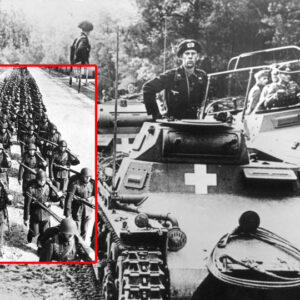
    During the German invasion of Poland at the beginning of World War II, 720 Polish soldiers manned the fortified line of defense near the village of Wizna for three days against 42,200 German soldiers and 350 tanks.

    Finally, the Polish commander, realizing the hopelessness of the situation, gave the order to his people to surrender. He himself then committed suicide by throwing himself on a grenade. Subsequently, this brutal battle in Polish culture was called the “Polish Thermopylae.”

    For the Polish armed forces, fortifications around the village of Wizna were a key point in the defense system on the northern border. They were near the intersection of the Narew and Biebrza rivers, and were intended to defend the areas where the rivers could be crossed.

    Polish infantry, 1939

    Polish infantry, 1939

    The 5.5 mile (9 km) line of defenses along the high riverbanks passed between the villages of Kołodzieje and Grądy-Woniecko, with Wizna in the center. In addition, the most important road, Łomża–Białystok, passed through Wizna.

    However, this defensive line was poorly fortified. If broken, an enemy would have access northwards to Warsaw.The construction of the main fortifications began only in April 1939.

    By September 1, the Poles had built six heavy bunkers with reinforced concrete domes weighing 8 tons each, two lightweight concrete bunkers, and eight machine gun pillboxes protected by sandbags or earthworks. Four more bunkers were still in the construction stage when the war began.

    Ruins of one of the Polish defense bunkers, now a memorial site Wizną 1939 Photo by Hiuppo CC BY 3.0

    Ruins of one of the Polish defense bunkers, now a memorial site Wizną 1939 Photo by Hiuppo CC BY 3.0

    The average thickness of the bunker walls was nearly 5 feet (1.5 meters). They were also protected by steel plates nearly 8 inches (20 cm) thick, which no Wehrmacht cannon could pierce at that time.

    In addition to the bunkers, anti-personnel and anti-tank barriers were erected and many trenches and ditches were dug. To flood this area in order to create additional difficulties for an adversary, the plan was to destroy the dams on the Narew and Biebrza rivers. However, a record dry summer and low water levels prevented that from happening.

    Polish 7TP light tanks in formation during the first days of the invasion

    Polish 7TP light tanks in formation during the first days of the invasion

    Despite their unfinished state, the Polish bunkers were of excellent quality. The fortifications were located on hills, which gave them a large radius of sight and many opportunities for shooting.

    On September 1, 1939, Germany attacked Poland, thereby unleashing World War II. The German 3rd Army, stationed in East Prussia, advanced in the direction of Warsaw through the positions of the Polish Narew Corps.

    Polish city destroyed by Luftwaffe bombing

    Polish city destroyed by Luftwaffe bombing

    On September 2, Captain Władysław Raginis took over the command of Wizna’s defense. As a headquarters, he chose the “GG-126” bunker, which was located on a hill near the village of Góra Strękowa in the center of the Polish defense line.

    Polish forces numbered about 700 enlisted soldiers and 20 officers. Other sources, however, indicate that Polish forces numbered no more than 360 people.Their armament included 6 pieces of 75 mm artillery, 24 heavy machine guns, and 18 light machine guns, as well as two Wz.35 anti-tank rifles.

    Captain Władysław Raginis

    Captain Władysław Raginis

    On September 3, Polish troops were attacked from the air, but their own aircraft could not fight back. The Podlaska Cavalry Brigade was operating in the area, but after multiple attacks on its flank on the night of September 4, it received an order to retreat toward Mały Płock and cross the Narew River.

    On September 7, scouts of General Nikolaus von Falkenhorst’s 10th Panzer Division captured a village near Wizna. Polish scouts from the mountain rifle division suffered losses and were forced to retreat to the southern bank of the Narew.

    Nikolaus von Falkenhorst Photo by Bundesarchiv, Bild 183-2006-0529-501 / CC-BY-SA 3.0

    Nikolaus von Falkenhorst Photo by Bundesarchiv, Bild 183-2006-0529-501 / CC-BY-SA 3.0

    Polish engineers destroyed the only bridge over the Narew, thereby temporarily stopping the Germans. German infantry patrols crossed the river and attempted to advance to Giełczyn, but suffered heavy losses.

    On September 8, German General Heinz Guderian received an order to advance through Wizna towards Brześć. The next morning, his troops invaded the Wizna area and were combined with the “Lötzen” Brigade and 10th Panzer Division.

    Heinz Guderian Bundesarchiv, Bild 101I-139-1112-17 Knobloch, Ludwig CC-BY-SA 3.0

    Heinz Guderian Bundesarchiv, Bild 101I-139-1112-17 Knobloch, Ludwig CC-BY-SA 3.0

    German forces now numbered 42,200 men, at least 350 tanks, 108 howitzers, 188 grenade launchers, 195 anti-tank guns, and nearly 1,000 various machine guns. According to various estimates, there were 40-60 German soldiers per Polish soldier, not to mention far more firepower.

    After dawn, German planes dropped leaflets that called on Polish soldiers to surrender. In return, they promised to let the Poles live. However, Władysław Raginis and Lt. Brykalski refused to surrender and vowed to fight to the death.

    Soon after, the Germans conducted an aerial and artillery bombardment. The Polish artillery was forced to retreat to Białystok. After the bombing, the Germans attacked the northern flank of the Polish troops.

    German occupied Białystok in 1944

    German occupied Białystok in 1944

    Two platoons of Polish troops were attacked from three sides, but the Germans suffered losses. After strong artillery fire, the Polish commander of the Giełczyn area, First Lieutenant Kiewlicz, received an order to burn the wooden bridge over the Narew and retreat to Białystok. Some of his troops managed to escape from the German encirclement, and joined the forces of General Franciszek Kleeberg in Białystok.

    At the same time, the southern Polish fortifications were surrounded and could not repel a tank attack. They did not have anti-tank weapons at their disposal but, hiding in the bunkers, the Poles could still fire at enemy infantry.

    General Franciszek Kleeberg

    General Franciszek Kleeberg

    Despite this, by 6:00 PM the Polish troops in the trenches and field fortifications had been forced to retreat to the bunkers. German tanks managed to cross the line of defense and advance to Tykocin and Zambrów. However, the German infantry suffered heavy losses and could not follow the armored units.

    Lt. Col. Tadeusz Tabaczyński was unable to send his troops to the aid of Raginis, although he was less than 19 miles (30 km) away from him in the fortified area of Osowiec. On September 8, Marshal Edward Śmigły-Rydz ordered the 135th Infantry Regiment, which made up the reserves of Wizna and Osowiec, to retreat to Warsaw.

    By the time this order reached the troops, it was too late. The troops on the Wizna line were surrounded.Assaults on the fortifications around Wizna continued. On September 10, German troops using artillery and tanks destroyed all but two of the Polish bunkers. Regardless of the large number of dead and wounded troops, those in the remaining bunkers continued to resist.

    In order to force the Poles to stop the resistance, Heinz Guderian demanded that Raginis cease-fire and surrender, threatening to shoot prisoners of war otherwise.For a while, resistance continued.

    Then Raginis, realizing the hopelessness of their position, ordered his soldiers to surrender to the Germans. He himself did not change his personal decision not to surrender: instead, he committed suicide by throwing himself on a grenade.

    Wizna Battlefield overlooking Narew River near Góra Strękowa Photo by Wojsyl CC BY-SA 3.0

    Wizna Battlefield overlooking Narew River near Góra Strękowa Photo by Wojsyl CC BY-SA 3.0
    The resistance of Raginis’ soldiers slowed the advance of the Germans for three days, but could not prevent the occupation of Poland. Even so, the feat of Raginis’ troops is one of the symbols of Poland’s struggles in World War II.

    Official Polish losses are unknown. According to various estimates, about 40-70 Polish soldiers survived, some of whom were captured. In his diaries, Guderian estimated German casualties at 900 people, at least 10 tanks, and a number of armored vehicles.

    The Swedish metal band Sabaton drew inspiration for its song “40:1” from the Battle of Wizna. The name of the song shows the ratio of German and Polish troops. The song focuses on the courage of the Polish soldiers, comparing them to the legendary 300 Spartans in the Battle of Thermopylae.

  • Venus Williams, 43, On Her Three Health Keys For Success

    Venus Williams, 43, On Her Three Health Keys For Success

    Venus Williams Follows These Three Rules To Hit Peak Health And Performance

    The pro athlete shares her best tips with Women’s Health.

    a woman holding a tennis racket

    Women’s Health may earn commission from the links on this page, but we only feature products we believe in. Why Trust Us?

    For Venus Williams, being a professional tennis player isn’t just about bringing her all on the court. While her remarkable achievements include four Olympic gold medals and seven Grand Slam singles titles—five at Wimbledon and two at the U.S. Open—Venus’ secret to success is pretty simple: She carves out lots of “me time.”

    In her off-court moments, Venus channels that intense energy into all the little things that helps her stay on top, like working on her physical strength, maintaining a healthy diet, collaborating with Bombas on her very own sock collection, and embracing confidence and comfort in her daily life.

    “I hold myself to a high standard on all fronts,” Venus tells Women’s Health. “And I know the level of consistency and effort that goes into getting results.”

    Here, the elite athlete shares four simple tips to finding success on and off the court, and they’re all centered around one fundamental principle: setting realistic goals.

    Her workout secret? Mixing strength and cardio.

    As a professional athlete, Venus’s fitness routine is incredibly important. That means focusing on a cardio or strength workout on days when she’s not competing.

    “I’m either on the court getting as many reps in as possible for cardio, in the gym doing strength work, or recovering and trying to get my body to the best place possible,” she tells Women’s Health.

    But Venus knows she’s only human. “Everybody is different when it comes to exercise,” she says. “The most important thing is to listen to your body, stay consistent, and set realistic goals.”

    On her strength training days, Venus spices up her routine with go-to workouts like lying hip raises, alternating leg raises using an exercise band, weighted dead bugs, and, of course, a few dance moves and hair flips to get the vibe right. When it comes to equipment, Venus uses a Pilates reformer machine and a bozu ball for stability and balance exercises.

    Although training hard is a big part of her success, rest and recovery are just as crucial. She devotes as much effort into letting her body recover as she does getting strong and ready for her next match. And on those rest days, you bet she’s eating good.

    Mealtimes are all about a high-protein, plant-based diet.

    The tennis star follows a plant-based diet that focuses on protein-enriched foods like chickpeas for hummus and curry, veggie burgers, and hardy soups.

    “This has really helped me feel energized and strong both on and off the courts,” she says.

    But don’t let the word “diet” fool you. In a 2021 interview with Women’s Health, the tennis star says she actually likes to refer to herself as a “chegan,” a.k.a. a vegan who cheats.

    A typical morning in Venus’s world will most likely always include a protein-packed smoothie with a scoop of her favorite strawberry-flavored powder from Happy Viking, a company she co-founded just two years ago.

    “The rest of the day, I tend to eat simple meals, which can vary from sweet potatoes and rice, to veggies and lentils,” she says.

    And, since Venus is always heading to meetings or on her way to a training session, she likes to have snacks at the ready that can fuel her throughout the day. “I love kale chips, flavored nuts, an energy bar, sliced fruit, and even another protein shake,” she explains.

    Comfort is key.

    Comfort is at the core of everything Venus does, regardless of the activity. “I know firsthand that when you look and feel your best, you have the confidence to play your best,” she says.

    And feeling good in your clothing can play a bigger role then you might think. “It’s so important that I feel comfortable and supported on the court so I can move around quicker and more effectively,” she says.

    As the founder of athleisure brand 11 By Venus Williams, Venus is a wealth of knowledge when it comes to quality gym attire. “I love a pop of color or anything that’s vibrant and fun, but it also has to be comfortable and functional so it empowers my movement and doesn’t cause distractions,” she says.

    And that commitment to comfort and functionality extends all the way to her toes. So, when the opportunity presented itself to create her own pair of socks with Bombas, Venus jumped at the offer. “I knew I wanted to design a collaboration that brought people this same sense of support, style, and confidence, helping them feel like they can conquer anything,” she says.

    And the collab definitely delivers. The Venus X Bombas socks collection, which launched last week, featuring Bombas signature performance construction, like zone cushioning and airflow ventilation, with the addition of Venus’s fresh and fun style. “The design inspiration of the line itself came from vintage athletic wear that is simple yet still modern,” she explains.

    Most importantly, Venus’ favorite feature is that her signature mantra “Wish You Well” is stitched into every pair of socks in the collection “as a reminder to always keep a positive attitude and let go of any negativity.” BTW, this collaboration is all about supporting others, as Bombas donates a portion of every sale to support those facing housing insecurity.

    Whether she’s working on a brand partnership or prepping for a match, Venus keeps her personal and work life consistent by being easy on herself and staying true to who she is—that’s the overarching key to success in every aspect of her life.

  • Big Sister Venus Williams Refuses to Let Go of Her Sisterly Duties in a Hyped Message to Serena Williams

    Big Sister Venus Williams Refuses to Let Go of Her Sisterly Duties in a Hyped Message to Serena Williams


    The year 2009 was truly special for Serena Williams. With a great start to the season, the American legend began the year with an Australian Open victory. Going on to clinch the Wimbledon Championship later on was exciting enough but what made it more special was that she defeated her big sister, Venus Williams, in the summit clash. It was Serena’s 11th Grand Slam singles title and it has brought up memories for Venus.

    The younger Williams sister didn’t stop there as she went on to lift 12 more major titles in her celebrated career. As dangerous as she was considered on the court, her family was always there to cheer her on. Including sibling and fellow tennis player Venus Williams.

    via Imago

    Venus Williams reminisces about Serena Williams’ iconic victory from 2009

    The official Instagram handle of the Olympics walked down memory lane with their latest post, talking about the greatest sporting moments from 2009. From Usain Bolt’s 100m World Record, Roger Federer’s Career Grand Slam, Cristiano Ronaldo’s official debut for Real Madrid, Kobe Bryant and Pau Gasol’s first NBA title together, and Japan’s second consecutive win in the World Baseball Classic, it was unforgettable. But w=so was Serena Williams.

    Among them was Serena Williams’ 11th Grand Slam title victory after which she won 12 more major titles. Further, her big sister, Venus Williams shared this story on her official Instagram handle, saying, “Go sis!”

    Despite the younger Williams sister’s amazing feat, her elder sibling, Venus Williams, holds a unique record against her. Their childhood coach, Rick Macci, once detailed the numbers that not many might be aware of.

    Rick Macci says Venus Williams gets lost in the Serena Williams craze

    Last year, the Williams sisters’ childhood coach, Rick Macci, appeared on the ES Fancast. During an interview there, he went on to talk about a rare record that Venus Williams holds over Serena Williams.

    He said, “Who beat Serena more than anybody was Venus, she beat her 12 times, no one could even come close to saying that, and Serena’s played a long time, it was 19 and 12 you know so at the end of the day Venus was amazing and she kind of gets lost in the shuffle. People have no idea how good Venus Williams was. She transcended the sport.”

    With their illustrious careers, the Williams sisters are one of the greatest siblings that have graced the sporting world. Having earned the respect of their opponents, their achievements will be difficult to match.

  • Venus Williams fondly looks back at sister Serena Williams’ 2009 Australian Open and Wimbledon Championships triumphs

    Venus Williams fondly looks back at sister Serena Williams’ 2009 Australian Open and Wimbledon Championships triumphs

    Venus Williams fondly looks back at sister Serena Williams’ 2009 Australian Open and Wimbledon Championships triumphs

    Venus Williams recalls sister Serena’s Grand Slam wins in 2009

    Venus Williams recalls sister Serena’s Grand Slam wins in 2009

    Venus Williams recently reminisced about her younger sister Serena’s 2009 season when she won the Australian Open as well as the Wimbledon Championships. She ended the year as an 11-time Grand Slam champion.
    Serena Williams is widely regarded as one of the greatest tennis players of all time and the most successful in the Open Era (since 1968). She won 23 Major singles titles, surpassing the previous mark of 22 held by Steffi Graf. Serena has also won 14 Grand Slam doubles titles with Venus and two mixed doubles titles with Max Mirnyi.

    One of Serena’s most memorable Grand Slam victories came at the 2009 Wimbledon Championships when she defeated Venus 7-6(3), 6-2 in the final. It was her third Wimbledon title and her 11th Grand Slam singles title overall.
    In the same tournament, Serena partnered with Venus in doubles to beat Samantha Stosur and Rennae Stubbs 7-6(4), 6-4 in the final. The William sisters won six Wimbledon doubles titles together, the most by any pair in the Open Era.
    The official Olympics Instagram account recently shared a flashback series that featured iconic moments in sports from 2009. These included Usain Bolt creating the 100m world record with a timing of 9.58 seconds, Serena Williams winning her 11th Grand Slam title, and Roger Federer winning his only French Open to complete his career Grand Slam.
    Additionally, it featured Cristiano Ronaldo making his official debut for Real Madrid, Kobe Bryant and Pau Gasol winning their first of two NBA titles together, and Japan winning their second consecutive World Baseball Classic.

    Venus shared the post on her Instagram story and wrote:
    “Go Sis!”
    Venus Williams on Instagram

    Venus Williams on Instagram

    A look into Venus Williams’ 2009 season highlights

    Serena Williams (Left) and Venus Williams (Right) at the 2022 US Open

    Serena Williams (Left) and Venus Williams (Right) at the 2022 US Open

    Venus Williams had a decent 2009 season, winning two singles titles in Dubai and Acapulco, where she triumphed in straight sets over Virginie Razzano and Flavia Pennetta, respectively.

    The American also reached the final of the Wimbledon Championships, Stanford Open, and WTA Finals, ending her year as the World No. 6. Additionally, she reached the semifinals at the Sony Ericsson Open in Florida and the Italian Open in Rome.

    Venus also teamed up with her sister Serena to win four doubles titles in 2009, at the Australian Open, Wimbledon Championships, Stanford Open, and the US Open, finishing the year as the World No. 3 doubles team.