Author: Ms Bich

  • Princess (later Queen ) Elizabeth of Great Britain doing technical repair work during her WW2 military service, 1944

    Princess (later Queen ) Elizabeth of Great Britain doing technical repair work during her WW2 military service, 1944

    Photo Credit: Universal History Archive / Universal Images Group / Getty Images

    A lot has been discussed regarding how the latest generation of the British Royal Family presents itself. This has primarily had to do with how in (or out of) touch they appear to be with the lives of ordinary people. While the majority of modern royals live in their own bubble, the late Queen Elizabeth II seemed to many like one of the people over whom she reigned.

    Prince William may have attended a university open to those who’d earned the grades and Harry distinguished himself by serving in Afghanistan, but it’s Elizabeth II who many have seen themselves in. Back in 1942, when she turned 16, she registered under the Ministry of Labour’s Registration Scheme, hoping to be selected for war duties alongside thousands of other young British women.

    Her father, King George VI, disapproved, and it wasn’t until two years later that she was able to get her way.

    Queen Elizabeth II signing a card while sitting at a table

    16-year-old Princess Elizabeth registers for war service under the Ministry of Labour’s Youth Registration Scheme, April 1942. (Photo Credit: Central Press / Hulton Archive / Getty Images)
    While George VI was convinced training in Royal protocols was more befitting a princess and future queen, he couldn’t stand in the way of his daughter. Elizabeth II joined the Auxiliary Territorial Service (ATS) and was commissioned as an honorary second subaltern, equivalent to a second lieutenant in the United States.

    The ATS was essentially a support service, but it wasn’t without its risks. In 1942, its first casualty was a woman killed by a bomb blast while serving at an anti-aircraft station.

    In March 1945, the then-princess began vehicle maintenance training, something that once was an unusual sight, but became more and more common throughout the Second World War. As men went off to fight and children were evacuated to the countryside, women filled the gaps left behind in factories, garages and on farms.

    Uniform worn by Queen Elizabeth II while she was serving in the Auxiliary Territorial Service (ATS)

    Auxiliary Territorial Service (ATS) overalls and cap worn by Princess Elizabeth during the Second World War. (Photo Credit: DANIEL LEAL / AFP / Getty Images)
    Elizabeth the Queen Mother was the official commandant in chief of the Women’s Royal Naval Service (WRNS), the Women’s Auxiliary Air Force (WAAF) and Women’s Auxiliary Territorial Service, so it was only natural for Elizabeth II to want to be part of things too, along with thousands of her contemporaries.

    At the time, the press was delighted, with the public commenting that the uniforms worn by both women were the first war-like attire worn by a British Royal woman since the days of the legendary Queen Boudica.

    George VI decreed that Elizabeth II would receive no special privileges, although she did get to return home to Windsor Castle every night, rather than sleep at the camp with her fellow student mechanics. Within five months, she’d earned a promotion to honorary Junior Commander.

    Queen Elizabeth II standing beside a first aid truck while in uniform

    Princess Elizabeth standing by an Auxiliary Territorial Service (ATS) first aid truck. (Photo Credit: Keystone / Getty Images)
    When her parents and sister, Princess Margaret, paid a visit to the Mechanical Transport Training Section at Camberley, Surrey, Elizabeth II was quoted by LIFE Magazine as saying, “I never knew there was quite so much advance preparation [for a royal visit], I’ll know another time.”

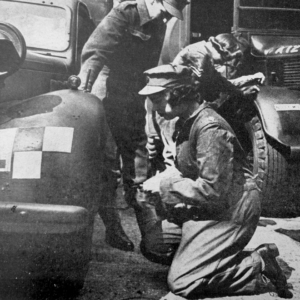
    The then-princess passed a military driving test and learned how to read maps, change a tire, and how to dismantle and rebuild an engine. She drove and maintained Austin K2/Y ambulances and “Tilly” trucks, and was the first woman from the Royal Family to be employed as a full-time active member of the women’s service.

    Queen Elizabeth II kneeling along the side of a car

    Princess Elizabeth learning basic car maintenance as a Second Subaltern in the Auxiliary Transport Service (ATS), April 1945. (Photo Credit: Daily Mirror / Mirrorpix / Getty Images)
    While she received the most attention, Elizabeth II wasn’t the only high-profile recruit to the service. British Prime Minister Winston Churchill’s daughter, Mary, also served in the ATS throughout the duration of World War II

  • Serena Williams gets candid as she tries to slip into denim Valentino skirt as a ‘goal’ five months after giving birth… but is unable to get it over famous derriere: ‘Houston, we got a problem’

    Serena Williams gets candid as she tries to slip into denim Valentino skirt as a ‘goal’ five months after giving birth… but is unable to get it over famous derriere: ‘Houston, we got a problem’

    Serena Williams has a goal in sight in her effort to lose all of that baby weight, which comes five moths after she and husband Alex Ohanian welcomed their second daughter to the family.

    ‘I got this cool Valentino skirt when I was pregnant and I was like, ‘I’m gonna be able to fit this when I don’t have a belly,’ the tennis legend, 42, revealed, while standing in front of a mirror in her bathroom.

    ‘I can’t fit it,’ she confessed before making an effort of two to pull the skirt on.

    While starting to sound discouraged, Williams began to try and slip both legs into the prized garment: ‘But this is my goal. Honestly, I should’ve been able to fit it by now, but I ran into some, um… I got distracted for about a month.’

    The seven-time Wimbledon champion admitted she about a month behind in reaching her goal, just as she turned to her side in front of mirror that showed her derriere sticking out over the waistline.

    The Tennis legend said she was given the skirt when she was pregnant and put it aside for when she loses all of her baby weight

    The seven-time Wimbledon champion turned to the side in front of her bathroom mirror to reveal her derriere is getting in the way of a perfect fit

    ‘We got a ways to go,’ she confessed with a sense of humor, ‘Houston we have a problem.’

    Knowing she has the ability to focus and hit the gym hard to get back into top shape, the Michigan native, who grew up in Southern California, set a new goal.

    ‘Okay, I feel like if I go to the gym and get fit I will be able to in it,’ she said with some hesitancy, which she showed by making a funny, not so confident look on her face.

    The clip ended with a shot of the denim skirt sitting on top of a dresser with a message to her 17.1 million Instagram fans and followers: ‘back to the drawer…. for now!’

    In another example of her sense of humor, Williams captioned the video ‘The Diary of a Denim skirt (part 1) #valentino.’

    Williams and Alexis Ohanian fell head over heels for one another in 2015 when they met by chance while staying at the same hotel in Rome, Italy.

    They began dating soon after and were going strong for more than year when Ohanian pulled out the romance card and proposed to the tennis legend in December 2016 at the very same hotel and table where they first met.

    That came about two months after the birth of their first daughter, Olympia, now six.

    'I got this cool Valentino skirt when I was pregnant and I was like, 'I'm gonna be able to fit this when I don't have a belly,' Williams revealed, while standing in front of a mirror in her bathroom

    The retired tennis icon started out good, getting her first leg in

    She stared to have some problems when she got the second leg in the skirt

    While starting to sound discouraged, Williams tried to get the skirt over her booty

    'Honestly, I should've been able to fit it by now, but I ran into some, um... I got distracted for about a month,' she admitted in front of the camera

    The mother of two, who had her long locks lightened and in braids, started to get discouraged

    The couple ended up welcoming their second daughter, a baby girl named Adira, this past August.

    Basically, that breaks down to five months since Williams gave birth to their second child.

    Ohanian is an internet entrepreneur and investor best known as the co-founder and former executive chairman of the social media site Reddit along with Steve Huffman and Aaron Swartz.

    Williams got animated when she realized the skirt wasn't going to fit just yet: 'We got a ways to go,' she confessed with a sense of humor, 'Houston we have a problem'

    The Michigan native said she's going to use the skirt as a motivation to finish getting back into shape, which comes only five moths after she gave birth to daughter Adira

    The clip ended with a shot of the denim skirt sitting on top of a dresser with a message to her 17.1 million Instagram fans and followers: 'back to the drawer.... for now!'

    Williams and husband Alex Ohania, 40, have been married since 2016, and are the proud parents of daughters Olympia, six, and Adira, five months

    He also co-founded the early-stage venture capital firm Initialized Capital, helped launch the travel search website Hipmunk, and started the social enterprise Breadpig.

    As for Williams, she is widely regarded as one of the greatest tennis players of all time after having a career where she was ranked number one in the world by the Women’s Tennis Association (WTA) for 319 weeks, and finishing as the year-end number one five times.

    She retired in September 2022 with 23 Grand Slam women single’s titles, which is the most in the Open Era, and the second-most of all time.

    Serena Williams also has the distinction of being the highest-earning woman athlete of all time.

  • Vast DNA Analysis of Hundreds of Vikings Reveals They Weren’t Who We Thought

    Vast DNA Analysis of Hundreds of Vikings Reveals They Weren’t Who We Thought

    Vikings DNA Analysis

    Vast DNA Analysis of Hundreds of Vikings Reveals They Weren’t Who We Thought

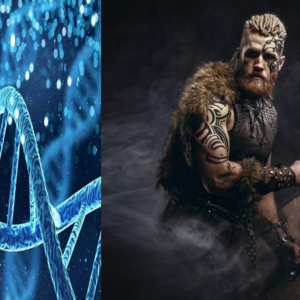
    A fascinating DNA study of more than 400 Viking skeletons has just re-written history. Today we know with certainty some Vikings were not those who we previously thought.

    A Viking warrior.

    Scientists have examined skeletons scattered across Europe and Greenland and cutting-edge DNA sequencing sheds new light on the history of Vikings.

    The results of the six-year research project led by Professor Eske Willerslev, a Fellow of St John’s College, University of Cambridge, and director of The Lundbeck Foundation GeoGenetics Centre, University of Copenhagen reveals:

    Skeletons from famous Viking burial sites in Scotland were actually local people who could have taken on Viking identities and were buried as Vikings.

    Many Vikings actually had brown hair not blonde hair.
    Viking identity was not limited to people with Scandinavian genetic ancestry. The study shows the genetic history of Scandinavia was influenced by foreign genes from Asia and Southern Europe before the Viking Age.
    Early Viking Age raiding parties were an activity for locals and included close family members.
    The genetic legacy in the UK has left the population with up to six percent Viking DNA.

    “We have this image of well-connected Vikings mixing with each other, trading and going on raiding parties to fight Kings across Europe because this is what we see on television and read in books—but genetically we have shown for the first time that it wasn’t that kind of world.

    Our Perception Of Vikings Have Changed

    This study changes the perception of who a Viking actually was—no one could have predicted these significant gene flows into Scandinavia from Southern Europe and Asia happened before and during the Viking Age,” Professor Eske Willerslev said in a press statement.

    The word Viking comes from the Scandinavian term ‘vikingr’ meaning ‘pirate’. The Viking Age generally refers to the period from AD800, a few years after the earliest recorded raid, until the 1050s, a few years before the Norman Conquest of England in 1066.

    Norse-Viking invasions – Kingdom of Canute – Cnut The Great was England’s Danish King and ruler of one Of the largest Nordic Empires

    The Vikings changed the political and genetic course of Europe and beyond: Cnut the Great became the King of England, Leif Eriksson is believed to have been the first European to reach North America – 500 years before Christopher Columbus – and Olaf Tryggvason is credited with taking Christianity to Norway.

    Many expeditions involved raiding monasteries and cities along the coastal settlements of Europe, but the goal of trading goods like fur, tusks and seal fat was often the more pragmatic aim.

    “We didn’t know genetically what they actually looked like until now,” said Willerslev. “We found genetic differences between different Viking populations within Scandinavia which shows Viking groups in the region were far more isolated than previously believed. Our research even debunks the modern image of Vikings with blonde hair as many had brown hair and were influenced by genetic influx from the outside of Scandinavia.”

    The international team sequenced the whole genomes of 442 mostly Viking Age men, women, children, and babies from their teeth and petrous bones found in Viking cemeteries. They analyzed the DNA from the remains from a boat burial in Estonia and discovered four Viking brothers died the same day.

    The scientists have also revealed male skeletons from a Viking burial site in Orkney, Scotland, were not actually genetically Vikings despite being buried with swords and other Viking memorabilia.

    There wasn’t a word for Scandinavia during the Viking Age – that came later. But the study shows that the Vikings from what is now Norway traveled to Ireland, Scotland, Iceland, and Greenland.

    The Vikings from what is now Denmark traveled to England. And Vikings from what is now Sweden went to the Baltic countries on their all-male ‘raiding parties’.

    “We carried out the largest ever DNA analysis of Viking remains to explore how they fit into the genetic picture of Ancient Europeans before the Viking Age,” said co-first author Dr. Ashot Margaryan from the University of Copenhagen. “The results were startling and some answer long-standing historical questions and confirm previous assumptions that lacked evidence.

    “We determined that a Viking raiding party expedition included close family members as we discovered four brothers in one boat burial in Estonia who died the same day. The rest of the occupants of the boat were genetically similar suggesting that they all likely came from a small town or village somewhere in Sweden.”

    A mass grave of around 50 headless Vikings from a site in Dorset, UK. Some of these remains were used for DNA analysis.

    DNA from the Viking remains were shotgun sequenced from sites in Greenland, Ukraine, the United Kingdom, Scandinavia, Poland and Russia.

    “We found that Vikings weren’t just Scandinavians in their genetic ancestry, as we analyzed genetic influences in their DNA from Southern Europe and Asia which has never been contemplated before,” said co-first author Professor Martin Sikora form the University of Copenhagen.

    “Many Vikings have high levels of non-Scandinavian ancestry, both within and outside Scandinavia, which suggest ongoing gene flow across Europe.”

    The team’s analysis also found that genetically Pictish people ‘became’ Vikings without genetically mixing with Scandinavians. The Picts were Celtic-speaking people who lived in what is today eastern and northern Scotland during the Late British Iron Age and Early Medieval periods.

    “Individuals with two genetically British parents who had Viking burials were found in Orkney and Norway,” said co-first author Dr. Daniel Lawson from the University of Bristol. “This is a different side of the cultural relationship from Viking raiding and pillaging.”

    How Vikings Changed Europe

    The Viking Age altered the political, cultural, and demographic map of Europe in ways that are still evident today in place names, surnames, and modern genetics.

    “Scandinavian diasporas established trade and settlement stretching from the American continent to the Asian steppe,” said co-author Professor Søren Sindbæk from Moesgaard Museum in Denmark.

    “They exported ideas, technologies, language, beliefs, and practices and developed new socio-political structures. Importantly our results show that ‘Viking’ identity was not limited to people with Scandinavian genetic ancestry. Two Orkney skeletons who were buried with Viking swords in Viking style graves are genetically similar to present-day Irish and Scottish people and could be the earliest Pictish genomes ever studied.”

    The Vikings were the lords of the oceans. One of the main reasons behind Vikings’ success to reach distant lands lies in their remarkable longships. The Vikings’ ships were the greatest technical and artistic achievement of the European Dark Ages. Without these great ships, the Viking Age would never have happened.

    It’s Time To Re-Write History Books

    “This is the first time we can take a detailed look at the evolution of variants under natural selection in the last 2,000 years of European history,” said co-first author Professor Fernando Racimo from the University of Copenhagen.

    “The Viking genomes allow us to disentangle how selection unfolded before, during and after the Viking movements across Europe, affecting genes associated with important traits like immunity, pigmentation and metabolism. We can also begin to infer the physical appearance of ancient Vikings and compare them to Scandinavians today.”

    The genetic legacy of the Viking Age lives on today with six per cent of people of the UK population predicted to have Viking DNA in their genes compared to 10 per cent in Sweden.

    “The results change the perception of who a Viking actually was. The history books will need to be updated,” said Willerslev.

  • ‘Little Sister Serena Williams Told Me..’- Venus Williams Lays Bare Her Tennis Goals for the Year

    ‘Little Sister Serena Williams Told Me..’- Venus Williams Lays Bare Her Tennis Goals for the Year

    Venus Williams surprised her fans by announcing her upcoming plans to attend professional tournaments. Williams suffered an injury while playing against Elina Svitolina at the center court in Wimbledon last July. After that, she had to pause for the rest of the season. Now once again the world’s former number one tennis star revealed her plans for this season.


    Now fans know well that Venus Williams is not a contender for quitting. This forty-three-year-old tennis star still amazes fans with good performance in professional tournaments. That is why Venus Williams’s injury update saddened her fans. However, in her latest update, Venus Williams revealed her plans for this season by ruling out her farewell.

    ‘ I am not allowed to quit’ – Tennis legend Venus Williams is returning after injury

    A reliable tennis source recently tweeted a clip showcasing Venus Williams’ message for her fans. In this clip, Venus Williams spilled the beans about her future tennis plans. She said- “One of my big goals is to play the United States…  to play in Miami Open and to play Indian Wells. I have not played this since 2019 due to injuries. It’s a long time. These next one’s gonna be in 2024. It’s a lot of years not to play at home. So that’s of course one of my big goals in horizon is to be there prepare to do that. Amongst many other goals in the court too and my little sister Serena told me I am not allowed to quit. And of course I will never quit but it’s the mandate but she said no. So I will be back on the court.

    https://twitter.com/VeeSTARWilliams/status/1751320923397877799?ref_src=twsrc%5Etfw%7Ctwcamp%5Etweetembed%7Ctwterm%5E1751320923397877799%7Ctwgr%5Eadbb1c7d29206b5f0aa4cea0fa31fadb1de74e64%7Ctwcon%5Es1_&ref_url=https%3A%2F%2Fwww.essentiallysports.com%2Fwta-tennis-news-little-sister-serena-williams-told-me-venus-williams-lays-bare-her-tennis-goals-for-the-year-ahead-as-she-rules-out-a-farewell%2F

    Sharing the clip, this source wrote- “Vee is planning on returning to Indian Wells and The Miami Open! It has been 5 years since the last time she has played there. It will be so refreshing seeing Vee grace those courts again.” Venus Williams’s message surely brought a lot of hope and cheer among her fans.

    Venus Williams, who is known for her indomitable spirit had to rest after her injury at the Wimbledon last year. She said- “I tried my best to recover for the US Open. I did not reach my form so now I am just resting until I get back,  am targeting March, that’s when the tournaments go back to the States, so my goal is to be up and running when tournaments come back to the U.S.”

    Venus Williams’ message brought much hope to her fans. Despite her injury, this tennis legend is aiming to be back on the court with her full spirit. So, what is your opinion on Venus Williams’s plans for the 2024 Miami Open and Indian Wells?


  • The reason why Vikings Had Terrible Teeth

    The reason why Vikings Had Terrible Teeth

    The seafaring Scandinavian warriors suffered from painful cavities and tooth abscesses. Still, their dental health was in some ways better than ours.

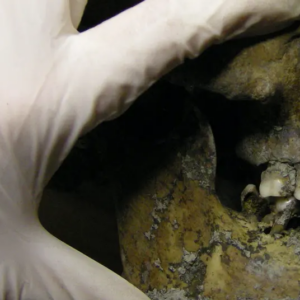
    Examination of Viking jaw and teeth.CAROLINA BERTILSSON, CC-BY 4.0

    At the height of the Viking Age, seafaring Scandinavian warriors reigned supreme in northern Europe and beyond. Yet even as they were terrorizing, say, the British Isles, they were losing the fight against oral bacteria. As it turns out, many Vikings suffered from cavities, plaque buildup, and tooth infections, and they employed various strategies to lessen the pain.

    Several studies have examined the dental health of Vikings, including one published in December 2023 in the journal PLOS One. For that study, a research team looked at the skeletal remains of 171 Vikings who had been buried in the 10th through 12th centuries outside Varnhem Abbey, the site of the oldest stone church in Sweden.

    Life of a Viking

    Lead author Carolina Bertilsson, a practicing dentist and associate researcher at the University of Gothenburg, essentially gave each set of Viking teeth a routine checkup. She and two dental students used a bright light, a round dental mirror, and a soft toothbrush to inspect 3,293 total teeth, and then X-rayed some of them to confirm their findings.

    Among Viking children, they couldn’t locate a single cavity, a far cry from today, where even in Sweden—which Bertilsson calls “one of the countries in the world with the best dental health” —roughly 20 percent of 6-year-olds have already developed a cavity. (The rate is far higher in the United States.)

    For Viking adults, though, it was a different story. Over 60 percent of those examined had at least one cavity, and one individual was found with a whopping 22 cavities. Bertilsson and her co-authors also found evidence of plaque and tartar buildup, as well as infections that would have caused painful, pus-filled tooth abscesses. “You can see the traces [of these things] even 1,000 years after,” Bertilsson says.

    One Viking woman in her thirties had a tooth infection so severe it may have killed her, either by obstructing her airways or triggering sepsis. “Even today, it’s a serious condition,” Bertilsson says. “You need to use antibiotics. Sometimes you need to go to the hospital to get treatment.”

    Viking Diet Was Rough on Dental Hygiene

    What caused all these dental issues? The Viking diet may be at fault. Medieval Scandinavians ate meat, fish, dairy, vegetables, and hazelnuts, all generally fine for oral health. But they also dined on starchy and sweet foods like bread, porridge, honey, and fruits, and they imbibed beer and mead, which over time can bring about chronic tooth disease.

    Previous research shows that other Viking communities, including in Denmark, Scotland, and on the Swedish island of Gotland, likewise suffered from cavities. Icelandic Vikings, on the other hand, appear to have developed relatively few cavities (though they did experience extensive tooth wear), possibly because they didn’t eat as much starch and natural sugar as their less isolated counterparts.

    The Vikings, renowned for their excellent hygiene, did not take these problems lying down. Bertilsson’s team found evidence that they pulled out rotten teeth, and also used toothpicks—a practice that dates back to the Neanderthals—to dislodge bits of stuck food. More surprisingly, Bertilsson’s team identified two instances in which Vikings apparently dug into a tooth’s pulp chamber, likely to relieve the pain of an infection.

    “Obviously, they didn’t have anesthetics, so it must have hurt a lot,” says Bertilsson, who adds that the Vikings were not previously known to have performed such a procedure.

    (Though unrelated to dental health, some Viking males also filed grooves into their front teeth, possibly as a status or fashion symbol.)

    Medieval Europe: A ‘Bad Time for Teeth’

    Vikings were certainly not unique among medieval Europeans in having dental problems. “It’s a very bad time for teeth,” Sarah A. Lacy, an assistant professor of anthropology at the University of Delaware, who studies ancient teeth, says of the Middle Ages. In fact, she says the oral health of humans first started to worsen around 20,000 years ago, at the peak of the last Ice Age, when shrinking habitable land caused dietary shifts. Primitive dentistry followed not too long after; as early as 13,000 years ago, tar dental fillings were being used in Italy.

    Due to their diets, hunter-gatherers generally had healthy chompers (although there were exceptions, such as a Paleolithic group in present-day Morocco with a fondness for sweet acorns). But when societies transitioned to farming, their teeth usually suffered, and they began looking for additional ways to treat them. For example, scientists have discovered that flint tools were purportedly used to drill into cavity-ravaged molars in Pakistan some 7,500 to 9,000 years ago, whereas a 6,500-year-old beeswax dental filling was unearthed in Slovenia.

    Meanwhile, ancient Mesopotamians (wrongly) blamed tooth worms for dental decay, ancient Egyptians and others used toothpaste, ancient Etruscans fashioned gold crowns and dental bridges, and the Chinese invented the bristle toothbrush. However, modern dentistry dates only to the 18th century, around when the Industrial Revolution ushered in an era of processed flour and sugar that wreaked havoc on peoples’ teeth. Until recently, Lacy says, oral health “just keeps going downhill and downhill over time.”

    Indeed, despite lacking fluoridated toothpaste, toothbrushes, floss and professional dentistry, Viking dental health, particularly for children, in some ways surpassed that of 21st-century humans.

  • Heartbreaking reason why Venus Williams ended tennis season ahead of 2024 return

    Heartbreaking reason why Venus Williams ended tennis season ahead of 2024 return


    Seven-time Grand Slam champion Venus Williams has spoken about her injury issues that led to her not playing after the US Open. Williams said she “really got injured” at Wimbledon where she slipped on the grass during her first-round loss to Elina Svitolina. Williams played three more tournaments in North America. The 43-year-old has revealed plans to return in March.

    Spent the whole summer pretty injured' - Venus Williams reveals why she  ended tennis season ahead of 2024 return - Eurosport

    Venus Williams

    Image credit: Getty Images

    Venus Williams has revealed she shut down her 2023 season after the US Open to give her “knee a chance to heal” after spending most of the summer “pretty injured”.

    Williams, 43, made her return on grass in June after six months out.

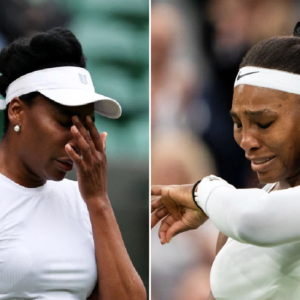
    She played the Libema Open and Birmingham before Wimbledon, where she slipped and appeared to injure her knee in a first-round defeat to Elina Svitolina.

    She continued to play across the North American hard-court summer but ended her season after defeat to qualifier Greet Minnen in the first round of the US Open.

    Looking back at her summer, Williams said on her YouTube channel: “I went to Wimbledon and sadly slipped in the third game of the match and really got injured. I spent the whole summer pretty injured with my knee, like really struggling with it.

    “I didn’t want to miss the US Open, made it there, but definitely not my best performance after so much time off after Wimbledon. So, I decided not to play anymore the rest of the year and just give my knee a chance to heal.

    “What was super interesting is once I just sat down, I felt better, I would say. After the US Open, I would say maybe like four weeks later I got up, I remember it was a Sunday and I got up and I was like ‘Oh my God! I’m not in pain’.

    “Just like pain from sitting around, like my knee hurts, my knee is swelling every day. It’s very difficult to play tennis or any sport when you have like the swelling cycle, when your body won’t stop swelling.”

    Seven-time Grand Slam champion Williams has played sparingly over the last few years as her career enters its twilight.

    She has said that over the summer she couldn’t get the “swelling down” on her knee and also “lost range of motion”.

    Spent the whole summer pretty injured' - Venus Williams reveals why she  ended tennis season ahead of 2024 return - Eurosport

    “With the swelling I was having, I lost range of motion. You lose strength when your knee is swelling, also your muscles don’t activate anymore. So, your muscles are not activating, you can’t train, so you lose muscles. It’s a whole cycle.

    “This is what I was going through in the summer. I couldn’t get my swelling down, I lost range of motion, the nature of my injury was you know, all this stuff. But anyway, I was dealing with all that, so, I decided not to play any more.”

    Williams is set to miss the 2024 Australian Open but has previously revealed plans to return in March, potentially ahead of Indian Wells and the Miami Open.

    “I am targeting March, that’s when the tournaments go back to the States, so my goal is to be up and running when tournaments come back to the US,” she said in October on social media.

  • (Watch) Audie Murphy, the most decorated war hero in the history of the United States reenacts some of his experiences in the European Theater of WWII

    (Watch) Audie Murphy, the most decorated war hero in the history of the United States reenacts some of his experiences in the European Theater of WWII

    Audie Murphy was one of the most famous faces of both the US Army and Hollywood. He valiantly served overseas throughout the Second World War, becoming the most decorated soldier in American history. He followed up his service with a successful career on the big screen, starring in a number of highly-rated films, including one about his own exploits.

    The following are nine facts about the actor and veteran you might not have known.

    Photo Credit: Silver Screen Collection / Getty Images

    He was rejected from the US Navy and Marine Corps

    Bill Mauldin and Audie Murphy as Tom Wilson and Henry Fleming in 'The Red Badge of Courage'

    The Red Badge of Courage, 1951. (Photo Credit: Hulton Archive / Getty Images)

    Following the Japanese attack on Pearl Harbor on December 7, 1941, Audie Murphy was driven to enlist in the US military. He tried to join the Marine Corps, Navy and Army, but was denied by all three due to his being underweight and underage.

    Undeterred, Murphy enlisted the help of his sister to falsify documents to make it appear as though he was older than he actually was. He tried, once again, to join the US Army and this time was accepted.

    Murphy was sent to Camp Wolters, Texas for Basic Training, where he earned his Expert Badge with Bayonet Component Bar and Marksman Badge with Rifle Component Bar. After this, he underwent Advanced Infantry Training at Fort Meade, Maryland.

    Audie Murphy single-handedly held off a company of German troops

    Alexander Patch placing the Medal of Honor around Audie Murphy's neck

    Gen. Alexander Patch presenting Audie Murphy with the Medal of Honor, 1945. (Photo Credit: Bettmann / Getty Images)

    In February 1943, Audie Murphy was deployed to the Mediterranean, and after seeing notable action there was transferred to the European Theater. It was there that he would experience the majority of his wartime service. One notable incident, in particular, resulted in him being presented with the Medal of Honor.

    In January 1945, Murphy was stationed in the Colmar Pocket with his platoon. He and the 3rd Infantry Division were later moved to Holtzwihr, where they encountered a German counterattack. Murphy was made commander of Company B, and, despite being injured, put the wellbeing of his men over his own.

    After the Germans set an M10 tank destroyer ablaze, Murphy ordered his men to retreat to the woods, away from the enemy fire. Alone, with just his M1 Carbine and a radio to direct artillery fire, he mounted the armored vehicle and began firing its .50-caliber machine gun at the advancing troops. He did this for an hour, inflicting 50 casualties.

    Murphy himself suffered yet another injury to one of his legs. Despite being wounded, he returned to his men and led a full-man charge against the Germans. Speaking about Murphy’s bravery, Pvt. Charles Owen recalled, “He saved our lives. If he hadn’t done what he did, the Germans would have annihilated us.”

    The US Army changed how he viewed his name

    Portrait of Audie Murphy

    Audie Murphy, 1950s. (Photo Credit: Silver Screen Collection / Getty Images)

    While he was growing up, Audie Murphy hated his first name. As such, he often went by his middle name, Leon. It had been given to him by one of his older sisters, who had no idea of its meaning in Latin: “lion.” It was a rather fitting name, considering all he achieved during World War II.

    Only when he entered the US Army did Murphy begin to appreciate his first name. In the service, “Leon” was considered a country name, which prompted him to go by either “Audie” or “Murph” for the remainder of his life.

    Awarded every US military combat award for valor – and then some

    Portrait of Audie Murphy

    Audie Murphy with his military decorations. (Photo Credit: Bettmann / Getty Images)
    Audie Murphy is known for being the most decorated soldier in American history. This isn’t a symbolic title, either – he actually earned all the honors bestowed upon him.

    Along with the Medal of Honor, Murphy was presented with the Distinguished Service Cross, the Silver Star with bronze oak leaf cluster, the Legion of Merit, the Bronze Star with “V” Device, the Purple Heart with two bronze oak leaf clusters, the Presidential Unit Citation with First Oak Leaf Cluster, the Army Outstanding Civilian Service Medal and the Texas Legislative Medal of Honor.

    He was also the recipient of a number of campaign medals – the Good Conduct Medal, the American Campaign Medal, the European-African-Middle Eastern Campaign Medal, the World War II Victory Medal, the Army of Occupation Medal with Germany Clasp and the Armed Forces Reserve Medal – and several badges, including the Combat Infantryman Badge, the Marksman Badge with Rifle Component Bar and the Expert Badge with Bayonet Component Bar.

    That’s not all… Those are only the awards presented to him by the US military!

    Murphy also received decorations from the French and Belgians. These included the French Legion of Honor – Grade of Chevalier (Knight), the French Croix de Guerre with Silver Star, the French Croix de Guerre with Palm, the Medal of a Liberated France, the Belgian Croix de Guerre with 1940 Palm and the French Fourragère in Colors of the Croix de Guerre.

    Audie Murphy suffered from battle fatigue for the rest of his life

    Audie Murphy as Capt. Bruce Coburn in '40 Guns to Apache Pass'

    40 Guns to Apache Pass, 1967. (Photo Credit: Silver Screen Collection / Hulton Archive / Getty Images)
    While known back in the day as “battle fatigue,” Audie Murphy suffered from what today we’d call post-traumatic stress disorder (PTSD) as a result of his WWII service. After he returned home, he began to suffer from insomnia and depression, and needed to find a solution. He was prescribed Placidyl, a strong sedative, from a doctor and unknowingly became addicted to it. When he realized the grip the drug had on him, Murphy locked himself in a motel room, without any pills, and spent a week detoxing.

    Unlike many celebrities and veterans of his time, Murphy became an advocate for mental health, particularly in regards to retired servicemen returning home from Korea and Vietnam. He spoke of his own experiences in his advocacy, and even pushed the US government to conduct better research into the toll combat has on the human brain.

    He wanted to make a movie about Desmond Doss’ military service

    Harry Truman placing the Medal of Honor around Desmond Doss' neck

    President Harry Truman presenting Desmond Doss with the Medal of Honor, 1945. (Photo Credit: Bettmann / Getty Images)
    There was once a time Audie Murphy wanted to make a film about another Medal of Honor recipient, Desmond Doss. Awarded the decoration for his actions at Hacksaw Ridge during the Battle of Okinawa, Doss risked his life to treat his injured comrades, even though it meant exposing himself to unrelenting enemy fire. His efforts saved the lives of 75 men.

    Hal B. Wallis, the producer of Casablanca (1942), tried to use Murphy to convince Doss to sell his story to Hollywood. However, the MoH recipient didn’t consider himself a hero, nor did he want “his character being impugned or compromised,” so he turned down the offer. It wasn’t until the release of Hacksaw Ridge in 2016 that Doss’ bravery made it to the big screen.

    Audie Murphy portrayed himself in To Hell and Back (1955)

    Audie Murphy as himself in 'To Hell and Back'

    To Hell and Back, 1955. (Photo Credit: bigpix / MovieStillsDB)
    It’s rare that someone gets a film made about their life, let alone that they get to star as themselves in it. Audie Murphy is one of the few who did, portraying himself in the 1955 movie, To Hell and Back, based on the 1949 autobiography ghostwritten by his friend, David McClure.

    To Hell and Back covers Murphy’s service during the Second World War, and stars the likes of Jack Kelly, Marshall Thompson, Charles Drake, Gregg Palmer and Paul Picerni, among a host of other notable names. It was released on the anniversary of his discharge from the US Army, and received generally positive reviews.

    Despite being poor, there were still products he wouldn’t promote

    Portrait of Audie Murphy

    Audie Murphy, 1950. (Photo Credit: Silver Screen Collection / Getty Images)
    In the last few years of his life, Audie Murphy struggled financially. He lost several hundred thousand dollars in an Algerian oil deal, and the Internal Revenue Service (IRS) had come after him for unpaid taxes.

    While the majority of actors would have accepted any job that came their way, he refused to go against his morals. Murphy was offered a number of cigarette and alcohol commercials, but turned down each one, as he didn’t want to set a bad example for his young fans.

    Audie Murphy is buried at Arlington National Cemetery

    Rows of gravestones at Arlington National Cemetery

    Audie Murphy’s gravestone at Arlington National Cemetery. (Photo Credit: Carol M. Highsmith / Buyenlarge / Getty Images)
    While traveling to a business deal on May 28, 1971, Audie Murphy was killed when the private plane he was in crashed into the side of a mountain in Roanoke, Virginia. Given his prior military service, he was granted a plot in Arlington National Cemetery, where he was buried with full military honors on June 7.

    Given his status, Murphy’s gravestone became a high-traffic area, becoming the second-most visited at Arlington, after that of President John F. Kennedy. The amount of visitors prompted the constructed of a flagstone walkway, and those wishing to visit the grave can find it in Section 46, across from the Memorial Amphitheater.

  • HMS Victory – The World’s Oldest Warship Still In Commission: Discover the fascinating – and lengthy – history of one of the most incredible ships ever commissioned by the British Royal Navy

    HMS Victory – The World’s Oldest Warship Still In Commission: Discover the fascinating – and lengthy – history of one of the most incredible ships ever commissioned by the British Royal Navy

    Photo Credit: Hulton-Deutsch Collection / CORBIS / Getty Images

    Photo Credit: Hulton-Deutsch Collection / CORBIS / Getty Images

    At well over 200 years old, the HMS Victory is undeniably one of the most famous ships in the world. Serving as the flagship for Lord Horatio Nelson during the Battle of Trafalgar, she’s been well-preserved, despite her age, thanks to the dedication of British citizens numerous times throughout her past.

    Discover the fascinating – and lengthy – history of one of the most incredible ships ever commissioned by the British Royal Navy.
    Construction of the HMS Victory

    Painting of the HMS Victory

    HMS Victory, 1900. (Photo Credit: Unknown Author / Wikimedia Commons / Public Domain)
    The HMS Victory was built during the 18th century as one of 12 first-rate ships designed to carry at least 100 guns. Her keel was laid down on July 23, 1759, and she was given her name in October of the following year. The vessel’s frame was constructed by 150 workmen, who used the wood of a whopping 6,000 trees, the majority of them oak.

    At the time, the Seven Years’ War was going in England’s favor, so there wasn’t a rush to complete construction. It wasn’t until May 7, 1765 that Victory was finally launched.

    A few problems soon became obvious. First, the ship’s lower gunports were only 1.4 meters above the water, and she tipped slightly to the right. The latter problem was fixed, but it was determined that, if Victory was fighting in rough water, then the lower guns couldn’t be used, as they would flood the vessel.

    As the Seven Years’ War was over by the time of her launch, Victory wasn’t put into service until the American Revolution, sitting for years in the River Medway.

    HMS Victory‘s specifications

    Chart showing the inner makeup of the HMS Victory in 1805

    HMS Victory, as she was equipped in 1805. (Photo Credit: Photo12 / Universal Images Group / Getty Images)
    The HMS Victory was certainly a sizeable ship at 227 feet, six inches in length – her gundeck alone measured 186 feet. Her depth of hold was more than 21 feet, with a draught of just over 28 feet. Arguably the most visually impressive feature was her sails, and it’s no wonder why – they totaled 6,510 square yards, allowing for a top speed of 11 knots. She could also hold a crew of roughly 850 men.

    Victory‘s armaments changed throughout the years, though they were always made up of various cast iron cannons. Initially, she had thirty 42-pound cannons on the lower deck, twenty-eight 24-pound long guns on the middle deck, thirty 12-pound cannons on the upper deck, and 12 six-pound cannons split between the quarterdeck and the forecastle. The 42-pound ones were swapped back and forth with 32-pound cannons, depending on what was available at the time.

    The HMS Victory makes a name for herself in combat

    British Royal Navy sailors standing along the side of the HMS Victory

    British Royal Navy sailors from the HMS Victory stand guard in front of the ship for the 200th anniversary of the Battle of Trafalgar, June 2005. (Photo Credit: Jamie Wiseman / AFP / Getty Images)
    The HMS Victory quickly became known as an excellent vessel at sea, taking on the role of flagship for many well-known British admirals. She was used during the First and Second Battles of Ushant, the Siege of Gibraltar and the Battle of Cape St. Vincent.

    Following this last engagement, she was sent back to England to be assessed for seaworthiness, and naval architect Sir Robert Seppings found Victory had significant weakness in her stern. As such, she was declared unfit for service and left in the Chatham Dockyard, until she was turned into a hospital ship for French and Spanish prisoners of war (POWs) in December 1798.

    Ultimately, the decision was made to recondition Victory and bring her back into service, after the HMS Impregnable (1810) ran aground, leaving the British Admiralty without a high-quality, three-decked ship. As well as fresh paint, four gun ports were added, her magazine was lined with copper and the figurehead was replaced.

    Lord Horatio Nelson

    Military portrait of Lord Horatio Nelson

    Lord Horatio Nelson, 1798. (Photo Credit: The Print Collector / Getty Images)
    When her remodeling was complete, the HMS Victory was transferred to then-Vice-Adm. Horatio Nelson, who raised his flag on May 18, 1803, making Samuel Sutton captain. Nelson was the commander-in-chief of the Mediterranean Fleet and sent much of his vessels, including Victory, to blockade the French for 18 months. Under Adm. Pierre-Charles Villeneuve, the enemy ships escaped the British in March 1805.

    The fleet gave chase, traveling to the West Indies. Nelson, aboard Victory, waited for them to leave Cádiz Harbor and sail into the Mediterranean. What ensued was the most famous of Victory’s engagements: the Battle of Trafalgar. It took place off of Cape Trafalgar against the same French and Spanish fleet the British had been chasing during the previous months.

    Battle of Trafalgar

    Illustration of the Battle of Trafalgar

    Redoutable (1795) engaging the HMS Victory during the Battle of Trafalgar, October 1805. (Photo Credit: Hulton Archive / Getty Images)
    Before the battle broke out, Lord Nelson had the HMS Victory use flag signals to display his most famous line, “England expects that every man will do his duty.” He then commanded his fleet of 27 ships to separate into two columns, forging forward to break the enemy line. Although conditions weren’t quick, they were able to reach and engage the belligerents, with Victory taking on two vessels.

    It seems only appropriate that the English flagship would be the one to take on her French counterpart, Bucentaure, as well as Redoutable (1795). Victory’s guns tore a hole in the side of the former, and the amount of cannon fire caused between 300 and 450 casualties aboard the French vessel.

    A sniper positioned on the mast of Redoutable managed to deliver a fatal shot to Nelson, who died before the battle concluded. Trafalgar was a win for the British, however, and Nelson’s men carried the admiral’s body home in a vat of liquor.

    The HMS Victory is taken out of the fight

    HMS Victory drydocked

    HMS Victory, 1926. (Photo Credit: Fox Photos / Getty Images)
    The HMS Victory sailed for a few more years, to help with the British continental blockade during the Napoleonic Wars. Despite her impressive display at Trafalgar, the Admiralty decided she was too old to be used any longer. She was demoted from first to second-rate, and used as a troopship, a floating depot and, finally, a prison ship.

    As her condition worsened, Victory was taken to Portsmouth Harbour, where she served as the flagship for the port admiral, a non-sailing role. By 1831, it was decided that her time had come to an end and she was to be broken up and used to repair other vessels.

    This, however, didn’t sit well with the public. After significant discontent, Victory was opened to tours which, inadvertently, made her condition worse. On numerous occasions, she almost sank into the harbor, once because she was hit by the HMS Neptune (1874). Another was the result of the vessel springing a leak

    Save the Victory Campaign

    HMS Dreadnought (1906) sailing by the HMS Victory

    HMS Dreadnought (1906) passing the HMS Victory. (Photo Credit: Arkivi / Getty Images)
    By 1886, the HMS Victory was in such bad shape that Sir Edward Seymour declared, “A more rotten ship than she had become probably never flew the pennant. I could literally run my walking stick through her sides in many places.” A few years later, another observer called her condition “nothing short of an insult.”

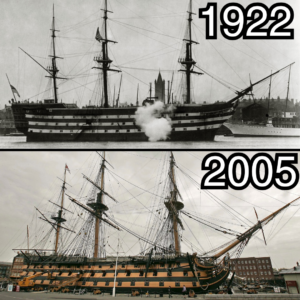
    In 1921, the vessel was saved yet again by the public, who started the Save the Victory Campaign. Thanks to the outcry, as well as a sizeable donation from Sir James Caird, Victory was taken to a drydock and restored to how she looked under the command of Lord Nelson. It took years for the work to be completed, and she was only made worse by the Luftwaffe dropping a bomb on her. It wasn’t until the 200th anniversary of the Battle of Trafalgar, in 2005, that she was finally finished.

  • Iconic photo of Serena Williams with Kobe Bryant, LeBron James, and rest of US basketball team at Mcdonald’s during 2012 Olympics resurfaces

    Iconic photo of Serena Williams with Kobe Bryant, LeBron James, and rest of US basketball team at Mcdonald’s during 2012 Olympics resurfaces


    Serena Williams, Kobe Bryant, and LeBron James at the 2012 London Olympics

    An iconic photo of Serena Williams alongside Kobe Bryant, LeBron James, and the rest of the USA men’s basketball team at a local McDonald’s during the 2012 London Olympics recently resurfaced online.

    The former World No. 1 and 23-time Grand Slam Champion created history that year, winning her first-ever singles gold medal at the Olympics with a victory over Maria Sharapova in the summit clash. She defeated Jelena Jankovic, Urszula Radwanska, Vera Zvonareva, Caroline Wozniacki, and Victoria Azarenka en route to the final.

    Williams also won the doubles gold alongside sister Venus Williams that year, successfully defending their title by defeating Czech Republic’s Andrea Hlaváčková and Lucie Hradecká in the final, 6–4, 6–4. It was their third Olympic doubles gold medal together (previously in 2000 and 2008).

    Celebrating her double gold, Williams shared a photo alongside other American Olympians in London at the fast-food restaurant. Decorated basketball stars such as Kobe Bryant, LeBron James, Kevin Durant, Andre Iguodala, and James Harden could be seen in the photograph as well.

    The basketball team also won gold at the 2012 Olympics, beating Spain 107-100 in the final.

    The iconic photo, shared by Williams at the time via the video-sharing app Mobli, resurfaced on social media now while some fans were reminiscing about her glory days before retirement. The 23-time Grand Slam champion hung up her racquet in 2022, playing her final tournament at the US Open.

    Serena Williams only player in history to win a Career Golden Slam in singles and doubles

    Serena Williams at the 2012 US Open - Getty Images
    Serena Williams at the 2012 US Open – Getty Images

    Serena Williams is the only player in history to have completed a Career Golden Slam in both singles and doubles competitions – winning all four Grand Slams and the Olympic gold.

    Serena and her sister Venus Williams together won Roland Garros and the US Open in 1999 and then Wimbledon and the Sydney Olympics in 2000. They completed the Golden Slam at the Australian Open in 2001.

    In singles, Williams completed the Career Grand Slam in 2003, with her first wins at the four Slams coming in: Australian Open (2003), French Open and Wimbledon (2002) and the US Open (1999). Then, by winning the Olympic gold in London in 2012, she achieved the Golden Slam.

  • Serena Williams Passes on Her Quirky Wisdom to 6-Year-Old Daughter Olympia at an Unexpected Location

    Serena Williams Passes on Her Quirky Wisdom to 6-Year-Old Daughter Olympia at an Unexpected Location

    With 23 Grand Slam singles titles under her belt, Serena Williams established herself as one of the tennis ‘GOATs’ on the women’s tour. The American tennis legend has already mesmerized fans by showcasing her stellar on-court skills throughout her illustrious competitive journey. But now that she has put down her racket, the 42-year-old sporting icon has diligently taken up an off-court endeavor.


    The ‘Queen of the Court’ recently brought to light her latent talent for singing by belting out a vintage tune for her kid. While ardently following her newfound interest in singing, Williams has also decided to teach her little daughter Olympia a retro song at an unexpected location.

    Serena Williams takes special mother-daughter music time with Olympia

    After her retirement, the former tennis ace seldom misses providing an update on day-to-day off-the-court activities. Even her recent mother-daughter session was not kept hidden from the public lens on social media. Serena Williams and her daughter Olympia were sighted together in the car as they were jamming the retro song “Car Wash” by the American soul and R&B band Rose Royce.

    While singing the chorus of the track, “At the car wash yeah, yeah… ,’ the 23-time singles Grand Slam champion wanted her daughter to repeat the same. A video clip of the mother-daughter singing session was recently brought to light by a fan page, ‘venusxserena’, which added the caption, “🎶𝐀𝐭 𝐭𝐡𝐞 𝐜𝐚𝐫 𝐰𝐚𝐬𝐡 🎶𝐯𝐢𝐚 𝐒𝐞𝐫𝐞𝐧𝐚’𝐬 𝐓𝐢𝐤𝐭𝐨𝐤”

    While the former American tennis player was trying to teach Olympia the vintage track, her daughter was busy eating her food. Consequently, Olympia had to face the wrath of her tennis star mother, who was heard saying, “You can’t be eating when we are trying to work on our singing.” Just like Serena, her husband, Alexis Ohanian, has also imparted a skill to their daughter.

    Olympia has learned the art of baking from her father

    The American internet entrepreneur is diligently following the tradition of baking ‘Papa Pancakes’ on Sundays. Alexis Ohanian has learned it from his dad, and now he is doing his best to impart his artistic baking skills to his little kid. During his pancake session, the internet mogul is often accompanied by Olympia, as he recently took it to the ‘next level’ for his daughter.

    While sharing a video clip of his recent culinary creation, Ohanian opened up about how there is always a ‘chance to improve.’ He tweeted, “Sunday means Papa Pancakes 🥞 a tradition my own dad did every Sunday for my entire childhood. I had to take it next level for Olympia with squeeze bottles. 😤 Always a chance to improve.”