Author: Ms Bich

  • Nakano Takeko: The Fearsome Female Warrior Who Was One of the Last Samurai

    Nakano Takeko: The Fearsome Female Warrior Who Was One of the Last Samurai

    In the annals of Japanese history, few figures stand as tall as Nakano Takeko, a remarkable woman who defied societal norms to become a fearsome warrior. Hers is a story of unwavering determination and a commitment to protecting her homeland. Her legacy as a skilled martial artist and a pivotal leader in Japan’s rich samurai heritage continues to captivate audiences to this day.

    Nakano Takeko

    Portrait of Nakano Takeko

    Nakano Takeko. (Photo Credit: Hokaiji Temple / Wikimedia Commons / Public Domain)
    Nakano Takeko was born into a well-respected samurai family in April 1847. From an early age – sources indicate she began as early as six years old – she was exposed to the ways of combat and weaponry. Her teacher, Akaoka Daisuke, also taught her the literary arts and calligraphy.

    After completing of her training, Nakano became certified to teach these same skills, allowing her to obtain a position with the lady of Niwase. She acted as her secretary and taught her to wield the naginata, a Japanese pole weapon with a curved blade.

    In 1863, Nakano was adopted by her teacher. Alongside him, she continued to teach martial arts, eventually finding herself in the Aizu Domain in February 1868. There, she taught naginata to other women and famously captured men peeping on the women’s bathhouse.

    However, her fate changed when she became embroiled in the Boshin War,

    Fighting the Boshin War

    Actress dressed as an Onna-musha

    Actress dressed as an Onna-musha. (Photo Credit: Pictures From History / Universal Images Group / Getty Images)
    The Boshin War marked the end of the Tokugawa shogunate and the restoration of imperial rule in Japan. During this time, the Aizu Domain sided with the Tokugawa forces against the imperial Meiji. The Aizu samurai found themselves drawn into combat.

    Even though she was immensely qualified, Nakano Takeko wasn’t supposed to fight, given she was a woman. This didn’t stop her. At only 21 years old, she put together an ad hoc group of female warriors (Onna-musha) called the Jōshitai. Alongside her 40-year-old mother and 16-year-old sister, several other women joined.

    Despite Tokugawa commanders refusing to let them join any official ranks, the Jōshitai fought fiercely alongside the men and, eventually, Nakano was designated the leader of their force, under Furuya Sakuzaemon.

    A warrior’s death

    14th-century naginata laid out on a red table

    Collection of 14th-century naginata. (Photo Credit: Universal History Archive / Universal Images Group / Getty Images)

    In October 1868, Nakano Takeko led her women in a charge against enemy forces at Yanagi Bridge. They were equipped with only their naginata, while the Meiji troops had firearms.

    When they got close enough for the men to realize they were shooting at women, the commander ordered them not to be killed – a big mistake. This gave the Jōshitai the opening they needed to kill many of them before they, again, came under attack. Accounts say Nakano took down at least five soldiers, but her luck ran out when she was hit in the chest with a bullet.

    Aware the imperial forces would mutilate the bodies of fallen Aizu warriors to count them, Nakano urged her sister to cut off her head to prevent such a humiliation. Her last wish was honored, and she passed away with her dignity intact. Her head was buried at the family temple, where a monument was eventually erected.

    More from us: Zheng of Qin: The Chinese Emperor Who Escaped Assassination By Running Around a Pillar

    Nakano and the Jōshitai left behind a revered legacy as some of the last samurai.

    Rosemary Giles

    Rosemary Giles is a history content writer with Hive Media. She received both her bachelor of arts degree in history, and her master of arts degree in history from Western University. Her research focused on military, environmental, and Canadian history with a specific focus on the Second World War. As a student, she worked in a variety of research positions, including as an archivist. She also worked as a teaching assistant in the History Department.

    Since completing her degrees, she has decided to take a step back from academia to focus her career on writing and sharing history in a more accessible way. With a passion for historical learning and historical education, her writing interests include social history, and war history, especially researching obscure facts about the Second World War. In her spare time, Rosemary enjoys spending time with her partner, her cats, and her horse, or sitting down to read a good book.

    linkedin.com/in/rosemary-giles

  • Serena Williams Shares Sweet Video of Daughter Olympia Giving Little Sister Adira a ‘Work Out’

    Serena Williams Shares Sweet Video of Daughter Olympia Giving Little Sister Adira a ‘Work Out’

    The 23-time grand slam champion shared a video of her older daughter helping out her baby sister “work out” on Christmas day.


    Serena Williams and daughters Alexis and Adira. Photo: Serena Williams/ Instagram

    Serena Williams is teaching her daughters how to train together.

    On Christmas, the tennis pro, 42, shared an Instagram video of her daughter, Olympia Ohanian, 6, helping her 4-month-old baby sister Adira River “work out.”

    Williams shares daughters Olympia and Adira with husband Alexis Ohanian, 40.

    In the photo, Williams speaks to her eldest daughter in French as she lifts and lowers the infant and shows her how to “work out.”

    “Doucement, doucement … comme ça,” Williams is heard telling Olympia (meaning “gently, gently … like that”). In the video, Olympia (wearing a ruffled red dress) carefully lifts her baby sister (in holiday jammies) from the ground and lowers her back down, holding her hands the whole time — for a sweet version of baby sit-ups.

    “We all work out in this family. @adiraohanian @olympiaohanian 💪🏿,” wrote Williams of the family moment caught on camera.

    Serena Williams Shares Sweet Video of Daughter Alexis Giving Little Sister Adira a ‘Work Out’

    Serena Williams and daughters Alexis and Adira.Serena Williams/ Instagram

    Last month, in November, the 23-time grand slam champion revealed that Olympia is successfully “navigating” being an older sister to Adira.

    “She loves it,” Williams told Entertainment Tonight at the CFDA Awards. “Adira’s like a tiny little baby, so Olympia just calls her her little sis.”

    Per the outlet, Williams explained that Olympia “prayed for a sister” but revealed she herself was a little “worried” ahead of Adira’s arrival.

    “I was like, ‘OK, I don’t know if I can like anyone as much as I love Olympia,’” Williams said. “I was really nervous about that. But I feel like it all worked out.”

    Alexis Olympia Ohanian Jr. and Adira River Ohanian

    Alexis Olympia Ohanian Jr. and Adira River Ohanian.Alexis Olympia Ohanian Jr. Instagram

    Since the arrival of Williams and Ohanian’s second child, the tennis legend has shared photos of the infant and has opened up about some of the more challenging parts of motherhood.

    In late November, Williams shared a photo cuddling with her baby daughter, Adira. In the photo, Williams holds her daughter against her chest as the little girl is swaddled in a polka-dot blanket.

    “This makes me so happy,” Williams captioned the post.

    Serena Williams and Alexis Olympia during the Auckland Classic tennis tournament in 2020

    Serena Williams and Alexis Olympia during the Auckland Classic tennis tournament in 2020.MICHAEL BRADLEY/AFP/Getty

    The sweet selfie was posted just hours after the sports legend shared another message on X (formerly known as Twitter) telling her followers that she was “not ok today.”

    “I am not ok today. And that’s ok to not be ok. No one is ok every single day. If you are not ok today I’m with you,” she wrote.

    “There’s always tomorrow 😘,” she added. “Love you.”

  • The asteroid that created Earth’s largest crater may have been way bigger than we thought

    The asteroid that created Earth’s largest crater may have been way bigger than we thought

    It was possibly twice the size of the asteroid that wiped out the dinosaurs.

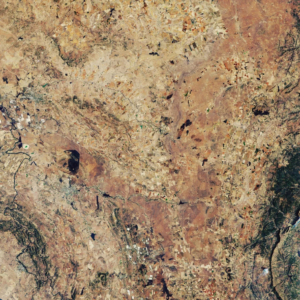
    Two billion years ago, an impactor (most likely an asteroid) crashed into the Earth near present-day Johannesburg, South Africa, forming the largest and oldest known crater on Earth. NASA Earth Observatory image by Lauren Dauphin, using Landsat data from the U.S. Geological Survey.

    It’s a big week for asteroids, and not just because NASA’s DART mission intentionally slammed a spacecraft into an asteroid. An ancient space rock is getting another chance in the spotlight as well.

    At roughly 62 miles (100 kilometers) in diameter, the Vredefort crater, located near the present-day city of Johannesburg, South Africa, is the largest and oldest-known impact crater on the planet. About 2 billion years ago, an impactor (most likely an asteroid) hurtled towards the Earth, forming the giant hole in the ground that was an estimated 111 to 186 miles wide (180 to 300 kilometers) soon after impact. A study published this week in the Journal of Geophysical Research found that the impactor may have been bigger than previously estimated. If so, this flying rock would have had devastating consequences across the entire planet.

    This new research will allow scientists to better simulate impact events on Earth and other planets. “Understanding the largest impact structure that we have on Earth is critical,” Natalie Allen, the paper’s first author and a PhD student at Johns Hopkins University, said in a press release. “Having access to the information provided by a structure like the Vredefort crater is a great opportunity to test our model and our understanding of the geologic evidence so we can better understand impacts on Earth and beyond.”

    The Vredefort crater has eroded over the past 2 billion years, which makes it difficult for scientists to accurately estimate both how large the crater was upon impact, not to mention the size and velocity of the impactor that made the crater. The team conducted simulations to match the updated size of the crater. Their results showed that an impactor would have to be much larger: about 12 to 15 miles in diameter (20 to 25 kilometers) and traveling at a velocity of about 33,500 to 44,000 miles per hour (15 to 20 kilometers per second).

    These new findings show it is possible that it was larger than the asteroid that struck 66 million years ago, causing the extinction of most species of dinosaurs and forming the Chicxulub crater in Mexico. In addition to this mass extinction, Earth was plagued by major effects after the hit, including widespread forest fires, acid rain, and destruction of the ozone layer.

    If the Vredefort crater was created by an even larger and faster moving impactor than the one that formed the Chicxulub crater, the Vredefort impact possibly caused even greater catastrophic global consequences.

    “Unlike the Chicxulub impact, the Vredefort impact did not leave a record of mass extinction or forest fires given that there were only single-cell lifeforms and no trees existed two billion years ago,” Miki Nakajima, an assistant professor of earth and environmental sciences at the University of Rochester, said in a press release. “However, the impact would have affected the global climate potentially more extensively than the Chicxulub impact did.”

    Nakajima added that it’s possible that dust and small particles from the Vredefort impact spread across the planet blocking sunlight, cooling the Earth’s surface. “This could have had a devastating effect on photosynthetic organisms,” he said. “After the dust and aerosols settled—which could have taken anywhere from hours to a decade—greenhouse gases such as carbon dioxide that were emitted from the impact would have raised the global temperature potentially by several degrees for a long period of time.”

    Previous research into this event determined that material from the impactor was ejected as far away as present-day Karelia, Russia. Using a new model, the team determined that the distance of the land mass containing Karelia would have been only about 1,200 to 1,500 miles (2,000 to 2,500 kilometers) from the crater in South Africa—much closer than the roughly 6,176 miles (9.940 kilometers) that separate the two areas are today.

    “It is incredibly difficult to constrain the location of landmasses long ago,” Allen said. “The current best simulations have mapped back about a billion years, and uncertainties grow larger the further back you go. Clarifying evidence such as this ejecta [material thrown out by the asteroid] layer mapping may allow researchers to test their models and help complete the view into the past.”

  • 10 Things They’re Still Not Telling You About Pearl Harbor: These conspiracy theories about the Japanese a:t t a c k in 1941

    10 Things They’re Still Not Telling You About Pearl Harbor: These conspiracy theories about the Japanese a:t t a c k in 1941

    Read on to learn about these conspiracy theories about the Japanese attack at Pearl Harbor in 1941.

    1 / 10

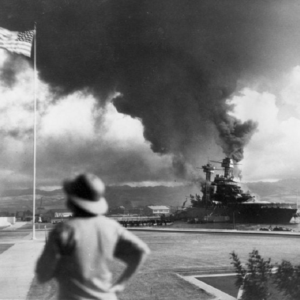
    Various Dec 7, 1941, Pearl Harbor, Hawaii - Uss Phoenix (Cl Burning After Japanese Attack NARA ARCHIVES/SHUTTERSTOCK

    Did the government want the attack to happen?

    On December 7, 1941, Japan attacked the U.S. naval base at Pearl Harbor in Hawaii. The day after, President Franklin D. Roosevelt declared it “a date which will live in infamy,” and Congress passed a declaration of war against Japan. The United States was officially a player in World War II. Still, it was no secret that even prior to the attack, FDR wanted to support Britain against Nazi Germany. The American people shut that down—up to 94 percent of the country opposed an intervention. That’s why some fringe historians argue that the president welcomed the attack from Japan. After all, it riled up the American people and got them ready to fight. Read up on the 16 strangest unsolved mysteries of all time.

    2 / 10

    WWII CASABLANCA CONFERENCE, CASABLANCA, Morocco AP/SHUTTERSTOCK

    Did the United States provoke Japan on purpose?

    On a similar theme, some government officials believe the United States knew exactly what it was doing as it got more and more belligerent in its talks with Japan. “Prior to December 7, it was evident even to me…that we were pushing Japan into a corner,” said Vice Admiral Frank Edmund Beatty Jr., who at the time of the attack was an aide to the Secretary of the Navy Frank Knox, in a 1958 issue of U.S. News and World Report. “I believed that it was the desire of President Roosevelt, and Prime Minister Churchill that we get into the war, as they felt the Allies could not win without us and all our efforts to cause the Germans to declare war on us failed; the conditions we imposed upon Japan—to get out of China, for example—were so severe that we knew the nation could not accept them. We were forcing her so severely that we could have known that she would react toward the United States.”

    3 / 10

    Pearl Harbor Anniversary UNCREDITED/AP/SHUTTERSTOCK

    “So much the better” if Japan commits an act of war

    A year before Pearl Harbor, Lieutenant Commander Arthur H. McCollum of the Office of Naval Intelligence submitted a memo to two Navy captains that outlined numerous actions the United States could take to provoke Japan to attack. The letter was made public in 1994. It included the line, “If by these means Japan could be led to commit an overt act of war, so much the better.” It’s still unclear if the memo ever reached FDR, or even if it reached the highest levels of Navy command. Still, the government followed all the recommendations that the memo made.

    4 / 10

    Pearl Harbor Anniversary, San Francisco, USA UNCREDITED/AP/SHUTTERSTOCK

    Did Japanese participants know the full extent of the attack?

    The idea of a full-on surprise attack was controversial even among the ranks of the Japanese military. “When one of the lead dive bombers in the attack on Pearl Harbor, Zenji Abe, heard this story—that they had not given any notice beforehand and had attacked without warning—he was filled with shame and remorse,” Craig Nelson, historian and author of the book Pearl Harbor: From Infamy to Greatness, told the USO. “Abe arranges for a group of them to come to Pearl Harbor for the anniversary. And they show up and at first, nobody will have anything to do with them. But he keeps trying and trying, and finally, he meets a Marine bugler from West Virginia named Richard Fiske, who had survived Pearl Harbor and Iwo Jima. [Fiske] said that he had spent almost 50 years hating the Japanese, but they became friends. They arranged so that every year, Fiske would appear with roses donated by Abe and play American and Japanese taps at Pearl Harbor.” Here’s what the government knows about Area 51 that you don’t.

    5 / 10

    John B. Anderson, New York, USA CARLOS RENE PEREZ/AP/SHUTTERSTOCK

    Was there a warning about the attack in the New Yorker magazine?

    On November 21st, a series of ads appeared in the New Yorker magazine for a dice game called “The Deadly Double.” The headline was “Achtung, Warning, Alert!” (Achtung means danger in German). An image showed people in an air raid shelter playing dice. The dice in the photo were numbered 12 and 7. As a date, that’d be December 7th. “No dice has 12 and seven on them. The game never existed and the company that supposedly made it never existed,” Nelson told the USO. “Military intelligence investigated this, but everything led to a dead end. The person buying the ad space had brought the copy in person, paid in cash and no one knows what the real story is behind that creepy ad.”

    6 / 10

    FDR FIRESIDE CHAT AP/SHUTTERSTOCK

    Did FDR know about the attack?

    It is largely acknowledged that FDR and other top officials expected a Japanese military action on December 6 or 7. Still, they didn’t know where it would occur, and most information suggested it’d take place in British, Dutch, or French possessions in Southeast Asia. If there was any lingering conspiracy that FDR knew where it would occur, credible historians put it to bed. “It is implausible to think that Roosevelt, a former assistant secretary of the Navy, would have exposed so much of the U.S. fleet to destruction at Pearl Harbor had he known an assault was coming,” writes Britannica. “If his only purpose was to use a Japanese attack to bring the United States into the war, he could have done so with the loss of just a few destroyers and some airplanes.” Check out the these 10 tricky U.S. war history questions most people don’t get right.

    7 / 10

    OPERATION DESERT FOX / GULF CRISIS - 1998 SHUTTERSTOCK

    Why weren’t the important ships in the harbor?

    At the time of the Pearl Harbor attack, none of the three aircraft carriers assigned to the harbor were in port. Some conspiracy theorists say that’s because officials knew about the attack in advance and saved their most valuable ships from destruction. Two carriers were on missions to Wake and Midway Islands. The third was in Puget Sound in Washington state for a routine refit.

    8 / 10

    USA Japanese Two Man Submarine, USA AP/SHUTTERSTOCK

    Why did we ignore the Japanese submarines outside the harbor?

    At 6:37 a.m., about an hour before the first round of air attacks on Pearl Harbor, a U.S. destroyer, the USS Ward, spotted and attacked Japanese submarines outside the entrance to Pearl Harbor. The destroyer sunk at least one of the subs. It’s unclear why this didn’t lead to a swift response—at the very least, the navy could have dispersed some of its aircraft from the harbor. But according to the Christian Science Monitor, “U.S. military officials did not heed the warning provided by the Ward, or did not believe it, or simply were unable to react in time.” Here are 12 secrets they’re still not telling you about 9/11.

    9 / 10

    Pearl Harbor Sailor's Goodbye, New York, USA - 15 Jun 1938 UNCREDITED/AP/SHUTTERSTOCK

    Did military commanders at Pearl Harbor do everything they could to protect their men?

    It’s worth repeating that most credible historians reject the idea that Pearl Harbor was a conspiracy to trick the American public into welcoming a war. Still, theories abound. To clear the names of two men involved, Admiral Husband Kimmel and General Walter Short, the military commanders at Pearl Harbor, Congress passed a defense authorization bill in 2000 that included a provision to absolve Kimmel and Short of any blame. It declared that they were not “provided necessary and critical intelligence that would have alerted them to prepare for the attack,” writes Britannica.

    10 / 10

    WWII U.S. Attack, Pearl Harbor, USA - 7 Nov 1941 AP/SHUTTERSTOCK

    How devastating was it—really?

    Craig Nelson, the historian who wrote Pearl Harbor: From Infamy to Greatness, says one of the greatest pieces of misinformation about Pearl Harbor was how much damage was actually done. “Remember after 9/11, they had the pictures of people jumping off the towers, and how they made this effort to sort of scrub all that away?” he told TIME. “Something sort of similar happened with Pearl Harbor, where they tried not letting people know how devastating it was. Roosevelt announced that 300 people had died when it was 2,403. There’s almost a protective quality the government wants to have, to go, ‘Oh, this wasn’t as bad as you think,’ when it’s much worse than any one of them thought.” Next up, learn the 12 crazy conspiracy theories turned out to be true.

  • (Photo) Serena and Venus Williams’ Throwback Twinning Moments on the Court

    (Photo) Serena and Venus Williams’ Throwback Twinning Moments on the Court

    The superstar sisters have dominated the tennis court wearing coordinating outfits throughout their careers

    venus and serena williams

    Serena and Venus Williams as kids. Photo: getty

    Happy Birthday, Serena Williams!

    The tennis great turns 42 on Sept. 26, 2023, and some fans probably feel they’ve known her all her life.

    In the spotlight from a young age thanks to her talents (and those of her big sis, Venus), Serena has grown from über-impressive kid to global champion to the actual G.O.A.T. who happens to also be a devoted wife and mother of two.

    In honor of her latest milestone, check out these sweet throwback photos of Serena Williams and her sister Venus through the years.

    01 of 15

    Compton Courts

    Richard Williams, Venus and Serena Williams

    Venus, Richard and Serena Williams. Paul Harris/Online USA/ Getty

    Venus and Serena Williams sported colorful tees while practicing in Compton with their dad Richard Williams in 1991, years before they would play each other for the first time as pros at the Wimbledon semifinals in July 2000.

    02 of 15

    Sparking Smiles

    venus and serena williams

    getty

    Venus and Serena were as close as can be, especially during their early years training in Florida with matching Reebok gear in 1992.

    03 of 15

    Beaded Braids

    venus and serena williams

    Richard Corkery/NY Daily News Archive via Getty

    As the sisters prepared for the U.S. Open at New York City’s Arthur Ashe Stadium years ago, they twinned with their white-beaded braids — a look they would be remembered for.

    04 of 15

    Double Dare You

    venus and serena williams

    Stefan Hesse/picture alliance via Getty

    The dominating doubles partners matched in white tennis dresses and sneakers while facing off against Mercedes Paz and Rika Hiraki during a match in 1998. (They won, of course.)

    05 of 15

    Seeing Double

    venus and serena williams

    getty

    On and off the court, Serena has talked about copying older sister Venus.

    “I was like, ‘Why am I not Venus?’ And she was tired of me copying her. She was like, ‘Get your own identity, please!’ ” Serena told GQ in November 2018 about how close they were, and still are.

    06 of 15

    Sisters in Sync

    venus and serena williams

    Tony Marshall/EMPICS via Getty

    The sisters hydrated at the same time in their matching white-and-blue tops at Wimbledon in 2001.

    07 of 15

    Victory Lap

    venus and serena williams

    MARTYN HAYHOW/AFP via Getty

    Venus and Serena were all smiles after winning their third round doubles match at Wimbledon in 2000 against Irina Spirlea and Caroline Vis.

    08 of 15

    Silly Sisters

    venus and serena williams

    Venus and Serena Williams. William STEVENS/Gamma-Rapho via Getty

    Serena giggled while chatting with Venus at the French Open tennis tournament in 1999. The two always had fun on the court, while coordinating in their tennis dresses.

    09 of 15

    Got Your Back

    venus and serena williams

    MIKE NELSON/AFP via Getty Images)

    Serena showcased her powerful backhand while Venus focused forward during their 1999 match against Katrina Adams and Debbie Graham at the Evert Cup in Indian Wells.

    10 of 15

    Winning Big

    venus and serena williams

    Mike Hewitt/Getty

    After Serena won against Venus at Wimbledon in 2002, the sisters came together to show off their shiny new hardware.

    11 of 15

    Memory Lane

    Venus shared a throwback of the two from Wimbledon 2000, twinning in their white outfits and gold accessories.

    12 of 15

    Favorite Flashback

    Older sis Venus shared a sweet snap of her and her little sis Serena as they took the court together at Wimbledon in 2016.

    13 of 15

    Going for Gold

    Serena threw it back to the sisters’ very first gold medals at the 2000 Olympics.

    14 of 15

    Little Sister Strikes Again

    Sure, she’s arguably the greatest athlete of all time, but she’s always going to be Venus’ little sister. Serena shared this throwback with a caption that all little sisters can relate to.

    “🙏🏾 I promise I will stay out of your room 😒 (maybe) although I was just there getting some things I needed 🙈 ,” she ended her cheeky note, adding the hashtag “#sisters.”

    15 of 15

    Bonded for Life

    “Some things never change,” Serena captioned a photo of the two hanging out on the court in 2019.

  • The Hunt for the Loch Ness Monster: Sightings and Theories You Need to Know

    The Hunt for the Loch Ness Monster: Sightings and Theories You Need to Know

    Mythical creature, dinosaur that time forgot, or complete hoax? Here’s what we really know about Nessie, the Loch Ness Monster.

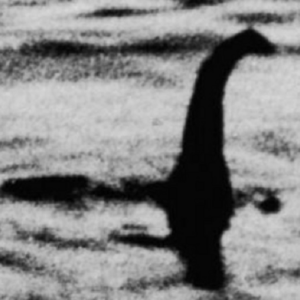
    1934 photo purported to be the Loch Ness Monster
    The Surgeon’s Photograph: Famous 1934 photo purported to be the Loch Ness Monster. Real or hoax? (Credit: Public domain/Wikimedia Commons)

    In any list of famous cryptids, you’ll find Bigfoot, of course, the Abominable Snowman/Yeti, or even the Chupacabra. But one name that always ends up near the top is the Loch Ness Monster — or Nessie, as it’s known to its friends.

    For at least 1,500 years, the monster has been a part of local legend and achieved international fame in the last century or so, with hundreds of sightings reported down through the decades. But what is the Loch Ness Monster? Is there any chance it could be real, and if so, what does it look like? Let’s take a deep dive into the myths and mysteries of the Loch Ness Monster. 

    Where Is the Loch Ness Monster? 

    Loch Ness in central Scotland, beautiful landscapes and gloomy region

    Loch Ness in central Scotland, beautiful, gloomy, and mysterious. (Credit: Mmartin/Shutterstock)

    As the name suggests, the creature (or creatures) is said to inhabit Loch Ness in Scotland (“loch” is the Scottish Gaelic word for a body of water, typically a lake). And almost no loch is bigger or more majestic than Loch Ness.

    Where Is Loch Ness Located?

    With its northern tip located about 8 miles outside the city of Inverness, Loch Ness runs nearly 23 miles long, nearly 2 miles wide at its widest point, and is almost 800 feet deep. It contains the largest volume of fresh water in the United Kingdom — 263 billion cubic feet, supposedly more than all the lakes in England and Wales combined. Loch Ness also connects to various other rivers and lochs, which in turn ultimately lead to the North Sea.

    Suffice it to say, that’s a lot of deep, dark water for something big to hide in. This can make any attempt to locate or view the monster particularly challenging — and there have been plenty of ambitious efforts over the years.  

    When was the First Sighting of the Loch Ness Monster?

    Falkirk Scotland - January 05 2015 The Kelpies are 30-metre-high (98 ft) horse-head sculptures depicting kelpies (shape-shifting water spirits) that are lit up at night in various colours

    Falkirk Scotland: The Kelpies are 30-meter-high (98 ft) horse-head sculptures depicting kelpies (shape-shifting water spirits). (Credit: Altopix/Shutterstock)

    Scottish folklore is particularly rich with tales of mythological aquatic beasties such as kelpies, water horses, and others —supernatural creatures known to inhabit the rivers and lochs of Scotland. Indeed, Loch Ness is hardly the only Scottish body of water believed to harbor a monster; it just happens to be the most famous.

    St. Columba and the Loch Ness Monster

    The earliest tale associated with Nessie involves St. Columba, a 6th-century Irish missionary who traveled to Scotland to convert the pagan populations to Christianity. As saints go, Columba was famous for performing many miracles, but one incident in particular grabbed the later attention of Nessie hunters.

    In 565 C.E., according to an early biography of Columba, the saint and his companions encountered a “water beast” in the River Ness, which flows from Loch Ness. The massive creature had already attacked and killed one man swimming in the river. In some versions of the account, Columba raised the luckless swimmer from the dead. Then, for an encore miracle, he sent one of his friends into the river.

    That intrepid fellow immediately attracted the attention of the creature, which swam rapidly towards him, mouth wide open. But back on shore, Columba was said to have invoked the power of God and commanded the creature not to attack his friend. The monster retreated instantly, disappearing into the depths. The locals were so impressed, Columba had little trouble converting them to his faith. 

    Although many folklorists and historians believe this story belongs to the older tradition of kelpie and water horse legends, accounts of Loch Ness’s cryptid continued to pop up in history, with various sightings being reported over the centuries. 

    What Does the Loch Ness Monster Look Like?

    Nessie, the famed lake monster of Loch Ness in Scotland, rears out of the waters of the lake. A castle sits on the shores behind it.

    3D Rendering of Nessie, the famed lake monster, rearing out of the waters of the lake. A castle sits on the shores of Scotland behind it. (Credit: Daniel Eskridge/Shutterstock)

    However, Nessie really made a splash in the wider world in 1933, when several sensational sightings were reported in local papers. One witness claimed to see a large, whale-like creature rolling in the water. Another witness claimed the monster had an eel-like body, but bigger than any eel ever known. Yet another sighting, this time out of the water, reported the creature as looking like a “dragon or prehistoric monster” with flippers or feet that allowed it to lumber across a road before crashing through the underbrush and into the loch.

    Famous Photos of Nessie

    1934 photo purported to be the Loch Ness Monster

    The Surgeon’s Photograph: Famous 1934 photo purported to be the Loch Ness Monster. Real or hoax? (Credit: Public domain/Wikimedia Commons)

    One man even produced a grainy black-and-white photo of a large creature thrashing a massive tail and churning up the water. Other photos would follow including one of the most famous, taken in 1934, of a long-necked monster emerging from the water. From then on, Nessie would become an international celebrity, even if no one could quite agree on what exactly the creature was. 

    How Big Is the Loch Ness Monster?

    Blurred mysterious silhouette of the plesiosaur Loch ness monster under the waves of the lake.

    How big is the Loch Ness Monster supposed to be? (Lubomira08/Shutterstock)

    As you can see, early descriptions varied widely, and so did estimates of the size of the beast. Some described the monster as being the size of a small boat; others compared it in size to a horse. Some said the monster was about 8 feet long; others claimed it was more than 20 feet. It hardly sounds like the various accounts were describing the same creature, which of course has led some believers to contend that there may be more than one monster in the loch, perhaps an adult and a juvenile, or even a group of some exotic, long-forgotten species.

    Eventually, over 90+ years and roughly 1,000 or more reported sightings, the consensus among most believers is that the Loch Ness Monster is a marine animal with a small head and a very long neck (perhaps as much as 10 feet), with flippers and a hump (or two) on its back. Estimates these days tend to put Nessie’s overall body size at around 4 or 5 feet high with a length of about 25 feet.

    Is the Loch Ness Monster a Dinosaur?

    Plesiosaurus skeleton isolated on white background

    Is Nessie a descendant of this dinosaur? (Credit:Aranami/Shutterstock)

    At that size and with those features, it was no great leap for some monster hunters to suggest that Nessie looked a lot like a dinosaur — specifically a plesiosaur, a prehistoric marine reptile that lived in the Earth’s oceans as long as 200 million years ago, becoming extinct by about 65 million years ago.

    Originally thought to be saltwater animals only, recent research indicates that some plesiosaurs could live in freshwater environments (like Loch Ness). This has only added to the conviction that Nessie is either some surviving example of plesiosaur or a heretofore unknown species descended from those early dinosaurs. 

    Is the Loch Ness Monster an Eel?

    A giant moray eel with a mysterious appearance swims near the sandy bottom surrounded by many fish close-up

    Could the Loch Ness Monster just be a really big eel? (Credit: Vladimir Turkenich/Shutterstock)

    Some cryptid hunters, however, still maintain that Nessie is a massive eel, as a few early eyewitness accounts maintained. This theory got an unexpected boost of scientific support in 2019, when researchers from New Zealand’s University of Otago did a DNA analysis of hundreds of water samples taken at various locations and depths around the loch. They didn’t find any plesiosaur DNA, nor DNA of any large marine animal.

    They did, however, find lots of eel DNA, so much so that “… we can’t discount the possibility that what people see and believe is the Loch Ness Monster might be a giant eel,” said research leader Neil Gemmell, a professor of anatomy at Otago, when he announced the team’s findings at a press conference.

    Could the Loch Ness Monster Be Real?

    Loch Ness, Scotland/United Kingdom -Jan 2nd 2013: International tourists taking pictures on tour cruise on the famous Loch Ness in the Scottish Highlands on a cloudy winter day.

    Loch Ness: International tourists taking pictures on tour cruise on the famous Loch Ness in the Scottish Highlands on a cloudy winter day. (Credit: Doublelee/Shutterstock)

    Monster hunters, cryptozoologists and, as we’ve seen, even a few open-minded scientists have journeyed to Loch Ness year after year, hunting for clues or simply hoping to catch a glimpse of something.

    Photos of mysterious objects in the loch still make the news — at least in tabloids. In August 2023, the biggest search in more than 50 years was organized by the Loch Ness Centre. The effort attracted hundreds of volunteers, bringing with them drones, infrared scanners, and other devices that they hoped would finally provide conclusive evidence of the beast.

    And yet, after all this time, hard proof of the existence of the Loch Ness Monster remains as elusive as Nessie itself. Despite all of the technology at their disposal, those hundreds of searchers last August reported little more than “sightings” of a few shadows in the water, and some equally vague and inconclusive underwater noises. 

    Debunking the Eel Theory

    Meanwhile, fans of the giant-eel theory suffered a setback when a recent study debunked that notion. While there may indeed be large eels in Loch Ness, it would be highly unlikely that they’d be any longer than a few feet in length — nothing close to the 25-foot lengths that some Nessie spotters have described.

    Speaking of size, despite the vastness of Loch Ness, scientists have determined that it’s still not big enough to accommodate the dietary needs of a dinosaur-sized creature. Nor have any bones or fossils of such an outsized animal ever been found, although researchers have searched the bottom of the loch numerous times over the years.

    Other basic facts about Loch Ness argue against the presence of the monster. It’s too cold for reptiles and despite a tenuous connection to the North Sea, there’s no plausible way for such a large creature to have migrated from there to the loch, even in prehistoric times (in fact, especially in prehistoric times, since most of Scotland was covered in ice and all of its lochs would have been frozen solid).

    Are the Photos of Nessie Real?

    But what about the photos? Alas, even some of the most cherished “evidence” of the monster has proven over time to be suspect. That iconic 1934 image, for example, was eventually revealed as a hoax.

    Nevertheless, despite the lack of proof — or maybe because of it — interest in the Loch Ness Monster shows no signs of waning. By some estimates, Loch Ness attracts as many as a million visitors to the region every year. And those visitors spend money: According to one analysis in 2018, Nessie accounted for about $52 million in tourism dollars annually.

    By that measure, at least, there’s no doubt that the people of Scotland do indeed have a monster on their hands.

  • Was the Allied Bombing of Dresden a War Crime or Wartime Necessity?

    Was the Allied Bombing of Dresden a War Crime or Wartime Necessity?

    The Bombing of Dresden, Germany stands as one of the most controversial events of the Second World War and is a stark symbol of the devastation wrought by aerial warfare. In February 1945, this once-picturesque city, known as “Florence on the Elbe” for its stunning architecture and art, became the target of an Allied aerial assault, and its fate during the final months of the conflict left an indelible mark on the collective memory.

    Strategic importance of Dresden during World War II

    Illustration of Dresden

    Dresden, 1890s. (Photo Credit: Detroit Publishing Co. / Library of Congress’ Prints and Photographs Division / Wikimedia Commons / Public Domain)
    As World War II raged on, Dresden’s strategic importance became increasingly significant. Located in eastern Germany, it wasn’t just a picturesque city with Baroque architecture and cultural treasures; it was also a vital transportation hub.

    Railways running from the area connected the Eastern and Western Fronts, allowing for the swift movement of German troops and equipment – it was just 155 miles from the East. This logistical significance made Dresden a target of interest for the Allies, who sought to disrupt the Germans’ military operations and hasten the end of the war.

    Moreover, Dresden housed important industrial complexes that contributed to the German war machine. While not as heavily industrialized as other cities, its factories produced precision optical equipment, electronics and military hardware; Dresden’s infrastructure supported German war efforts subtly but critically.

    What led up to the Allied bombing of Dresden?

    Rubble strewn around the remains of a church

    Remains of a church following the bombing of Dresden, 1945. (Photo Credit: Mondadori / Getty Images)
    The Allies’ desire to bomb key areas of German-occupied land wasn’t a secret during the Second World War, with British Prime Minister Winston Churchill calling for increased British air raids throughout the conflict. These only increased as the Luftwaffe‘s strength decreased (particularly following Operation Bodenplatte) and the size of the Allies’ bomber fleets increased.

    The decision to launch an aerial assault on Dresden was influenced by the desire to aid the Soviet advance and undermine the morale of the German populace. The city swelled with hundreds of thousands of refugees fleeing the Red Army’s advance into Silesia, adding to the complexity of the situation.

    As the plans for the assault were finalized, little did the residents of Dresden know that their city would become synonymous with one of the most controversial bombings of the Second World War.

    Dresden engulfed in flames

    Aerial view of the ruins of Dresden

    Dresden following the Allied bombing of the city, 1945. (Photo Credit: Prisma / UIG / Getty Images)
    As the bombing of Dresden commenced, the city was soon swallowed up by an inferno that scarred its landscape and history. Beginning at around 10:00 PM on the night of February 13, 1945, the British sent 800 bombers, led by pathfinders dropping flares, to attack the city, which dropped 2,700 tons of incendiaries and explosives over the German city. While there had been hopes the air raid would begin earlier, poor weather prevented daytime action.

    The amount of munitions dropped from overhead created a massive firestorm, a phenomenon that occurs when fires become so extensive that they create their own weather system. The temperature soared, and the air itself seemed to ignite, turning Dresden into a literal furnace. The firestorm was so intense that it could be seen from miles away.

    The next day, the Eighth Air Force, under the US Army Air Forces (USAAF), dropped another 400 tons of bombs from Boeing B-17 Flying Fortresses, with the assault coming to a close on February 15, after nearly 4,000 tons of munitions had been deployed.

    Dresden was destroyed

    Remains of the Frauenkirche, in Dresden

    Ruins of the Dresden Frauenkirche, 1945. (Photo Credit: Deutsche Fotothek / picture alliance / Getty Images)
    It’s estimated that between 22,700 and 25,000 civilians lost their lives in the bombing of Dresden, with many of the deceased treated poorly over fears of disease.

    A 1953 report found that 50 percent of residential buildings and 23 percent of industrial structures had been destroyed or severely damaged, with over 90 percent of the city center obliterated. In contrast, the Allies only lost seven aircraft. The Americans saw one destroyed, while the British experienced six, three of which were the result of hitting each other with their own bombs.

    In the wake of the Allied bombing, Dresden’s historical center lay in ruins, with landmarks like the Zwinger, the Semperoper and the Cathedral severely damaged or destroyed. The air raid decimated the city’s infrastructure, leaving survivors amid a landscape of ash and rubble. The impact was felt not just in the immediate loss of life and destruction of property, but in the deep wounds it inflicted on the cultural heart of Dresden.

    Controversy surrounding the bombing of Dresden

    Avro Lancaster dropping incendiaries mid-flight

    Avro Lancaster dropping munitions, 1944. (Photo Credit: United Kingdom Government / Wikimedia Commons / Public Domain)
    The bombing of Dresden has long been mired in contention, sparking debates that question the necessity and morality of the air raid. Critics argue the city was of limited strategic value, suggesting the assault was excessive and even a war crime. They point to its reputation as a cultural landmark, rather than an industrial powerhouse, and the high civilian casualties as evidence that what occurred wasn’t justified by military necessity.

    The German regime used this point as propaganda, arguing that Dresden wasn’t home to anything that aided the war effort and claiming that upwards of 200,000 civilians had been senselessly killed.

    This controversy is fueled by varying casualty estimates and the fact the Second World War was nearing its end following the high German losses during the Battle of the Bulge, leading some to believe the bombing was more of a political statement or an act of retribution, rather than a strategic move.

    Even Winston Churchill, for all his talk, questioned the bombing, writing in a memo, “It seems to me that the moment has come when the question of bombing of German cities simply for the sake of increasing the terror, though under other pretexts, should be reviewed. The destruction of Dresden remains a serious query against the conduct of Allied bombing.”

    On the other side of the debate, defenders emphasize the city’s role in German military logistics, including the transportation and communication networks critical to the war effort. They argue that Dresden was a legitimate military target, meaning any inaction would have hindered the upcoming Soviet offensive.

    Furthermore, they contend the attack hastened the war’s end, saving lives that would have been lost in a protracted conflict.

    Rebuilding Dresden following World War II

    Crowd gathered around lit candles on the ground

    Residents of Dresden commemorating the 78th anniversary of the city’s bombing during World War II, 2023. (Photo Credit: JENS SCHLUETER / AFP / Getty Images)
    In the wake of the bombing of Dresden, the city was left in ruins. The immediate aftermath was marked by a staggering loss of life and the immense challenge of addressing the humanitarian needs of survivors. Yet, amid the devastation, the spirit of Dresden’s citizens shone as they embarked on the arduous journey of rebuilding their beloved city.

    Reconstruction efforts began soon after WWII came to a close, with it initially proposed that the entire city be demolished and rebuilt from the ground up. This didn’t sit well with locals, who took the lead in clearing debris and salvaging what they could from the wreckage. The priority was to create habitable spaces and restore essential services.Photo Credit: Mondadori / Getty Images

  • Researchers Unearth 3-Million-Year-Old Tools

    Researchers Unearth 3-Million-Year-Old Tools

    The discoveries push back the date of one of humans’ earliest technological advances.

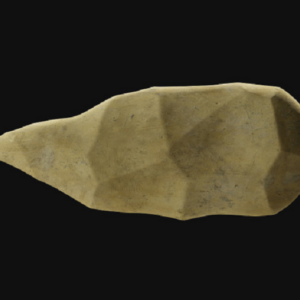
    Oldowan stone tool
    An example of an Oldowan stone tool. (Credit: Appio Studios/Shutterstock)

    Ancient tools, buried for millions of years in Kenya, may be the oldest example yet of our ancestors’ technological prowess. The tools, recently discvered on the Homa Peninsula in Lake Victoria, are now the earliest known examples of Oldowan technology — stretching its known start date back by as many as 400,000 years.

    The Oldowan Toolkit

    “[Oldowan] is a real benchmark of our technology,” says paleontologist Rick Potts, the director of the Human Origins Program at the Smithsonian National Museum of Natural History in Washington, D.C., and a co-author of the new study published in Science.

    The “Oldowan toolkit” is a term anthropologists use to describe the distinct technology that lasted for millions of years before Homo sapiens ever walked the Earth. These tools usually involved very controlled rock-flaking.

    By hitting one stone against another, ancient hominins chipped off sharp, thin slivers, leaving a sharp-edged stone behind that would have been good for chopping or scraping. The slivers could also have been used as sewing materials and other things.

    The technology’s name comes from the Olduvai Gorge in Tanzania, where archaeologists discovered ancient hominin bones and tools during several digs beginning in the 1910s. Some of these bones date back to about 2.1 million years ago.

    Since then, tools that fall into this categorization have been found widely across Africa and even into Europe and East Asia.

    Digging in Nyayanga

    The Nyayanga excavation site where the stone tools were found is a lush, tropical place with deep gullies. As these gullies erode, extremely old layers of dirt and sediment — and sometimes ancient fossils and tools — are exposed.

    Potts, who has been exploring the area since 1985, says “it’s a ripe area to be making major discoveries.”

    More recently, he and his study co-authors found that the 330 stone tools they unearthed at Nyayanga date between 2.58 million and 3 million years ago. That’s hundreds of thousands of years older than the previously oldest known set of Oldowan tools, which were found in Ethiopia.

    “We are seeing a real sea change in terms of our understanding,” Potts says.

    The site has also revealed 1,776 animal fossils, including those of at least three hippos and antelopes. The bones of two of the hippos show signs of butchery marks, including a cut on the ribs and four parallel marks on a shin bone; some of the antelope bones indicate scraping.

    A separate analysis the researchers conducted on stone flakes found in the area shows they were likely used for scraping, cutting and pounding animals and plants. “The surprising find is that that ancient technology was used not just for cutting up animals,” Potts says.

    It remains unclear, however, whether these ancient tool-users killed the animals themselves before the butchering, or whether humans simply scavenged cadavers.

    Whose Tools Are They?

    Similarly, the question of who made these tools in the first place isn’t entirely obvious — though there are a few suspects.

    Researchers have long assumed tool use to be limited to the Homo genus. The oldest known fossil depicting this is a 2.8-million-year-old jawbone, known as LD 350-1, found in Ethiopia. That timeline lines up pretty well with the range of tools at Nyayanga.

    But perhaps even more compelling is the evidence found at Nyayanga itself, in the form of two molars the team has identified as belonging to Paranthropus. This genus is a close relative of the Homo genus, but some researchers have speculated that, due to their powerful jaws, Paranthropus wouldn’t have needed tools to help break down their food.

    “It was basically a chewing machine all by itself,” Potts says of theirjaws, though he believes that discussion is ripe to be revisited based on these latest findings.

    Finally, a third possible hominin found roughly around this time is Australopithecus. The best known of these, Lucy, died in Ethiopia and dates roughly to 3.2 million years ago, while the most recent Australopithecus specimensdate to about 2.9 million years ago.

    Any of these three hominins could have used the stone tools found in Nyayanga. But until more bones are unearthed, it’s difficult to say definitively.

  • An Ancient Sloth Weighing at Least 500 Pounds Fell Victim to a Sinkhole

    An Ancient Sloth Weighing at Least 500 Pounds Fell Victim to a Sinkhole

    With armor like chainmail and razor-sharp claws, giant ground sloths were titans of the Ice Age. Now, scientists are unearthing new findings about a new species that lived around 10,000 years ago — and was found at the bottom of an underwater cave.

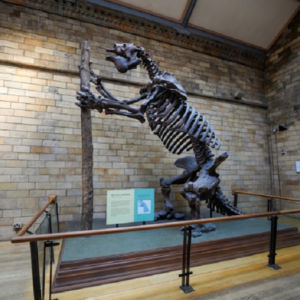
    A giant ground sloth skeleton, an extinct mammal, towers over visitors to the Natural History Museum in London. (Credit: Old Town Tourist/Shutterstock)

    Tree sloths have earned a reputation for being shy and slow-moving. But their ancestors, a diverse group of extinct creatures known as giant ground sloths, were not nearly as cuddly as their modern counterparts.

    Sporting bony, chainmail-like armor and razor-sharp claws, these impressive beasts could be found lumbering throughout the prehistoric Americas during the last Ice Age — and not just on the surface, either. 

    Are Scientists Still Unearthing New Species of Giant Sloth?   

    In 2009, paleontologists discovered the fossils of a giant ground sloth in Mexico’s Yucatan Peninsula. The scientists found the remarkably well-preserved sloth skeleton 100 feet below ground, in an underwater limestone cave. More recently, they’ve learned that the remains belong to an entirely new — albeit extinct — species of giant sloth.

    The new species, later dubbed Xibalbaonyx oviceps, was the first in its genus to be uncovered, according to a 2017 paper published in Paläontologische Zeitschrift. Fittingly, ‘Xibalba’ is the name of the underworld in Maya mythology, given that the Maya used limestone caves as the sites for sacrificial rituals over a thousand years ago. 

    What Was an Ancient Sloth Doing in an Underwater Cave?  

    The fossilized sloth’s resting place was also unique. The creature died at the bottom of the El Zapote cenote, a massive, hourglass-shaped sinkhole that stretches down more than 170 feet. The sinkhole’s bottom spans more than 300 feet wide, and its ceiling houses cone-shaped rock formations called Hell’s Bells that measure up to six feet long.   

    But how did a member of this species of giant ground sloth — which scientists estimate to be around the size of a bear — end up at the bottom of a sinkhole? In a 2020 paper published in Historical Biology, paleontologists posited that the creature’s robust musculature may have allowed it to climb up steep cave walls.  

    It seems that X. oviceps, while not a swimmer, was a spelunker, possibly using the limestone caverns for shelter and as a water source. The researchers suggest that the specimen died before the cenote flooded, and the oxygen-poor waters helped preserve it. Without oxygen, microbes can’t break down a carcass as effectively or quickly, allowing the body to remain intact for ages as a biological time capsule.  

    Indeed, the researchers theorized that the sloth’s well-preserved skull, along with other skeletal fragments, is a consequence of the oxygen-poor environment in which it was fossilized. Beyond that, the specimen also helped demonstrate that X. oviceps likely used Mexico as a corridor to travel between North and South America as they spread from lower latitudes. 

    What Other Types of Prehistoric Sloths Have Scientists Found?  

    While subterranean sloths like X. oviceps may tower over today’s tree-dwelling sloths, they still pale in size to other species of giant ground sloths. The former is suspected to at least have been the size of a black bear, weighing around 500 pounds, but behemoths like Megatherium americanum tipped the scales at (literally) elephantine proportions, weighing more than 4.5 tons.  

    Megatherium Americanum

    These massive beasts, native to South American steppes, could stand 12 feet tall. The giant sloth’s environment was home to an abundant supply of herbivores, which the omnivorous sloths likely hunted for food, dispatching their prey with seven-inch claws. 

    Thalassocnus

    Other sloths, meanwhile, took to the sea. Enter Thalassocnus, an extinct group of semiaquatic sloths that mowed down meadows of seagrass during the Miocene and Pliocene eras, from roughly 16 to 2.5 million years ago. This would have put these shaggy prehistoric beasts alongside other aquatic titans like the megalodon, the largest predatory shark to have ever lived. 

    Other ground sloths employed strange defensive measures. Sloths from the Mylodontoidae family, a sister group to the Megatherium genus, possessed bony deposits in their skin called osteoderms. These structures are much more visible in their modern relatives, the armadillos, but in the ancient sloths they formed a subdermal layer of bony chainmail, which functioned as a resilient mesh that toughened their skin like armor. 

    What Happened to the Giant Ground Sloths?  

    In fact, there’s even some evidence that ancient humans in South America hunted down the sloths for their bony skin, furnishing the animal’s osteoderms into necklaces and other such ornaments. Unfortunately for the sloths, most were driven to extinction, possibly by a combination of hunting and climate change, around 10,000 years ago.  

    The last of the giant ground sloths died in what is now Cuba, where they persisted until around 2,500 B.C.E. This allowed them to coexist, at least briefly, with arriving humans. Still, the only living legacy of these giant creatures seems to be the six species of small, tree-dwelling sloths that can be found in South and Central America today. 

    At least, one would be inclined to assume that without a keen paleontological eye. Hundreds of tunnels dug into South American mud faces, the result of hours of labor thousands of years ago, are hypothesized to have come from giant sloths, or perhaps their armadillo brethren. These so-called paleoburrows are but one vestige of the influence large animals, termed megafauna, have had on environments. 

    While modern sloths may appear to be sleepy and unimpressive in comparison to these prehistoric titans, they have ultimately had the last laugh, managing to persist past all of their giant relatives. And as specimens like the sinkhole-exploring Xibalbaonyx demonstrate, their lineage is full of surprises.

  • The 50-Year Battle to Clear Charles McVay III In the Sinking of the USS Indianapolis (CA-35)

    The 50-Year Battle to Clear Charles McVay III In the Sinking of the USS Indianapolis (CA-35)

    The USS Indianapolis (CA-35) was a Portland-class heavy cruiser commissioned by the US Navy in 1932. She was the flagship of Scouting Force 1 prior to the Second World War, and eventually became the flagship for Adm. Raymond Spruance of the US Fifth Fleet. On the day she went down, Indianapolis was under the command of Capt. Charles McVay III, who wound up being blamed for her sinking. It took 50 years, and an unlikely helper, for his name to be cleared.

    Photo Credit: 1. PhotoQuest / Getty Images 2. Bettmann / Getty Images (Colorized by Palette.fm)

    Sinking of the USS Indianapolis (CA-35)

    USS Indianapolis (CA-35) at sea

    USS Indianapolis (CA-35), July 1945. (Photo Credit: Unknown Author / Naval History and Heritage Command / Wikimedia Commons / Public Domain)
    During the Second World War, the USS Indianapolis served throughout the Pacific Theater. Her final mission was to deliver top-secret parts for the atomic bomb Little Boy to Tinian Naval Base. On July 30, 1945, the cruiser was traveling from the base to the Philippines for training duty when she was torpedoed by the Japanese submarine I-58. 

    The hit caused Indianapolis to sink in just 12 minutes. Roughly 300 crewmen went down with the ship, while the remaining 890 were stranded in the water. Not only did they have to deal with normal concerns – dehydration, exposure and exhaustion – they were also attacked by a shiver of sharks that were drawn to the bloody water. Initially, the fish attacked only the dead, but quickly became less selective.

    Despite sending out numerous SOS signals, it took four days before the US Navy found the survivors, then numbering only 316.

    Charles McVay III and the loss of the USS Indianapolis (CA-35)

    Charles McVay III speaking into a microphone while sitting at a desk

    Capt. Charles McVay III testifying at his own court-martial, December 1945. (Photo Credit: Bettmann / Getty Images)
    Charles McVay was one of the men rescued after the sinking of the USS Indianapolis. He was livid that it had taken so long for help to arrive, but was never given a concrete answer as to the delay. The service claimed the SOS messages were never received, despite declassified records later showing that three of them had actually gone through. They were ignored for different reasons: a drunk commander, orders to not disturb and the belief one was a ruse by the Japanese.

    As the senior officer onboard the ship, he was court-martialed for what happened, despite Adm. Chester Nimitz‘s feeling a letter of reprimand would be enough. McVay was accused of failure to order the abandonment of Indianapolis in a timely manner, as well as failure to zigzag. He was charged for the latter, despite testimonies that this tactic was barely effective, which included one from Imperial Japanese Navy (IJN) Cmdr. Mochitsura Hashimoto of I-58. 

    As if this decision wasn’t controversial enough, there was significant information available that showed Indianapolis was placed in a dangerous position not by McVay, but by other admirals. The captain had asked for destroyers to escort the vessel, a request that was denied, even though the area was known to contain Japanese submarines. This decision also meant Indianapolis was sailing blind, without submarine detection equipment.

    A heavy burden to bear

    Charles McVay III sitting at a table with war correspondents

    Capt. Charles McVay III telling war correspondents about the sinking of the USS Indianapolis (CA-35), 1945. (Photo Credit: PhotoQuest / Getty Images)
    Out of hundreds of US ships sunk during World War II, Charles McVay was the only captain to be court-martialed. Although the decision was eventually overturned by Secretary of the Navy James Forrestal, and McVay later promoted to rear admiral, his career in the Navy was all but over, as he struggled to get over the treatment he’d received after the USS Indianapolis sank.

    He officially retired in 1949, but this wasn’t enough to distance him from the incident. The families of those who perished in the sinking reacted in a variety of ways.  Some didn’t blame the McVay, while others did. The latter went so far as to send him letters with horrible statements, like, “Merry Christmas! Our family’s holiday would be a lot merrier if you hadn’t killed my son.”

    Eventually, the burden became too great, leading McVay to take his own life on November 6, 1968. He was found at his home in Connecticut with his pistol in one hand and a toy sailor in the other. The latter had been a gift from his father.

    Hunter Scott to the rescue

    Hunter Scott posing for a picture with Victor Buckett

    Lt. Hunter Scott, who cleared Capt. Charles McVay III’s name, with USS Indianapolis (CA-35) survivor, Victor Buckett, 2013. (Photo Credit: Petty Officer 1st Class Burton Eichen / Expeditionary Combat Camera / DVIDS / Public Domain)
    Sadly, Charles McVay didn’t live to see his name cleared, which it eventually was, thanks to the efforts of Hunter Scott. No, he wasn’t an expensive lawyer or professional researcher – he was a sixth-grade student who researched the sinking of the USS Indianapolis for a school history project. He interviewed nearly 150 survivors and consulted over 800 additional documents to conclude that McVay had been wrongfully charged.

    Scott didn’t stop with just his school presentation. He brought his research to the attention of Congressman Joe Scarborough (R-FL), who helped him take it before the US Congress. His research was monumental, resulting in a resolution, signed by President Bill Clinton in 2000, that exonerated McVay.

    He went on to join the Navy himself, serving aboard USS Bonhomme Richard (LHD-6).

    Scott said during his impassioned speech to Congress:

    “This is Captain McVay’s dog tag from when he was a cadet at the Naval Academy. As you can see, it has his thumbprint on the back. I carry this as a reminder of my mission in the memory of a man who ended his own life in 1968 […] I carry this dog tag to remind me of the privilege and responsibility that I have to carry forward the torch of honor passed to me by the men of the USS Indianapolis.”