Author: Ms Bich

  • Lucy, our ancient human ancestor, was super buff

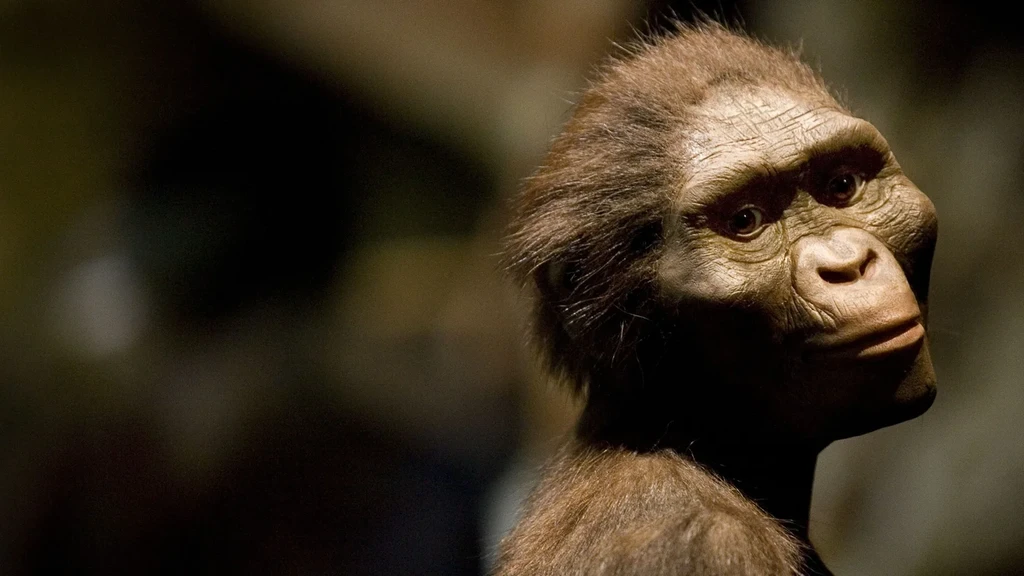
    Lucy, our ancient human ancestor, was super buff

    The unique hominid ‘likely walked and moved in a way that we do not see in any living species today.’

    The calves and thighs of the Australopithecus afarensis were more than twice the size of those of modern humans. Dave Einsel/Getty Images

    In late November 1974, the world of archeology changed when scientists discovered Lucy (a nod to a famous Beatles track played over and over at the dig site), a 40-percent complete fossil of a young female Australopithecus afarensis in Ethiopia. This species of ancient hominid was living and walking around on two feet in East Africa 3.7 to 3 million years ago, long before the earliest stone tools were made. While Lucy and her relatives were shorter, more ape-like, and had smaller brains than Homo sapiens, they showed just how long human-like creatures were evolving and strolling about on Earth.

    Just recently, scientists uncovered that Lucy, whose remains are housed in a specially constructed safe in the National Museum of Ethiopia, may have been even more like us than we thought—and considerably more muscular in the legs department. According to a new paper published on June 13 in the journal Royal Society Open Science, Lucy could walk around upright just as well as a person.

    Previously, paleoanthropologists disagreed on Lucy’s bipedal stance. Some thought she likely waddled around with her back hunched over, not unlike today’s chimpanzees. However, Ashleigh Wiseman, a paleoanthropology research associate at the University of Cambridge, created 3D models of the leg and pelvis muscles of the 3.2 million-year-old Australopithecus afarensis. After recreating 36 muscles in each of the ancient hominids’ legs, she found that Lucy’s stance was quite similar to humans.


    A 3D polygonal model, guided by imaging scan data and muscle scarring, reconstructing the lower limb muscles of the Australopithecus afarensis fossil AL 288-1, known as ‘Lucy’. Credit: Dr Ashleigh Wiseman
    Not only could she walk like a Homo sapien, but she was considerably more muscular than us—her calves and thighs were more than twice the size of those of modern humans. Her thighs in particular were made up of 74 percent muscle, compared to the average 50 percent split between fat and muscle in our species today.

    This shouldn’t be too surprising, however, given the world ancient hominids lived in. To manage life in East Africa 3 million years ago, Lucy and her cousins would’ve had to roam wooded grasslands, while swiftly switching to climbing forest canopies, Wiseman said in a statement.

    “We are now the only animal that can stand upright with straight knees. Lucy’s muscles suggest that she was as proficient at bipedalism as we are, while possibly also being at home in the trees,” Wiseman added. “Lucy likely walked and moved in a way that we do not see in any living species today.”

    3D models have previously been used to reconstruct the muscles of other lost species. In fact, Wiseman mentions that the method has helped paleontologists figure out the shockingly slow running speeds of T. rexes. But recreating the builds of our ancestors lets us see how far we’ve come—and how much muscle we’ve lost as our lifestyles have shifted.

    “Of course, in the fossil record we are left looking at the bare bones,” Wiseman told CNN. “But muscles animate the body—they allow you to walk, run, jump and even dance. So, if we want to understand how our ancestors moved, we first need to reconstruct their soft tissues.”

  • Watch a Young Venus Williams (with Sister Serena) Talk About Her Love of Tennis

    Watch a Young Venus Williams (with Sister Serena) Talk About Her Love of Tennis


    “I really started getting serious when I was 7,” Venus Williams told Today at age 10

    Venus and Serena Williams were seasoned tennis pros before they even finished middle school.

    In a resurfaced 1991 interview with Today, shared by the morning show on Wednesday, the young phenoms hit the court in matching outfits.

    Venus, then 10, told the Today interviewer of her passion for the sport, explaining, “I think when I was 5 years old, that’s when I think I started liking it a lot.”

    “I really started getting serious when I was 7,” continued the preteen athlete. “I think first it was my dad and my mom and my family, going out there to help me and push me.”

    venus-williams-2

    venus-williams-4

    The clip noted that Venus’ 9-year-old sister Serena — using a neon racket — was following in her sisters’ footsteps.

    Heard offscreen, the athletes’ mother, Oracene Price, said, “Sometimes I feel just like it was destiny, you know, for the both of them. Because my first three girls, they went out, they didn’t take to it. But the last two, they liked it a great deal.”

    Venus, now 38, and Serena, now 36, are competing in the U.S. Open this week. Serena has won the grand slam 6 times, and Venus twice.

    On Monday night, Serena dominated the court in her women’s singles match against Magda Linette from Poland, advancing to the second round of the tournament. Venus also advanced, defeating Svetlana Kuznetsova, in her first-round match.

    The start of the open hasn’t been all smooth sailing, however. On Saturday, Serena responded after French Tennis Federation President Bernard Giudicelli said the catsuit the athlete wore in May to compete in the French Open would “no longer be accepted,” drawing backlash.

    060318_tennis_rolandgarros_3330.jpg

    Tim Clayton/Corbis via Getty Images

    Williams told reporters at the press conference in video shared by ESPN that “everything’s fine” with the situation, and noted, “Obviously the grand slams have a right to do what they want to do, but I feel like if and when or if they know that some things are for health reasons then there’s no way that they wouldn’t be okay with it.”

    In fact, the mom of one joked, she wouldn’t be wearing the catsuit anytime soon, anyhow. Explained Serena, “When it comes to fashion you don’t want to be repeat offender. It’ll be a while before this even has to come up again.”

    And on Monday, she did just that, wearing a chic one shoulder dress, a pleated tulle skirt, fishnet stockings and custom sparkly Off-White sneakers to compete.


  • The enduring mystery of the Terracotta Warriors and the tomb of the first emperor

    The enduring mystery of the Terracotta Warriors and the tomb of the first emperor

    Step back in time to ancient China, where a massive tomb complex was built for the first emperor, Qin Shi Huang. As you wander through the underground chambers, you stumble upon something unexpected: an army of life-size terracotta warriors, each one unique in its own way.


    These figures, meticulously crafted over 2,000 years ago, stand in formation, ready for battle. You’re standing in the midst of the Terracotta Army, one of the greatest archaeological discoveries of our time.

    But despite decades of research, the mysteries surrounding this incredible find continue to baffle and intrigue experts.


    In this article, we delve into the enduring mystery of the Terracotta Warriors and the First Emperor’s Tomb, exploring the fascinating history, art, and culture of ancient China.

    What was the Terracotta Army?

    The Terracotta Army is one of the most famous archaeological discoveries in history.


    Located near Xi’an in China, this collection of thousands of life-size terracotta figures represents the army that was buried with Qin Shi Huang, the first emperor of China, over 2,000 years ago.


    The discovery of the Terracotta Army has provided invaluable insight into the art, culture, and history of ancient China.


    However, despite decades of research, there are still many unanswered questions about this enduring mystery.

    Their discovery

    The Terracotta Army was discovered by a group of farmers who were digging a well in 1974.


    They unearthed several clay fragments, which turned out to be parts of a terracotta warrior.


    The news of this discovery quickly spread, and archaeologists were soon excavating the site.


    They found a massive underground tomb complex, covering an area of 20 square miles, which was believed to be the final resting place of Emperor Qin Shi Huang.

    Terracotta armySource: https://pixabay.com/photos/terracotta-warriors-warrior-soldier-16860/

    Who was Qin Shi Huang?

    Shi Huangdi, also known as Qin Shi Huang, was the first emperor of China. He ruled from 221 BC to 210 BC, during a period known as the Qin dynasty.


    Shi Huangdi was a powerful and ambitious ruler who conquered and unified the various warring states of China, thereby creating a unified Chinese empire for the first time in history.


    He is also credited with implementing major administrative, economic, and social reforms, such as standardizing weights and measures, building roads and canals, and establishing a centralized government system.


    However, his legacy is also controversial, as he was known for his harsh rule and brutal treatment of his enemies, as well as his suppression of intellectual and cultural expression.

    The strange burial of the warriors

    The Terracotta Army was found in three large pits, each containing thousands of terracotta figures, arranged in battle formation.


    The figures were highly detailed, with individualized facial features and hairstyles, and were equipped with weapons and armor.


    It is estimated that there are over 8,000 figures in total, including soldiers, chariots, and horses.

    The discovery of the Terracotta Army has shed light on the incredible artistic and engineering skills of the ancient Chinese.


    The figures were made using a complex production process that involved molding, firing, and painting.


    It is believed that over 700,000 laborers worked on the tomb complex over a period of 37 years, from 246 BC until the emperor’s death in 210 BC.

    Clost up of Terracotta soldiersSource: https://pixabay.com/photos/china-statues-warriors-terracotta-4366989/

    Unanswered questions…

    Despite the wealth of information provided by the Terracotta Army, there are still many unanswered questions about the tomb complex and the emperor’s burial.


    One of the most pressing questions is why the emperor chose to be buried with such a vast army of terracotta figures.


    Some experts believe that the Terracotta Army was meant to protect the emperor in the afterlife, while others speculate that it was meant to showcase the emperor’s military might and power.

    Another mystery surrounding the tomb complex is the identity of the people who created the Terracotta Army.


    Although the workers who built the tomb complex were likely slaves or prisoners of war, the artisans who created the figures were likely skilled craftsmen.


    However, no records of the artisans who created the Terracotta Army have been found, and their identities remain a mystery.

    Pits of Terracotta armySource: https://pixabay.com/photos/terracotta-army-terracotta-warriors-2967852/

    The lethal dangers of the tomb

    One of the most intriguing mysteries surrounding the Terracotta Army is the emperor’s tomb itself.


    Although the tomb complex has been extensively excavated, the emperor’s tomb has yet to be fully explored.


    Experts believe that the tomb may contain a vast array of treasures and artifacts, as well as important historical records.


    However, the Chinese government has been hesitant to excavate the tomb, citing concerns over the preservation of the site and the potential damage that could be caused by excavation.

    In 2012, Chinese archaeologists conducted extensive tests on the tomb complex, including scanning it with advanced imaging technology.


    They discovered elevated levels of mercury in the soil surrounding the tomb, leading some to believe that the emperor’s tomb may indeed contain rivers of liquid mercury.


    However, there is currently no direct evidence of this, as the tomb has not been fully excavated due to concerns over preservation and potential damage.

    While the potential use of mercury in the tomb is fascinating, it also raises concerns about the environmental and health impacts of such a discovery.


    Liquid mercury is a highly toxic substance that can have serious health effects if not handled properly, and any excavation of the tomb would need to be conducted with extreme caution and care.


    Until the tomb is fully explored, the potential use of mercury in the Terracotta Army and the First Emperor’s tomb remains a tantalizing mystery.

    The ongoing mystery

    Despite the many mysteries surrounding the Terracotta Army and the emperor’s tomb, the discovery remains one of the most significant archaeological finds in history.


    The Terracotta Army has provided us with valuable insights into the art, culture, and history of ancient China, and has inspired countless researchers and scholars around the world.


    As we continue to explore this enduring mystery, we may one day uncover the secrets of the first emperor’s tomb and the incredible civilization that created it.

    Terracotta warrior horses

  • Astronomers detect a distant galaxy’s magnetic field for the first time

    Astronomers detect a distant galaxy’s magnetic field for the first time

    It took more than 11 billion years for the light from galaxy 9io9 to reach Earth.

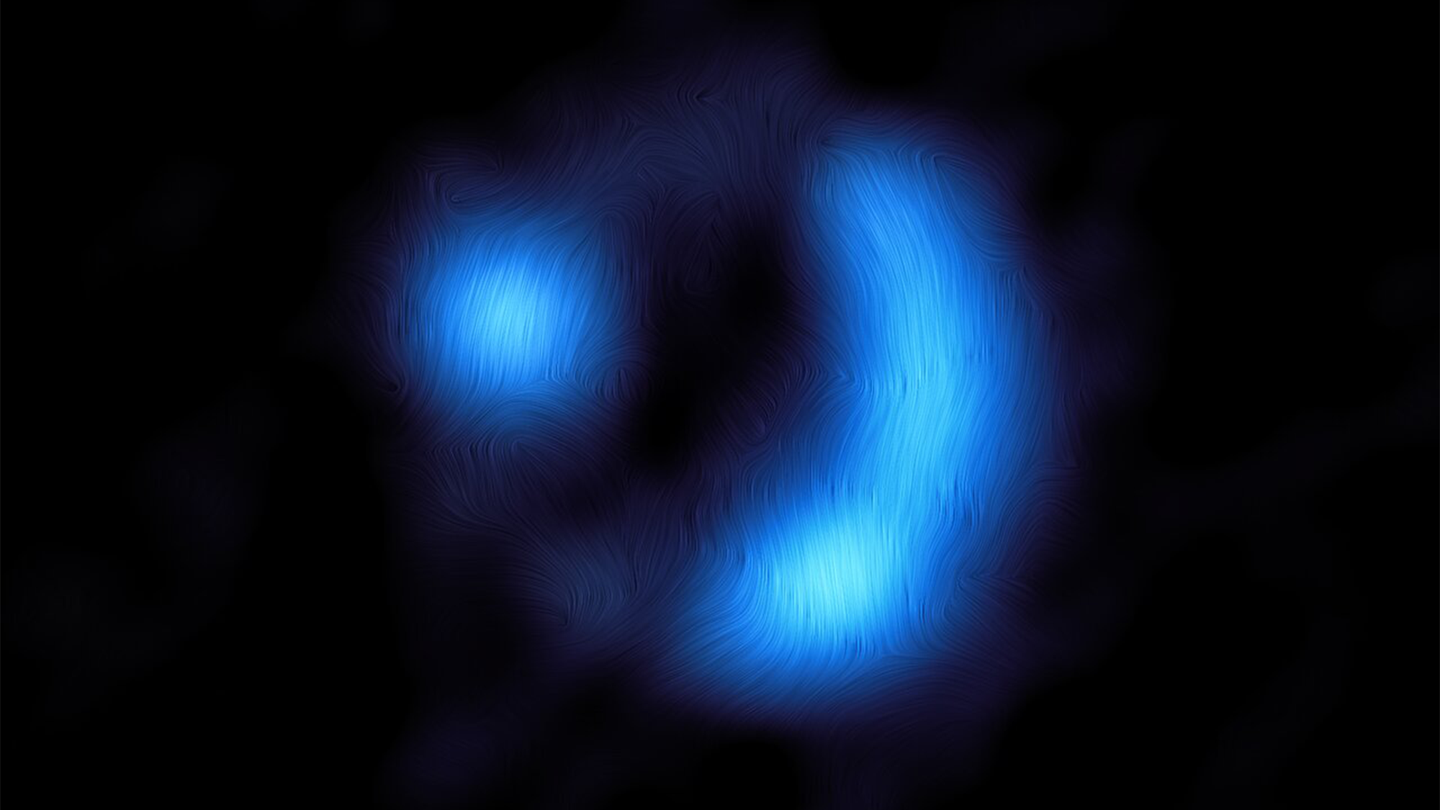
    The orientation of the magnetic field in the distant 9io9 galaxy, seen here when the universe was only 20 percent of its current age and the furthest ever detection of a galaxy’s magnetic field. ALMA (ESO/NAOJ/NRAO)/J. Geach et al.

    Astronomers using the Atacama Large Millimeter/submillimeter Array (ALMA) radio telescope have detected the magnetic field of a galaxy that is so far away from Earth, that its light has taken more than 11 billion years to get here. With the telescope, we are seeing this galaxy just as it was when our universe was only 2.5 billion years old.

    The findings are detailed in a study published September 6 in the journal Nature. Finally seeing this cosmic artifact could give astronomers some vital clues to how the magnetic fields of galaxies like the Milky Way came to be. Magnetic fields are present in many of the universe’s astronomical bodies from stars to planets and up to galaxies.

    “Many people might not be aware that our entire galaxy and other galaxies are laced with magnetic fields, spanning tens of thousands of light-years,” study co-author and University of Hertfordshire astrophysicist James Geach said in a statement.

    It is not yet fully clear both how early in our universe’s lifetime and how quickly the magnetic fields in galaxies form. To date, astronomers have only mapped magnetic fields in galaxies close to us.

    “We actually know very little about how these fields form, despite their being quite fundamental to how galaxies evolve,” study co-author and Stanford University extragalactic astronomer Enrique Lopez Rodriguez said in a statement.

    In this new study, the team used data from ALMA and the European Southern Observatory (ESO) and discovered a fully formed magnetic field in a distant galaxy. It’s similar in structure to what is observed in nearby galaxies, and while the magnetic field is about 1,000 times weaker than our planet’s magnetic field, it extends over more than 16,000 light-years.

    Observing a fully developed magnetic field this early in the history of the universe is an indication that magnetic fields spanning entire galaxies can form pretty quickly, even while younger galaxies are still growing.

    According to the team, intense star formation in the universe’s early days may have played a role in accelerating the development of the magnetic fields and that the fields can influence how later generations of stars will eventually form.

    These new findings show off the inner workings of galaxies, according to study co-author and ESO astronomer Rob Ivison. “The magnetic fields are linked to the material that is forming new stars,” Ivison said in a statement.

    To detect this light, the team searched for light emitted by dust grains in a distant galaxy named 9io9. When a magnetic field is present, galaxies are full of dust trains that tend to align and the light that they emit becomes polarized. When this happens, the light waves oscillate along a preferred direction instead of randomly. When ALMA detected and mapped the more polarized signal coming from galaxy 9io9, it confirmed the presence of a magnetic field in a very distant galaxy for potentially the first time.

    “No other telescope could have achieved this,” said Geach.

    The team hopes that with this new discovery and future observations of distant magnetic fields, astronomers will get closer to how fundamental components of galaxies form.

  • Serena Williams Shares Beautiful Beach Photo of ‘Soulmate’ Venus Williams

    Serena Williams Shares Beautiful Beach Photo of ‘Soulmate’ Venus Williams


    Serena sang her older sister’s praises during their recent trip to the Bahamas

    Sisterly love!

    While on vacation together in the Bahamas, Serena Williams shared an affectionate tribute to her sister, and “soulmate,” Venus Williams.

    Reflecting on the bond she shares with the 39-year-old athlete, Serena called Venus her “doubles partner sister soulmate,” as well as “one of my fav sisters.” Alongside the message, Serena, 38, posted a beautiful photo of Venus wearing a green polka dot dress while standing on the beach.

    As the two sisters soaked up the sun together earlier this week, they also spent some quality time on a yacht — and making puns!

    “Yacht got time?” Venus wrote alongside one video of the pair showing off some of their best moves onboard the vessel. “Yasssssssss,” Serena commented, before going on to post her own dancing video with the same caption over the weekend.

    Venus Williams

    Venus Williams/Instagram

    During their sisterly getaway, Serena also posted multiple photos showcasing her stylish new hairstyle: a butt-length ponytail.

    “I ain’t got Yacht type,” she wrote alongside one set of images, days before revealing that she’s actually decided to name her mane.

    “Morning warmups with Trixie (this ponytail is so EXTRA I had to name her),” Williams captioned another snap, which saw the star showing off her flexibility by standing on one foot while raising the other toward the sky.

    Over the summer, Serena reminisced about living with her older sister.

    “So I’m at Venus’ house, we lived together our whole lives, we’re not living together now which kinda sucks but it’s life,” Serena said in an Instagram Story video, before cracking a joke about the lack of contents inside her sister’s fridge.

    “Nothing’s changed for her,” Serena quipped. “This was our refrigerator for like 20 years … we lived together our whole lives, but as adults for 20 years.”

    The famous siblings most recently shared a Florida mansion in Palm Beach Gardens, on land they bought back in 1998 according to Variety.

    venus-serena-williams

    Andre Sturdivant for Oath

    Speaking with Architectural Digest in August, Serena revealed that when they shared a home, Venus — who has her own interior design company — was always mixing things up design-wise.

    “It’s so fun because we used to live together, and it was great because I would come home and the house would look different. I would love it, and it was perfect,” Serena said.

    Trading compliments, Venus added that her younger sister is “really good at space planning.”

    “Before I was doing any of this sort of design, I couldn’t do that,” Venus said. “So, it’s interesting how she has a knack for it and creating spaces and connections. It’s pretty cool.”


  • A second asteroid may have crashed into Earth as the dinosaurs died

    A second asteroid may have crashed into Earth as the dinosaurs died

    A dimple in the Atlantic seafloor could be the sign of another impact.

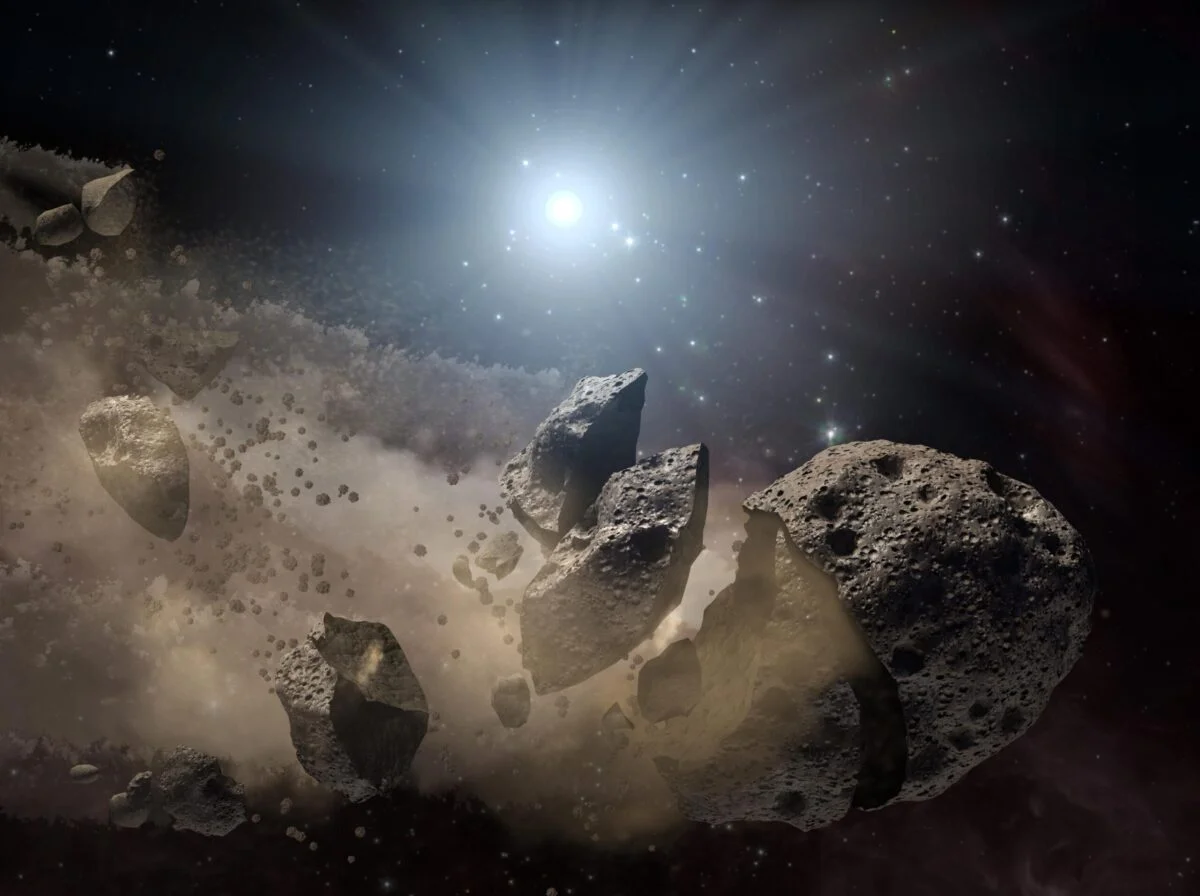
    An asteroid splits apart while traveling in space, in an artist’s illustration. NASA/JPL-Caltech

    When Africa and South America split apart during the Jurassic, birthing the Atlantic Ocean, the separation left a plateau of shallow ocean off the west coast of Guinea. “All the sediments are very flat, almost like a layer cake,” says Uisdean Nicholson, a marine geologist at Heriot-Watt University in Scotland who studies the region to learn about the birth of the Atlantic.

    So in 2017, when Nicholson was examining seismic scans of the region taken by oil and gas exploration vessels, an unexpected feature jumped out: a 5-mile-wide dimple buried deep in the cake.

    A closer analysis of the site, led by Nicholson and published today in the journal Science Advances, argues that it’s the crater from a meteor as wide as the Eiffel Tower is tall. If it’s confirmed as a crater, it would have crashed into Earth within a million years of the Chicxulub meteor that caused the extinction of the dinosaurs.

    Nicholson hunted for other ways to explain the dimple—escaping methane bubbles, tectonic activity, or a volcano. But none of them quite explained the crater’s size, location, and shape.  So he turned to cosmic impact experts for help. “Probably every week, somebody sends me circles they spotted on Google Earth, or in seismic data,” says Sean Gulick, an expert in meteor strikes at the University of Texas Institute for Geophysics, and a coauthor on the research. But the dimple, which the team calls the Nadir Crater, passed the tests they threw at it. “Shapes, sizes, even modeling, it’s all fitting,” says Gulick.

    To further confirm the explanation, Veronica Bray, a planetary scientist at the Lunar and Planetary Laboratory in Tucson and a member of the team, simulated multiple meteor strikes in different ocean depths. A rock longer than 1,000 feet across, striking the half-mile-deep ocean, created a close approximation to the actual crater. According to the simulation, in the first few seconds after the impact, the rock would have plunged nearly a mile into the ocean floor, vaporizing rocks and water, and sending a tsunami in all directions.

    The vibrations from the impact would be so intense that “the rocks or sediment below the seabed become a fluid,” Nicholson says. The rock around the crater would shatter, and “you get this massive vertical column, like you dropped something into a puddle,” he says. “That happens with the water, but it also happens with the rocks below”—leaving a crater with an uplifted mound of solid rock in the middle, like what’s buried under the Guinean seafloor.


    Courtesy Veronica Bray.
    “The energies involved in this are enormous,” says Gulick. “This is 1000 times the energy of the Tonga eruption. It would generate earthquakes that are magnitude 7.5 or 8.”

    Ludovic Ferrière, an impact crater expert from the Natural History Museum Vienna who was not involved in the work, agrees that the shape of the feature is interesting and warrants further investigation—but he’s skeptical of the decision to publish on the basis of seismic images alone. “It’s a very nice proposal,” he says. “”But it’s too preliminary. At the end they may be right, but they may be completely wrong.”

    Ferrière—who says that he discussed the crater with Gulick at a bar days before the publication—says that he has found similarly compelling craters.  But, without physical evidence, he doesn’t think they pass scientific scrutiny to publish. “To find the killer in a murder, you need DNA or blood,” he says. The same is true for an impact crater: The only hard evidence of a meteor are the presence of “shocked” minerals that form only under the hammer blow of a cosmic strike, or actual spray from the extraterrestrial object.

    Drilling from a ship hundreds of feet into the seafloor itself is the only way to be sure. Yet this creates a chicken-egg problem. The International Ocean Discovery Program, the academic institution best equipped to take a sample—“at a cost of several million dollars,” Nicholson writes over email–would do so only after a peer-reviewed paper confirms that it is a good candidate.

    The International Ocean Discovery Program’s ship, which can collect core samples under thousands of feet of water and hundreds more feet of rock, will visit the region in 2023. The team has submitted an application for time with the drill, and hopes to analyze samples from the crater in the next few years.

    That drilling will also clarify the age of the proposed crater. Based on cores drilled a little over 100 miles from the proposed crater, the site sits right around the K-PG boundary, the line that marks the mass extinction of dinosaurs, pterosaurs, and giant marine reptiles, 65 million years ago. That die-off was caused when the miles-wide Chicxulub meteor smashed into what’s now the Yucatan Peninsula.

    But the sound waves the team is relying on in Guinea produce a slightly fuzzy image, which can’t firmly pin down the date. “To the best of our knowledge, we’re at the boundary, but it could be, could be a million years older or younger,” says Nicholson.

    If the crater sits right at the boundary, it’s possible that it was caused by a fragment of the Chixculub meteor that broke off on a previous fly-by past Earth, though Gulick thinks this is unlikely. Alternatively, it could have been  part of an asteroid swarm that intercepted our planet over the course of thousands of years. Ferrière, for his part, calls these hypotheses “speculation upon speculation”—without confirmation that the Nadir Crater is actually a crater, he says, “it’s like constructing a big castle of stone on something that is not stable.”

    A similarly sized meteor hits Earth roughly every 700,000 years, so even if it’s a crater, it’s  not necessarily connected to the Chicxulub impact. But Gulick says that documented craters are so rare–there are just over 200 confirmed or likely craters on Earth—that to find one within a million years of Chicxulub would be a surprise.

  • The True Story Behind the Court-Martial Scene in ‘Band of Brothers’

    The True Story Behind the Court-Martial Scene in ‘Band of Brothers’

    Photo Credit: 1. mdew / HBO / Dreamworks Pictures / MovieStillsDB 2. jeffw616 / HBO / Dreamworks Pictures / MovieStillsDB

    Fact and fiction are blended seamlessly in the HBO miniseries Band of Brothers (2001), which can sometimes make it hard to determine what really happened and what was embellished. While the majority of the story is accurate to the actions of Easy Company, 506th Parachute Infantry Regiment, 101st Airborne Division during the Second World War, there was one scene, in particular, that we were curious about: Richard Winters’ court-martial in the first episode.

    We always wondered if the real Maj. Winters stuck it to his captain by requesting the court-martial. As it turns out, he really did.

    Court-martial scene in Band of Brothers

    Damian Lewis and David Schwimmer as Richard Winters and Herbert Sobel in 'Band of Brothers'

    Band of Brothers, 2021. (Photo Credit: jeffw616 / HBO / Dreamworks Pictures / MovieStillsDB)

    In the premiere episode of Band of Brothers, Capt. Herbert Sobel (David Schwimmer) takes disciplinary action against then-1st Lt. Richard Winters (Damian Lewis) for failing to show up on time to inspect the soldiers cleaning the latrines. However, Sobel had switched the time of inspection at the last moment, which Winters was unaware of.

    Despite claiming that he’d tried to call him and even had a runner sent to deliver the message, Winters never caught wind of the time change. It’s important to note the home where Winters was staying at the time didn’t have a phone and that a runner never arrived.

    Sobel proceeds to punish Winters for the minor infraction, giving him a choice and saying, “So, your options are quite simple, lieutenant. Punishment for your offenses will be denial of a 48-hour pass for 60 days. Or, you may initiate a letter of appeal and request a trial by court-martial.”

    Sobel even tries to offer Winters some kind of understanding, telling him to take the punishment, as “you spend your weekends on base anyway.” Instead, the first lieutenant replies, “I request trial by court-martial,” before saluting his captain and leaving him in a stunned silence.

    Is there any truth behind the scene?

    Military portrait of Richard Winters

    Maj. Richard Winters. (Photo Credit: Unknown / Wikimedia Commons CC BY-SA 4.0)

    In the miniseries, Herbert Sobel serves as an early antagonist who’s determined to keep Richard Winters down. His character is portrayed as one who cares more for how his men served as a reflection of himself, rather than his leadership and their wellbeing, and Band of Brothers suggests he was extremely strict and malicious during their training.

    It seems it got most of Sobel’s character correct, as well as the court-martial scene. In a book by Erik Dorr about Winters, a copy of Sobel’s reprimand and Winters’ signature for requesting a trial by court-martial proves the petty interaction did, in fact, occur in real life.

    As the book upon which the series is based includes the memories of surviving members of the Easy Company, 506th Parachute Infantry Regiment, 101st Airborne Division, Sobel really was as petty and harsh as Band of Brothers makes him out to be. Most of the real Easy Company disliked him, which is why what happened next, while shocking, isn’t entirely unbelievable.

    Easy Company turned against Herbert Sobel

    Military portrait of Herbert Sobel

    Capt. Herbert Sobel. (Photo Credit: US Army / Wikimedia Commons / Public Domain)
    After Richard Winters’ court-martial, the men of Easy Company began to turn on Herbert Sobel. Soon after, their faith in him disappeared completely. Without Winters, who was performing administrative duties outside of the company during his court-martial, the paratroopers took matters into their own hands.

    “A band of sergeants mutinied against Sobel, writing a letter to Col. Sink indicating their unwillingness [to] serve under the captain,” Erik Dorr wrote. “Risking their own futures, the men unleashed a verbal volley undermining Sobel’s authority and abilities. Several of the sergeants were accordingly punished for insubordination.

    “Realizing how sour the situation was, Sink at last transferred the captain from Easy Company that February.”

    Dorr quoted one of the paratroopers, Tech. Sgt. Donald Malarkey, as having said, “Winters quietly orchestrated the deal to force Sobel out. Not for his selfish gain, mind you; that wasn’t Winters’s style. He was among the most selfless men I’ve ever had the privilege of serving with. No, he did it for the good of the men. He did it to save their lives.”

  • Venus Williams Says She and Sister Serena Are ‘Each Other’s Hero’

    Venus Williams Says She and Sister Serena Are ‘Each Other’s Hero’


    Venus Williams also talks about reliving past memories through the upcoming Will Smith-starring film about her father, Richard Williams

    Tennis’ dynamic duo is forever in awe of each other.

    While speaking to PEOPLE (the TV Show!)‘s Kay Adams about her UNO partnership, superstar Venus Williams reflects on her relationship with her sister and fellow sports icon Serena Williams.

    “I think we’re each other’s hero,” Venus, 41, says. “I know that I’m the oldest sister so it’s different, but she’s in the sense that she’s my younger sister and she’s the only one [of my siblings] younger than me. So she’s the only one that I have to like ‘take care of.’ “

    Continues Venus, “So she’s my, everything in that sense. And she’s the best younger sister you could ever have. She’s so protective. And I learned so much from her on, off the court and I couldn’t have been the person that I am or won any titles really without cause I watched her.”

    The Williams sisters’ childhood and rise on the tennis circuit will soon be explored in the upcoming Will Smith-helmed film about their father and former tennis coach, Richard Williams.

    In King Richard, Venus and Serena, 40, are played by actresses Saniyya Sidney and Demi Singleton, respectively.

    Filming, Venus says, brought her back to those early days. “Honestly, it was more about memories. Like I forgot about that,” she says.

    Tennis, Abu Dhabi, United Arab Emirates - 27 Dec 2018

    Venus (left) and Serena Williams in 2018. Kamran Jebreili/AP/Shutterstock

    The siblings previously praised Smith’s portrayal of their father, telling Entertainment Weekly, “Whatever film he’s in, it’s the real deal.

    Added Venus of the movie, “I love that it captured the innocence — the innocence we still hang on to, actually. It’s kind of difficult for me to say, ‘Oh, this film shows me.’ Because me is Serena. Me is my sisters. And there’s no me without her, and I could have never done what I’ve been able to achieve on the court without her because I was also watching her and learning.”

    Venus and Serena told EW they weren’t certain their father Richard, now 79, had yet seen the movie. The outlet reported that COVID-19 kept Richard away from the set and he did not participate in the interview due to health issues.

  • Hubble telescope spies Saturn’s rings in ‘spoke season’

    Hubble telescope spies Saturn’s rings in ‘spoke season’

    One season on Saturn lasts roughly seven Earth years.

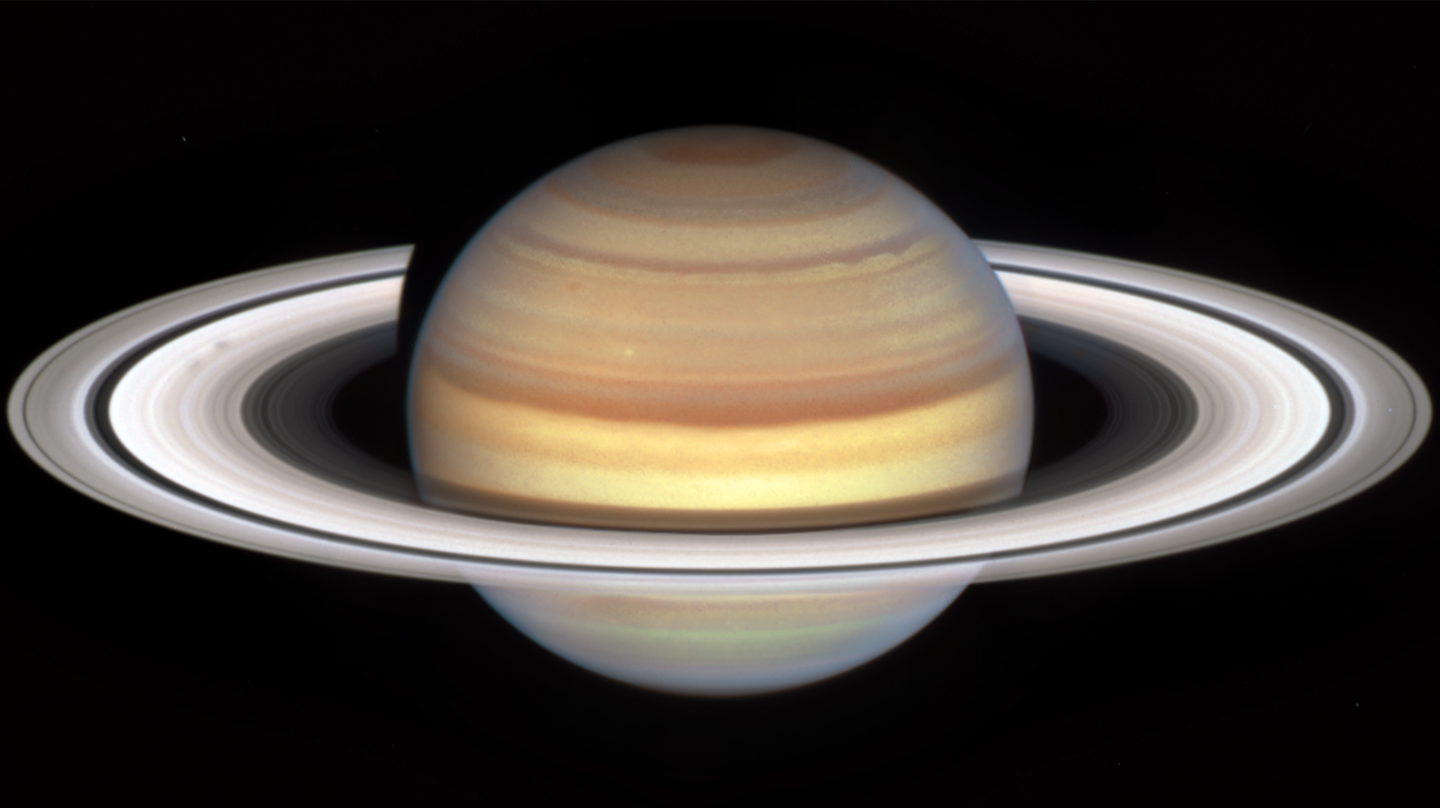
    Saturn’s “spoke season,” seen by NASA’s Hubble Space Telescope’s Outer Planet Atmospheres Legacy (OPAL) program. Two smudgy spokes are seen in the B ring (left). The shape and shading of spokes can appear light or dark, depending on the viewing angle, and sometimes appear more like blobs than classic radial spoke shapes, as seen here. NASA, ESA, and Amy Simon (NASA-GSFC); Image Processing: Alyssa Pagan (STScI)

    Happy “spoke” season, Saturnians! NASA’s Hubble Space Telescope captured new images of the spoke season during the planet’s equinox, when mysterious smudgy spokes appear around Saturn’s famed rings. Scientists still don’t have a full understanding of what causes these spokes and their seasonal variations.

    Saturn is tilted on its axis and has four seasons just like Earth. Since Saturn has a larger orbit around the sun, each season on Saturn lasts about seven Earth years. During this cycle, an equinox occurs when Saturn’s rings are tilted edge-on to the sun, and as Saturn approaches its summer and winter solstices, these spokes disappear.

    The autumnal equinox for Saturn’s northern hemisphere is on May 6, 2025 and it gets closer, the spokes are expected to become more prominent and observable.

    Astronomers believe that the spokes are caused by Saturn’s variable magnetic field. When a planet’s magnetic field interacts with solar wind, it creates an electrically charged environment.

    Scientists believe that the smallest, dust-sized icy ring particles can also become charged, and temporarily levitate those particles above the larger icy particles and boulders in the rings.

    NASA’s Voyager mission first observed the ring spokes during the early 1980s. Depending on how much is illuminated and the viewing angle, the strange features can appear dark or light.

    To learn more about Saturn and the other gas giants of our solar system (Jupiter, Uranus, and Neptune), Hubble’s Outer Planet Atmospheres Legacy (OPAL) is a project, is taking long time baseline observations of the outer planets to better understand their evolution and atmospheric dynamics. The measurements will be taken throughout the remainder of Hubble’s operation,  which could be into the 2030s.

    “Thanks to Hubble’s OPAL program, which is building an archive of data on the outer solar system planets, we will have longer dedicated time to study Saturn’s spokes this season than ever before,” said NASA senior planetary scientist Amy Simon, head of the Hubble OPAL program, in a statement.

    Saturn’s last equinox occurred in 2009 and NASA’s Cassini spacecraft was orbiting it for close-up reconnaissance. Hubble is now continuing the work of monitoring Saturn and other outer planets for long-term now that Cassini and Voyager have wrapped up their missions.

    “Despite years of excellent observations by the Cassini mission, the precise beginning and duration of the spoke season is still unpredictable, rather like predicting the first storm during hurricane season,” said Simon.

    While other planets have ring systems, Saturn’s are the most prominent which makes them a good laboratory for studying spokes. “It’s a fascinating magic trick of nature we only see on Saturn – for now at least,” Simon said.

    Next, Hubble’s OPAL program will add visual and spectroscopic data to Cassini’s archived observations. Putting these pieces together could paint a more complete picture of the spoke phenomenon and what it can tell us about the physics of planetary rings.

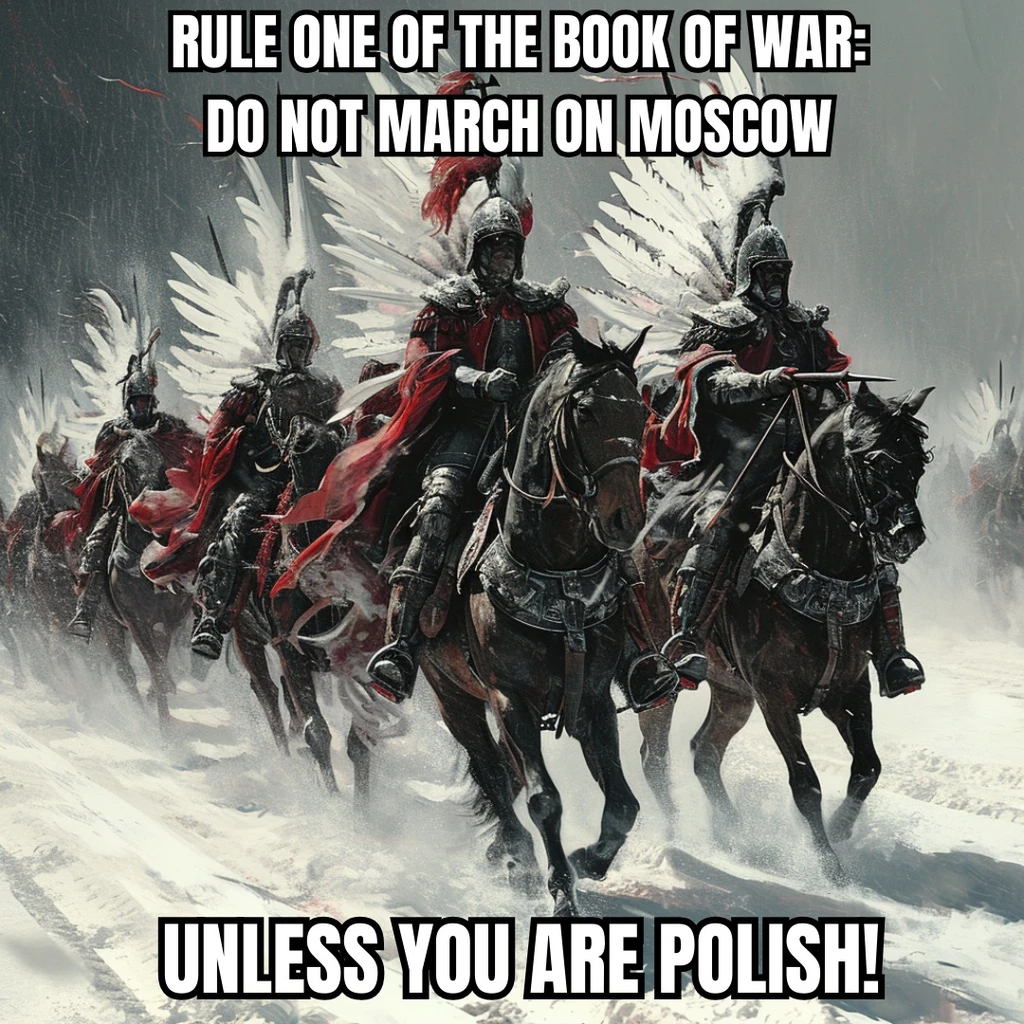
  • Rule One of the Book of War: Do not march on Moscow – Unless You Are Polish!

    Rule One of the Book of War: Do not march on Moscow – Unless You Are Polish!

    Polish Cavalry befor a Battle. Wikipedia / Public Domain

    Conquering Moscow

    It’s often said that Russia never was conquered by European powers. Despite the fact that Napoleon with his great army in 1812, and Hitler 131 years later both failed, this task wasn’t impossible to achieve. This piece of history will present to you some less-known events from 1610.

    Prelude

    In the 16th century, most European countries were focusing on colonization, yet not every country had opportunities to cross the seas. For Eastern Europe, the Terra Incognita and the sphere of interests were laying on the east. For Polish-Lithuanian Commonwealth, one of the biggest countries in Europe back then, a big neighbor like Russia, afflicted by many internal conflicts, was tempting prey. Russia saw it coming and in 1609 signed an alliance with the Kingdom of Sweden. In 1605, the Polish-Russian War started.

    View of 17th-century Moscow (Drawing by Apollinary Vasnetsov / Wikipedia / Public Domain)

    View of 17th-century Moscow.

    A few months later, 15,000 Swedish soldiers and mercenaries from Scotland, England, France and Germany entered Veliky Novgorod to aid the current Tsar of Russia. The King of Poland, Sigismund III Vasa who still had desired his Swedish throne back, marched out with his 22,000-man army toward Smolensk, one of the strongest Russian fortresses. A joint Swedish-Russian Army led by Dmitry Shuisky was sent by Tsar Vasily IV (brother of Dmitry) in order to break the siege of Smolensk.

    Battle of Klushino

    “Necessitas in loco, spes in virtute, salus in victoria” – latin sentence spoken by Hetman Żółkiewski before the battle.

    In summer 1610, Polish Hetman Stanisław Żółkiewski received intelligence about Shuisky’s army marching to besieged city of Smolensk. The Russians were not aware of the real number of the Polish army. The Poles, on the other hand, knew very well how highly outnumbered they were, yet Hetman Żółkiewski was confident about the might of the famous Winged Hussars and decided to press to the advance. He took with him only the most mobile units, around 6,500 in total (5,500 Winged Hussars included).

    At night of the 4th of July 1610, the Polish Army marched across the muddy roads, leaving their supplies behind. After four miles, the Poles were surprised to see that the Russian camp that was still… asleep and unaware of the presence of the enemy. 30,000 Russians (led by Dmitry Shuisky) and 5,000 mercenaries (led by Jacob De la Gardie) were completely surprised when the first wave of Winged Hussars launched the charge. The first part of the battle consisted of Polish hussars repeatedly charging the fortified Russian positions. Some Hussar units charged as many as ten times each. With constant attacks, the commander of the Polish Army tried to break the spirit and formations of the enemy and hide their real numbers.

    National heroes of Russia: Kuzma Minin and Dmitry Pozharsky. Note the historically accurate banner (Painting by Mikhail Scotti / Public Domain / Wikipedia) National heroes of Russia: Kuzma Minin and Dmitry Pozharsky. Note the historically accurate banner.
    The entire battle lasted about five hours. The turning point of the battle came when heavy armoured Swedish Reitars failed to perform their caracole and that decisive moment was an excellent opportunity for the next charge that forced the Swedes to retreat. After that, the whole Russian formation collapsed and the slaughter of retreating Russo-Swedish forces began.

    Meanwhile, most of the Polish army were exhausted more interested in looting the enemy camp (luxury goods and, from a military point of view, the most important trophy – gold for the mercenaries), yet some units pursued the retreating Russians, inflicting several thousand casualties.

    Total losses on the Polish side were 400 killed, including 100 Winged Hussars. The Russians lost 5,000 to 8,000 men. The road to the capital of Russia was now widely open.

    “Then when there were no more of the German infantrymen harassing us by the hedge, a few troops of our cavalry, joining together, charged the foreign cavalry with lances, – those who still had them – sabers, and broadswords. They, deprived of protection of the Russian soldiers and cavalry, unable to resist, began escaping back into their camp. But there too our men rode after, and hitting and hacking drove them through their own camp” – Hetman Żółkiewski’s Memoires

     Battle of Klushino (By Szymon Boguszowicz - www.kluszyn1610.pl / Wikipedia / Public Domain)

    Battle of Klushino.

    March to Moscow

    The ignominious defeat of Dmitry was the main reason of the Tsar’s dethronement. Hetman Żółkiewski set off his army two days after the battle. The Polish troops were strengthened by 8,000 Russians after the deal proclaiming the Polish prince, Władysław IV Vasa, as a new Tsar of Russia. Population in Russia gladly received this news as it would mean a peace for their country and the end of the many years’ turmoil.

    On 3rd of August, Żółkiewski entered the Moscow. The Polish prince was announced as a Tsar of Russia under one condition – conversion to orthodoxy. The king of Poland had to stop the siege of Smolensk and returned all conquered castles. On 28th of August, the crowd swore their allegiance to the Władysław IV Vasa.

    Winged Hussars (Painting by Józef Brandt / Wikipedia / Public Domain)

    Winged Hussars.

    Aftermath

    Władysław IV Vasa claimed the Tsar’s title from 1610 to 1634 but never assumed the throne, because his father, king of the Polish-Lithuanian Commonwealth, failed to finish the negotiations with the boyars (the Russian aristocracy).

    Vasily IV of Russia was the only member of House of Shuysky to become Tsar and the last member of the Rurikid dynasty to rule. The boyars made him a monk against his will, to ensure his political death.

    Shuysky Tribute in 1611 (Painting by Jan Matejko / Public Domain / Wikipedia)

    Shuysky Tribute in 1611.

    Zygmunt III Vasa wanted the crown of the Tsar for himself in order to take back his inherited throne of Sweden. His pro-Catholic attitude was one of the reasons why he lost Sweden and why he will lost Moscow in the near future…

    The Battle of Klushino is commemorated (after 1990) on the Tomb of the Unknown Soldier, Warsaw, with the inscription “KLUSZYN – MOSKWA 2 VII – 28 VIII 1610”.

    The battle is remembered as one of the greatest triumphs of the Polish cavalry and an example of excellence and supremacy of the Polish military at the time.