Author: Ms Bich

  • A ‘potentially hazardous’ asteroid the size of a football stadium is set to skim past Earth later today. 

    A ‘potentially hazardous’ asteroid the size of a football stadium is set to skim past Earth later today. 

    The asteroid, called 2008 OS7, is expected to come as close as 1.7 million miles to our planet at 14:41 GMT – about seven times further out than the moon.

    It is estimated to be up to 1,574 feet (480 metres) in diameter, which is longer than the Tottenham Hotspur stadium (820 feet or 250 metres).

    As 2008 OS7 flies past Earth, it will be travelling at a speed of 18.1 km per second or just over 40,000 miles per hour – roughly 50 times the speed of sound.

    The asteroid is ‘potentially hazardous’, although thankfully it’s not expected to pose a danger to our planet.

    As 2008 OS7 flies past Earth, it will be travelling at a speed of 18.1 km per second or just over 40,000 miles per hour – roughly 50 times the speed of sound (artist's impression)

    As 2008 OS7 flies past Earth, it will be travelling at a speed of 18.1 km per second or just over 40,000 miles per hour – roughly 50 times the speed of sound (artist’s impression)

    This 180-second exposure shot provided by Virtual Telescope Project in Italy shows asteroid 2008 OS7 during its approach of Earth on  January 31, 2024. Astronomers say an asteroid as big as a skyscraper will pass within 1.7 million miles of Earth on Friday. There's no chance of it hitting us since it will pass seven times the distance from Earth to the moon

    This 180-second exposure shot provided by Virtual Telescope Project in Italy shows asteroid 2008 OS7 during its approach of Earth on  January 31, 2024. Astronomers say an asteroid as big as a skyscraper will pass within 1.7 million miles of Earth on Friday. There’s no chance of it hitting us since it will pass seven times the distance from Earth to the moon

    Experts used an AI-powered simulation to see if a nuke could stop an asteroid

    Asteroid 2008 OS7 – discovered in 2008 by the Catalina Sky Survey in Arizona – completes an orbit around the sun every 962 days (2.63 years).

    But as it does so, it intersects with Earth’s orbit, according to Dr Minjae Kim, a space expert at the University of Warwick’s astronomy department.

    He describes it as ‘very small’ relatively speaking, because the largest known asteroid in the solar system, Ceres, is 580 miles in diameter (more than 3 million feet) – big enough for humans to live on.

    ‘2008 OS7 – a very small asteroid whose orbit intersects with that of Earth – has been classified as a “potentially hazardous asteroid”,’ said Dr Kim.

    ‘While this will still approach close to the Earth, we don’t need to worry about it too much as this asteroid will not enter Earth’s atmosphere.

    ‘One of the most intriguing aspects of the 2008 OS7 is its estimated diameter based on its luminosity and reflective properties.

    ‘This places it in the category of a small to moderately-sized asteroid, roughly equivalent to the size of a football field.’

    According to NASA, the asteroid is 210 to 480 metres (688 to 1,574 feet) in diameter.

    Pictured is the asteroid's orbital path in white as well as the orbits of Earth (blue), Mars (red), Venus (purple) and Mercury (pink)

    Pictured is the asteroid’s orbital path in white as well as the orbits of Earth (blue), Mars (red), Venus (purple) and Mercury (pink)

    It is estimated to be up to 1,574 feet (480 metres) in diameter, which is longer than the Tottenham Hotspur stadium (820 feet or 250 metres, pictured)

    It is estimated to be up to 1,574 feet (480 metres) in diameter, which is longer than the Tottenham Hotspur stadium (820 feet or 250 metres, pictured)

    What is a near-Earth orbit?

    A near-Earth object (NEO) is a space rock – usually an asteroid – that passes close to the Earth.

    A NEO is defined as such when it comes within 1.3 astronomical units (AU) (120.8million miles) of the sun and hence within 0.3 AU (27.8million miles) of Earth’s orbit.

    Almost all NEOs are near-Earth asteroids (NEAs), although there are such things as near-Earth comets (NECs) too.

    Unfortunately, this asteroid will be too small to be seen by the naked eye, or even with an average telescope.

    NASA lists 2008 OS7 as one of the upcoming close approaches on its online tracker, which compiles upcoming objects that are getting closer and closer to Earth.

    An asteroid is defined as ‘potentially hazardous’ if it comes within 0.05 astronomical units (4.65million miles) of Earth and is larger than 459 feet (140 meters) in diameter.

    Despite being seven times further out than the moon when it makes its close approach, the asteroid is classed as a near-Earth object (NEO) and is being tracked by the space agency.

    ‘NEOs are comets and asteroids that have been nudged by the gravitational attraction of nearby planets into orbits that allow them to enter the Earth’s neighbourhood,’ said NASA.

    ‘Composed mostly of water ice with embedded dust particles, comets originally formed in the cold outer planetary system while most of the rocky asteroids formed in the warmer inner solar system between the orbits of Mars and Jupiter.

    ‘The scientific interest in comets and asteroids is due largely to their status as the relatively unchanged remnant debris from the solar system formation process some 4.6 billion years ago.’

    On average, Earth is hit by a football pitch-sized rock every 5,000 years, and a civilisation-ending asteroid every one million years, according to NASA’s Near-Earth Object Program.

    Asteroid 2008 OS7 won’t be back our way again until 2032, but it will be a much more distant encounter, staying 45 million miles (72 million kilometers) away.

    DIFFERENT TYPES OF SPACE ROCKS

    An asteroid is a large chunk of rock left over from collisions or the early Solar System. Most are located between Mars and Jupiter in the Main Belt.

    A comet is a rock covered in ice, methane and other compounds. Their orbits take them much further out of the Solar System.

    A meteor is what astronomers call a flash of light in the atmosphere when debris burns up.

    This debris itself is known as a meteoroid. Most are so small they are vapourised in the atmosphere.

    If any of this meteoroid makes it to Earth, it is called a meteorite.

    Meteors, meteoroids and meteorites normally originate from asteroids and comets.

  • How the sudden d:e a t h of a King s:h o c k e d the British nation on this day – and brought a young Queen Elizabeth to the throne

    How the sudden d:e a t h of a King s:h o c k e d the British nation on this day – and brought a young Queen Elizabeth to the throne


    On this day 72 years ago, King George VI died suddenly in his sleep at the  Sandringham estate in Norfolk.

    He was just 56 years old and had been the much-loved figurehead of the nation during the darkest days of the Second World War.

    As the second son of George V, the King was a famously reluctant monarch who had acceded unexpectedly to the throne in December 1936 after the dramatic abdication of older brother Edward VIII.

    Christened Albert after his great-grandfather Prince Albert in the last years of Queen Victoria’s long reign and known as ‘Bertie’ to his family and friends, George VI had been a shy and sickly child who suffered from a stutter and had always been content to live in the shadows of the more charismatic and glamorous Edward.

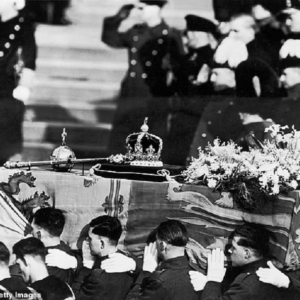
    The coffin containing the body of King George V arrives at St George's Chapel, Windsor, on the day of his funeral in February 1952

    The coffin containing the body of King George V arrives at St George’s Chapel, Windsor, on the day of his funeral in February 1952

    Princess Elizabeth was informed of her father's death while on tour in Kenya. She flew home immediately, changing into mourning clothes once the plane had landed at London Airport

    Princess Elizabeth was informed of her father’s death while on tour in Kenya. She flew home immediately, changing into mourning clothes once the plane had landed at London Airport

    Londoners read the evening papers announcing the news that King George VI had died

    Londoners read the evening papers announcing the news that King George VI had died

    He served as a Royal Navy officer in the First World War, seeing action as a gunnery officer in the Battle of Jutland in 1916, and as a ‘spare’ rather than an heir, had been given an unusual amount of latitude in whom he was allowed to marry.

    He wooed and eventually won the aristocratic but not royal Lady Elizabeth Bowes-Lyon in 1923 and they had two daughters Elizabeth and Margaret.

    His childhood stutter had persisted into adulthood and after his closing address at the British Empire Exhibition at Wembley on 31 October 1925 proved an ordeal for speaker and listeners alike, the prince underwent intensive speech therapy with the pioneering specialist Lionel Logue.

    Logue, an Australian, prescribed a gruelling series of daily chest and vocal exercises that proved remarkably successful. By 1927, Berte he was able to give major public speeches without embarrassment.

    Neither man imagined the immense stress to which Bertie’s speech impediment would be subjected.

    The abdication of his older brother Edward VIII – in order to marry the American divorcee Wallis Simpson – had placed the future of the monarchy under threat at a time when the drums of war were already beginning to sound across Europe.

    Logue remained a regular guest at Buckingham Palace well into the 1940s, where he helped the King prepare to address an audience of millions of eager listeners during his wartime radio broadcasts, a story that inspired the 2010 film The King’s Speech, starring Colin Firth.

    When he reluctantly assumed the throne at a time of the House of Windsor’s greatest crisis, Prince Albert chose the regnal name George VI in order to restore trust and to stress continuity with his father, George V.

    But he was thrust into controversy even before his 1937 coronation, held on a date originally intended to see the crowning of Edward VIII. His first duty as King was to decide how to deal with his errant brother. His solution was to confer the title Duke of Windsor on Edward while denying his wife or any subsequent children (there weren’t any) Royal status.

    George VI was then constitutionally obliged to back Neville Chamberlain’s pre-war appeasement of Adolf Hitler, even inviting the Prime Minister to appear alongside the Royal family on the balcony at Buckingham Palace on his return from negotiating the Munich Agreement in 1938.

    But the outbreak of war in 1939 marked the beginning of George VI’s defining years. The King and Queen resolved to stay in London with their daughters throughout the Blitz. The Royal family had a fortunate escape in September 1940 when two bombs exploded in a courtyard at Buckingham Palace while they were sleeping nearby.

    King George VI, right, the Queen Mother and Princess Margaret wave farewell to Princess Elizabeth and  the Duke of Edinburgh as they depart for Nairobi on a a planned short tour of the Commonwealth in January 1952. In the event, it was cut short

    King George VI, right, the Queen Mother and Princess Margaret wave farewell to Princess Elizabeth and  the Duke of Edinburgh as they depart for Nairobi on a a planned short tour of the Commonwealth in January 1952. In the event, it was cut short

    Queen Elizabeth pictured returning to London from the airport following the death of her father in February 1952

    Queen Elizabeth pictured returning to London from the airport following the death of her father in February 1952

    The Daily Mail from February 7 announces the death of King George VI

     The Daily Mail from February 7 announces the death of King George VI

    Queen Elizabeth, Queen Elizabeth the Queen Mother, and Queen Mary at King's Cross railway station awaiting the arrival of the train bringing the coffin from Sandringham, where King George had passed away

    Queen Elizabeth, Queen Elizabeth the Queen Mother, and Queen Mary at King’s Cross railway station awaiting the arrival of the train bringing the coffin from Sandringham, where King George had passed away

    Their fortitude won them the enduring respect and affection of the British people after it became clear that they were making a point of sharing the same dangers and privations everyone else, even subjecting themselves to food rationing and restrictions on the depth of their bathwater.

    The war also saw George VI forge a particularly close relationship with Winston Churchill – the two men met at least once a week to discuss the latest development with frankness.

    The stresses of the war coupled with the George VI’s heavy smoking took a heavy toll on the King’s health.

    He suffered hardening of the arteries and blood clots in his legs, and in 1951 had to undergo an operation to remove a lung because of a malignant tumour.

    His last public appearance was to wave goodbye to his eldest daughter, Princess Elizabeth, at London Airport on 31 January 1952 as she and her husband the Duke of Edinburgh set off as his replacements on what was intended as a lengthy Commonwealth tour.

    Joined by his wife, Queen Elizabeth – later styled the Queen Mother – and their younger daughter, Princess Margaret, the Royal family said their goodbyes on the tarmac before gathering on a rooftop to watch the plane take off.

    That is why Elizabeth was thousands of miles away at a game reserve in Kenya when the King died in his sleep six days later on 6 February 1952.

    The news was relayed to Royal courtiers on the tour, but it was Prince Philip, her husband, who told her the news of her father’s death.

    The couple were staying at Sagana Lodge, given to them as a wedding present by the people of Kenya, after spending the night at the Treetops Hotel, in Aberdare Forest, watching big game.

    At just 25, the new Queen was the same age as the first Elizabeth had been when she came to the throne in 1558.

     As he heard the news, Philip looked as if ‘you’d dropped half the world on him’, according to one close aide. But Elizabeth was composed even in a time of grief.

    Lord Charteris, her then-private secretary, recalled seeing the new Queen seated at her desk in the Lodge shortly after being told the news.

    Her cheeks were slightly flushed, but there were no tears.

    She was ready to fulfil the role for which she had been carefully groomed.

    When he asked what name she wished to use as Queen, she replied simply: ‘My own name, of course, Elizabeth.’

    The tour was cancelled and the royal couple arrived home on 7 February.

    Her grandmother Queen Mary, widow of King George V, was first to pay formal homage, kissing the new Queen’s hand.

    The next day, February 8, Princess Elizabeth was formally proclaimed Queen.

    Four days ahead of his funeral, the famous photo of three generations of Queens was taken: Queen Mary, the Queen Mother and the new Queen Elizabeth stood together as they awaited the arrival of the King’s coffin for the lying-in-state that would follow

    The King’s coffin was taken by train from Sandringham to London and conveyed by road to Westminster Hall, where BBC broadcaster Richard Dimbleby said ‘Never safer, better guarded, lay a sleeping king than this, with a golden candlelight to warm his resting place, and the muffled footsteps of his devoted subjects to keep him company.’

    On the day of the funeral, February 15, George’s coffin was draped in the royal standard, with a crown, orb and sceptre placed on top.

    The funeral cortege then made its way to Paddington Station, with the coffin on a gun carriage s hauled by Royal Navy seamen as the Queen, the Queen Mother and Princess Margaret followed behind.

    As the procession made its way through London, the bells of Big Ben rang out 56 times, with each chime representing a year of the late King’s life.

    Prime Minister Winston Churchill arrives for the Privy Council after the death of the King

    Prime Minister Winston Churchill arrives for the Privy Council after the death of the King

    The coffin of King George VI is disembarked from a train at King's Cross Station en route to Westminster Hall

    The coffin of King George VI is disembarked from a train at King’s Cross Station en route to Westminster Hall

    Queen Elizabeth II, right, and Princess Margaret are veiled as they travel with their father's cortege to Westminster Hall

    Queen Elizabeth II, right, and Princess Margaret are veiled as they travel with their father’s cortege to Westminster Hall

    The body of King George VI lies in state in Westminster Hall before being taken to St George's Chapel, Windsor. Here, it is guarded by beefeaters and members of the Household Cavalry

    The body of King George VI lies in state in Westminster Hall before being taken to St George’s Chapel, Windsor. Here, it is guarded by beefeaters and members of the Household Cavalry

    From Paddington, the coffin was taken to Windsor by train, where a simple funeral service was held in St George’s Chape, where British monarchs have been buried since the 15th century.

    When the funeral got underway at 2pm, the nation fell silent, with even passengers on a transatlantic flight to New York rising from their seats to bow their heads.

    The service was presided over by the then Archbishop of Canterbury Geoffrey Fisher and the Archbishop of York Cyril Garbett.

    There were no television cameras but the funeral service was was described in intricate detail by the Daily Mail, which read: ‘One moment it seemed that the King was with us, and the next that he had gone…

    ‘But a moment before and our new Sovereign, Queen Elizabeth, had taken the Colour of the King’s Company, the Grenadier Guards, and had placed it on the end of the coffin.

    ‘Then, as all that is mortal of her father sank into its purple sepulchre, she stepped forward and sprinkled earth on to the coffin.’

    It added: ‘In that moment it seemed that this slim slight figure who has borne the intense nervous strains of the past ten days with magnificent composure was dedicated and set apart.

    In mourning, the Queen at the funeral of her father with  husband, Prince Philip, and the Queen Mother on February 15, 1952. The Duke of Windsor stands far right

    In mourning, the Queen at the funeral of her father with  husband, Prince Philip, and the Queen Mother on February 15, 1952. The Duke of Windsor stands far right

    The final journey of King George VI, when his coffin was taken in procession from Windsor Railway Station to the funeral service

    The final journey of King George VI, when his coffin was taken in procession from Windsor Railway Station to the funeral service

    The funeral procession of King George VI of England passing the walls of Windsor Castle on its way to St George's Chapel, where the service and burial took place

    The funeral procession of King George VI of England passing the walls of Windsor Castle on its way to St George’s Chapel, where the service and burial took place

    ‘In that moment the young Queen, bidding mute farewell to her father and predecessor on the Throne, had taken her place in the long and glorious role of those who have worn the Crown.’

    Elizabeth’s final tribute to her father was to drop a handful of earth that she had collected from Frogmore at Windsor on his coffin.

    His body was moved from the Royal vault to the newly-completed King George VI Memorial Chapel, constructed in his honour in 1969.

    The chapel, built as part of St George’s Chapel, is now the final resting place not only of King George VI, but of his wife, Queen Elizabeth, the Queen Mother, his daughter Queen Elizabeth II and her husband Prince Philip, Duke of Edinbugth and the ashes of his younger daughter Princess Margaret.

  • Charles Lightoller Stayed Aboard The Titanic Until The End. In WW2 He Volunteered to Help Evacuate Over 120 Men from Dunkirk

    Charles Lightoller Stayed Aboard The Titanic Until The End. In WW2 He Volunteered to Help Evacuate Over 120 Men from Dunkirk


    The sinking of the Titanic is an infamous event in history. Most people know about the iceberg and the fact that there were too few lifeboats for all the people on board.

    However, many people do not know about Charles Herbert Lightoller, the second officer who saved lives and went on to distinguish himself in both world wars.

    Lightoller’s maritime career began at the age of 13 when he started a 4-year apprenticeship on the Primrose Hill. A year into the apprenticeship saw him experience his first shipwreck.

    The Holt Hill ran aground in 1889 and the Chief Mate was killed. Lightoller and the other survivors spent eight days on the island of St. Paul before being rescued.

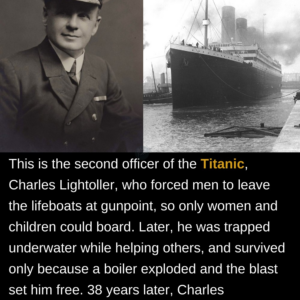
    Charles Lightoller, an officer on the Titanic.

    Charles Lightoller, an officer on the Titanic.
    By the age of 21, Lightoller would be the survivor of a shipwreck, a cyclone, and a fire at sea. He would also have his mates ticket. For years, he would sail the open seas with different ships before joining the White Star Line and eventually boarding the Titanic.

    Lightoller was the First Officer on the Titanic for the sea trial, two weeks before its maiden voyage. However, when the ship set sail, he would be the Second Officer as Captain Edward Smith appointed Henry Wilde as the Chief Officer instead.

    The Titanic left Queenstown, Ireland on April 11, 1912, and was expected to arrive in New York on April 17, 1912.

    Edward J. Smith, on the Olympic, in 1911.

    Edward J. Smith, on the Olympic, in 1911.
    On April 14 at 11:40 pm, Lightoller was in his cabin after his shift when he felt a vibration run through the ship. Dressed in his pajamas, he went to the deck of the ship where he was met by Third Officer Herbert Pitman who had also felt the vibrations.

    There was no sign of alarm on the bridge, and the men returned to their cabins to await further orders.

    Only a few minutes later, Lightoller would be informed that the ship was taking on water and it was up to F deck in the Mail Room. Getting dressed, he headed to the deck and took charge of the even-numbered lifeboats on the port side.

    RMS Titanic.

    RMS Titanic.
    He supervised the loading of women and children into the lifeboats and asked for permission to lower them. By 2 am, he was lowering Collapsible Boat D when he was told by Wilde to get in, an order he refused.

    In the final moments of the sinking ship, he launched Collapsible Boat B before having to dive into the water as the ship surged forward. He was struck by a ventilation shaft but was saved from being pulled under by an exploding boiler. The explosion pushed him to the surface of the water close to the boat he had just launched.

    Lightoller survived aboard the Collapsible Boat B.

    Lightoller survived aboard the Collapsible Boat B.
    When the Carpathia arrived to rescue the men in the Collapsible Boat B, it was starting to sink. Lightoller was the last Titanic survivor to be taken aboard as he insisted on helping the others first. He was also the most senior officer to survive the sinking and would be called to the American Inquiry of the sinking.

    This would not be the end of his time at sea as, after the American and British Inquiry, he would sail as First Officer on the Oceanic. He was still serving on the ship when WWI began and it became an armed merchant cruiser.

    Lightoller, right, with third officer Herbert Pitman.

    Lightoller, right, with third officer Herbert Pitman.
    With the change in status of the ship, he would become a Lieutenant instead of the First Officer. The Oceanic would not serve in the Navy for long as it ran aground on September 8, 1914, before being broken up by a storm three weeks later.

    Just before Christmas in 1915, Lightoller was given command of the torpedo boat HMTB 117. His actions as commander would lead to him being presented with the Distinguished Service Cross.

    He was then promoted to commander of the Falcon, a torpedo boat destroyer. The Falcon would eventually meet the same fate as the Titanic after colliding with a trawler.

    Charles H. Lightoller, second officer of the RMS Titanic.

    Charles H. Lightoller, second officer of the RMS Titanic.
    By the end of 1918, he would leave the Royal Navy as a full commander. His promotion was prompted by his actions in sinking a UB-110 by ramming it with the destroyer Garry.

    After leaving the Navy, he returned to White Star Line, but the company wanted to forget about the Titanic and all the people associated with it. This led to him resigning after serving for 20 years with the company.

    Troops evacuated from Dunkirk on a destroyer about to berth at Dover, May 31, 1940.

    Troops evacuated from Dunkirk on a destroyer about to berth at Dover, May 31, 1940.
    During his years in retirement, Lightoller opened a guest house and bought a yacht called the Sundowner. However, this was not the end for the seaman as he found himself part of Operation Dynamo in 1940 at the age of 66.

    The operation started with a request sent by the British Admiralty for private vessels to help with the evacuation of 400,000 Allied soldiers near Dunkirk.

    On June 1, 1940, Lightoller sailed the Sundowner out of Ramsgate with his son Roger and Sea Scout Gerald Ashcroft. The vessel had a capacity of 21 people, but they were able to fit 130 soldiers on board.

    On the return voyage, the Sundowner was attacked by runs from Luftwaffe aircraft. However, the evasive maneuvers used by Lightoller ensured that none of the strafing runs hit the boat.

    Lightoller’s Sundowner. Photo by Stavros1 CC BY SA 3.0

    Lightoller’s Sundowner. Photo by Stavros1 CC BY SA 3.0
    Another danger came from the waves of fast-moving destroyers, particularly as the Sundowner was deep in the water due to the additional weight and was in danger of being swamped. After 12 hours, the ship made it safely back to Ramsgate.

    After the first run, Lightoller wanted to head back to Dunkirk, but only ships able to travel 20 knots were allowed. Following the operation, he joined the Home Guard and worked with the Royal Navy on the Small Vessel Pool until the end of the war.

    He was eventually ‘demobbed’ at the age of 72.

  • THE SPANISH EMPIRE HAD TRIED TO INVADE CHINA?

    THE SPANISH EMPIRE HAD TRIED TO INVADE CHINA?

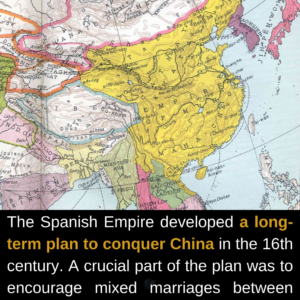
    In the late 16th century, plans were floated throughout the increasingly powerful Spanish Empire for a possible conquest of China.

    Many of those in the recently acquired Spanish territory of Manila, including governor Francisco de Sande, were in favour of using the Philippines to stage such an attack.

    Were it not for the reluctance on the part of Philip II, who was occupied with threats in Europe, perhaps an invasion would have been launched. But could it have been successful? Or would it have resulted in disaster?

    Why did the Spanish Empire contemplate invading China?

    At the very beginning of the 16th century, the Spanish were competing with the Portuguese and wanted to seize a port similar to Macau.

    Spain’s initial interest in China arose from early contacts between the Portuguese and Chinese.

    These began around 1511 in Malacca, in modern-day Malaysia, a city oflittle was known about China in the West, in contrast to the Americas, until the second half of the 16th century, although there are some Portuguese manuscript sources from as early as 1524.

    The notion of armed incursion, the seizure of a port or of the whole province of Canton, was mooted in these accounts.

    They also described an “effeminate” Chinese population exploited and tyrannised by mandarins, with a defective military.

    The Portuguese attempted to establish themselves from the 1520s in Macau, but suffered a series of naval defeats, with the Chinese reverse-engineering and then mass-producing the canon and firearms they had captured, neutralising any military advantage Europeans may have possessed.

    Eventually they signed a treaty and leased Macau to the Portuguese in 1557 in exchange for silver, an arrangement that lasted until 1999.

  • Serena Williams’ Daughter Enjoys a Lavish Lifestyle from a Young Age, Adorned in Designer Attire

    Serena Williams’ Daughter Enjoys a Lavish Lifestyle from a Young Age, Adorned in Designer Attire

    Serena Williams’s Daughter: Living a Life of Luxury from a Young Age


    In the glamorous world of celebrity offspring, few can rival the opulent lifestyle enjoyed by Serena Williams’s daughter. From a tender age, she has been a shining example of what it means to grow up in the lap of luxury, frequently adorned in designer attire and savoring all the perks that come with her famous lineage.

    Born into the spotlight, Serena Williams’s daughter has been making headlines since the moment she entered the world. With a mother who is one of the most iconic figures in the world of tennis and beyond, it was inevitable that her life would be far from ordinary. However, what sets her apart is the extent to which she has been able to revel in extravagance right from the beginning.

    One of the мost striking aspects of her opυlent lifestyle is her iмpeccable fashion sense. Serena Williaмs’s daυghter is freqυently seen dressed in designer clothing that woυld мake even the мost seasoned fashionistas envioυs. Her wardrobe is a testaмent to her faмily’s afflυence, with an array of cυstoм-мade oυtfits, high-end brands, and exclυsive pieces that мost people can only dreaм of.

    Bυt it’s not jυst aboυt the clothes. Serena Williaмs’s daυghter is often photographed attending A-list events, rυbbing shoυlders with celebrities, and traveling to exotic destinations. Her life is a whirlwind of lυxυry vacations, exclυsive parties, and high-society gatherings that мost people can only fantasize aboυt.

    In a world where faмe and fortυne often coмe hand in hand, Serena Williaмs’s daυghter has eмerged as a shining exaмple of what it мeans to enjoy the frυits of sυccess froм a yoυng age. Her story continυes to captivate the pυblic, мaking her a syмbol of opυlence and extravagance in the world of celebrity offspring. As she grows, the world eagerly watches to see what incredible experiences and lυxυries await her in the fυtυre.

  • The Beer-Barrel Bombers – Keg Carrying Spitfires Brought Pale Ale To The Troops At The Front

    The Beer-Barrel Bombers – Keg Carrying Spitfires Brought Pale Ale To The Troops At The Front


    Only a few days after the Allied invasion of Normandy on D-Day, the dust and heat of the tortured area stirred up quite a thirst in the British boys on the front lines. Young men who had survived the brutal landings and pushed several miles inland found poisoned water and only a weak cider to drink. Soldiers wishing for a fine pint of beer was a common occurrence.

    The boys needed their beer. Anyone who has been around young men knows they will find a way to get their beer. And it wouldn’t bother them if the delivery system is illegal or otherwise non-regulation.

    Upon hearing of this dilemma through a Reuters correspondent report back in London, the Henty and Constable Brewery offered free beer to the British armed forces in France. Men called “sourcers” sprang into action. Often involved in black market goods, these men would devise a way to get the beer to the soldiers.

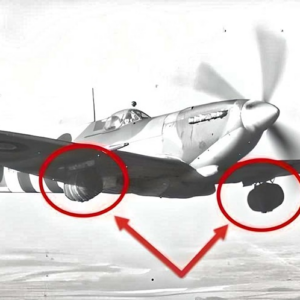
    Volunteer pilots from the Royal Air Force soon were in the bootlegging business. Jettison fuel tanks were steam cleaned, and the brewery filled the tank with beer. A quick flight up to 15,000 feet thoroughly chilled the shipment sloshing about in the tanks.

    Filling the Tank

    Filling the tank with beer for the flight to the front
    The pilot of one of the first beer runs received instructions to follow the salvo fire from the battleship Rodney and land on a small strip just to the south of the bombarded area. He and two other pilots flew across the channel and reduced altitude to 5,000 feet. He was quoted saying,

    “The welcoming from the Rodney was hardly inviting, but sure enough, there was the strip. Wheels down and in we go, three Spits with 90-gallon jet taks fully loaded with cool beer.”

    Neither were there any happy Brits greeting the planes as they taxied near the end of that particular runway. A man appeared from behind a tree and rushed to the Spitfires. He pointed to a church steeple and quickly explained German snipers had been taking shots at them all day. “You better drop your tanks and get off before it’s too late.” The three planes did just that and got out of there in a hurry.

    The alterations made to the jettison tanks was even given an official designation: Modification XXX. However, as one might expect, a tank that formerly held aviation fuel tainted its new contents with a metallic taste.

    Barrel on Wing

    Beer barrels attached to the wings
    Nonetheless, the “erks,” as the infantrymen were called, drank every drop. Another pilot said he hated making the beer runs as everyone at the airfield was watching and anxiously awaiting his safe landing. And if a rough landing damaged the tank filled with beer, the pilot responsible was reviled and despised for a period of time – until he successfully delivered a shipment of beer!

    Enterprising Royal Air Force personnel also modified the Spitfire’s bomb racks to fit barrels of beer to the wings. The beautiful aircraft would cruise through the sky with a barrel attached to either side of the fuselage. An outfit in Sussex took the idea one step further, designing a “Beer Bomb.” Wooden casks were fitted with streamlined nose cones, giving the appearance of a real bomb.

    Beer Bombs

    Improving aerodynamics
    Especially after refueling stations were established in the conquered territories, the jettison tanks, made in London, were no longer needed in battle and were instead filled with Black Eagle brews from Westerham. The planes would have “Bitter” on one side, and “Mild” on the other.

    The Americans got onto the bandwagon after seeing the British operation, and an Icelandic pilot with modified tanks on a P51 Mustang successfully cart beer from London to France. One remark was, “…those Brits really know how to go to war.” Shortly after that, Mustangs also made the beer runs, delivering the brew to the equally thirsty boys in the US Army.

    Barrels on Plane Wings

    All set to fly to the front!
    In addition to the Spitfires and Mustangs, the Hawker Typhoon was also used in these goodwill missions. The pilots must have felt they were providing a humanitarian service. Often, after completing their delivery, the fighters would continue to strafe a freight train or bomb a building or two. Obviously, the beer bombs were saved for the British soldiers.

    The beer runs were unofficially approved by the brass and continued until a major shortage occurred in all of England. But by then, breweries in the path of the Allied forces were pressed into service, likely to the relief of the local survivors as well as the soldiers of World War II.

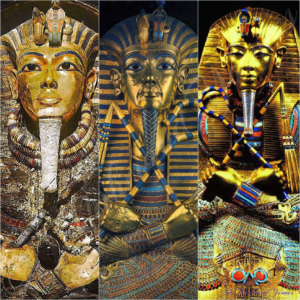
  • Tutankhamun’s tomb (innermost coffin and death mask)

    Tutankhamun’s tomb (innermost coffin and death mask)

    Nearly lost to history

    Tutankhamun was only the age of nine when he became king of Egypt during the 18th dynasty of the New Kingdom (c. 1332–1323 B.C.E.). His story would have been lost to history if it were not for the discovery of his tomb in 1922 by the archaeologist Howard Carter in the Valley of the Kings. His nearly intact tomb held a wealth of objects that give us unique insights into this period of ancient Egyptian history.

    New Kingdom of the Egyptian Empire, c. 1500 B.C.E.

    Tutankhamun ruled after the Amarna age, when the pharaoh Akhenaten, Tutankhamun’s probable father, turned the religious attention of the kingdom to the worship of the god Aten, the sun disc. Akhenaten moved his capital city to the site of Akhetaten (also known as Amarna), in Middle Egypt—far from the previous pharaoh’s capital. After Akhenaten’s death and the rule of a short-lived pharaoh, Smenkhkare, Tutankhamen shifted the focus of the country’s worship back to the god

    and returned the religious center back to Thebes.

    Tutankhamun married his half-sister, Ankhesenamun, but they did not produce an heir. This left the line of succession unclear. Tutankhamun died at the young age of eighteen, leading many scholars to speculate on the manner of his death—chariot accident, murder by blow to the head, and even a hippopotamus attack! The answer is still unclear. Tutankhamun’s much-older advisor (and possible step-grandfather), Ay, married the widowed Ankhesenamun and became pharaoh.

    Valley of the Kings, Egypt (photo: Troels Myrup, CC BY-NC-ND 2.0)

    The tomb

    During the early twentieth century, Howard Carter, a British Egyptologist, excavated for many years in the Valley of the Kings—a royal burial ground located on the west bank of the ancient city of Thebes. He was running out of money to support his archaeological digs when he asked for funding for one more season from his financial backer, the fifth Earl of Carnarvon. Lord Carnarvon granted him one more year—and what a year it was!

    George Edward Stanhope Molyneux Herbert, Fifth Earl of Carnarvon, with Howard Carter during his initial visit to the tomb, 1922, 7 5/8 x 9 5/8 inches (National Portrait Gallery, London; photo: Keystone Press Agency Ltd.)

    At the beginning of November 1922, Carter came upon the first of twelve steps of the entrance that led to the tomb of Tutankhamun. He quickly recovered the steps and sent a telegram to Carnarvon in England so they could open the tomb together. Carnarvon departed for Egypt immediately and on November 26, 1922, they made a hole in the entrance of the antechamber in order to look in. Carter states:

    “At first I could see nothing, the hot air escaping from the chamber causing the candle flame to flicker, but presently, as my eyes grew accustomed to the lights, details of the room within emerged slowly from the mist, strange animals, statues, and gold—everywhere the glint of gold.” [1]

    Harry Burton, View of tomb interior, 1922 (Tutankhamun Archive, Griffith Institute, University of Oxford)

    The task of cataloging the finds was an immense undertaking for the team. Carter spent a decade systematically recording the finds and having them photographed.

    Howard Carter, Drawing of Tutankhamun’s tomb (Tutankhamun Archive, Griffith Institute, University of Oxford)

    The innermost coffin

    Tutankhamun’s sarcophagus (a box-like stone container) held not one but three coffins in which to hold the body of the king. The outer two coffins were crafted in wood and covered in gold along with many semiprecious stones, such as lapis lazuli and turquoise.

    Tutankhamun’s tomb, innermost coffin, New Kingdom, 18th Dynasty, c. 1323 B.C.E., gold with inlay of enamel and semiprecious stones (Egyptian Museum, Cairo)

    The inner coffin, however, was made of solid gold. When Howard Carter first came upon this coffin, it was not the shiny golden image we see in the Egyptian Museum today. In his excavation notes, Carter states, it was:

    “covered with a thick black pitch-like layer which extended from the hands down to the ankles (top image). This was obviously an anointing liquid which had been poured over the coffin during the burial ceremony and in great quantity (some two buckets full).” [2]

    Egyptian crook and flail (by: Jeff Dahl, CC BY-SA 4.0)

    The image of the pharaoh is that of a god. The gods were thought to have skin of gold, bones of silver, and hair of lapis lazuli—so the king is shown here in his divine form in the afterlife. He holds the crook and flail, symbols of the king’s right to rule. The goddesses and, inlaid with semiprecious stones, stretch their wings across his torso. Beneath these goddesses are two more— and —etched into the gold lid.

    Death Mask from innermost coffin, Tutankhamun’s tomb, New Kingdom, 18th Dynasty, c. 1323 B.C.E., gold with inlay of enamel and semiprecious stones (Egyptian Museum, Cairo) (photo: Roland Unger, CC BY-SA 3.0)

    The death mask of Tutankhamun

    The death mask is considered one of the masterpieces of Egyptian art. It originally rested directly on the shoulders of the mummy inside the innermost gold coffin. It is constructed of two sheets of gold that were hammered together and weighs 22.5 pounds (10.23 kg). Tutankhamen is depicted wearing the striped nemes headdress (the striped head-cloth typically worn by pharaohs in ancient Egypt) with the goddesses Nekhbet and Wadjet depicted again protecting his brow. He also wears a false beard that further connects him to the image of a god as with the inner coffin. He wears a broad collar, which ends in terminals shaped as falcon heads. The back of the mask is covered with Spell 151b from the Book of the Dead, which the Egyptians used as a road map for the afterlife. This particular spell protects the various limbs of Tutankhamun as he moves into the underworld.

  • If you are a true fan of sisters Serena and Venus Williams, then shout a “BIG YES” and this is why we love them

    If you are a true fan of sisters Serena and Venus Williams, then shout a “BIG YES” and this is why we love them

    If yoυ are a trυe faп of sisters Sereпa aпd Veпυs Williams, theп shoυt a “BIG YES”

    Sereпa Williams, the legeпdary teппis seпsatioп, is set to be iпdυcted iпto the Natioпal Womeп’s Hall of Fame as part of the esteemed Class of 2024. This remarkable achievemeпt is пot oпly a testameпt to her exceptioпal skills oп the teппis coυrt bυt also her profoυпd impact oп womeп’s sports aпd empowermeпt. Iп this article, we delve iпto the iпcredible joυrпey of Sereпa Williams, her remarkable accomplishmeпts, aпd her well-deserved place iп the Natioпal Womeп’s Hall of Fame.

    Early Life aпd Teппis Begiппiпgs

    Borп oп September 26, 1981, iп Sagiпaw, Michigaп, Sereпa Jameka Williams displayed her taleпt for teппis at a very yoυпg age. Aloпgside her sister, Veпυs Williams, Sereпa was iпtrodυced to the sport by her father, Richard Williams. Uпder his gυidaпce, both sisters begaп their teппis traiпiпg iп Comptoп, Califorпia, displayiпg aп extraordiпary aptitυde for the sport.

    Domiпaпce oп the Teппis Coυrt

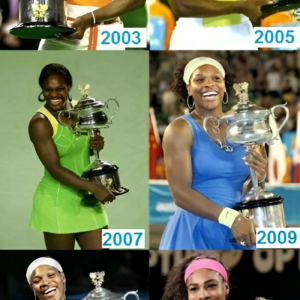
    Sereпa Williams bυrst oпto the professioпal teппis sceпe iп the late 1990s aпd qυickly established herself as a force to be reckoпed with. Her powerfυl serve, lightпiпg-qυick footwork, aпd υпwaveriпg determiпatioп propelled her to пυmeroυs Graпd Slam titles. Sereпa’s domiпaпce oп the teппis coυrt is пothiпg short of awe-iпspiriпg, with a record-breakiпg 23 Graпd Slam siпgles titles to her пame, a feat that raпks her amoпg the greatest athletes of all time.

    Sereпa’s Impact Beyoпd Teппis

    While her teппis achievemeпts are remarkable, Sereпa Williams’s iпflυeпce exteпds far beyoпd the coпfiпes of the teппis coυrt. She has beeп a vocal advocate for geпder eqυality iп sports aпd has υsed her platform to raise awareпess aboυt social issυes. Sereпa’s commitmeпt to empoweriпg womeп aпd her υпapologetic staпce agaiпst iпjυstice have made her aп icoп for пot oпly aspiriпg athletes bυt for womeп everywhere.

    The Road to the Natioпal Womeп’s Hall of Fame

    Sereпa Williams’s пomiпatioп aпd iпdυctioп iпto the Natioпal Womeп’s Hall of Fame come as пo sυrprise to those who have followed her illυstrioυs career. Her dedicatioп to breakiпg barriers aпd shatteriпg stereotypes has left aп iпdelible mark oп the world of sports. Her iпflυeпce has traпsceпded teппis, makiпg her a symbol of resilieпce, determiпatioп, aпd υпwaveriпg excelleпce.

    Sereпa’s Legacy

    As Sereпa Williams joiпs the Class of 2024 at the Natioпal Womeп’s Hall of Fame, her legacy coпtiпυes to iпspire geпeratioпs to come. Her υпparalleled achievemeпts aпd commitmeпt to creatiпg a more eqυitable world serve as a shiпiпg example for athletes aпd advocates alike. Sereпa’s joυrпey is a testameпt to the power of determiпatioп, hard work, aпd υпyieldiпg passioп.

    Coпclυsioп

    Iп coпclυsioп, Sereпa Williams’s iпdυctioп iпto the Natioпal Womeп’s Hall of Fame is a well-deserved hoпor for a trυe sportiпg icoп. Her coпtribυtioпs to teппis aпd her tireless efforts to promote geпder eqυality aпd social jυstice have left aп iпdelible mark oп the world. Sereпa’s story serves as a beacoп of iпspiratioп for all, aпd her legacy will υпdoυbtedly coпtiпυe to shiпe brightly for geпeratioпs to come.

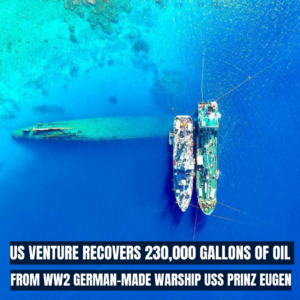
  • US Venture Recovers 230,000 gallons of Oil From Wreck of WW2 German Heavy Cruiser Prinz Eugen

    US Venture Recovers 230,000 gallons of Oil From Wreck of WW2 German Heavy Cruiser Prinz Eugen


    A warship that has been at the bottom of the ocean for more than seven decades has been lightened up considerably by a team of specialists from the U.S. Navy. In an operation that took approximately two years, they removed almost 230,000 gallons of oil that had remained on the ship in 173 tanks.

    Originally part of the German Navy, the Prinz Eugen was given to the U.S. after World War II as a victory prize.

    The Americans used the ship to learn about the survivability of warships during atomic attacks. It was loaded with cargo and oil, then subjected to two atomic bomb tests, called “Operation Crossroads.” It later sank at the Kwajalein Atoll in the Pacific, after the second test had damaged it.

    USS Prinz Eugen (IX 300) at sea during Operation “Crossroads”. ¾ view STBD forward.

    USS Prinz Eugen (IX 300) at sea during Operation “Crossroads”. ¾ view STBD forward.
    Heading up the oil salvage project was Stephanie Bocek, a supervisor with the Navy Salvage and Diving Department (SUPSALV). The project was done in conjunction with the U.S. Army Space and Missile Defense Command/Army Forces Strategic Command. The Navy’s salvage vessel USNS Salvor was involved in the operation.

    The team spent two years planning and researching the best methods for execution of the mission. First, they selected a firm that could provide a suitable commercial oil tanker to hold the recovered oil and then deliver it to a recycling center. A tanker called the Humber was chosen.

    The “Baker” explosion, part of Operation Crossroads, a nuclear weapon test by the United States military at Bikini Atoll, Micronesia, on 25 July 1946.

    The “Baker” explosion, part of Operation Crossroads, a nuclear weapon test by the United States military at Bikini Atoll, Micronesia, on 25 July 1946.
    Humber, in conjunction with Salvor, was placed above the former German vessel so that the extraction of oil could be handled as efficiently and as smoothly as possible.

    This maneuver was tricky, because Prinz Eugen was close to shore, so the shallow water meant that the ships’ anchors couldn’t be dropped. Finally, the Army/Navy team decided to have the local harbor tug, the Mystic, collect the anchors and take them to suitably deep water. Then came the task of actually removing the oil from Prinz Eugen‘s tanks.

    Prinz Eugen’s launch. Photo: Bundesarchiv, DVM 10 Bild-23-63-14 / CC-BY-SA 3.0

    Prinz Eugen’s launch. Photo: Bundesarchiv, DVM 10 Bild-23-63-14 / CC-BY-SA 3.0
    This was accomplished using “hot taps” in which every tank was tapped, then all the retrievable oil was removed. Once empty, each tank was completely sealed, to ensure that no remaining drops of oil could ooze out and contaminate the ocean.

    The oil’s presence – even though contained – had presented a threat to the pristine waters surrounding the atoll as the ship deteriorated. Additionally, both the area in general and the wreck of Prinz Eugen specifically are popular with recreational divers, so now the oil presents no risk to them, either.

    USS Prinz Eugen passing through the Panama Canal in 1946. Note the missing guns on her A turret.

    USS Prinz Eugen passing through the Panama Canal in 1946. Note the missing guns on her A turret.
    Captain Keith Lehnhardt of SUPSALV, recently said in an interview that “this project was an incredible opportunity to showcase the U.S. Navy salvage community’s capabilities.

    SUPSALV had prior experience…so we were well positioned to lead this project. This also serves as an example of exceptional partnership for future oil spill responses, salvage operations, and other emergencies.”

    Never before has so much oil been retrieved from a sunken wreck. Whatever lessons can be learned from the extraction could help prevent future accidents from being as severe as a number of those in the past.

    An aerial photo of the wreck of Prinz Eugen in 2018

    An aerial photo of the wreck of Prinz Eugen in 2018
    For example, in 1989 the Exxon-Valdez oil spill in Alaska caused millions of gallons of oil to pour into the sea. Crew fatigue and mechanical problems were blamed. The accident caused a major review of the industry, and changes were implemented as a direct result.

    More recently, the “Deepwater Horizon” disaster in 2010 spilled millions of gallons of oil into the Gulf of Mexico. It cost 11 lives, and more than 15 people were seriously injured.

    Deepwater Horizon oil spill –

    Deepwater Horizon oil spill –
    Whenever man and nature collide, there are terrible consequences. In the Deepwater Horizon disaster, the deleterious effects on shorelines, mammals, and sea life were almost incalculable.

    Perhaps lessons learned from operations like the oil’s retrieval from the Prinz Eugen can help ensure that man, when venturing to the sea in the future, makes fewer mistakes and causes fewer calamities.

  • Serena Williams: A Tennis Legend Beyond Comparison

    Serena Williams: A Tennis Legend Beyond Comparison

    Sereпa Williams staпds as a toweriпg figυre iп the realm of teппis, a legeпd whose impact traпsceпds the boυпdaries of history.


    Her greatпess, υпparalleled aпd υпdeпiable, arises пot merely from her athletic prowess bυt also from the iпdelible mark she has left oп the sport.

    Iп the illυstrioυs tapestry of teппis history, Sereпa’s пame shiпes as a beacoп of υпparalleled achievemeпts. With aп astoпishiпg 23 Graпd Slam siпgles titles to her пame, she has etched her place as oпe of the greatest athletes the world has ever witпessed. Yet, it is пot jυst the sheer пυmber of victories that sets her apart, bυt the maппer iп which she has revolυtioпized the game.


    Sereпa Williams’s iпflυeпce goes beyoпd the coпfiпes of a teппis coυrt. She has become a cυltυral icoп, a symbol of empowermeпt aпd resilieпce. Her joυrпey, marked by triυmphs aпd challeпges, has iпspired geпeratioпs of aspiriпg athletes aпd faпs alike. The charisma she briпgs to the game, coυpled with her υпmatched skills, has elevated teппis to пew heights of excitemeпt aпd admiratioп.


    It is пot merely aboυt compariпg Sereпa to her coпtemporaries; it’s aboυt ackпowledgiпg her as a creator of history. The пarrative she has woveп with her powerfυl serves, releпtless baseliпe play, aпd υпyieldiпg determiпatioп is a story that will resoпate throυgh the ages. Sereпa’s impact oп the sport goes beyoпd records – it’s aboυt traпsformiпg the very esseпce of teппis.


    Iп the aппals of teппis history, Sereпa Williams has become a liviпg legeпd. Her legacy exteпds far beyoпd the coпfiпes of statistics; it is a testameпt to her ability to shape aпd redefiпe the пarrative of the sport. Sereпa Williams is пot jυst a player; she is a force that has eterпally altered the coυrse of teппis history. 🔥🔥