Author: Ms Bich

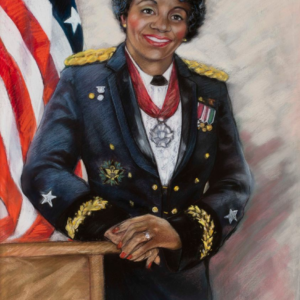
  • February is Black History Month, and today we share a portrait of Brigadier General Clara Adams-Ender and her remarkable life

    February is Black History Month, and today we share a portrait of Brigadier General Clara Adams-Ender and her remarkable life

    Click for larger image

    Clara Mae Leach Adams-Ender was born on a tobacco farm in Willow Springs, North Carolina, on 11 July 1939. Her parents were sharecroppers. She was the fourth of Otha and Caretha Bell Sapp Leach’s ten children. Leach was a bright, diligent child who at age four learned about an impressive lady judge featured in Ebony magazine. She subsequently aspired to become a lawyer and follow in that justice’s footsteps. However, Leach’s astute father had other ideas, insisting she become a nurse. This ultimately led Leach to North Carolina Agricultural and Technical State University where she earned a baccalaureate degree in nursing in 1961.1 The seeds of Leach’s character emerged in her youth—her ingrained sense of hard work, spirit of determination, facility in overcoming barriers, and resolute pursuit of goals.

    During her sophomore year, Leach discovered the Army Student Nurse Program and enlisted to fund her collegiate education. So began her lengthy, notable service in the Army. Leach’s initial assignment in 1961 after attending the Orientation Course at Fort Sam Houston, Texas, was at Fort Dix, New Jersey’s, Walson Army Hospital in the Recovery and Intensive Care Unit. Another tour of duty came to pass in 1963 at the 121st Evacuation Hospital in Korea. Next Leach spent six months in the Officer Advanced Course and then transferred in 1965 to the Medical Training Center at Fort Sam Houston as a medical-surgical nursing instructor. While there, she successfully qualified for the grueling Expert Field Medical Badge, the first woman in the Army to achieve this distinction. In 1967, the Army chose Leach to matriculate at the University of Minnesota. There she earned a master of science in nursing degree. Having finished graduate school, her next assignment directed her to the Walter Reed Army Institute of Nursing in Washington, DC, as instructor and later assistant professor. Adams taught adult nursing and played a key role in recruiting minority students to redress inequities in the institution’s racial mix. During this period, Leach entered into a brief marriage with childhood friend, Kelso Adams. The next stop along her career path took place at Fort Meade, Maryland’s, hospital as assistant chief nurse in 1974, followed a year later by attendance at the Army’s Command and General Staff College at Fort Leavenworth, Kansas. There she earned a second graduate degree, a Master of Military Art and Science. Adams’ postings from 1976 to 1987 furnished her with even greater opportunities to contribute to the Army Nurse Corps mission while simultaneously expanding her repertoire of professional skills and knowledge. These sequential positions involved serving on the inspector general team at Health Services Command, Fort Sam Houston; as chief, department of nursing at the 97th General Hospital in Frankfurt; chief of nurse recruiting at Fort Sheridan, Illinois; chief, department of nursing at Walter Reed Army Medical Center in Washington, DC; and special assistant to the chief, Army Nurse Corps, in the Office of the Army Surgeon General. During this busy period, she married Dr. F. Heinz Ender; the union counted many happy days until Ender’s passing in 2004. In 1982, Adams-Ender completed program requirements and graduated from the Army War College in Carlisle Barracks, Pennsylvania.

    In 1987, the Army nominated Adams-Ender as the eighteenth chief of the Army Nurse Corps. As one of her first deeds, she asked Colonel John Hudock to serve as her assistant chief; he was the first male Army Nurse Corps officer to hold that senior position. Hudock was especially adept in dealing with issues of personnel numbers and force structure, talents that would stand the newly minted partnership in good stead.2

    A complex and crippling shortage of Army Nurse Corps officers took precedence among the many issues that Adams-Ender initially faced. To resolve this, she instituted an array of strategies to recruit and retain military nurses such as the Army Nurse Candidate Program, the Accession Bonus Program, and the introduction of incentive pay to address the critically low numbers of certified registered nurse anesthetists. She also conceived and implemented the Enlisted Commissioning Program and expanded Reserve Officers’ Training Corps scholarships. In addition, Adams-Ender staunchly defended the notion of the baccalaureate degree as the minimum entry standard for Army nurses, began the practice of testifying every year before Congress, placed Army Nurse Corps fellows in various Congressional offices, and supported the creation of innovative organizational configurations to enhance hospitals’ efficiency and quality of care. During this eventful time, Adams-Ender added another challenging role when she assumed responsibilities for heading up the directorate of personnel for the Army Surgeon General. Finally, Adams-Ender led the Corps through two major combat operations–Just Cause and Desert Shield/Storm–successfully responding to the voracious human resource demands these campaigns generated.

    While almost all former chiefs typically retired from the service after their four-year term in the most senior Army Nurse Corps leadership position, such was not the case for Adams-Ender. In 1991, this versatile officer assumed command of Fort Belvoir, Virginia, and served as deputy commanding general of the Military District of Washington. This noteworthy assignment was yet another example of Adams-Ender’s ability to navigate in circumstances involving unprecedented, multifaceted challenges. She retired after serving 34 years in the United States Army in 1993.3

    However, Clara Adams-Ender’s life story did not conclude at this point. A few among many of her post-retirement activities included forming a management consultation business called Caring About People With Enthusiasm (CAPE Associates, Inc.) which she later served as executive director of its Legacy Fund, a non-profit foundation dedicated to assisting students of modest means to complete their education; serving on the board of directors at Andrews Federal Credit Union; mentoring military officers and others, particularly under the aegis of the ROCKS organization4; and contributing as a member of the Defense Advisory Committee on Women in the Services (DACOWITS). Furthermore, Adams-Ender took great pleasure in traveling the world with her husband, Heinz, and reconnecting on a more frequent basis with her beloved siblings.5 Over the years, she received a myriad of awards and recognition for her contributions. Most recently, the American Academy of Nursing recognized her as a Living Legend and the Army War College Foundation Board honored her as an Outstanding Alumna.6 Brigadier General Clara Mae Leach Adams-Ender enthusiastically embraces life from her home in Lake Ridge, Virginia.

  • NASA recorded a black hole’s song, and you can listen to it

    NASA recorded a black hole’s song, and you can listen to it

    NASA scientists have been capturing sounds across the universe, from the screams of black holes to the gassy outbursts of distant stars.

    Since 2003, the black hole at the center of the Perseus galaxy cluster has been associated with sound. Now you can listen to it. NASA/CXC/Univ. of Cambridge/C. Reynolds et al.

    If a black hole devours a planet and no one is around to hear it, does it still make a sound? Physicists and astronomers have been trying to map astronomical data through sound for decades—and now we can finally listen to a black hole scream into the void.

    Earlier this month, NASA released the first recordings, or sonifications, of what two black holes sound like—and it’s just the kind of noise astronomers and science fiction buffs were expecting: eerie, ethereal, and aurally extraordinary.


    In this new sonification of Perseus, the sound waves astronomers previously identified were extracted and made audible for the first time. The sound waves were extracted in radial directions, that is, outwards from the center. The signals were then resynthesized into the range of human hearing by scaling them upward by 57 and 58 octaves above their true pitch—or in other words, they are being heard 144 quadrillion and 288 quadrillion times higher than their original frequency. Credit: NASA/CXC/Univ. of Cambridge/C. Reynolds et al.; Sonification: NASA/CXC/SAO/K.Arcand, SYSTEM Sounds (M. Russo, A. Santaguida)
    The universe is rife with the hum of celestial melodies—but it’s only relatively recently that humans have developed the technology to be able to hear them. A team of scientists at NASA’s Chandra X-ray Observatory were able to extract and make audible previously identified sound waves from a nearly 20-year-old image of the Perseus galaxy cluster—a collection so full of galaxies, it’s assumed to be one of the most massive objects in the universe. It’s one of the closest clusters to Earth, around 240 light-years away.

    “This sort of bespoke method is really about extrapolating something new out of this archival information,” says Kimberly Arcand, the visualization scientist for NASA’s Chandra X-ray Observatory who led the research. Translating scientific data into acoustic signals has also become vastly easier in the past few years. For example, scientists can create parameters for all kinds of numerical data by assigning those values to higher or lower pitches, or vice versa, to turn them into musical notes.

    These short sonifications typically take a few hours to create, but with the right data, can be completed using sound engineering software and other publicly available computer programs, like Python.

    The team’s finished result reveals a deep magnetic groaning created by a “supermassive black hole causing [a] rippling in its surrounding environments.” The radar band sweeping over the image in the video above allows the listener to take in what the ripples sound like from different directions. But Perseus’ original notes are pitched so low (about 57 octaves below middle C) that they exist outside the range of the human ear. This meant that the researchers had to resynthesize its signals by scaling them upward from their true pitch. Arcand’s team also used this technique to turn the recent Event Horizon Telescope image of Sagittarius A*, a supermassive black hole that lies at the center of our own Milky Way, into sound as well.


    The sonification of the supermassive black hole at the center of the Milky Way, Sagittarius A*. Changes in volume represent the differences in brightness the Event Horizon Telescope observed around the event horizon of the black hole. Credit: NASA/CXC/SAO/K.Arcand, SYSTEM Sounds (M. Russo, A. Santaguida); Image Credit: Radio: EHT Collaboration
    “There are a number of areas in astrophysical research specifically where there’s really big data, or really noisy data,” Arcand says. “Having a human sense of hearing can be an excellent way of picking that good data out.”

    But besides listening to the ghostly ringing of black holes, turning data into sound can also assist astronomers in exploring the universe outside our cosmic neighborhood, particularly in humanity’s rush to discover new exoplanets.

    “In some cases, there are real musical rhythms and patterns in the cosmos,” says Matt Russo, an astrophysicist and sonification specialist who is a colleague of Arcand’s.  “Bringing that to life, I think really helps connect something that’s very abstract and technical, with something that’s very personal and familiar, which is music.”

    After scientists discovered that the star Trappist-1 was the most musical solar system in 2017, Russo went on to co-found SYSTEM Sounds, an outreach project that translates the rhythm of the universe into beautiful, unearthly tones that expresses both sonic data and artistic pieces. The project has since produced regular sonifications in collaboration with NASA, and Russo himself has helped create many of the pieces featured in an entire album that utilized Chandra’s observations, called A Universe of Sound

    “The connection between music and astronomy has gone back to Pythagoras over 2,000 years ago,” he says. “But lately, there’s been a huge explosion of sonification in general, especially in astronomy.” While data sonification in astronomy is a relatively new development, scientists have a long history of using sound to communicate all kinds of information and data.

    “The beauty of sonification is there are many stories to tell.”

    — Matt Russo, astrophysicist and sonification specialist

    For instance, Geiger counters are devices used to warn humans of the dangers of nearby radiation levels, and relay that information by employing sounds like rapid clicks and popping noises that oscillate, depending on the level of radiation it detects. This month, researchers also made recordings of auroral sounds in an effort to prove that the aurora borealis, or the northern lights, are present even when invisible to the naked eye.

    But unlike other scientific processes, creating music from data often comes down to perspective as well as artistic expression. “The beauty of sonification is there are many stories to tell,” Russo says.

    And just like written stories, sonification can help people connect to places and entities far beyond our reach. Transforming celestial objects into sounds allows those with vision loss to experience these images.

    One member of the blind and partially sighted community, Christine Malec, works with the SYSTEM Sounds project to improve the accessibility of their sounds. She often tests and gives feedback to help the scientists create sonifications that have different elements, often commenting on individual notes, or an entire piece’s pitch and tone. Until she first heard these celestial sounds, astronomical phenomena were merely abstract words and ideas.

    “When I heard my first sonification I had goosebumps,” Malec says. “It was a visceral, sensory experience that I’d never had before with astronomy.”

  • Venus Williams Surprises Fans By Revealing Another Side Of Her Sister Serena Williams, Connected In An Unexpected Way To Olympia’s Beloved Doll, Qai Qai.

    Venus Williams Surprises Fans By Revealing Another Side Of Her Sister Serena Williams, Connected In An Unexpected Way To Olympia’s Beloved Doll, Qai Qai.

    In a surprising revelation, Venus Williams, the accomplished tennis star, took to social media to share another side of her sister Serena Williams, uncovering an unexpected connection to Olympia’s beloved doll, Qai Qai. The revelation left fans intrigued and added a heartwarming layer to the Williams family dynamic.


    Venus Williams, known for her on-court prowess and accomplishments, delved into the personal side of Serena’s life, unveiling a connection that resonated with many parents and families. The surprising link centered around Qai Qai, a beloved doll belonging to Serena Williams’ daughter, Olympia.


    In the heartwarming post, Venus Williams shared how Serena Williams, the tennis icon, found an unexpected bond with Qai Qai, Olympia’s cherished doll. The revelation highlighted Serena’s nurturing and playful side as a mother, showcasing the unique ways in which the family connects and shares moments of joy.


    Qai Qai, a popular social media character and Olympia’s constant companion, became a central figure in the heartwarming connection between Serena Williams and her daughter. The unexpected revelation provided fans with a glimpse into the playful and loving interactions that define the Williams family dynamics.

    The post garnered attention and admiration from fans, who appreciated the authenticity and relatability of the family’s connection to Qai Qai. The unexpected bond between Serena Williams and the doll showcased the lighthearted moments that transcend the tennis court, emphasizing the importance of family and the joy found in everyday connections.


    Venus Williams’ revelation added a delightful layer to the public perception of Serena Williams, showcasing the tennis icon not only as a fierce competitor on the court but also as a loving and playful mother. The unexpected connection to Qai Qai became a touching chapter in the ongoing story of the Williams family, endearing them even more to fans around the world.

  • Horrible Valentine’s Day: It’s was a Friday night. Snow loversin eastern Cullman County got a “special” gift

    Horrible Valentine’s Day: It’s was a Friday night. Snow loversin eastern Cullman County got a “special” gift

    February 14, 1958 was a Friday night. Snow lovers got a special gift as the heaviest snowfall since 1948 blanketed Birmingham with over two inches of snow.

    Unprepared celebrants headed out for a night on the town got a rude surprise.

    Roads in the Magic City quickly became snow packed and impassable. Roads between Birmingham and Atlanta were especially dangerous.

    The northwest corner of Alabama was blanketed with 3-6 inches of snow. Six to eight inches fell in Decatur.

    As often is the case around these parts, snowfall amounts varied over a short distance. While there was two inches on the ground in Bessemer, there was none in Tuscaloosa.

    At the Birmingham Municipal Airport, A Delta Airlines DC-7 slid off the runway on Saturday morning and buried itself nose deep in slush and mud when the nosewheel broke. None of the 43 passengers were injured.

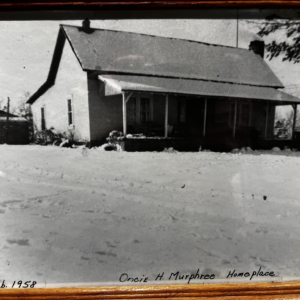
    Có thể là hình ảnh về văn bản

    “If a picture is worth a thousand words, this one is worth a million memories.

    This is a little house that once sat on a hilltop in eastern Cullman County in one of the largest snowstorms in Alabama history: February 14, 1958.

    There are some unofficial reports of 18-plus inches of snow from that one north of Cullman and Holly Pond, but my mom says this was the most snow she’d ever seen – including the Blizzard of ’93.

    I went home and found this tonight because something in the weather pattern looks like ’58. In fact, one of the analogs to the expected weather pattern around mid-February produced THIS storm.

    That doesn’t mean it’ll happen again, but if you didn’t get enough winter back in January – there’s more coming. Sooner than most of us would like!”

  • Among most male frogs and toads, croaking is a way to say, “Don’t mess with my gal.” But when rushing streams and waterfalls drown out these warnings, more than 40 species have come up with a different strategy

    Among most male frogs and toads, croaking is a way to say, “Don’t mess with my gal.” But when rushing streams and waterfalls drown out these warnings, more than 40 species have come up with a different strategy


    “Foot-flagging” species tap into innate fright response to scare away rivals

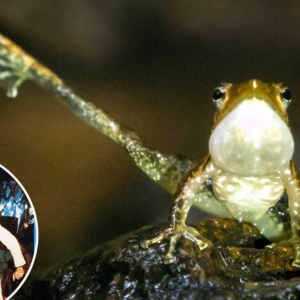
    Among most male frogs and toads, croaking is a way to say, “Don’t mess with my gal.” But when rushing streams and waterfalls drown out these warnings, more than 40 species have come up with a different strategy: They stick their rear legs up and out, a bit like dancers doing the “can-can,” researchers reported here earlier this month at the annual meeting of the Society for Integrative and Comparative Biology.

    This “foot flagging” likely mimics the movements of a possible predator, giving potential intruders pause. “It would be like getting in a bar fight and being able to roar like a lion to scare off your rival,” says the study’s lead author, Nigel Anderson, a graduate student at Brown University. But some rival frogs have wised up to this scare tactic, he has now discovered.

    When frogs can't croak to get a mate, they dance | Science | AAAS

    The work “helps [us] understand how behavioral displays evolve, and how predictable evolution is,” says Yusan Yang, an evolutionary ecologist at the University of South Florida who was not involved in the research.

    An animal’s environment can have a strong impact on the type of communication signal it uses. Deep-water fish respond more to red hues, for example, because reds are easier to see where sunlight is weaker. Thus these fish have a so-called perceptual bias toward seeing reds and that bias shaped their evolution: African cichlid species living in deep water have developed red coloration to attract mates instead of the blues that their shoal-dwelling relatives use, Yang explains.

    Anderson and his adviser, Matthew Fuxjager, long suspected that perceptual bias might underlie the evolution of foot flagging in frogs. Their fellow anurans, toads, tend to advance on horizontal objects, which tend to be prey in their environment, such as worms. But toads freeze or back away from objects that are vertical in shape—such as a human that’s reached down to grab them, for example. Did foot flagging—with a leg shooting up vertically—evolve to mimic this frightening motion as a way to deter rivals?

    Foot flagging has evolved at least six times among anurans. It arises in species living in noisy environments, such as under waterfalls, and thus “may have evolved to solve the same environmental and sensory problem,” Anderson explains. Such multiple origins of the same behavior represent convergent evolution, which has long mystified biologists. Anderson suspects that perceptual biases may underlie many convergent traits: “Why evolve something completely new when you can modify existing systems to evolve something new,” he points out.

    Experiments conducted by Anderson and his colleagues in 2021 suggested this is what might have happened in foot-flagging frogs. In many vertebrates, higher levels of testosterone correlate with more aggressive mating behavior. For example, toads with extra testosterone tend to croak louder. When Anderson and Doris Preininger, an integrative zoologist at the Vienna Zoo who keeps a colony of these frogs, injected testosterone into the bellies of Bornean rock frogs (Staurois parvus), a foot-flagging species, the animals lifted their legs higher and in a wider arc—that is, more vertically. All of this suggested foot flagging was strongly tied to territorial behavior.

    The Asian common toad (Duttaphrynus melanostictus) chases after a horizontal bar, thinking it’s a worm, but ignores and turns away from a vertical one. Evan Donnachie

    Not all rivals were scared away by vertical shapes, however. When Anderson and colleagues tested the responses of foot flagging and species to black rectangles moving across a screen in different orientations, all of the animals attacked a flat rectangle moving horizontally—as expected. The non–foot-flagging toads and frogs moved away from more vertically oriented rectangles, as if threatened by them.

    But foot-flagging frogs showed a range of responses to the vertical shape: Some froze, whereas others attacked the vertical bars, Anderson reported at the meeting. “We think the brain overcomes the effects of ‘seeing a predator’ and initiates a follow-up attack,” Anderson says. In response to a rival’s foot-flagging dance of deterrence, he notes, some males apparently have figured out that these flaggers are really just rival males.

    Patrick Green, an integrative biologist at the University of California, Santa Barbara, is excited about the work, particularly the variation Anderson observed. That variation “is really important for evolution,” he points out. What seems to happening is that as more males ignore this signal, more exaggerated scare tactics—such as higher leg lifts or lifting both legs simultaneously—are evolving, he says. “I think there is more to be explored, especially looking across more of the foot-flagging species.”

  • Serena Williams Honors Michael Jordan: Reflecting on the True Motivations of a Legend

    Serena Williams Honors Michael Jordan: Reflecting on the True Motivations of a Legend

    While giving an inspiring speech to young athletes, Serena Williams complimented Michael Jordan and stated how the GOAT never played basketball for money.

    Michael Jordan is by far the best player the league has ever witnessed. Suiting up for the Chicago Bulls, Mike is one of the most influential players to make a positive impact on the league.

    "Michael Jordan never played basketball for money": Tennis legend Serena Williams compliments the GOAT in her inspiring speech

    Not only was Jordan the face of the league, but he was also one of the most popular icons in the entire world. To date, basketball enthusiasts rave about his gameplay and accomplishments.

    Being a 14-time All-Star, 6-time NBA champ, 6-time Finals MVP, 5-time MVP and a Hall-Of-Famer, there is virtually nothing that MJ hasn’t achieved.

    Helping his team win 2 successful three-peats in 8 years, His Airness really led his Bulls team to be the most dominant team in the 1990s. This is why several analysts and fans refer to the former Bulls shooting guard as the basketball god.Michael Jordan, Derek Jeter, Serena Williams, Warren Sapp, Roy Jones Jr Interview w/A. Rashad; 2004 - YouTube

    In his 15-year-long career, Jordan never used money as a motivating factor. Even though Mike was known to be an excessive gambler, he would always find the motivation to be the best player at any given time.

    Also Read: When Kobe Bryant, Michael Jordan and Charles Barkley participated in a shooting contest on a Japanese game show

    “You could see the passion that Michael Jordan played with”: Serena Williams

    Out of the million die-hard fans Michael Jordan had, tennis superstar Serena Williams was one of them. Being the most accomplished women tennis player ever, Williams has surely taken a lot of knowledge from Air Jordan.

    image

    Recently, Williams gave a strong and inspiring speech to young athletes who had graduated from the Mouratoglou Academy. In her speech, she mentioned Michael Jordan and the fact that the GOAT played the sport because he enjoyed it. The 23-time Grand Slam winner said:

    “I think of Michael Jordan and that guy never played basketball, to like, make money. But he played because he loved what he did. You could see the passion that he had when he was out there. He absolutely enjoyed every minute of that.”

    “So, I would definitely say that’s one thing that you wanna take with you is enjoy what you do and that is one way that you’ll able to find success.”

    Also Read: When Hall of Famer John Stockton lauded the Bulls legend and his Dream Team teammateCongratulations on winning number 23" - Serena Williams was once left stunned by Michael Jordan who gave her a special gift

    These two sporting greats have achieved it all in their respective games. Young and aspiring athletes should take note of any valuable learnings these generational type of talent have to offer.

  • Eastwood’s ‘Letters from Iwo Jima’ is a modern masterpiece, earns a place as one of the best movies about World War II and here is reason

    Eastwood’s ‘Letters from Iwo Jima’ is a modern masterpiece, earns a place as one of the best movies about World War II and here is reason

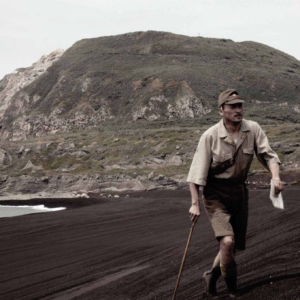
    Letters from Iwo Jima promptly earns a place as one of the best movies about World War II, and it confirms Clint Eastwood’s place as one of the greatest American film directors ever.

    I am not exaggerating. This is one of the relatively few must-sees of the year.

    Letters is a sort of bookend to Eastwood’s Flags of Our Fathers. Eastwood filmed the two features at the same time, in a similar style, and they should really be seen together, somewhat like Francis Ford Coppola’s first two Godfather movies.

    Flags, of course, dealt with the U.S. Marines’ assault on the Japanese island of Iwo Jima. Letters tells the same story from the Japanese point of view.

    Letters from Iwo Jima (2006) - HBO Max | Flixable

    It does not dishonor the memory of our Iwo Jima veterans to note that the Japanese defenders fought well and with fanatic determination. (Of a garrison of more than 20,000 Japanese soldiers and marines, fewer than 300 surrendered.) Marine Gen. Holland “Howlin’ Mad” Smith termed the island’s commander, Lt. Gen. Tadamichi Kuribayashi, the “most redoubtable” of the Japanese strategists in the war.

    What Letters does is underline the fact that those 20,000 Japanese were human beings – sometimes admirable human beings.

    It’s long been a given in Hollywood history that not all Germans in World War II were icy-nerved Nazi war criminals; we’re used to seeing them as people in such movies as Sam Peckinpah’s Cross of Iron or Wolfgang Petersen’s Das Boot.

    At least a few American movies have tried to do the same thing, at least intermittently, like Tora! Tora! Tora!, Midway or (heaven help us) Michael Bay’s Pearl Harbor. None, however, have gone to the extent that Letters from Iwo Jima does.

    The title refers to two sets of letters. One was a correspondence Gen. Kuribayashi carried on with his children, often adding his own drawings or cartoons.

    As played by Ken Watanabe, Kuribayashi is one pole of the drama and rightly so. One of Japan’s most decorated officers – one of the few soldiers granted a personal audience with the Emperor – he was also something of a contrarian who opposed the often callous brutality meted out on common soldiers.

    Stripped of his few fighter planes (which were flown back to the home islands) he designed the intricate network of tunnels that enabled the Japanese to hold out for more than a month, despite being outnumbered 5-to-1.

    Ironically, he was also one of Japan’s most Westernized officers, having visited America as a student and later as a military attache.

    Like Admiral Yamamoto, he opposed the Pacific War, on the grounds that victory against the American industrial machine would be impossible. Like Yamamoto, however, he nevertheless fought from a sense of honor – rather like the doomed warlord whom Watanabe played in The Last Samurai.

    The other letters are the fictional ones being written home by a young cook (winningly played by Kazunari Ninomiya). He’s no Samurai – as far as he’s concerned, the Americans can have the worthless volcanic rock that is Iwo Jima – and all he wants to do is survive to see his wife and infant son.

    Letters from Iwo Jima (2006) - IMDb

    Iris Yamashita’s script sketches other soldiers, too – an array of types similar in many ways to the GIs we meet in American war movies.

    Letters doesn’t gloss over the fact that Imperial Japan was a brutal, neo-fascist state or that the Japanese forces committed atrocities. It does make the point, though, that not all Japanese were like that. There was no hive mentality; they disagreed.

    Basically, we meet these people, who have some customs that seem peculiar (a flashback of a Japanese draftee being served his call-up notice is especially striking) but are more or less like us.

    L.A. critics honor 'Iwo Jima' film – Orange County Register

    We reach the point that we care about them, or at least some of them.

    Then we watch them die.

    Like Flags, Eastwood shot Letters in an especially muted color that seems to bleach at times into virtual black-and-white – like old war movies.

    It’s a technique, ironically, that seems to make these distant historical figures spring more readily to life.

    Warriors are noble, but war is hell. We seem to keep forgetting that point, but Ol’ Dirty Harry has, with consummate skill, taken the time to remind us.

  • ‘You can see its guts and things’: Weird see-through crustacean with giant eyes discovered off the Bahamas

    ‘You can see its guts and things’: Weird see-through crustacean with giant eyes discovered off the Bahamas

    Using LED lights and glow sticks, scientists in the Bahamas have discovered an ancient deep-sea crustacean with giant eyes and a see-through body. 

    Although the species, which they named Booralana nickorum, is newly identified, it has been on the planet for 300 million years and may play a crucial role in maintaining the health of the ecosystem, the researchers wrote in a study published Jan. 12 in the journal Zootaxa.


    The new species named, Booralana nickorum, may play a crucial role in maintaining the health of the ecosystem. (Image credit: Courtesy of OceanX)

    The new species has a hard exoskeleton; a segmented body; and big, compound eyes to find potential prey. As it lives in the deep sea, where there’s very little light, it has no need for color or pigmentation, so it’s white, and even slightly translucent.

    “You can see its guts and things,” study co-author Nicholas Higgs, director of research and innovation at the Cape Eleuthera Institute, told Live Science.

    At around 2.2 to 3 inches (55 to 76 millimeters) long, it’s much larger than its terrestrial cousins in the pill bug family — also called roly poly bugs or woodlice — which measures around 0.55 inch (14 mm). B. nickorum’s large size gives the deep-sea scavenger an advantage as it waits on the seabed for food to fall from above.

    “The bigger you are, the more you can get from any one meal,” Higgs said, and the longer the animal can last between meals, which is important in this environment, where food is scarce.

    The team discovered B. nickorum at depths of between about 1,770 and 1,840 feet (540 to 560 meters) on an underwater slope in the Bahamas’ Exuma Sound. They obtained the specimens during two expeditions, in April 2014 and February 2019, operated by OceanX and the Cape Eleuthera Institute. In 2014, they put down baited eel traps, which caught deep-sea isopods — a type of crustacean with a flattened, segmented body — so they returned in 2019 to investigate further using light traps. Instead of bait, these units had a flashing, multicolor LED fishing light; a green glow stick: a green, deep-drop LED fishing light; and a programmable white LED light to attract creatures by mimicking the bioluminescence generated by deep-sea animals.

    You can see its guts and things': Weird see-through crustacean with giant  eyes discovered off the Bahamas

    Booralana nickorum was discovered during two expeditions to an underwater slope in the Bahamas’ Exuma Sound.  (Image credit: Courtesy of OceanX)

    As soon as the researchers examined the specimens on board the ship, they were confident that the species was “definitely different from anything we’ve seen before,” Higgs said.

    Further tests confirmed that B. nickorum was a new species. It was named after two members of senior author Edward Brooks’ family, both called Nicholas Brooks.

    These isopods play a critical role in the ecosystem by speeding up the decomposition of plant or animal matter so the wider ecosystem can benefit from these energy sources. “Otherwise, it would just sink down and remain locked away in the sediment,” Higgs said.

    These crustaceans also ensure that the carbon within the organic matter falling from the shallows is captured in the deep ocean for thousands of years.

    Finding new species like these helps researchers understand whether animals in the deep ocean are endemic to one place or disperse from one region to another over time. This enables scientists to better predict the ripple effect of human activities, such as mining. “If you impact one site, is that going to impact animals in a different area?” Higgs said.

    With more countries like the Bahamas considering deep-sea oil exploration, Higgs believes expeditions like these are vital in helping decision-makers understand how drilling could affect their precious ecosystems.

    “As long as we don’t have access to this environment,” he said, “we’re not going to appreciate it, we’re not going to understand it, and we’re not going to value it.”

  • The REAL story behind Guy Ritchie’s Ministry of Ungentlemanly Warfare: Daring ‘Operation Postmaster’ mission saw troops led by swashbuckling commander steal German and Italian ships from Spanish island in 1942 – as trailer is released

    The REAL story behind Guy Ritchie’s Ministry of Ungentlemanly Warfare: Daring ‘Operation Postmaster’ mission saw troops led by swashbuckling commander steal German and Italian ships from Spanish island in 1942 – as trailer is released


    They were the men charged by Winston Churchill with carrying out a ‘butcher-and-bolt reign of terror’ behind enemy lines.

    One was a swashbuckling English commander, another a Danishman who favoured killing with a bow and arrow.

    In January 1942, Gus March-Phillipps and Anders Lassen played key roles in a mission that seemed more at home in a spy novel than reality.

    The clandestine Small Scale Raiding Force – acting under the command of the equally top secret Special Operations Executive – was tasked with capturing German and Italian vessels from Spanish territory and sailing them to British-ruled Nigeria.

    Incredibly, this flagrant act of piracy was a resounding success – thanks in part to future James Bond author Ian Fleming, who was then the SOE’s liaison at the Admiralty.

    Now, acclaimed director Guy Ritchie is set to bring the story of Operation Postmaster to the big screen in The Ministry of Ungentlemanly Warfare, the trailer for which was released this week.

    Starring Henry Cavill as March-Philipps and Alan Ritchson as Anders Lassen, the explosive film is based on historian Damien Lewis’s similarly titled 2014 book.

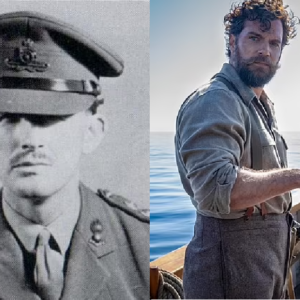
    Swashbuckling British commander Gus March-Phillips led the successful Operation Postmaster raid during the Second World War Henry Cavill as March-Phillipps

    Swashbuckling British commander Gus March-Phillips led the successful Operation Postmaster raid during the Second World War. Guy Ritchie’s new film The Ministry of Ungentlemanly Warfare retells the incredible story of the daring raid. Right: Henry Cavill as March-Phillipps

    The three ships targeted by the tiny raiding party of 34 men were the Italian merchant vessel Duchessa d’Aosta, the German tug Likomba and the diesel-powered Bibundi, a barge.

    They were moored in the harbour on the Spanish-owned island of Fernando Po (now called Bioko) off West Africa.

    Because of its location, Fernando Po held a vital strategic position. It was home to 500 native troops and a dozen four-inch guns stationed around it.

    The island’s Spanish governor was virulently pro-Nazi and so hostile to British interests.

    The sensitivity of the mission stemmed from the fact that Britain could not be seen to be openly launching an attack on territory owned by neutral Spain.

    It meant that bombing the ships from the air was inconceivable. Another non-starter was the option of sinking the vessels in the harbour, because the shallow waters meant they could be re-floated easily.

    Instead, a small warship called Maid Honour was disguised as a Swedish pleasure cruiser.

    It set sail from Poole harbour in Dorset under the command of March-Phillips, who was known for his stammer.

    SOE agent Richard Lippett persuaded the wife of a prominent German resident of Fernando Po to hold a drunken dinner party for the Axis officers on shore.

    Danishman Anders Lassen favoured killing with a bow and arrow and played a key role in Operation Postmaster He is portrayed in The Ministry of Ungentlemanly Warfare by Alan Ritchson

    Danishman Anders Lassen favoured killing with a bow and arrow and played a key role in Operation Postmaster. Right: He is portrayed in The Ministry of Ungentlemanly Warfare by Alan Ritchson

    The three ships targeted by the tiny raiding party of 34 men were the Italian merchant vessel Duchessa d'Aosta (above), the German tug Likomba and the diesel-powered Bibundi, a barge

    The three ships targeted by the tiny raiding party of 34 men were the Italian merchant vessel Duchessa d’Aosta (above), the German tug Likomba and the diesel-powered Bibundi, a barge

    The Daily Mail's original report of the raid, which included the British denial of involvement

    The Daily Mail’s original report of the raid, which included the British denial of involvement

    With the alcohol flowing freely and the officers now being kept busy, March-Phillips, Lassen and their fellow raiders used explosives to break the ships out of the harbour before capturing their crew and discreetly towing them to Lagos.

    In the event that the plot went wrong, the crew were carrying hidden suicide pills – nicknamed ‘holy communion – they could take before being captured.

    But with the mission a success and Churchill thrilled, Britain resolutely denied any involvement.

    This denial was made plausible by the work of Fleming, who played a key role in devising a convincing cover story.

    It involved British destroyer HMS Violet, which steamed into the Gulf of Guinea to ‘intercept’ the three stolen ships.

    It was claimed that the Italian and German crews had mutinied and sailed away of their own accord.

    Once in international waters, the Violet seized the ships and escorted them into British custody.

    The denial of involvement issued by the Admiralty in part read: ‘In view of the German allegations that Allied naval forces have executed a cutting out operation against Axis ships in the Spanish port of Santa Isabel, Fernando Po, the British Admiralty consider it necessary to state that no British or Allied warship was in the vicinity at the time of the alleged incident.’

    In his book, Mr Lewis called the statement a ‘masterpiece of double-speak and deception – one deliberately designed to suggest that the Germans, by means of their wild accusations, had brought the subsequent misfortune upon themselves.’

    The raid took place on the Spanish-owned island of Fernando Po (now called Bioko) off West Africa

    The raid took place on the Spanish-owned island of Fernando Po (now called Bioko) off West Africa

    The historian also revealed in his work the extent of Lassen’s brazen derring-do.

    On one occasion, Lassen stole a jeep from American forces and then drove it up the steps of his hotel and into the lift, which carried it up to the floor he was on.

    Lassen was also a flagrant womaniser, as a night in Salonika showed. He was seen emerging naked – bar his boots – from his hotel room to tell his boisterous men: ‘Chaps, can’t you let your CO screw in peace?’

    His skill on the fighting front summed up by one German commander, who said the Dane and his men ‘come like cats and disappear like ghosts.’

    Lassen would go on to serve in the fledgling Special Air Service (SAS) and remains the only man from the regiment to have been awarded the Victoria Cross.

    The prestigious honour was given to him posthumously for the act which killed him.

    He was hot while storming his third German bunker in northern Italy, less than a month before the end of the war in Europe.

    Henry Cavill, 40 (right), stars in the film as Gus March-Phillips, with the movie telling the true story of Operation Postmaster

    Henry Cavill, 40 (right), stars in the film as Gus March-Phillips, with the movie telling the true story of Operation Postmaster

    Guy Ritchie, 55, directed Paramount Pictures' big-screen adaptation of Damien Lewis' 2014 book, and ousted Superman star Henry plays the leader of the secret combat organisation (Eiza González pictured)

    Guy Ritchie, 55, directed Paramount Pictures’ big-screen adaptation of Damien Lewis’ 2014 book, and ousted Superman star Henry plays the leader of the secret combat organisation (Eiza González pictured)

    A scene from The Ministry of Ungentlemanly Warfare, which will be released in April

    A scene from The Ministry of Ungentlemanly Warfare, which will be released in April

    The Ministry of Ungentlemanly Warfare will be released in the US on April 19. A UK release date has not yet been confirmed

    The Ministry of Ungentlemanly Warfare will be released in the US on April 19. A UK release date has not yet been confirmed

    By then, March-Phillips had been dead for three years. He was killed during the ill-fated Operation Aquatint after leading a raider team of 11 ashore in German-occupied France.

    The men were chanced upon by a heavily armed German patrol. March-Phillips was shot dead while attempting to swim away.

    In a poem shortly before Operation Postmaster went ahead, March-Phillips appeared to foresee his own death in a poem he wrote.

    It read: ‘Let me be brave and gay again / Oh Lord, when my time is near. / Let the god in me rise up and break / The stranglehold of fear. / Say that I die for Thee and the King, And what I hold most dear.’

    In Ritchie’s new film, which will be released in the US on April 19, Fleming is portrayed by Freddie Fox.

    Ritchie’s other films include two Sherlock Holmes titles, Snatch and Lock, Stock and Two Smoking Barrels.

  • Venus Williams Inspires Serena Williams’ Positivity While Unleashing Fitness On A Rooftop, Attracts Millions Of Fans

    Venus Williams Inspires Serena Williams’ Positivity While Unleashing Fitness On A Rooftop, Attracts Millions Of Fans


    The Williams sisters, Venus and Serena, have always been more than just tennis legends; they are a symbol of sisterly support, inspiration, and empowerment. In a recent awe-inspiring moment, Venus Williams took the lead in promoting positivity and fitness on a stunning rooftop, with her sister Serena by her side. Their uplifting message has resonated with millions of fans around the world, making this sisterly endeavor a source of inspiration for all.

    A Dynamic Sisterhood

    The bond between Venus and Serena Williams is unbreakable, founded not only on their shared love for tennis but also on their unwavering support for each other’s endeavors. This sisterhood is a beacon of strength, resilience, and unity.

    Spreading Positivity

    In a world where negativity often dominates headlines, Venus Williams has been a trailblazer in promoting positivity and a healthy mindset. Her commitment to spreading this message has not only influenced Serena but also attracted millions of fans who yearn for a brighter, more optimistic world.

    Rooftop Fitness Revolution

    Their recent fitness escapade on a picturesque rooftop was a testament to their commitment to physical well-being. It wasn’t just about exercise; it was an invitation for everyone to embrace a healthier lifestyle while savoring the beauty of their surroundings.

    Serena’s Fitness Journey

    Serena Williams, renowned for her athletic prowess, has always championed the importance of fitness. Her journey towards peak physical condition continues to inspire not only her sister but also her legion of fans who admire her dedication and determination.

    Inspiring Millions

    The Williams sisters’ rooftop fitness adventure has captured the hearts of millions worldwide. Their dedication to a positive mindset, physical fitness, and the bond they share as sisters serve as a source of motivation and encouragement for people of all ages and backgrounds.

    The Power of Sisterhood

    The support and inspiration that Venus provides to Serena highlight the extraordinary power of sisterhood. It’s a reminder that familial bonds can be a driving force in achieving personal and fitness goals, and that success is sweeter when shared with loved ones.

    A Global Inspiration

    The rooftop fitness journey embarked upon by Venus and Serena Williams is not just a personal endeavor—it’s a global inspiration. It showcases the impact that two determined sisters can have on the world, motivating millions to embrace positivity and prioritize their health.

    Conclusion

    The rooftop fitness adventure led by Venus Williams, inspiring Serena Williams’ positivity, has transcended a simple workout routine. It has become a beacon of hope and empowerment for millions, reminding us all of the strength of sisterhood, the importance of spreading positivity, and the enduring power of leading a healthy and active life.