Author: Ms Bich

  • Who Should Play John, Paul, George and Ringo in the Beatles Movies?

    Who Should Play John, Paul, George and Ringo in the Beatles Movies?

    Who should play the Fab Four?

    After director Sam Mendes announced Tuesday that he plans to make four separate movies about the Beatles, one from the perspective of every member of the most famous band in history, every actor with a serviceable Liverpool accent and the ability to carry a tune is burnishing their resumes and hoping to score an audition.

    The Beatles

    Getty Images

    But John, Paul, George and Ringo were icons for a reason. Finding the right actor to play each of them will be nearly impossible because so few people have that rare combination of singing ability, sex appeal, charm and that certain something that separates pop music deities from the merely talented. So with that in mind, here’s a list of actors who might have what it takes to bring moviegoers along on a magical mystery tour.

    John Lennon Sam Claflin

    Photo : Getty Images

    Best Known For: Joining the rebellion in the “Hunger Games” films, then melting hearts in “Me Before You.”
    Why He’d Make Beautiful Music: He channeled his inner rock god in “Daisy Jones & the Six,” the Amazon mini-series in which he did his own singing as the leader of a band.
    Why He Hits the Wrong Notes: He’s got the charisma, but can he capture Lennon’s darker side?

    John Lennon Aaron Taylor Johnson

    Photo : Getty Images

    Best Known For: Battling primordial monsters in “Godzilla,” entering the Avengers’ orbit for a hot second in “Age of Ultron,” and taking a pretty memorable bathroom break in “Nocturnal Animals,” which earned him a Golden Globe.
    Why He’d Make Beautiful Music: More than a decade ago, he played Lennon as a teenager in “Nowhere Boy,” perfectly channeling his moody intensity.
    Why He Hits the Wrong Notes: Been there, done that.

    John Lennon Paul Dano

    Photo : Getty Images

    Best Known For: Playing Spielberg’s pops in “The Fabelmans,” going toe-to-toe with Daniel Day-Lewis as a deranged preacher in “There Will Be Blood.”
    Why He’d Make Beautiful Music: Dano earned critical raves portraying another tortured musical genius, Brian Wilson, in “Love & Mercy.”
    Why He Hits the Wrong Notes: He’s from New York City, not Liverpool.

    John Lennon Kit Connor

    Photo : Getty Images

    Best Known For: Falling in teen love in “Heartstoppers.”
    Why He’d Make Beautiful Music: At 19, he wouldn’t need any CGI trickery to channel Lennon as he forms the Quarrymen or begins to make a name for himself (and the Beatles) in Hamburg.
    Why He Hits the Wrong Notes: …but he’d definitely need prosthetics to play Lennon as the Beatles dissolve and he cooks up solo hits like “Imagine” and hosts his bed-ins for peace.

    Paul McCartney Jacob Elordi

    Photo : Getty Images

    Best Known For: Attending the world’s most dysfunctional high school in “Euphoria,” being the object of Barry Keoghan’s perverse affections in “Saltburn.”
    Why He’d Make Beautiful Music: Elordi took on music legend Elvis Presley in “Priscilla” and left audiences all shook up.
    Why He Hits the Wrong Notes: Having tackled the King of Rock, he might not be up for playing another cultural idol.

    Paul McCartney Jamie Bell

    Photo : Getty Images

    Best Known For: Sticking the landing as a dancing prodigy in “Billy Elliot,” surviving Skull Island in “King Kong.”
    Why He’d Make Beautiful Music: Bell is a great actor, who has had an accomplished career. A showy role like this could catapult him to the next level of stardom.
    Why He Hits the Wrong Notes: At 37, he might be a little too gray-around-the-temples to play McCartney at the height of “Beatlemania.”

    Paul McCartney Tom Holland

    Photo : Getty Images

    Best Known For: Spinning webs and grappling with multiverses in the Spider-Man movies.
    Why He’d Make Beautiful Music: After the blockbuster success of “Spider-Man: No Way Home,” Holland could pitch himself as Yoko Ono, and the films’ producers would say, “yes.”
    Why He Hits the Wrong Notes: More Spidey sequels could create scheduling conflicts. And he’s probably too expensive.

    George Harrison Timothee Chalamet

    Photo : Getty Images

    Best Known For: Doing unspeakable things to a peach in “Call Me By Your Name,” taking sandworms for a spin in the “Dune” films, and inhabiting a world of pure imagination in “Wonka.”
    Why He’d Make Beautiful Music: “Wonka” proved that Chalamet’s name above the title is enough to draw crowds. As the rare twenty-something movie star with a rabid fanbase, he understands the kind of passion that the Beatles inspired at their height (just witness the screams that greet Timmy every time he struts down a red carpet).
    Why He Hits the Wrong Notes: He’s set to play Bob Dylan in James Mangold’s “A Complete Unknown,” which chronicles the artist as he first plugs in his electric guitar at the 1965 Newport Folk Festival. That might be one too many trips through the counterculture.

    George Harrison Asa Butterfield

    Photo : Getty Images

    Best Known For: Serving as a teenage Dr. Ruth in “Sex Education,” helping Martin Scorsese make a rare family-friendly film with “Hugo.”
    Why He’d Make Beautiful Music: Butterfield has the chops to play Harrison, a prickly genius who bristled at being overshadowed by Lennon and McCartney. Plus, Butterfield makes and produces music, so he may be able to pull off a convincing cover of “While My Guitar Gently Weeps.”
    Why He Hits the Wrong Notes: Having just wrapped up four seasons of “Sex Education,” does he really want to sign up for four Beatles’ films?

    George Harrison Dhani Harrison

    Photo : Getty Images

    Best Known For: Composing the music for “Beautiful Creatures,” being a member of bands like Thenewno2 and Fistful of Mercy, serving as a model for the Gap.
    Why He’d Make Beautiful Music: His father was George Harrison. Clearly, he has a personal connection to the material.
    Why He Hits the Wrong Notes: At 45, he’s probably a member of the wrong generation. Moreover, can he act?

    Ringo Starr Barry Keoghan

    Photo : Getty Images

    Best Known For: Slurping Jacob Elordi’s left-over bath water in “Saltburn,” as well as for his Oscar-nominated turn as a lonely villager in “The Banshees of Inisherin.”
    Why He’d Make Beautiful Music: Keoghan is a shape-shifter, whose talent knows no boundaries. Bonus: He has the kind of twitchy magnetism that made Starr so irresistible.
    Why He Hits the Wrong Notes: Does he share the drummer’s droll sense of humor?

    Ringo Starr Daniel Radcliffe

    Photo : Getty Images

    Best Known For: Hogwarts’ most famous alum has demonstrated there’s life beyond “Harry Potter” with Broadway turns and colorful indie roles like the farting corpse he brought to cinematic life in “Swiss Army Man.”
    Why He’d Make Beautiful Music: At 5’5, Radcliffe is diminutive like Starr, and has demonstrated his musical chops in revivals of “Merrily We Roll Along” and “How to Succeed in Business Without Really Trying.”
    Why He Hits the Wrong Notes: But is he too famous? After all, it’s hard for an icon to play another icon.

    Ringo Starr Daniel Day-Lewis

    Photo : Getty Images

    Best Known For: Being the greatest actor who ever lived.
    Why He’d Make Beautiful Music: He’s Daniel Day-Lewis. He’s portrayed rapacious oil barons, 19th-century gang leaders, boxers, fashion designers, even Abraham Lincoln. He could play all the Beatles more convincingly than the real Beatles.
    Why He Hits the Wrong Notes: He’s much too old. Plus, in case you haven’t heard, he’s retired.

  • The Beatles’ ‘Fab Four’ members each have a separate biopic in the works

    The Beatles’ ‘Fab Four’ members each have a separate biopic in the works

    A ‘day in the life’ of all four members of the Beatles is coming to the big screen.

    Oscar-winning director Sam Mendes is set to direct four separate feature-length biopics chronicling the story of the Beatles through the eyes of each of its members; Paul McCartney, Ringo Starr and the late John Lennon and George Harrison.

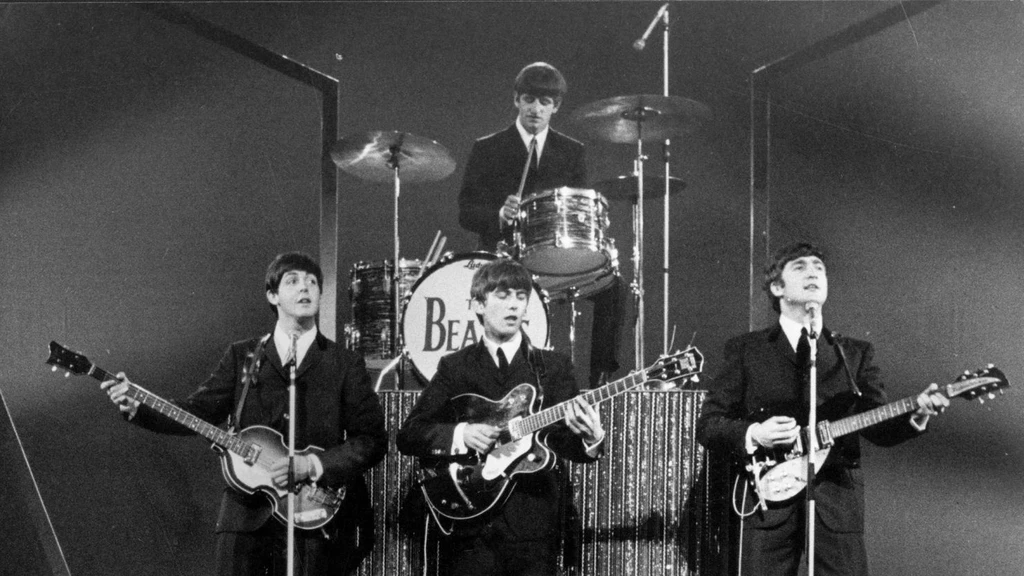
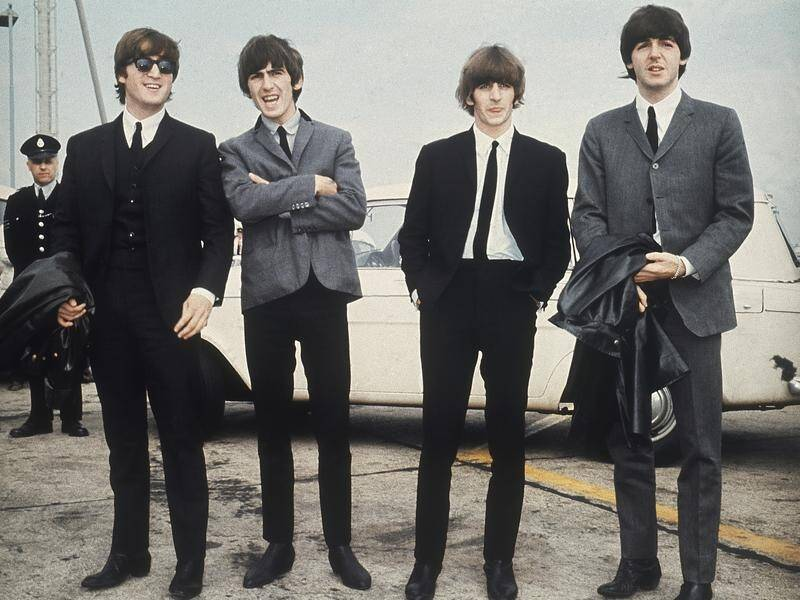
    The Beatles (from left) Paul McCartney, George Harrison, Ringo Starr and John Lennon at the London Palladium during a performance in 1963.

    According to a news release on Tuesday from Sony Pictures Entertainment, the films will be told from each band member’s point of view and collectively “intersect to tell the astonishing story of the greatest band in history.”

    The films will each have their own theatrical release in 2027, the exact dates of which will be announced closer to their debut.

    “Have you heard the news? Oh boy. We all support the Sam Mendes movie project. Yes, indeed. peace and love,” Starr wrote on his X page on Tuesday.

    Four Beatles biopics coming, one movie for each of them | Shepparton News

    According to the release, the “American Beauty” director is being granted full access to the Beatles’ life stories and music.

    “I’m honored to be telling the story of the greatest rock band of all time, and excited to challenge the notion of what constitutes a trip to the movies,” Mendes said in a statement.

    According to Sony Pictures Entertainment executive Tom Rothman, seeing these movies in a classic theatrical setting will be an integral part of the experience and will “rock audiences all over the globe.”

    JAMES BOND Director Sam Mendes To Direct Four Intersecting Biopics For The  Beatles — GeekTyrant

    Details on casting was not specified in the release but the news is sure to unleash a slew of predictions as to who may land the coveted role of each Beatle.

    The Beatles are one of the most influential bands in history, the genesis of which dates back to the late 1950s when McCartney and Lennon first came together in the Quarrymen.

    Beatles Cinematic Universe? Sam Mendes preps four films about John, Paul,  George and Ringo

    With Harrison and Starr on board under the band’s name as we know it today, the Beatles released their first single “Love Me Do” in 1962. By 1964, “Beatlemania” was in full swing when the four Brits came to America to make their now-historic appearance on the “Ed Sullivan Show,” and the rest is history.

    They released “Let It Be,” their final album as a band in 1970, before going their separate ways to pursue solo careers. In 2023, the “last” Beatles song “Now & Then” was released.

  • See how Smarties candy company carries on its sweet legacy

    See how Smarties candy company carries on its sweet legacy

    See how Smarties candy company carries on its sweet legacy — and takes Halloween off after 9-month prep!

    This is an archived article and the information in the article may be outdated. Please look at the time stamp on the story to see when it was last updated.

    UNION, N.J. — Even on the outside, the smell of sugar is in the air. Inside, the third generation of a candy family continues to meet high demand for the nostalgic plastic rolls of Smarties candy.

    The Secrets to Smarties' 70 Years of Success - The Hustle

    “It’s in our blood to be here in New Jersey making candy here,” said the younger Dee.

    But today, all was quiet in the factory. The roughly 100 people employed at their Union facility were all sent home early, with 15 pounds of candy each. The company is celebrating that their ninth-month preparation for Halloween is over. Their factory produces roughly 1 billion rolls of Smarties every year, plus the company has a second factory in Canada.

     Today, sisters Liz and Jessica, along with their cousin Sarah Dee carry on the candy legacy their grandfather built.

    Brownells, Inc. on X: "Smarties was founded in 1949 by Edward Dee, who was  from a candy-making family in London that settled in NJ. He rented a garage  with a repurposed pellet-making

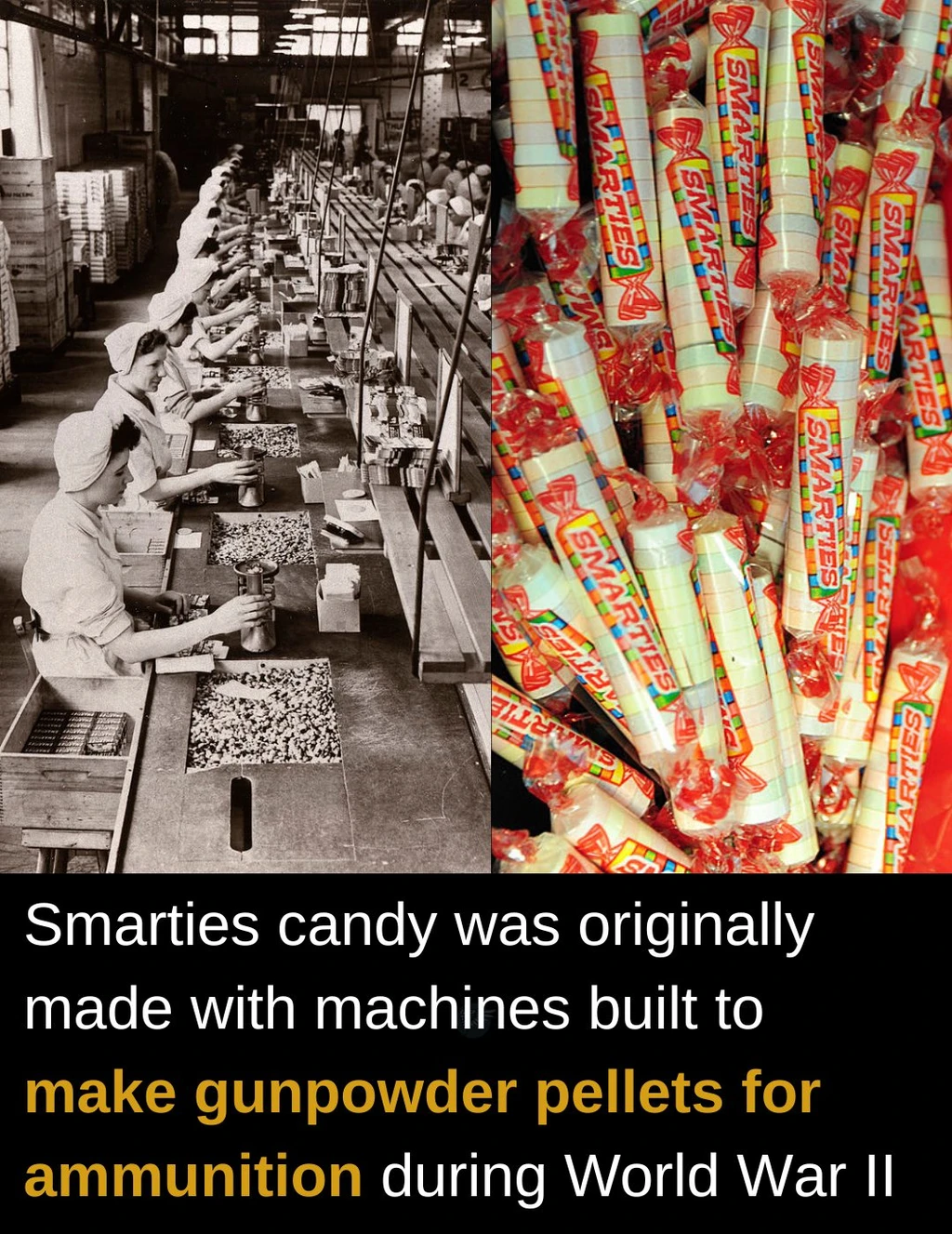
    “It still amazes me when I meet people, that not only do they enjoy smarties but their parents did and their grandparents did as well,” said Liz Dee, whose grandfather immigrated to the United States in 1949, armed with two candy-making machines.

    “These machines were repurposed gunpowder pellet presses from World War II. And he used that technology, obviously altered it quite a bit, to make what we know of as Smarties today.”

    Edward Dee, a third-generation candy-maker himself, still comes to work almost every day at age 91. Dee initially delivered the little multi-colored rolls to local stores himself. Known then as Ce De Candy, the company’s name was eventually swapped for their most popular product name. Over the years the company’s address has changed several times, from Bloomfield, New Jersey to Elizabeth and finally Union, but the family is committed to keeping the business in the Garden State.

  • Six coins in a World War I soldier’s pocket got him discovered and shot. They also saved his life

    Six coins in a World War I soldier’s pocket got him discovered and shot. They also saved his life

    WWI coins save soldier trnd 01

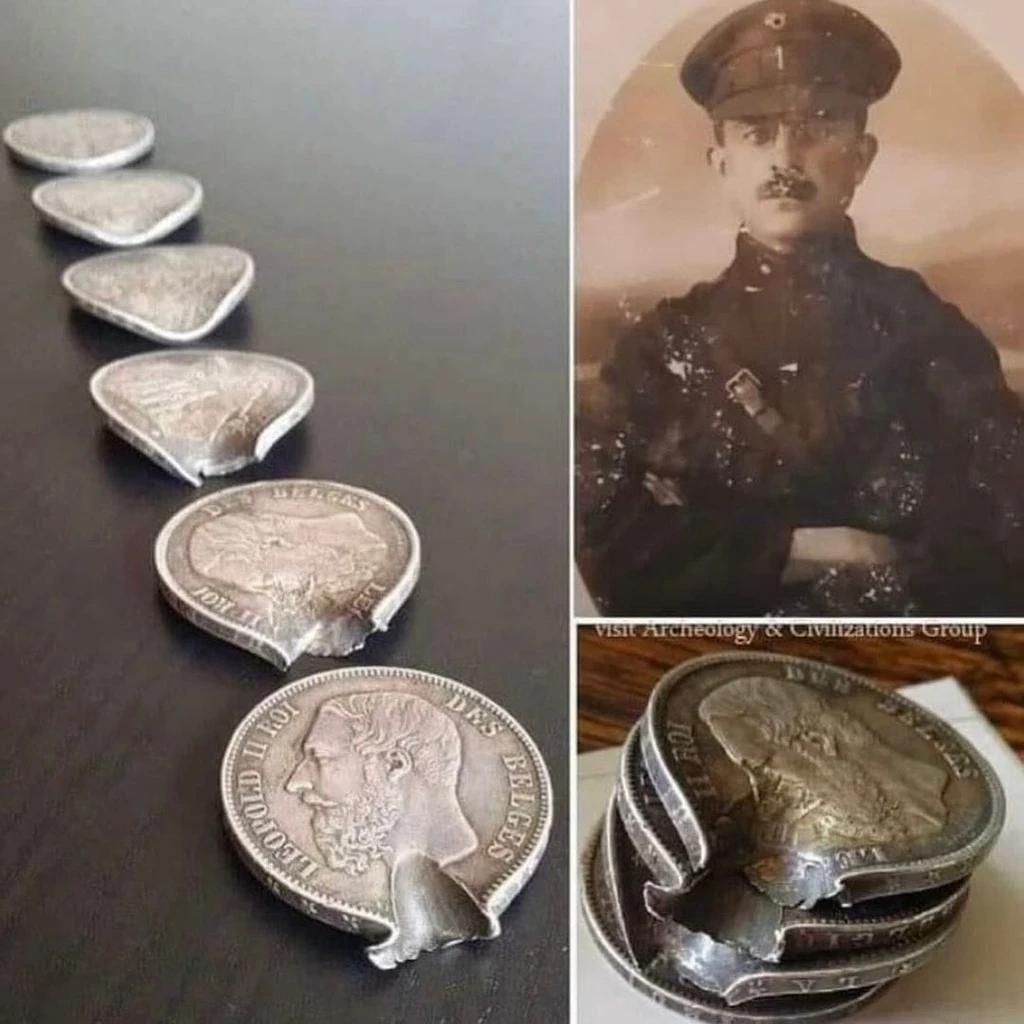
    Optatius Buyssens was a Belgian soldier who fought the Germans during World War I.

    His great grandson, Vincent Buyssens, just found out that he had six coins to thank for saving – and endangering – his great-grandfather’s life during the war.

    Vincent Buyssens, who lives in Antwerp, said the coins stopped a bullet and saved his great-grandfather’s life. He posted a picture of the three Belgian francs and three French francs on Reddit.

    “Ironically, the coins were the reason why he got shot,” Buyssens said. “It was the noise of them clinging together in his breast pocket which gave his position away.”

    Optatius Buyssens was initially barred from the army because of a hip injury but eventually joined as a volunteer. He was shot during a scouting mission in September 1914 near Lebbeke, Belgium.

    The German soldier who shot him kicked his head and Optatius Buyssens pretended to be dead. Once the soldier walked away, Buyssens and another comrade crawled to safety.

    Optatius Buyssens, a WWI soldier.

    Optatius Buyssens, a WWI soldier.
    Courtesy of Vincent Buyssens

    “He was very lucky since the bullet that should have killed him ricocheted off of the coins, thus saving his life,” Vincent Buyssens told CNN.

    He said it wasn’t until recently that he discovered the whole story about the coins in a journal kept by his great-grandfather’s brother, who was an avid archivist. Buyssens said he received photos of the journal from a local museum.

    Optatius Buyssens survived the war and died of heart disease in the 1950s, according to his great grandson.

    “The letters were the missing piece that we didn’t know existed until today,” he said. “And they were kept in a museum just behind the corner.”

  • Chuck Mawhinney: The Legendary USMC Sniper Who Hit 16 Enemy in 30 Seconds on a Pitch-Black Night

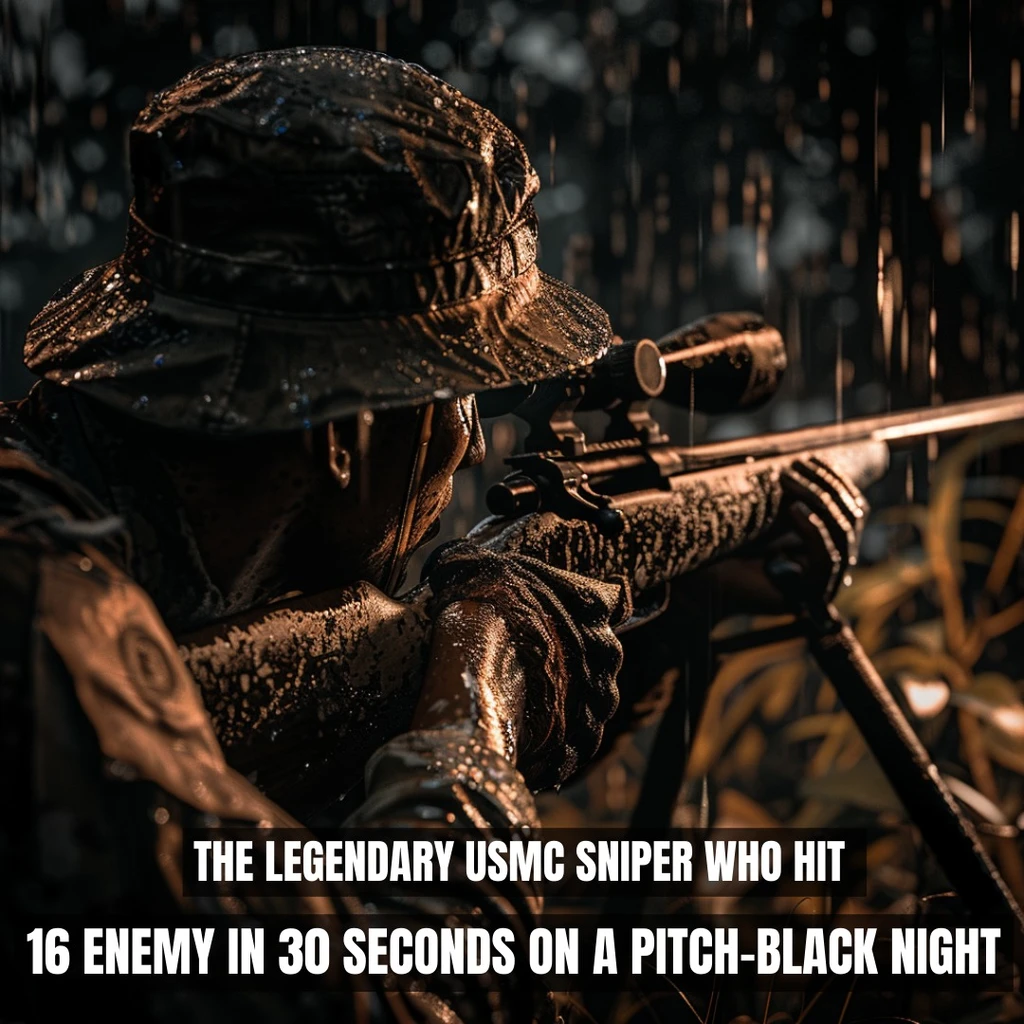
    Chuck Mawhinney: The Legendary USMC Sniper Who Hit 16 Enemy in 30 Seconds on a Pitch-Black Night

    Photo Credit: MidJourney

    In the realm of extraordinary military feats, several service members gain recognition, receiving public praise and awards – some even become the subjects of books and/or movies. Chuck Mawhinney, however, chose the path less traveled. A US Marine Corps sniper who served in Vietnam, he forged an exceptional career for himself and deliberately kept it a secret from his family, friends and his wife.

    Mawhinney’s story was revealed by someone else, prompting him to not only validate the account, but inadvertently reshape the public’s perception of snipers.

    Chuck Mawhinney was a skilled shooter

    US Marines disembarking from landing craft on a beach

    US Marines in South Vietnam, 1965. (Photo Credit: Bettmann / Getty Images)
    Charles “Chuck” Mawhinney, born in 1949 in Lakeview, Oregon, spent his youth hunting with his Marine father, inheriting skills that would shape his future. Opting to become a sniper, he graduated from high school in 1967 and joined the US Marine Corps. In an unusual move, he negotiated a unique agreement: delaying his training until after deer hunting season.

    Graduating from the Scout Sniper School at Marine Corps Base Camp Pendleton in April 1968, he soon found himself deployed to Vietnam.

    Sniper with the US Marine Corps

    US Marine aiming a sniper rifle while crouched in tall grass

    US Marine sniper in Vietnam, 1968. (Photo Credit: USMC Archives / Wikimedia Commons CC BY 2.0)
    Embarking on his sniper journey with the US Marine Corps, Chuck Mawhinney began his tour as a rifleman with Lima Company, 1st Battalion, 5th Marine Regiment, 1st Marine Division, transferring to various battalions before landing with Delta Company.

    His pinnacle moment as a sniper unfolded near Da Nang on Valentine’s Day 1969. In response to intelligence about a large North Vietnamese Army force, he volunteered to cover the river crossing with his spotter, unleashing an impressive 16 bullets in just 30 seconds, each a lethal headshot.

    “Every one of them was headshots, dead center,” Mawhinney recounted.

    Chuck Mawhinney holds an impressive record

    M40 rifle on display

    Chuck Mawhinney’s M40 on display at the National Museum of the Marine Corps in Triangle, Virginia. (Photo Credit: Mark Pellegrin / Wikimedia Commons CC BY-SA 3.0)
    While Chuck Mawhinney may not hold the record for the most kills in Vietnam (that distinction belongs to US Army Staff Sgt. Adelbert Waldron), his 103 confirmed kills and 216 probable ones establish him as the deadliest US Marine sniper in history.

    More remarkable than the sheer numbers is his extraordinary accuracy – over 16 months, he missed just once, a haunting memory he later shared, saying, “I can’t help thinking about how many people that he may have killed later, how many of my friends, how many Marines… That still bothers me.”

    Keeping a secret

    North Vietnamese Army soldiers aiming their weapons at the sky

    North Vietnamese soldiers in Quang Binh Province, 1965. (Photo Credit: Sovfoto / Universal Images Group / Getty Images)
    Post-Vietnam War, Chuck Mawhinney briefly served as a marksmanship instructor at Marine Corps Base Camp Pendleton, but struggled with nightmares. In particular, he was haunted by foxhole entrapments under heavy fire.

    Leaving the US Marine Corps in 1970 wound up having a positive impact on his mental health. Returning to Lakeview, he joined the US Forestry Service and married, all while guarding the secret of his service in Vietnam. This silence was broken by a fellow Marine who thrust Mawhinney into the spotlight, making his combat actions public.

    Revealing Chuck Mawhinney’s secret

    Chuck Mawhinney standing in the desert with a rifle

    Chuck Mawhinney. (Photo Credit: PFC Garrett White / Wikimedia Commons / Public Domain)
    In 1991, Joseph T. Ward’s book, Dear Mom: A Sniper’s Vietnam, featuring his and Chuck Mawhinney’s accounts, catapulted the US Marine Corps veteran into fame with credited with 101 kills, surpassing Carlos Hathcock‘s record by eight.

    Initially resistant to his newfound notoriety, Mawhinney gradually embraced interviews and public appearances. Insights from these and the book, Sniper: The Untold Story of the Marine Corps’ Greatest Marksman of All Time, shed light on his journey.

    Life in the public eye

    US Marines walking through a rice paddy

    US Marines advancing toward enemy positions during Operation Lien Kit-4, near Chu Lai, Vietnam, 1967. (Photo Credit: Hulton Archive / Getty Images)
    Speaking at conventions and sniper training classes, Chuck Mawhinney imparted his veteran advice, saying, “I give them Chuck Mawhinney’s three rules of becoming a good sniper: Practice, practice and more practice.”

    Beyond shaping future snipers, Mawhinney seized the opportunity to challenge stereotypes, asserting that a proficient sniper, far from a bloodthirsty assassin, saves lives by undermining the enemy’s will or ability to fight.

  • Ghosts of World War II and Cold War in the fields of the Russian-Ukrainian war

    Ghosts of World War II and Cold War in the fields of the Russian-Ukrainian war

    Ghosts of World War II and Cold War in the fields of the Russian-Ukrainian war

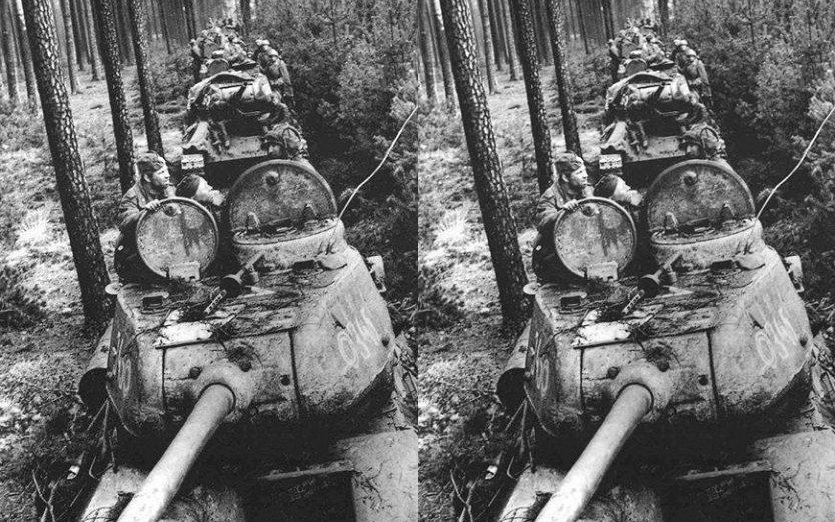
    The Cold War ended more than 30 years ago, but the “ghosts” of its hot phase, which should have been exhibited in museums for decades, are actively used in the fields of the Russian-Ukrainian war.

    Moreover, the combat vehicles that fought in World War II can be spotted on the battlefield.

    Our war is unusual: modern high-tech combat vehicles, such as the Leopard 2A7, are in the same formation along with “relics” from long ago, such as the M-55S and Leopard 1.

    On the other hand, the situation is mirrored: alongside the T-90M and BMP-3 are the T-55/54 and T-62.

    Of course, some of these vehicles are modernized. They are equipped with modern navigation and communication systems and optical daytime and night channels, which prolong the life of old combat vehicles.

    Modernization of electronics does not compensate for protection that does not meet modern requirements, but opens up new uses, for example, for shooting from indirect positions.

    World War II Echo

    The Russian-Ukrainian war did not start on February 24, 2022, but earlier – in 2014, with the annexation of Crimea and the start of the anti-terrorist operation in Donbas, so it would be appropriate to consider the use of such combat vehicles at that time.

    One of the combat vehicles in the hands of pro-Russian terrorists was the IS-3 tank that was positioned in the village of Oleksandro-Kalynove. Starting in May 2014, militants of the so-called “Donetsk People’s Republic” inspected the combat vehicle, and later managed to start it up and send it to Kostyantynivka for repairs.

    The D-25T 122mm gun was disabled during the tank’s demilitarization, and therefore, its use was not possible. The militants installed an NSV 12.7mm machine gun on the tank.

    The militants claimed that on June 30, IS-3 fired a machine gun at a Ukrainian checkpoint in the village of Ulyanivka, allegedly killing three Ukrainian soldiers and wounding three others, but there is no evidence of this.

    After the liberation of Kostyantynivka, the militants left the tank behind. Ukrainian forces sent it to Kyiv, from where it was transported to the Mykolaiv region to the Museum of Strategic Rocket Forces.

    In February 2014, militants of the Kazachya National Guard group, subordinate to the so-called “LPR,” removed the T-34-85 tank from the pedestal near the Antratsyt town hall. The fighting vehicle was installed in memory of the city’s liberation from German troops.

    The KNG terrorists installed anti-accumulative grilles on the sides of the tank, which additionally covered the rollers, welded additional protection to the fuel tanks, and installed tracks on the frontal projection of the tracks.

    Propaganda resources of the so-called “LPR” presented the T-34-85 tank driving the streets of Antratsyt and stated that the fighting vehicle was ready to engage. However, this was the end of it, there was no information about the use of this tank in combat operations, and it was later returned to its place.

    The Ukrainian defenders also used the legendary Kharkiv T-34-85 tank during the full-scale Russian-Ukrainian war. During the battles for Lysychansk, the T-34-85 was removed from the pedestal No. 227. The tank was presumably used by Ukrainian forces to obstruct the road but not as real firepower.

    Another interesting moment in the Russian-Ukrainian war was Pz. Kpfw. IV tank near Kreminna. The tank is equipped with tracks from the BMP-1/BMP-2, so, most likely, it was operational. Judging by the photos, it hit a mine or was hit by a drone.

    It is not known which unit used the tank and what it was used for, but it can be assumed that it was a decoy for Russian drones and artillery or an armored transporter.

    Return of T-62

    The Russian use of T-62 tanks in the Russian-Ukrainian war was first reported in May 2022. It is worth noting that these tanks participated in the war in Georgia and went into storage about a decade ago.

    Earlier, in October 2021, there was evidence of the use of T-62MVs by units of the Southern Military District. It is also reported that in August 2018, during the Vostok-2018 exercises, the Russian military took at least several dozen T-62M and T-62MVs out of storage.

    During the Russian-Ukrainian war, tanks started to be equipped with “grills” on the turret and engine compartment to protect them from munitions and FPV drones. There were “tsar grills” that covered the tank in all projections.

    However, such upgrades give an additional load on the weak V-55 engine, the problems with which were not solved during the USSR time.

    In October 2022, it was reported that the 103rd Armored Plant near Chita received an order to repair and improve about 800 T-62 tanks within three years.

    The Russians plan to equip the T-62 with modern thermal imagers and night sights and strengthen their protection by installing add-on armor, protection against missile systems, and stern protection against grenade launchers.

    According to the OSINT service Oryx, the Russians lost 37 T-62s of various modifications as destroyed, and 45 were captured by Ukrainian troops.

    Some of the captured T-62s are converted into armored recovery vehicles and fire support vehicles.

    The T-62 was adopted by the Soviet army in 1961, and in the 1980s, it was recognized as completely obsolete and began to be put into storage. A number of tanks remained in service with the Russian Federation until the 2000s and were gradually decommissioned, but then, around 2018, they began to be returned to service.

    Return of T-55

    After the introduction of the T-62 on the battlefield of the Russian-Ukrainian war, users online were joking about restoring the T-55/54. Within a short time, the jokes became a reality, but with a “twist.”

    In September 2022, Slovenia announced that it would transfer M-55S tanks, which are an upgraded version of the Soviet T-55, to Ukraine.

    STO RAVNE and Israeli Elbit carried out the Slovenian modernization. The tank was equipped with an improved fire control system with a digital ballistic computer and gun stabilization on both axes. The M-55S also received a L7 105mm gun similar to the Leopard 1.

    The gunner received a new Fotona SGS-55 sight with a laser rangefinder, and the commander received a Fotona COMTOS-55 with an independent stabilization line of sight. In addition, the tank received the LIRD-1A laser warning system and the associated IS-6 smoke grenade launcher, which can operate in automatic mode.

    In addition, the engine was modernized, and its power was increased from 520 horsepower to 600. M-55S was also equipped with new rubber-metal tracks.

    The first evidence of the M-55S in Ukraine appeared in December 2022, and a little later, it was reported that they were in service with the 47th Separate Mechanized Brigade.

    In fact, Ukrainian defenders started to use T-54 much earlier, during the defense of Mariupol. It is known that the tank was removed from the pedestal on the territory of Azovstal and, most likely, was towed and used to strengthen defensive positions.

    Later, in March 2023, it was announced that the Russians were transferring an echelon of T-55/54 tanks from the city of Arsenyev, in which the 1295th Central Reserve and Tank Storage Base was located.

    In April, the Russians released a video from the war zone that captured a tank similar to a T-54 or T-55.

    Destruction and damage to the T-55 is quite a rare event. Damage to one T-55 was recorded on August 5, 2023, and the destruction of an unspecified type of combat vehicle, which might have been T-54 or T-55, was recorded on June 18.

    The destruction of the T-55 was confirmed recently, as reported on January 4, 2024.

    The Russians were most likely using T-55/54 and T-62 tanks to fire from the indirect position. However, it is worth noting that combat vehicles of two types were destroyed during offensive operations.

    Leopard 1

    The first information on the supply of Leopard 1 tanks to Ukraine was reported in April 2022, when it was announced that Rheinmetall was preparing 50 tanks in the A5 version.

    The company’s CEO, Armin Papperger, announced the intention to transfer those tanks to Ukraine. At the time, about 100 combat vehicles were in the company’s depots.

    It was later reported that the German government received a request from Rheinmetall to supply 88 combat vehicles to Ukraine with a total value of more than 2 billion euros. The itemized list of equipment was not released, but it can be assumed that it included Leopard 1.

    In early February 2023, it was reported that the German government intended to approve the transfer of Leopard 1 tanks from industrial stocks to Ukraine. Germany was then joined by Denmark and the Netherlands, who also stored a large number of tanks after decommissioning.

    In April, it was reported that the Ukrainian military started receiving these combat vehicles, while representatives of the German government claimed that Ukraine would begin to receive tanks in the second half of 2023.

    Finally, the first Leopard 1A5s were transferred to the arsenal of the Ukrainian Armed Forces later in the fall. In total, Ukraine is to receive about 180 vehicles.

  • Mercy Dogs: Meet the Heroes Who Delivered Aid and Comforted the Dying on the Battlefields of World War I

    Mercy Dogs: Meet the Heroes Who Delivered Aid and Comforted the Dying on the Battlefields of World War I

    dog-training-ww1
    A dog trains to recover a “wounded” soldier in 1917. (Imperial War Museums)

    In the agony of trench warfare and no man’s land, the sound of a skitter and a wet nose — typically a rat, doubled in size after gorging on the flesh of man — usually spelled trouble.

    But occasionally, the wet nose brushing across both Allied and Central Power soldier’s faces meant that help, or at the very least comfort, was on its way.

    Over 16 million total animals were in service during the Great War, with dogs hauling machine guns and supply carts, serving as messengers and delivering the all-important cigarette cartons to the troops.

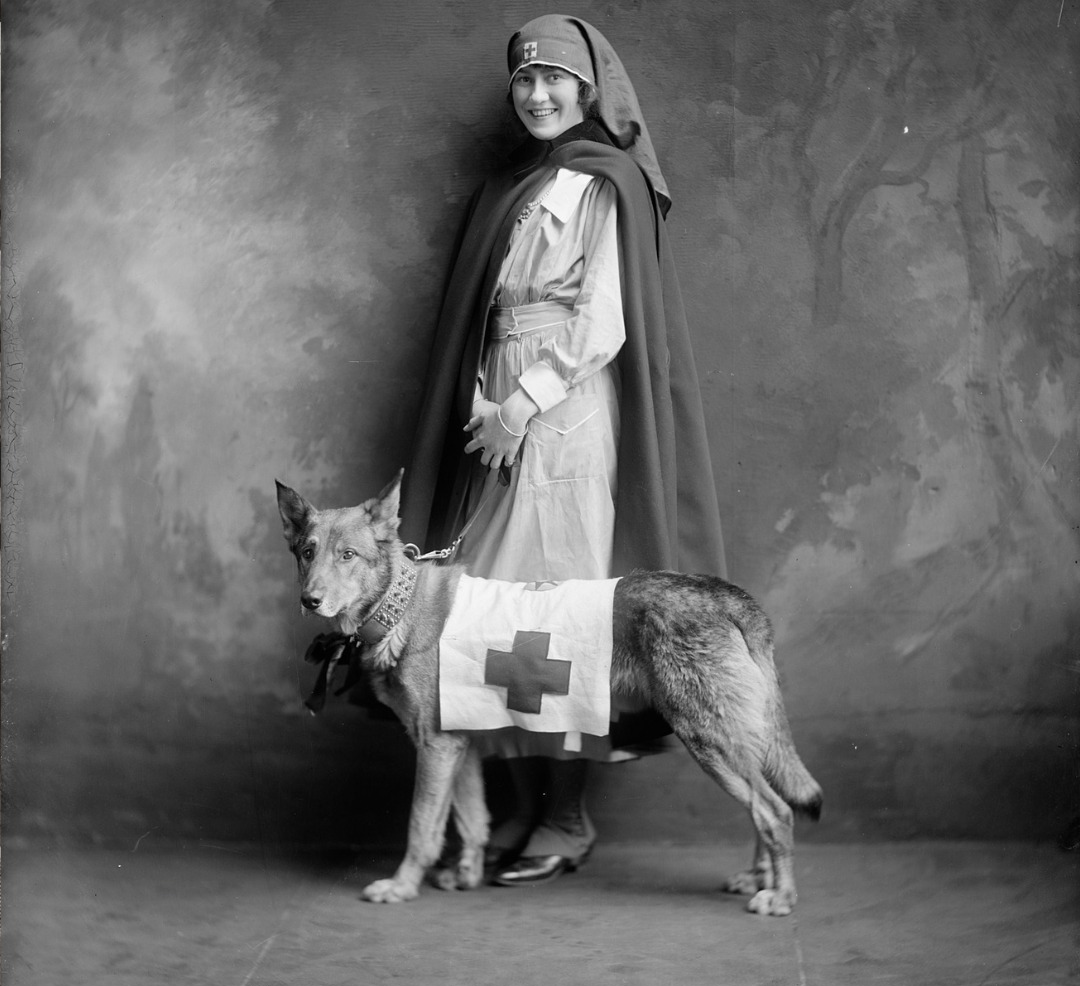
    However, Mercy Dogs, also referred to as casualty dogs, were specifically trained to aid the wounded and dying on the battlefield. First trained by the Germanic armies in the 19th century, these sanitätshunde, or medical dogs, began to see widespread use as World War I swept across Europe.

    Trained to find and distinguish between the dead, wounded and dying, Mercy Dogs were set loose on the battlefield to bring medical supplies to the wounded, “getting as close as possible so the soldier could access the dogs’ saddle bags, which contained first aid supplies and rations. Instead of barking and alerting the enemy, the dogs were trained to bring back something belonging to the soldier,” according to the Red Cross.

    The dogs were trained in triage, able to indicate who needed aid the most and who was too far gone to establish any medical care. In the case of the latter, the dog would often stay with the mortally wounded soldier to ensure that, in his final moments, he wasn’t alone.

    The idea of Mercy Dogs was first introduced in 1890 by German painter, Jean Bungartz, who founded the Deutschen Verein für Santiätshunde or German Association for Medical Dogs.

    Five years later, Britain took notice after Maj. Edwin Richardson observed that English-bred dogs were being shipped to Germany in bulk.

    “I took notice of a ‘foreigner’ buying a sheepdog from a shepherd and learned that the man was a German, sent over by his government to purchase large quantities of collie dogs for the German Army,” Richardson recounted.
    Maj. Edwin H. Richardson with Red Cross war dogs during World War I. (Library of Congress)
    Seeing a similar need, Richardson and his wife opened the British War Dog School, just prior to the outbreak of war in 1914 — the first of its kind in the nation. While Richardson trained several different breeds, his favorite was Airedales for their intelligence, devotion and coolness under fire.

    Trained under realistic battle conditions, one visiting journalist recounted that “Shells from batteries at practice were screaming overhead, and army motor lorries passed to and fro. The dogs are trained to the constant sound of the guns and very soon learn to take no heed of them.”

    Once on the Western Front, these dogs “not only had to survive but to perform critical duties in ghastly conditions which saw the natural world obliterated daily — grass was virtually nonexistent, trees were blown to pieces or harvested into oblivion for wood, the air was rife with poisonous gases in addition to the sounds and shell fragments of explosions, water was contaminated with heavy metals, decomposing bodies were omnipresent and the earth’s surface tended to be wildernesses of bomb craters or oceans of mud,” writes MHQ editor, Zita Ballinger Fletcher.

    Under these conditions, the animals silently toiled, utilizing their noses and devotion to ultimately save roughly thousands of lives, according to the Red Cross.

    One British surgeon noted, “They sometimes lead us to bodies we think have no life in them, but when we bring them back to the doctors…always find a spark. It is purely a matter of their instinct, [which is] far more effective than man’s reasoning powers.”

    In 1915, British soldier Oliver Hyde published a long-forgotten work entitled “The Work of the Red Cross Dog on the Battlefield.”

    In it, he captures the small but mighty group of heroes:

    “To the forlorn and despairing wounded soldier, the coming of the Red Cross dog is that of a messenger of hope.

    “Here at last is help, here is first aid. [The soldier] knows that medical assistance cannot be far away, and will be summoned by every means in the dog’s power.

    “As part of the great Red Cross army of mercy, he is beyond price.”

    Tragically, albeit unsurprisingly, a large number of Mercy Dogs died during the war. By the time the Armistice was signed on Nov. 18, 1918, some 7,000 Mercy Dogs had been killed in service to their respective countries.

  • Object 775 – The Pancake Tank

    Object 775 – The Pancake Tank

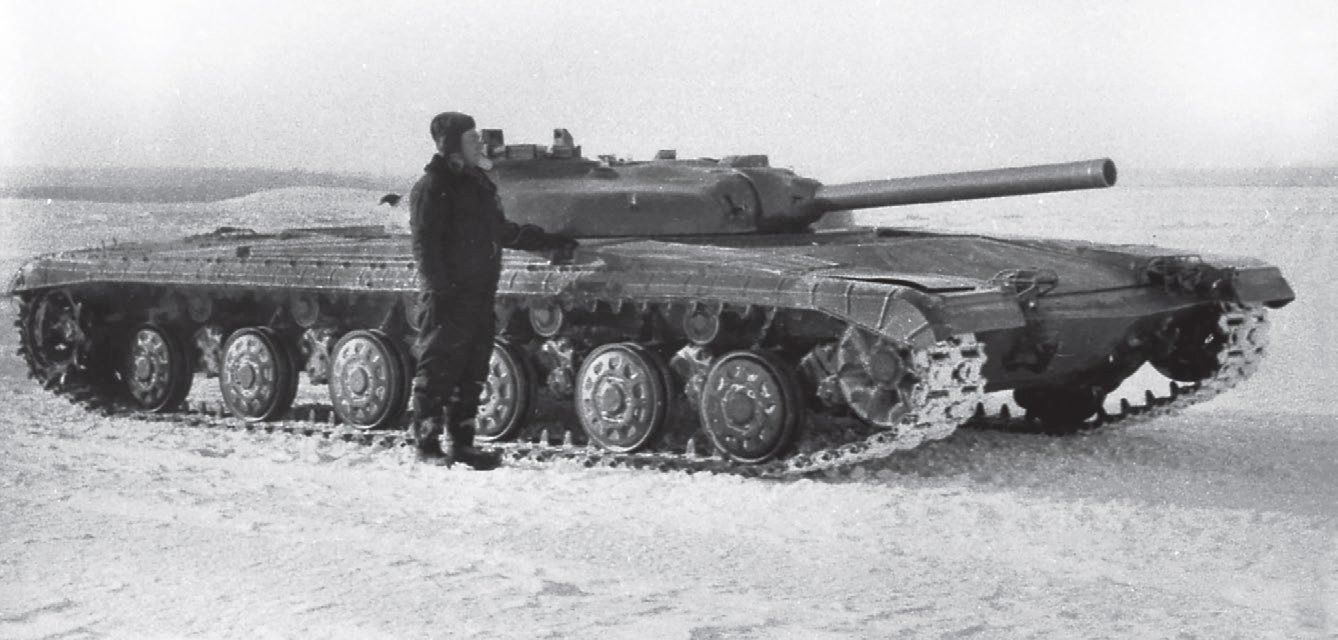
    Behold the flattest tank around: the Object 775. This strange and obscure vehicle was a missile tank developed by the Soviet Union in the 1960s. Those who do know of its existence likely do so in part because of its comical proportions.

    Its low height was possible as it did not have a conventional smoothbore or rifled gun, instead it used a missile system as its primary armament.

    This is the concept of the missile tank, something the Object 775 helped to pioneer.

    Soviet Premier Nikita Kruschev was a major driving force behind the creation of these tanks, which he used to help kill off the heavy tank.

    Despite its small size, low weight and tank-killing missiles, the Object 775 was not a successful design.

    Background

    The Soviet Union emerged from WWII with a passionate love for heavy tanks. After all, they had kicked German-butt during the war.

    Their development continued throughout the 1950s, producing tanks like the T-10 and arguably culminating in the “nuke-resistant” Object 279.

    However these types of tanks were the descendents of WWII designs, and would have likely suffered on the battlefields of the Cold War. In this new era, battles would would be dictated by speed and technology.

    The Object 279 from the front.The Object 279 is considered by many to be the final Soviet heavy tank. Image by Aleksandr Markin CC BY-SA 2.0.

    Their obsolescence was compounded by the advancements of anti-tank guided missiles (ATGMs). These could be mounted on lightweight vehicles and were easily capable of destroying the most heavily armed tanks on the battlefield.

    Suddenly, a truck could carry MBT-level firepower. Heavy tanks were becoming harder to justify.

    The final nail in the coffin came in 1960 – not from new technology, but by Nikita Kruschev.

    Kruschev had a personal dislike of heavy tanks. He believed they were too slow, too expensive and lacked enough extra protection to justify this. Furthermore, their size and weight was a burden on logistical and transport systems, particularly bridges.

    Meanwhile, he was extremely fond of ATGMs, which could be mounted on most vehicles and knock out enemy tanks from extreme ranges.


    He envisaged large numbers of cheap missile tanks that could encircle and obliterate western armor.

    After a heavy tank demonstration in 1960, Kruschev brought the hammer down, declaring that any future tanks must not exceed 37 tonnes.

    With most of the USSR’s heavy tanks weighing in excess of 50 tonnes, Kruschev’s decision killed off this infamous breed of tanks.

    Smaller tanks were now a priority.

    Missile Tanks

    Attention turned to missile tanks, resulting in a series of vehicles that carried missiles as their primary weapon.

    The IT-1 was one of the earliest. It was based on the T-62 chassis and had been under development since the 1950s. The IT-1 featured a “pop-up” missile system, which literally popped up through a door in the turret roof.

    A problem with these systems was that they had a minimum arming distance between 300 and 500 meters, and each shot was extremely expensive.

    An IT-1 prototype.The Object 150, which in service as the IT-1. Image by Alan Wilson CC BY-SA 2.0

    This meant if a missile tank was faced with a soft target like a truck, it would have to use a massively expensive missile to kill it. Alternatively, the tank would be too close to use its missiles.

    To solve this, Soviet designers created two missile tanks based on the T-64.

    Their exact development dates vary between sources, but it was around 1961 and 1962.

    One of these was the Object 287, a low profile vehicle that carried a pop-up missile system and two 73mm smoothbore guns for use against soft and close range targets.

    A preserved Object 287.Object 287 was armed with two 73 mm smoothbore guns and a missile system. Image by Alan Wilson CC BY-SA 2.0.

    The other was the Object 775, the focus of this article.

    Object 775

    The Object 775 is not a well known vehicle, but it broke new ground and is certainly deserving of more appreciation for this.

    Almost every aspect is bizarre. It has a crew of two, extremely good armor for its size and is very, very low.

    Both crew members (driver and commander/gunner) were situated in the ultra-low profile, pancake-like turret.

    The Object 775.The hilariously sized Object 775. Image by Alan Wilson CC BY-SA 2.0.

    The driver sat in an independently rotating unit that kept him facing forward at all times, regardless of where the turret was in relation to the hull.

    This arrangement allowed the entire vehicle to have a remarkably low silhouette. It was so low that it could be completely hidden by even the smallest disturbance in the terrain.

    Impressively, the Object 775 was fitted with hydropneumatic suspension (one of the first, in fact) that could be manually adjusted, reducing its maximum height of 1.7 meters even further.

    Object 775 hull front.At its maximum height the Object 775 measured just 1.7 meters tall. This could be reduced significantly by lowering the suspension.

    The Object 775’s low height would have made it a tough target to hit, especially if was moving or at a distance. It certainly subscribed to the idea that not getting in the first place was the best form of protection.

    However when rounds did start flying their way, the crew were protected by up to 120 mm of armor, an amount close to the recently abandoned heavy tanks.

    Even with these levels of protection though, the Object 775 weighed less than 40 tons, thanks to its compact design.

    Object 775 front.The frontal armor of the Object 775 was similar to heavy tanks of the previous decade. Image by Hornet Driver CC BY-SA 3.0.

    Powering it was the same 700 hp 5TDF diesel engine used in the T-64. This engine is a horizontally opposed 5 cylinder, which, like all horizontally opposed engines, was incredibly low profile.

    This engine gave the Object 775 an excellent top speed of 43 mph (70 km/h). Its low silhouette, high speed and thick armor would have made it tough to hit, let alone kill.

    Inside the comically flat turret is a 125 mm D-126 short barreled, rifled missile launcher – the very reason for the tank’s existence.

    The Object 775 carried two types of missiles for the launcher; “Rubin”, an anti-tank guided missile, and “Bur”, a high explosive unguided rocket with a range of 9,000 meters.

    Object 775 D-126 gun.The D-126 missile launcher was loaded by an autoloader, removing the need for a third crew member. Image by Serguei S. Dukachev CC BY-SA 3.0.

    Both were loaded into the weapon via an autoloader.

    The 1.5 meter long Rubin missile is a rather primitive system by today’s standards, but at the time it was able to knock out any tank on the planet.

    It was semi-automatically guided by a 180 kg fire control system and the commander. Once fired, it travelled towards the target at 1,100 mph out to a maximum distance of 3-4000 meters.

    It was capable of piercing 500 mm of steel.

    Fate

    Despite featuring many innovations, a number of inherent issues with the Object 775’s design meant it was never accepted into service.

    Its low height – a critical part of its design – hampered crew efficiency and significantly reduced their visibility.

    The missiles proved to be less effective than hoped in practice, and their guidance system was unreliable.

    In fact, the entire tank was expensive and complex.

    The investigations into missile tanks found that missile systems could complement conventional tank guns, but not completely replace them.

    Object 775 now in a musuem.The Object 775’s complex technologies contributed to its downfall. Image by Mike1979 Russia CC BY-SA 3.0.

    Lessons and concepts learned from the Object 775 and similar vehicles directly contributed to the Soviets developing missiles that could be fired from tank guns.

    It was mentioned at the start of this article that the Object 775 isn’t a very well known tank. This is curious, as in many ways it was analogous to the extremely famous MBT-70 project that occurred around the same time.

    The MBT-70 also had hydropneumatic suspension, its driver in the turret and a missile launcher. Yet as history has shown, one is remembered while the other is forgotten.

  • The Soviets Tried to Starve Berlin Into Submission, But Were Humiliated By the Unprecedented Airlift

    The Soviets Tried to Starve Berlin Into Submission, But Were Humiliated By the Unprecedented Airlift

    Photo Credit: Keystone-France / Gamma-Keystone / Getty Images

    Berlin, 1948; a city torn in two – and the Soviet Union wanted it all. The plan? Choke West Berlin by blocking all supply routes, leaving the western part of the city to either surrender or starve. However, the Western Allies weren’t about to let that happen, and they planned a magnificent airlift to help the people of Berlin.

    Western Allies launch the Berlin Airlift

    Map showing Berlin split between the French, British, Americans and the Soviet Union

    Berlin occupation zones, 1948. (Photo Credit: Universal History Archive / Universal Images Group / Getty Images)
    The Allies – notably the United States and the United Kingdom – and their daring resolve to defy the odds looked at what became known as the Berlin Blockade and thought, “Heck, no, Joseph!” They believed in the seemingly impossible – that the city could be sustained by air alone, defying the Soviets’ merciless strategy.

    The Allies launched the Berlin Airlift, a masterstroke of logistical genius. Imagine: fleets of aircraft, from Douglas C-47 Skytrains to much larger C-54 Skymasters, soaring through the skies, forming a lifeline between West Berlin and the free world, delivering everything from food to coal to… Well, candy!

    Aircraft took off and landed every minute as pilots, ground crews and logisticians worked around the clock to ensure a steady flow of supplies and create a beacon of hope for the beleaguered Berliners. At the height of the operation, the Allies were so efficient that they landed a cargo aircraft in West Berlin every 45 seconds; approximately 278,000 flights were conducted by the Western Allies during the Berlin Airlift.

    Soviet reaction to the Berlin Airlift

    Military personnel standing around a vehicle

    British driver detained at the Soviet-American boundary checkpoint in Berlin. (Photo Credit: Bettmann / Getty Images)
    Soviet leader Joseph Stalin watched as the Allies turned what should have been a quick victory through starvation into a slugfest of endurance. The Berlin Airlift wasn’t merely a demonstration of logistical capability – it was a monumental testament to human resolve and the unwillingness to bow to tyranny.

    Throughout the operation, the Soviets employed a number of tactics in an attempt to harass and intimidate Allied pilots. There were reports of their aviators engaging in “buzzing” (flying very close to) Allied aircraft, as well as parachute jumps within the corridors and the use of searchlights at night to impair the pilots’ vision.

    Starting in August 1948, the Soviets offered free food to West Berliners to try and entice them into registering their ration cards in East Berlin. However, the majority rejected this offer, showing their resilience and opposition to the regime, despite the hardships they were facing.

    Not just bread and coal were delivered to West Berlin

    Gail Halvorsen sitting on a cot

    US Air Force pilot Gail Halvorsen. (Photo Credit: U.S. Air Force / Wikimedia Commons / Public Domain)
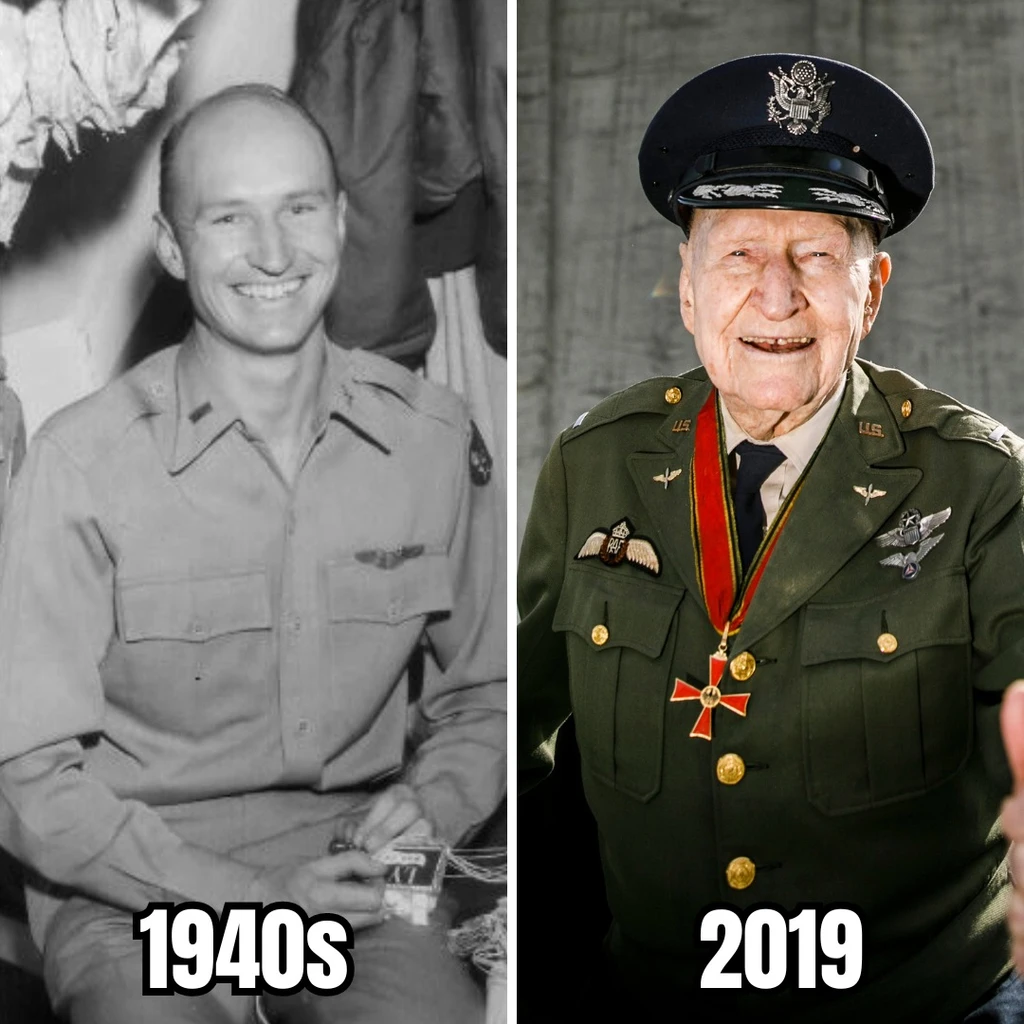
    Pilots like Gail Halvorsen with the US Air Force, nicknamed the “Candy Bomber” and “Rosinenbomber” (Raisin Bomber), not only dropped necessities, but also parachuted candy to the children of Berlin – a sweet gesture that was more than sugar. The mission was known as Operation “Little Vittles” and resulted in more than 23 tons of candy being dropped over West Berlin.

    For nearly a year, Allied aircraft buzzed over the Soviet blockade, keeping West Berlin alive one supply run at a time. It was a feat so remarkable that it seemed to scoff in the face of logic and pragmatism, demonstrating that a city could be sustained by air alone. The Soviets, initially so confident, ultimately halted their efforts upon realizing they were unable to combat the unyielding spirit of the Allies and West Berliners who refused to buckle under the pressure.

    Millions of goods were delivered to West Berlin

    Two airmen loading milk into the cargo-hold of a Douglas C-47 Skytrain

    Crew of a Douglas C-47 Skytrain load up a cargo of milk in Frankfurt Rhine-Main as part of the Berlin Airlift, 1948. (Photo Credit: Henry Grant Compton / FPG / Getty Images)
    Unfortunately, the Berlin Airlift wasn’t without its casualties. A total of 101 people, among 40 Britons and 31 Americans, lost their lives in airlift-related accidents.

    The operation lasted 462 days, from June 26, 1948 to September 30, 1949. Over its course, around 2.3 million tons of goods were delivered to West Berlin. It cost approximately $224 million, with the biggest single-day delivery occurring on Easter Sunday in 1949, when around 13,000 tons of coal were delivered.

    The Allies’ efforts, through ingenuity and sheer determination, turned the Berlin Blockade into a humiliating defeat.

    Aftermath of the Berlin Airlift

    American airmen standing alongside an aircraft

    American crewmen cheering the news that the Berlin Blockade has been lifted, 1949. (Photo Credit: Keystone / Getty Images)
    The Berlin Airlift is often viewed as a diplomatic and humanitarian triumph for the Western Allies and as a setback for the Soviet Union in the early stages of the Cold War. The West responded not with military force, but with a massive humanitarian effort to supply the city from the air.

    In a way, the successful execution and the moral high ground achieved by the Allies through the operation could be perceived as a humiliation for the Soviets on the international stage. It showed their determination and capability to resist intense pressure and underscored their commitment to the citizens of West Berlin.

  • Zundapp KS 750 the Motorcycle War Horse

    Zundapp KS 750 the Motorcycle War Horse

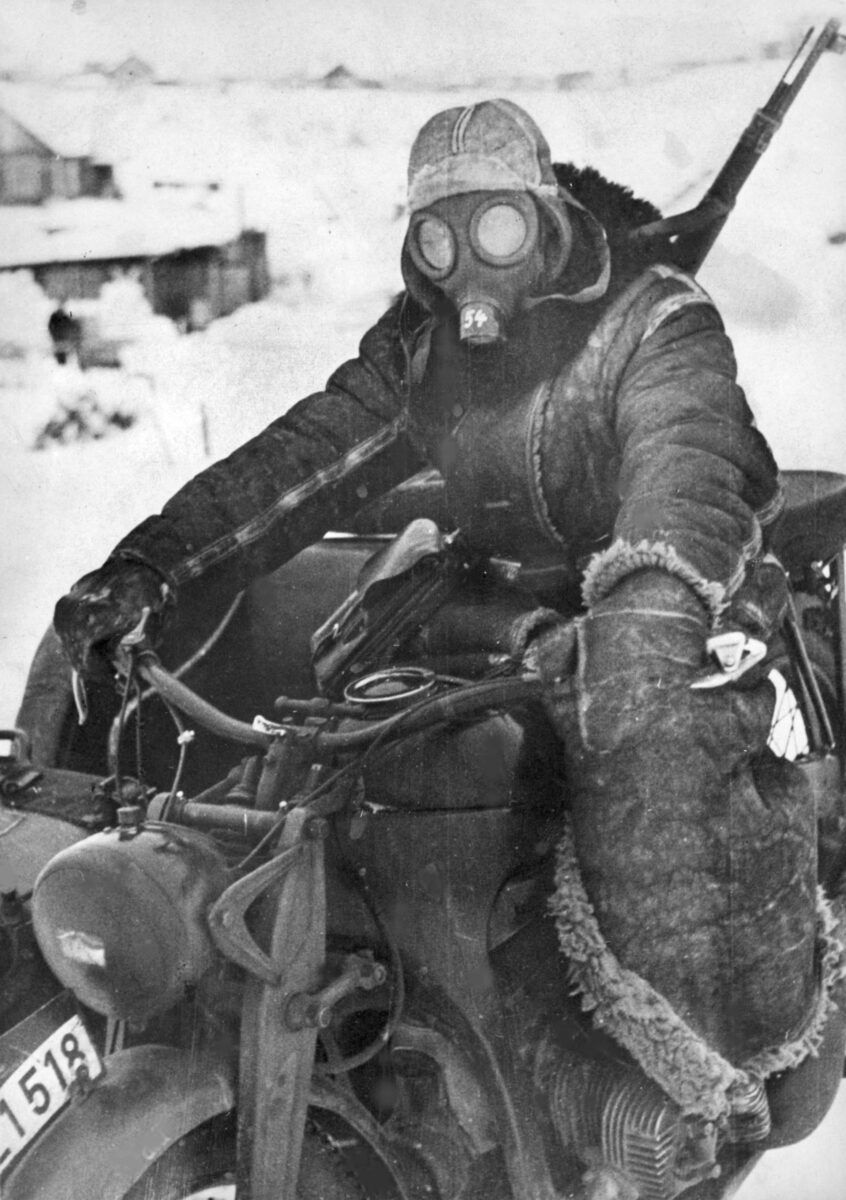
    The Zundapp KS 750, a motorcycle and sidecar combo from the World War II era, was developed by the German company Zundapp G.m.b.H for the German Wehrmacht (armed forces). This model entered service in 1941 and saw the production of over 18,000 units by 1944.

    It was utilized across all major German battlefronts in a variety of roles during the Second World War. A distinctive feature of the KS 750 was its dual-driven wheel design; both the motorcycle’s rear wheel and the sidecar wheel were shaft-driven.

    This functionality was powered by a 751 cc (45.8 cu in) flat twin engine with an overhead valve, boasting a bore of 75mm and a stroke of 85mm.

    Background

    In the late 1930s, as the political climate in Europe grew increasingly tense, the German military recognized the need for robust and versatile transportation vehicles that could support their expanding war efforts.

    Motorcycles, known for their agility and speed, were identified as crucial for various military operations, prompting the search for a model that could withstand the rigors of combat and challenging terrains.

    Transmission: The KS 750 featured a four-speed gearbox with a reverse gear, unusual for motorcycles. ZundappTransmission: The KS 750 featured a four-speed gearbox with a reverse gear, unusual for motorcycles.

    This need led to the involvement of Zundapp, a reputable German motorcycle manufacturer with a history of producing reliable and durable bikes.

    The company was tasked with creating a motorcycle that could not only handle the tough conditions of warfare but also provide flexibility in various roles, from reconnaissance to troop transport. Zundapp’s response to this military requirement was the development of the KS 750.

    The design of the KS 750 was a significant departure from the conventional motorcycles of the era. It was built to be heavy-duty, with a focus on endurance and adaptability.

    Zundapp KS 750

    One of the most notable features was its 750cc engine, which was considerably more powerful than the engines in standard motorcycles at the time. This increase in power was necessary to ensure the bike could carry heavy loads, navigate rough terrains, and maintain performance in extreme weather conditions.

    Another innovative aspect of the KS 750 was its sidecar design. Unlike typical sidecars of the period, which were merely attached for additional passenger capacity, the sidecar of the KS 750 was an integral part of the vehicle’s functionality.

    Off-road Capabilities: The motorcycle was designed for off-road use, with a high ground clearance and robust construction. ZundappOff-road Capabilities: The motorcycle was designed for off-road use, with a high ground clearance and robust construction.

    It was designed to be powered by the same shaft that drove the motorcycle’s rear wheel, a feature that greatly enhanced stability and control, particularly in off-road situations. This was a crucial adaptation, considering the diverse environments where the German military operated, from the deserts of North Africa to the snowy landscapes of the Eastern Front.

    In addition to its mechanical prowess, the KS 750 was designed with practicality in mind. The motorcycle needed to be easy to repair and maintain, even in field conditions.

    This practicality was reflected in features such as its horizontally opposed twin engine, known for its reliability and ease of maintenance, and the shaft drive, which was more durable and required less upkeep than a chain drive.

    Design and Features

    At the heart of its design was a robust 750cc engine, significantly more powerful than the engines typically used in motorcycles of that era. This choice of a larger engine was crucial, as it provided the necessary power and torque for the heavy-duty tasks expected of a military vehicle, from carrying equipment and personnel to navigating challenging terrains.

    Production Numbers: About 18,695 units of the KS 750 were produced.Production Numbers: About 18,695 units of the KS 750 were produced.

    A defining feature of the KS 750 was its sidecar, which was not merely an attachment for additional seating but an integral component of the motorcycle’s design. Uniquely, the sidecar wheel was powered, connected by a shaft drive that also drove the motorcycle’s rear wheel.

    This innovative design provided enhanced traction and stability, particularly in off-road conditions, a vital attribute for a vehicle expected to perform in diverse and often harsh environments.

    The KS 750’s engine was a horizontally opposed twin, a layout known for its balance and lower center of gravity, which contributed to the motorcycle’s stability and handling. This engine type was also recognized for its reliability and ease of maintenance, essential features for a vehicle that would often be serviced in field conditions.

    Shaft Driven

    Another notable aspect of the KS 750’s design was its use of a shaft drive system, rather than the more common chain drive found in most motorcycles of the time.

    The shaft drive offered several advantages in a military context: it was more durable, required less maintenance, and was less susceptible to damage from elements like mud, dust, and debris – common challenges in wartime environments.

    Unique Steering System: It had a unique feature called the "trailing link" front fork, which was advanced for its time and provided better stability.Unique Steering System: It had a unique feature called the “trailing link” front fork, which was advanced for its time and provided better stability.

    The motorcycle’s structural design also reflected its intended use in demanding conditions. It featured a strong, reinforced frame to withstand the rigors of heavy loads and rough terrain. The suspension system was designed to provide a balance of comfort and stability, ensuring that the motorcycle could traverse uneven landscapes with relative ease.

    In addition to its mechanical prowess, the KS 750 was equipped with practical features that enhanced its utility in combat situations. These included provisions for mounting weapons and additional equipment, as well as design considerations for ease of repair and maintenance under combat conditions.

    Military Use

    Its deployment spanned various roles, reflecting its versatility and reliability in the demanding conditions of warfare.Primarily, the KS 750 was used for reconnaissance missions. Its robust design and powerful engine allowed it to navigate challenging terrains with ease, making it ideal for gathering intelligence and conducting surveillance operations.

    Sidecar Equipped: It is well-known for its sidecar, which was equipped with a driven wheel, providing two-wheel-drive capability. ZundappSidecar Equipped: It is well-known for its sidecar, which was equipped with a driven wheel, providing two-wheel-drive capability.

    The motorcycle’s ability to cover ground quickly and efficiently was crucial in these roles, offering the German military a significant advantage in mobility.

    Another critical function of the KS 750 was rapid troop transport. In the fast-moving scenarios of the war, where quick response and mobility were key, the KS 750 enabled swift movement of soldiers across the front lines. This capability was particularly valuable in situations where larger vehicles were impractical or unavailable.

    Wounded Soldiers

    The KS 750’s design also allowed for the mounting of machine guns, transforming it into a mobile weapon platform. This adaptability meant that it could be used not just for transport or reconnaissance but also actively in combat, providing support and firepower where needed.

    In addition to combat roles, the KS 750 was employed for logistical support. Its sidecar enabled it to carry supplies, equipment, and even wounded soldiers, serving as an essential vehicle for both frontline and behind-the-scenes operations. This aspect of its use underscored the KS 750’s role as a workhorse in the German military’s machinery.

    Fuel Efficiency: The KS 750 was relatively fuel-efficient for its time and purpose, with a fuel consumption of around 7 liters per 100 km. ZundappFuel Efficiency: The KS 750 was relatively fuel-efficient for its time and purpose, with a fuel consumption of around 7 liters per 100 km.

    The motorcycle’s design features, such as the powered sidecar, enhanced stability and control, particularly in off-road and rough terrain conditions. This made the KS 750 a reliable choice in various environments, from the deserts of North Africa to the Eastern Front’s snow-covered landscapes.

    Furthermore, the KS 750’s durability and ease of maintenance were highly valued in the field. Its ability to withstand heavy use and its straightforward repair process ensured that it remained operational even in the most challenging situations.

    Zundapp Production and Numbers

    The production and numbers of the Zundapp KS 750 during World War II reflect its importance as a military asset and the substantial demand for this robust motorcycle in the German armed forces. Production of the KS 750 commenced in earnest as the war escalated, with Zundapp responding to the growing need for reliable and versatile military vehicles.

    Between 1940 and 1944, Zundapp manufactured approximately 18,000 units of the KS 750. This high production volume is indicative of the motorcycle’s integral role in the German military strategy. The KS 750 was not a mere auxiliary vehicle; it was a primary mode of transportation and operation, essential in various aspects of warfare.

    Influence on Post-War Designs: The design and technology of the KS 750 influenced post-war motorcycle and sidecar design, particularly in Europe. ZundappInfluence on Post-War Designs: The design and technology of the KS 750 influenced post-war motorcycle and sidecar design, particularly in Europe.

    The production process of the KS 750 was a feat in itself, especially considering the challenging circumstances of the time. World War II placed immense pressure on manufacturing resources, with material shortages and the constant threat of Allied bombing raids.

    Mechanization and Mobility

    Despite these hurdles, Zundapp maintained a steady rate of production, a testament to the company’s commitment to the war effort and the motorcycle’s perceived value to the German military.

    The KS 750’s production was concentrated in the Zundapp factories, which had to adapt to the changing conditions of the war. These facilities not only had to ensure the efficient assembly of the motorcycles but also had to manage the logistics of sourcing materials and parts in a war-torn economy.

    Furthermore, the number of KS 750 units produced reflects the strategic shift in the German military’s approach to mechanization and mobility.

    Modern Replicas: There are modern replicas and restorations of the Zündapp KS 750, reflecting its status as a classic and collectible motorcycle.Modern Replicas: There are modern replicas and restorations of the Zündapp KS 750, reflecting its status as a classic and collectible motorcycle.

    The KS 750 was part of a broader move towards using more mechanized units in reconnaissance, combat, and logistics, a recognition of the changing nature of warfare and the need for rapid, adaptable, and reliable transportation.

    The production and numbers of the Zundapp KS 750 during World War II were significant, both in terms of the volume produced and the impact these vehicles had on the German war effort. The KS 750 was not just another motorcycle; it was a crucial component of the German military’s operations, valued for its robustness, versatility, and reliability in some of the war’s most challenging theaters.

    Zundapp Post War

    After World War II, the KS 750, originally designed and used for military purposes, found new life in various civilian roles, reflecting its durable and versatile design.

    In the immediate aftermath of the war, Europe was in a state of reconstruction, and there was a pressing need for reliable transportation. The KS 750, known for its robustness and adaptability, was well-suited to the challenging conditions of post-war Europe.

    Many of these motorcycles were repurposed for civilian use, particularly in agricultural settings, where their power and stability were beneficial. In some areas, they were also adapted for everyday transportation, helping to fill the gap left by the scarcity of vehicles in the post-war period.

    Beyond its practical uses, the Zundapp KS 750 gained a certain cultural and historical significance. It became a symbol of the era, representing both the technological advancements of wartime and the resilience in the face of adversity. For military enthusiasts and historians, the KS 750 is a prized collectible, sought after for restoration and preservation.