Author: bangc

  • The Final Cruelty: How Systemic Failure, Shamed by Media Fury, Left Caroline Flack to Feel There Was ‘No Way Out’

    The Final Cruelty: How Systemic Failure, Shamed by Media Fury, Left Caroline Flack to Feel There Was ‘No Way Out’

    The bright, often dazzling, lights of British television have seldom masked a darker truth than the one now surrounding the final, devastating months of Caroline Flack. For years, she was the quintessential television darling: charismatic, effortlessly effervescent, and the beloved face of one of the country’s most popular cultural phenomena, Love Island. She was a figure synonymous with summer, romance, and the sheer, unadulterated joy of celebrity success. Yet, beneath the professional façade, a deeply vulnerable woman was battling demons, a fight that tragically culminated in her taking her own life in February 2020 at the age of 40.

    Four years on, the profound sense of loss is interwoven with a growing, devastating realisation: that the catastrophic outcome was not an inevitability, but arguably a direct consequence of systemic failures and questionable decisions made within the institutions of law and order. New evidence, championed fiercely by her heartbroken mother, Christine Flack, paints a picture of a justice system paralysed by fear of media backlash, determined to pursue a prosecution that expert legal minds now overwhelmingly agree should have been stopped at the very beginning. It is a story of a spiral into darkness, accelerated by official inaction and fuelled by a relentless, shame-driven public narrative.


    The Fateful December and the Initial Judgment


    The start of Caroline’s final, desperate journey can be traced back to a tumultuous night in December 2019 at her London flat, an evening that spiralled into a domestic altercation with her then-boyfriend, Lewis Burton. The details that followed were luridly and relentlessly splashed across the tabloids, framing a narrative of volatile celebrity behaviour. Police were called, and Caroline was subsequently charged with assault.

    What the public did not know, and what has only now been brought into sharp focus by Christine Flack’s unflinching pursuit of the truth, is the crucial, initial professional assessment of the case. On the night of the incident, the Crown Prosecution Service (CPS) had initially suggested that the case warranted nothing more than a police caution. This decision, made by frontline prosecutors who assessed the facts, the history, and the context, would have been the lifeline Caroline desperately needed. A caution is a formal warning, often applied to first-time, low-level offenders, and crucially, it would have allowed her to retain her privacy, her employment, and her sanity. It would have, in the words of her mother, “changed everything.”

    The initial, rational judgement, however, did not stand. A high-ranking detective inspector subsequently overruled the CPS recommendation. The prosecution was pressed forward. This pivotal moment—this administrative U-turn—is now identified by those closest to the tragedy, and by independent legal experts, as the critical point of no return. It was the decision that transformed a private, distressing incident into a public, career-shattering criminal case.

    Caroline Flack's management criticises 'show trial'


    The Domino Effect: Job Loss, Isolation, and Shame


    The immediate fallout was cataclysmic. Charged with assault, Caroline was forced to adhere to strict bail conditions, which included being banned from contacting Lewis Burton—the very person who, crucially, never wanted the case to proceed and was adamant that he would not support the prosecution.

    The consequences were swift and brutal. She had to step down from her immensely high-profile role as the host of Love Island. For a television star, the loss of the job that defines her public persona is not merely a financial blow; it is an existential threat. It stripped her of her professional identity and isolated her further from the familiar, comforting structure of her work life. She had to leave her home, her world changing overnight.

    The prosecution became a self-fulfilling prophecy of devastation. As her lawyer, Paul Morris, reflected, the case was pursued because it was “more difficult to stop the snowball rolling than let it continue.” The description offered is damning: “Saving face, I think adequately describes the stance taken.” The institutional inertia, coupled with an apparent fear of being seen to “go soft” on a celebrity by the baying media, proved to be more important than the individual’s mental health or the fundamental principle of justice.

    Caroline, who was already dealing with pre-existing vulnerabilities, was now thrust into a high-stakes, high-shame environment. The pressure was unimaginable. She was subjected to a relentless, 24/7 public trial by social media and tabloid journalism. Her agent, Louisa Booth, stated that they sent a psychiatric report to the CPS, pleading for compassion: “We sent a psychiatric report to the CPS saying she is not fit mentally to go through this. We had professional analysis. It was ignored.” This is perhaps the most agonising revelation—that professionals warned the state of her fragility, and that warning was deliberately cast aside.


    The Media Monster and the ‘Horror Movie’ Myth


    The agony of the legal proceedings was amplified exponentially by the sensationalist reporting and the toxicity of online commentary. The media created and perpetuated a narrative that was, in parts, deeply misleading and cruel. A story was published with photographs from the scene, which reportedly showed a bed covered in blood. Prosecution lawyer Katie Weiss also told the court Lewis had been hit with a lamp. This combination of details created a visceral, terrifying picture for the public: a star out of control, violently assaulting her partner with a weapon.

    The truth, as confirmed by both Caroline and Lewis Burton, was different. Caroline maintained she hit Lewis with a phone, not a lamp. The blood that horrified onlookers was her own, stemming from a moment of self-harm during the emotional altercation. This false narrative—the “lamp” myth—was yet another layer of shame piled upon her. Caroline was already telling friends she wouldn’t get a “fair trial,” and that she couldn’t “cope with the shame.” The media had cast her as a villain, and the justice system appeared hell-bent on reinforcing that image.

    Caroline Flack obituary | Television | The Guardian

    The relentless cycle of accusation and public condemnation led her to despair. When she heard the case would officially go ahead on February 13, the despair solidified into a terrifying finality. She texted a friend, stating simply: “My life is over. My head is throbbing.” This was not hyperbole; it was the raw, emotional confession of a woman who saw the entire state apparatus, backed by the savage roar of social media, closing in on her. She had been publicly shamed, professionally ruined, and legally pursued in a case that legal experts now confirm was fundamentally unsound. To her, there truly was “no way out.”


    The Verdict of the Experts: A System Rushed and Broken


    Christine Flack’s determination to uncover the truth has brought forward powerful corroborating voices that lend profound credence to the family’s claims of institutional error. Nazir Afzal, the former CPS chief crown prosecutor for the North West, meticulously reviewed the evidence and police documents. His professional judgment is absolute: “Having looked at all your evidence, I can’t understand why they rushed the judgement. This was a case where there is no previous history, no coercive behaviour. Mr Burton never wanted this case and was adamant.”

    Afzal goes further, stating unequivocally that “the very worst thing that should have happened was a caution.” His professional conclusion is devastating: “I can’t think of any reason to proceed, unless they were scared of what the media were going to say about them. It is not about losing face, this is about justice. My take on it is Caroline would still be with us if certain decisions weren’t taken in that month or two.” This is more than retrospective analysis; it is a direct indictment of the failure to exercise discretion and common sense.

    Jess McDonald, an ex-Met detective constable who had specific experience in dealing with domestic violence cases, echoed this sentiment, highlighting that “so much shouts out to me as mishandling.” She pointed to an email challenging the caution decision, where the detective inspector insisted there was no clear admission of guilt—a point contradicted by the evidence, as Caroline admitted guilt 12 times in a statement. The prosecution was pushed through not because of strength of evidence, but because of a weak justification and a powerful fear of public optics.


    The Agony of the Final Days


    In the final weeks of 2019, after the charges were laid, Caroline was barely coping. Her team managed to get her to see a psychiatrist, whose professional opinion was subsequently delivered to the CPS—and tragically, ignored. She became convinced, as her mum Christine recounted, that “They were going to pursue the case whatever. That’s what Caroline knew in the end.”

    In a harrowing final stretch, the documentary reveals she was so distressed that she took pills and drank a minibar dry. The day before she was due in court, a breakdown led to her trashing her flat. Friends, terrified, rushed to her side and called an ambulance, managing to calm her. But the sense of impending doom was unshakable. She insisted her friends go home the next morning, as her twin sister, Jody, was coming to visit. Jody arrived to a locked door, and the awful, crushing reality was soon discovered. Caroline had taken her own life. A desperate note left in her flat encapsulated her final plea: “Please let this court case be dropped, and myself and Lewis find harmony.”

    Search for the Truth: What Happened to Caroline Flack | Marie Claire UK

    The system, confronted with the ultimate consequence of its choices, offered only bureaucratic apologies and denials. The Metropolitan Police apologised for not keeping a record about why the decision to charge her with assault was made, a staggering admission of procedural lapse at a moment of crisis. An Independent Office for Police Conduct review found no misconduct, and the Met subsequently stated that while there was “organisational learning on points of process,” no misconduct was identified.

    The CPS, for their part, maintained their position, stating that “All decisions were made on the basis of the medical opinion available,” and that “A person’s celebrity status never influences whether a case is taken forward. We are satisfied the prosecution was correctly brought.”

    These statements, rendered in the cold, detached language of institutional defence, stand in stark, cruel contrast to the weeping, visceral evidence provided by her family and the professional condemnation offered by former colleagues within the justice system itself. The Met’s acknowledgment of organisational learning and the CPS’s insistence that celebrity status did not influence their decision ring hollow against the backdrop of an ignored psychiatric report and the explicit fear of media scrutiny that experts believe drove the process.

    The truth revealed is not just a tragic personal story, but a profound and terrifying lesson in the mechanics of modern celebrity shame. Caroline Flack was not just hounded by the media or the vicious tide of online trolls; she was, arguably, processed to death by a legal system that failed to exercise its fundamental duties of care and proportionality. It prioritised the appearance of toughness over the reality of justice, and it failed to see a vulnerable human being beyond the headline. The devastating conclusion remains: the case that destroyed her was one that many now believe should never have been allowed to stand. Her final weeks were an agonising testament to the chilling power of institutional inertia, a power that, once unleashed, left no escape. The price of that inertia was a life.

  • Breaking News:WW2 hero, 100, tears into Labour’s broken Britain: ‘It’s not a nice place anymore!’

    Breaking News:WW2 hero, 100, tears into Labour’s broken Britain: ‘It’s not a nice place anymore!’

    Alec Penstone

    The D-Day warrior says Britain is now unrecognisable to him (Image: Ian Vogler / Daily Mirror)

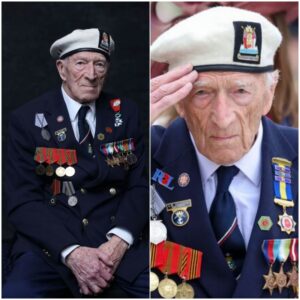
    A WW2 hero has slammed Labour’s broken Britain, which he says “just doesn’t seem to be a nice place any more”. Few know service and courage like Royal Navy hero Alec Penstone. The 100-year-old World War II veteran was just 15 when war broke out and signed up as soon as he was old enough to fight for his country.

    Alec from Shanklin, on the Isle of Wight, joined after making a promise to his father that he would not serve in the trenches, due to the horrors he had witnessed during World War I. Each year, he returns to Normandy, where he served on D-Day, to salute his fallen friends.

    However, in a damning indictment of broken Britain under Labour, he asks whether the sacrifice was worthwhile.

    Speaking exclusively to the Express on Remembrance Sunday, Alec said: “There are too many people with their hands in the till and who just think, ‘what can I get out of the country?’

    “This country is so divided it just doesn’t seem to be a nice place any more, and I blame the politicians, none of whom seem to have the backing of the people. It’s all self, self, self. What on Earth has happened?”

    Alec Penstone

    Hero Alec served with the Royal Navy and was married for 77-years. (Image: Jonathan Buckmaster)

    Alec was born on April 23, 1925, when Stanley Baldwin was Prime Minister. And few are as proud or patriotic as he.

    He said: “I was born on St George’s Day​ and proudly ​fly my flag each and every day. And I tell you something, if anyone tries to remove it, they’ll have to get past me first. What is happening now is beyond all comprehension.”

    Alec was too young to join up when war broke out in 1939, so he volunteered as a messenger during the Blitz.

    He spent his teens “pulling bodies out of bombed buildings” until he was old enough to quit his factory job and fight for his country.

    Able Seaman Alec served aboard HMS Campania, an escort aircraft carrier, defending the invading Allied armada from German U-boats and submarines. During the D-Day invasion, he spent his time three decks below on constant action stations and on-watch listening for torpedoes, mines and U-boats.

    He later served on Arctic convoy ships delivering essential supplies to northern ports in the Soviet Union and made a total of 10 perilous crossings.

    Alec met his sweetheart, Gladys, on Christmas Eve 1943 while on leave.

    They married on July 21, 1945, but just two days later, he returned to duty and set sail for the Far East. Alec served for a further 14 months after the war ended before he was demobilised in September 1946.

    They were together for 77 years until Gladys died in 2022.

    Her ashes sit on the mantelpiece at their home, and Alec says she visits him nightly.

    He said: “She tells me to come and join her soon. She still comes every night and asks ‘when are you coming to join me?’ I say, ‘sorry love I’m not ready yet. But I won’t be long.”

    Alec’s father, Alec senior, served in the 2nd Battalion Royal Berkshire Regiment and was seriously injured and left for dead during the Battle of the Somme. He survived but was crippled and died when his son was 40.

    Alec junior was awarded the Legion of Honour, the highest and most prestigious French national order of merit, for his service on D-Day and each year returns with the Spirit of Normandy Trust to participate in commemorations to honour those who perished across the Channel.

    Around 384,000 British military personnel died during WW2 across all branches of the Armed Forces and the Merchant Navy.

    Each year, Alec and his chums pay a pilgrimage to the British Normandy Memorial, the stunning edifice overlooking Gold Beach where the British 50th (Northumbrian) Division stormed ashore on D-Day, and which records the names of 22,442 soldiers who fell on June 6, 1944 and the three-month Battle of Normandy that followed.

    Alec, who participated in a remembrance service in Newport, said: “To us, the names carved there are not just names. They are real people. We can see their faces, and for some of them, we can still recall their voices. It is so important for us to always remember them.

    “I can see in my mind’s eye those rows and rows of white stones and all the hundreds of my friends who gave their lives, for what? The country of today?

    “I’m sorry, but the sacrifice wasn’t worth the result of what it is now. What we fought for was our freedom, but now it’s a darn sight worse than when I fought for it.

    “I’m not a hero, I never was, I am just so lucky. The heroes are the ones who never returned. They knew they were going to their death. They were your family, and I am so grateful for what they did.

    “Some of the younger generation don’t understand because they have never been taught. That is why it is so important to teach them about what happened and why.”

    He added: “Bravery? We just did our jobs and to the best of our abilities. I have always said I am not a hero, I am just one very lucky person.”

  • Emmerdale SHOCKER: April gives police a major lead after Marlon is ruthlessly gunned down by Ray — she knows the real hideout of the drug dealers!

    Emmerdale SHOCKER: April gives police a major lead after Marlon is ruthlessly gunned down by Ray — she knows the real hideout of the drug dealers!

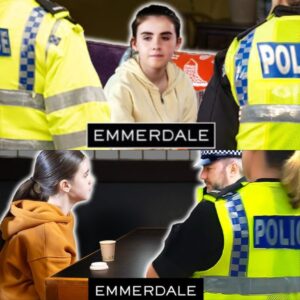
    Emmerdale has always been known for its dramatic storylines, but the recent events surrounding Marlon’s shocking shooting have left fans reeling. In the latest episodes, viewers witnessed a heart-stopping moment when Marlon was ruthlessly gunned down by Ray, a character whose dark dealings have finally come to a head. However, amidst the chaos, young April has emerged as a beacon of hope, providing police with a significant lead that could change everything. In this article, we will delve into the details of this shocking incident and explore how April’s knowledge of the drug dealers’ hideout could be pivotal in bringing justice to the village.

    The Shocking Incident: Marlon’s Shooting


    The recent episode of Emmerdale took a dark turn when Marlon was shot by Ray, a character whose involvement in the drug trade has been hinted at for some time. This shocking act of violence has sent shockwaves through the village, leaving both characters and viewers in disbelief. Marlon, a beloved character known for his warmth and humor, has found himself at the center of a dangerous web of crime that has been slowly unraveling throughout the series.

    As the episode unfolded, viewers were left on the edge of their seats, wondering how this brutal act would impact the community. The emotional fallout from Marlon’s shooting is expected to reverberate throughout the village, affecting not only his family but also the relationships and dynamics among other characters. The stakes have never been higher, and the tension is palpable as the story progresses.

    April’s Role: A Glimmer of Hope

    In the midst of this turmoil, young April has emerged as a key player in the unfolding drama. Despite her tender age, she possesses a remarkable sense of awareness and bravery that has allowed her to gather crucial information regarding the drug dealers’ hideout. This revelation could be the turning point in the investigation, providing the police with the lead they desperately need to apprehend those responsible for Marlon’s shooting.

    April’s character has evolved significantly over the years, and her courage in the face of danger showcases her growth. Her willingness to step forward and share what she knows demonstrates not only her loyalty to Marlon but also her commitment to justice. As the police begin to piece together the clues, April’s insights could prove invaluable in dismantling the drug operation that has plagued the village.

    The emotional weight of April’s decision to come forward cannot be understated. It reflects the broader themes of community, bravery, and the fight against crime that are central to Emmerdale’s narrative. As viewers, we are left to ponder the implications of her actions and how they will shape the future of the village.

    The Investigation: What Lies Ahead?


    With April providing a major lead, the police are now faced with the daunting task of investigating the drug dealers’ hideout. This development opens up a myriad of possibilities for the storyline, as the tension escalates and the stakes grow higher. The investigation will likely involve a series of twists and turns, keeping viewers engaged and eager to see how the plot unfolds.

    Online TV streaming services


    As the police delve deeper into the drug trade, we can expect to see familiar faces stepping up to assist in the investigation. Characters who have previously been sidelined may find themselves playing pivotal roles in the quest for justice. The dynamics within the village will shift as alliances are formed and tested, leading to unexpected confrontations and revelations.

    Moreover, the emotional toll on Marlon’s family and friends will be a significant aspect of the narrative. The impact of his shooting will resonate throughout the community, prompting discussions about safety, crime, and the lengths people will go to protect their loved ones. Emmerdale has a knack for weaving complex emotional threads into its storylines, and this situation is no exception.

    Community Response: The Ripple Effect


    As news of Marlon’s shooting spreads throughout the village, the community’s response will play a crucial role in shaping the narrative. Emmerdale has always highlighted the importance of community, and this incident is likely to bring residents together in unexpected ways. We may see characters rallying around Marlon’s family, offering support and solidarity during this challenging time.

    The ripple effect of this shocking event could lead to a renewed focus on community safety and the fight against crime. Characters who have previously turned a blind eye to the drug trade may find themselves compelled to take action, leading to a more proactive approach to addressing the issues facing the village. This shift in perspective could spark important conversations about accountability, justice, and the role of community in combating crime.

    As the investigation unfolds, viewers will be left to wonder how the community will respond to the challenges ahead. Will they come together to support one another, or will divisions emerge as tensions rise? The potential for conflict and resolution adds an exciting layer to the storyline, keeping audiences engaged and invested in the characters’ journeys.

    Conclusion: A Turning Point for Emmerdale


    The shocking events surrounding Marlon’s shooting and April’s courageous decision to provide police with a lead mark a significant turning point for Emmerdale. As the investigation unfolds, viewers can expect a gripping narrative filled with suspense, emotional depth, and the exploration of community dynamics. April’s bravery serves as a reminder that even in the darkest of times, hope can emerge from unexpected places.

    As fans eagerly await the next episode, one thing is clear: the stakes have never been higher for the residents of Emmerdale. The unfolding drama promises to captivate audiences and spark conversations about justice, community, and the fight against crime. Don’t miss out on the latest developments—tune in to see how this thrilling storyline unfolds!

  • “In a Filthy Attic in Emmerdale, I Saw the Horror of Modern Slavery” – Inside the Soap’s Most Heartbreaking Storyline Yet

    “In a Filthy Attic in Emmerdale, I Saw the Horror of Modern Slavery” – Inside the Soap’s Most Heartbreaking Storyline Yet

    Emmerdale is about to air one of its most disturbing — and socially charged — storylines in years. Behind the idyllic Yorkshire village backdrop, the soap has turned the spotlight on one of the darkest realities in modern Britain: human trafficking and forced labour.

    I visited the Emmerdale set to witness filming for tonight’s special episode (Monday, November 10), where the horrifying truth about Bear Wolf’s disappearance finally comes to light. What I saw in a cold, dim attic on the outskirts of Leeds was both heartbreaking and unforgettable.

    Video Player


    The Hidden Nightmare: Bear’s Captivity Revealed

    Four months ago, fans believed Bear (Joshua Richards) had left for a quiet life in Ireland. But this week, Paddy Kirk (Dominic Brunt) discovers his father never made it there — and the truth is far closer to home.

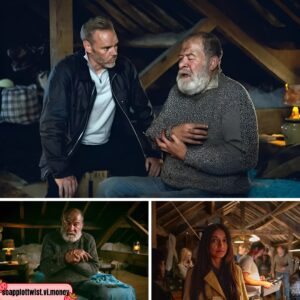
    At the end of Friday’s episode, a shocking final shot revealed a gaunt, bruised Bear imprisoned in the attic of Celia Daniels’ (Jaye Griffiths) farmhouse — a place now doubling as a front for a modern slavery ring, run by Celia and her ruthless enforcer, Ray Walters (Joe Absolom).

    When I stepped onto the set, I found myself inside that very attic. It was claustrophobic — low ceilings, rotting beams, stained mattresses, and a bucket in the corner for a toilet. Director Tim O’Mara quietly called for the cameras to roll as Joe Absolom’s Ray towered over Bear, his voice cold and venomous.

    “Get back to work,” he snapped, shoving Bear as he clutched his bleeding arm. The scene was gut-wrenching — and the silence between takes even more so.In a filthy attic in Emmerdale I saw the horror of modern slavery - viewers  will cry' - The Mirror


    “It’s Happening Right Now” — Joshua Richards on Playing Bear’s Ordeal

    After filming, Joshua Richards sat down to talk about embodying Bear’s suffering.

    “It’s harrowing,” he admitted. “Everyone’s worked so hard to make this believable, because it is happening in real life. Modern slavery is even bigger than slavery before abolition. Criminal gangs make fortunes exploiting people’s labour — and many victims are British.”

    Home Office statistics back him up. By the end of 2024, 19,125 potential victims of modern slavery were identified — the highest figure since records began in 2009. Shockingly, 23% were British nationals, just like Bear.


    Inside the “Slave Quarters”

    As Richards walked me through the set, he pointed out details of the victims’ living space.

    “Bear’s been here the longest — that’s why he’s got the bed. The rest sleep on the floor. There’s barely food. There’s no pay, no dignity. You get broken down until you believe that’s all you deserve.”

    Joining Bear in captivity are Anya (Alia Al-Shabibi), a trafficked Romanian woman, and Mick (Leon Harrop), a young man with Down’s Syndrome — both victims forced to work on Celia’s farm.

    On set were advisors from The Salvation ArmyIsobel McFarlane and Shanice Brown, who have spent years supporting real-life survivors of human trafficking.

    “The conditions you see here are true to life,” said Shanice. “It’s all about stripping people of their humanity to make them compliant.”

    In a filthy attic in Emmerdale I saw the horror of modern slavery - viewers  will cry' - The Mirror


    How Bear and April’s Stories Collide

    This harrowing plotline intertwines with the ongoing story of April Windsor (Amelia Flanagan), who has been exploited by the same criminals. Ray and Celia first groomed April into drug running before attempting to push her into sex trafficking.

    Shanice from The Salvation Army explained the link:

    “We’re seeing more cases where traffickers use County Lines networks to coerce vulnerable people into moving drugs or doing unpaid labour. It’s all part of the same system of control.”


    Behind the Scenes: “The Crew Were Fighting Back Tears”

    Director Tim O’Mara said that in his nearly three decades with Emmerdale, no storyline has moved him like this one.

    “Josh delivered one scene today that broke everyone,” he recalled. “I looked around during rehearsal — the crew were teary-eyed. It’s heart-rending. Viewers will need tissues.”

    Actor Joe Absolom, who plays Ray, admitted that taking on the role was “deeply uncomfortable but vital.”

    “Ray’s a manipulator, but he’s also a product of his own abuse by Celia,” Joe explained. “It’s about showing how the cycle of exploitation continues.”

    He even found a grim sense of irony in the script:

    “When I first read that Ray was keeping Bear in the attic, I thought it meant a literal bear,” he laughed softly. “Then I realised it was that Bear.”In a filthy attic in Emmerdale I saw the horror of modern slavery - viewers  will cry' - Mirror Online


    The Human Cost

    Joshua Richards reflected on Bear’s emotional journey and why this story matters:

    “Bear feels worthless — like he’s failed everyone. That’s how traffickers get in; they prey on loneliness and insecurity. They promise work and housing, but what they’re really doing is taking away your freedom.”

    He added that Emmerdale’s aim is not just to shock, but to educate and raise awareness.

    “If one person recognises a sign of modern slavery because of this storyline, it’s worth it.”


    A Story That Will Break Hearts

    As tonight’s episode airs, fans should brace for one of Emmerdale’s most emotional hours in years. This isn’t just soap drama — it’s social realism. It’s raw, unflinching, and heartbreakingly human.

    And as the camera pans over Bear’s face — tired, bruised, but still holding on to hope — viewers will feel the full weight of his suffering.

    “Viewers will cry,” Tim O’Mara warned. “But they’ll also understand something they might not have before — that slavery didn’t end in history books. It’s happening right now, closer to home than we think.”

  • “BRITAIN BETRAYED US!” — 99-Year-Old WW2 Hero Breaks Down in Tears Live On Air: “This Isn’t the Country I Fought For…”

    “BRITAIN BETRAYED US!” — 99-Year-Old WW2 Hero Breaks Down in Tears Live On Air: “This Isn’t the Country I Fought For…”

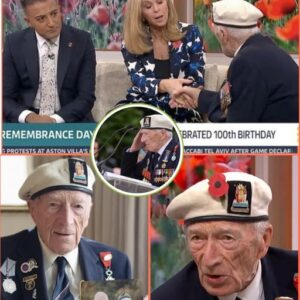
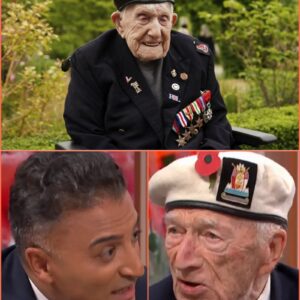
    Good Morning Britain presenters Adil Ray and Kate Garraway were left mortified live on air when a 100-year-old veteran declared winning World War II ‘wasn’t worth it’ due to the present state of the UK. Proudly wearing his medals Alec Penstone appeared on the show in advance of Remembrance Sunday on November 9 and told how he quit his factory job to sign up for the Royal Navy and fight for his country as soon as he was old enough. He emotionally recalled how many of his friends had lost their lives and described himself as “just a lucky one” for making it through.

    However the moving segment took a turn when Kate asked him what Remembrance Sunday means to him. He said he felt that winning the war was “not worth” how the country had turned out today. “My message is, I can see in my mind’s eye those rows and rows of white stones and all the hundreds of my friends who gave their lives, for what? The country of today?” he said sadly.

    D-Day veteran goes viral after emotional speech on ITV's Good Morning  Britain - Yahoo News UK

    “No, I’m sorry – but the sacrifice wasn’t worth the result of what it is now. What we fought for was our freedom, but now it’s a darn sight worse than when I fought for it.”

    A visibly stunned Kate interjected with her apologies as she said: “Alec, I’m sorry you feel like that and I want you to know that all the generations that have come since, including me and my children, are so grateful for your bravery and all the other service personnel.

    “It’s our job now to make it the country that you fought for, and we will do,” she promised him.

    In response he said: “It’s so wonderful to know there are people like you who spread the word around to the younger generations.”

    100-year-old World War II Veteran Alec Penstone

    Viewers overwhelmingly agreed with his sentiment and flocked to X to comment on a clip of the chat posted by the show. “Well done Alec for saying how it is but as usual they try and cut him off with ‘oh sorry about that’ and talk over him and talk to him like a child,” one penned.

    “Truly sad to see this wonderful brave man questioning what he and he fallen comrades fought for, he has been betrayed by spineless politicians of all colours. Thank you sir for what you and your comrades did for us but sadly I think you are correct,” another added.

    A third observed: “That’s a heartbreaking indictment on the country you gave service to. And no more damming critique.”

    Meanwhile a fourth chimed in: “He is absolutely correct. We have never lived through what he has and for those words to come from this hero’s heart is a damming testament to what our country has become. God bless him.”

  • Davina McCall Faces Cancer’s Return After Brain Surgery — TV Legend Opens Up on Emotional Struggle

    Davina McCall Faces Cancer’s Return After Brain Surgery — TV Legend Opens Up on Emotional Struggle

    TV presenter Davina McCall has revealed that she was diagnosed with breast cancer six weeks ago, describing how she found a lump in her breast while filming ITV’s The Masked Singer. The 58-year-old, who previously underwent surgery for a benign brain tumour last year, said she was “incredibly lucky” that the disease was caught very early.

    In a heartfelt video posted on social media, Davina shared that she had been encouraged to perform a self-check after seeing a reminder sign in the toilets at Lorraine’s studio. “I just wanted to tell you I’ve had breast cancer,” she said. “I found a lump a few weeks ago and it came and went. One morning I saw it in the mirror and thought, ‘I’m going to get that looked at.’”

    After a biopsy confirmed it was cancer, Davina underwent a lumpectomy nearly three weeks ago. “They took out a little bit extra and checked the margins — and the margins are clear,” she said with visible relief. “It was very, very small, so I got it very, very early. My lymph nodes were clear, and I didn’t have any removed. I’m just going to have five days of radiotherapy in January as a kind of insurance policy.”

    Davina expressed deep gratitude to the medical team at The Royal Marsden Hospital, her “brilliant kids,” and her partner Michael. “It’s been a lot,” she admitted. “I was very angry when I first found out, but I let go of that and now I feel in a much more positive place.”

    The Big Brother icon also used her platform to urge women to take breast health seriously. “If you’re worried, get checked. Check yourself regularly. If you’re due a mammogram, do it. I postponed an ultrasound because I couldn’t find the time — don’t do that.”

    Messages of love quickly flooded her post, with Amanda Holden and Gabby Logan among the many friends sending their support. The news comes almost a year after Davina’s successful neurosurgery to remove a brain cyst, marking yet another moment of resilience in her remarkable life.

  • “NO ANIMAL SHOULD EVER BE LEFT TO DIE FOR HUMAN CONVENIENCE.” Pete Wicks delivered the line with a trembling intensity that froze everyone in the room, moments before unveiling the decision that stunned even his closest friends. The millionaire didn’t just adopt a handful of unwanted dogs; he poured £5M into transforming a derelict stretch of land into a sanctuary farm built for thirteen terrified, abandoned slaughterhouse pups he refused to let disappear….

    “NO ANIMAL SHOULD EVER BE LEFT TO DIE FOR HUMAN CONVENIENCE.” Pete Wicks delivered the line with a trembling intensity that froze everyone in the room, moments before unveiling the decision that stunned even his closest friends. The millionaire didn’t just adopt a handful of unwanted dogs; he poured £5M into transforming a derelict stretch of land into a sanctuary farm built for thirteen terrified, abandoned slaughterhouse pups he refused to let disappear….

    In a world where celebrity scandals dominate the headlines and influencers peddle sponsored selfies for a living, Pete Wicks stands out like a beacon of unfiltered compassion. The tattooed heartthrob from The Only Way Is Essex (TOWIE), known for his brooding good looks, string of high-profile romances, and that signature man-bun, has always worn his emotions on his sleeve—quite literally, with ink that tells tales of heartbreak and hustle. But on a crisp autumn morning in the rolling hills of Essex, Wicks pulled off a feat that transcended tabloid fodder: he dropped a staggering £5 million to transform a derelict plot into a sprawling sanctuary for 13 forsaken dogs, yanked from the brink of a grim fate at an infamous slaughterhouse. The story alone is heartwarming—a millionaire trading Lambos for leads and red carpets for rawhide. Yet, it’s one off-the-cuff remark, uttered amid the cheers and camera flashes, that left onlookers, volunteers, and even his closest mates utterly speechless. What could make a room full of animal lovers freeze in stunned silence? Buckle up; this isn’t just a rescue—it’s a revelation that peels back the layers of a man we’ve only glimpsed on screen.

    TOWIE's Pete Wicks to rescue dogs from Romania and South Korea and has also  given up meat | Daily Mail Online

    Pete Wicks, 37, exploded onto our screens in 2015 as the Essex lad with a leather jacket, a devilish grin, and a knack for stirring the drama pot on ITV’s TOWIE. His on-off fling with Megan McKenna became appointment viewing—fiery rows, makeup makeouts, and enough tears to fill the Thames. Off-camera, Pete’s been on a quieter journey: therapy sessions unpacking his dad’s suicide, a pivot to podcasting with Staying Relevant (co-hosted with Sam Thompson, where they dissect everything from mental health to man-flu myths), and a string of wellness ventures, including a clothing line that donates proceeds to suicide prevention. But beneath the bravado, there’s always been a soft spot for the voiceless—stray cats in his flat, fundraisers for Battersea Dogs & Cats Home, and whispers of late-night drives to pull pups from shelters.

    The spark for this £5M odyssey? A tip-off from a shadowy contact in the animal welfare underground. Last spring, Pete caught wind of a derelict slaughterhouse on the outskirts of Chelmsford, a forgotten relic from the ’80s where regulations had lapsed, and desperate owners dumped their “problems” at the door. Thirteen dogs— a motley crew of lurchers, staffies, and mongrels, ages ranging from wide-eyed puppies to grizzled seniors—were slated for the bolt gun in 48 hours. “I saw the photos,” Pete later recounted, his voice cracking in a raw Instagram Live. “Eyes like they’d given up. It hit me like a brick— these weren’t strays; they were someone’s discarded family.” No time for red tape: Pete wired funds, rallied a team of vets and builders, and stormed the facility with a fleet of vans. By dawn, the dogs were en route to a makeshift holding pen, their barks a symphony of second chances.

    The £5 million investment? No small change, even for a bloke who’s parlayed reality TV into a £2M net worth. He snapped up 50 acres of prime Essex farmland—a crumbling estate with barns begging for beams and fields ripe for romps— and turned it into “Wicks’ Wayward Tails,” a state-of-the-art haven. Picture this: solar-powered kennels with underfloor heating, a hydrotherapy pool for rehabbing the rescued, organic veggie patches for homemade kibble, and even a “zen zone” agility course designed by dog whisperer experts. Pete didn’t skimp: custom murals of famous mutts (think Hachiko meets Lassie) adorn the walls, and a dedicated vet clinic ensures no tail wags in vain. “This isn’t a hobby,” he told a cluster of wide-eyed reporters at the grand opening. “It’s a promise. These dogs get the life they were robbed of— forever homes, or the best damn retirement village on four legs.”

    The 13 originals? They’ve got names now that scream personality: Bolt (the speedy lurcher with trust issues), Sable (the staffie who hoards socks like treasures), and little Luna, the runt who arrived shivering but now leads the pack in zoomies. Volunteers buzz around like bees in a hive, funded by Pete’s merch drops and corporate tie-ins (hello, branded chew toys at Pets at Home). It’s not just rescue; it’s revolution—Pete’s partnering with local councils to crack down on puppy farms and pushing for tougher slaughterhouse laws in Parliament. Essex, once synonymous with fake tans and feuds, is now ground zero for goodwill.

    The Grand Unveiling: Cheers, Tears, and a Curveball Comment

    Fast-forward to the sanctuary’s ribbon-cutting bash, a sun-drenched affair under azure skies. A-listers dotted the guest list: Megan McKenna showed up with her own pooch in tow, sharing an awkward-but-amicable hug with Pete; Sam Thompson brought the laughs, MC-ing with dad jokes about “fetching” donations; even Chloe Sims popped by, her eyes misty as she cuddled a rescue pup. The press pack was thick—Hello!OK!, and The Sun jockeying for quotes—while influencers live-streamed the works, racking up millions of views. Pete, dapper in a linen shirt rolled to his elbows (tats on full display), hoisted a golden leash like an Olympic torch, declaring, “Today, we don’t just save dogs—we save souls.”

    The crowd ate it up: applause thundered as the gates swung open, the 13 pioneers bounding into their new digs with tails whipping like helicopter blades. A volunteer brigade—fur-real enthusiasts from Battersea to the RSPCA—cheered as each dog got their “welcome wag,” a ceremonial treat toss. Donations poured in via QR codes on hay bales; a silent auction of Pete’s signed TOWIE scripts fetched thousands. It was peak feel-good: kids finger-painting paw prints, a live band crooning “Who Let the Dogs Out,” and Pete posing for selfies with every mutt in sight. “This is bigger than me,” he beamed, sweat beading on his brow from the midday heat. “It’s for every kid who grew up with a dog as their best mate, like I did before… well, before everything.”

    Then, the mic drop—or rather, the jaw-drop. As the festivities hit fever pitch, a reporter from Essex Live lobbed a softball: “Pete, what’s the one thing you want these dogs to teach the world?” The crowd hushed, phones poised for the soundbite. Pete paused, his easy grin fading into something steelier, eyes scanning the sea of smiling faces. He leaned into the mic, voice low and laced with gravel: “That loyalty isn’t blind. These dogs trusted humans once, and we broke them. If we can’t fix that betrayal in ourselves first, no amount of farms or fame will save the next one.” Silence. Dead, echoing silence. The band faltered mid-chord; a toddler’s balloon popped unnoticed; even the dogs seemed to tilt their heads, sensing the shift.

    The Stunning Silence: Unpacking Pete’s Piercing Truth

    That sentence? It landed like a thunderclap in a tea party. For a man who’d just funneled a fortune into fur-ever homes, it wasn’t gratitude or gush—it was a gut-punch indictment. The room, buzzing with champagne toasts and treat bags, froze in collective introspection. Reporters exchanged glances; influencers fumbled their filters; Megan’s hand flew to her mouth. Was this the cheeky Pete, calling out the very society that idolizes him? Or a deeper confession, echoing his own scars—the absent father, the public breakups, the nights when loyalty felt like a luxury?

    In the aftermath, the quote went viral, dissected on every podcast from Staying Relevant to The Joe Rogan Experience. Sam Thompson, in a teary episode, admitted, “Mate, you stopped me cold. Made me think about the mates I’ve ghosted.” Mental health advocates hailed it as a manifesto: “Wicks just therapy-slammed the nation,” tweeted one influencer. Critics? Some sniped it as “preachy Pete,” but even they couldn’t deny the resonance—especially with the sanctuary’s first adoption wave, where families signed “loyalty pledges” inspired by his words. Pete, unfazed by the frenzy, doubled down in a follow-up IG post: a black-and-white shot of him with Bolt, captioned, “We owe them better. Start with you.”

    The ripple? Monumental. Donation spikes hit 300%; copycat sanctuaries sprouted in Surrey and Somerset; Pete’s even scripting a docu-series, Tails of Betrayal, blending rescue footage with raw chats on trust. For the dogs, it’s paradise: Sable’s already matched with a therapy program, Luna’s starring in puppy Pilates vids. And Pete? He’s trading TOWIE cameos for dawn patrols, his man-bun windswept, soul a tad lighter.

    A Legacy in Leashes: Pete’s Pound of Gold

    Pete Wicks’ £5M gamble isn’t about headlines—though it snagged plenty. It’s a testament to turning pain into paws, fame into fields. That stunning sentence? It wasn’t a slip; it was the soul of the story, reminding us that true rescue starts inward. As Essex’s prodigal son patrols his pack under starlit skies, one can’t help but wonder: In a world quick to betray, can we all learn to heel? For now, at Wicks’ Wayward Tails, the answer barks yes—one wagging tail at a time.

  • Keir Starmer’s fierce declaration lit the fuse, and Joanna Lumley instantly escalated it with a razor-edged takedown of “polished lies,” pushing the studio into dangerous territory. Rylan Clark doubled the intensity with his own blunt refusal to “sugarcoat anything,” turning the segment into a raw showdown that blew past daytime TV norms. Social media erupted within minutes, and as the cameras finally powered down, everyone knew a major shockwave had been unleashed and the real fallout was still building.

    Keir Starmer’s fierce declaration lit the fuse, and Joanna Lumley instantly escalated it with a razor-edged takedown of “polished lies,” pushing the studio into dangerous territory. Rylan Clark doubled the intensity with his own blunt refusal to “sugarcoat anything,” turning the segment into a raw showdown that blew past daytime TV norms. Social media erupted within minutes, and as the cameras finally powered down, everyone knew a major shockwave had been unleashed and the real fallout was still building.

    Joanna Lumley & Rylan Clark Ignite Social Media Storm — Saying What No One Else Will!

    In a time when public figures often tread carefully around sensitive issues, two of Britain’s most recognizable television personalities — Dame Joanna Lumley and Rylan Clark — have emerged as unexpected voices of courage. Their recent comments on the UK’s growing migration crisis have sparked national debate, dividing opinion but earning both stars praise for their honesty and bravery.

    Keir Starmer: From radical lawyer to leader of a Labour party that needs  uniting | The Times of Israel

    Joanna Lumley, known for her elegance and sharp intellect, stunned audiences this week when she declared that the UK — “a small island nation” — simply “cannot feed millions.” Her words, though simple, struck a nerve. While critics accused her of being out of touch, thousands across the country applauded her for saying what many silently believe but are too afraid to express.

    “Joanna’s not being cruel — she’s being real,” one supporter wrote online. “Someone finally said it.”

    Migrant deported to France under returns deal comes back to UK by small  boat | ITV News

    Meanwhile, Rylan Clark, the outspoken television host known for his quick wit and candor, made headlines of his own after describing the government’s immigration policies as “absolutely insane.” On This Morning, Rylan boldly defended the difference between supporting legal immigration and condemning illegal routes — a distinction that many politicians have avoided making publicly.

    Joanna Lumley - Letters Live

    “You can be pro-immigration and still against chaos,” he insisted, a statement that instantly trended across social media.

    The comments have earned both Lumley and Clark waves of backlash from critics and activists — but also admiration from ordinary Britons who feel ignored by mainstream voices. Despite facing complaints to Ofcom and intense media scrutiny, Rylan stood firm, later clarifying that his point was about fairness and balance, not exclusion.

    For Lumley, her remarks echo decades of advocacy work on humanitarian issues — from refugees to sustainable development — proving her concern stems from compassion, not prejudice. She later emphasized the need for a “global approach” to migration that helps people at the source rather than overwhelming small host nations.

    Yet one thing unites these two stars: neither is backing down. In an era where most celebrities fear cancellation or controversy, Joanna Lumley and Rylan Clark have done the unthinkable — they spoke their truth.

    Rylan Clark praises migrants who saved mum - 'this country is built on  immigration' - Mirror Online

    And whether you agree with them or not, Britain is talking. Loudly.

    💬 “They’re brave enough to say what everyone’s thinking — and that’s rare these days,” one fan commented.

  • “BRITAIN BETRAYED US!” — 99-Year-Old WW2 Hero Breaks Down in Tears Live On Air: “This Isn’t the Country I Fought For…”

    “BRITAIN BETRAYED US!” — 99-Year-Old WW2 Hero Breaks Down in Tears Live On Air: “This Isn’t the Country I Fought For…”

    Good Morning Britain presenters Adil Ray and Kate Garraway were left mortified live on air when a 100-year-old veteran declared winning World War II ‘wasn’t worth it’ due to the present state of the UK. Proudly wearing his medals Alec Penstone appeared on the show in advance of Remembrance Sunday on November 9 and told how he quit his factory job to sign up for the Royal Navy and fight for his country as soon as he was old enough. He emotionally recalled how many of his friends had lost their lives and described himself as “just a lucky one” for making it through.

    However the moving segment took a turn when Kate asked him what Remembrance Sunday means to him. He said he felt that winning the war was “not worth” how the country had turned out today. “My message is, I can see in my mind’s eye those rows and rows of white stones and all the hundreds of my friends who gave their lives, for what? The country of today?” he said sadly.

    Close up of Alec Penstone on Good Morning Britain

    Veteran Alec Penstone appeared on Good Morning Britain in advance of Remembrance Sunday (Image: ITV)

    “No, I’m sorry – but the sacrifice wasn’t worth the result of what it is now. What we fought for was our freedom, but now it’s a darn sight worse than when I fought for it.”

    A visibly stunned Kate interjected with her apologies as she said: “Alec, I’m sorry you feel like that and I want you to know that all the generations that have come since, including me and my children, are so grateful for your bravery and all the other service personnel.

    “It’s our job now to make it the country that you fought for, and we will do,” she promised him.

    In response he said: “It’s so wonderful to know there are people like you who spread the word around to the younger generations.”

    Adil Ray and Kate Garraway talking to Alec Penstone on GMB

    Adil Ray and Kate Garraway interviewed veteran Alec Penstone on Good Morning Britian (Image: ITV)

    Viewers overwhelmingly agreed with his sentiment and flocked to X to comment on a clip of the chat posted by the show. “Well done Alec for saying how it is but as usual they try and cut him off with ‘oh sorry about that’ and talk over him and talk to him like a child,” one penned.

    “Truly sad to see this wonderful brave man questioning what he and he fallen comrades fought for, he has been betrayed by spineless politicians of all colours. Thank you sir for what you and your comrades did for us but sadly I think you are correct,” another added.

    A third observed: “That’s a heartbreaking indictment on the country you gave service to. And no more damming critique.”

    Meanwhile a fourth chimed in: “He is absolutely correct. We have never lived through what he has and for those words to come from this hero’s heart is a damming testament to what our country has become. God bless him.”

  • THE ETERNAL CURTAIN CALL: HOW 18-YEAR-OLD LILY RODRIGUEZ’S FINAL CONCERT WISH INSPIRED TAYLOR SWIFT TO FOUND A LASTING LEGACY OF HOPE

    THE ETERNAL CURTAIN CALL: HOW 18-YEAR-OLD LILY RODRIGUEZ’S FINAL CONCERT WISH INSPIRED TAYLOR SWIFT TO FOUND A LASTING LEGACY OF HOPE

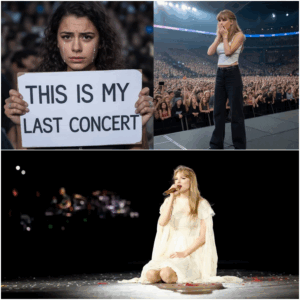
    The air inside SoFi Stadium in Los Angeles was electric, thick with the synchronized euphoria of 82,000 fervent fans. The Eras Tour finale was a high-octane spectacle of music, memory, and sheer star power. Yet, amidst the dazzling lights and the thunderous, unifying chorus of a global anthem, the show was about to be stopped—not by a technical glitch, but by the quiet, devastating courage contained within four handwritten words on a small cardboard sign.

    Taylor Swift, the architect of this mesmerizing universe, was mid-song, belting out the self-aware brilliance of “Anti-Hero.” Her eyes swept across the vast ocean of admirers when a small, white placard held precariously at the edge of the stage caught her attention. It was held by an 18-year-old girl, frail yet resolute, named Lily Rodriguez. As Taylor focused, the message became clear, cutting through the music like a shard of glass: “This is my last concert.”

    What happened in the moments that followed transcended the limits of a musical performance, etching itself into the annals of emotional history. Taylor, in a spontaneous act of humanity that overshadowed her superstar status, abruptly halted the music. The instantaneous silence that descended upon the 82,000-strong crowd was deafening, a collective holding of breath as the stadium awaited the resolution of this profound and unexpected interruption. Stepping toward the edge of the catwalk, microphone lowered, Taylor’s voice, often commanding, was imbued with a tremor of confusion and concern as she asked the young woman, “Why is this your last concert?” Lily’s answer, simple, stark, and utterly heartbreaking, was delivered loudly enough to carry through the quieted arena: “Because I’m dying.”

    The Courage of Four Words


    The story of Lily Rodriguez is one of extraordinary grace faced with ultimate unfairness. Just six months prior, Lily had received a terminal diagnosis: Stage 4 Lymphoma. The doctors had delivered the cruelest possible prognosis, giving the vibrant 18-year-old between three to six months to live. While the news would have shattered any spirit, Lily’s reaction was not one of despair, but of profound prioritization. She had only one final wish. “If I’m going to die,” she told her mother, Maria, through tears, “let my last concert be Taylor Swift.”

    For Maria, a heartbroken mother watching her daughter’s life slip away before it had truly begun, fulfilling this final, precious wish became her singular mission. She exhausted her life savings to secure front-row tickets for the Eras Tour finale. The journey to SoFi Stadium itself was a testament to Lily’s fierce determination. Her health was deteriorating rapidly, her body ravaged by the disease and the harsh treatments of chemotherapy, yet her spirit remained unbowed. “This is my last chance,” she insisted, pushing past her doctors’ warnings. “I don’t want to die without seeing Taylor.”

    That simple white sign, prepared with a black marker, was Lily’s quiet declaration to the world, summarizing her entire truncated existence into four words. As they navigated the stadium’s entrance, Maria noted the flickering light in Lily’s eyes—a light that refused to fade despite her physical weakness and hair loss. “Tonight will be perfect, Mommy,” Lily had promised. “I’ll see Taylor, and she’ll see me. She’ll see this sign, and she’s someone who truly cares about people.” It was a prediction rooted not just in a fan’s hopeful dream, but in a profound belief in the artist’s known capacity for empathy.


    The Icon’s Unscripted Embrace


    When Taylor Swift’s eyes met the sign, and the reality of the words sank in, the superstar’s carefully constructed show dissolved. The momentum of the Eras Tour, a financial and cultural phenomenon, suddenly seemed utterly irrelevant compared to the young life standing before her. Upon hearing Lily’s devastating confirmation—“I’m a terminal stage cancer patient. They gave me three months. This is my last concert”—Taylor’s composure broke.

    Ignoring the protocol and the cautionary efforts of security guards, Taylor dropped her microphone and sprinted toward the edge of the stage, crouching down to be eye-level with Lily. This was no longer the global pop icon; this was a human being connecting with another in a moment of existential crisis. “How old are you?” Taylor asked, her voice thick with emotion. “18,” Lily whispered. “And what’s your name?” “Lily Rodriguez.”

    In that moment, Taylor pulled Lily into a warm, protective embrace. The spontaneous, powerful gesture caused the entire 82,000-person stadium to rise in unison, not in wild concert cheering, but in a silent, respectful standing ovation. It was not applause; it was an acknowledgment of profound courage. “Lily,” Taylor said, looking into the young woman’s tear-filled eyes, “you’re a very brave girl, and tonight is your night.”


    The Duet of Shared Sorrow


    Taylor’s next action was perhaps the most crucial: she didn’t just offer comfort; she offered partnership. She asked Lily about her biggest dream. Lily, humbled and trembling, confessed: “To sing with you, but my voice is very bad because of chemotherapy.” Taylor instantly refuted the self-deprecation. “Your voice will be perfect. Will you come on stage?”

    Assisted by Taylor, who physically supported her weak frame, Lily was brought onto the stage, greeted by the thunderous, loving acclaim of the entire arena. Taylor introduced her as “Lily Rodriguez, 18 years old and very brave. And tonight, she’s my special guest.” Lily, speaking into the microphone, tremblingly shared her story, and the stadium listened in solemn silence as she recounted her diagnosis and the spread of her disease.

    Taylor Swift gets very emotional and tries to hold back her tears as a  multitude cheers in a concert | Marca

    She then revealed the song that gave her hope: “Soon You’ll Get Better.” The choice was profoundly significant, for it is one of Taylor’s most raw and personal tracks, written about her own mother’s battle with cancer. For Lily to select this song was a gesture of deep, spiritual connection, recognizing the artist’s own vulnerability. The duet that followed was not about perfect pitch or choreography; it was an act of sincere, fragile healing.

    Lily’s voice, weak yet utterly sincere, struggled to keep up with the lyrics. When they reached the line, “You’ll get better soon, ’cause you have to,” Lily’s voice broke entirely. Tears streamed down her face as she spoke a truth that contradicted the lyric: “I won’t get better,” she wept, “but others will.”

    Taylor held her close. “You’re already better, Lily. Your heart is healed, your soul is healed. You didn’t lose hope. You’re here with us. You’re celebrating life.”


    A Foundation and a “Fighter” Necklace


    The night transformed into a spiritual celebration of Lily’s life, rather than a farewell. Taylor signaled the production crew, and a large cake was wheeled onto the stage, inscribed with the words: “Celebrate every day Lily Rodriguez.” Taylor explained: “Today is the day you were reborn, because today you’re not just Lily—you’ve become a symbol of hope.”

    In a moment of extraordinary personal significance, Taylor removed a necklace from her own neck and placed it on Lily. It was inscribed with the word “Fighter.” “I made this for my mother when she had cancer,” Taylor explained. “Now let it be yours.” The exchange sealed a bond far deeper than that of artist and fan, placing Lily firmly within Taylor Swift’s personal circle of warriors.

    Then came the promise that would ensure Lily’s spirit would outlive her body. Turning to the vast arena, Taylor made a monumental declaration: “Tonight, I learned a lot from Lily—how precious life is, how important every moment is.” She announced the immediate establishment of a special fund: The Lily’s Hope Foundation. Its mission: to make the dreams of young cancer patients come true, just as Lily’s had been.

    Later, backstage with Lily and her mother Maria, Taylor asked Lily about her remaining dreams. Lily, ever selfless, listed two goals that had nothing to do with fame: she wanted to graduate and receive her diploma from hospital school, and she wanted to buy a house for her mother, who had quit her job to become her full-time caregiver. Taylor, eyes filled with tears, gave a final, life-changing promise: “Lily, we’ll make all your dreams come true through the foundation. You’ll graduate. Your mother will have a new house. And you’ll give hope to other children.”


    The Eternal Legacy of Hope

    See Photos of Taylor Swift, Blake Lively and More

    Taylor Swift, known for her ability to keep a secret, became known for her determination to keep this promise. Lily’s Hope Foundation was immediately established, becoming a vehicle for the dreams of thousands. Taylor personally ensured that every one of Lily’s final wishes was granted.

    The graduation ceremony was a poignant, heartfelt event, held not in a sterile auditorium, but at Taylor Swift’s own house, symbolizing a deep, familial inclusion. Lily received her diploma, a cherished accomplishment. While she would sadly not live long enough to see her mother move in, a new house was bought for Maria, ensuring the woman who had sacrificed everything would be safe and secure. Most profoundly, Lily, in her final weeks, became the radiant face and voice of the foundation, offering living proof that courage is contagious and hope is transferable.

    A month after the concert, Lily’s condition worsened, and she was hospitalized. Taylor visited her, finding Lily physically weakened but still smiling. “Thank you,” Lily told her, “for giving me not my last concert, but my most beautiful concert.” Taylor, in turn, offered a reciprocal gratitude: “You changed my life. You showed me how precious life is. You taught me what real courage is.”

    A week later, Lily Rodriguez passed away. But she died happy, her final weeks imbued with purpose and fulfillment. Five thousand people attended her funeral, a testament to the magnitude of her story. Taylor was there, too, singing “Soon You’ll Get Better,” turning a song of personal grief into a hymn of collective remembrance.

    “Lily Rodriguez lived only 18 years,” Taylor stated, “but gave hope to thousands of people. She showed us that life is not in its length, but in its depth.”

    In its first year, Lily’s Hope Foundation achieved staggering success, helping over 500 young cancer patients realize their own precious dreams. Maria, Lily’s devoted mother, became the president of the foundation, continuing her daughter’s mission. Lily’s enduring philosophy, articulated in her final weeks, became the foundation’s guiding light: “Dying isn’t bad. Not having lived is bad.”


    The Night That Never Ends


    Lily Rodriguez’s story is not a tragic farewell; it is a profound lesson in how to truly live. It has birthed an eternal mission that continues to ripple across the globe.

    Every year, on the anniversary of Lily’s passing, Taylor Swift hosts a special concert known as Lily’s Night. All proceeds are funneled directly back into the foundation. Lily’s photo stands proudly at the edge of the stage, a silent, powerful presence. Before every song, Taylor offers a dedication, ensuring the narrative of courage is never forgotten: “This song is for Lily. She showed us that the greatest courage is choosing to live even when facing death.”

    At every concert, Taylor invites a young cancer patient to the stage, presenting them with a replica of the “Fighter” necklace. “This necklace,” she tells them, “reminds you that you are warriors, just like Lily.”

    The concert that Lily believed would be her last became, instead, the unforgettable prelude to her eternal legacy. She lives on in the music, in the hope she instilled, and in the countless dreams of other children the foundation continues to fulfill. Taylor Swift, too, was profoundly changed. The musician realized that her art was not merely entertainment, but a powerful, healing tool. Before every show, she looks at Lily’s photograph and offers a silent vow: “Tonight is for you, Lily. You taught me the true meaning of life.”

    Lily Rodriguez’s 18 years were not cut short; they were maximized. She taught the world that the most significant moments can arise from the simplest, most honest acts of showing up fully and courageously, even when the time is short. Her story—a universe of courage, connection, and hope—breaks the heart and lifts the spirit simultaneously, reminding us all that true purpose is measured not in the decades we are given, but in the depth of compassion and meaning we choose to create in the time we have left. The stage lights may dim on the Eras Tour, but the hope ignited by Lily Rodriguez’s four words will shine forever.