Author: bangc

  • Watch a special Paddington performance on Strictly Come Dancing The bear takes to the floor!

    Watch a special Paddington performance on Strictly Come Dancing The bear takes to the floor!

    Paddington (Arti Shah) and Tom Fletcher, © Guy Levy / BBC
    Paddington The Musical had a lovely spell on Musicals Week on Strictly Come Dancing!

    The iconic bear, played by James Hameed (the Paddington off-stage performer and remote puppeteer), Arti Shah (the Paddington on-stage performer) joined composer and lyricist Tom Fletcher for a rendition of “The Explorer and the Bear”, accompanied by Strictly pros Nadiya Bychkova and Vito Coppola.

    You can watch it below.

    See the rest of Strictly‘s Musicals Week performances here. Paddington The Musical features a score by Tom Fletcher and a book by Jessica Swale, and is directed by Luke Sheppard. It is based on A Bear Called Paddington by Michael Bond and the film Paddington, by special arrangement with StudioCanal.

    The full cast includes Hameed (Young Man / Paddington off-stage performer and remote puppeteer), Shah (Paddington on-stage performer), Timi Akinyosade (Tony), Amy Booth-Steel (Lady Sloane), Tarinn Callender (Grant), Delilah Bennett-Cardy (Judy Brown), Adrian Der Gregorian (Mr Brown), Tom Edden (Mr Curry), Brenda Edwards (Tanya), Amy Ellen Richardson (Mrs Brown), Victoria Hamilton-Barritt (Millicent Clyde), Teddy Kempner (Mr Gruber), and Bonnie Langford (Mrs Bird), with Joseph Bramley, Leo Collon, Stevie Hare and Jasper Rowse sharing the role of Jonathan Brown, and alternate Paddington on-stage performers Abbie Purvis and Ali Sarebani.

    The ensemble includes Esme Bacalla-Hayes, Tiago Dhondt Bamberger, David Birch, Aimée Fisher, Jacqueline Hughes, Kellianna Jay, Sam Lathwood, Natasha Leaver, Katie Lee, Sunny Lee, Vicki Lee Taylor, Jáiden Lodge, Andilé Mabhena, Rose Mary O’Reilly, Ben Redfern, Hugo Rolland, Simon Shorten, and Hassan Taj.

    The team responsible for the bear includes Tahra Zafar (Paddington bear designer), Audrey Brisson (Bear physicality associate director), Phill Woodfine (remote puppetry coach), and Annabelle Davis (Paddington bear casting director).

    The creative team also includes Matt Brind (musical supervisor, orchestrations and arrangements), Ellen Kane (choreographer), Tom Pye (scenic designer), Gabriella Slade (costume designer), Tahra Zafar (Paddington Bear designer), Neil Austin (lighting designer), Gareth Owen (sound designer), Ash J Woodward (video designer and animation), Campbell Young Associates (hair, wig and make-up designer), Majid Adin (illustration and additional animation), Laura Bangay (musical director), Natalie Gallacher for Pippa Ailion and Natalie Gallacher Casting (casting director), Nick Hockaday (young persons’ casting director), Davis (Paddington casting director), Javier Marzan (physical comedy consultant), Tobago Crusoe and Felix Ruiz (additional music consultants).

    Paddington books, beginning with A Bear Called Paddington in 1958, have sold over 35 million copies worldwide. Paddington has been adapted for television by the BBC and in the Emmy Award-winning series The Adventures of Paddington by StudioCanal. StudioCanal has also produced three films: Paddington (2014), Paddington 2 (2017), and Paddington in Peru (2024).

    The production is currently booking until 25 October 2026.

  • “When a Miracle Friendship Meets a Heartbreaking Battle” — Peggy the Staffy Fights for Her Life as Magpie Best Friend Refuses to Leave Her Side

    “When a Miracle Friendship Meets a Heartbreaking Battle” — Peggy the Staffy Fights for Her Life as Magpie Best Friend Refuses to Leave Her Side

    Peggy the Staffy wasn’t just another internet-famous dog — she was a symbol of unlikely friendship, gentle loyalty and the kind of soft-hearted magic that only animals seem capable of. Alongside her inseparable companion, Molly the magpie, Peggy captured the world’s attention as the duo played, snuggled and healed together. It was the story no one expected: a tough-looking rescue Staffy and a tiny abandoned magpie forming a bond deeper than species, rules, or reason.

    Now, Peggy faces the hardest chapter of her life — one that has left millions of fans heartbroken, her family devastated, and even Molly the magpie unusually quiet on her favorite branch.

    A Diagnosis That Shattered the Peace

    For months, Peggy’s owners sensed something wasn’t right. The playful spark dimmed. Her breathing grew heavier after short walks. She slept more, ate less, and began turning down the games she once loved. At first, it was easy to blame age or weather.

    But the vet visit changed everything.

    A swelling…
    A shadow on the scan…
    A conversation no pet owner wants to hear.

    Peggy was diagnosed with a condition that required immediate, life-saving surgery — a complex, risky operation with uncertain outcomes. The kind of news that knocks the air from your lungs.

    Her family said the room went silent. Peggy, ever gentle, rested her head on her owner’s knee as though she were comforting them.

    Molly the Magpie Knows Something Is Wrong

    Animals understand more than we give them credit for — and Molly proved it.

    The once-cheeky magpie, famous for stealing buttons, hopping on Peggy’s back, and chirping loudly for attention, suddenly changed. She stopped playing. She followed Peggy closely, sat beside her on the porch steps, and tucked herself into Peggy’s fur when the Staffy lay down to rest.

    Their fans online noticed it, too:
    Molly looks worried.
    She’s guarding Peggy.
    She knows.

    Peggy and Molly’s friendship had always felt almost magical — born from kindness, deepened by trust, and shared with millions who found comfort in their unlikely bond.

    Now, Molly’s quiet companionship feels like a vigil.

    Preparing for the Surgery That Could Save Her Life

    Peggy’s family described the night before surgery as “the longest night of our lives.” She was washed gently, wrapped in blankets, fed her favorite soft foods, and given more cuddles than she probably wanted — but she didn’t resist.

    Peggy seemed calm. But everyone else was falling apart inside.

    Molly refused to leave her side, hopping carefully around Peggy’s bed, occasionally nudging her with her beak as though checking on her. It was as if the magpie understood the gravity of the moment better than any human.

    At sunrise, Peggy walked — slowly but proudly — to the car. Her tail gave one soft wag. A quiet, brave “I’m ready.”

    A Global Community Holds Its Breath

    Support poured in from around the world.
    Art. Letters. Donations for her care.
    Messages from people who said Peggy’s friendship with Molly helped them through breakups, depression, anxiety, grief.

    It turns out Peggy wasn’t just a dog on the internet.
    She was comfort.
    She was hope.
    She was the warm reminder that love can bloom anywhere — even between a dog and a tiny rescued bird.

    The Battle Ahead

    Peggy’s surgery is risky, but necessary. The family says they are clinging fiercely to optimism, drawing strength from the thousands who are standing with them — and from Molly, who still waits by the window for her best friend.

    Whatever happens next, Peggy’s story has already changed lives. She showed the world that gentleness isn’t weakness, that love is universal, and that friendship can cross any boundary.

    She’s not just fighting for her life — she’s fighting for all the hearts she’s touched along the way.

    And Molly?
    She’ll be waiting.
    She’ll be watching.
    She’ll be ready to welcome her best friend home.

  • Rachel Maddow stuns with a mysterious multi-million-dollar pledge to create a “special sanctuary” for abandoned creatures

    Rachel Maddow stuns with a mysterious multi-million-dollar pledge to create a “special sanctuary” for abandoned creatures


    Rachel Maddow has surprised fans worldwide with a bold, compassionate initiative.

    In a move that has captured the attention of millions, Rachel Maddow has announced a multi-million-dollar pledge to establish a sanctuary for abandoned dogs and cats. Dubbed a “forever paradise”, the sanctuary aims to rescue thousands of animals from streets and shelters, providing not only basic necessities like food and medical care but also permanent, loving homes.

    While Maddow is best known for her fearless reporting and incisive commentary on political affairs, this latest initiative reveals a deeply personal side of the broadcaster—one driven by compassion and a desire to change lives beyond the newsroom.

    “Every tail wag and every purr deserves a chance at love,” Maddow said during a heartfelt statement.

    The announcement instantly went viral, prompting an outpouring of support across social media. Fans have praised Maddow not only for her unwavering journalistic integrity but also for her commitment to humanitarian causes, calling the sanctuary plan “inspiring, bold, and life-changing.”


    The sanctuary will provide safe shelter and medical care for thousands of animals.

    The sanctuary itself remains largely under wraps. Sources close to Maddow indicate that it will feature state-of-the-art facilities, a veterinary wing, and programs to help socialize and rehabilitate rescued animals. The location has not yet been disclosed, adding a layer of intrigue and anticipation among fans and animal welfare advocates alike.

    “This isn’t just about rescuing animals,” Maddow told reporters. “It’s about creating a permanent place of safety, care, and love—a space where they can truly be free and thrive.”

    The scope of the project has left supporters and insiders alike buzzing. Some speculate that Maddow’s sanctuary could become one of the largest and most impactful animal welfare programs in the country, while others point out that her influence could inspire similar high-profile initiatives nationwide.

    Maddow’s sanctuary is expected to open within the next year, with ambitious plans to reshape animal rescue.

    This announcement has sparked discussions not only about Maddow’s philanthropic efforts but also about the intersection of celebrity influence and humanitarian work. Many fans have noted that the project underscores a softer, nurturing side of Maddow rarely seen on television, contrasting with her typically intense coverage of politics and current events.

    The sanctuary is expected to open its doors within the next year. Maddow has promised that regular updates will be shared with the public, including stories of rescued animals and the lives changed by the project. Animal rights organizations are reportedly already collaborating behind the scenes, ensuring that the sanctuary can have maximum impact from day one.

    In a media landscape often dominated by political commentary, Maddow’s bold initiative is a refreshing reminder of compassion in action, blending her journalistic credibility with a mission that touches hearts everywhere. Fans and supporters alike are eagerly watching, ready to see how this “forever paradise” will transform the lives of both animals and the people who care for them.

  • The Architects of Betrayal: Unmasking the Cover-Up Behind Minnesota’s $8 Billion Fraud

    The Architects of Betrayal: Unmasking the Cover-Up Behind Minnesota’s $8 Billion Fraud

    The numbers alone paralyze the senses. One billion dollars. Two billion. Early reports of the massive scheme to defraud the citizens of Minnesota were already horrifying, an indictment of state-level oversight and basic governance. But the true, incandescent scale of the betrayal is now snapping into focus: According to whistleblowers who dared to speak out, the final theft could eclipse $8 billion.

    This is not a budget mishap. This is not simple waste. This is, in the prosecutor’s chilling words, an “industrial complex of fraud,” a sophisticated, deeply embedded machinery built for the sole purpose of looting the state treasury—funded entirely by the pockets of every hardworking American taxpayer. The scale of this operation is a political and societal calamity, a structural collapse that threatens to fundamentally redefine the relationship between the government and the governed, demonstrating the catastrophic failure of the modern progressive administrative state.

    Why Ilhan Omar Is Making Headlines

    The Anatomy of the Theft: A System Designed to Fail

    The crime’s mechanism was deceptively simple, yet its execution required institutional negligence bordering on conscious complicity. The fraud targeted state programs intended to serve the most vulnerable—child care, food nutrition, housing—the very safety nets designed to embody the state’s “generous spirit.” Dozens of shell businesses were established, allegedly funneling billions out of these programs. The tragedy is compounded by the fact that the vast majority of individuals involved were drawn from one specific community, adding a layer of complex and uncomfortable social failure to the political rot.

    The immediate casualty is the state’s financial stability. The ultimate casualty, however, is the public trust.

    The defenders of the status quo—primarily the Democratic leadership, including Governor Tim Walls—have attempted to frame this catastrophe as a regrettable consequence of moving too fast during the COVID-19 emergency. They speak of “pausing programs” and “bringing in outside auditors” as if this is a minor administrative fix. This spin is patently insulting.

    Eight billion dollars is not an oversight; it is an epochal failure of governance.

    The Wall of Complicity: Ignoring the Warnings

    The most damning aspect of this entire debacle, the one that demands the immediate attention of every citizen, is the accusation that high-ranking officials knew this was happening and deliberately looked the other way.

    We now face a binary political choice: Is the Walls administration “incredibly incompetent or are they complicit?”

    Whistleblowers have stepped forward with devastating claims: concerns over rampant, industrial-scale fraud were repeatedly raised to Governor Walls and other state officials. Instead of acting, the administration allegedly dismissed these warnings, and in a chilling act of bureaucratic retaliation, turned on the very people who were attempting to protect the taxpayer. This is the definition of a cover-up. It suggests that protecting the program—the very symbol of the progressive agenda—was deemed more important than protecting the public’s money.

    This alleged political obstruction triggered the federal intervention. The Small Business Administration (SBA) Administrator, Kelly Loeffler, has explicitly stated that her agency continues to work to expose the abuse “despite Governor Walls’s best efforts to obstruct.” This is not a political spat; it is a declaration of war between a federal agency determined to enforce accountability and a state administration accused of trying to shield a system in collapse.

    The progressive impulse, in this case, reveals its fatal flaw: The belief that government spending, unconstrained by stringent guardrails and rigorous oversight, is inherently virtuous. When politicians preach “generous spirit” but fail to install basic mechanisms of defense, they invite the corruption that ultimately destroys the very programs they claim to cherish.

    The ‘Word Salad’ and the Democratic Socialist Welfare State

    Enter Congresswoman Ilhan Omar, who represents the district at the center of this firestorm. Her attempt to explain the unexplainable on national television was a masterpiece of political evasion, a stunning demonstration of a politician attempting to run out the clock on accountability.

    When asked to explain the out-of-control fraud, Omar offered a classic “word salad,” blaming the complexity on the need to quickly set up new programs, relying on third parties, and the rapid pace preventing the creation of “guardrails.”

    This is deflection disguised as analysis. The truth is far simpler and far more damaging to the progressive cause. As the SBA Administrator correctly identified, this kind of systemic failure is a hallmark of the “democratic socialist welfare state.” It is a system predicated on massive, rapid wealth redistribution where the checks and balances are intentionally weak, often swept away under the guise of urgency or compassion.

    For four years, during an administration that prioritized spending over stewardship, the fraud was allegedly “completely overlooked and swept under the rug.” The result is predictable: When a government treats taxpayer dollars as an inexhaustible, consequence-free pool of capital, a political and criminal class will inevitably organize to siphon it off.

    The Long-Term Consequences: An Assault on Dignity and the Taxpayer

    The stakes involved in this Minnesota betrayal extend far beyond state lines. This scandal is an urgent national lesson in the moral and financial bankruptcy of dependency.

    As one expert analysis asserts, we must move people off government dependency not just for societal reasons, but because the government has an obligation to the taxpayer to “rightsize and return to a system that can function.”

    The $8 billion stolen is a direct assault on the dignity of work. Every single dollar looted by this fraud industrial complex is a dollar that must be earned back by the labor of honest citizens. This theft translates directly into higher taxes, deficits that future generations will carry, and, most cruelly, a reduction in services for the truly needy. When fraud becomes an “industrial complex,” the legitimate recipients of aid are the ultimate victims, as skepticism and resentment force legitimate programs to be cut or scrapped entirely.

    The solution is not more audits; it is structural welfare reform that includes genuine work requirements to encourage citizens back into the workforce. It is about restoring the fundamental principle that government aid should be a temporary hand-up, not a permanent, easily exploitable lifestyle financed by forced contribution. We must enforce a hard line, ensuring that those who defraud the government are permanently barred from receiving future benefits.

    The Minnesota $8 Billion Betrayal is not merely a regional news story—it is a political paradigm shift. It is the definitive proof that unchecked, accelerated government expansion inevitably breeds corruption, shields incompetence, and ultimately steals from the very people it was created to serve. The clock is ticking on accountability, and citizens across the nation must demand that those who designed, enabled, and attempted to cover up this theft face the full, uncompromising force of justice. Our financial integrity and our moral identity depend on it.

  • The Weaponization of Generosity: How the Minnesota Fraud Scandal Exposes the Political Architecture of National Sabotage

    The Weaponization of Generosity: How the Minnesota Fraud Scandal Exposes the Political Architecture of National Sabotage

    The dollar amount alone is enough to induce shock: hundreds of millions of dollars stolen from American taxpayers in what is rapidly becoming the single greatest act of welfare fraud in the nation’s history. Yet, to focus purely on the dollar amount is to miss the entire, terrifying political architecture that made this possible. The Minnesota fraud scandal, centered on a massive, calculated scheme targeting food programs and healthcare, is not merely a failure of oversight; it is a profound and damning political exposure. It reveals how a segment of the political establishment has systematically turned mass migration from a humanitarian discussion into a sophisticated, highly weaponized tool of partisan warfare—a tool designed to rob the American people of their treasury, their votes, and ultimately, their sovereignty.

    We are watching a scandal unfold in the heart of the American Midwest that will, as White House Deputy Chief of Staff for Policy, Stephen Miller, rightly predicted, “rock the CORE of Minnesota politics and American politics”. This is not an overstatement. The details unearthed by investigators, who claim to have only “scratched the very top of the surface”, detail complex schemes: faking enrollment in food programs, pretending children had debilitating conditions like autism who were not, in fact, autistic. This was not a few desperate people taking advantage of a loophole; this was a deliberate, organized, and large-scale “grift on a scale we’ve never seen before in American history”. The brazenness is the message.

    The first, and most crucial, indictment is against the apparatus of the state itself. The local political class in Minnesota did not merely fail to stop this theft; they appear to have offered a shield of willful blindness. We have whistleblowers sounding alarms to Governor Tim Walz, only to be reportedly ignored. We have the Minnesota Attorney General offering a dismissive, politically correct defense of the community while downplaying the criminal magnitude of the fraud. And we have high-profile political figures, such as Congresswoman Ilhan Omar, becoming defensive as investigations reportedly touch people within her orbit. This is not the reaction of public servants horrified by a crime against the state; it is the reaction of a political machine protecting its turf.

    The defense employed by the accused political class is always the same: to frame any investigation as a bigoted attack on a community. But this framing intentionally obscures the central political malignancy: the systemic betrayal of the American taxpayer.

    The Corrupt Architecture of Complicity

    The scandal forces a devastating question: Was this theft enabled by incompetence, or was it enabled by design? The evidence suggests the latter. It is impossible for an operation of this financial magnitude—one described as “massive” and “unprecedented”—to proceed without the explicit, or at least strategically negligent, complicity of state agencies and political overseers. This is where the term “Democrat bureaucracies” becomes a crucial political concept. These are the systems that, through a combination of hyper-political correctness and activist staffing, deliberately look the other way, prioritizing ideological compliance over fiscal accountability.

    The incentive structure is clear. For decades, a political faction has pursued mass third-world migration into this country. Miller argues forcefully that the Democrat party has “used migration as a weapon against the American people to gain political power”. The ultimate prize is not merely votes, though that is a massive part of the strategy, but the dilution of sovereignty—the breaking down of the fundamental social contract that defines who is a citizen and who is not, and what duties the state owes to its citizens versus the rest of the world.

    When political actors actively resist the enforcement of federal law—the very laws they swore an oath to uphold—they signal to the population that the rules of the Republic are suspended. They openly dismiss ICE and Border Patrol heroes like Tom Homan, who are working “night and day to keep the country safer and enforce our laws”, while simultaneously creating an environment where criminal foreign nationals (including those charged with assault, fraud, robbery, and human trafficking) can operate with impunity. This dual approach is deliberate: cripple enforcement and cultivate dependency.

    The Assault on Law and Fiscal Integrity

    Stephen Miller Plays Happy Family After Wife Left with Musk

    This scandal is fundamentally an indictment of the deliberate assault on established federal law. The law is unequivocal. As Miller pointed out, it has been federal law since the 1880s that immigrants must be financially self-sufficient and “cannot be a financial burden on the American people”. Furthermore, a sponsor must sign a legally binding document promising that the person they sponsor will not use welfare, and if they do, the sponsor is 100% liable for the cost. This federal law was “not happened once here”, according to the analysis.

    The political system is therefore not merely failing to enforce the law—it is engaging in a systemic, institutionalized effort to subvert it. This subversion has created a national liability where the American taxpayer is forced to shoulder the crushing weight of massive financial burden, including a Somali refugee population in Minnesota that reportedly has 75% reliance on welfare. This financial injury, however, is merely the symptom of the deeper political strategy: the creation of a vast, dependent client state at the cost of the native population’s wealth and resources.

    This is the long-term consequence for the common citizen. The money stolen through this fraud—money meant for genuine domestic needs, for our aging infrastructure, for our veterans—is gone forever, used to buy “houses and cars and crap like that” by the perpetrators. The deeper consequence, however, is the chilling normalization of the idea that American citizens can be “ripped off” and that the governing elite will be complicit, looking the other way because the political calculus demands it.

    The Battle for Sovereignty

    In the face of this systemic betrayal, the political establishment has a clear objective: to dismantle the financial and social incentives that drive illegal entry and to restore the integrity of citizenship. This is why the news that the Supreme Court has agreed to decide whether President Trump can end birthright citizenship by executive order is so pivotal.

    Birthright citizenship has long been one of the primary magnets incentivizing illegal entry. If the political class is using mass migration as a weapon to undermine the Republic, then the most powerful counter-measure is to fundamentally redefine the value and security of the American birthright. This action would eliminate a major incentive for illegals to come to the country, restoring a degree of national control and self-determination. It is a necessary, constitutional counter-punch against the political elite who have already compromised the nation’s financial integrity.

    The Minnesota fraud scandal is a searing moment of truth. It is a direct, irrefutable example of how political power, unchecked and fueled by ideological imperatives, will happily sacrifice the financial security and sovereignty of the nation. It is a clarion call to every American citizen: the fight against this kind of corruption is no longer just about prosecuting criminals; it is about reclaiming the core of our politics, enforcing the law, and ensuring that the American treasury is reserved for the citizens who built it. The core of American politics is indeed being rocked, and the question is whether the foundation will hold, or whether the political architects of our nation’s decline will finally be held accountable.

  • The Oath vs. The Agenda: How Ilhan Omar’s Ouster Exposed the Civil War Over American Patriotism

    The Oath vs. The Agenda: How Ilhan Omar’s Ouster Exposed the Civil War Over American Patriotism

    The moment Senator John Kennedy looked into the camera and delivered his cold, surgical assessment—that Congresswoman Ilhan Omar and her ideological allies, “The Squad,” are simply fools who hate America—the polite political theater ended. It wasn’t a gaffe; it was a detonation. It stripped the conflict down to its irreducible core: a civil war not over policy or procedure, but over the very soul and identity of the American Republic.

    The vote to remove Representative Omar from the prestigious House Foreign Affairs Committee was dressed up in the familiar garb of accountability—specifically, her pattern of remarks widely condemned as anti-Semitic. But to view this solely as a consequence for six cited statements is to miss the strategic, ideological magnitude of the event. This was not merely punishment; it was a political expulsion, a demand for ideological compatibility in the crucial theatre of global diplomacy. This was the moment the old guard drew a line in the sand, daring the radical fringe to cross it, and the implications for every citizen are profound.

    The Weaponization of Identity and the Shield of Hypocrisy

    Ilhan Omar: The 9/11 row embroiling the US congresswoman

    The immediate, predictable response from Omar’s defenders—led by fellow Squad members—was to deploy the ultimate psychological trigger: shrieking racism, Islamophobia, and white supremacy. This is the modern political shield, wielded to deflect any critique of substance. They invoked the name of Representative Marjorie Taylor Greene, pointing out the breathtaking hypocrisy of a party that elevated a member who spoke of “Jewish space lasers” while condemning Omar. This is a critical point that demands scrutiny. The Republican party’s failure to police its own extremists is not a defense of Omar’s fitness; it is a demonstration that the rules of consequence have been weaponized by both sides.

    However, the argument over Republican hypocrisy is a distraction from the fundamental, disqualifying issue: Omar’s articulated worldview. The removal was not truly about whether her statements were anti-Semitic—though they certainly were condemned as such and carry a heavy weight—it was about whether she harbors a core belief system that is fundamentally antithetical to the nation she swore to represent abroad. The Foreign Affairs Committee requires its members to act as ambassadors, negotiators, and defenders of the American interest. It requires a foundational conviction that the United States is a force for good, a guarantor of stability, and an indispensable partner.

    Senator Kennedy’s stark words—“They hate America. They think America was wicked in its origins and it’s even more wicked today”—cut to the heart of this ideological betrayal.

    The Ideological Incompatibility: An Existential Threat

    This is the long-term consequence for the common citizen: the quiet subversion of national interests by an ideologically hostile elite. The Squad’s philosophy, rooted in critical theory and radical anti-colonialism, paints the American experience as one defined solely by oppression, slavery, and global imperialism. For a politician holding this view, every foreign policy discussion—from military aid to diplomatic treaties—is framed not as an opportunity to project strength and stability, but as an opportunity for ideological penance or the dismantling of a wicked global architecture.

    Imagine a U.S. representative negotiating with a key ally while secretly or openly believing that ally should be shunned, or that their own nation’s foundational stability is built on moral rot. The negotiating leverage vanishes. The integrity of the process is compromised. The entire world, including our adversaries, understands this ideological fault line. When Omar is seated at the table, the question isn’t whether she’s a woman of color, but whether she’s a representative who believes in the nation she is representing.

    The most quotable man in the Senate agonizes over leaving - POLITICO

    Kennedy’s simple, brutal truth—”If you’re not happy in America, leave”—is not a threat; it is a challenge to this ideological charade. This country welcomed her as a refugee, provided her with safety, education, and the extraordinary opportunity to attain one of the highest seats of power in the world. To use that platform to declare the nation that gave her everything as “evil” or “wicked” is not political dissent; it is a profound act of ungrateful, subversive hostility.

    The Erosion of National Integrity

    The stakes here are not abstract. When the Foreign Affairs Committee sends a delegation abroad, it is not merely sending a few individuals; it is projecting the collective consensus and moral authority of the United States Congress. When that body is infiltrated by members who operate from a stance of ideological opposition to American power, that authority erodes.

    This sets a dangerous precedent for every citizen:

      Damage to National Security: Our allies rely on consistent, reliable American leadership. A Congress paralyzed by internal, anti-patriot ideology becomes an unreliable partner.

      The Politicization of Consequences: By weaponizing identity (crying “racism” for legitimate calls for accountability), The Squad ensures that any debate over competence, loyalty, or integrity is immediately shut down. This is an attempt to create a privileged class of politician who operates above the consequences of their rhetoric simply because of their background.

      The Normalization of Self-Loathing: The greatest threat this movement poses is the injection of national self-loathing into the mainstream. It forces citizens to question not what their government is doing, but who they are as a people. This internal doubt is political poison, destroying the civic fabric necessary for a functioning republic.

    The citizens are left with a terrifying clarity: either we demand that our representatives operate with a minimum standard of belief in the nation’s foundational principles, or we accept that a key pillar of our government will be occupied by ideological opponents actively seeking to tear down the American structure from within.

    The Conclusion: A Demand for Unconditional Loyalty

    The removal of Ilhan Omar from the Foreign Affairs Committee was an imperfect, politically motivated act. But its consequence is necessary. It was a forceful, decisive statement that membership on a committee dealing with national security and global diplomacy demands unconditional loyalty to the American cause. It is a tacit rejection of the idea that ideological purity against the state outweighs competence and integrity.

    The fight is far from over. The left will continue to cry foul, to deploy the shields of identity, and to fundraise on the narrative of victimhood. But Senator Kennedy’s truth-telling has provided a rallying point for the majority of Americans who still believe in the enduring promise of this nation. It is a reminder that patriotism is not a costume; it is a prerequisite for public service. The question now is whether the American people will seize this moment and demand that their representatives be worthy of the flag they swear to defend. The integrity of the nation hangs in the balance. The time for polite debate is over.

  • The Billion-Dollar Betrayal: How Political Fear Fueled Minnesota’s Massive Welfare Fraud Scandal

    The Billion-Dollar Betrayal: How Political Fear Fueled Minnesota’s Massive Welfare Fraud Scandal

    The chamber of the United States Senate is typically an arena for measured debate, but on a recent day, it became the pulpit for a blistering, emotionally charged indictment of systemic political failure and staggering public corruption. Senator John Kennedy (R-LA) delivered a fiery address that went “nuclear” on the alleged architects and enablers of a massive, multi-year fraud scheme in Minnesota, claiming that over a billion dollars in taxpayer money was stolen, with the perpetrators receiving political cover born out of fear.

    The Senator’s speech was more than a report on corruption; it was a deeply felt lament over the exploitation of American generosity and a stunning exposé on how political expediency allegedly overrode the fundamental duty to protect the public purse and the nation’s most vulnerable. “The American people are the most generous people in the entire world,” Kennedy began, describing a society that cares for the hungry, the homeless, and the sick. This generosity, he argued, was systematically exploited in a manner so shocking it amounted to “clown world on steroids.”

    The Architecture of Theft: Three Schemes, One Goal

    The core of the scandal, according to federal prosecutors and the information presented by Senator Kennedy, revolved around three elaborate, sophisticated schemes that targeted federal welfare programs administered by the state of Minnesota. The total alleged theft surpassed $1 billion and, as the Senator repeatedly stressed, was factually concentrated within criminal elements of the state’s Somali community. “Over a billion dollars of American taxpayer money has been stolen, just stolen. They can call it fraud, but a better term would be stealing,” the Senator asserted.

    The first scheme centered on a non-profit organization named “Feeding Our Future.” This group approached state welfare authorities, requesting federal funds to feed allegedly hungry children in the Somali community. What began as a small operation grew exponentially, eventually reaching a claimed expenditure of around $100 million a year. The money was funneled to various businesses, many of which were Somali-owned, supposedly to set up feeding sites. The reality, as revealed by investigators, was that the vast majority of the funds were embezzled. The criminals involved were not feeding children; they were spending the stolen funds on “yachts and vacations and jewelry and and and furniture for their home,” a cruel irony that saw money meant for sustenance instead funding extravagant luxury.

    The second scheme exploited resources designated for the housing of the poor and homeless. Beginning small, the annual requests escalated significantly in subsequent years, eventually peaking at over $100 million annually. Once again, a non-profit organization, led by individuals of Somali ancestry, allegedly coordinated with providers who claimed to be housing vulnerable citizens. The Senator’s analysis indicated that, just as in the feeding program, virtually none of this money was directed toward its intended beneficiaries. It was simply pocketed by the orchestrators.

    Perhaps the most grotesque of the three was the third scheme, which the Senator described as so repulsive it “makes you want to throw up in a potted plant.” This fraud targeted funds for autistic children. Medical providers recruited parents, specifically in the Somali community, and allegedly offered bribes ranging from hundreds to over a thousand dollars to allow them to falsely certify their children as autistic. The program quickly swelled, asking for increasing amounts before skyrocketing to hundreds of millions of dollars in recent years. The willingness to exploit the compassion reserved for children with disabilities, bribing parents to participate in a fraudulent diagnostic process, speaks to an extraordinary level of moral depravity at the heart of the scandal.

    The Political Calculus: Fear and Retaliation

    The sheer scale of the fraud—a billion dollars stolen—was not the only scandal Kennedy highlighted; it was the political obstruction that allegedly allowed it to persist and thrive. The central question the Senator posed was: “How could this happen? Why didn’t the people in the Department of Social Services and the welfare department in state government… say something?”

    The answer, Kennedy argued, was political terror.

    When rank-and-file employees in the welfare office grew suspicious and attempted to cut off the escalating claims, Feeding Our Future allegedly retaliated with a terrifying threat. They sent emails and made phone calls asserting that failing to approve new applicants from “minority-owned businesses would result in a lawsuit, a lawsuit feeding accusations of racism that would be sprawled across the news.”

    This threat was not merely bureaucratic bluster; it hit a deep political nerve. The legislative auditor and a fraud investigator in the Attorney General’s office, cited in the Senator’s speech, confirmed the political dynamic at play. The fraud investigator noted, “There is a perception… that forcefully tackling this issue would cause political backlash from the Somali community, which is a core voting block for Democrats.”

    This fear of being branded racist, or of jeopardizing a critical electoral advantage, allegedly led high-level political officials to effectively disarm the regulatory mechanisms of the state. The Senator emphasized that the politicians “did nothing.” Furthermore, employees from the Minnesota Department of Human Service (DHS), the agency tasked with administering the program, eventually posted their own desperate statement on social media, accusing the state’s leadership of active obstruction. They claimed that when they notified Governor Tim Walz of the fraud “early on,” they received the “opposite response.” They alleged that Governor Walz “systematically retaliated against whistleblowers using monitoring, using threats, using repression and did his best to discredit fraud reports.”

    This dynamic transforms the theft from a simple criminal matter into a profound governmental crisis. The system designed to catch fraud was allegedly not merely inept, but intentionally neutralized by politicians prioritizing electoral politics over their fiduciary responsibility to the taxpayers and the vulnerable they swore to protect.

    The Shadow of Global Terror

    Adding a layer of chilling, national security concern to the domestic scandal, the Senator raised an allegation cited in the Senate City Journal, published by the Manhattan Institute. This report alleged that a portion of the stolen $1 billion was funneled outside the United States and found its way to Al-Shabaab, a notorious terrorist organization in Somalia. While Kennedy caveated that the prosecutors were still attempting to confirm the claim, the mere allegation that U.S. taxpayer money, intended for hungry American children, could be siphoned to a group actively hostile to the U.S. government—a group that “want[s] to kill Americans”—elevates the scandal from mere public corruption to a matter of potential terror financing.

    The Senator fiercely defended the factual nature of his presentation, rejecting any attempt to dismiss the scandal as “racist.” He insisted that the facts—the community origin of the scheme’s leadership, the participants in the fraud, and the political motivations for the cover-up—were simply unvarnished truths that the American people needed to confront. His conclusion was unequivocal and deeply personal: “Man, these people ought to all be put in jail, including the politicians.”

    A Call for Accountability and Relief

    Senator Kennedy then pivoted to connect this act of financial betrayal with the everyday struggles of American families, shifting his focus to the economic anxieties plaguing the nation. He recognized that the high cost of living, housing, and insurance premiums are keeping “moms and dads across America… having a little trouble sleeping these days.”

    While acknowledging that inflation has dropped from its peak to approximately 3%—a process he correctly termed “disinflation“—he stressed that this only means prices are rising less quickly, not that they are actually going down. The Senator underscored that the true solution to these financial anxieties is not deflation (which would require a job-crushing recession) but boosting incomes through structural reform: tax reform, regulatory reform, and healthcare system overhaul.

    This final segment served as a powerful concluding argument: while politicians in Minnesota allegedly enabled the theft of $1 billion, money that could have helped real hungry and homeless citizens, the rest of the American electorate is left to deal with the crushing financial reality of rising prices. The twin crises—massive public corruption and the failure to provide economic relief—are inextricably linked by a government that seems incapable, or unwilling, to prioritize the welfare of its hardworking citizens over partisan political battles. The core message of the speech, and the lasting implication of the Minnesota scandal, is a demand for a renewed, aggressive focus on governmental accountability and the ethical use of every tax dollar, ensuring that American generosity is never again leveraged as a weapon for personal gain or political preservation.

  • The Cold Calculus of Character: How Trump’s Strategic Strike Exposed a Progressive Fault Line

    The Cold Calculus of Character: How Trump’s Strategic Strike Exposed a Progressive Fault Line

    The sudden, untimely death of conservative activist Marcus Sterling at the age of 34, leaving behind a wife and two young children, was a tragedy that should have transcended politics. As the builder of the influential Youth Action Network, Sterling had earned respect even from those who opposed his politics. Yet, the solemnity of his passing was brutally interrupted not by a spontaneous social media outburst, but by a calculated act of disrespect from one of the most prominent members of Congress, Representative Ilhan Omar. Her subsequent downfall was not the result of a policy failure, but a strategic masterstroke by President Donald Trump, who exposed what the situation revealed as a deep and fatal weakness in modern progressive politics: the erosion of basic human empathy.

    Omar’s immediate reaction to Sterling’s death was to post content comparing the activist to a “puppet master whose strings finally snapped.” This was described in the source material as neither a mistake nor a matter of bad timing, but “cold and deliberate.” This single message, aimed at celebrating the death of a political opponent, became a flashpoint that revealed a profound disconnect within a political movement increasingly perceived as drifting away from fundamental American values of dignity and respect.

    Donald Trump recognized this opening instantly, yet his response was deliberately measured. Instead of launching a rage-filled personal insult, Trump waited 72 hours and delivered a surgically precise question: “How can someone who shows such disrespect for American families claim to represent American values?” This move was not designed to win an argument on policy or ideology, but to expose a character issue that millions of Americans would immediately recognize.

    The strategic blow was twofold. Trump’s question about values was coupled with a quiet, yet powerful, reintroduction of long-whispered allegations concerning Omar’s immigration history and marriage records—questions that had previously remained outside the mainstream spotlight. This combination of moral critique and legal insinuation placed Omar in an immediate and inescapable defensive posture.

    Omar’s televised appearance on CNN that night confirmed the impact of Trump’s maneuver. Pressed by anchor Sarah Chen, Omar appeared genuinely shaken, lacking her “usual anger-driven confidence,” replaced by genuine fear. Instead of offering remorse to a grieving family, she became defensive, insisting she had “every right to speak truth about harmful ideologies.” But the most damaging statement came when she snapped back, “We can’t let emotional manipulation silence legitimate criticism.”

    In that single, desperate answer, Omar sealed her political fate. She attempted to frame the situation as a political attack, but what she exposed was a character flaw: an inability to separate legitimate political criticism from basic human decency and compassion in the face of death. Trump’s goal was instantly achieved, and the consequences rippled through her own party with astonishing speed.

    Within 48 hours, Omar’s political allies began a swift retreat. Prominent progressive figures like Alexandria Ocasio-Cortez released weak statements about “moving forward constructively,” while Bernie Sanders reportedly avoided the topic entirely. Their silence was more damning than any formal criticism, indicating that Omar had crossed a line her party was unwilling to defend.

    Trump followed up with a message that cut through the noise: Americans want leaders who understand that some things are above politics—death, family, and respect for the grieving. The narrative flipped overnight. Editorial boards that had previously defended her began calling for accountability. Omar was no longer seen as a fearless progressive champion; she was viewed as a politician dangerously out of touch with basic human values.

    The gravity of the situation was compounded by the backdrop of Marcus Sterling’s memorial service. The contrast between a politician making “snide remarks about a dead man” and the stark reality of a grieving family was impossible for the public to ignore. Omar’s approval ratings tumbled, even among her own Democratic base, proving Trump’s underlying theory: once voters question a leader’s basic empathy, their policy positions cease to matter.

    The situation escalated from a political fallout to a dangerous national security concern. An armed former military contractor, who had been tracking Omar’s online activity, showed up at the memorial claiming he was there to provide protection. His arrest brought the frightening reality into the public consciousness: Omar had become indirectly linked to a security incident that placed grieving families in danger. Furthermore, the FBI investigation revealed that her comments were being circulated in extremist online forums, used by hostile groups as “evidence of foreign influence in American government.”

    The optics were catastrophic: a Congresswoman unknowingly providing recruitment material to the very radicals she claimed to oppose. This provided Trump with his final, most devastating move. At a rally in Michigan, he did not name her, but delivered the broader message: “When American politicians celebrate death, they give ammunition to America’s enemies, and our enemies are watching.”

    Omar was now caught in a perfect political trap: responding would highlight the security incident; remaining silent made her look weak. Behind closed doors, the Democratic leadership went into urgent crisis mode. Sources close to Nancy Pelosi confirmed that discussions began about removing Omar from high-profile committees, calculating that she had become a profound liability. The financial consequences confirmed this assessment: her fundraising numbers collapsed by more than 60% in the following quarter, as major donors quietly redirected their money to other, less controversial progressives.

    The damage control tour that followed proved equally disastrous. At a Minneapolis town hall, the ultimate reckoning came not from a political opponent, but from her own community. An elderly Somali American woman, one of Omar’s early and passionate supporters, stood and asked, “How can you speak for our community when you show such disrespect for American families who are grieving?” The entire room froze. Omar’s attempt to pivot to a long explanation about systemic oppression missed the point completely. The emotional wound she had inflicted was now bleeding into the foundation of her political identity, as immigrant communities began questioning her understanding of American values.

    The ripple effects were instant and widespread. Democratic candidates in swing districts openly criticized her behavior to signal their distance, recognizing the toxicity of her brand. International media, particularly outlets like Chinese state media, used clips of her statements as propaganda, claiming it showed the decline of American values. Trump weaponized this final point, asserting that Omar was not only damaging her own reputation but “hurting America’s image worldwide.”

    The consequences became an unstoppable avalanche. Primary challengers began preparing campaigns, donors backed away, and progressive groups quietly began the search for a new, uncontroversial figure to champion their policies. Omar had lost the trust of her own community, questioning her empathy over her ideology.

    Donald Trump’s strategy was not impulsive, but “calm, deliberate, and built on exposing the one thing voters from every background still care about: character.” He understood that a leader showing coldness at a moment of public tragedy is a mistake the public rarely forgets. Omar’s panicked response and the subsequent political unraveling confirmed the brutal precision of this political truth. In American politics, the source concludes with unflinching clarity: character is not just part of the story, character is destiny.

  • The Culture Wars’ New Front Line: Trump’s Unprecedented Executive Action Targets the Kennedy Center

    The Culture Wars’ New Front Line: Trump’s Unprecedented Executive Action Targets the Kennedy Center

    The capital of the United States woke last week to the reverberations of an act many deemed unthinkable: a direct, aggressive political intervention into the operations of the John F. Kennedy Center for the Performing Arts. In a late-night move executed with surgical precision, the Trump administration announced an executive order initiating a dramatic “re-evaluation and structural transition” of the Center, a step widely interpreted by critics as nothing short of a hostile government takeover of America’s most revered cultural institution.

    This action, immediately dubbed by opponents as the “Black Friday for the Arts,” shatters the long-held, seemingly sacred firewall between partisan politics and federal cultural patronage. It is a defining moment in the escalating culture wars, signaling that the administration is not content merely to reshape political and economic policy, but intends to assert dominion over the very institutions that define American artistic and historical legacy.

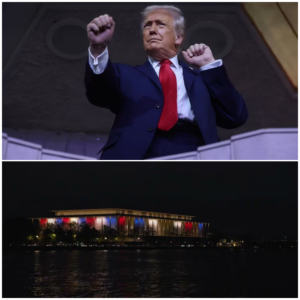
    President Donald Trump dances to the Village People during the FIFA World Cup draw at the John F. Kennedy Center for the Performing Arts in Washington, DC on December 5, 2025.

    The Mechanism of Disruption: A Bold Assertion of Executive Authority

    The executive order, titled the “Cultural Accountability and National Heritage Restoration Initiative,” laid out a framework that systematically challenges the Kennedy Center’s historical independence. Central to the order was the immediate replacement of the entire 17-member Board of Trustees—a body typically comprising high-ranking politicians, philanthropic leaders, and arts professionals—with a hand-picked roster of presidential appointees. The order cited concerns over the Center’s alleged “mission drift,” “elite cultural insularity,” and a supposed failure to reflect the “diverse artistic and geographic values of the American public.”

    This is not a mere dispute over budget line items; it is a fundamental challenge to the Center’s institutional DNA. Established in 1964 as a living memorial to the late President John F. Kennedy, the Center’s federal charter guaranteed its functional independence, positioning it as the nation’s premier stage for artistic endeavors, a space meant to rise above the political fray. This independence is now shattered.

    The administration’s move came after months of subtle signaling, including pointed criticisms from conservative media commentators and certain Cabinet officials regarding the programming choices at the Center, particularly those perceived as politically critical of the current government. “For too long, the people’s money has supported a coastal elite that views the hardworking men and women of this nation with contempt,” stated a White House senior advisor, who spoke on background, summarizing the administration’s position. “This initiative is about bringing true cultural representation back to the heart of Washington.”

    Outcry and Artistic Defiance

    The reaction was immediate, furious, and highly emotional. Across the arts world, the response ranged from stunned disbelief to organized outrage. The Chairman of the outgoing Board of Trustees, a prominent former ambassador, issued a blistering public statement: “This executive order is a betrayal of the trust placed in the federal government to steward our national treasures. It is not reform; it is vandalism under the guise of restoration. It is an act of political retribution against the very idea of independent, federally supported art.”

    Leading figures in the performing arts wasted no time in mobilizing. Prominent playwrights, renowned orchestral conductors, and celebrated actors took to social media and news broadcasts, framing the action as a direct threat to the First Amendment rights of artists. Paraphrasing a statement released by a coalition of theater companies, one critic noted, “When the state dictates who sits on the board and what art is deemed ‘acceptable,’ we have crossed a dangerous threshold from patronage to propaganda. The silence of the arts is the sound of democracy dying.”

    Kennedy Center to light up red, white and blue permanently | wusa9.com

    Protests erupted spontaneously on the Kennedy Center plaza, featuring students from the associated National Symphony Orchestra and local arts colleges. The scene was one of deep, symbolic conflict: hundreds gathered under the gaze of the towering bronze bust of John F. Kennedy, hoisting signs that read “Art Is Not Propaganda” and “Hands Off Our Culture.”

    The Political and Historical Significance

    To understand the political significance of this act, one must appreciate the Kennedy Center’s symbolic weight. It is not just a theater complex; it is a national memorial, a landmark intended to enshrine the ideal of culture as a unifying force, a concept President Kennedy himself championed. Targeting this institution, therefore, is targeting a deep vein of bipartisan American history.

    For the administration, the move is a powerful tactical strike. It addresses the grievances of a conservative base that often feels alienated and mocked by what they perceive as culturally dominant, liberal institutions. By seizing control of the Kennedy Center, the administration is effectively announcing its intent to aggressively contest the cultural high ground. This action transforms a seemingly benign cultural body into a highly charged political battleground, forcing every Democrat and moderate Republican to publicly choose sides on the contentious issue of federal arts funding and control.

    Furthermore, the timing of the action, late in the administration’s term, suggests a deliberate move to cement a cultural legacy that will be difficult for a future administration to fully undo. The appointment of new trustees—who will inevitably reshape programming, staffing, and long-term vision—is a long game, ensuring the political fight over the Kennedy Center will continue for years, irrespective of future electoral outcomes.

    The political analysis is stark: this move is a calculated escalation designed to polarize, galvanize the core conservative support, and force a political confrontation on territory favorable to the administration’s narrative of fighting “entrenched establishment corruption.” The administration is betting that the outrage from the arts elite will be successfully portrayed to the wider public as elitist hysteria, thus reinforcing the need for their “restoration” efforts.

    The Broader Implications: A Cultural Precedent

    The true danger of the “takeover,” however, lies in the precedent it sets. If the executive branch can so easily override the established governance of the Kennedy Center, what prevents similar action against the Smithsonian Institution, the National Endowment for the Arts (NEA), or the National Endowment for the Humanities (NEH)? The firewall has not just been breached; it has been annihilated.

    The broader implication is a chilling effect on artistic independence. Federal funding, however small a portion of a major institution’s budget, is often necessary for infrastructure and critical programs. By demonstrating a willingness to politically weaponize the power of appointments and funding review, the administration sends an unmistakable message to every cultural organization reliant, even tangentially, on federal support: comply or risk being targeted. This threat fundamentally alters the ecosystem of American art, replacing institutional independence with political subservience.

    The battle for the Kennedy Center will now move from the plaza to the courts and the legislative chambers. Congressional Democrats are already vowing to introduce immediate legislation to protect the Center’s charter, but such efforts face an arduous path. What is clear is that the struggle over this single cultural landmark is a microcosm of a much larger fight for the soul of the nation—a fight over who determines what is valued, what is remembered, and what is allowed to be expressed in the public sphere.

    This is more than a cultural skirmish; it is a profound political reflection on the use of executive power. The removal of the cultural guardrails marks a significant and deeply concerning milestone in American political life, signaling a new, aggressive phase in the campaign to politicize every aspect of federal governance, from policy to performance art. The lights may still be on at the Kennedy Center, but the shadow of political control now darkens its stage.

  • The Minnesota Meltdown: Ilhan Omar’s Ties to $1 Billion Welfare Fraud Ignite Political Crisis and Congressional Probes

    The Minnesota Meltdown: Ilhan Omar’s Ties to $1 Billion Welfare Fraud Ignite Political Crisis and Congressional Probes

    The political landscape of Minnesota has been violently rearranged by the unfolding crisis of a $1 billion welfare fraud scandal, a betrayal of public trust so massive it has captured the attention of the nation’s capital. What began as a brazen, coordinated theft of federal funds meant to feed the most vulnerable has metastasized into a profound political problem, drawing a searing spotlight onto two of the state’s most prominent Democratic leaders: Congresswoman Ilhan Omar and Governor Tim Walz. As new investigations are launched by both Congress and the Treasury Department, the scandal is no longer solely about financial crime; it has become a defining test of political competence, ethical boundaries, and accountability at the highest echelons of government.

    The core narrative is as reprehensible as its scale is staggering. During the acute phase of the COVID-19 pandemic, non-profit organizations were ostensibly established in Minnesota to leverage federal resources for feeding hungry school children. Instead, as reports have revealed, an expansive network of fraudsters diverted the colossal sum, skimming the cash and using it to fund “lavish lifestyles.” These were dollars set aside to safeguard children against hunger, yet the funds were allegedly pilfered in an act of staggering moral negligence. This grand larceny, now known as the billion-dollar welfare fraud, is, as Congresswoman Omar herself described the scheme, “reprehensible.”

    For Congresswoman Omar, a prominent figure in the progressive “Squad” and the representative for Minnesota’s Fifth Congressional District, the distance between her office and the scandal appears to be shrinking by the day. Reports suggest that a “great deal of the $1 billion ripoff took place in Omar’s congressional district right under her nose.” This geographic and administrative proximity is only the beginning of the intense scrutiny she faces. The allegations center on a series of political and personal ties that critics argue amount to “unquestionable ties” to both the scheme and the people who perpetrated it.

    One of the most concerning revelations surrounds the legislative framework. Congresswoman Omar is cited for having “introduced the bill which allowed organizations to be reimbursed with taxpayer money for feeding kids.” While the legislation itself was designed with a laudable goal, critics charge that its structure was exploited, ultimately leading to an estimated $250 million worth of the total theft. The intent of the legislation is now irrevocably linked to its disastrous outcome, forcing a deep examination of the due diligence and oversight—or lack thereof—that was applied both during its passage and its subsequent implementation by state-level agencies.

    More damning, perhaps, are the multiple personal connections that have been unearthed between the Congresswoman and those now convicted of carrying out the fraud. The commentary surrounding the ongoing investigations reveals that Omar “personally knew several people who’ve been convicted for taking part in the scam and ripping off millions of dollars.” This includes one of her own staff members. The connections are not isolated incidents but a systemic entanglement with individuals at the heart of the “epic con job.” Further linking her to the corrupt networks, a local business owner who was convicted of stealing more than $12 million for serving “phantom meals” was identified as the co-owner of the restaurant where Omar held her congressional victory party in 2018. Adding to this intricate web is the report that she was photographed often with another scammer who actively worked on her political campaigns and was a Democratic activist, a person who also “pocketed millions” from the con.

    Despite the mounting body of evidence and public outcry, Omar and her team have maintained a resolute defense, insisting that she “never knew anything about it.” The narrative her office attempts to project is one of distance and unawareness—a political leader caught in the periphery of a scandal, not at its center. However, this defense has not quieted her detractors. Instead, it has pivoted the conversation from potential complicity to questions of fundamental competence. Critics are now leveraging the sheer volume of personal connections and the legislative link to argue that she is “either being willfully ignorant completely naive or simply knowing and not really caring.” The rhetorical question posed is harsh: if she is claiming ignorance, then “at the very least she’s incompetent and should step away from her job immediately.”

    I know what intolerance looks like': Ilhan Omar takes her turn in the  spotlight | Democrats | The Guardian

    The political fallout extends beyond the Congresswoman to encompass the state’s executive leader, Governor Tim Walz. The $1 billion fraud, having occurred during the pandemic, is characterized as having taken place under Walz’s watch. While the allegations against Walz are focused less on direct personal connection and more on administrative negligence, the gravity of the financial loss has triggered major federal interest. The fact that both Congress and the Treasury Department have launched new investigations into whether Governor Walz “could have done anything about it anytime sooner” highlights the political responsibility that rests on the chief executive. The core query facing the Governor is one of systemic failure: how could a scheme of this colossal magnitude, which diverted food aid funds on a daily basis, have gone undetected by the state agencies under his command for such an extended period?

    The political commentary surrounding the Walz-Omar dynamic is pointed, observing that under the “ever watchful eye of the esteemed congresswoman from Minnesota” and “Much like her fellow Democrat the governor of the fine state of Minnesota,” millions of dollars were “pilfered.” This line of criticism serves to tie the two political figures together, suggesting a shared, though potentially differentiated, responsibility for the catastrophic failure of oversight within the state’s Democratic-led government. The sentiment among the most vocal critics is unambiguous: “Neither of them have done anything unsavory underhanded or unethical. And they had no knowledge of any wrongdoing. It’s kind of like Schultzy from that TV show Hogan’s Heroes. They knew nothing. I know nothing.” This sardonic reflection encapsulates the deep skepticism many feel about the leaders’ claims of total ignorance.

    Ultimately, the significance of the Minnesota welfare fraud scandal transcends party lines and individual careers. It is a story about the destruction of the social contract. The money stolen was not abstract federal budgeting; it was millions “set aside to provide food for needy children.” When that essential safety net is breached and the funds diverted into the hands of a “bunch of naro wells,” the public trust is severely damaged. The moral and political imperative, critics insist, is clear: “someone has to be held accountable.” As the representative for the district where the majority of the fraud is said to have occurred, and with the labyrinth of personal and legislative ties now exposed, the focus of the accountability debate remains fixed on the Congresswoman: “that someone it’s the ill one Ilhan Omar.” The full scope of the federal probes remains to be seen, but the political reverberations have already proven devastating, demanding a comprehensive and public reckoning for all those who failed to protect the public purse and the most vulnerable citizens.