Author: bang7

  • The Anatomy of Rage: Lewis Hamilton’s Meltdown and the Fragile Future of His Ferrari Dream

    The Anatomy of Rage: Lewis Hamilton’s Meltdown and the Fragile Future of His Ferrari Dream

    The silence was the loudest sound of the 2025 Formula 1 season. As Lewis Hamilton walked away from his Ferrari one final time in Abu Dhabi, his head was down, and the desert heat seemed less intense than the “season’s worth of frustration weighing heavier” on his shoulders. The cameras captured the moment—the sheer body language of defeat, the quiet exhaustion. But it was the words that followed, raw and unfiltered, that truly stopped the sport: Hamilton spoke not of disappointment or bad luck, but of an “anger inside him [that] had become unbearable,” describing it plainly as rage.

    When a seven-time World Champion uses such stark, uncompromising language, it ceases to be a story about simple lap times or poor strategy. It becomes a piercing journalistic look into the crushing pressures of elite sport, a question of identity, and what happens when one of the greatest drivers in history feels irrevocably “trapped inside a season he cannot control”. This moment, far from being the end of a bad year, was the chaotic, emotional beginning of a reckoning that will define the Hamilton-Ferrari partnership long into the future.

    The Dream That Became a Grind

    Hamilton’s move to Maranello was meant to be a fairytale, a rebirth, the bold final chapter written in the glorious red of the Scuderia. Instead, the 2025 campaign quickly devolved into “one long grind”. The statistics for the man who holds almost every record in F1 were shocking: no podiums, no momentum, and a relentless string of mistakes that turned into massive consequences. By Abu Dhabi, the damage was irreversible, punctuated by four straight Q1 exits—unfamiliar and deeply humiliating territory for the former champion.

    The tension was most clearly measured against his teammate, Charles Leclerc, who finished the season 86 points ahead. That vast point difference wasn’t the result of one unlucky race; it was the cumulative outcome of a year where Leclerc, molded by years of Ferrari inconsistency, was able to extract more from the same machinery. Hamilton, conversely, looked “more drained with every session”. The radio messages, once a stable line of communication, grew tense and sharper, filled with criticism and frustration as his belief began to crack.

    The breaking point arrived not only in the season finale but reached an unimaginable low in Las Vegas, where Hamilton qualified last on “pure pace,” devoid of any traffic or yellow flag excuses. For Ferrari, it was an embarrassing statistic. For Hamilton, it was deeply personal, an attack on an identity he had spent two decades forging. As the transcript notes, when a person has “defined yourself as one of the best ever suddenly being slow feels like betrayal by the car, by the team, and eventually by yourself”. His rage, he later clarified, did not stem from apathy but from a profound, agonizing desire to win. When that goal slipped away, the emotional cost transformed frustration into true fury.

    The Technical and Human Faultlines

    The root of this emotional breakdown lay not just in poor results, but in the fundamental incompatibility between the driver and the machine. Hamilton, who built his career on “rhythm and confidence,” found himself in a ground-effect car that offered him no stable base. The car was unpredictable: one weekend, the rear slid; the next, the front refused to bite. Small setup changes brought “big swings,” and he was constantly forced into a state of “constant guessing”. For a driver reliant on instinctive flow, this constant doubt was absolutely exhausting.

    The human element amplified the suffering. The absolute trust F1 drivers need in their race engineer, a voice in the chaos, never materialized with Ricardo Adami. Communication was flawed: messages were misunderstood, timing was off, and “on the radio patience wore thin”. This felt like isolation, turning the battle from “you versus the stopwatch” into “you versus the system”. Hamilton’s anger was the “emotional cost of trying to force a fit that never fully clicked”.

    Vasseur’s Calm: A Cultural Battle for Control

    The intensity of Hamilton’s public emotional outburst in Abu Dhabi was met with a remarkable coolness by Ferrari Team Principal Fred Vasseur. Vasseur, a veteran of Formula 1 pressure, “brushed it aside,” stating bluntly that he “doesn’t listen to drivers when emotions are still hot”. For Vasseur, moments like this are “noise”; the real work begins later, behind closed doors during the debrief. His philosophy is rooted in control: uncontrolled emotion is the enemy, but frustration, when channeled correctly, is “fuel”.

    Vasseur’s measured response, however, revealed a critical culture clash at the heart of the partnership. Ferrari’s tradition values “unity, calm, [and] control”. Public disagreement—Hamilton’s raw, uncompromising honesty—”cuts deep” into the brand’s image. The team wants passion, but only on its own terms. Vasseur even used Leclerc as a clear counter-example, pointing out that Leclerc’s criticisms, though harsh, “always points forward, always toward improvement”. This subtle comparison puts immense pressure on Hamilton to adapt to a mold that is fundamentally not his own.

    Internally, Hamilton’s fire is seen as a “mirror, not a weapon,” pointing out flaws that need fixing. But every time he vents, it forces leadership into a defensive position: “protect the driver or protect the brand”. The tension of 2025 was shaped by this struggle, a clear signal that “talent doesn’t erase incompatibility”.

    The Silence and the Struggle for Survival

    The ultimate signal of the season’s toll came not from a technical change but from a deeply personal declaration: Hamilton announced he was “unplugging completely,” seeking “no phone, no contact, no noise”. This was not a casual holiday. It was “exhaustion speaking,” a necessary act of survival driven by mental fatigue. For a global brand and driver who has lived under constant scrutiny, stepping away from all of it is a powerful signal that 2025 took more from him than almost any season prior.

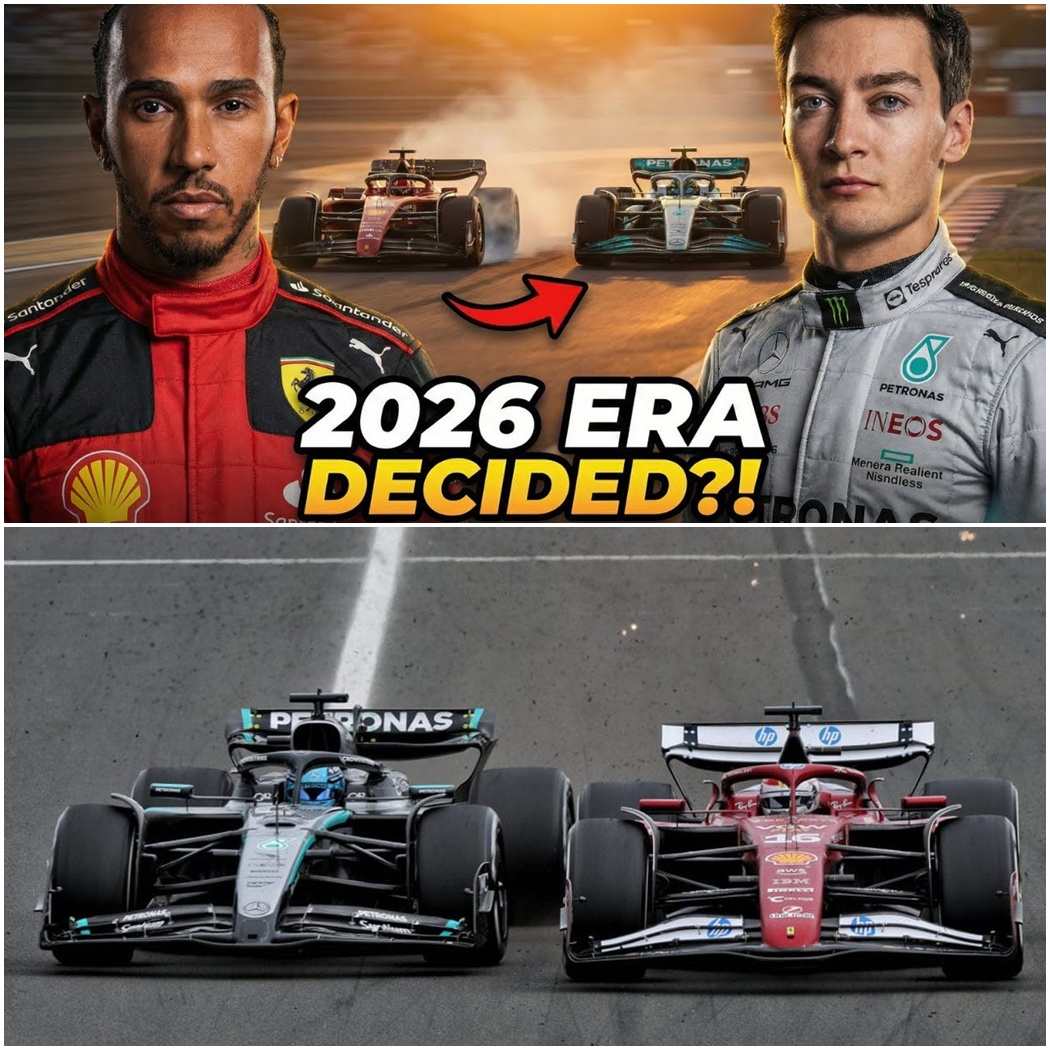
    By choosing silence and distance, Hamilton is seeking the clarity he lost in the chaos of a failed season. But time away doesn’t stop the clock. Ferrari’s future is moving quickly, with the critical 2026 era approaching. The winter break now presents the most difficult set of questions the Scuderia has faced in years, and they are human questions, not technical ones: Do they adapt communication styles to support a visibly strained yet elite driver? Do they rethink engineering structures to create the safety net Hamilton needs? Or do they expect their legend to conform entirely to a culture that clearly doesn’t yet suit him?

    Vasseur insists that his team can absorb the pressure Hamilton applies, framing it as a necessary push to improve. But words are cheap. The real test will arrive when the lights go out again and the inevitable frustrations return.

    The narrative moving forward is defined by a delicate balance: Can this partnership evolve into something stronger, or will 2025 be remembered as the year when expectation and reality drifted too far apart to recover? Hamilton still cares, maybe “too deeply, about getting this right”. His rage wasn’t a loss of control; it was the painful emotional cost of refusing to accept decline without a fight.

    As the noise of the season fades, the fate of Lewis Hamilton at Ferrari will be decided in the “quiet phase”—meetings without microphones, test laps without headlines. His focus may sharpen, or the weight of the past season may linger. Ferrari is betting on the former, hoping the painful experience of 2025 becomes the foundation of something formidable. If not, the cracks exposed by Hamilton’s unbearable anger may only widen, proving once again that in Formula 1, speed is never enough; alignment, trust, and emotional equilibrium are the true components of victory.

  • Lando Norris’s Two-Point Thriller: F1 Crown Sparks Horrifying Fan Vengeance After Abu Dhabi Showdown

    Lando Norris’s Two-Point Thriller: F1 Crown Sparks Horrifying Fan Vengeance After Abu Dhabi Showdown

    The Formula 1 season has concluded in a maelstrom of shock, exhilaration, and terrifying controversy, leaving fans, pundits, and rivals reeling. In a title decider that rewrote the definition of a photo-finish, McLaren’s Lando Norris crossed the line at the Abu Dhabi Grand Prix to claim not the race, but the ultimate prize: the Formula 1 World Drivers’ Championship, edging out Red Bull’s Max Verstappen by a mere two points.

    The sheer unpredictability of the season, however, pales in comparison to the shocking and vitriolic fallout witnessed in the aftermath. While Norris and his team celebrated a hard-fought and unexpected victory that “restore[d] peace and order to the F1 Twitter sphere,” the same social media space was immediately consumed by a wave of fan toxicity that has now spiralled into a crisis, culminating in highly publicized threats against the newly crowned champion.

    The Season of Shocks: From Pre-Season Hype to Chaos

    The narrative arc of this season was defined by chaos from its very inception. Pre-season testing in Bahrain set a tone of high drama and broken promises. Mercedes, after a lackluster previous campaign, arrived with their radical W16 design, screaming from the hills that they finally understood their car and were ready to challenge. However, this initial confidence quickly dissolved into an unsettling silence, with star driver George Russell reportedly left so “traumatized” by the early running that he was seen draped in an emergency blanket. The team’s initial bravado evaporated, signaling a season of continued struggle.

    Meanwhile, other teams provided their own brand of pre-season spectacle. Aston Martin launched their livery with a bizarre, “Fifty Shades of Gray inspired video,” prompting the media to question the point of the elaborate, poorly rendered teaser. Even the newly rebranded Racing Bulls outfit, with their curious driver lineup, managed to garner attention, proving that the F1 silly season truly never ends.

    The testing sessions themselves were littered with peculiar incidents, including a mysterious power outage at the Sakhir International Circuit after something “got into the electronics box,” forcing an immediate stoppage. On-track action was equally dramatic, with Pedestrian Hulkenberg coming to blows in a strange collision and the Haas VF beginning to strip off its components on the main straight, offering a masterclass in “how not to design a Formula 1 car.”

    McLaren’s Ascent and the Piastri-Norris Divide

    Amidst the early confusion, McLaren established themselves as a formidable contender. The Papaya team seemed to be the “team to beat” in performance runs, showcasing a car that, unlike their rivals, had genuine race-winning potential.

    However, the team’s internal dynamics became a flashpoint for fan extremism. The rivalry between Lando Norris and his talented teammate, Oscar Piastri, was a continuous thread of tension, not just on the track, but venomously so in the online sphere. Following a floor replacement on Norris’s car during testing, which was somehow immediately blamed on Piastri, the fan divide exploded. The commentary highlighted a persistent, toxic cohort—the “Lando stands”—who, in a bizarre and disturbing exaggeration, “believe Oscar Pastri is the re-mbodied form of Genghis Khn and should be murdered at all costs.”

    This vitriolic sentiment, framed in the broadcast as “real desperation,” underscored the dark side of F1 fandom that had been brewing for seasons. While the on-track battle was professional and intense, the digital war waged by certain segments of the fanbase created a deeply unsettling backdrop to McLaren’s championship bid. The tension, already a concern throughout the year, reached a catastrophic climax when the final chequered flag fell.

    The Abu Dhabi Final: A Title Decided by Two Points

    The Abu Dhabi Grand Prix was set up as the final, agonizing showdown between the two championship contenders: Norris and Verstappen. The race was by no means an action-packed spectacle, described bluntly as “f***ing shit” and “boring”—an assessment often leveled at the Yas Marina circuit.

    Max Verstappen, facing immense pressure, opted to stay out and cruise to victory. He won the race, demonstrating his characteristic composure under fire. In what was perhaps the greatest statistical irony of his career, winning the final Grand Prix was not enough.

    In a scenario where every single point, every fastest lap, and every controversial call across the entire season came into play, Lando Norris’s strategic drive ensured he finished high enough to overturn the small advantage held by the reigning champion. As the dust settled and the final arithmetic was completed, the unthinkable happened: Verstappen, despite winning the final race, “lose[s] the championship by just two points.”

    Norris, securing the championship, was hailed for his remarkable consistency and resilience, overcoming numerous hurdles throughout the year—a career-defining moment that cemented his place among the sport’s elite. He was declared the champion of the world, a victory that was supposed to bring “peace and order.”

    The Terrifying Fallout: “I Will F**king Find You”

    Instead of celebration, the victory triggered a horrifying, immediate response that exposed the true extent of the toxicity infecting the sport’s fringes. In a moment of sheer, terrifying audio—dubbed the “Pastry Mental Asylum proceeding”—a voice, presumably a fan driven to the brink by the outcome, launched into an unhinged, violent tirade aimed directly at the new World Champion.

    The voice was heard screaming threats, declaring: “You might have won this year bh, but I promise you you will not survive to the end of next year. I will fing find you!” The explicit nature and violence of the threat continued, escalating into repeated, aggressive warnings of physical harm and vengeance: “I swear to God I’m going to handle you, I’m going to find you, I’m going to find you. So you better up your security norms ‘cuz I swear to God you’re going to be toast.”

    The sheer depravity of the audio shocked the global motorsport community. What was meant to be a moment of crowning glory for Norris and McLaren was instantly marred by the darkest depths of online obsession. This was not the standard, passionate rivalry of F1 fandom; this was a terrifying escalation that transcended sport and entered the realm of criminal threat.

    The incident was quickly highlighted as the “Angs bell end of the f***ing year”—a title that, in this context, carried a heavy, sobering weight far beyond mere insult. The immediate blocking of the account responsible provided a momentary reprieve, but the threat hung heavy in the air, a stark reminder of the safety risks and psychological toll placed upon athletes by extreme, unhinged segments of their audience.

    The season will be remembered for the brilliance of Lando Norris’s title win, clinched by the slimmest margin imaginable. It will also be remembered for the controversies, the on-track mishaps, and the spectacular failures of rivals. Most critically, however, it will be remembered as the year when the toxicity of fan culture boiled over into direct, horrifying threats of violence, making the celebrations feel hollowed out and leaving a lingering question: at what cost comes the glory of the Formula 1 World Championship?

    The narrative arc, as captured and critiqued, suggests a season where the competition was intense, but the ultimate drama was found not on the track, but in the unstable and dangerous reaction of those watching from the sidelines. The sport now faces an unprecedented challenge to protect its stars and address the monstrous extremism that this season’s climax—the Lando Norris two-point thriller—has so violently exposed.

  • The €10 Million Aftershock: Red Bull’s Turbulent New Era Begins with Marko’s Shock Exit and Verstappen’s Unprecedented Absence

    The €10 Million Aftershock: Red Bull’s Turbulent New Era Begins with Marko’s Shock Exit and Verstappen’s Unprecedented Absence

    The Formula 1 season concluded not with the expected celebration of a champion’s victory, but with a palpable sense of shock, disappointment, and imminent change swirling around the powerhouse team, Red Bull Racing. The narrow defeat to Lando Norris and McLaren, decided by a razor-thin margin of just two points in the final moments of the season, has already set off a chain reaction that threatens to redefine the team’s structure and legacy. In a stunning sequence of events, Red Bull’s motorsport adviser, the legendary Helmut Marko, confirmed his immediate departure, a decision swiftly followed by the conspicuous absence of their star driver, Max Verstappen, from the official FIA end-of-year prize giving ceremony. These two occurrences, one financial and seismic, the other symbolic and unsettling, signal a period of profound turbulence in Milton Keynes, leaving the F1 world to wonder: has the golden age of Red Bull truly come to an abrupt and bitter end?

    The Architect Walks Away: Helmut Marko’s Bitter Goodbye

    For nearly two decades, the austere and influential figure of Helmut Marko has been the bedrock upon which Red Bull’s Formula 1 dominance was built. Since 2005, he has acted as the brand’s motorsport adviser, a role that transcended mere consultancy. He was the architect, the talent scout, and the ruthless evaluator whose sharp eye plucked future champions from the junior ranks, most notably Sebastian Vettel, who secured four consecutive world titles, and, crucially, Max Verstappen, whom Marko championed and secured for the team when the Dutch phenom was still competing in Formula 3. Marko’s influence has been total, his presence a constant, unyielding factor in the Red Bull garage.

    This is why the confirmation, coming in the immediate aftermath of the title decider in Abu Dhabi, that Marko would be leaving Red Bull’s Formula 1 project, hit the paddock like a thunderclap. This was not a planned retirement; it was an emotional and deeply significant exit that felt directly catalyzed by the heartbreak of the season finale.

    Speaking to the Austrian broadcaster ORF, Marko provided a rare window into the emotional turmoil that underpinned his decision, confirming that leaving his current role was his own idea. His words painted a picture of a veteran spirit exhausted by the sheer intensity of the fight and the agony of its conclusion.

    “We had a difficult season this year,” Marko stated, as quoted by motorsport.com. “It was particularly bumpy in the middle.” He referenced the massive 104-point deficit they faced at the Zandvoort Grand Prix, a gulf that seemed insurmountable. What followed was, by all accounts, a unique and historic comeback, closing the gap to just 12 points entering the final race. Yet, the effort ultimately fell short, losing the championship by just two points.

    The weight of that failure was crushing. “Unfortunately it didn’t work out in the last race,” Marko lamented. “Although the comeback was unique it was still a very bitter disappointment. It hit us particularly hard.” This profound sense of loss, that feeling that “something had been lost” even after an extraordinary effort, proved to be the breaking point for the veteran.

    His decision was solidified in the quiet aftermath, away from the trackside adrenaline. “I then stayed in Dubai on Monday,” he revealed. “That’s when I made my decision.” In a remarkable admission, he suggested that the victory itself might have provided a graceful exit, but the stinging defeat made the departure an equally good, if painful, endpoint. “Even if we had won it would have been a good reason to leave this job but now in hindsight because we lost it’s also a good point,” he concluded. It is a candid reflection that speaks volumes about the emotional exhaustion inherent in sustaining success at the highest level of motorsport.

    The €10 Million Golden Handshake: A Payout for a Legacy

    Marko was originally contracted to remain with the team. His decision to step away early necessitated a financial agreement be reached, and the reported terms of that agreement underscore the immense value Red Bull placed on his service, even in his departure.

    According to reports, including one by the German publication Bild, Helmut Marko is set to receive a stunning severance package. This “golden handshake” is believed to be in the region of €10 million. This astronomical figure is reported to be his full annual salary, paid out despite him not seeing out his contract.

    This is not merely a contract settlement; it is a sign of profound appreciation. The payout is framed as recognition for his singular achievements, particularly his uncanny ability to discover, nurture, and secure the generational talents of Vettel and Verstappen. The financial sacrifice by Red Bull, paying such a large sum for the departure of a figure they might have otherwise sought to retain, demonstrates the scale of the debt of gratitude the team owes him. It also highlights the speed and finality of the split—Red Bull is closing the chapter immediately, and the cost of doing so is a staggering eight-figure sum.

    The exit is abrupt, expensive, and fundamentally changes the power dynamic and leadership structure within the organization as they head into a crucial regulatory period. For a team built on consistency and singular vision, the departure of its most enduring figure is nothing short of an institutional crisis.

    The Absent Crown Prince: Verstappen’s Symbolic Non-Attendance

    As the drama unfolded around Marko’s resignation, the focus briefly shifted to the mandatory pomp and circumstance of the FIA end-of-year prize giving ceremony. This traditional conclusion to the motorsport season is where the champions are officially honored, and it is a strict requirement for the top three finishers of the World Championship to attend.

    While the newly crowned World Champion, Lando Norris, and the third-place finisher, Oscar Piastri, were both in attendance, the runner-up, Max Verstappen, was notably absent.

    Verstappen, who had fought with characteristic intensity to secure his second-place finish, was unable to attend due to illness. His doctors’ instructions specifically prevented him from flying, forcing him to remain grounded and miss the official crowning of his rival.

    While the reason was genuine and medical, the symbolism of the star driver missing the ceremony—the mandatory concluding act of the season—was not lost on observers. After a season of relentless pressure, a unique comeback, and an agonizing final defeat, the sight of the P2 driver’s empty seat felt like a metaphor for the team’s post-season malaise. The heartbreak was so deep that even their star champion could not physically be present to witness the official celebration of the team that had bested them.

    The star driver, however, was not totally silent. He sent a brief video message, a professional necessity that served as both an explanation and a moment of goodwill. In the video, Verstappen offered a sincere apology for his unavoidable absence. He also extended congratulations to FIA President Muhammad Ben Sulayem on his reelection and, perhaps most importantly, delivered gracious words to his competitor.

    “I’m very sorry that I cannot be with you, the doctors have prevented me from flying,” Verstappen said, before adding, “Besides that I wanted to say a big congrats to all the winners… In my own championship, a big congratulations to McLaren and especially Lando.”

    His acknowledgement of Norris’s success was gracious and mature. “You guys had an unbelievable season and it was really cool to race against you guys until the end, so definitely enjoy it,” he concluded.

    A New, Uncertain Chapter

    The confluence of these two events—the voluntary, bitter exit of the team’s foundational architect with a €10 million handshake, and the involuntary, symbolic absence of its star driver from the season’s final curtain call—has cast a long, dark shadow over Red Bull’s immediate future.

    Helmut Marko’s departure is more than just a personnel change; it is the ripping out of institutional memory and a long-standing culture of talent development. His decision, motivated by the “bitter disappointment” of a championship that slipped through their grasp, confirms the immense toll the season took on the entire organization. When a figure of his stature walks away from a €10 million contract early, citing an emotional necessity to leave, it confirms the depth of the spiritual fracture within the team.

    Max Verstappen’s apology, while medically mandated, only amplified the sense of a profound shift. The team that once seemed invincible now looks vulnerable, reeling from a devastating loss and facing a vacuum in its leadership structure.

    The golden age of Red Bull was defined by consistency, a clear hierarchy, and the ruthless efficiency of its talent pipeline, all overseen by Marko. As the team moves forward, they must now navigate the future without that steady hand, and the immediate post-season turmoil suggests that the road to reclaiming the F1 title will be anything but smooth. The €10 million question for Red Bull now is not just about who will replace Marko, but how they will heal the emotional wounds of the loss and restore the unified, winning spirit that has been so dramatically shattered. The turbulent new era has officially begun.

  • Defiance Confirmed: Zak Brown Doubles Down on McLaren’s ‘Papaya Rules’ for 2026, Daring F1 to Follow Their Radical Vision

    Defiance Confirmed: Zak Brown Doubles Down on McLaren’s ‘Papaya Rules’ for 2026, Daring F1 to Follow Their Radical Vision

    For months, it had been the most fiercely whispered, hotly debated subject across the Formula 1 paddock. The ‘Papaya Rules’—McLaren’s radical, almost heretical philosophy of driver equality—was considered by many to be a dangerous, unsustainable gamble. As the prior season progressed, bringing the Woking-based team closer to a historic championship double, the murmurs intensified, becoming a roar of expectation. Surely, the narrative went, a team fighting for the highest honors would eventually abandon this idealistic experiment, install a number one driver, and adopt the cold, pragmatic hierarchy that has defined Formula 1 for decades.

    But in the luminous setting of the FIA’s prize-giving gala in Qatar, McLaren CEO Zak Brown finally stood before the world and delivered his unambiguous verdict. The quiet part was said out loud, and it landed like a seismic shift across the grid: The Papaya Rules were not a temporary gamble. They were not a phase. They were a philosophy, a statement of identity, and a commitment to the future. McLaren had won both the Drivers’ and Constructors’ championships without compromise, and they plan to do it again in 2026.

    “To go into the final race with two drivers fighting for the world championship when everyone said that couldn’t be done, I’m just very proud of how McLaren went racing, and that’s exactly what we plan to do next year,” Brown asserted, delivering a message of pure defiance that echoed far beyond the gilded halls of the ceremony.

    This isn’t merely a strategic decision; it’s a cultural declaration, a challenge to the entire sport. In an era where many top teams engineer explicit hierarchies to maximize their title odds, McLaren dared to double down on trust, fairness, and the purity of competition between their two young phenoms, Lando Norris and Oscar Piastri. The fact that this policy not only survived but triumphed under the most relentless pressure is what makes McLaren’s championship campaign—and Brown’s confirmation for 2026—one of the most compelling stories in Formula 1 history.

    The Anatomy of a Championship Built on Trust

    The season, which saw McLaren secure their first Drivers’ and Constructors’ Championship double since the legendary campaign decades prior, was defined by the extraordinary rivalry within the team. From the moment the first race lights went out, Brown and Team Principal Andrea Stella held firm: Norris and Piastri would race freely, regardless of the consequences. There would be no strategic favors, no quiet reshuffling of priority, and no intervention to designate a ‘lead driver’.

    This approach ignited a fiery debate. Critics, hardened by decades of F1’s ruthless pursuit of titles, saw it as naive. They foresaw internal chaos, fractured relationships, and the inevitable moment where the team’s relentless fight against rivals like Max Verstappen would be compromised by its own internal politics. Yet, the opposite occurred.

    The season became a spectacular, high-stakes duel. One weekend, it was Norris carrying the momentum, dominating the points. The next, Piastri would look poised to strike, often pushing his teammate to the absolute limit. This internal competition, far from destroying the team, refined it. It created a constant performance benchmark that relentlessly pushed development and extracted the maximum potential from both drivers and the car. As Stella later noted, the true success was not just speed, but the conduct of the drivers. Under relentless, championship-defining pressure, both men respected the rules, respected each other, and, crucially, respected the spirit of competition. There were no internal wars, no public fractures—just disciplined, clean racing that repaid the team’s foundational trust.

    Qatar: The Controversy that Almost Broke the Dream

    While the narrative of trust and triumph ultimately defined the season, it was punctuated by a moment of intense controversy that critics pointed to as the system’s fatal flaw: the Qatar Grand Prix.

    Late in the season, with the championship still hanging precariously in the balance, an early safety car reshuffled the pack. Piastri and Norris were running first and third, positioned perfectly for a double pit stop that would have been virtually free, offering a substantial advantage. In a move that defied conventional F1 strategy, McLaren stayed out. The result was immediate and brutal: Verstappen seized the opportunity, pitted, and took the victory, while the Papaya cars slipped back to second and fourth.

    The reaction was instantaneous. Pundits and rivals pounced, declaring that the ‘Papaya Rules’ had finally cost McLaren control of the championship fight. The rigid commitment to avoiding intervention, they argued, had gifted victory to their main rival. It was the moment everyone had predicted—the high-minded philosophy costing the team tangible points when they needed them most.

    But inside the McLaren garage, the reaction was startlingly different. There was no regret, no apology, and certainly no knee-jerk scramble to change the rules. What looked like stubbornness from the outside was, internally, viewed as a necessary statement of identity. McLaren had chosen its path long before the sands of Qatar, and they were not about to abandon their principles when the title was on the line. The near-loss was accepted as the price of doing business the ‘McLaren Way,’ a necessary toll to pay for the ultimate goal: a championship won ethically and fairly. The gamble survived the severest test, precisely because the team prioritized their ethos over short-term strategic gain.

    The Abu Dhabi Payoff and a Milestone Victory

    The tension culminated in the season finale in Abu Dhabi. Lando Norris arrived knowing that Verstappen was still within striking distance, the margin for error razor thin, with just two points separating him from the rival. The pressure was unimaginable.

    Yet, there were no last-minute rule changes. Piastri was not asked to step aside; Norris was not protected. Both drivers were sent into battle under the same, unyielding rules that had defined the entire campaign.

    When the checkered flag finally fell, Lando Norris had done just enough. By the smallest of margins, he held off Verstappen to become the World Champion—the 11th British driver to achieve the feat and McLaren’s first since Hamilton years prior. The drought stretching back over a decade was finally over.

    The victory was not merely a personal milestone for Norris or a relief for the team; it was, fundamentally, proof. It was proof that in a sport often defined by ruthless compromise, trust could be a more powerful currency than hierarchy. It demonstrated that two competitive, ambitious drivers could fight for the ultimate prize without tearing their team apart, without the drama and public fracture that has so often stained other legendary rivalries. Abu Dhabi was the validation, the undeniable outcome that silenced the remaining critics. The numbers told the story: both championships secured, and critically, without breaking their principles.

    The Future is Papaya: A Challenge to the Grid

    With the confetti settled and the titles secured, the natural inclination was to assume McLaren would cautiously revert to a more traditional model for the next cycle. After all, with sweeping regulation changes scheduled for 2026, the stakes will be even higher, and the need for a cohesive, prioritized strategy will be paramount.

    This is why Zak Brown’s confirmation at the FIA Gala was so profound. It wasn’t just a reflection on the prior season; it was a defiant roadmap for the future. He stated clearly that equality, fairness, and freedom would be carried straight into 2026. McLaren is choosing continuity over caution, identity over expediency, even as the sport heads toward a new technical era.

    Andrea Stella, the man charged with managing the internal dynamics, echoed this commitment, highlighting the deep satisfaction that the success belonged to both drivers who delivered the points, victories, and championships without internal conflict. The success of the Papaya Rules lies not in a new technology or a hidden speed advantage, but in a behavioral commitment: “That’s what we do. We go racing. Trust became McLaren’s currency, and the drivers repaid it with discipline and results.”

    While rivals are already engineering hierarchies and preparing for the strategic compromises a new regulation set often demands, McLaren is preparing to roll the dice again, betting that the motivational power of fair competition will once again outperform the cold calculus of prioritizing a single driver.

    The Papaya Rules are returning to the grid, not as a theory, but as a proven championship practice. Two drivers, equal rules, no favorites. McLaren are not changing their identity to chase success. Instead, by locking in their philosophy for 2026, they are daring the rest of Formula 1—the teams, the media, and the public—to keep up with a radical vision where trust trumps tradition. The foundation of their next chapter is set, and it is a commitment to the exhilarating, high-wire act of allowing the best racers to simply race, no matter the stakes. The entire world of F1 is now watching to see if this revolutionary approach can deliver another historic double in the face of an entirely new era of motorsport.

  • Richest F1 driver of all time dwarfs Lewis Hamilton and Max Verstappen’s net worth

    Richest F1 driver of all time dwarfs Lewis Hamilton and Max Verstappen’s net worth

    Where Lewis Hamilton and Max Verstappen sit in’s F1’s all-time rich list, with one icon well out in front

    View 3 Images

    Max Verstappen, Lewis Hamilton and Lando Norris trail an F1 icon in the sport’s rich list(Image: Formula 1 via Getty Images)

    Lewis Hamilton and Max Verstappen are the most decorated current F1 stars with 11 drivers’ titles between them. However, it is one of their fellow icons who is in pole position when it comes to net worth.

    Michael Schumacher remains F1’s richest figure with an estimated net worth of £472million. The German great was paid handsomely after reaching motorsport’s top table in 1991, especially during his decade-long stint with Ferrari, where he won five of his seven F1 titles.

    After retiring at the end of 2006, Schumacher returned to the sport with Mercedes in 2010. After three unsuccessful years with the Silver Arrows, he re-retired before his devastating skiing accident in late 2013, which left him with life-altering head injuries.

    Little is known about his condition, as his family has been determined to protect the privacy he tried to maintain during the height of his racing fame. But he remains in the hearts of F1 fans, especially those of Ferrari followers.

    Next up on F1 rich list is Hamilton with an estimated net worth of £385m. Aside from earning upwards of £50m per year during his championship years with Mercedes, the current Ferrari driver has invested his wealth in a string of global ventures, including becoming a part-owner in the Denver Broncos NFL franchise.

    As for Verstappen, the four-time world champion is further down the list and trails another current F1 star in Fernando Alonso, who is worth an estimated £200m. The oldest driver on the grid at 44, the Spaniard first entered F1 in 2001.

    Aside from his F1 earnings, Alonso boasts a management company, which has Sauder/Audi driver Gabriel Bortoleto on its books, and the Kimoa clothing brand.

    View 3 Images

    Michael Schumacher is one of the most successful and richest drivers in F1 history(Image: Clive Mason/Getty Images)

    At just 27, with many more F1 seasons ahead of him if he chooses, Verstappen has the potential to vastly increase his estimated net worth of £168m. The Dutchman is believed to pocket an incredible £65million annually from Red Bull, where he has spent his entire F1 career to date.

    Regarded as by far the best driver on the grid, Verstappen can effectively name his price should he decide to switch teams in the future.

    View 3 Images

    Fernando Alonso is worth more than Verstappen(Image: AFP via Getty Images)

    If Red Bull are not competitive next season, when new engine and aerodynamic rules come into force, Verstappen could start looking for a way out, with Mercedes and Aston Martin his most likely suitors.

    As for the new world champion, Lando Norris, who pipped Verstappen by just two points, the Briton has some catching up to do with an estimated net worth of just over £23m.

    But Norris, who is paid £15m a year by McLaren, can expect to increase his wealth thanks to his new status as world champion.

  • Red Bull’s Hidden War: Marko’s Final Word Reveals Horner’s Alleged Coup and the Price of Delayed Governance.

    Red Bull’s Hidden War: Marko’s Final Word Reveals Horner’s Alleged Coup and the Price of Delayed Governance.

    The Austrian Uprising: Helmut Marko’s Bombshell Testimony Exposes Years of Christian Horner’s Power Grab and Red Bull’s Governance Collapse

    Helmut Marko’s sudden and definitive exit from Red Bull Racing has proven to be far more than a simple retirement or a personnel shuffle; it is the culmination of a protracted institutional struggle that threatened to unravel one of Formula 1’s most successful dynasties. His unprecedented decision to speak out so openly in the aftermath of his departure offers the most revealing account yet of the internal dynamics, power shifts, and governance failures that plagued the team’s upper echelons for years.

    Crucially, Marko’s statements are not delivered as an emotional act of retaliation or a reactive grievance. Instead, they present a chillingly structured and retrospective explanation of how power, authority, and accountability gradually collapsed at the top of the dominant Formula 1 operation. At its heart, the testimony reframes years of speculation about behind-the-scenes politics into a coherent narrative of institutional betrayal, asserting that Christian Horner’s removal became not an optional choice, but an inevitable necessity.

    The Foundation and the Fracture: Mateschitz’s Vision

    To understand Marko’s account, one must first revisit the origins of Red Bull Racing. Marko consistently emphasizes that the team was conceived as an Austrian-led project, with the late Dietrich Mateschitz holding ultimate, undisputed authority. Within this foundational structure, Marko served as Mateschitz’s closest sporting representative, while Christian Horner was appointed as Team Principal with a specific mandate: to execute decisions. He was not, Marko insists, brought in to redefine the ownership structure or the hierarchy of power. This historical context is the key to unlocking the controversy; it establishes the baseline against which all subsequent developments are judged. For Marko, the later shifts were not a natural progression of leadership, but a deliberate attempt to bypass the very foundations upon which the team was built.

    The pivotal inflection point, the moment the organizational safeguards were violently removed, was the passing of Dietrich Mateschitz. Marko portrays this event as the precise moment a power vacuum was created. History proves that such voids are never left unchallenged, and Marko alleges that Horner moved with swift and unsettling opportunism to fill it.

    The Alleged Coup and the Thai Alignment

    Marko’s testimony alleges that Horner’s immediate and deliberate strategy was to align himself more closely with Chalerm Yoovidhya, Red Bull’s Thai co-owner. This, Marko claims, was far more than routine stakeholder management; it was a calculated maneuver intended to shift control away from the Austrian side of the business and consolidate influence exclusively on the Thai side.

    What lends added weight to Marko’s detailed narrative is the specificity of his recollections. He recounts a conversation at a gathering before a previous Austrian Grand Prix, where Horner allegedly commented on Mateschitz’s declining health in a manner that, to Marko, revealed a clear intention of opportunism. Whether one interprets this as blunt realism or a cold calculus of internal advancement, Marko frames it as the catalyst for a much broader campaign to reshape the hierarchy, once the ultimate arbiter, Mateschitz, was no longer there.

    This campaign, as described by Marko, played out over the subsequent seasons through strategic influence-building, narrative control, and internal positioning. The resulting friction, he is keen to stress, was never rooted in personal animosity; it was an institutional struggle over who ultimately governed Red Bull Racing. For anyone familiar with the high-stakes corporate governance of Formula 1, this distinction is critical. Elite teams are complex, high-pressure corporations where accountability, authority, and ownership interests routinely clash behind the façade of sporting competition.

    Dirty Games and the Star Driver’s Intervention

    The highly publicized controversy surrounding the allegations against Christian Horner in early this year fits neatly into this broader, pre-existing framework of internal struggle. While Marko declines to adjudicate the substance of those allegations, he forcefully argues that the internal fallout destabilized the team at a truly critical juncture. Red Bull’s competitive advantage had already begun to narrow, and this unprecedented internal uncertainty simply compounded the technical and strategic challenges facing the operation. In elite sport, particularly in the unforgiving realm of Formula 1, organizational distraction often manifests as an undeniable performance decline long before it ever becomes visible to the public eye.

    Marko’s assertion that Horner’s final period in charge was specifically marked by “dirty games” introduces a dark, new dimension to the public understanding of the team’s dynamics. He claims that false statements were deliberately attributed to him, including damaging remarks about Sergio Perez and manufactured concerns over engine development and Ford’s commitment to the new partnership. These claims paint a picture of an organization where mutual reliance and internal trust had eroded to the point that reputational damage was allegedly being manufactured and used as leverage in a vicious power contest.

    The crisis point was undeniably reached when the team moved to suspend Marko himself, a move that was thwarted only by the direct intervention of the team’s undisputed star, Max Verstappen. As Marko recounts, Verstappen’s willingness to defend and support him highlights just how deeply entangled the team’s sporting authority had become with its internal governance. When a star driver is pulled into an internal power struggle, it is the clearest possible sign that organizational cohesion has been fundamentally compromised.

    The Cost of Delay: A Championship Lost

    Perhaps the most consequential element of Marko’s testimony is his conviction that Red Bull acted far too late. He offers a stunning revisionist history of the subsequent season, expressing his belief that Verstappen would have secured the championship had Horner been dismissed earlier in the crisis. This statement reframes the outcome of that season not as a purely competitive failure, but as a direct governance failure, with the internal chaos directly impacting on-track results.

    The team’s visibly improved form after Laurent Mekies took over lends undeniable credibility to this interpretation. The immediate operational impact of decisive, clear leadership strongly suggested that the previous environment of factionalism had been actively draining performance potential.

    Marko’s account challenges the simplified public idea that Christian Horner’s dismissal simply and abruptly closed a chapter of internal conflict. Instead, Marko reframes the entire situation as the unavoidable end point of a prolonged, unresolved, and cumulative power struggle that had been developing quietly for years. The damage, according to this version of events, was not sudden, but cumulative, with each passing season layering internal tension atop the immense competitive pressure. This pattern is a familiar tragedy in Formula 1: dominant teams often begin to suffer not from technical stagnation, but from internal realignment struggles once the original balance of authority is finally disrupted. Marko argues that Red Bull simply followed this historical trajectory, where their sustained success masked deep-seated governance fractures until the performance and unity began to visibly erode simultaneously.

    A Departure of Principle, Not Defeat

    Marko’s own departure shortly after Horner’s removal must be viewed through this same, critical lens. Rather than framing his exit as a result of defeat or marginalization, he frames it as the natural conclusion of a role that was always, and inextricably, tied to the original vision of Dietrich Mateschitz.

    From his unique viewpoint, his continued presence was only necessary while that original governance structure remained under threat. Once the balance of control was, in his eyes, restored to its intended framework, his functional role became redundant. This interpretation reframes his exit not as fallout from an internal loss, but as a deliberate step away after a long-term institutional objective had been achieved. It reinforces the powerful idea that his loyalty was always to the foundational structure of Red Bull Racing, rather than merely to his position within it.

    As Red Bull now stares down the crucial regulatory cycle, the consequences of this turmoil are profound. With both Horner and Marko gone, the team is not merely adjusting personnel; it is redefining its entire leadership identity at a moment of unprecedented technical upheaval. The incoming regulatory cycle demands absolute clarity, decisiveness, and cohesion—qualities that are difficult to establish amid such a major organizational reset. Laurent Mekies, the new operational head, inherits a team with enormous competitive potential, but also the daunting burden of repairing trust after years of debilitating internal factionalism. His task is not just to manage performance, but to stabilize the governance in a way that permanently prevents the reemergence of the corrosive dynamics Marko has so clearly described.

    Ultimately, Marko’s bombshell is not merely a personal vendetta; it is a profound form of institutional testimony from someone who witnessed Red Bull’s evolution from its inception to its era of dominance. His account compels observers to fundamentally reconsider how power was exercised, resisted, and eventually redistributed within one of Formula 1’s most successful teams. As Red Bull moves forward into a new era, these revelations ensure that its recent history will not be remembered as a seamless transition between champions, but as a cautionary case study in how cumulative success can tragically generate internal complexity, and how governance decisions—delayed or decisive—shape competitive outcomes just as surely as any aerodynamic upgrade.

  • Sebastian Vettel’s new life now as he mixes with Prince William and learns Red Bull return fate

    Sebastian Vettel’s new life now as he mixes with Prince William and learns Red Bull return fate

    Sebastian Vettel has been linked with a return to Red Bull, where he won all four of his F1 titles

    View 4 Images

    Sebastian Vettel is passionate about environment issues(Image: Getty)

    Sebastian Vettel’s rumoured comeback to F1 has seemingly been dismissed by Red Bull. The four-time world champion hung up his helmet in 2022 and had been touted for a shock return to the paddock following Helmut Marko’s departure from the team after they lost out on the Drivers’ Championship.

    McLaren’s Lando Norris clinched the title, denying Max Verstappen a fifth straight crown. As a beloved figure at Red Bull during his racing days, combined with his interest in pursuing a management role, Vettel seemed ideally placed to succeed Marko. Yet according to BILD, there will be no fairytale homecoming for the German, with the team having no immediate plans to appoint anyone to the advisor role Marko held.

    Since stepping away from racing, Vettel has remained connected to the sport while using his profile to promote environmental initiatives. Speaking to Sky Sports F1 at the Sao Paolo Grand Prix, he addressed speculation about a possible return.

    “I don’t know, I read as well there was a lot of talk about it and so on, and I did speak with Helmut a little bit, but it never got anywhere, never gained any traction,” he said.

    “I don’t know, if the right opportunity, position, perspective, whatever, turns up or could turn up, maybe there’s a role that I could be happy to step up to. Time will tell.”

    Vettel’s post-racing life has become firmly rooted in environmental activism, with two major projects taking centre stage. The most prominent is F1REST, an innovative initiative using art to shine a spotlight on vulnerable ecosystems across the globe.

    On his website, the four-time world champion explained his mission: “I’m back in Brazil. Last year I’ve travelled here to see and discover the Amazon rainforest, meet the indigenous people. I was very welcomed to their home. I saw how beautiful it is and how diverse and rich it is, but I also saw how fragile it is and how urgent it is to protect it.”

    “Now, this year, I’m coming back. And with F1REST – drawn together, I want all of us to draw a tree. All the drivers, fans, kids, old people, young people, people from different backgrounds. Everyone is invited to draw their very own tree and collecting them. And many trees make forests and make our beautiful diverse F1 forests.”

    View 4 Images

    Vettel has been linked with a Red Bull return(Image: Getty)

    “That’s why I’m here and that’s what I’m trying to do. Trying to raise awareness only by seeing how rich and full of life these ecosystems are, we can start to care. And if we start to care, we can heal.”

    Last month, Vettel appeared as a guest presenter at The Earthshot Prize 2025 ceremony held in Rio de Janeiro, Brazil. He was joined by football icon Cafu in a star-studded line-up.

    Prince William also attended the event, where he enthusiastically participated in the F1REST project by painting his own tree and adding his signature to the artwork.

    View 4 Images

    Prince William has lent his support to one of Vettel’s campaigns(Image: Getty Images)

    Another of Vettel’s projects, Buzzin’ Corner, was launched two years ago at the second turn of Japan’s legendary Suzuka circuit. The project focuses on constructing insect hotels to highlight the critical importance of biodiversity.

    Working alongside the circuit management, Vettel ensured the inside kerbs were painted yellow and black to draw attention to the cause. Taking to Instagram, he explained: “There’s one special thing about this corner this weekend, the kerbs are painted in yellow and black. That’s unique because all the other kerbs, for example at the entrance of the corner, are painted in white and red.

    “It’s very different and the reason for that is because together with Buzzin’ Corner we are racing for biodiversity. With this project I want to create awareness around the importance and subject of biodiversity.”

    View 4 Images

    Vettel has been supported by current F1 drivers(Image: Getty)

    The former F1 champion’s Instagram feed is filled with environmental issues, constantly highlighting urgent ecological challenges. He recently flew over the Amazon at Piaraçu, exposing the devastating impact of illegal mining operations, which have torn through vast swathes of rainforest.

    Vettel likened the scene to “having an inside to hell”. The flyover formed part of a broader social media push where he championed Amazon protection under the banner “Respect the Amazon” across multiple posts.

    His latest efforts centre on the F1REST initiative, which has even seen fellow F1 drivers sketch their own trees for display in the FIA garage.

  • Every F1 record broken this season as Lewis Hamilton surpasses Michael Schumacher

    Every F1 record broken this season as Lewis Hamilton surpasses Michael Schumacher

    Lando Norris may have won the World Drivers’ Championship but there were plenty of records broken over the entire season

    MONTE CARLO, MONACO – MAY 23: Lewis Hamilton (R) of Great Britain and McLaren talks with Michael Schumacher (L) of Germany and Mercedes GP at the drivers press conference during previews to the Monaco Formula One Grand Prix at the Monte Carlo Circuit on May 23, 2012 in Monte Carlo, Monaco. (Photo by Clive Mason/Getty Images)(Image: Clive Mason/Getty Images)

    Every Formula 1 record broken this season by Max Verstappen, Lewis Hamilton and Kimi Antonelli

    Max Verstappen set a new record for the most consecutive seasons with a grand slam, with 2025 being his fifth season doing so.
    Max Verstappen set the record for the highest average speed by a winning driver at an F1 race, reaching 250.706 km/h at the 2025 Italian Grand Prix.
    Max Verstappen set a new record for the most consecutive races as a championship leader – his streak ended at 63 races. This is started with the 2022 Spanish Grand Prix and finished at the 2025 Australian Grand Prix.
    Max Verstappen moved past Sebastian Vettel (3098 points) and became the driver with the second most overall points – 3444.5 (+421 in 2025).
    Lewis Hamilton broke the record of Michael Schumacher for the most consecutive seasons with a fastest lap. They were previously tied with 15 consecutive seasons, and Hamilton now holds the number one spot with 16 consecutive seasons with a fastest lap, which started in 2010.
    Kimi Antonelli broke Max Verstappen’s record for the youngest driver to set a fastest lap. Antonelli was 18 years, 225 days old when he set the record at the 2025 Japanese Grand Prix while Verstappen was 19 years, 44 days old when he did so at the 2016 Brazilian Grand Prix.
    Kimi Antonelli broke Max Verstappen’s record for the youngest driver to lead at least one lap. Antonelli was 18 years, 225 days old when he set the record at the 2025 Japanese Grand Prix while Verstappen was 18 years, 228 days old when he did so at the 2016 Spanish Grand Prix.

  • The Great Autonomy Betrayal: As The FIA Seizes Control With a Mandatory Logo, Lewis Hamilton Enters Ferrari’s Internal Civil War

    The Great Autonomy Betrayal: As The FIA Seizes Control With a Mandatory Logo, Lewis Hamilton Enters Ferrari’s Internal Civil War

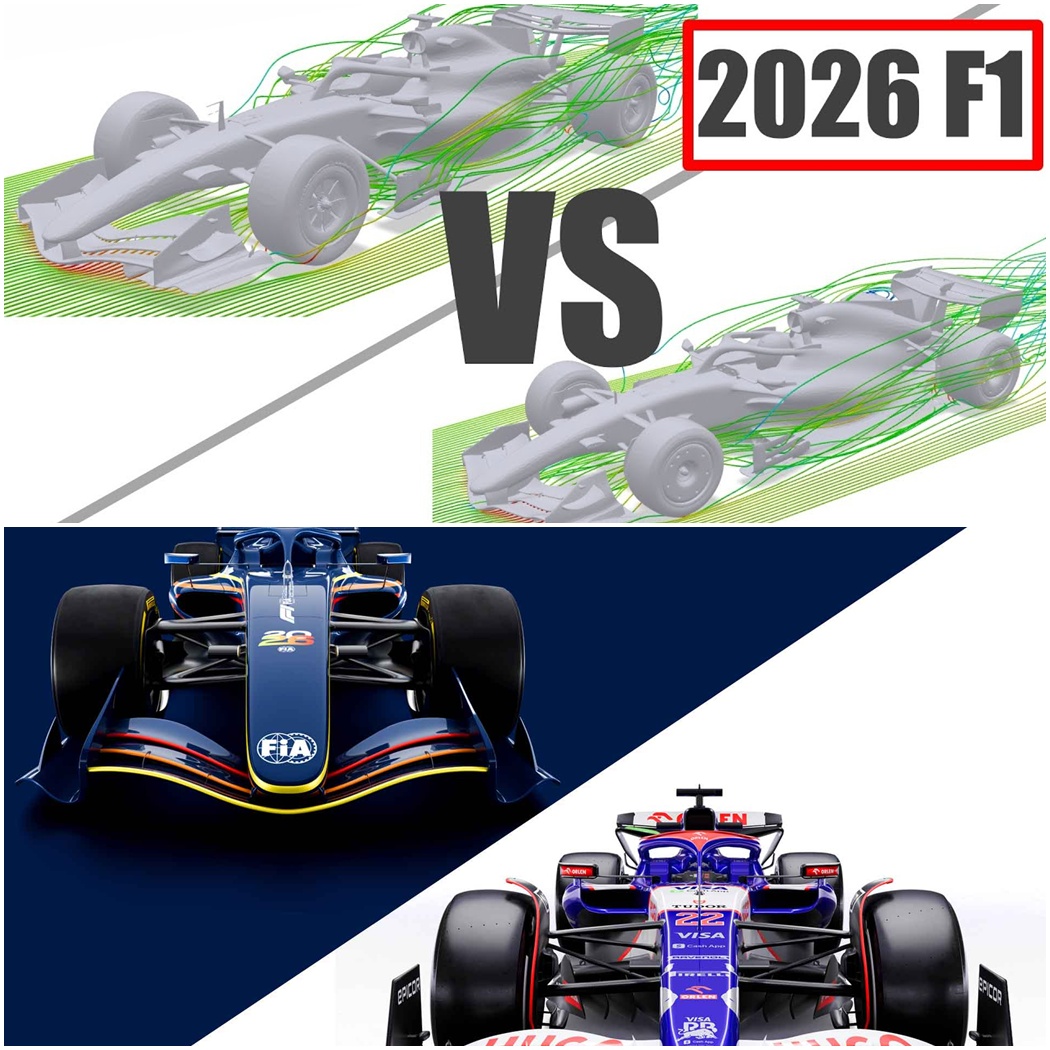
    The Formula 1 era has long been marked on the calendar as the dawn of a new technical period—a revolution defined by active aerodynamics and the most advanced hybrid power units motorsport has ever seen. Yet, while the world focuses on the noise of a changing engine formula and the sleek lines of future single-seaters, the real revolution is playing out in the fine print of contracts and the fractured culture of F1’s most storied team.

    The upcoming F1 season will not just be about who builds the fastest car; it will be about who truly holds the power, and the answers emerging from the shadows are rattling the very foundation of the sport. A new, mandatory symbol is set to appear on every car, a clear declaration of control by the governing body, while simultaneously, the legendary house of Ferrari is battling an unprecedented cultural implosion. At the heart of this perfect storm sits the seven-time world champion, Lewis Hamilton, whose move to Maranello is looking less like a dream partnership and more like a desperate attempt to perform emergency surgery on a dying icon.

    The FIA’s Red Flag: Control on the Chassis

    The most overlooked, yet profoundly symbolic, change is a small, 75mm mark. The FIA, the Federation Internationale de l’Automobile, has introduced a new, non-negotiable obligation: every Formula 1 car on the grid must display the official FIA logo front and center.

    On the surface, this might seem like standard branding, a way to enhance the governing body’s visibility, as some have claimed. But in a sport where visual identity is intrinsically linked to market value, history, and racing soul—Red Bull’s aggressive lines, McLaren’s defiant papaya, and, critically, Ferrari’s iconic scarlet—this imposition is nothing less than a declaration of ownership.

    For decades, F1 teams have fiercely guarded their livery, a canvas that represents their corporate sponsors, their national pride, and their design philosophy. Now, the FIA is planting its flag on every chassis, formally integrating its logo into the design concept of the single-seaters. This is not a partnership; it is an assertion of dominance, a visual reminder to the world that the governing body is no longer content merely to regulate the sport; it is actively becoming a part of the product itself.

    This move is inexorably tied to the recently signed Concord Agreement, the foundational document governing F1. The fact that all 11 teams have signed this deal, agreeing to cede a piece of their visual autonomy in exchange for the stability it promises, speaks volumes about the shifting power dynamic. While FIA President Muhammad bin Sulayem and Formula 1 CEO Stefano Domenicali may hail the deal as ensuring “long-term stability for the championship” and “the best conditions for future growth,” the language of “clearer governance framework” and “enhanced control” suggests a profound consolidation of power by the regulator.

    The trade-off is stark: in exchange for financial security and a stable commercial platform, the teams have effectively given up the absolute right to their visual sovereignty. Every machine hitting the track will carry the symbolic mark of its ultimate master. This quiet revolution in the fine print ensures that no matter who wins the races, the FIA wins the political war.

    The Ferrari Implosion: A Cultural War From Within

    While the governing body tightens its grip on the sport, its most significant institution, Ferrari, is experiencing a public and agonizing breakdown. The narrative coming out of Maranello is not one of engineering failure or wind tunnel deficits, but of a devastating internal cultural collapse.

    Sky commentator Carlo Vanzini, a voice deeply embedded in the heart of Italian motorsport, did not mince words, pointing to instability as Ferrari’s “biggest enemy over the past few years.” The storied Scuderia has lost key figures, shifted blame between departments, and failed to produce a car capable of challenging for titles. Vanzini’s diagnosis was damning: “There was a short circuit somewhere.” The translation is brutal: Ferrari has the resources, the people, and the legacy, but they have lost the ability to hold it together.

    The core issue, however, transcends technical specifications; it is rooted in a deep, toxic cultural divide. Team Principal Fred Vasseur had attempted to deflect pressure by blaming the media for inflating expectations during the season. But Vanzini directly refuted this, asserting: “The expectations were not created by the media; we do not believe in fairy tales.” The internal criticism reached its explosive peak when Vanzini openly questioned Vasseur’s cultural competence to lead the most Italian of teams.

    The statement that shook the Scuderia to its core was Vanzini’s insistence that Lewis Hamilton needed someone next to him “who knows Ferrari perfectly,” adding that Vasseur “is not the person you can rely on to understand Maranello, Italians, and our way of living.”

    This is a cultural indictment of the highest order. It suggests that the problem is not merely strategic, but spiritual—a clash between modern, global F1 management and the deeply ingrained, passionate “Italian way of living.” For Ferrari’s own media, the people who are meant to breathe the brand, to publicly question the Team Principal’s foundational understanding of the team’s soul is a catastrophic failure of leadership and unity. The team enters the upcoming season not just seeking performance, but fundamentally divided.

    The financial consequences of this instability were starkly highlighted by the championship entry fees. Formula 1 requires teams to pay a fee based on their previous season’s performance. Ferrari, paying $3.5 million to enter, is being charged less because they lost. In brutal contrast, McLaren, the team that found dominance and won, will pay $7.7 million. This numerical disparity serves as a tangible, painful measure of Ferrari’s recent failure and the deep hole Hamilton is being asked to climb out of.

    Hamilton’s Unseen War

    Into this volatile environment, seven-time world champion Lewis Hamilton makes his strategic, and arguably, sacrificial entry. While Ferrari fights itself and the media questions its leadership, Hamilton has been conducting an “unseen war” of preparation.

    His strategic factory visit to Maranello was not a leisurely meet-and-greet. He was spotted next to the towering autoclave, speaking with engineers, and actively providing input on critical elements, including aerodynamics and power unit integration.

    Hamilton isn’t just preparing to drive a new car; he is preparing for a systemic fight against the internal fractures of his new team. The urgency of his involvement suggests an understanding that the technical challenge is secondary to the organizational one. His expertise is being leveraged not just to build a fast car, but to try and bridge the immense cultural gap that critics like Vanzini have identified.

    The key question remains: can one driver, even one of Lewis Hamilton’s immense talent and influence, fix a team that its own internal voices say is incapable of holding itself together? He is betting his legacy on the belief that his presence, his input, and his winning culture can overcome years of internal conflict and institutional instability. The scenario is clear: Hamilton’s expertise could get lost in translation, or his factory visits could pay off, and the Scuderia could become a championship-winning force once more.

    The New Order: Sport or Product?

    The twin narratives of the FIA’s consolidation of power and Ferrari’s internal disintegration define the true revolution of the upcoming era. This isn’t just a technical reset; it is an existential crossroads for Formula 1.

    The mandatory FIA logo is the physical manifestation of the shift towards consolidation and control. The Concord Agreement ensures long-term dependence on the regulator. As teams become more compliant and afraid to challenge the authority, the question that must be asked is unsettling: when every car carries the same logo, when every team follows the same regulatory framework, when the FIA’s brand sits on every chassis from the newest entrant to the oldest legend, is Formula 1 still the pinnacle of competitive motorsport, or has it become something else entirely—a highly controlled, corporatized product owned and operated by its regulator?

    The internal plight of Ferrari serves as a potent microcosm of the struggle. The essence of F1 has always been the unique, passionate identity of its competing teams. When that identity is fractured from within, and simultaneously challenged from above by a governing body seeking total control, the sport’s very soul is at risk.

    The upcoming F1 season will determine if the technical genius of the new regulations will be overshadowed by the political and cultural war being waged off-track. It won’t just be about surviving the rule changes; it will be about surviving the new order. The biggest transformation in modern F1 history is underway, and the real victory will belong to those who can master the politics, not just the physics.

  • The Reckoning: Why Oscar Piastri’s Red Bull Rumor Exploded After McLaren’s Championship Triumph

    The Reckoning: Why Oscar Piastri’s Red Bull Rumor Exploded After McLaren’s Championship Triumph

    The champagne had barely dried on the Yas Marina asphalt. The roar of celebration for Lando Norris’s 2025 Drivers’ Championship win was still echoing when an entirely different, more unsettling sound began to rise through the Formula 1 paddock: the whisper of seismic change. In the immediate, emotionally charged aftermath of a season that delivered the greatest prize in motorsport to Woking, the focus should have been on McLaren’s unified triumph. Instead, the spotlight swung sharply onto the other side of the garage, where the rumor of Oscar Piastri’s potential defection to Red Bull began to gather an unsettling, combustible momentum.

    This wasn’t mere paddock chatter; it was a conversation fueled by context, timing, and the brutal logic of Formula 1. According to highly placed sources, including Autoport editor-in-chief and BBC pundit Beck Clansancy, the notion that Piastri was eyeing a move—not immediately, but from the pivotal 2027 season onwards—was pervasive. Clansancy revealed on the Piranha Club podcast that the talk was “everywhere on the inside,” suggesting intent where there should have been none. The irony was devastating: McLaren had delivered the best car on the grid, yet the driver who had fought like a champion in waiting was suddenly the subject of a transfer rumor targeting their biggest rival.

    The Uncomfortable Plausibility of Betrayal

    In a sport obsessed with contracts, the Piastri-to-Red Bull link should be nonsensical. Piastri had committed his long-term future, extending his contract beyond the looming 2026 regulation changes and tying himself to McLaren until at least 2028. Yet, as respected F1 journalist Ben Hunt pointed out, the move is “entirely plausible.” The explanation lies in the storm brewing ahead. The 2026 regulations represent a complete technical reset: lighter cars, active aerodynamics, more battery power, and, crucially, Red Bull’s shift to a new power unit partnership with Ford.

    Hunt’s analysis cuts to the core of the F1 manager’s ruthless pragmatism: nobody knows who will “nail the engine.” That uncertainty is precisely where opportunity is born. If Red Bull, known for its ability to dominate technical eras, masters the new regulations alongside Ford, their car will become the most coveted seat in the sport. Furthermore, the volatility surrounding the team—from Max Verstappen’s occasionally uncertain future to the post-Christian Horner and Helmut Marko era of transition—means the landscape is far from settled.

    As Hunt put it bluntly, any Formula 1 manager not “checking on people’s availability” is simply not doing their job. Conversations don’t equal commitment, but they signal intent, and in the high-stakes chess game of driver careers, intent is everything. If Red Bull emerges with a dominant package, the queue to join Verstappen—or, indeed, replace him if he chooses to pursue a new challenge or demands absolute, total control—would be “enormous,” and Piastri’s name would be at the very top. This rumor felt different because it was less about wishful thinking and more about perfect timing, a factor that decides everything in Formula 1.

    The Erosion of Yesterday’s Certainty

    Piastri himself had previously dismissed the speculation with composure, stating earlier in the year that while the links were “flattering,” he didn’t care and saw his future firmly with McLaren. His early contract extension was a powerful statement in a sport addicted to escape clauses and vague promises. He cited the team’s miraculous development—from being at the back of the grid in early 2023 to title contention just two years later—as the evidence of their potential. The mission, he insisted, wasn’t just to win races, but to conquer both world championships together.

    However, Formula 1 has a cruel habit of making yesterday’s certainty feel naive. Contracts don’t neutralize politics, and confidence can quietly erode when results, and, more importantly, decisions, do not fall your way. Piastri’s season, while marking him out as a championship-caliber talent, planted profound seeds of doubt—not about his speed, but about the delicate and dangerous question of fairness.

    The team’s official mantra, “Papaya Rules,” preached absolute equality and no favorites. This promise is simple to maintain when neither driver is a title challenger, but it becomes something else entirely when one is crowned champion and the other is left standing in the shadow. Lando Norris is a World Champion; Oscar Piastri is not, despite driving with the capability of one for much of 2025.

    Counting the Receipts: The Title That Got Away

    Piastri’s title loss wasn’t entirely political; the transcript acknowledges that some wounds were self-inflicted. His off-track excursion in Australia cost him a significant haul of points, and DNFs followed in Baku, the Brazil sprint, and the Austin sprint. These incidents, though contextualized, left undeniable damage.

    But what hurt more, and what truly began the slow, internal fracture of loyalty, were the moments beyond his control—the critical incidents and perceived decisions that seemed to consistently favor the other side of the garage. The Monza race, the controversial Qatar safety car disaster, the questionable Silverstone penalty, and, most damningly, the strategy calls in Hungary and Imola that analysts felt clearly favored Norris.

    Stack these incidents together, and the picture for Piastri becomes brutal. As the transcript notes, without that list of team-influenced setbacks, it is undeniable that Piastri would have been world champion, even accounting for his own mistakes. Suddenly, the official policy of “Papaya Rules” no longer felt neutral; it felt consequential. When one driver lifts the trophy, the other starts “counting receipts.” This is how loyalty quietly fractures in the high-pressure cooker of Formula 1.

    History’s Unforgiving Memory

    The dilemma facing Piastri is one of the oldest and most destructive in F1 history: the driver who loses the intra-team title battle. The sport’s long memory is rarely kind to the one standing next to the champion.

    The cautionary tale is Daniel Ricciardo. He left Red Bull at the end of 2018 seeking freedom and a team built around him, only to watch Max Verstappen become a multi-time world champion while Ricciardo drifted through Renault and McLaren before ultimately retiring. His flashes of brilliance were swallowed by inconsistency. The pattern is usually unforgiving: Mark Webber never overcame Sebastian Vettel, Sergio Pérez was ultimately discarded, and sharing a team with a dominant force rarely leads to an individual title.

    Nico Rosberg remains the lone modern exception, narrowly beating Lewis Hamilton in 2016 before immediately walking away. For Piastri, the historical weight is enormous: staying risks becoming the defeated; leaving risks becoming forgotten. He is good enough to win, but the question now is whether he can achieve that goal alongside a newly crowned world champion who may increasingly, if subtly, become the team’s focus.

    The Volatile Future Landscape

    The Red Bull rumor is also given life by the wider, highly volatile F1 grid beyond 2026. Doors don’t need to be open to be tested, and Piastri’s management would be foolish not to monitor every potential trigger and future opening.

    Mercedes’ future is believed to hinge on performance clauses for George Russell and the emerging talent of Kimi Antonelli. Ferrari is grappling with the aging of Lewis Hamilton, tied to a multi-year deal that may not see him through past 2026 if results turn sour. Aston Martin remains a sleeping giant, with Fernando Alonso and Lance Stroll not locked in indefinitely. Should the arrival of design genius Adrian Newey turn Aston Martin into a front-runner, the chaos of the driver market would be immediate, and Piastri’s name would be prioritized.

    Every single one of these scenarios puts elite, proven talents under a microscope. Piastri, a championship-caliber driver, would be monitored closely by every team needing a guaranteed winner. Leaving McLaren would be a massive gamble, but staying—and risking being continually consequentialized by the Norris-centric gravity of a title-winning team—might be the bigger, slower gamble that costs him a career.

    The Challenge That Remains

    The tension at the heart of Oscar Piastri’s future is profound. He is, undeniably, good enough to win a World Championship, having proven his talent in just his third year of Formula 1. He entered the post-season not with bitterness, but with a reflective tone, calling the battle with Norris a “fun challenge” that has contributed to McLaren’s collective success. He stressed the growth that went both ways, acknowledging that the intense weekends and tight battles have made them both better.

    But the question is no longer about talent; it is about environment and opportunity. Can McLaren, now focused on defending its champion and entering a new regulation era, truly remain the place where Piastri’s singular ambition can be fully realized, or has the fracture of 2025 made the paddock’s rumor mill a prophecy? The fight remains where it began: across the garage, against Lando Norris. However, the shadow of a different color—the blue and red of Red Bull—is now a permanent fixture on the horizon, signaling that the most important race of Oscar Piastri’s career may be the one fought off-track, for the perfect exit clause.