Author: bang7

  • The Shocking Truth About Success: Why Tim Ferriss Says Defining Your Fears is More Important Than Setting Your Goals

    The Shocking Truth About Success: Why Tim Ferriss Says Defining Your Fears is More Important Than Setting Your Goals

    In a world obsessed with vision boards, goal tracking, and endless self-improvement mantras, the pathway to success is consistently painted as a forward-facing, aspirational journey. We are constantly told to define our goals with laser focus, to visualize the perfect outcome, and to pursue our dreams with relentless passion. But what if this entire paradigm is fundamentally flawed? What if the secret to breaking through—the true engine for high achievement—lies not in the dazzling light of future goals, but in the dark, uncomfortable corners of our deepest anxieties?

    Tim Ferriss, the entrepreneur, investor, and global phenomenon behind The 4-Hour Workweek, didn’t find his revolutionary success by simply chasing the next big goal. Instead, he found salvation and breakthrough by looking directly at the very things that terrified him. For Ferriss, a man who has always been drawn to the habits of high achievers, his own early years were shadowed by a relentless struggle with anxiety and depression. He exhausted the conventional routes: medication, endless talk therapy, and a grueling, unsustainable work ethic that masked his internal strife. The ultimate liberation came not from a complex, cutting-edge treatment, but from a deceptively simple, paper-based exercise he calls “Fear Setting”.

    This concept, Ferriss argues, is a necessary tool for thriving in high-stress environments. It serves as the antidote to the debilitating “analysis paralysis” that traps millions of aspiring achievers, leaving them stuck, delaying action, and unable to make the first move toward their potential.

    The Stoic Blueprint for Action

    Fear setting is not a self-help gimmick; it’s a powerful, actionable system inspired by the ancient philosophy of Stoicism. The core idea is simple: if we can clearly define, dissect, and prepare for our fears, we can mitigate their emotional impact and render them manageable.

    Most people treat fear as a vague, terrifying monster lurking in the shadows. Ferriss insists you must drag that monster into the light, analyze its features, and figure out how to defeat it. By forcing clarity on the worst-case scenarios, we realize that most of our mental barriers are not the “life-ending disasters” we imagine. In fact, they are often reversible, manageable, and far less threatening than the pain of regret.

    The exercise is structured around three distinct pages, each designed to dismantle a different facet of the fear-based roadblock.

    Page One: Defining the Nightmare

    The first page is the definition of your fears, a rigorous exercise in identifying and analyzing the specific worst-case outcomes associated with a high-stakes decision. Ferriss instructs the practitioner to draw up a three-column table.

    Column 1: The Worst-Case Outcomes

    Here, the goal is total honesty. Write down 10 to 20 specific, measurable worst-case outcomes that could occur if you take the step you are contemplating. This is not about general anxiety; it’s about concrete possibilities. If you quit your job, what exactly happens? You lose your income. You burn a bridge. You have to move. Name every single consequence.

    Column 2: Preventative Measures

    With the disasters clearly laid out, the next step is to address them head-on. For each fear listed in Column 1, list the preventative measures you can take to make sure that specific outcome does not happen. If you fear losing your income, the preventative measure might be saving six months of expenses or securing a few freelance gigs first. This column transforms vague worries into actionable tasks, reducing the probability of failure to near-zero.

    Column 3: The Repair Plan

    This is perhaps the most psychologically powerful column. It asks: If the worst-case scenario does happen, what can you do to repair the damage or get back to where you were? This step reveals the reversibility of almost every fear. If you lose all your money, what steps would you take to earn it back? You would call your network, take a temporary job, or sell assets. This column proves that even catastrophic failure is rarely permanent. It gives you a roadmap back to stability, stripping the failure of its finality.

    Page Two: The Unseen Cost of Inaction

    Most people only focus on the risk of doing something. Ferriss forces a radical shift in perspective by dedicating an entire page to the cost of not doing anything at all.

    The real danger often lurks not in attempting a difficult task, but in remaining stagnant out of fear. This page requires brutal self-assessment, asking the chilling question: If you do nothing, what will the cost be? This assessment must be measured across three critical timeframes:

    6 Months from Now: What immediate opportunities will you have missed? What level of frustration will you be feeling?

    1 Year from Now: How far behind will you be compared to your true potential? How much damage will the continued anxiety have done to your health and relationships?

    3 Years from Now: What is the profound, soul-crushing cost of regret? What unfulfilled potential will you mourn? This extended time frame solidifies the understanding that the cost of maintaining the status status quo is almost always greater—and less reversible—than the cost of a failed attempt.

    Page Three: The Grace of Partial Success

    The final page serves as a necessary psychological buffer against the pressure of absolute perfection. Ambition can be self-sabotaging when it demands a flawless, 100% successful outcome. The third page asks: What are the benefits of a partial success?

    What if you only achieve 50% of your desired outcome? Will it still be worthwhile?

    By considering the value of a partial win, the fear of total failure shrinks significantly. If your goal is to launch a massive company but you only manage to create a profitable, small side-business, that is still a partial success. You gained new skills, built a network, and earned income. This frame of mind allows the practitioner to see the inherent value in the process, regardless of whether the initial, lofty goal is fully met.

    The Case Study That Launched a Legend

    Tim Ferriss’s personal journey provides the most compelling evidence for the power of fear setting. In the early days of his first company, he found himself trapped in a cycle of overwork and unhappiness. He was clocking 14 hours a day, seven days a week, utterly miserable despite his supposed success. He desperately wanted to take a three-week trip abroad, but the terror of the consequences was paralyzing.

    His mind conjured up a litany of catastrophic fears: the business would collapse, his team would lose all respect for him, or he would simply become irrelevant. Using his own fear-setting framework, he systematically disassembled these anxieties. He detailed the collapse, planned the preventative measures, and wrote the explicit fix-it plan.

    The result was astonishing. He took the trip to Europe and Japan. The business did not collapse; in fact, the team handled things efficiently and well. Ferriss returned not only rejuvenated and with a clear mind but with the realization that the world had not ended without him.

    This three-week trip—made possible by defining his fears—was the essential catalyst. It didn’t just end there; the break evolved into a three-year sabbatical, a period of profound re-evaluation that ultimately led to the insights and systems codified in his legendary book, The 4-Hour Workweek.

    The True Disaster is Regret

    The powerful lesson from Ferriss is not about abandoning goals; it’s about clearing the emotional and psychological debris that prevents us from moving toward them. The therapeutic value of the fear-setting process is immense. It proves, through systematic and rational analysis, that most things we fear are not the permanent, life-shattering calamities we build them up to be. They are tactical obstacles that can be managed, reversed, or survived.

    The true, irreversible, soul-destroying disaster is the cost of inaction. It is the cumulative toll of years spent wondering “what if,” of opportunities squandered, and of potential left tragically untapped.

    Fear setting is not a one-and-done exercise; it is a muscle that must be consistently exercised, which is why Ferriss recommends repeating the process once a quarter. By regularly defining your fears, you are empowered with a choice: to consciously choose to face them, armed with a plan, or to consciously choose to avoid them, knowing the exact price you will pay in six months, one year, and three years.

    In a world telling you to define your goals, Tim Ferriss offers a radical, life-changing alternative: Define your fears. It is only when you stare into the abyss of potential failure and regret that you gain the clarity, courage, and concrete plan required to leap into the realm of true high achievement. The power is not in the dream, but in the preparedness.

  • BOMBSHELL: Helmut Marko Claims Christian Horner’s Power Play and ‘Dirty Games’ Cost Red Bull a World Championship

    BOMBSHELL: Helmut Marko Claims Christian Horner’s Power Play and ‘Dirty Games’ Cost Red Bull a World Championship

    The Final Grenade: Helmut Marko’s Explosive Truth About Christian Horner and the Destruction of the Red Bull Dynasty

    For two decades, Helmut Marko was the immovable object at the heart of Red Bull Racing, the Austrian veteran who guided the team from ambitious newcomers to a Formula 1 dynasty. He was the “adviser,” the “mentor,” and the fiercely protective voice in the ear of champions like Max Verstappen. His presence was a symbol of Red Bull’s raw, unfiltered, and uncompromising approach to racing. When the 82-year-old departed the team earlier in the season, ending a 20-year reign, the official narrative was one of a gentle farewell, a chapter closed by a man ready for retirement.

    But that narrative, according to Marko himself, was a carefully constructed lie. In a stunning, explosive interview with a European newspaper following his exit, Marko dropped a series of bombshell allegations that peel back the layers of the team’s recent success to reveal a core rotten with political warfare, mistrust, and outright betrayal. This was no retirement; it was the firing of a final, destructive grenade, aimed squarely at his long-time co-worker, Christian Horner, the man he claims turned the once-unified team into a battleground for personal power.

    The Shadow of Succession: A Power Play Before the Fall

    Marko’s most chilling claim centers on Christian Horner’s alleged maneuvering in the shadow of co-founder Dietrich Mateschitz’s illness. Mateschitz, affectionately known as ‘Deei,’ was the visionary who built the entire Red Bull empire. According to Marko, Horner began his calculated ascent to solitary control long before Mateschitz’s eventual passing.

    Marko recounts a conversation that exposed Horner’s ruthlessly political foresight. “Christian came up to me and said he won’t make it to the end of the year,” Marko recalled, referring to Mateschitz. “From that moment on, he started cozying up to Chalerm Yoovidhya,” the Thai billionaire who holds a major share of the company. To Marko, this wasn’t just smart networking; it was a clear and calculated power play, a move designed to secure the backing of the ultimate shareholder before the man who co-created the team had even drawn his last breath.

    After Mateschitz’s death, the political game intensified. Marko alleges that Horner did “everything he could to take control” with Yoovidhya’s support. Marko, who says he tried everything he could to stop it, found himself in a solitary fight against a political machine. The adviser who helped build the Red Bull dynasty was now being systematically sidelined and undermined by the very man he had worked alongside for two decades. This was the moment the dynasty fractured; the ideological soul of Red Bull, guided by Mateschitz and Marko, was being replaced by the slick, public relations-driven ambition of Christian Horner.

    The Toxic Atmosphere and ‘Dirty Games’

    The allegations go far beyond a simple boardroom battle. Marko didn’t mince words when describing his final years working under Horner. He said the experience was “not pleasant” and involved “dirty games being played.” These are not minor criticisms; they are accusations of a toxic, corrosive atmosphere within the highest echelons of one of the world’s most successful sporting organizations.

    Marko pointed to specific public incidents that he claims were deliberately manipulated to create a campaign against him. He referenced the controversial comments he made about Sergio Perez’s focus and form, which were widely criticized at the time as being racially charged—comments for which Marko later apologized. Now, Marko says that whole story might have been “fabricated, perhaps by them,” meaning Horner’s camp, as part of a campaign to damage his reputation.

    He cited similar instances involving rumors that he had told people Red Bull’s engine development was behind schedule and that the team might lose a sponsor. Marko insists he never made these comments, but he claims Horner planned to use the fabricated rumors to justify suspending him from the team.

    The tension became so unbearable that rumors of Marko’s potential suspension were already swirling earlier in the 2024 season. Marko was ultimately saved only after talks and the powerful, public backing of his star driver, Max Verstappen, in Jeddah. This detail alone paints a picture of a team principal actively trying to remove a core member of the leadership, turning the paddock gossip into a high-stakes struggle for internal survival. Marko’s revelations confirm that the perceived unity of Red Bull was merely a facade masking a relentless internal war for ultimate power.

    The Ultimate Price: A World Championship Lost

    Perhaps the most damning and emotionally resonant allegation is Marko’s absolute conviction that the internal turmoil cost Red Bull the 2025 World Championship.

    Max Verstappen, the driver Marko mentored from his karting days, finished just two points behind eventual champion Lando Norris. According to Marko, this devastating loss was directly attributable to the infighting and the delayed removal of Christian Horner.

    “If we had done it earlier, we would have got things back on track sooner and Max Verstappen would have been world champion this year. I am absolutely convinced of that,” Marko declared.

    This is a breathtaking accusation. It transforms a political fight into a sporting tragedy. Marko suggests that the internal dysfunction—the political battleground created by Horner’s ambition—was so corrosive that it impacted the team’s operational focus and ultimately the on-track performance, resulting in the loss of a fifth consecutive title. It implies that the quest for power superseded the quest for victory.

    Marko’s heart was clearly broken by this outcome. His “ultimate dream,” he confided, was to win “five in a row with Max, the best driver we’ve ever had,” but, he lamented, “it wasn’t meant to be.” This is the emotional core of the entire saga: a lifetime of work, a legacy cemented through dynasty, undermined and ultimately shattered by what he views as one man’s naked ambition. It is a stunning charge that the team’s failure to achieve its ultimate goal wasn’t due to technical shortcomings or driver error, but to a profound internal breakdown of trust and unity.

    The Official Narrative and the Need for a Personal Goodbye

    The nature of Marko’s actual departure was as contentious as his tenure. Red Bull’s official statement presented a clean, dignified exit, suggesting Marko was simply moving on to a new stage of life after a successful chapter. Marko dismissed this statement as being “full of nonsense.”

    He clarified that the idea of quitting was not a long-planned retirement but a sudden, emotional decision that only began to form during the Qatar Grand Prix. His reason for leaving was simple: “The team had changed too much.”

    In a poignant detail that highlights the gulf between the corporate PR machine and the personal relationships he valued, Marko revealed that he had to call Max Verstappen himself to let him know what was truly happening. This act—bypassing the official channels to personally explain his decision to the star driver he considered a son—underscores the depth of the confusion and conflict at the finish line. It was a departure driven by principle and personal disillusionment, not by a mutual agreement to move on.

    Marko even revealed that, in a final act of trust and loyalty to the racing team, he had appointed Laurent Mekies, a trusted figure, to lead the team, hoping to steer the ship back on course after Horner’s eventual exit. Under Mekies’ guidance, Verstappen did mount an extraordinary comeback, pushing until the final lap in Abu Dhabi. But it wasn’t enough, leaving Marko with the bitter, agonizing reminder of what might have been.

    The Cracked Empire and the Void

    The departure of Helmut Marko is the final, seismic event in the complete breakdown of the unstoppable Red Bull machine. The team that once seemed unbeatable is now fundamentally altered.

    The original architect and visionary, Dietrich Mateschitz, is gone. Technical guru Adrian Newey has been gone for over a year. Christian Horner, the political operator, is out. And now, the spiritual leader and mentor, Helmut Marko, is out, not quietly, but with a series of career-defining allegations.

    The Red Bull Empire feels cracked open from within. This story is not merely about two powerful men fighting; it’s a high-stakes, real-world drama about power, passion, legacy, and the ultimate price of betrayal. Marko has shown the world what happens when ambition collides with loyalty in the highest pressure environment.

    He is not an old man riding into the sunset. He is a man who, in his final act, torched the house he helped build to ensure the world knew the true, bitter cost of the internal war. The question now burning in the paddock remains: Red Bull may still have the speed and the technology, but has the battle for power finally broken the team’s heart and destroyed its soul? The answer to that question will define the future of the team that once stood alone at the top of Formula 1.

  • Audi F1 team confirm new name, team logo and car launch date as 2026 countdown begins

    Audi F1 team confirm new name, team logo and car launch date as 2026 countdown begins

    F1 will have two new teams on the grid when the 2026 season gets underway, and one of the new entries has confirmed some exciting details ahead of the official launch event

    Sauber/Audi will have a fresh identity for the 2026 F1 season(Image: ALEXANDRA BEIER/AFP via Getty Images)

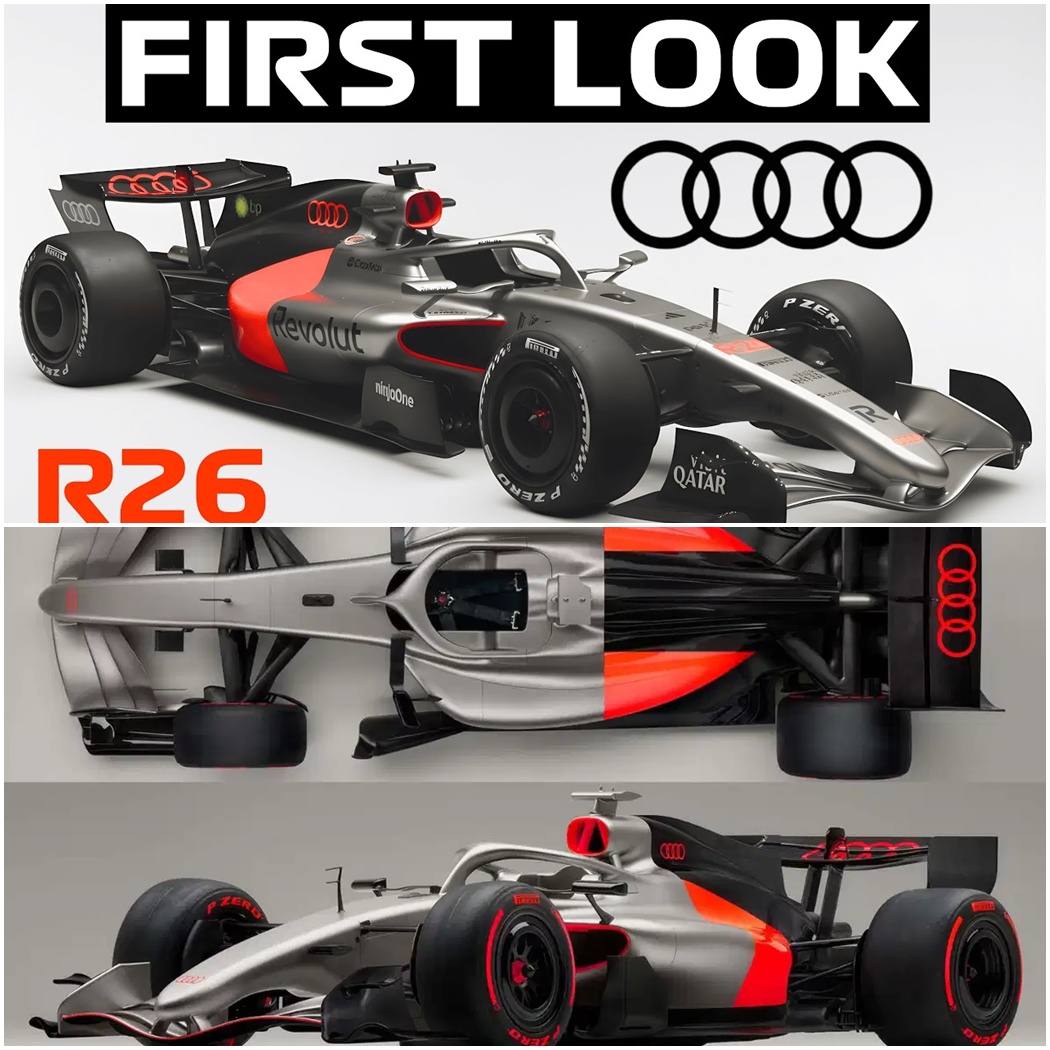
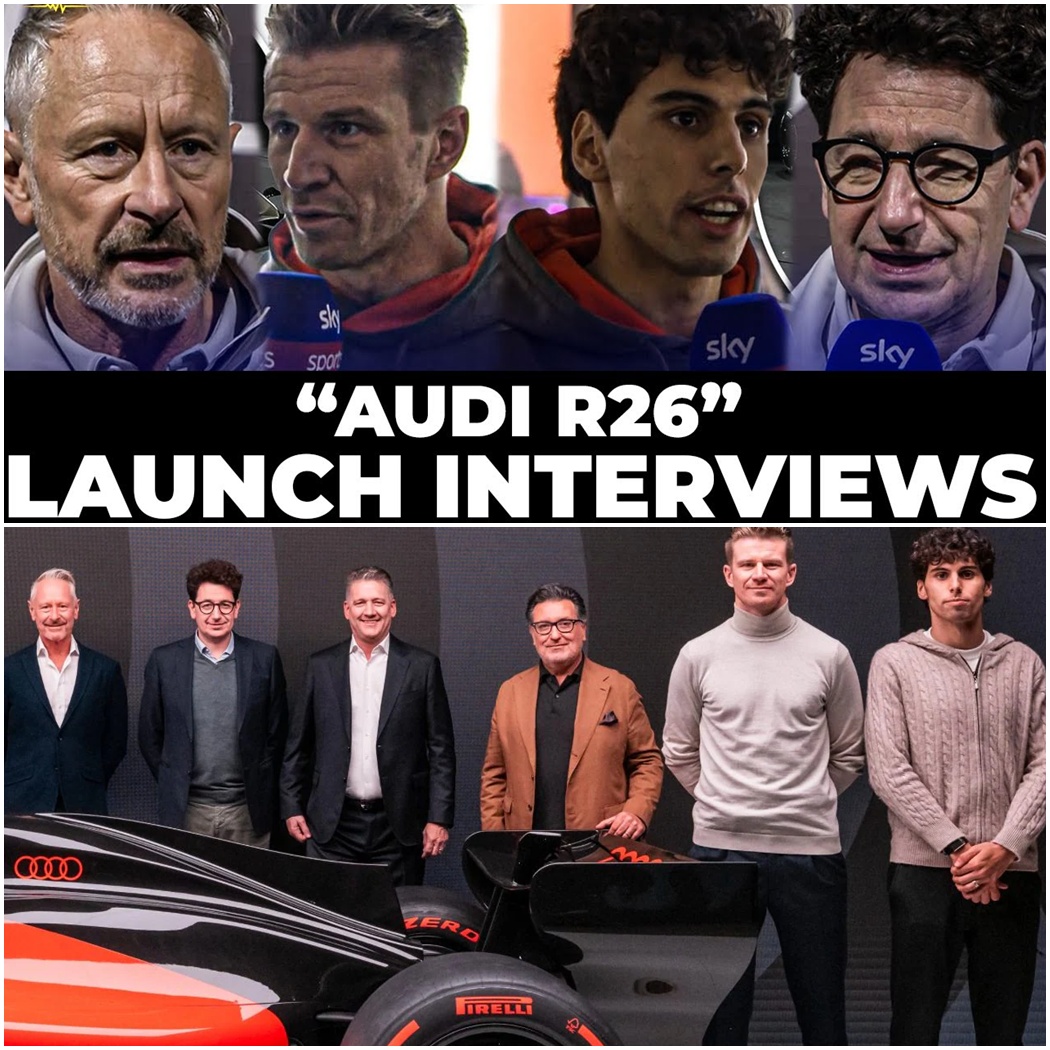
    Everything we know after Audi Revolut F1 Team confirmed their new name and logo, and revealed their two-phase car launch for the 2026 F1 season.

    Fresh identity : The new F1 project from the German manufacturer Audi will be officially known as the Audi Revolut F1 Team for the 2026 season. This name confirms a title partnership with Revolut, alongside the team’s identity as they take over the Sauber F1 Team.
    Car launch confirmed : The team has confirmed its launch date for its first F1 challenger, which will be revealed on January 20, 2026, at an exclusive event in Berlin. The following day, fans will have a public opening to view the car, showcasing the livery that will be used in the first year of the new technical regulations.
    New logo design : The Audi Revolut F1 Team name will be featured prominently on broadcasts next season, including on the cars and the timing tower. Team Principal Jonathan Wheatley stated, “The Audi Revolut F1 Team name is a symbol of the combined strength of our teams in Germany, UK and Switzerland, together with our partners.”
    Two new teams : Audi’s entry into the sport is part of a growing grid, as they are set to be one of two new organisations debuting in 2026. They will be joined by the American squad Cadillac, marking an exciting period of growth for the championship.
    Audi hard at work : The official announcement gives a clear focus and identity to the massive engineering and development work currently underway in the background. Mattia Binotto commented that “This announcement gives a name and a face to the incredible work being done by the team,” which is “driven by a culture of precision and relentless ambition.”
    Countdown to the debut: The launch event marks a crucial moment in the team’s development before their track debut, as it is the first time the team will appear as a unified front. Wheatley noted that the new name “energises the entire project and makes our long-term ambition tangible for everyone involved.”

  • Michael Schumacher’s telling behind-the-scenes behaviour emerges from close ally

    Michael Schumacher’s telling behind-the-scenes behaviour emerges from close ally

    Michael Schumacher won seven F1 world titles before suffering life-changing injuries in 2013

    View 3 Images

    Michael Schumacher won seven F1 world titles during his career(Image: Clive Mason/Getty Images)

    Michael Schumacher’s success in Formula 1 has been attributed to his ability to foster a team mentality, both on and off the track. The 56-year-old won a record seven world titles during his legendary career, a tally that Lewis Hamilton has since equequalledaled.

    The German driver won the first two of his championships at Benetton in 1994 and 1995. After defending his title, Schumacher moved to Ferrari, where he went on to win five consecutive world titles from 2000 until 2004.

    Remarkably, the F1 icon won all seven championships under the guidance of Ross Brawn. The British engineer was Benetton’s technical director during Schumacher’s title wins and the pair later reunited at Ferrari. Former Top Gear producer Andy Wilman has recalled how Brawn explained Schumacher’s role in creating a winning team.

    “When [Schumacher] goes to Ferrari, the magnitude of that job,” Wilman said on the High Performance Podcast. “Every Ferrari driver who goes there moans if it’s not right. Did we ever hear him moan? He goes there, the car’s a dog in ‘96 and he knows he’s in for a four or five-year plan to bring them back to glory.

    “I remember Ross Brawn saying, ‘Lunchtime, he’s playing football with the mechanics. He likes a game of football but he knows this is all part of it. The big superstar driver is with the mechanics, he is with them all the time. You do stuff together. He’d go round the factory, shakes hands with people sweeping the floor, everybody at Christmas.’

    “People don’t see this. They just see the villain on the track, they don’t see what he’s doing in that factory.”

    Brawn also worked with Schumacher during his three-year comeback at Mercedes at the end of his F1 career. The 71-year-old has remained part of the driver’s inner circle since his life-changing skiing accident in December 2013.

    The Schumacher family have strived to keep his health private, with Michael being kept out of the spotlight. Meanwhile, Brawn is still passionate about Schumacher’s success on the F1 grid.

    View 3 Images

    Ross Brawn worked with Schumacher across three F1 teams(Image: Christian Fischer/Bongarts/Getty Images)

    “You need talent and his was enormous,” Brawn told Auto Hebdo in August. “The history of Formula 1 is full of drivers with a lot of talent, but who don’t know how to put it into practice, and Michael knew that.

    “There is no doubt that he had an exceptional physical condition, an enormous power of concentration and unparalleled commitment. He had all the necessary attributes and the intelligence to burn stages.”

    View 3 Images

    Schumacher is arguably the greatest F1 driver of all time(Image: Clive Rose/Getty Images)

    He added: “Helping him to each of his seven F1 world championship titles was something exceptional for me. There is no one above Michael.

    “Michael’s ability to blend talent with hard work and intelligence made him extraordinary. His dedication was unmatched, and he had an almost unique ability to take his skills and elevate them to the highest level.”

  • The Structural Time Bomb: How McLaren’s ‘Papaya Rules’ for Fairness Imploded Their Title Dream and Forced an Explosive Reckoning

    The Structural Time Bomb: How McLaren’s ‘Papaya Rules’ for Fairness Imploded Their Title Dream and Forced an Explosive Reckoning

    The Structural Time Bomb: How McLaren’s ‘Papaya Rules’ for Fairness Imploded Their Title Dream and Forced a Shocking Reckoning

    For a team that has achieved the rare feat of fighting for and winning championships, the air at the McLaren Technology Centre should be thick with self-congratulation. Yet, beneath the veneer of success, a significant and potentially destabilizing tension is forcing the Woking-based outfit into a profound self-examination. The issue is not a technical failure, nor a lack of pace, but a philosophical one: the beloved, non-negotiable “Papaya Rules”—the internal framework designed to guarantee competitive fairness between two elite drivers—have been exposed as a structural time bomb, one that may have cost Oscar Piastri a world title and now threatens to sabotage the team’s aspirations for the radical regulation reset ahead.

    The tension reached its public apex with Piastri’s calculated and deliberate request for discussions with senior management. This was not a moment of frustration vented in the heat of defeat, but a calculated, cold-eyed observation by a driver assessing the structure rather than the outcome of a championship battle. Piastri is not questioning the intent of McLaren’s system; he is challenging its execution and, more chillingly, its adaptability when the competitive margin collapses to zero.

    The Problem of Rigid Equality

    McLaren’s philosophy—championed by CEO Zak Brown—is one of absolute equality, allowing their two highly competitive drivers, Lando Norris and Oscar Piastri, to race freely. Brown has long defended this approach as a cornerstone of the team’s identity and a rare achievement in modern Formula 1, where team orders often prevail. This freedom, the ‘Papaya Rules,’ worked flawlessly earlier when both drivers were fighting for occasional wins and podiums. The margins were wide, and the consequences of any one decision were proportional to the single race.

    However, as Piastri surged into genuine championship contention, the same seemingly fair framework began to interact with high-stakes physics, resulting in a crucial asymmetry of consequence. The competitive reality is that for the championship leader, every marginal position lost, every strategic ambiguity, and every inch of track position carries a disproportionate weight.

    Singapore, for instance, provided a stark illustration. Norris’s aggressive move on Piastri was entirely consistent with the team’s ethos of letting them race. There was no regulatory inconsistency. Yet, in the context of a tightening title fight, the incident carried crucial momentum implications that extended far beyond a simple position swap. Piastri’s lack of public objection at the time did not diminish the cumulative effect of such moments over a campaign.

    Hungary presented a different strategic dilemma. The team’s modeling led to a divergence in strategy, placing the drivers on unequal trajectories, despite both their intent and the team’s being identical. The outcome once again, albeit neutrally, benefited Norris. This wasn’t preferential treatment, but it hammered home the uncomfortable truth that equality of opportunity does not guarantee equality of consequence when a driver is managing a championship lead.

    The situation in Qatar arguably placed the Papaya Rules under the most intense and unforgiving scrutiny. The decision not to pit either driver under an early safety car was rooted in consistency and neutrality, a defensible choice with the information available in the moment. However, in hindsight, it proved costly, allowing rivals to capitalize and further eroding Piastri’s lead. For Piastri, scenarios like this underline the destructive tension between rigid equality and contextual flexibility—a system that cannot adapt will become a liability.

    Piastri’s Measured, Chilling Critique

    What gives Piastri’s current demand such weight is his consistency and his complete refusal to play the victim. He has not distanced himself from the rules when they worked against him, nor has he selectively endorsed them. His critique is not emotional; it is an observation grounded in empirical evidence accumulated over a full championship campaign. He is seeking refinement, not reform, arguing that the system is a competitive asset that simply requires calibration, not abandonment.

    The subtlety of his position is masterful. He is not questioning the legitimacy of Norris’s title or implying manipulation. Instead, he highlighted how the context of a championship war alters the impact of decisions. A system that functioned smoothly when margins were wide can become deeply flawed when those margins collapse.

    His most striking comment, that Norris has not become “Superman” since winning the title, deserves precise interpretation. It was not dismissive, nor was it intended to be provocative. It was a precise, pre-emptive assertion that McLaren’s internal equilibrium and strategic priorities must remain unchanged by the external label of ‘World Champion.’ Championships subtly alter internal dynamics, often through implicit shifts in assumption, risk tolerance, and perceived strategic priority. Piastri is asserting his ongoing parity and demanding clarity to ensure the team does not unconsciously shift its focus or bias toward the reigning champion.

    Zak Brown’s Defense vs. Andrea Stella’s Reality

    Zak Brown, while defending the Papaya Rules as a “cornerstone of McLaren’s success,” has also demonstrated a willingness to evolve. His defense focuses on the principle of equality, which he correctly asserts is non-negotiable. However, his understanding that this philosophy must continue into the future—a philosophy being a more flexible guide than a fixed rule book—allows for the very refinement Piastri is seeking. Brown’s challenge is not to defend the past, but to ensure the future interpretation of fairness remains perfectly aligned with competitive reality.

    Team Principal Andrea Stella’s contributions reinforce this necessity. His emphasis on professionalism, respect, and conduct highlights the critical human framework underpinning McLaren’s success. He implicitly recognizes that in an environment where both drivers are legitimate title contenders, trust and clarity are not static; they require constant, active reinforcement. Stella’s perspective reflects a fundamental operational truth: fair treatment does not mean identical experience. Timing, safety cars, and track position will always introduce divergence. The challenge for McLaren’s leadership is not to eliminate disparity, but to ensure that the rationale behind every marginal decision is clearly understood and consistently applied to both drivers, thereby removing all ambiguity.

    Mark Webber and the Future Imperative

    The involvement of Mark Webber, Piastri’s manager and a former championship contender who faced similar intra-team rivalries, adds vital historical and developmental context. Webber understands acutely how marginal decisions accumulate over a campaign. His forward-focused outlook views the season not as a missed opportunity, but as a critical reference point for the future. Webber’s confidence suggests he sees this period as developmental, not detrimental—a necessary trial-by-fire that will temper Piastri and prepare him for the next era.

    The upcoming regulation reset is the real driving force behind this high-stakes internal discussion. That reset will compress performance across the grid, magnifying every single marginal decision. McLaren will enter that environment not as a hungry challenger, but as a benchmark. In this exposed position, any unresolved ambiguity or perceived inconsistency becomes exponentially costly. As Piastri rightly understands, clarity is competitive currency in a championship environment.

    What differentiates McLaren’s situation from historical intra-team rivalries is the refreshing, yet dangerous, transparency. All key figures have addressed the issue openly, which builds internal trust and reduces the risk of long-term internal fracture. However, it also invites sustained, intense public scrutiny, demanding a level of coherence that is notoriously hard to maintain in F1. Inconsistencies are harder to conceal when the discussion is happening in the open.

    The tension surrounding the Papaya Rules must be understood as functional tension—the natural, painful consequence of profound success, not a symptom of organizational dysfunction. McLaren has built a system capable of sustaining two elite drivers at the front of the field, a system that now must evolve to sustain them through a title fight.

    How effectively McLaren’s leadership, Brown and Stella, translates the lessons—the painful knowledge of how rigid equality creates an asymmetry of consequence—into its future framework will define more than internal harmony. It will determine the team’s ability to convert raw performance into sustained success under the most intense pressure. If McLaren can refine its philosophy from fairness into true, adaptable consistency, it will enter the new era not just with a fast car, but with the internal structure capable of sustaining its ambitions, preventing the structural time bomb from detonating in the crucial years ahead.

  • The Kings are Falling: Red Bull’s Massive 2026 Engine Gamble Turns Into a Shocking F1 Nightmare

    The Kings are Falling: Red Bull’s Massive 2026 Engine Gamble Turns Into a Shocking F1 Nightmare

    The Kings are Falling: Red Bull’s Massive 2026 Engine Gamble Turns Into a Shocking F1 Nightmare

    For nearly a decade, Red Bull Racing has been Formula 1’s indomitable empire. With a relentless focus on design excellence and the unparalleled driving genius of Max Verstappen, they have not merely won; they have dominated, shattering records and rewriting the definition of an unbeatable team. The era of the Blue Bulls has felt eternal, a seamless march from one championship to the next.

    But as the sport hurtles towards the cataclysmic regulation reset of 2026, the bedrock of this empire is beginning to show seismic cracks. The team’s audacious decision to step away from external suppliers and build its own power unit for the first time—the Red Bull Powertrains (RBP) project—was hailed as the ultimate expression of ambition. Now, all signs suggest that this monumental gamble is poised to turn into a crushing, catastrophic disaster, threatening to bring the Red Bull dynasty crumbling down in a historic fall from grace.

    The Reckless Ambition of RBP

    The 2026 season represents a complete ideological reset for Formula 1. The new power units will be simpler in philosophy, yet exponentially more complex in execution. They mandate a switch to 100% synthetic fuels and, critically, a massive increase in electrical power, with the hybrid system expected to deliver an astonishing 50% of the total output. This pivot means that established performance metrics are irrelevant; what matters is mastering next-generation electrical recovery and deployment.

    For the established engine manufacturers—Mercedes, Ferrari, and Renault—this is a difficult but familiar challenge, one they approach with decades of institutional knowledge, thermodynamic expertise, and hybrid systems experience. For Red Bull, however, this is a monumental, almost naive undertaking.

    When Honda announced their departure at the end of 2021, Red Bull faced a binary choice: surrender their works-team status and become a customer, beholden to a supplier who would prioritize their own factory team, or take the leap. They chose the latter, pouring hundreds of millions into a state-of-the-art factory in Milton Keynes and poaching hundreds of engineers from across the paddock to form Red Bull Powertrains. The vision was perfect on paper: full control over their destiny, seamless integration between engine and chassis, and the ability to design an F1 car where every component worked together in perfect harmony. It was the ultimate expression of control.

    But ambition, as the paddock is quickly learning, is no substitute for institutional experience. Building a competitive F1 power unit is arguably the single hardest engineering feat in global motorsport. It demands a flawless, immediate understanding of high-frequency vibration, cutting-edge combustion, intricate hybrid electronics, and thousands of hours of dyno testing to validate reliability. Red Bull is running desperately short on two of the three key ingredients: time and expertise.

    The Engine Crisis: Months Behind Schedule

    The whispers that have been circulating the F1 paddock for months are now coalescing into a frightening reality. Reports suggest that Red Bull Powertrains is severely behind schedule with its 2026 engine project. This is not a matter of a few weeks of delay; the gap between RBP and its established rivals is now measured in months.

    The most critical area of failure is the new hybrid system. Getting the energy recovery, storage, and deployment right is the cornerstone of the 2026 regulations, dictating not only lap time but the entire race strategy. Rumors abound of significant reliability issues and a concerning deficit in performance, suggesting RBP is struggling to get the new technology to function effectively under load. While manufacturers like Mercedes and Ferrari have been rigorously testing their 2026 units on dynamometers, generating crucial data to refine their architecture, Red Bull is reportedly still navigating the early, foundational stages of development.

    In the unforgiving, forward-looking world of Formula 1, standing still means actively moving backward. This failure to progress at the required pace is a major red flag, a chilling echo of past engine calamities in the sport. The entire RBP concept, which promised a perfect synergy, now risks becoming the team’s greatest liability, a technical handicap too profound for even the finest chassis design to overcome.

    The Erosion of Racing DNA

    The engine crisis is being compounded by a devastating sense of instability within the team’s leadership structure. The recent departure of key figures, Christian Horner and the long-time advisor Helmut Marko, has ripped away the stabilizing forces that built the Red Bull dynasty. These were the men who embodied the team’s aggressive, racing-first DNA, making lightning-fast decisions and demanding ruthless performance.

    Their absence has created a significant power vacuum that has been filled by a more corporate-focused leadership, spearheaded by Oliver Mintzlaff. While professional, this new structure does not possess the same instinctive ‘racing’ intuition that Horner and Marko brought to the paddock. The fear is that the new corporate hierarchy will lack the patience—or the specific, intimate knowledge of F1 development cycles—to absorb the massive financial and temporal setback of the RBP project. If the new engine is not competitive quickly, the corporate axe may fall swiftly, prioritizing a financially prudent customer deal over the continuation of an ambitious, yet failing, in-house program. The team identity that defined Red Bull’s success—a fearless, fast-moving, and sometimes volatile outfit—is now being diluted just when it needs its grit the most.

    The Max Verstappen Time Bomb

    The most existential threat posed by the Red Bull engine nightmare is the stability of its star driver, Max Verstappen. Verstappen is not merely a fast driver; he is the key to the entire Red Bull operation, a generational talent who has carried the team on his back, extracting victories from cars that were not always the absolute fastest. He is, above all, a winner.

    An uncompetitive 2026 car will not be tolerated. While his contract currently runs until 2028, it is widely understood that it contains critical performance-based exit clauses. If the RBP power unit is not a front-runner, or if the reliability issues force the team to detune the engine, rendering the chassis uncompetitive, Verstappen will be free to seek greener pastures.

    The paddock is already buzzing with anticipation. Toto Wolff, head of the Mercedes team, has long courted the Dutchman, and a move to the Brackley outfit—which is reportedly feeling confident about its own 2026 engine progress—would be a devastating, season-ending blow to Red Bull before the year even begins. Aston Martin, securing the proven might of Honda for 2026, would also be a highly attractive proposition.

    Losing Verstappen would be more than a driver change; it would be the unequivocal signal of the end of an era. The team would be immediately relegated to the midfield, relying on young, talented but unproven drivers like Isak Hadjar, and the dream of continued dominance would vanish overnight. The gamble on RBP, if it fails, will cost Red Bull not just a season, but their entire future identity.

    The Moment of Truth

    The contrast with their rivals could not be more stark. Mercedes and Ferrari are operating with years of experience and a clear, measured plan. Audi, entering the sport, has the massive backing of the Volkswagen Group and a well-established timeline. Honda, having a proven track record of building championship-winning engines, is poised to enter a formidable partnership with Aston Martin. Red Bull is going it alone, with no manufacturer safety net and no decades of experience to fall back on.

    The next few months will be critical. Pre-season testing for 2026 will serve as the cold, hard moment of truth. That is when the world will see if Red Bull’s engineers have somehow pulled off a modern-day miracle, or if the rumors are devastatingly accurate.

    The first race of the season, where the RBP unit must survive a full race distance and compete on power and reliability with its experienced rivals, will determine the fate of the entire organization. Red Bull Racing, the team that defined modern F1 dominance, now faces an existential question: Will their bold gamble lead to the ultimate redemption, or will it be remembered as a cautionary, heartbreaking tale of ambition without the necessary experience, culminating in a swift and brutal fall from the summit of global motorsport? The kings of Formula 1 are currently on a terrifying descent, one that they initiated themselves.

  • Ferrari’s Shocking Secret: Why a Record-Breaking New Engine May Still Collapse Under the Weight of History

    Ferrari’s Shocking Secret: Why a Record-Breaking New Engine May Still Collapse Under the Weight of History

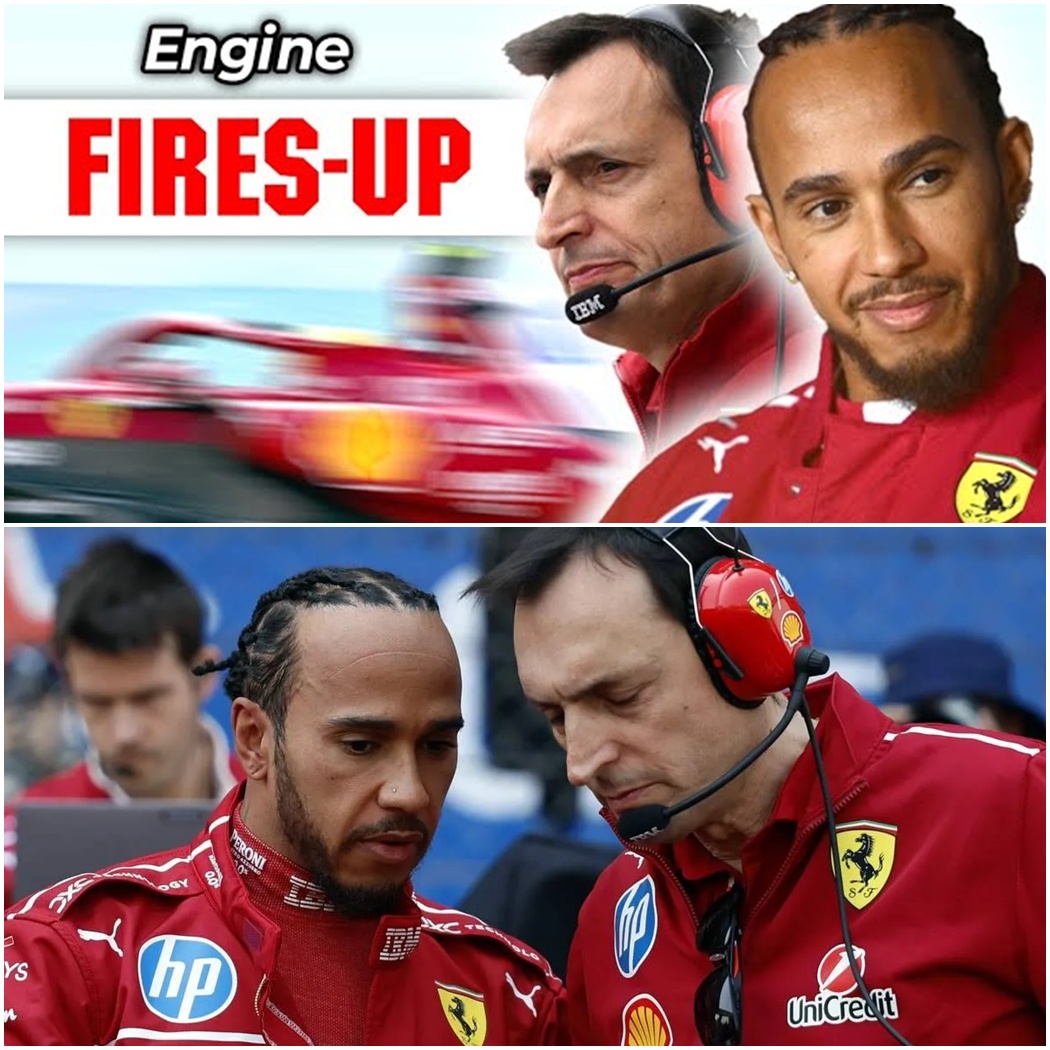
    In the cold, clinical air of Maranello, behind doors secured against the intrusive gaze of the outside world, a critical experiment took place in late December 2025. It was a moment devoid of the usual fanfare, headlines, or glory associated with the most iconic name in Formula 1. An engine fired for the first time—Ferrari’s 2026 power unit, a beast conceived under the most radical regulation reset the sport has seen in decades. Engineers, the custodians of a fragile Italian legacy, held their breath. The initial disclosures were breathtaking: the power was there. The sophisticated hybrid system functioned perfectly. The performance numbers looked, on paper, competitive.

    Yet, despite this victory, one chilling word kept echoing within the Scuderia’s technical halls, acting like a shroud over the celebration: Reliability. This single variable, the Achilles’ heel of the Prancing Horse for nearly two decades, remains the critical, unresolved question that will ultimately define success or failure. For Ferrari, this is not merely a technical challenge; it is a psychological battle against 17 years of self-inflicted wounds. The path ahead leads either to redemption or to repetition of a heartbreak that has destroyed more championships than any rival ever could.

    The Ghost of Ambition Without Endurance

    The 2026 regulations are not a mere evolution; they are a revolution, fundamentally flipping the delicate balance between internal combustion and electrical power delivery. Traditional horsepower is being dethroned. The new currency is energy deployment, thermal stability, and, most crucially, the predictable, sustained transfer of power across an entire race distance. Ferrari’s power unit group, spearheaded by Enrico Gualtieri, has successfully navigated the initial, high-stakes performance hurdle, validating their core power output and hybrid energy recovery projections.

    But this is the juncture where past trauma rears its head. The reliability caveat is not a vague ‘needs improvement’ note; it is flagged internally as the critical variable. This frank admission speaks volumes about the team’s lingering awareness of its own history. This is the same outfit that once produced the brilliant, yet terminally fragile, SF90—a rocket ship that often seemed to melt itself under pressure. It is the same team that pushed the SF1000 so aggressively that it became an uncompetitive midfield car by the Spanish Grand Prix due to thermal constraints. For too long, the Ferrari mantra has been characterized by “ambition without endurance,” and “speed without survival.” Now, faced with the most complex hybrid regulations in F1 history, Ferrari is admitting the one thing they cannot simulate away: whether their ambition can last the distance.

    A Unified Platform: The Silent Strategic Shift

    The decision that followed the initial fire-up changed the dynamics of their entire campaign, though it was a quiet, internal call that most fans and pundits will likely miss. Ferrari committed to assembling and validating the 2026 power unit alongside the chassis from the very beginning of the development cycle. This may sound like common sense, but for Ferrari, it represents a profound cultural break from decades of ingrained practice.

    In previous regulation cycles, the Scuderia’s departments notoriously operated in isolation. Power unit engineers chased peak performance figures, while chassis designers focused purely on aerodynamic downforce. When the two departments finally brought their respective masterpieces together late in the cycle, the result was often chaos: cooling ducts that didn’t fit, vibration frequencies that destroyed suspension components, and thermal limits that forced the aero team to compromise rear-end grip by opening up bodywork. These late compromises led to conservative final designs and missed potential—the definition of a Formula 1 disaster.

    This time, the strategic pivot is absolute. The 2026 project is being treated as a unified platform. The power unit is being validated inside the chassis environment while design solutions remain flexible. This integrated approach, simple in concept, is what separates dynasties like Mercedes and Red Bull from the recurring disasters that have plagued Maranello. It allows the team to understand the real-world interaction between combustion, electrical systems, cooling, and vibration under load—interactions that are impossible for even the most advanced simulation tools to fully predict. If a crack appears, they still have time to redesign the architecture before it is locked in for the season, turning what used to be a point of irreversible chaos into a solvable validation event.

    The Hamilton Effect: Fighting the Unpredictability

    This new strategic discipline under Team Principal Fred Vasseur and Technical Guru Loïc Serra—focused heavily on tire behavior and suspension geometry—underscores a stark new reality for 2026: absolute aerodynamic figures will matter less than consistency and predictability. In a world of lighter cars and revised aero concepts, maintaining tire stability through varying energy deployment cycles will be decisive. This mandates that the power unit cannot be erratic. It cannot spike, it cannot fade; it must function with the relentless, precise rhythm of a metronome.

    This is where the story connects to the most decorated figure in the sport: Lewis Hamilton. The seven-time World Champion is not just coming to Maranello for a photo opportunity; he is there to serve as a high-fidelity, human feedback loop. Hamilton’s unparalleled experience allows him to detect the subtle nuances that raw telemetry can miss: inconsistencies in braking feel, power delivery transitions, and erratic energy recovery behavior. These are precisely the nuances that become catastrophic liabilities under the tight coupling of driver input and hybrid response mandated by the new rules.

    Hamilton’s presence is Ferrari’s proactive measure to prevent theoretical performance from masking practical limitations—the exact scenario that doomed their 2022 campaign, which, despite having blistering pace, was undone by fundamental weight distribution problems that cost them crucial lap time in slow corners. This time, Ferrari is confronting their limitations before the first pre-season test, using the most experienced driver on the grid to ensure they develop a car that can be naturally exploited, not one that requires constant, desperate management of its own intrinsic weaknesses.

    Redemption, Repetition, or War

    The planned ignition tests in late December were more than a milestone; they were a warning shot fired across the paddock. Every manufacturer faces the same, immense uncertainty inherent in the 2026 regulation reset. Even the best simulations cannot guarantee real-world success.

    For Ferrari, three scenarios loom large, defining the immediate future:

    The Path to Redemption: Ferrari stabilizes reliability before the crucial Barcelona testing phase. The platform proves dependable, allowing Hamilton and Charles Leclerc to exploit its speed from race one. The integrated chassis philosophy, the tire management strategy, and driver strength align perfectly. After a 17-year drought, Ferrari is suddenly and convincingly back in the fight for the Constructors’ Championship.

    The Repetition of Failure: Small, persistent reliability issues—a consequence of their historical weakness—appear during pre-season running. Ferrari enters the season with a fast but fragile package, forcing them to detune the power unit to prevent catastrophic failures. The entire car concept is compromised, and by mid-season, they are fighting an expensive, draining battle for damage control instead of titles.

    The All-Out War: Ferrari gets its integration and reliability exactly right, but so do their rivals, Mercedes and Red Bull. Barcelona becomes a true lottery, a crucible where the team that solves the intricate puzzle of sustained hybrid performance first doesn’t just win a race, but defines an entire era.

    Ferrari has met its targets for power and energy recovery. The revolutionary integration strategy is a clear sign of their commitment to breaking the cycle. Lewis Hamilton is on the inside, shaping development. But the ultimate truth rests on that single, dark shadow: reliability. Can a team that last won a constructor’s title in 2008 master the most complex technical regulations Formula 1 has ever designed? The first engine fire-up gave them hope, but the real answer will only be revealed when the lights go out in Australia, and the new hybrid system must survive the relentless pressure of a 23-race season without compromise. In Formula 1, it is not about who promises the most; it is about who can deliver when the temperatures are rising and the long, unforgiving weight of history is staring you down. The race for 2026 isn’t about raw speed; it’s about survival of the fittest—a question of whether Ferrari is finally ready to survive its own, immense ambition.

  • The $2-Point Tragedy: Red Bull Insider Confirms Christian Horner’s Delayed Exit Cost Max Verstappen the World Championship

    The $2-Point Tragedy: Red Bull Insider Confirms Christian Horner’s Delayed Exit Cost Max Verstappen the World Championship

    The Formula 1 season concluded not with a celebration of victory, but with the haunting specter of ‘what if’ hanging over the Red Bull Racing garage. Max Verstappen, the prodigious talent who had mounted a near-impossible comeback, fell short of the Drivers’ Championship by a razor-thin margin of just two points to eventual title winner Lando Norris. It was a sporting tragedy of the highest order—a testament to the Dutchman’s grit, yet a painful reminder of a deficit too large to overcome.

    Now, the narrative of a near-miss has been violently reshaped into a story of organizational failure. In a stunning post-season revelation, a former Red Bull power broker has laid the blame for the title loss not at the feet of the drivers, the engineers, or the racing gods, but squarely on the timing of a monumental boardroom decision: the dismissal of former Team Principal and CEO, Christian Horner.

    The explosive accusation comes from none other than Helmut Marko, the long-serving motorsports adviser whose own storied collaboration with the energy drink giant concluded just after the final Grand Prix. Marko, who together with the late Dietrich Mateschitz founded Red Bull Racing, spoke with absolute conviction, shattering the façade of corporate solidarity and pointing directly to the organizational malaise that crippled the team’s early performance.

    “If we had done it earlier, we would have got things back on track sooner and Max Verstappen would have been world champion this year. I’m absolutely convinced of that,” Marko stated. This is not mere speculation; it is an organizational indictment, suggesting the very delay in replacing the leadership was the factor that ultimately subtracted the two necessary points from Verstappen’s tally.

    The Anatomy of a Crisis

    To understand the emotional weight of Marko’s claim, one must revisit the fractured first half of the season. Despite flashes of brilliance, including victories at established hunting grounds, the dominant force that was Red Bull had become a shadow of its former self. The team’s challenger suffered from crippling inconsistency, an Achilles’ heel that Max Verstappen, even at his unparalleled best, could not compensate for.

    As the season progressed through spring and early summer, the gap in the standings widened, transforming from a minor concern into a championship-threatening chasm. By the time the circus reached the critical Grand Prix, Verstappen was “falling further and further behind in the driver standings.” The crisis was evident on track, but according to Marko, its roots were internal.

    It was following that crucial Grand Prix that the axe finally fell, and Christian Horner was “sacked as the chief executive and team principal of Red Bull Racing.” The media, as Marko noted, had long characterized the situation as a “reported power struggle.” While Marko attempted to play down the personal nature of the conflict—insisting it was “nothing personal” and that decision-making power had always resided in Austria—the effect of the internal instability on the car’s development and on-track consistency appears to be the core issue. Performance, as Marko starkly put it, “was falling behind.” The dismissal, therefore, was not a strategic shake-up but a necessary surgical intervention demanded by poor results.

    The Lazarus Effect: A Near-Impossible Comeback

    The immediate aftermath of Horner’s departure saw Laurent Mekies step into the leadership role, and the results were nothing short of miraculous. It was under Mekies’s stewardship that Max Verstappen began one of the most ferocious and determined championship comebacks in recent memory.

    By the time the teams left the key summer Grand Prix, the gap to the championship leader was colossal—over 100 points in the standings. For all intents and purposes, the title fight should have been over. Yet, Verstappen and the newly stabilized Red Bull team refused to surrender. They began an unrelenting, race-by-race assault on the standings, chipping away at the seemingly insurmountable lead held by Lando Norris.

    The second half of the season was a masterclass in driving and team execution, proving that the raw potential and speed were always present within the team. The consistency returned, the development pace accelerated, and Verstappen drove with the desperation and brilliance of a true champion fighting for his legacy. The comeback was so profound that by the final flag, Verstappen had closed the over 100-point deficit down to a mere two points behind the eventual champion.

    This is the crux of Marko’s argument. The sheer scale of the turnaround in the second half of the season serves as empirical evidence that the car and driver package, once the organizational distraction was removed, was championship-winning caliber. If the necessary leadership change had been enacted sooner—say, before the critical mid-season development phase, or even earlier than the crucial Grand Prix—those lost points in the first half could have been secured. The two points needed for a fifth title were, in this estimation, sacrificed on the altar of administrative delay.

    The New Guard: Hajar and the Reset

    The internal drama and the painful lesson immediately cast a long shadow over Red Bull’s plans for the future. Yet, as one era ends, another begins, and the team is already focused on the monumental changes coming under the new technical regulations. This focus is highlighted by the promotion of a young, ambitious talent: Isak Hajar.

    Hajar, fresh off a “very impressive rookie season” in the Red Bull Junior team, which included securing a podium, has been promoted to drive alongside Verstappen. He becomes the latest driver to partner Verstappen, a statistic that underscores the immense pressure and instability of the Red Bull second seat.

    Hajar is pragmatic about the challenge. He understands the difficulty of immediately matching Verstappen’s pace and has adopted a cautious, long-term mindset, which stands in stark contrast to the high-pressure churn of recent Red Bull history.

    “If anything, the goal is to accept that I’m going to be slower the first month,” Hajar admitted. “If you go into that mindset, you accept already that it’s going to be very tough looking at the data and seeing things you can’t achieve yet. It’s going to be very frustrating, but if you know, then you’re more prepared.”

    Crucially, Hajar views the timing of his arrival as a strategic benefit, directly related to the new technical regulations coming for the power unit and chassis.

    “It’s a new car. It’s not like Max knows the car. We all start from scratch,” he explained. “I feel very, very lucky in the way I’m coming to Red Bull, so it’s going to be very beneficial.” This new beginning, where both the veteran champion and the rookie start on a level playing field regarding car knowledge, offers Red Bull a genuine opportunity for complete organizational and technical reset, free from the shadow of the Horner-era inconsistencies. Hajar even suggests his “input” could shape the car’s direction.

    A Legacy of ‘What If’

    The departure of two long-standing titans, Horner and Marko, in the same tumultuous period signals an epochal shift at Red Bull Racing. The team is now entering a new era under entirely new leadership and with a rejuvenated young talent alongside its champion.

    But the final, stinging remark from Helmut Marko will undoubtedly define the immediate legacy of the season. The question is no longer how Max Verstappen missed the title, but why the Red Bull leadership failed to act fast enough to save it. It’s a powerful narrative—the champion was fighting not just Lando Norris on the track, but organizational inertia in the boardroom.

    The conclusion is inescapable: the two-point difference separating Verstappen from the title was a direct consequence of a delayed management decision. The tragedy is that the title was, in Marko’s absolute conviction, there for the taking. It was simply lost in the high-stakes politics and indecision of the off-track drama, leaving behind a bitter and unforgettable ‘what if’ for the entire Red Bull organization. The new era must now prove it has learned the painful lesson of its predecessor: in the world of Formula 1, managerial clarity is just as vital as aerodynamic perfection.

  • The secret is OUT: Aston Martin is betting billions on the 2026 title, fueled by a ‘Supercomputer’ capable of 20,000 simulations. Alonso has set a shock ‘Race 5’ deadline for victory. This is not a drill. Read the full, explosive details in the comments below.

    The secret is OUT: Aston Martin is betting billions on the 2026 title, fueled by a ‘Supercomputer’ capable of 20,000 simulations. Alonso has set a shock ‘Race 5’ deadline for victory. This is not a drill. Read the full, explosive details in the comments below.

    Alonso’s Audacious ‘Race 5’ Ultimatum: Inside Aston Martin and Honda’s Billion-Dollar, High-Stakes F1 2026 Gamble

    The world of Formula 1 has always been defined by cycles of dominance and seismic shifts in regulation. Yet, no upcoming change has held the same potent mix of terrifying risk and glorious reward as the 2026 season. This is the year the sport’s power unit concept is fundamentally rewritten, tilting the scales of power and forcing every team to start from a blank sheet of paper. At the heart of this epoch-making reset stands a partnership that has already captured the imagination of the racing world: Aston Martin and Honda.

    Their alliance is not merely a corporate agreement; it is a colossal, billion-dollar gamble designed to catapult the Silverstone-based squad from midfield contender into genuine title challengers. The initial steps of this audacious journey are currently shrouded in secrecy, beginning with a vital, private Silverstone shakedown of the new AMR26 chassis—an event that will determine the course of their entire campaign. This initial, clandestine running is the silent starting gun for Aston Martin’s 2026 championship bid, and its most crucial voice will be that of the veteran maestro, Fernando Alonso.

    The 200-Kilometer Tightrope Walk: Alonso’s Crucial Role

    The F1 regulations grant teams a strict limit of 200 kilometers per year for promotional and filming days—the essential “shakedowns” used to test system functionality. For Aston Martin, this limited mileage is now more critical than ever. Weeks before the official pre-season tests kick off in Barcelona and Bahrain, the AMR26 will hit the famed British circuit for its inaugural run. This is not a test for outright speed; it is an unforgiving system check, a frantic day dedicated to ensuring every single component works in harmony.

    The immense pressure of this event falls squarely on the shoulders of two-time world champion Fernando Alonso. Known for his almost surgical ability to diagnose a car’s strengths and weaknesses, Alonso’s feedback is indispensable. Engineers are desperate for his credible and detailed analysis on not just the car’s handling, but the fundamental performance of the all-new Honda engine. Even on ‘show tires,’ the two-hundred kilometers provide the first, precious data points outside of a virtual environment. Every lap counts, and every word from Alonso’s mouth will trigger crucial adjustments back at base, long before the wider world gets a glimpse of the finished product. This early work, while limited, is what separates the early pacesetters from those forced to play catch-up.

    This high-stakes scramble is not unique to Aston Martin. It is a fundamental part of the new F1 lifecycle, and rivals like Audi and Alpine are already known to have similar secret tests lined up. The 2026 season demands aggressive early validation, and this initial 200km is the engineering team’s first, and best, chance to put the new machinery through its paces under real-world conditions.

    Honda’s Redemption: The 20,000 Simulation Supercomputer

    The real headline of this partnership is the immense power unit project being spearheaded by Honda. For the Japanese manufacturer, 2026 represents a shot at complete technological vindication. Honda is acutely aware that this is not the ill-fated partnership that resulted in the disgraceful and uncompetitive McLaren-Honda collaboration of 2015. This is a stronger, more experienced, and infinitely more knowledgeable Honda—one forged in the fires of championship success with Red Bull Racing.

    The level of investment is nothing short of staggering. To guarantee the new engine is built on a reliable and efficient platform, Aston Martin has deployed technology that borders on science fiction. Reports confirm the existence of an almost unbelievable ‘supercomputer’ that can execute a jaw-dropping 20,000 simulations on the engine front alone, running at its peak efficiency. This unprecedented level of digital testing is designed to iron out any potential reliability or performance flaws before the engine ever reaches the Silverstone track. Building a power unit this sophisticated requires immense resources, development time, and financial commitment.

    Crucially, this new Honda team inherits the profound expertise gained from working closely with technical genius Adrian Newey, who has since transitioned to Aston Martin. Under the previous engine formula, Honda had already established itself as a leader, particularly in developing the best electrical recovery system (ERS) on the grid. That knowledge base, combined with Newey’s chassis integration know-how, provides a terrifying technical foundation for the AMR26. Their goal for the first test is clear: sufficient power, electric efficiency, and reliability—a solid platform from which to build upon.

    Any major failure at this stage would not just be a technical setback, but a crushing blow to the morale of a project that has absorbed so much time and resource.

    The Mercedes Shadow: An ERS Crisis Looms Over the Grid

    Despite Honda’s technological might and its proven track record in ERS, a major technical anxiety hangs over every single team on the grid—save one. The new engine regulations introduce an incredibly complex Energy Recovery System, and the industry is struggling to perform adequate stress-tests to ensure its reliability across all operational fronts.

    The one team that has reportedly overcome this hurdle? Mercedes.

    According to reports circulating in the German motorsport press, Mercedes is already boastful about the reliability of their new engine, suggesting they have already validated the ERS in a way their rivals have not. If this claim proves true, Mercedes has already acquired a significant, potentially unassailable advantage before the 2026 cars have even turned a competitive wheel. For Aston Martin, who were previously leaders in this very field, this reliability question is their biggest existential threat.

    The 2026 power unit mandates a 50/50 split between combustion power and electric power. If the ERS unit fails to operate reliably or efficiently, it effectively halves the car’s overall performance. Honda’s pedigree offers a strong counter-argument to Mercedes’ alleged lead, drawing on their recent history of energy management excellence. However, the silent fear of the untested ERS system remains the black cloud hanging over the Silverstone shakedown, a question mark only 200 kilometers of intense running can begin to answer. The initial engine configuration for the shakedown is simply the first iteration, and it will be constantly evolved and refined based on the findings from the limited track running.

    Fernando Alonso’s Audacious ‘Race 5’ Target

    While engineers meticulously focus on milliseconds and kinetic energy, Fernando Alonso is focused on the bigger picture: the championship. The veteran driver has set a staggering, audacious goal for the new partnership that encapsulates his competitive fire and faith in Aston Martin’s development capabilities.

    Alonso’s target is not to win the first race, or even secure a podium. His goal is for the Aston Martin-Honda combination to be the quickest or joint-quickest car on the grid by the fourth or fifth race of the 2026 season.

    This is a profoundly strategic mindset. Alonso is accepting that the car that appears at Silverstone, and even the one that lines up for the season opener, will be aerodynamically immature. The AMR26 will undergo a relentless campaign of evolution—the bodywork that starts the season will be vastly different from the one used by mid-season. Alonso understands that under a brand-new regulation set, the greatest competitive gains are made not in the winter, but in the first few months of the championship.

    His lack of concern over the initial pace, so long as they remain competitive, highlights his faith in the team’s development speed and Honda’s ability to quickly unlock engine performance. The ‘Race 5’ milestone is the expected delivery date for the first major, performance-defining upgrade package. By that point, he expects the Aston Martin-Honda to be at the forefront of the pack.

    If they achieve this, Alonso will then expect himself to utilize his vast knowledge, experience, and skill—his entire repertoire—to launch a sustained title challenge.

    The next few weeks in January are arguably the most interesting and important of Aston Martin’s history. The Silverstone shakedown is the first step in translating 20,000 computer simulations into tangible performance. It is a moment where ambition meets the cold, hard reality of the track, driven by a two-time world champion who demands immediate, relentless progress. The 2026 title fight is not scheduled to begin in Australia; it is beginning right now, in secret, on the tarmac of Silverstone.

  • Legend Nigel Mansell finally names the 5 people he hated most in F1. Nelson Piquet wasn’t just a rival; he was pure poison. Read this shocking list to understand the brutal civil war inside Williams and Ferrari. Discover the absolute truth in the full article.

    Legend Nigel Mansell finally names the 5 people he hated most in F1. Nelson Piquet wasn’t just a rival; he was pure poison. Read this shocking list to understand the brutal civil war inside Williams and Ferrari. Discover the absolute truth in the full article.

    The War Beyond the Track: Nigel Mansell and the 5 Rivalries That Forged the “Lionheart”

    In the history of Formula 1, Nigel Mansell did not become a World Champion by being polite. He achieved it by fighting, bleeding, and dragging the car across the finish line even when everything inside him was breaking. The British driver was known throughout F1 as “The Lionheart,” a man who drove with a rare combination of brilliant skill and savage fury that few could match.

    However, that intense emotion and uncompromising fighting style came at a steep price. While fans adored him, the paddock and his rivals did not always feel the same. Mansell, with his stubborn courage, explosive emotions, and fearless racecraft, created as many enemies as he did victories. Behind the glory of his legendary 1992 season lies a truth Mansell rarely spoke about: throughout his tumultuous yet brilliant career, there were five men, five giants of Formula 1, who clashed with him more intensely than anyone else. Today, their identities are finally revealed, exposing a brutal, emotional, and political side of Formula 1.

    1. Nelson Piquet: The Most Vicious Teammate

    If there was ever a rivalry built on pure hostility, it was Nigel Mansell versus Nelson Piquet. They were not just teammates; they were two Alpha personalities trapped in the same garage, chasing the same championship with the same car. From the moment they paired at Williams in 1986, the paddock knew an explosion was imminent.

    Piquet, already a double World Champion, expected to walk in as the unquestioned leader. Mansell, however, had become the team’s rising force—fast, emotional, and wildly popular with the fans. That alone irritated Piquet, who hated sharing attention. But things escalated when Mansell started beating him straight up on the track.

    Their battles were vicious. Silverstone, Brands Hatch, Adelaide—everywhere they went, one tried to break the other. The tension reached its peak during the 1986 championship fight. Williams had the fastest car, yet neither driver would support the other. Instead of working together, they stole points from each other, race after race. Piquet publicly mocked Mansell as “thickheaded,” even making offensive comments about Mansell’s family—vile remarks that Mansell never forgave.

    Inside the team, the atmosphere became toxic. Engineers split into “Piquet people” and “Mansell people,” and the team’s title ultimately slipped away to Alain Prost because the two drivers simply refused to coexist. Piquet was the embodiment of disrespect, someone who tried to belittle, outmaneuver, and publicly humiliate Mansell. To Mansell, Piquet was an “emotional bulldozer”—fast, dangerous, and unwilling to accept any hierarchy. Their rivalry never healed; even decades later, the wounds never fully closed. It is no surprise that Nelson Piquet stands firmly among the five men Nigel Mansell could never tolerate.

    2. Alain Prost: The Intellectual and Political Adversary

    If Nelson Piquet attacked Mansell emotionally, Alain Prost attacked him intellectually. Their battle was never about insults or shouting matches; it was a duel between two opposite philosophies of racing. Prost was “The Professor”—calculated, ice-cold, a master of strategy. Mansell was instinctive, emotional, a driver who fought with his heart first and his head second.

    Their rivalry intensified during the 1986 championship fight. While Mansell overwhelmed with raw speed, Prost countered with timing, patience, and psychological pressure. Every time Mansell pushed too hard, Prost seemed to be waiting for the mistake. And at the infamous Adelaide finale, it was Prost playing chess in a field of warriors like Mansell, whose tire famously exploded. To Mansell, it felt like Prost had outsmarted him; to Prost, it was simply the reward for discipline.

    Things became even more personal in 1990 when the two became teammates at Ferrari. Mansell expected respect as the team’s powerhouse driver, but instead, he walked into a political hornet’s nest. Prost spoke fluent Italian, charmed the engineers, and quickly positioned himself as the favorite within the team. Mansell, uncomfortable with the politics and the shifting loyalties, felt blindsided and isolated.

    Their clashes on track grew sharper. Mansell accused Prost of manipulating the team to secure strategic advantages. Prost believed Mansell overreacted to everything, calling him too emotional for title-level racing. The tension escalated so much that after the 1990 season, Mansell briefly announced his retirement, utterly exhausted by the internal war.

    Then came the final, most devastating twist: in 1992, immediately after Mansell won the championship dominantly with Williams, he discovered that Prost was negotiating a comeback with the same team. Crucially, Prost refused to race if Mansell stayed, and Williams, needing stability after years of internal chaos, chose Prost. Mansell was devastated. After delivering one of the greatest seasons in F1 history, he was effectively pushed out of the team he had given everything to. Alain Prost, in the story of Nigel Mansell’s greatest rivals, was not the loudest or most aggressive, but he was the one who got inside Mansell’s head and stayed there.

    3. Ayrton Senna: The Unrelenting Intensity

    If there was one rival who brought out both the best and the worst in Nigel Mansell, it was Ayrton Senna. Their rivalry was not built on pure hatred; it was built on absolute intensity. Two men who refused to back down, two driving styles born to collide. Senna was precision, aggression, and spiritual focus; Mansell was emotion, bravery, and unfiltered fire. Put them together, and sparks were inevitable.

    One of the earliest flashpoints came at the 1987 British Grand Prix when Mansell hunted Senna down lap after lap before executing one of the most iconic overtakes in F1 history, selling a dummy at over 300 kilometers per hour. The crowd erupted, and Senna’s frustration was visible even through his visor.

    Their rivalry escalated again in 1991, especially in Barcelona, where Mansell and Senna went wheel-to-wheel down the main straight, tires brushing at over 200 miles per hour. It was a moment that defined both drivers: Senna refusing to lift, Mansell refusing to disappear. The footage later became one of the most famous displays of mutual fearlessness in Formula 1.

    Yet, beneath the highlight reels was a deeper tension. Senna believed in total focus and total dominance; Mansell believed in heart, instinct, and raw emotion. Senna viewed Mansell as unpredictable; Mansell viewed Senna as arrogant.

    Despite all the clashes, Mansell never denied Senna’s greatness, and Senna acknowledged Mansell’s courage. But that did not make their battles any softer. They collided, they argued in briefings, and in one post-race confrontation, Mansell famously grabbed Senna by the throat, proving their rivalry went far beyond the racetrack. Every time they lined up on the grid, the paddock knew one thing: someone was going to get bruised—physically, mentally, or both. That is why Ayrton Senna remains one of the five men Nigel Mansell could never fully get along with.

    4. Frank Williams: The Betrayal of a Believer

    Nigel Mansell’s relationship with Frank Williams was one of the most complicated in Formula 1 history. It was a story of loyalty and betrayal, triumph and frustration. A partnership that built a champion yet nearly broke him more than once.

    Frank Williams discovered Mansell, believed in him when few others did, and gave him the machines capable of fighting for world titles. But the same man also made the decisions that pushed Mansell away from the sport he loved.

    The tension began in the mid-1980s. Mansell had earned his place as one of the fastest drivers, yet Williams never gave him the clear number one status he felt he deserved. Frank was a pragmatist. He wanted two fast drivers pushing each other, even if it meant chaos inside the garage. For Mansell, that chaos had a name: Nelson Piquet. Williams’ refusal to control the rivalry allowed it to grow into one of the most toxic teammate relationships ever recorded.

    But the real fracture came after the legendary 1992 season. Mansell finally conquered the World Championship in dominant fashion. It was supposed to be the beginning of a new era, but instead, it became the breaking point. Behind closed doors, Williams had already begun negotiating with Alain Prost for the following season. Crucially, Prost refused to race if Mansell stayed, and Williams, prioritizing stability, chose Prost.

    Mansell was devastated. After delivering one of the greatest seasons in F1 history, he was effectively pushed out of the team he had given everything to. In his eyes, Frank Williams had betrayed him. In Frank’s eyes, he was making a business decision. Their story didn’t end in hatred but in a permanent, quiet tension. Mansell owes part of his legend to Williams; Williams owes part of his success to Mansell. And that is why Frank Williams became one of the few men Nigel Mansell admired deeply yet could never truly forgive.

    5. Michael Schumacher: The Sign of a Fading Era

    By the time Nigel Mansell crossed paths with Michael Schumacher, Formula 1 had already begun to change. The era of emotional, instinct-driven fighters like Mansell was giving way to a new breed: hyper-disciplined, analytical, and physically superior athletes. And leading that new generation was Schumacher—young, relentless, and terrifyingly efficient.

    To Mansell, he wasn’t just a rival. He was a sign that the sport he once ruled was evolving away from him. Their tension began subtly in 1991-1992 when Schumacher emerged as a rising star at Benetton. He was aggressive, precise, and unapologetic—everything that Mansell respected in theory but disliked in practice, especially when it was aimed at him.

    But the real clash came in 1994, the year Mansell returned to Formula 1. He expected competition. What he found was a driver who attacked corners with surgical brutality and defended like he was fighting for his life.

    At the 1994 Spanish Grand Prix, Schumacher pushed Mansell wide with a defensive move so sharp it bordered on intimidation. Mansell called it something else entirely: disrespect.

    Their rivalry escalated further at Adelaide 1994. Mansell won the race, but all attention was on Schumacher’s controversial collision with Damon Hill, which handed Schumacher the title. Mansell, seeing the chaos up close, felt the sport was changing into something colder, more tactical, less honorable.

    Schumacher perfectly symbolized this shift: a driver who played the rules to the edge and sometimes beyond it. For Mansell, Schumacher represented a future he wasn’t sure he belonged to. The old guard raced with emotion; the new guard raced with calculation. Mansell admired Schumacher’s talent, but the style, the ruthlessness, the unapologetic aggression clashed deeply with Mansell’s belief in respect between drivers. They were never enemies in the traditional sense, but they were two worlds colliding—one fading, one rising. Michael Schumacher wasn’t just a rival. He was the reminder that Mansell’s time was ending. And that makes him one of the five people Mansell could never fully warm to.

    Conclusion: Fire Forged the “Lionheart”

    In the end, the story of Nigel Mansell is not just the story of a champion. It is the story of a man who fought every battle with his heart exposed, who pushed himself through pain, politics, and pressure in a way few drivers ever dared.

    And along that journey, the five rivals he clashed with—Piquet, Prost, Senna, Frank Williams, and Schumacher—became something more than competitors. They became the forces that shaped him. Piquet tested his pride, Prost tested his patience, Senna tested his courage, Frank Williams tested his loyalty, and Schumacher tested his place in a changing world.

    Each rivalry left a scar. Each confrontation left a lesson. And together, they forged “The Lionheart,” the fighter who refused to quit, refused to bow, and refused to let the sport break him. Nigel Mansell may not have loved these five men. In truth, he may not have even liked them. But without them, his legend would not burn as brightly. And that is the strange beauty of Formula 1: sometimes, the people you dislike the most are the ones who make you unforgettable.