Author: bang7

  • Horner’s Billion-Dollar Bet: The Inside Story of the Alpine Takeover and the End of the Red Bull Era

    Horner’s Billion-Dollar Bet: The Inside Story of the Alpine Takeover and the End of the Red Bull Era

    The Formula 1 paddock is no stranger to high-stakes drama, but the latest “bombshell” reports emerging from Europe have sent the sport into a state of absolute frenzy. Christian Horner, the legendary architect of the Red Bull Racing dynasty, is reportedly in advanced negotiations for a return to the grid in 2026. However, in a twist that no one saw coming, he isn’t heading to a powerhouse like Ferrari or Mercedes. Instead, Horner is eyeing Alpine—the team that currently sits at the very bottom of the wreckage of the 2025 season.

    For nearly two decades, Horner was the face of Red Bull’s ruthless efficiency. He oversaw the rise of Sebastian Vettel’s four-year reign and orchestrated the dominant era of Max Verstappen. With eight world championships under his belt, Horner’s departure from Red Bull marked the end of an empire. But as his “gardening leave” approaches its expiration in the spring of 2026, it appears he is not interested in a quiet retirement. According to reports first broken by the Dutch newspaper De Telegraaf, Horner is preparing to execute the most audacious career U-turn in the history of motorsport.

    The most shocking element of this development is not just the team choice, but the nature of the role. Horner is reportedly not looking to be a mere employee. Along with a consortium of private investors, he is allegedly in talks to purchase a 24% stake in Alpine. This would elevate him to the status of a co-owner, mirroring the influential position Toto Wolff holds at Mercedes. At Red Bull, despite his immense power, Horner always answered to the corporate board in Austria or the Thai majority owners. At Alpine, he would be the master of his own destiny.

    The timing of this “Formula 1 earthquake” is calculated with surgical precision. The 2026 season marks the beginning of a radical new era for the sport, with major regulation changes that offer every team a “clean slate.” For Alpine, a team that managed a dismal 22 points in 2025, this represents a desperate need for a total identity reset. The team is already undergoing a seismic internal shift, abandoning its long-standing Renault power unit program to become a customer of Mercedes engines.

    Walking into “Ground Zero” at Alpine would be the ultimate test of Horner’s leadership. The team is currently a fractured shell of its former self, plagued by inconsistent results and a revolving door of management. Yet, Horner sees what others call “chaos” as an unparalleled opportunity. To take a team from last place to the podium would not just be a comeback; it would be a statement of total superiority over his former colleagues at Red Bull.

    Adding fuel to the fire is the presence of Flavio Briatore, the controversial mastermind who led Renault to championships in the mid-2000s. Briatore is currently lurking in the background as an executive adviser for Alpine. The prospect of Horner and Briatore—two of the most cunning, polarizing, and brilliant “sharks” in the history of the sport—working together is enough to make rival team principals lose sleep. It would be a political war machine unlike anything the grid has ever seen.

    However, the risks are astronomical. Alpine is moving away from being a factory-backed giant to a customer team, a move that suggests Renault’s parent company may be losing its passion for the sport. If Horner’s gamble fails, it won’t just be his reputation on the line—it will be his own capital and the money of his investment partners. Unlike his time at Red Bull, there is no safety net here.

    Red Bull, meanwhile, is watching with bated breath. While Laurent Mekies has taken the reigns in Milton Keynes, Horner’s fingerprints are still all over the organization. The sight of their former leader wearing Alpine blue in the 2026 paddock would be a psychological blow. There is no doubt that Red Bull would seek to crush Horner’s new project with brutal efficiency, leading to a rivalry that would be “pure theater” for the fans.

    When asked directly about the rumors, Horner’s response was a cryptic “no comment.” In the tight-lipped world of Formula 1, that silence is deafening. It suggests that the paperwork is being finalized and the stage is being set for a redemption arc that will define the next decade of racing. Whether this is the boldest move in F1 history or a bridge too far for the man who built an empire remains to be seen, but one thing is certain: Christian Horner is coming back, and he’s coming back for blood.

  • F1 star goes undercover at busy British karting track under fake name ‘Henry Shovlin’… but fails to make podium

    F1 star goes undercover at busy British karting track under fake name ‘Henry Shovlin’… but fails to make podium

    Punters had no clue until he removed his helmet

    A FORMULA ONE star went undercover under a FAKE NAME at a British karting track – but FAILED to make the podium.

    The driver signed up as ‘Henry Shovlin’ as he surprised locals by going incognito at Daytona Milton Keynes.
    Kimi Antonelli posed under the name ‘Henry Shovlin’ at Daytona Motorsport UKCredit: Instagram / daytonamsport

    Kimi Antonelli poses alongside the scoreboard after his day out kartingCredit: INSTAGRAM @ daytonamsport
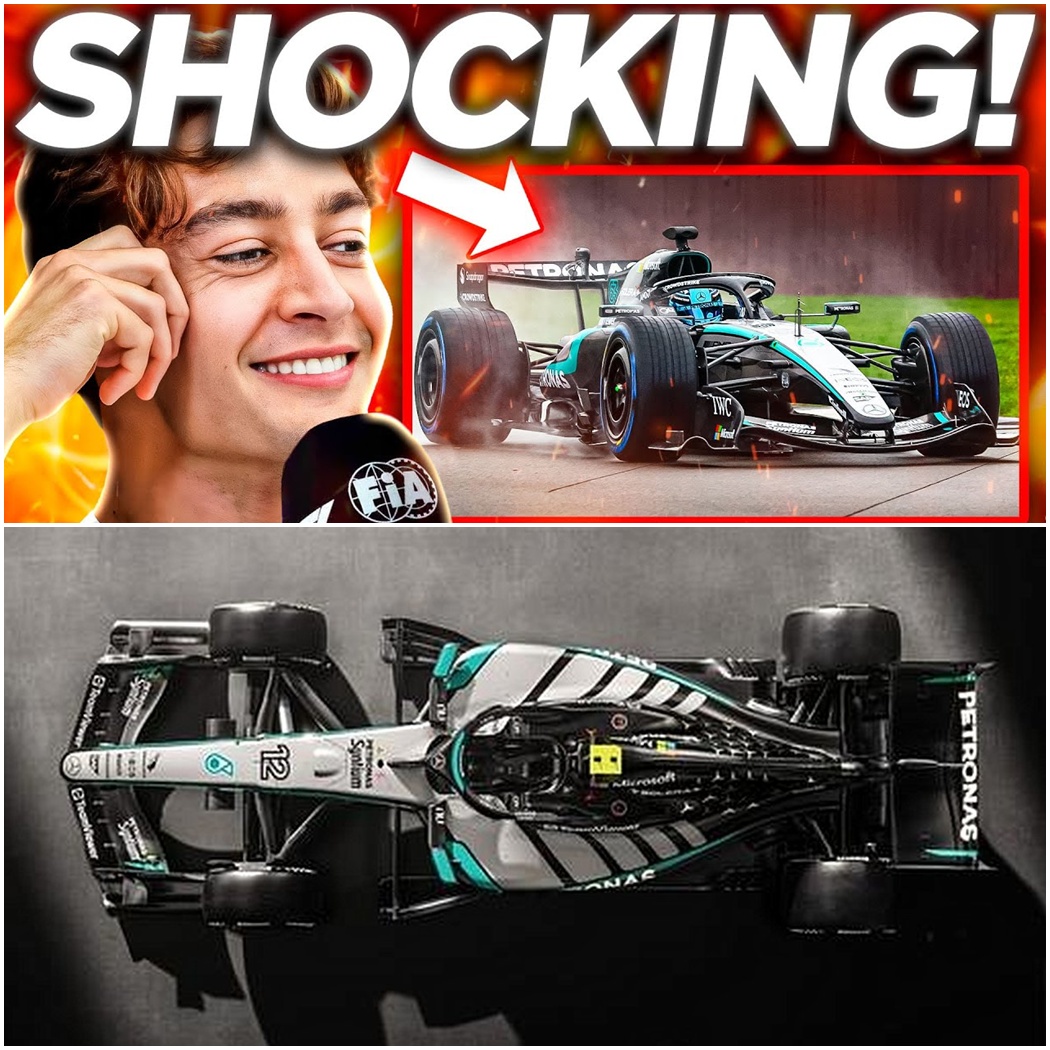
    F1’s Kimi Antonelli, who is a pro driver for Mercedes, was the man in question.

    The Italian, 19, got behind the wheel and raced punters who were unaware who he was at the time.

    It wasn’t until he removed his helmet that people clocked on.

    Daniel Prince from Daytona spilled the beans on the F1 driver’s visit and confirmed he FAILED to make the top three because of “two penalties” for “pushing too hard”.

    Speaking to BBC Three Counties Radio, he said: “He actually got two penalties for pushing too hard so didn’t finish on the podium at the end of it.

    “But he did get the fastest lap of the race by at least three seconds.”

    So what happened when his cover was blown?

    Price continued: “Everyone really mobbed him so a member of staff quickly rescued him and put him behind the desk for a cheeky photo by our celebrity leaderboard, and then he ran away and left.”

    Antonelli finished the 2025 F1 season in seventh position.

    He scored 150 season points across the campaign.

    In 24 Grand Prix races he picked up 135 points and 3 podium finishes in that run.

    He also managed to clock 14 top 10s.

  • The Ferrari Nightmare: Inside the Total Collapse of Lewis Hamilton’s Legendary Career

    The Ferrari Nightmare: Inside the Total Collapse of Lewis Hamilton’s Legendary Career

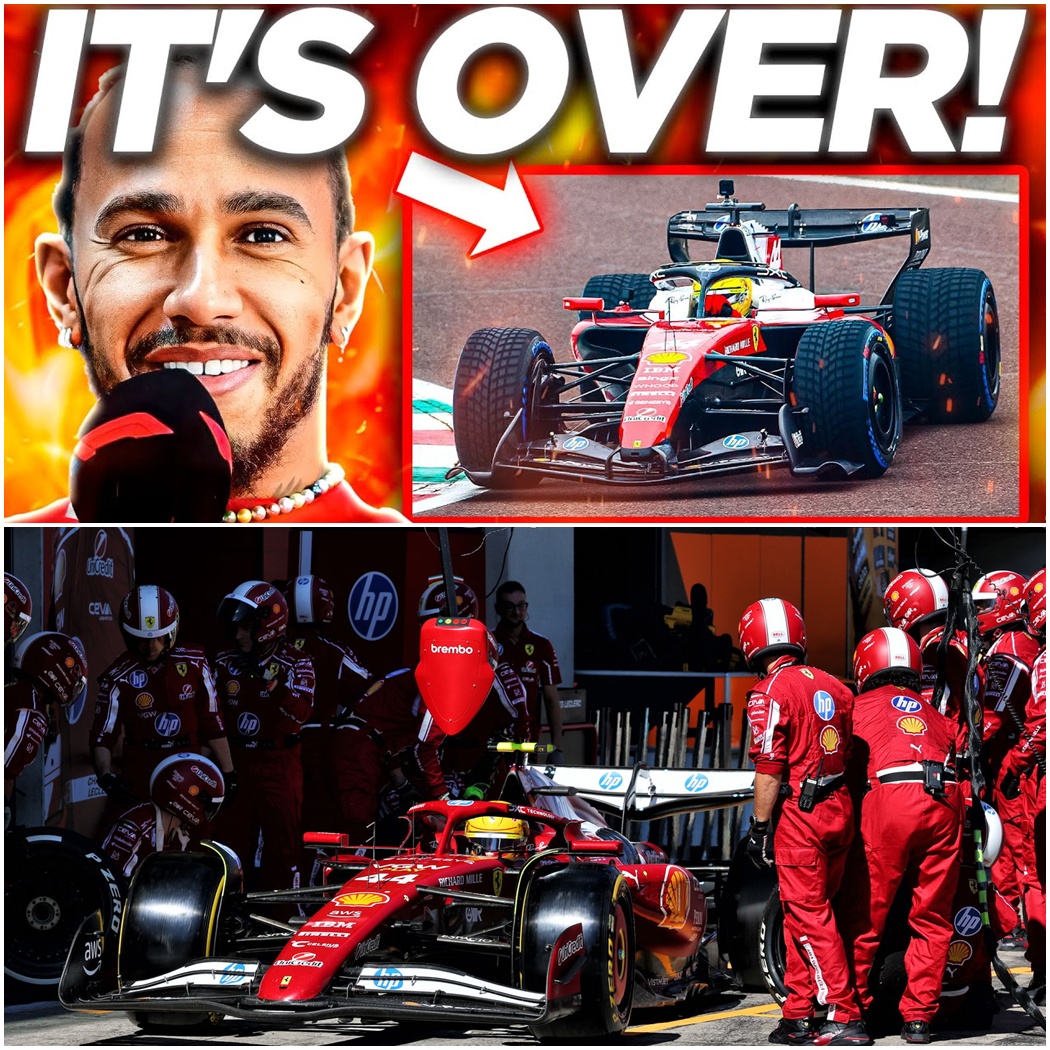
    The lights of Las Vegas usually represent glamour, speed, and the pinnacle of sporting achievement. But in November 2025, they cast a harsh glow on a sight no Formula 1 fan ever expected to see: Lewis Hamilton, the seven-time World Champion, sitting 20th on the grid. He wasn’t there because of a gearbox penalty or a crashed car in qualifying. He was there because, for the first time in a career spanning nearly two decades, he simply wasn’t fast enough. “I’m just useless,” Hamilton muttered over the radio, a haunting admission from a man who redefined the limits of the sport.

    What was supposed to be the “Greatest Romance” in motorsport history—the union of the most successful driver and the most iconic team—has devolved into a technical and psychological disaster. The 2025 season wasn’t just a “bad year” for Hamilton; it was a total collapse of the aura of invincibility that had surrounded him since 2007. For the first time in 19 years and 343 races, Lewis Hamilton completed an entire season without standing on a Grand Prix podium.

    The Ferrari Dream Turns Into a Cold War

    The hype in February 2025 was biblical. When Hamilton donned the Ferrari red at Maranello, the world expected magic. However, by the fifth race, the cracks were already wide open. While Hamilton secured a victory in a Sprint race in China, it was a hollow triumph followed by a double disqualification for the team. It was the first time in 75 years that both Ferrari drivers were thrown out of a race, a screaming warning sign of the operational chaos to come.

    The true betrayal, however, was technical. In April 2025, Ferrari made a ruthless executive decision: they halted all development on the SF-25 car to focus entirely on the 2026 regulation changes. Hamilton was left driving a machine frozen in time while rivals like McLaren and Red Bull evolved every weekend. He wasn’t just racing against other drivers; he was racing against a car philosophy he fundamentally loathed. The ground-effect era, which rewards a smooth and patient driving style, favored his teammate Charles Leclerc. Hamilton’s signature aggressive turn-in and late braking were punished by the SF-25, leading to three consecutive Q1 eliminations—a humiliating record for any Ferrari driver.

    The Document Scandal and Internal Friction

    Behind the scenes, the situation was even more toxic. Hamilton, a driven perfectionist who helped build the Mercedes dynasty, attempted to apply his expertise at Maranello. He authored detailed performance analysis documents and operational roadmaps for Ferrari’s senior leadership. The response? Silence. Sources suggest that Charles Leclerc and team management largely ignored his input, leading to a culture clash that left Hamilton feeling like an outsider in his own garage.

    The frustration boiled over after the Abu Dhabi finale. “I have just a lot of rage,” Hamilton admitted, stripping away the polished PR filter he has worn for twenty years. This wasn’t disappointment; it was the raw fury of a champion who felt sabotaged by a system that refused to adapt. With technical director Enrico Cardile fleeing to Aston Martin mid-season and Hamilton clashing with his own engineers over miscommunications, the Scuderia had become a “tomb of bitterness.”

    The Stats of a Downfall

    The numbers from 2025 are brutal. Hamilton finished sixth in the standings, a staggering 86 points behind Leclerc. He was out-qualified and out-raced by his teammate 18 times in 21 races. While Leclerc salvaged seven podiums for the team, Hamilton’s trophy cabinet remained empty for the first time in his professional life. Ferrari finished fourth in the Constructors’ Championship—their worst result in the modern era.

    Critics and former associates have been quick to weigh in. Gunther Steiner warned that another flat season would make retirement “inevitable,” while Nico Rosberg noted that age might finally be catching up with Hamilton’s reflexes, much like it did with Michael Schumacher during his Mercedes comeback. Unlike Fernando Alonso, who has maintained his edge through various racing disciplines, Hamilton appears to be struggling with a specific generation of cars that do not speak his language.

    2026: Resurrection or the Final Nail?

    Despite the “retirement” whispers that exploded after his “we’re done” comment in Las Vegas, Hamilton remains defiant. He has made it clear that he will be on the grid in 2026, but that season now carries the weight of his entire legacy.

    The 2026 regulations offer a glimmer of hope. With the end of the ground-effect era and the introduction of active aerodynamics and lighter cars, the “old” style of driving might become viable again. This is the “Redemption” scenario: Ferrari nails the engine regulations, the car suits Hamilton’s aggressive rotation, and he secures the elusive eighth world title before retiring on his own terms.

    However, the “Final Fall” scenario is equally plausible. If 2026 starts with the same struggles, Ferrari has already prepared contingency plans to replace him with a younger driver. In this version of the story, the greatest driver of a generation is remembered not for his 103 wins, but for the Ferrari disaster that broke him.

    As we look toward the future, one question remains: Has Lewis Hamilton already driven his last competitive lap? Charles Leclerc said it best: “Next year is now or never.” For Lewis Hamilton, 2026 isn’t just about winning a trophy; it’s about proving to the world—and perhaps to himself—that he still belongs among the gods of speed.

  • Lando Norris: 13 things you need to know about SPOTY contender including huge F1 contract

    Lando Norris: 13 things you need to know about SPOTY contender including huge F1 contract

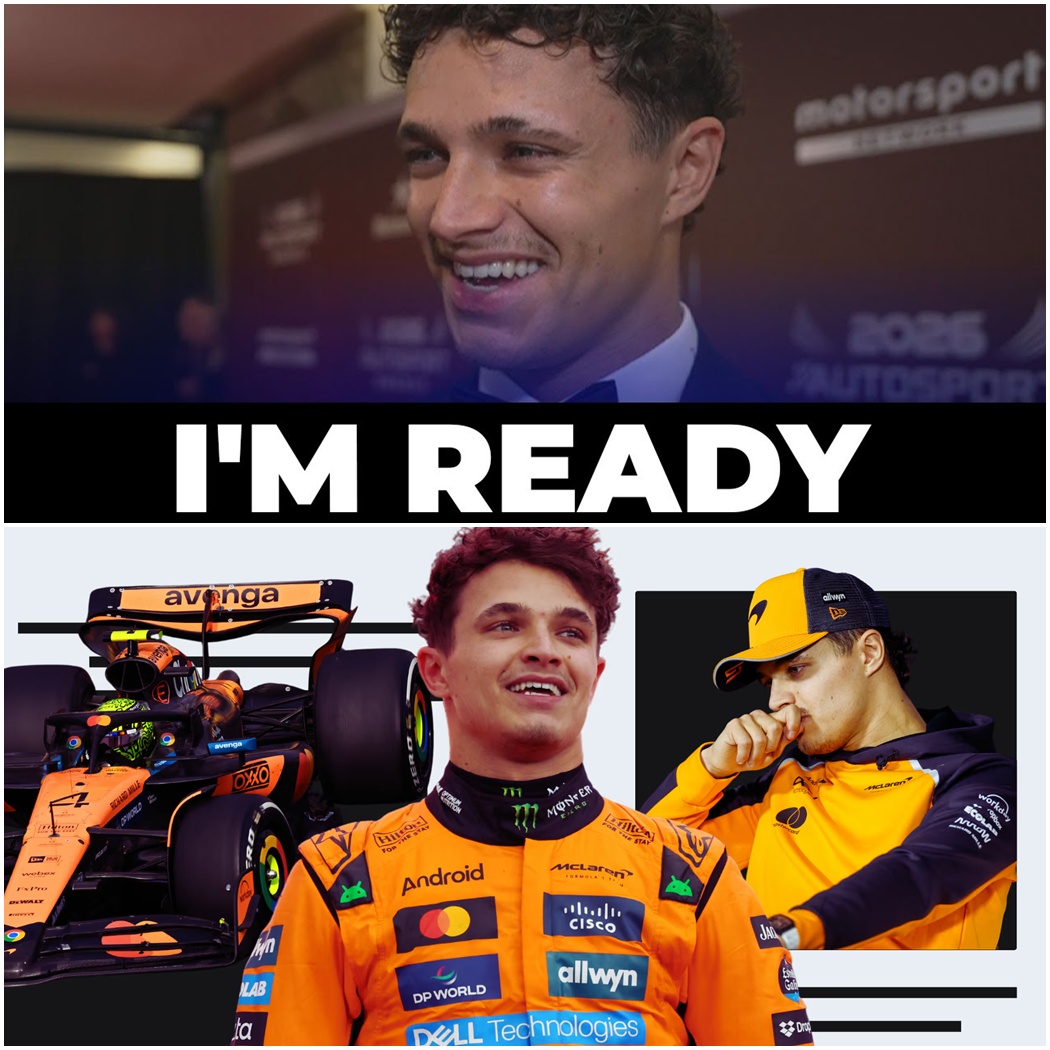
    Lando Norris is one of six BBC Sports Personality of the Year nominees

    Lando Norris has been nominated for BBC Sports Personality of the Year(Image: Handout/FIA/DPPI via Getty Images)

    Everything you need to know about Formula 1 champion and BBC SPOTY nominee Lando Norris

    F1 World Champion: Crowned the 2025 Formula 1 World Drivers’ Champion in a dramatic final race in Abu Dhabi.
    British Champion: Became the first British F1 champion since Lewis Hamilton in 2020.
    Maiden Title: Secured his long-awaited maiden Formula 1 title after years as a highly-rated contender.
    Record-Breaking Year: Set a new record for most wins in a season by a British driver (10 wins).
    McLaren’s Return: His championship win delivered McLaren’s first driver’s title since 2008.
    Age Milestone: At 26, he is one of the youngest-ever British F1 World Champions.
    Charity Work: Highly involved with the Mind mental health charity.
    E-Sports Connection: Owns his own successful gaming and content creation brand and team, Quadrant.
    Partner Status: He is in a highly publicised relationship with Portuguese model and actress Margarida Corceiro.
    F1 Salary: His annual salary is reported to hover around $20 million (£16 million) with McLaren.
    Net Worth: His net worth is estimated to be around £30 million to £52 million, bolstered by his long-term McLaren deal and lucrative endorsements (TUMI, Monster Energy, Richard Mille).
    Tax Haven Resident: He relocated to Monaco in 2023, a tax haven favoured by many F1 elite, to safeguard his earnings.
    Family Background: His father, Adam Norris, is a wealthy entrepreneur whose financial backing helped launch Lando’s early career.

  • Hamilton’s Private Ferrari Pact Revealed as Verstappen Triggers Major Identity Shift for 2026

    Hamilton’s Private Ferrari Pact Revealed as Verstappen Triggers Major Identity Shift for 2026

    The Formula 1 paddock is rarely a place of quiet reflection, but the conclusion of the 2025 season has brought about a period of intense soul-searching for two of the sport’s most iconic figures. As the dust settles on a year that saw a dramatic shift in the power dynamics of the grid, new revelations regarding Lewis Hamilton’s future and a significant branding change for Max Verstappen have sent shockwaves through the racing community.

    For Lewis Hamilton, the dream move to Ferrari has, thus far, been more of a nightmare. Entering the 2025 season with the weight of expectation that only a seven-time World Champion can carry, Hamilton found himself grappling with a Ferrari SF-25 that lacked the pace to challenge the front-runners. The statistics tell a sobering story: a season with no Grand Prix podiums, three consecutive Q1 exits in the final triple-header, and a sixth-place finish in the standings—trailing his teammate Charles Leclerc by a staggering 86 points.

    Naturally, these results fueled a firestorm of speculation. Critics and fans alike began to wonder if the “Goat” had finally lost his edge or if the motivation to continue at the pinnacle of motorsport had evaporated. However, veteran Sky Sports F1 commentator David Croft has stepped forward to provide much-needed clarity. Speaking recently about a private conversation he held with Hamilton in Las Vegas, Croft dismissed the retirement talk entirely.

    “Lewis is coming back,” Croft stated firmly. “He’s not going to retire; he’s not going to step down. He’ll be on the grid in 2026.” Croft emphasized that while the constant questioning about his pace must be “demoralizing” for a champion of Hamilton’s stature, the British driver remains a “great fighter.” The private chat suggested a driver who simply needs to rediscover his self-belief and remember that the inherent ability that secured 103 wins has not vanished overnight. The consensus remains that a refreshed Hamilton will return in 2026, determined to prove that his Ferrari chapter is far from over.

    While Hamilton fights to reclaim his throne, Max Verstappen is preparing for a different kind of transition. After four years of carrying the number one as the reigning World Champion, Verstappen must vacate the prestigious digit following Lando Norris’s triumphant 2025 title campaign. While Norris has confirmed he will take up the number one for 2026, the question remained: what would Verstappen choose?

    Historically, Verstappen has been synonymous with the number 33. However, it has been revealed that the Dutchman has never truly been a fan of the double-digit. His heart has always belonged to the number three—a number that has been occupied by his former teammate and friend, Daniel Ricciardo, since the permanent number system was introduced. Under FIA regulations, a driver’s number remains reserved for two seasons after they leave the sport, meaning the three was technically off-limits until the end of 2026.

    In a surprising turn of events, a recent FIA rule change has allowed drivers more flexibility to change their numbers during their careers. Leveraging this new regulation and reportedly securing the blessing of Ricciardo, Verstappen has confirmed he will move to a single number three for the 2026 season. “I’ve always said it represented double happiness, but of course, I’ve already had my luck in F1,” Verstappen noted regarding his old 33. He expressed a clear preference for the simplicity of the single digit as he enters a new era of his career, no longer as the hunted, but as the hunter.

    As we look toward 2026, the narratives are set. One legend is battling for his legacy in scarlet red, while another sheds his championship skin to return to his roots. The faces remain the same, but the numbers and the stakes have never been higher. One thing is certain: the drama of Formula 1 is only just beginning.

  • F1 2025 Season Review: Verstappen’s Resilience, Norris’s Glory, and the Rookie Revolution That Shook the Grid

    F1 2025 Season Review: Verstappen’s Resilience, Norris’s Glory, and the Rookie Revolution That Shook the Grid

    The checkered flag has officially dropped on the 2025 Formula 1 season, leaving behind a trail of burnt rubber, shattered expectations, and a championship battle that went down to the absolute wire. While Lando Norris may be the man holding the trophy, the debate over who truly performed the best behind the wheel is only just beginning. In a season defined by technical shifts, inner-team turmoil, and a surge of young talent, the hierarchy of the grid has been completely rewritten.

    The Masterclass of Max Verstappen

    Despite missing out on the driver’s title by a mere two points, Max Verstappen stands atop the rankings as the undisputed driver of the year. The 2025 season will be remembered as the year Max dragged a “kicking and screaming” Red Bull team through a period of immense transition. From the high-stakes move on Oscar Piastri in Suzuka to his measured, clinical consistency from Monza onwards, Verstappen proved that his talent transcends the machinery beneath him. While his “head loss” moment in Spain and a rare spin in Silverstone were minor blemishes, his ability to keep a faltering team in the title hunt until the final lap of the final race was nothing short of legendary.

    The Champion’s Grit: Lando Norris

    Lando Norris finally reached the summit of motorsport, clinching his first World Championship in a season that tested his mental fortitude as much as his driving skill. Norris was a fixture on the podium, securing 18 top-three finishes out of 24 races. While critics point to early-season misjudgments in China and Canada, Norris “clutched up” when it mattered most. In the final third of the season, he systematically outclassed his teammate, driving with a newfound freedom that silenced doubters and proved he could handle the immense pressure of a title fight.

    The Mercedes Renaissance and the Russell Factor

    George Russell secured the second spot in the rankings, emerging as perhaps the most consistent performer on the entire grid. Russell was the only driver to complete every single race lap of the season, scoring points in 23 out of 24 weekends. His victories in Zandvoort and Las Vegas were masterclasses in execution. While a strategic gamble in Silverstone backfired and he was briefly overshadowed by his rookie teammate in Brazil, Russell has firmly established himself as a legitimate 2026 title contender, especially with the promising synergy between the Mercedes chassis and their formidable new power unit.

    A Season of Contrast: Leclerc and Piastri

    Charles Leclerc and Oscar Piastri occupied the fourth and fifth spots, respectively, but their seasons followed very different trajectories. Leclerc was the epitome of “maximizing the package,” missing only one Q3 session all year despite a “tricky” Ferrari that often lacked the pace of the McLarens. His P14 finish in Silverstone was a career low, but his ability to extract every ounce of performance from his car remained unrivaled by almost anyone except Verstappen.

    Piastri, on the other hand, suffered a late-season collapse that cost him the top spot in many fans’ eyes. After a dominant middle stretch where he looked like the favorite for the title, his pace evaporated in Austin, Mexico, and Vegas. Whether it was a “skill issue” in low-grip conditions or a lack of confidence, the young Australian learned the hard way that F1 titles are won over 24 races, not 12.

    The Rookie Revolution: Hadjar, Bearman, and Antonelli

    2025 was undoubtedly the year of the rookie. Isak Hadjar emerged as the standout newcomer, earning the title of “Rookie of the Season” and a coveted Red Bull seat for 2026. Hadjar’s consistency in the midfield was staggering, outpacing the more experienced Liam Lawson and bouncing back from a horrific start in Australia to secure four wins and a clutch podium in Zandvoort.

    Ollie Bearman also made waves, showing flashes of brilliance by dominating his teammate Esteban Ocon in the second half of the year. His raw speed single-handedly dragged Haas into a fight for P7 in the constructors’ standings. Meanwhile, Kimi Antonelli, the youngest man on the grid, showed flashes of immense potential with podiums in Canada and Vegas, even outshining George Russell in Brazil. While unforced errors in Austria and Zandvoort showed his greenness, the peaks were high enough to justify the massive hype surrounding his debut.

    Veterans in Transition: Hamilton and Alonso

    For the legends of the sport, 2025 was a year of endurance. Lewis Hamilton endured what he described as his “worst season in Formula 1.” A transition year marked by a car that even his teammate struggled with, Hamilton suffered four consecutive Q3 exits to end the season. It was a painful, “adjustment” year for the seven-time champion, leaving fans hoping that his legendary career doesn’t end on such a low note.

    Fernando Alonso, conversely, proved that age is just a number. At 43, he continued to dominate Lance Stroll, extracting points from an Aston Martin that frequently looked like the ninth-fastest car on the grid. His P5 in Hungary was a tactical masterpiece, reminding the world that his racecraft remains among the elite.

    Final Thoughts on a Historic Year

    The 2025 season proved that Formula 1 is currently operating at a level of “fine margins” never seen before. From the heartbreak of Yuki Tsunoda’s ill-fated Red Bull stint to Nico Hulkenberg finally securing his long-awaited podium, every position on the grid was fought for with desperation. As we look toward 2026, the arrival of Toyota Gazoo Racing’s influence at Haas and the full emergence of the Audi factory team promise even more upheaval. Lando Norris may wear the crown for now, but in the world of F1, the next battle begins the moment the engines turn off.

  • Lewis Hamilton’s SPOTY controversy as Lando Norris challenges Luke Littler and Rory McIlroy

    Lewis Hamilton’s SPOTY controversy as Lando Norris challenges Luke Littler and Rory McIlroy

    F1 world champion Lando Norris is one of six contenders shortlisted for BBC Sports Personality of the Year, and rival Lewis Hamilton once gave a lesson in what not to say at the awards show

    View 3 Images

    Lewis Hamilton once had to backtrack after insulting his own hometown during the BBC Sports Personality of the Year awards(Image: BBC)

    Two-time BBC Sports Personality of the Year Lewis Hamilton once landed himself in hot water when he described his hometown as “the slums” during the prestigious awards ceremony. Newly crowned Formula 1 world champion Lando Norris might want to take notes on what not to say as he competes for this year’s trophy.

    The 26-year-old has been shortlisted for SPOTY silverware after beating Max Verstappen to clinch his first F1 championship this month. His nomination for the main prize, which will be awarded on Thursday evening, makes him the first F1 driver to be shortlisted since Hamilton claimed the second of his two titles in 2020.

    However, it was during one of Hamilton’s four runner-up appearances that he really misjudged his words. The F1 icon found himself backtracking on his comments as cycling hero Geraint Thomas picked up the award in 2018.

    “It’s been a really long journey, a dream for us all, as a family, to do something different, to get out of the slums,” said Hamilton, referring to his upbringing. But his comment didn’t go down well with Sharon Taylor, who was Stevenage Borough Council Leader at the time.

    Hamilton’s comment was likely more about his family’s financial circumstances than the area itself. Nevertheless, Taylor felt compelled to reject any suggestion their town could be characterised as slum-like.

    “It is disappointing that Lewis Hamilton referred to Stevenage as ‘the slums’ at such a high-profile event,” she said in response. “He clearly realised what he had said and tried to correct it but sadly the people of our town, many of whom admire and support him, felt very offended.”

    To his credit, Hamilton appeared to recognise his awkward phrasing immediately and attempted to clarify his remarks. The Ferrari driver, who secured sixth place in this year’s championship standings, redirected his comments towards how he had accomplished so much despite his humble beginnings.

    “Well, we would say it’s not the slums, but just come out from somewhere and do something,” he added on-stage. “We all set our goals very high, but we did it as a team.”

    View 3 Images

    Lando Norris is high in the running to win SPOTY after winning his maiden F1 world title(Image: Clive Rose, Getty Images)

    Hamilton subsequently issued another apology on Instagram: “I’m super proud of where I come from and I hope you know that I represent in the best way I can always…particularly when you are up in front of a crowd, trying to find the right words to express the long journey you’ve had in life, I chose the wrong words.”

    Norris can undoubtedly say McLaren operated as a collective unit as well, considering the support he received from team-mate Oscar Piastri throughout this season. Indeed, the Australian helped strip the competition and was one of three drivers vying for the title at the season-finale in Abu Dhabi.

    The McLaren duo has been the subject of much consternation recently. There’s speculation the manufacturer can’t keep both drivers in the long run as they each harbour championship aspirations, although the partnership is functioning well for now.

    View 3 Images

    Hamilton won’t be in contention for a third SPOTY award after finishing sixth in the F1 standings this year(Image: NurPhoto, NurPhoto via Getty Images)

    Norris was the main winner this year, narrowly crossing the finish line to end Verstappen’s streak of four consecutive world titles. However, retaining it in 2026 will undoubtedly be challenging, particularly as Piastri sharpens his own championship goals.

    The UK’s current top driver will aim to emulate other F1 legends like Hamilton, Nigel Mansell, Damon Hill and others by clinching SPOTY gold. However, current favourite Rory McIlroy will be tough to beat after his Masters victory saw him finally achieve golf’s career Grand Slam.

  • Beyond the Trophies: At 70, Alain Prost Reveals the 5 Rivals Who Defined His Career Through Conflict and Contempt

    Beyond the Trophies: At 70, Alain Prost Reveals the 5 Rivals Who Defined His Career Through Conflict and Contempt

    In the high-octane world of Formula 1, legends are often forged in the fires of passion and raw aggression. We remember the drivers who wore their hearts on their sleeves, those whose emotions spilled over at every turn. But Alain Prost was different. Known globally as “The Professor,” Prost didn’t race with his heart; he raced with a cold, calculating mind. For over a decade, his presence in the paddock made rivals uneasy not because he was explosive, but because he was precise. He was the man who turned racing into a game of chess at 200 miles per hour.

    Now, at 70 years old, the four-time World Champion is looking back at a legacy that is defined as much by his internal conflicts as his statistics. While the trophies gather dust, the names of those he stood against remain etched in his memory. Behind the strategic genius lay a darker reality: a career built on silent wars, garage-room hostilities, and political battles. Here are the five people Alain Prost truly could not tolerate—the rivals who forced him to confront the version of Formula 1 he fundamentally rejected.

    1. Ayrton Senna: The Philosophical Collision

    The rivalry between Alain Prost and Ayrton Senna is arguably the greatest in the history of sports, but for Prost, it was never just about who was faster. It was a clash of philosophies. When Senna joined McLaren, he brought a spiritual, almost reckless belief that racing was a moral battlefield. Prost, the established leader, viewed racing through the lens of risk management and discipline.

    To Prost, Senna’s “win at all costs” mentality was dangerous and irresponsible. The tension famously boiled over at Suzuka during their most intense title fights. While the world saw two titans fighting for glory, Prost saw a man willing to use destruction as a tool for victory. He didn’t hate Senna for his talent; he hated what Senna represented: the idea that winning justified anything. For Prost, the deliberate collisions were a line that could never be erased. It was a rejection of the intelligence and responsibility Prost spent his life championing.

    2. Nigel Mansell: The War of Egos

    If Senna was an ideological enemy, Nigel Mansell was a deeply personal one. Their conflict reached its zenith at Ferrari, a team already drowning in its own internal politics. Mansell was the “Lion,” the emotional hero of the fans who drove with visible passion. Prost was the clinical technician who wanted structure.

    Inside Ferrari, the garage became a battlefield. Mansell felt the team favored Prost, while Prost viewed Mansell as an undisciplined driver who relied too heavily on raw emotion. In the world of “The Professor,” nothing was more frustrating than a teammate who pushed a car past its limits and ended up in the garage while points were on the line. There was no dramatic single moment for these two; instead, it was a slow burn of vanished cooperation and cold interviews. For Prost, Mansell was a rival he could never trust, and in his world, a lack of trust was far worse than a lack of speed.

    3. Nelson Piquet: The Cold War of Intellect

    Nelson Piquet was perhaps the only driver who could match Prost’s intellectual approach to racing, but he used that intellect as a weapon of provocation. Both were masters of tire management and race strategy, yet their personal relationship was toxic.

    Prost valued control and professionalism; Piquet valued disruption and sarcasm. Piquet frequently mocked Prost in the media, questioning his courage and downplaying his achievements. To Prost, this wasn’t psychological warfare; it was noise that undermined the credibility of the sport. What made Piquet intolerable was his unpredictability. Prost wanted a predictable environment where the smartest man won; Piquet wanted chaos. Their rivalry lived in the whispers of the paddock, a silent acknowledgement that while they were equals in brilliance, they were worlds apart in character.

    4. Ferrari: The Betrayal of a Broken System

    For Alain Prost, some enemies didn’t wear racing suits—they wore ties. His move to Ferrari was supposed to be a match made in heaven, but it quickly turned into a slow-motion disaster. Prost joined to bring discipline to the Scuderia, but he found a system governed by national pride and power struggles rather than performance.

    Despite fighting for the championship, Prost felt his technical feedback was ignored. The relationship disintegrated when Prost, in a moment of brutal honesty, compared the Ferrari car to a “truck.” The team didn’t respond with improvements; they responded with war. Ferrari fired the four-time champion before the season even ended, a public humiliation that Prost viewed as the ultimate betrayal. He didn’t hate losing to a better car, but he loathed losing to a broken system. Ferrari wasn’t just a team; it was a structure he couldn’t fix, and for a man of logic, that was intolerable.

    5. Jean-Marie Balestre: The Shadow of Power

    Finally, there was Jean-Marie Balestre, the President of the FIA. Unlike the other rivals, Balestre wasn’t someone Prost could out-brake on the track. He represented power without a steering wheel. While critics often painted Prost as Balestre’s “pet” or political ally, the reality was much more uncomfortable for the driver.

    Prost wanted clear rules and fairness; Balestre wanted authority and influence. The controversial decisions at Suzuka, where the FIA intervened in ways that changed the course of history, haunted Prost’s legacy. It made his victories look like political executions rather than sporting achievements. Prost despised being associated with the dark arts of F1 politics. He knew he could defeat any driver, but he could never defeat the structure Balestre controlled. Balestre was the constant reminder that in Formula 1, championships are often decided in offices, not on the asphalt.

    Alain Prost was never the most “loved” champion, but he was undeniably the most intelligent. His career teaches us that in a sport ruled by ego and emotion, thinking differently comes at a heavy price. He didn’t seek out these enemies for spectacle; he stood against them for principle. Today, his reflections offer a rare, unvarnished look at the cost of greatness and the high stakes of a life lived at the limit.

  • Lando Norris Crowned 2025 F1 World Champion in Nail-Biting Finale: The “Shocking” Prediction He Made for Oscar Piastri That Has Everyone Talking

    Lando Norris Crowned 2025 F1 World Champion in Nail-Biting Finale: The “Shocking” Prediction He Made for Oscar Piastri That Has Everyone Talking

    The lights at Yas Marina have dimmed, the engines have cooled, and the confetti has settled, but the tremors from the 2025 Formula 1 season finale are only just beginning to be felt. In a sport often defined by milliseconds, the history of the 2025 World Drivers’ Championship was written by the slimmest of margins: two single points.

    That was the terrifyingly small gap that separated Lando Norris from Max Verstappen after a season stretched to its absolute breaking point. When Norris crossed the finish line to secure third place in Abu Dhabi, it wasn’t a roar of dominance that greeted him, but a collective exhale from the McLaren garage. He had done enough. Lando Norris is the 35th World Drivers’ Champion in Formula 1 history.

    But if you look closely at the celebrations, beyond the champagne spray and the tears of joy, you’ll find a story that is far more complex and emotionally charged than a simple victory lap. This wasn’t a title won on pure domination. It was a title forged in the fires of relentless pressure, not just from the Red Bull of Max Verstappen, but from the man sitting right next to Norris in the team briefings: Oscar Piastri.

    The Champion’s Unexpected Tribute

    In the immediate aftermath of the biggest achievement of his life, Lando Norris did something few champions do. With the adrenaline still coursing through his veins and the world’s media hanging on his every word, he shifted the spotlight away from himself.

    He didn’t speak of his own brilliance or the years of sacrifice. Instead, he turned his attention to the man he had just defeated.

    “I had two other guys who were pretty freaking fast and certainly made my life tough this year,” Norris admitted to the press, his voice thick with emotion. He wasn’t offering empty platitudes. He was acknowledging a brutal reality. “Oscar, the whole way since round one, I knew he was probably going to be the toughest guy to beat.”

    And then came the statement that silenced the room. It wasn’t a wish, and it wasn’t a polite encouragement. It was a prophecy delivered with absolute certainty.

    “Oscar will be a World Champion.”

    No “maybe.” No “if he keeps working hard.” Just “will.” Coming from the newly crowned king of the sport, those words carried a weight that transcended the typical teammate PR relations. Norris wasn’t speaking as a friend; he was speaking as a survivor who had just weathered a hurricane.

    The Heartbreak of Oscar Piastri

    To understand the gravity of Norris’s words, one must look at the tragedy of Oscar Piastri’s 2025 campaign. For a significant portion of the year, it looked like the trophy was destined for the Australian’s cabinet, not the Brit’s.

    Piastri’s season statistics are hauntingly impressive. He matched the World Champion with seven race wins. After Norris retired from the Dutch Grand Prix, Piastri held a commanding 34-point advantage in the standings. He was calm, precise, and relentlessly consistent—controlling the narrative through the heart of the season.

    But Formula 1 is a cruel mistress who never forgives hesitation. As the calendar ticked down toward the finale, the margins began to tighten in agonizing fashion. It wasn’t a dramatic crash or a singular moment of failure that undid Piastri’s title charge. It was, as analysts are calling it, a “slow bleed.”

    For six consecutive Grand Prix races, Piastri finished outside the podium places. The wins stopped coming. The points trickled away. What once looked like a secure march to glory quietly eroded into a desperate scramble for survival. By the time the paddock arrived in Abu Dhabi, Piastri was sitting third overall, just 13 points behind his teammate. He was close enough to touch the dream, yet far enough away to know it was slipping through his fingers.

    “It was not quite the ending I wished for,” Piastri said after the race, his face a mask of controlled disappointment. There were no excuses, no deflections—just the quiet acknowledgement of a dream deferred.

    A Rivalry Built on Respect and Fear

    The dynamic revealed by Norris’s comments paints a picture of a rivalry that is as intense as it is respectful. Norris confessed that Piastri wasn’t just a competitor; he was a “present danger.”

    “From the opening race, it wasn’t just competition; it was genuine threat,” Norris explained. Even with a four-time world champion like Max Verstappen breathing down his neck, Norris never discounted the threat from within his own team.

    “You can never count out Max, he’s Max,” Norris noted, acknowledging the Dutchman’s ferocity. But the way he spoke about Piastri placed the young Australian in rare company. Norris views Piastri not as a subordinate, but as an equal—an inevitable champion in waiting.

    “I really enjoyed this season because of that,” Norris said, perhaps surprising those who assume drivers hate the stress. “Maybe not always enjoy them, but some of them.”

    He was referring to the wheel-to-wheel battles, the strategic duels, and the moments where every corner carried the weight of a season. It was Piastri who forced Norris to find a new level of perfection. It was Piastri who matched his pace, win for win. It was Piastri who made this championship mean so much more because it was so incredibly hard to win.

    The Future of McLaren

    When a reigning champion tells the world that his teammate is a future champion, it changes the atmosphere in the garage. It signals to the rivals that McLaren doesn’t just have a Number 1 and a Number 2; they have two predators.

    Norris’s declaration has set a marker for 2026. He knows that Piastri won’t fade away. The Australian didn’t lose the championship because he wasn’t fast enough; he lost it because of a slump in momentum. He has learned exactly how close he is.

    “Oscar Piastri didn’t lose a championship in 2025; he learned how close he already is,” the narrative goes. And if history has taught us anything about Formula 1, it’s that drivers who get this close—and stay this calm—rarely stay denied for long.

    Lando Norris has etched his name into history as the 2025 World Champion. But even in his moment of ultimate triumph, he made sure the story didn’t end with him. He pointed to the man standing in the shadows and effectively warned the world: Get ready, because he is next.

    The 2025 season may be over, but the battle for the future has only just begun. And according to the man holding the trophy, the outcome is already written. Oscar Piastri is coming.

  • F1 2026 Bombshells: Verstappen Confirms Shock Number Change as Rumors of Newey’s “Genius” Loophole Explode

    F1 2026 Bombshells: Verstappen Confirms Shock Number Change as Rumors of Newey’s “Genius” Loophole Explode

    The Formula 1 paddock is never truly quiet, even in the depths of the off-season. While the engines are cold, the rumor mill is spinning at maximum RPM, and the latest developments for the 2026 season are nothing short of seismic. We are standing on the precipice of a new era in the sport, and two massive stories have collided to send shockwaves through the fanbase: a complete rebranding for the grid’s biggest star and a terrifying technical rumor that suggests one team may have already won the 2026 championship before a wheel has even turned.

    The Death of #33: Enter MV3

    For years, the number 33 was synonymous with Max Verstappen. It was the brand he built his empire on, the number that adorned the cars that challenged the Mercedes dominance, and the symbol of the “Orange Army.” When he ascended to the throne as World Champion, he rightfully adopted the number 1—a privilege reserved only for the king of the grid. But with the 2024 championship slipping from his grasp and Lando Norris claiming the crown (and the #1 plate), fans widely expected Max to return to his roots. The merchandise was ready; the nostalgia was palpable. We were all ready for the return of MV33.

    But Max Verstappen, true to his nature, has swerved left when everyone expected him to go right.

    In a move that has sparked intense debate across social media, Verstappen has officially confirmed that he will not be returning to number 33 for the 2026 season. Instead, he is rebranding to Number 3. “MV3” is the new reality.

    The backstory here is fascinating and touches on the often-overlooked camaraderie (and politics) of driver numbers. Max revealed that #3 was always his favorite number, his first choice since childhood. However, when he entered the sport, the number was occupied by none other than his teammate, Daniel Ricciardo. Under FIA rules, a driver holds the rights to their number for two full seasons after leaving the sport. Since Ricciardo departed recently, the number should technically still be locked.

    Max’s explanation of how he secured the number was typically blunt and unintentionally hilarious. He noted that Ricciardo “cooperated” with the request. The phrasing—described by some as “very Dutch”—almost made it sound like a hostage negotiation! In reality, it reflects the mutual respect between the two. Ricciardo, ever the gentleman, likely gave his blessing without hesitation, allowing Max to finally race with the digit he has coveted for over a decade.

    But does MV3 carry the same aura? For a generation of fans, 33 is Max. Seeing a single digit on the Red Bull—specifically one so closely linked to the Honey Badger—will take some getting used to. It marks a symbolic reset for Verstappen. The “Mad Max” of the 33 era is gone; the dominant champion of the #1 era has paused; now, we enter the unknown chapter of MV3.

    The Red Bull Exodus: A Team Transformed

    This number change comes at a time when Red Bull Racing itself is undergoing a metamorphosis. The team that Max drives for in 2026 will look drastically different from the juggernaut of 2023. The departures are racking up: Jonathan Wheatley, Rob Marshall, Will Courtenay, and perhaps most critically, the looming exit of Helmut Marko.

    The “ruthless machine” built by Dietrich Mateschitz is evolving. Observers have noted a change in tone—a shift from the cold, hard competitive edge to something slightly softer, perhaps exemplified by their new mascot “Boxy.” While mascots are fun, they don’t design fast cars. And the man who did design the fast cars is no longer there.

    This brings us to the second, and arguably more significant, bombshell rocking the F1 world.

    Newey’s Nightmare for Rivals: The 2026 “Trick”

    Adrian Newey is gone. He has traded the Red Bull energy station for the ambitious project at Aston Martin, and if the latest rumors from the Italian press are to be believed, he hasn’t gone there to retire. He has gone there to dominate.

    The 2026 technical regulations were supposed to be a reset button. They were designed to simplify the aerodynamics, removing the complex “Venturi tunnels” that defined the current ground-effect era. The goal was to eliminate the bouncing (porpoising) and make the cars rely more on engine power. But you cannot simply legislate away the laws of physics, especially when Adrian Newey is reading the rulebook.

    Reports are circulating that Newey has found a “loophole” or a clever exploitation of the rules regarding the car’s suspension. While active suspension is banned, Newey—who pioneered active suspension technology with Williams in the 90s—is rumored to be developing a passive suspension system that mimics the effects of the banned tech.

    Here is the technical breakdown in simple terms: The 2026 cars will have “active aero” (movable wings) but a flat floor. Newey’s reported concept involves designing the suspension geometry in such a way that when the car enters a corner, the suspension mechanically squats and seals the edges of the floor against the track surface.

    If successful, this would recreate the “Venturi effect” that the FIA tried to ban. It would create a massive low-pressure zone under the car, sucking it down to the tarmac and generating immense downforce that rival cars simply cannot match. While other teams are struggling to make the new hybrid engines work or fighting to hit the minimum weight limit, Newey might have effectively found a way to cheat the wind.

    The Brawn GP Parallel

    Veteran F1 fans will feel a sense of déjà vu. This situation mirrors the 2009 season, where Ross Brawn found a loophole in the diffuser regulations (the “Double Diffuser”). His team, Brawn GP, showed up to the first race with a car that was seconds a lap faster than everyone else. They won the championship easily.

    Could 2026 be the year of Aston Martin? The ingredients are terrifyingly perfect. You have the Honda engine (which has powered Max’s dominance), the manufacturing might of the Aston Martin factory, and the brain of Adrian Newey potentially unlocking a distinct aerodynamic advantage.

    If these rumors hold water, Max Verstappen might be looking at the back of an Aston Martin gearbox for the entirety of the 2026 season. Or, perhaps more intriguingly, he might be looking at a contract to join them.

    The Driver Market Shuffle

    This technical revelation throws gasoline on the driver market fire. Aston Martin currently fields Fernando Alonso and Lance Stroll. Alonso is an ageless wonder, but he will be entering the twilight of his career. Lance Stroll, while showing flashes of resilience, is generally not considered a championship-caliber driver in the same tier as Verstappen.

    If Aston Martin produces a rocket ship, they will want the best pilot in the cockpit. Rumors of Lawrence Stroll courting Verstappen have never really gone away. If Red Bull continues its “brain drain” and slips in competitiveness, and if Aston Martin unveils a “Newey Monster” in 2026, the allure of the Green Team might become irresistible for the newly christened MV3.

    Conclusion: A Season of Secrets

    As we countdown to the car launches—with Aston Martin set to reveal their challenger on February 9th—the tension is palpable. The 2026 season isn’t just a new championship; it’s a battle of philosophies. It’s the new corporate Red Bull versus the technical genius of Newey unleashed at Aston Martin.

    Max Verstappen has chosen his number. He’s ready to write a new chapter. But the pen he writes it with might depend entirely on whether Adrian Newey has indeed “cooked up” one last magic trick to stun the world. One thing is for certain: the F1 history books are about to get a lot more interesting.